The signs

The crests

The two houses and the bodies that stand beside them carry five crests of one series: a gilded cartouche with a shell at the top, in the form of the carved and gilded crests of eighteenth-century Sicily and Spain. Within the cartouche there is always a building, rendered in gold, and beside it what is alive, rendered in silver: the trees, the water, the stars. There is no lettering, there are no human figures and there is no religious sign of any kind. Each crest names the building from which the body takes its form.

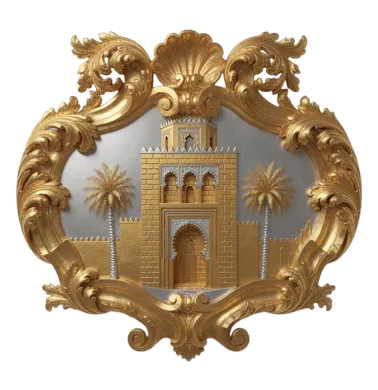
The crest of the Riad Al-Uns: the gate of a medina between two palms

The house in Fez

Riad Al-Uns

رياض الأنس

A medina gate: the crenellated body with the horseshoe arch at street level, the twin window and the turret above, the curtain walls running away on either side and two palms rising over the ramparts. It is the gate of a walled city, and the house stands within those walls: in Fez the riad does not face the street, and whoever enters is admitted by name.

Al-uns is gathered company, the settled familiarity of people who are at ease together. · www.al-uns.com
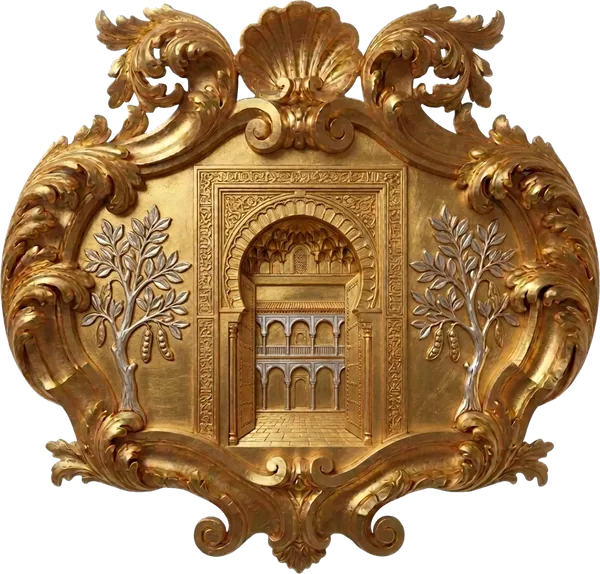
The crest of Al-Funduq as-Siqilli: the portal of a funduq open onto the courtyard, between two carobs

The house in Sicily

Al-Funduq as-Siqilli

الفندق الصقلي

The portal of a funduq, with the muqarnas vault above the arch and the bands of ornament around it. The leaves stand open and the courtyard shows behind, with its two orders of loggias, which is the form of the building: the workshops and the stores on the ground floor, the lodgings above. On either side two silver carob trees with their pods, the tree of the Iblean plateau where the house stands.

Funduq, from the Greek pandokheîon, is the inn of foreign merchants; in English fondaco, in Venetian fontego. · www.al-funduq.org

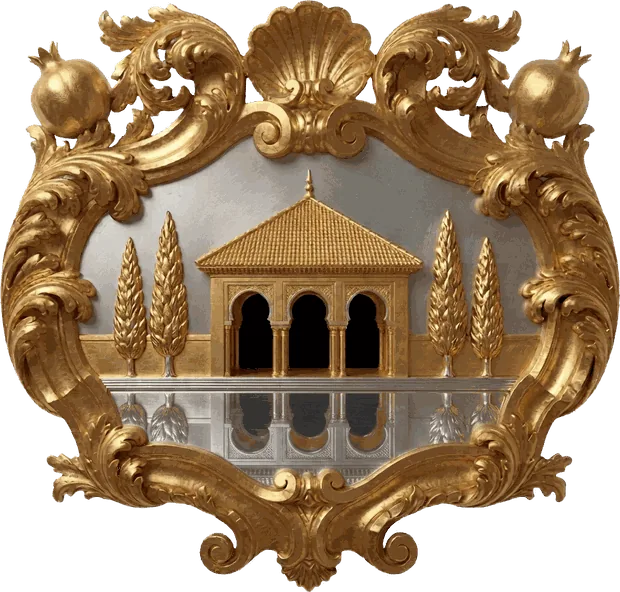
The crest of Al-Munya: the garden pavilion reflected in the basin, between cypresses

The house beside the house

Al-Munya

المُنية

A garden pavilion, with three open arcades and a pitched roof, reflected in a still basin; cypresses on either side, and two pomegranates on the cartouche. The munya is the villa with garden and land outside the walls in al-Andalus and the Maghreb — the almunia of Spanish documents. Beside the house, in a separate building with its own entrance, with its own accounts and with no voice in the resolutions.

The crest is the same in both places. Al-Munya is the body; inside it, Dar al-Bidaya and Dar al-Diyafa. · www.al-munya.com

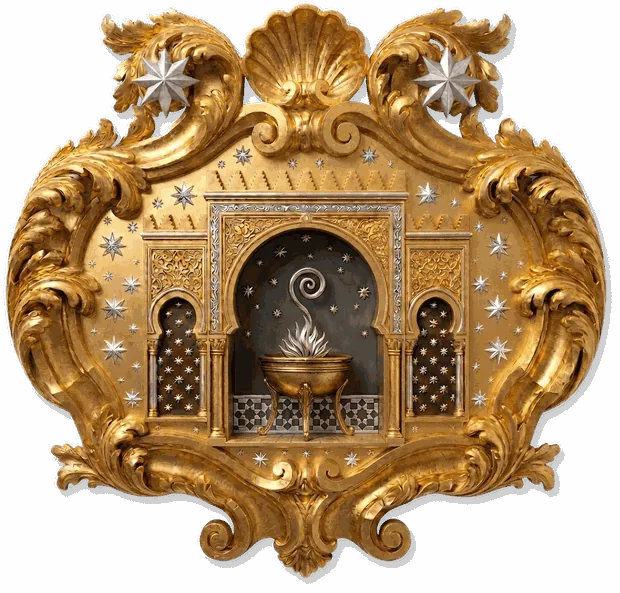
The crest of An-Nudama: the lit brazier under the arch, in a night room full of stars

The supporters

An-Nudama

الندماء

A room in the evening: under the central arch a lit brazier with its smoke rising, silver stars on the vault and in the grilles of the two side windows, and at the base a facing of zellij. The nudamāʾ are the companions of the table, in the singular nadīm. In the project they name the ninety-nine founders: a body with its own treasury, which funds the Riad. It is not a house, and they have no voice in the resolutions of the house.

It is the only crest of the series with a night scene.

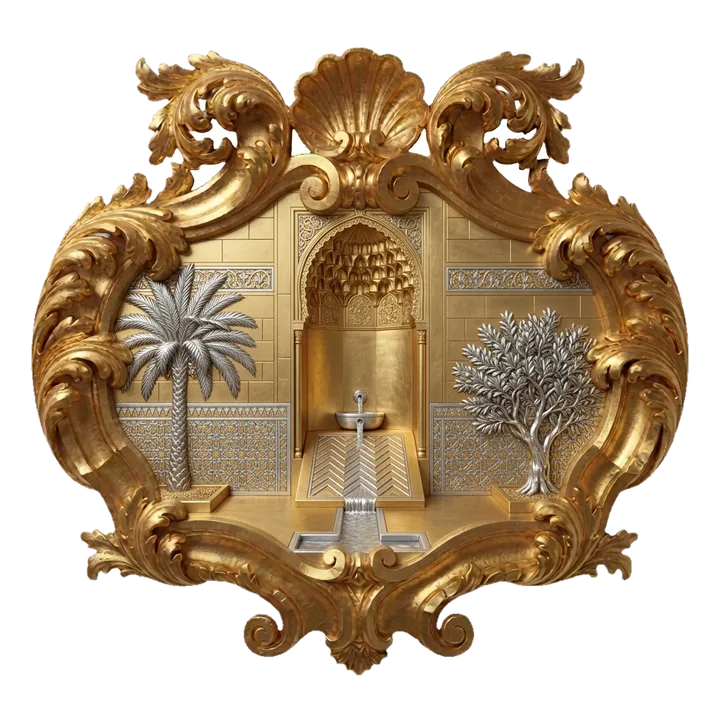
The crest of Al-Mithaq: the fountain hall of the Zisa between a palm and an olive tree

The common charter

Al-Mithaq

الميثاق

The fountain hall of the Zisa in Palermo, Arab-Norman work of the twelfth century: the niche with its muqarnas vault, the mouth from which the water runs down over the herringbone-cut slab, the channel that crosses the floor between two square basins. On the walls the zellij dado and the band of carved stucco. On either side a palm and an olive tree, the two houses. The rule of water and masonry mass is the same in both houses, and the Zisa is that same architecture built on the European shore, in Palermo, by Arab craftsmen for a Norman king.

Mīthāq is the written pact, the charter: the word with which Arabic names founding charters.

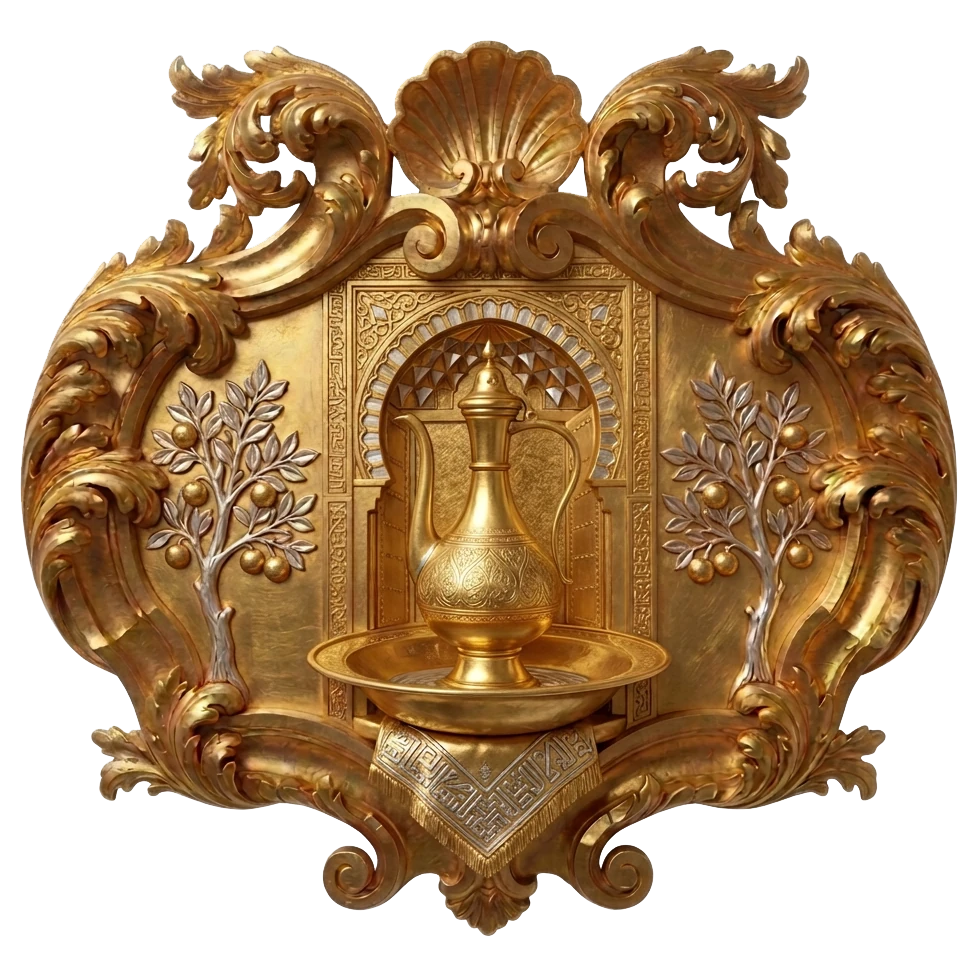
Crest of Dar al-Diyafa: the ewer and basin of the welcoming gesture, between two orange trees

The guesthouse of Fez

Dar al-Diyafa

دار الضيافة

The long-necked ewer set in the basin, under the niche arch, with the folded linen hanging from the rim: this is the first gesture the house makes to whoever arrives, water poured over the hands. The two bitter orange trees are those of the patios of Fez. The gesture is the same for the guest of rank and for the boy received without means.

Diyāfa is hospitality owed, the name of a duty before that of a service. · www.al-uns.com

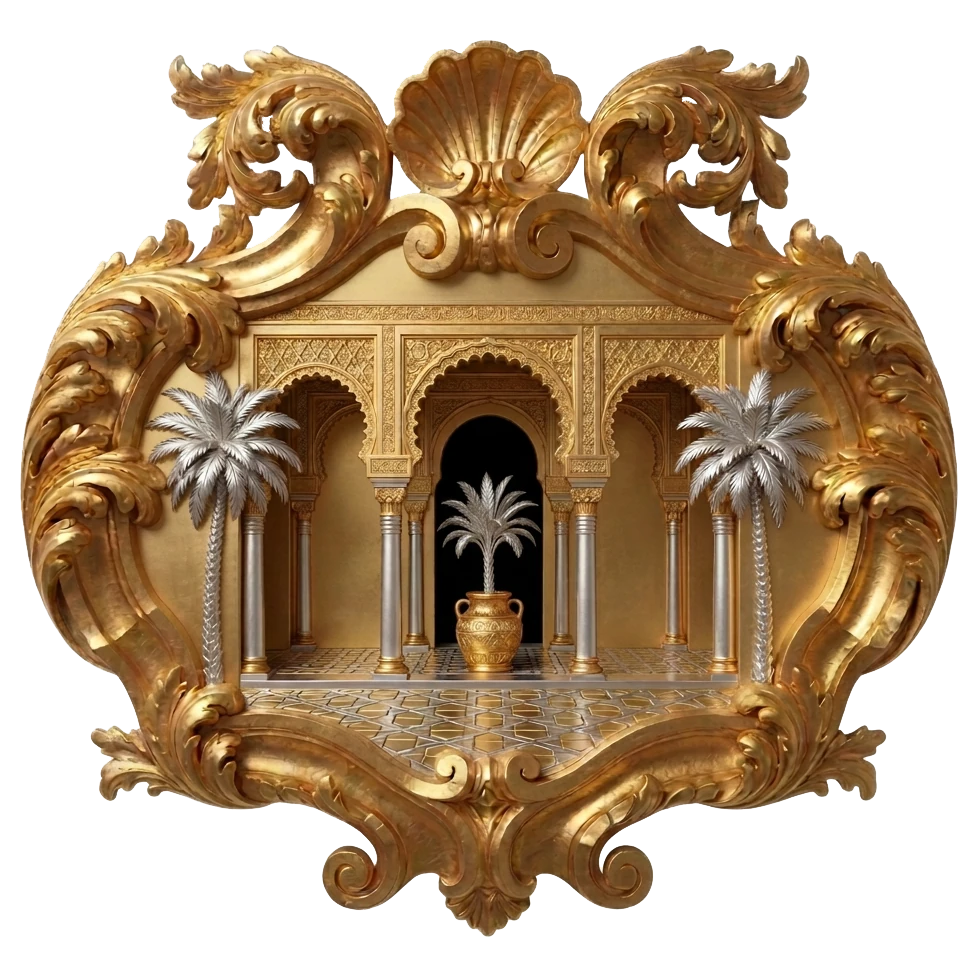
Crest of ar-Riwaq: the three-arched portico with the young palm in its pot

The trial wing of Fez

Ar-Riwaq

الرواق

The three-arched portico that gives the wing its name, and on the threshold an earthenware pot with a young palm: the plant is not yet in the ground. Whoever enters on trial is in the house without yet being of it, and the two grown palms at the sides are those of the Riad’s crest, waiting for him.

The riwāq is the portico, and by extension the wing that opens onto it. · www.al-uns.com

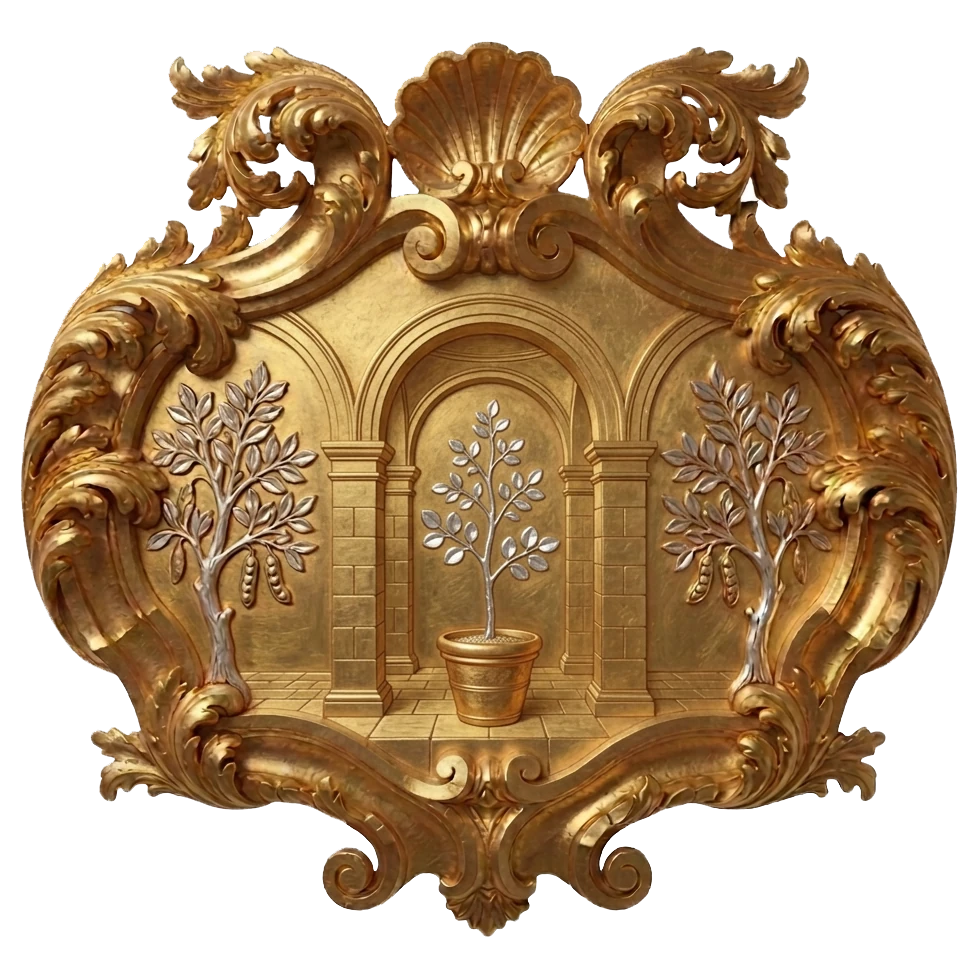
Crest of Dar al-Bidaya: the round-arched portico with the young carob in its pot

The trial wing of Sicily

Dar al-Bidaya

دار البداية

The same arrangement as ar-Riwāq, with the arch and the tree of the place: three round arches on squared stone piers, a floor of stone slabs, and on the threshold the earthenware pot with a young carob. At the sides, the two grown carobs of the Funduq’s crest. Dar al-Bidaya hosts without charge: the costs fall on the company. The same name and the same function hold in Fez and in Sicily. An-Nudama, the ninety-nine founders, has no lodging here.

Bidāya is the beginning. · www.al-funduq.org

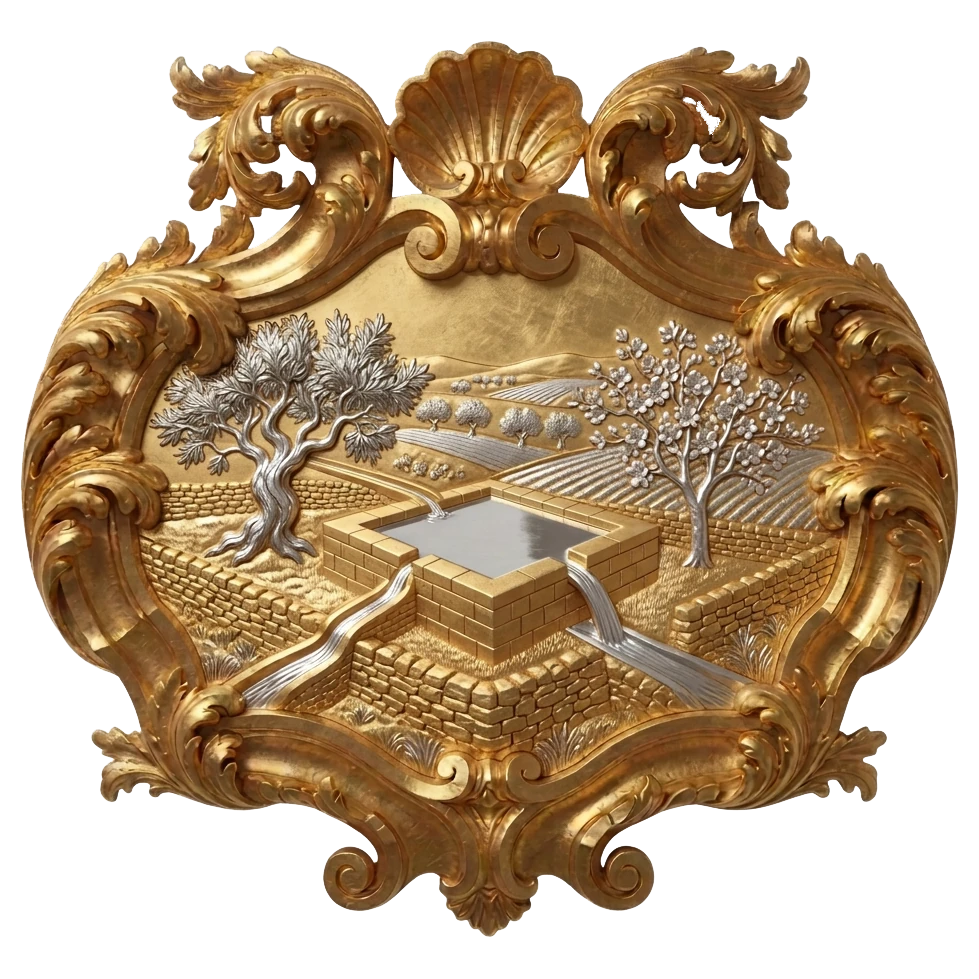
Crest of ar-Rahl: the gebbia between an olive and an almond tree, with the channels running in and out

The land in Sicily

Ar-Rahl

الرحل

The gebbia, the open masonry tank that gathers the water, with the channel that feeds it and the one that carries water to the ploughed fields. At the sides an olive and an almond in flower, the trees of the twenty-three hectares. It is the only piece in the series where the water works rather than rests.

Raḥl was the farmstead of Arab Sicily, the word inside Racalmuto and Regalbuto; gebbia comes from jābiya, the cistern, and saia from sāqiya, the channel. · www.al-funduq.org

Beside the crests run the workshop signs and the six threshold emblems, thirteen signs alike in the two houses, with the perfumers' still only in Fez and the saddle only in Sicily.

← Back to the entrance page