Leather
السرّاج
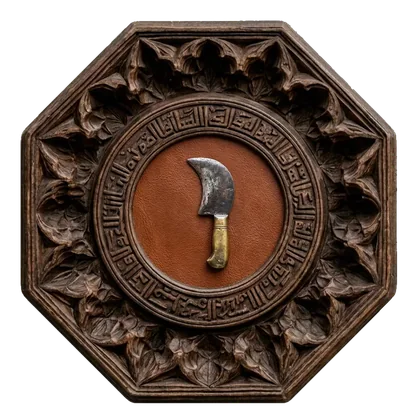
The saddler's half-moon knife
The signs
Beside the five crests, the two houses carry the signs of the workshops and six emblems on the thresholds. The sign of a workshop is the tool of the trade, the one the hand holds every day, rather than a mark chosen to stand for something. The form is that of the polylobed cartouche, the shamsa of manuscript frontispieces, and not that of the European shield; it is carved in cedar, with the tool in forged iron or brass at the centre, the ground in a single colour, and nothing else. No lettering: whoever has spent a week in the house has no need of it, and whoever arrives learns the sign by learning the trade.
No workshop makes its own sign: wood carves the panel, metal forges the tool, the book paints and burnishes the ground. Above the doors, every day, it shows that no trade is sufficient to itself.
السرّاج
The saddler's half-moon knife
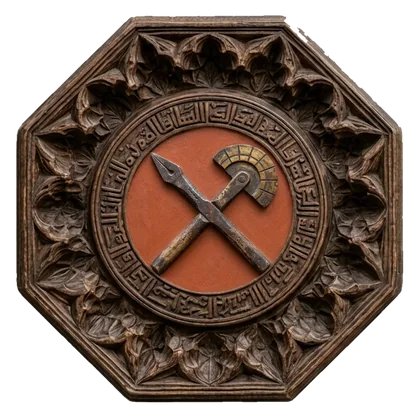
المجلّد
The reed pen crossed with the gilding wheel
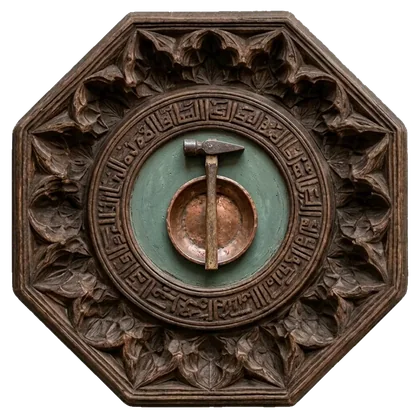
الصفّار
The hammer on the copper basin, as at Seffarine
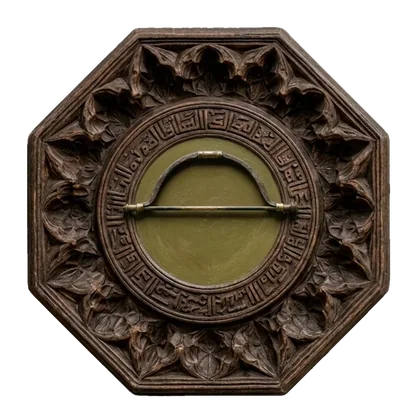
النجّار
The bow of the lathe
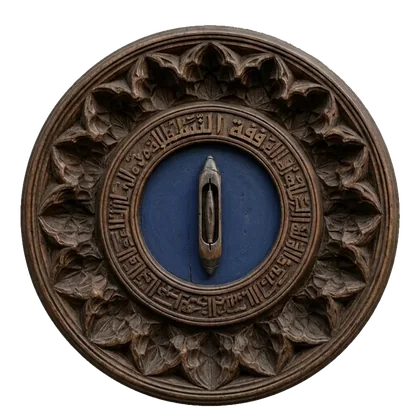
النسّاج
The shuttle, makkūk
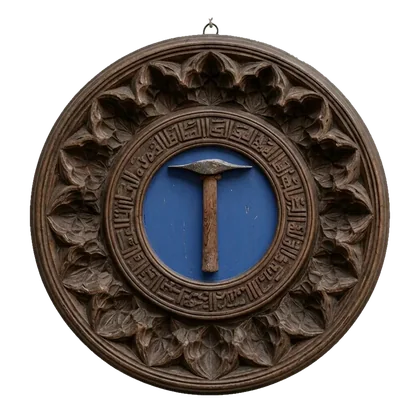
الفخّار
The minqāsh, the small hammer that cuts the zellij
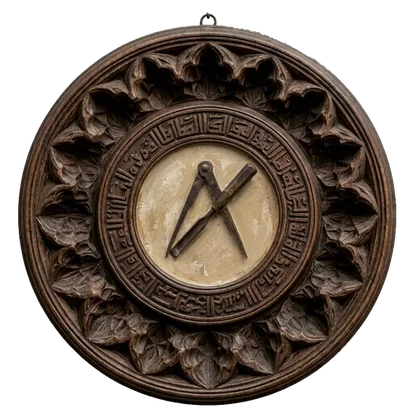
الجبّاص
The compass and the gouge, the geometry before the hand
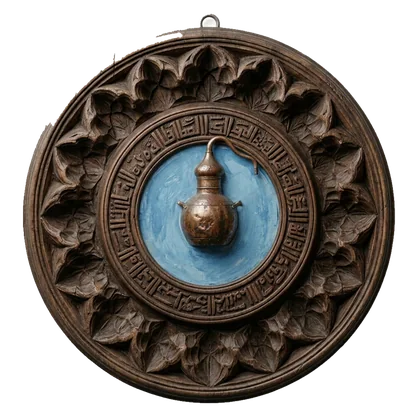
العطّار
The still, al-inbīq
In Fez only
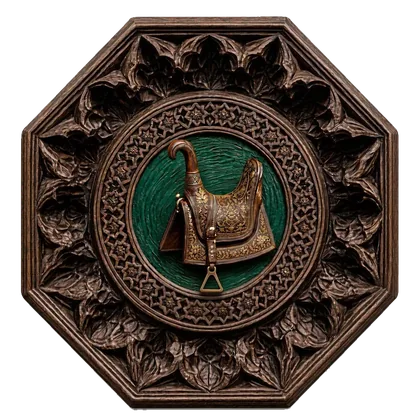
The finished saddle, which holds leather, wood and metal together
In Sicily only
The emblems are six and six only, carved in the same cedar, on the same night-blue ground, with the same gold figure in relief. They mark the passages rather than the rooms: the hammam, the refectory and the oratory carry none, because a mark that repeats stops being a mark.
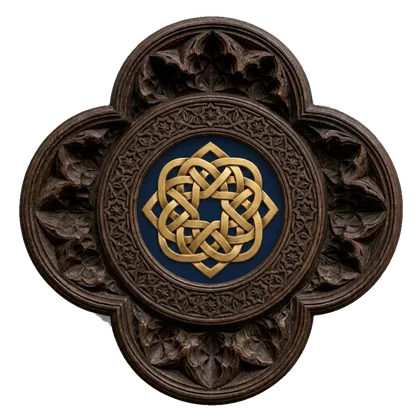
The street
On the entrance passage, the sqifa. A single band that passes over itself and does not end: the bond with the house is tied, it is not received.
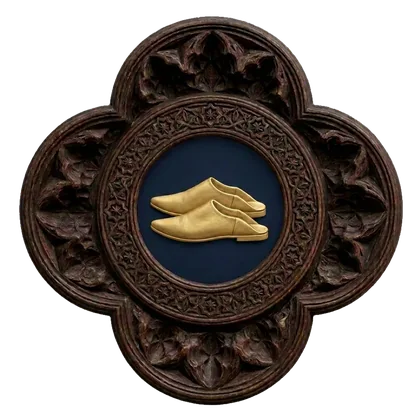
The residents' quarter
Where shoes come off. It is the one door of the house that no lock defends, and that is not crossed for all that.
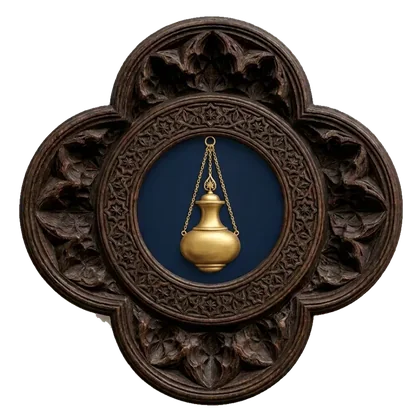
The khizana, the library
On the one door closed by a single key. What is locked is what one answers for before the others, rather than what belongs to oneself.
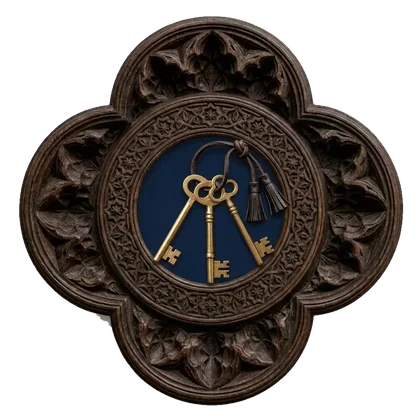
The sanduq, the common chest
On the armoured door of the chest, the only one that opens with three keys together: for what one answers for before everyone, no one answers alone.
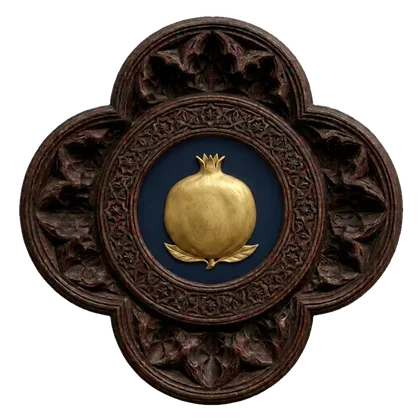
The secret garden
The fruit that shows nothing of what it holds. One does not go in at will: what is given all at once is not learned.
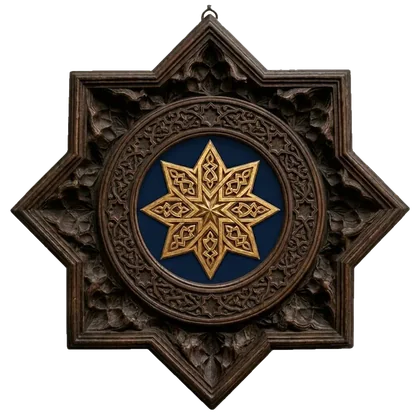
The party wall
On the door that leads from the Munya into the house. The frame differs from that of the other five, because this threshold does not belong to the house alone.
Thirteen signs are the same in the two houses; the last one changes with the trades each of them opens: in Fez the perfume laboratories, in Sicily the saddlery. In Fez the colour of the garment says which workshop a man belongs to, and the sign says what is done there; in Sicily the garment is the same for everyone, masters included, and the sign remains the only mark of the workshop.
The crests of the houses · the workshops of Fez at www.al-uns.com · those of Sicily at www.al-funduq.org