Support
Giving a house to the crafts, a time to training and a duration to what is founded.
Two doors for support
Al-Mīṯāq is not a third house and does not raise funds in place of the houses: it is the charter that holds them together without confusing them. Whoever wishes to support it finds two distinct doors, each with its own body, its own constraints and its own accounts. The first is the custody of a house; the second is the company of the founders, An-Nudamāʾ.
The custody of a house
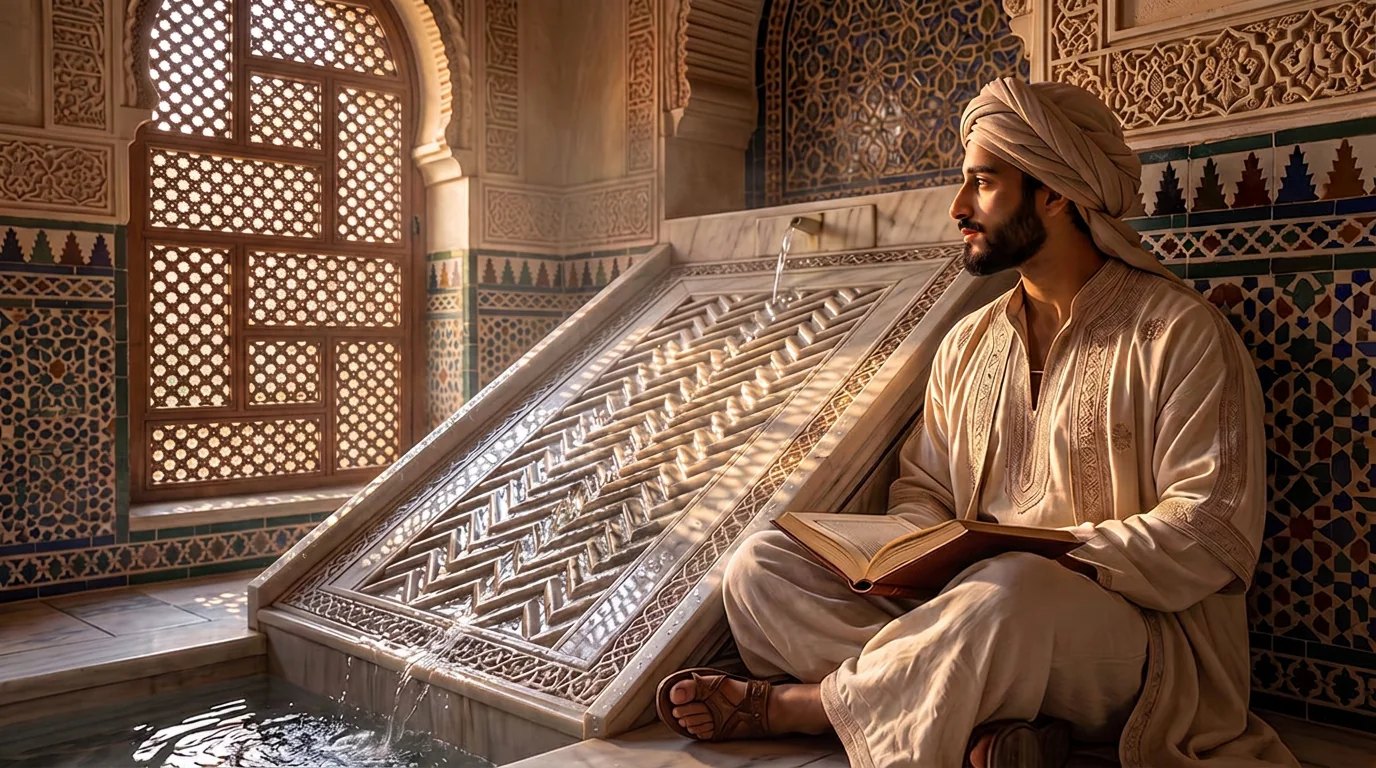
One supports a particular house, in its present phase: the purchase or the restoration, a workshop, a master, the endowment that secures its duration. Each house has its own support page, with its needs, its guarantees and its uncertainties: the Riad Al-Uns in the medina of Fez, Al-Funduq as-Siqilli in an Iblean masseria.
An-Nudama
The company of the ninety-nine founders accompanies the charter as a whole, beyond any single house, without entering the government of the houses. It is a distinct form of support, described on the page of An-Nudama.
Write to us for the dossier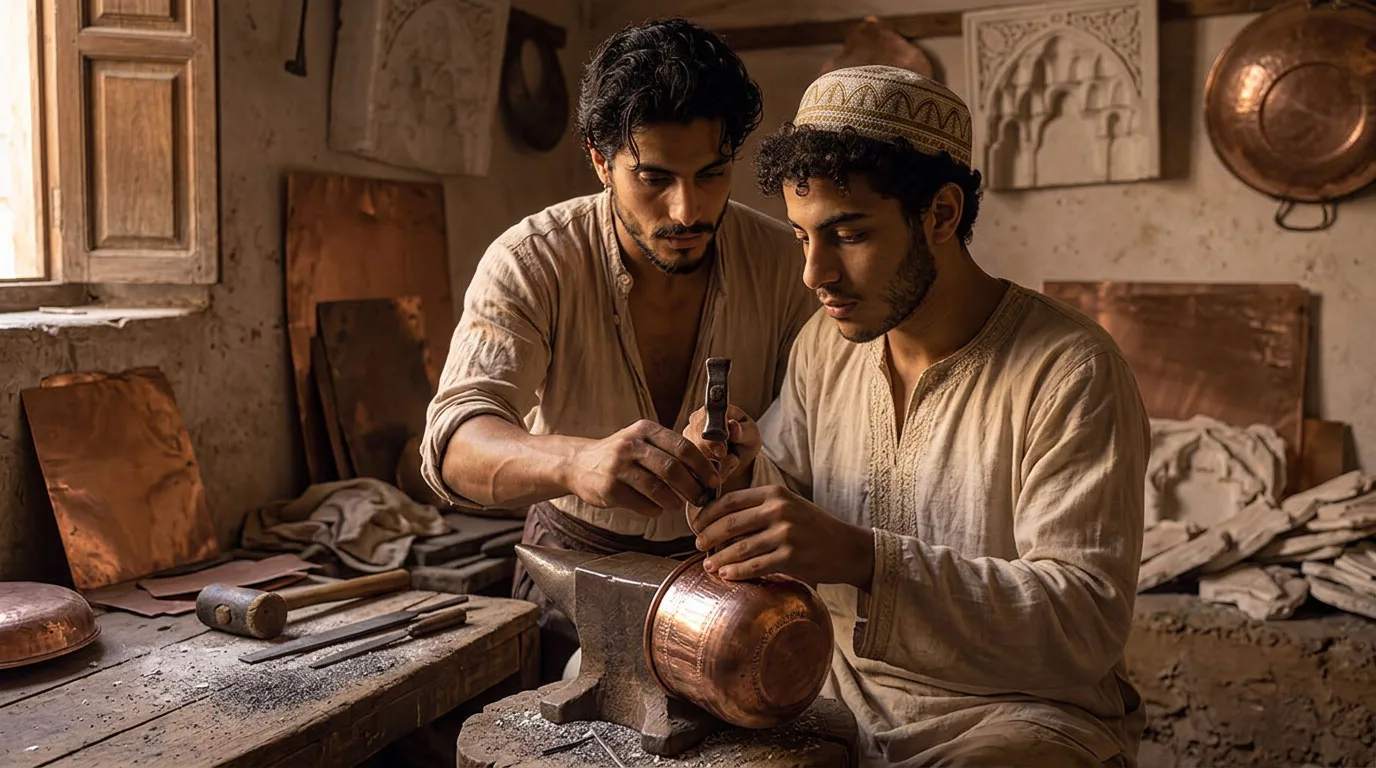
Three distinct commitments
The purchase
Identifying the dwelling, verifying its condition and availability, then buying it or conferring it. Without a suitable seat the programme cannot begin.
The restoration
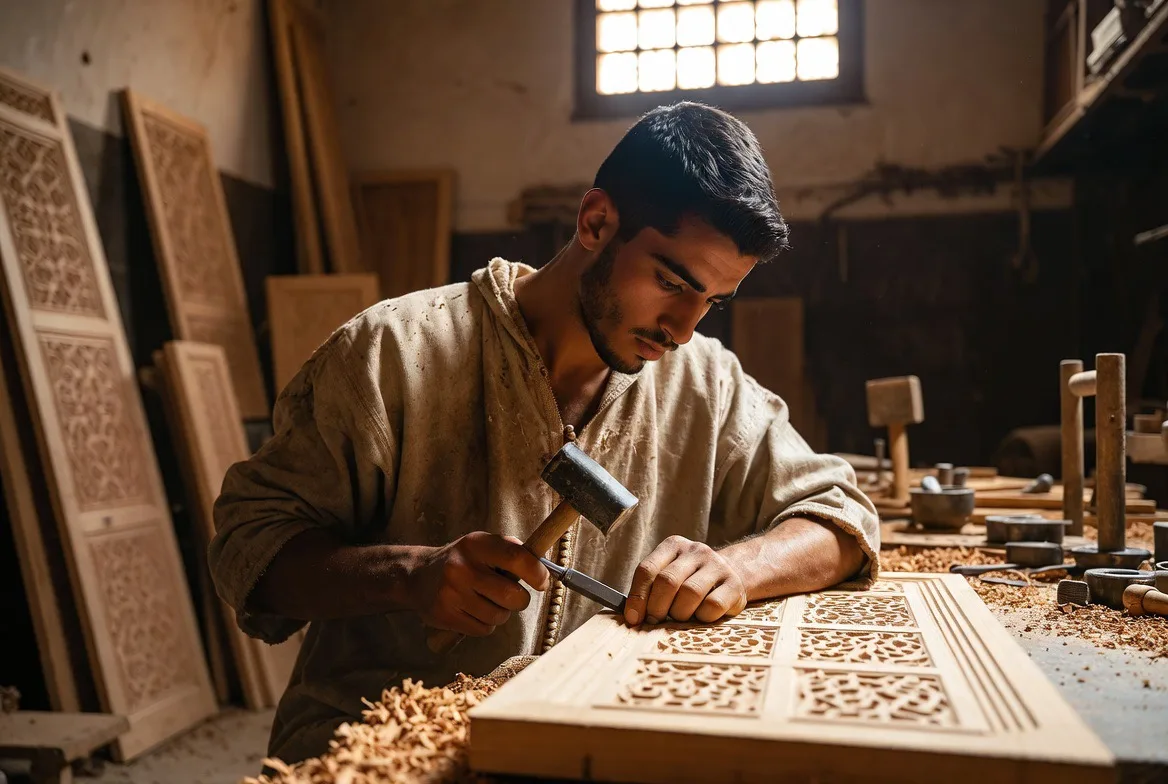
Returning the house to use with the appropriate techniques, the necessary services and the work of the local workshops. The building site is not only an expense: it is already work and transmission.
The endowment
Constituting resources able to sustain masters, apprentices and maintenance over time. A house bought and restored, but without durable income, remains exposed to the generosity of the following year.
Initial capital and annual income are not the same need. The first covers the property, the works, the fitting-out and the start; the second returns every year. One may contribute with a gift, a multi-year commitment, a property in ownership or in use, income-bearing assets, or materials and services. The conditions of each form are to be defined before any commitment is made.
A part of the house
One need not support the whole project to take part in it. An identifiable part can be followed in its use and in its development.
A master’s year
The remuneration of a master of the crafts for a year of training, so that knowledge has the time to pass from one hand to another.
A workshop
Benches, tools and raw materials: first the saddlery, which unites leather, wood and metals; then the other crafts, when there is a master and the necessary equipment.
An apprentice’s path
The training of a young man from the first grade to mastery, with the time and the conditions that a short course cannot offer.
A tool or the material of a work
A loom, a durable tool, or plaster, wood, iron and earths for a work that will remain in the house.
Figures and arrangements will be communicated in the dossier after a first exchange: before the dwelling has been identified, a final amount would be misleading.
Materials, services, works
The restoration will require, beside the work of plaster, zellij, cedar, iron and leather, also building materials, water and electrical services, waterproofing, kitchen equipment, scaffolding, transport and insurance. Companies may propose supplies or installation according to the lots and the architect’s specifications: what is received is what the building site needs, not what is left over in the warehouse.
A commission entrusted to the guilds of the city gives immediate work and keeps a living knowledge. Whoever supports the works can make possible a work made for that house, in the measures and the times that the material imposes.
Propose a supply or a collaboration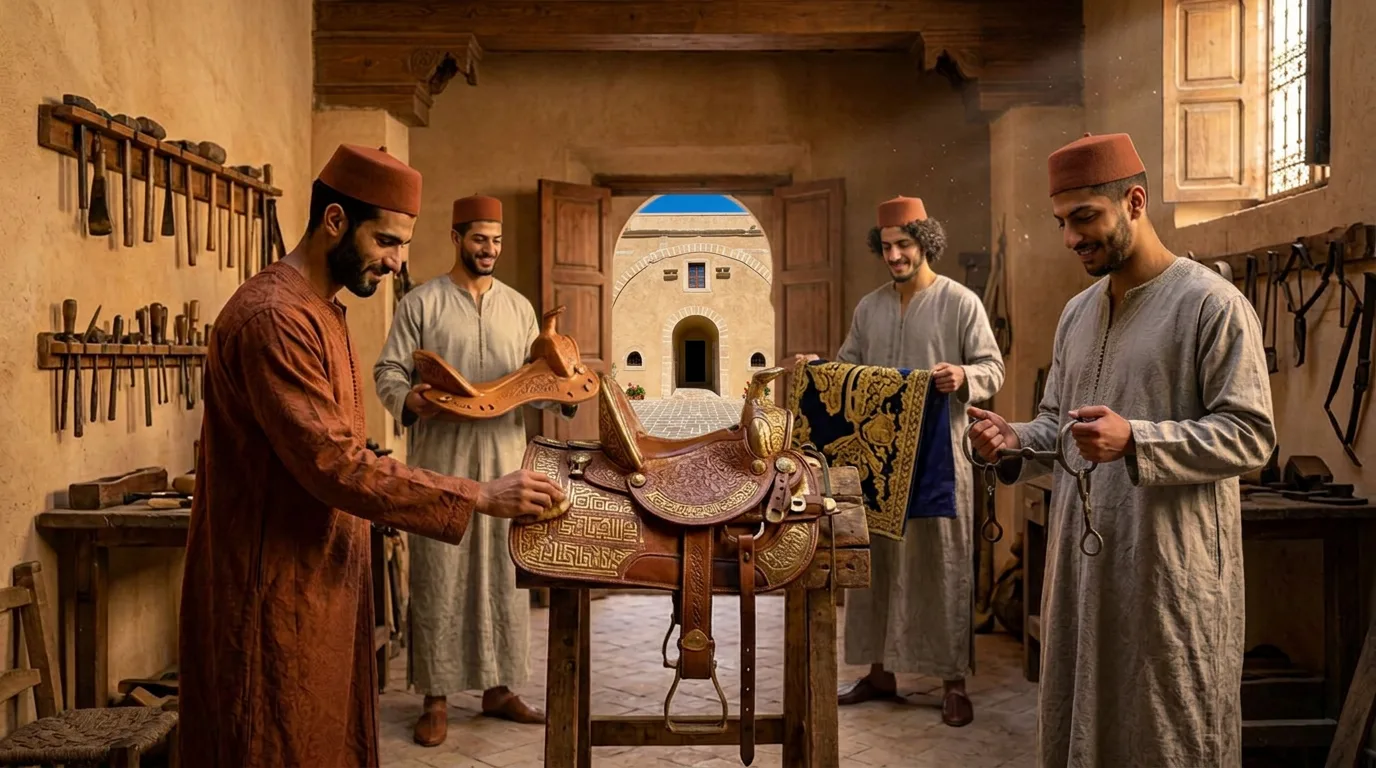
To whom support is entrusted
The project was conceived by Pietro Siffi; the design phase is followed by the association Il Fondaco Siciliano — Associazione per le arti e i mestieri. Each house will have its own legal entity, under the law of the country in which it stands: before contributing, everyone must know to which body they entrust their support and under what constraints. The forms of protection of the destination of assets are described on the pages of each house.
The gift and the rule
Support confers no power over admission, over the choice of masters, over the crafts taught or over the life of the house. The benefactor may ask for an account of the use of funds and of progress and, once the house is open, come to know its work. He may be remembered in the forms agreed, or remain anonymous: no name will be published without consent.
An-Nudamāʾ, the company of the ninety-nine founders, is a form of support distinct from the government of the houses. Whoever wishes to know more may write to us; no membership or payment is decided on this page.
Support asks for capital, not for power: it is the shared responsibility of which the Faro Convention speaks.
“[The Parties undertake to utilise all heritage aspects of the cultural environment] to reinforce social cohesion by fostering a sense of shared responsibility towards the places in which people live”Faro Convention · art. 8, cCouncil of Europe Framework Convention on the Value of Cultural Heritage for Society, Faro, 27 October 2005 (CETS No. 199), art. 8, c. The English and French texts are authentic; ratified by Italy by Law No. 133 of 1 October 2020.
A letter, before a commitment
Say which part of the project you would like to support — the place, the restoration, a workshop, a master, the endowment or a supply. We can share the dossier, the figures available, the questions still open and the body to which your contribution would be destined. Writing to us entails no payment.
Write to us about support