The hood (burqaʿ)
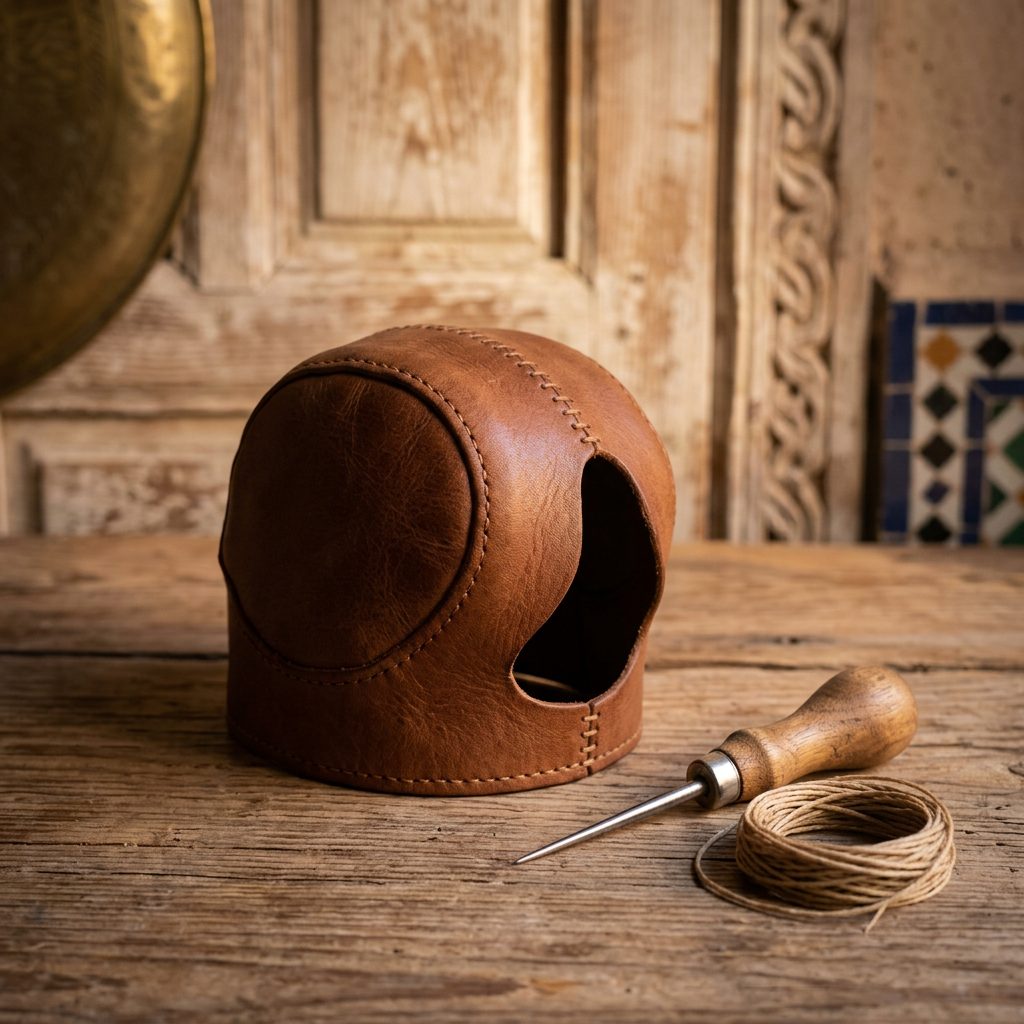
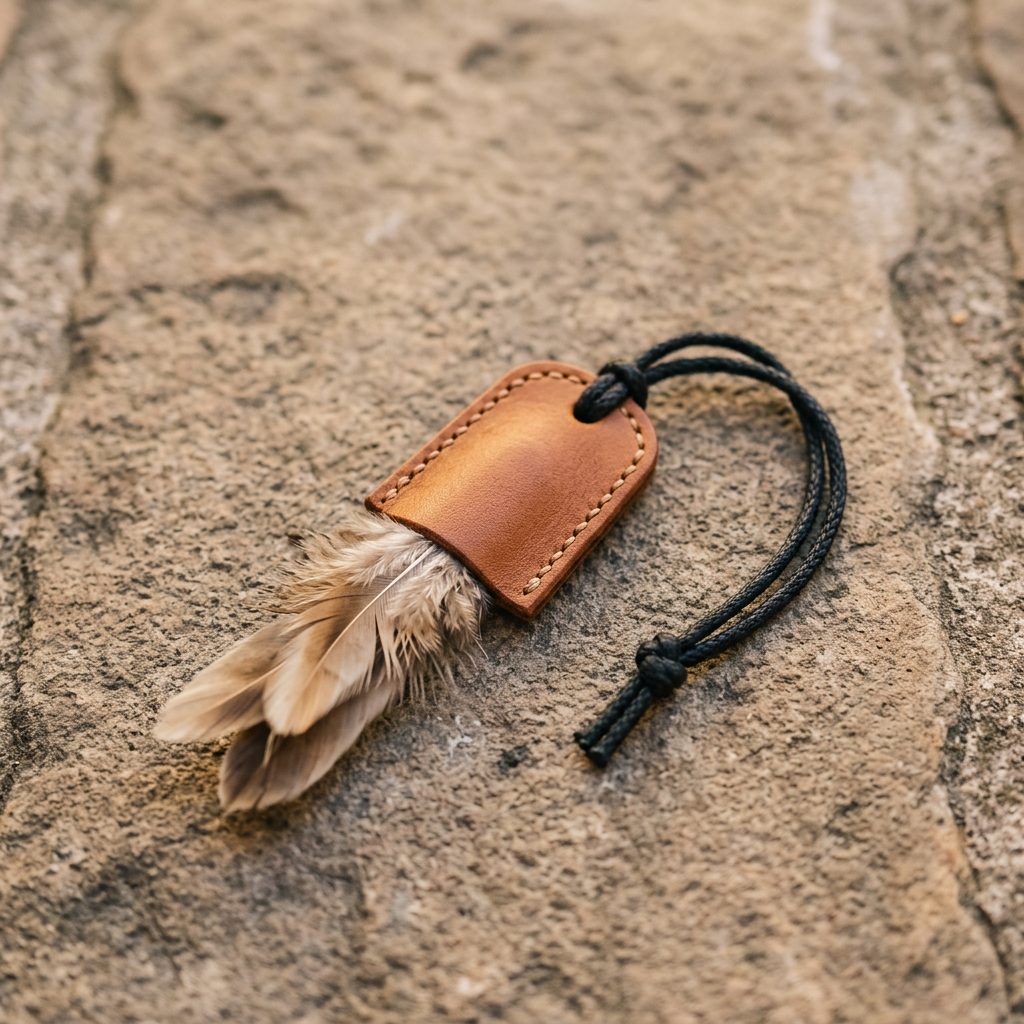
It covers the raptor’s head to keep it calm and accustom it to human presence. The first object of falconry and one of the most delicate: soft leather, cut to each bird.
Falconry, beside the furūsiyya: the objects with which this traditional discipline is practised.
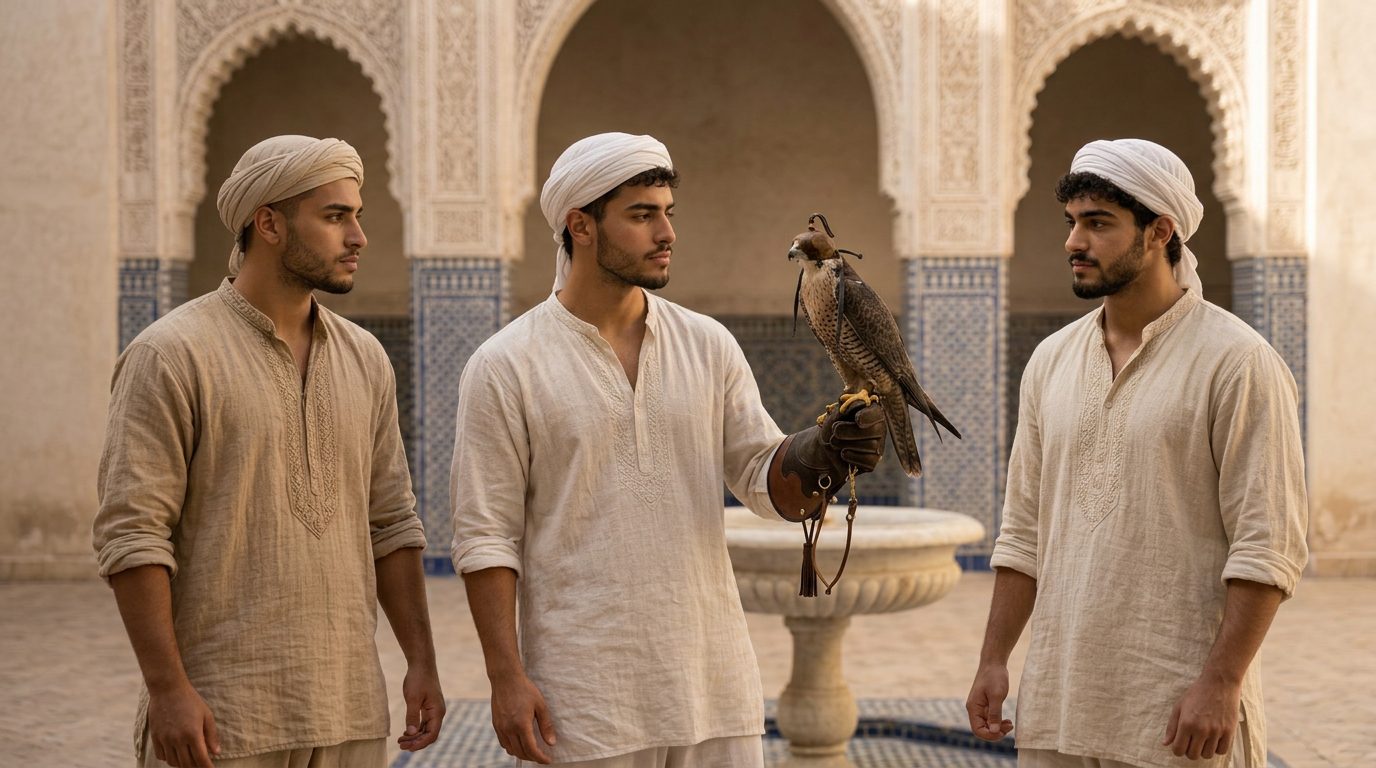
Falconry (bayzara, البيزرة) has for centuries accompanied Arab-Islamic and European chivalry. Frederick II of Hohenstaufen, who ruled in Sicily, devoted to it the De arte venandi cum avibus. The tradition is inscribed by UNESCO on the Intangible Cultural Heritage list, with Morocco and Italy among the submitting States. At the Riad it stands beside the furūsiyya→ as a discipline of body, patience and relation with another living being.
A discipline in prospect, not an active course, with no programme yet approved. Keeping and flying raptors is governed by national and international rules (species protection, CITES, hunting, animal welfare): no activity will start without permits, an experienced falconer and a veterinarian. This page describes objects and promises no service. The images are contemporary illustrative reconstructions.
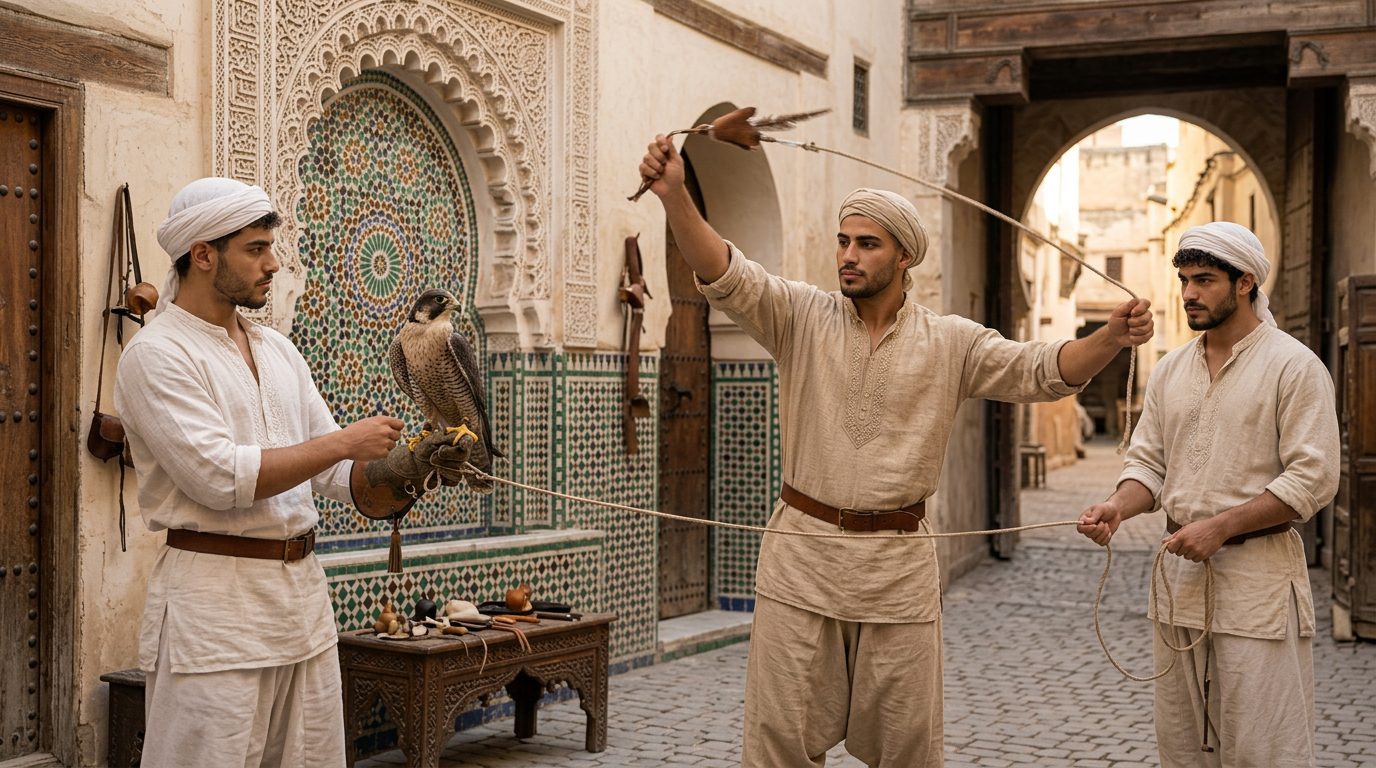
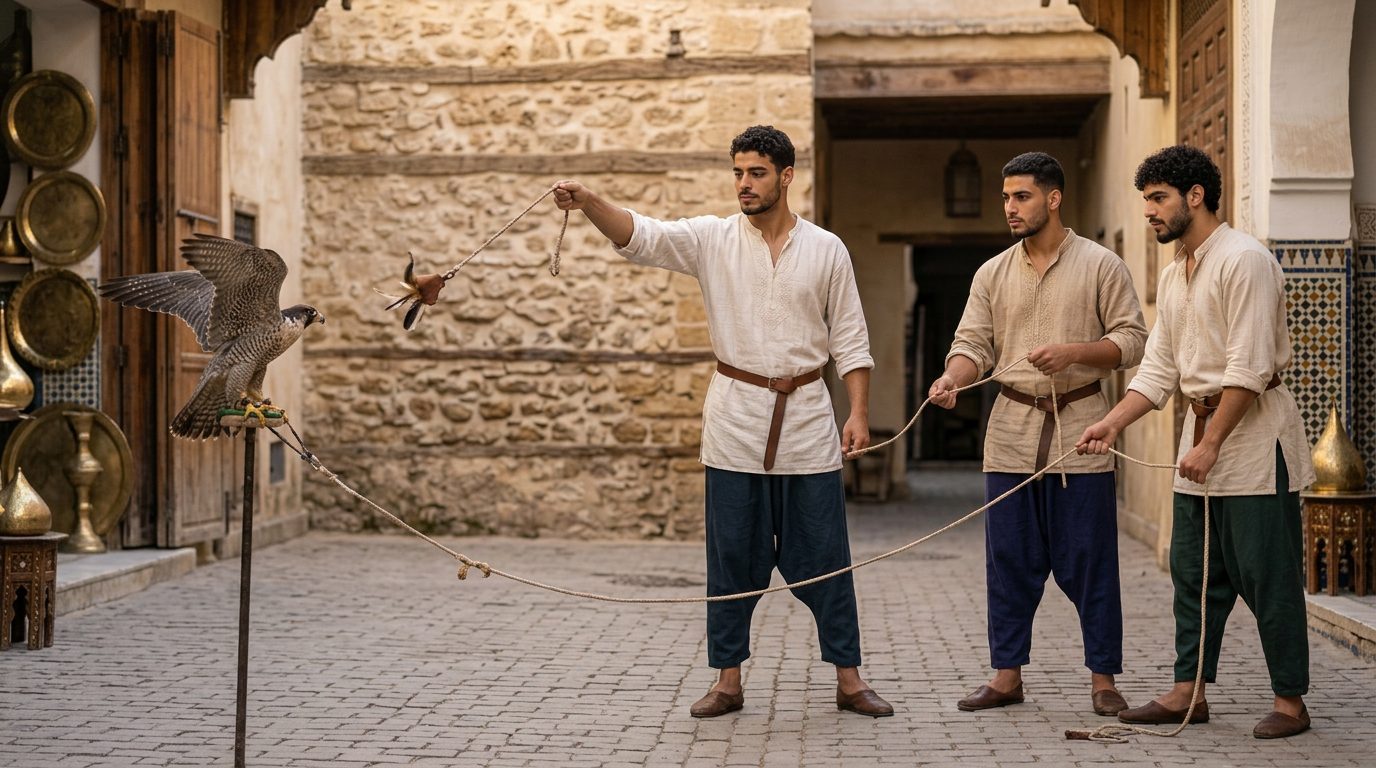
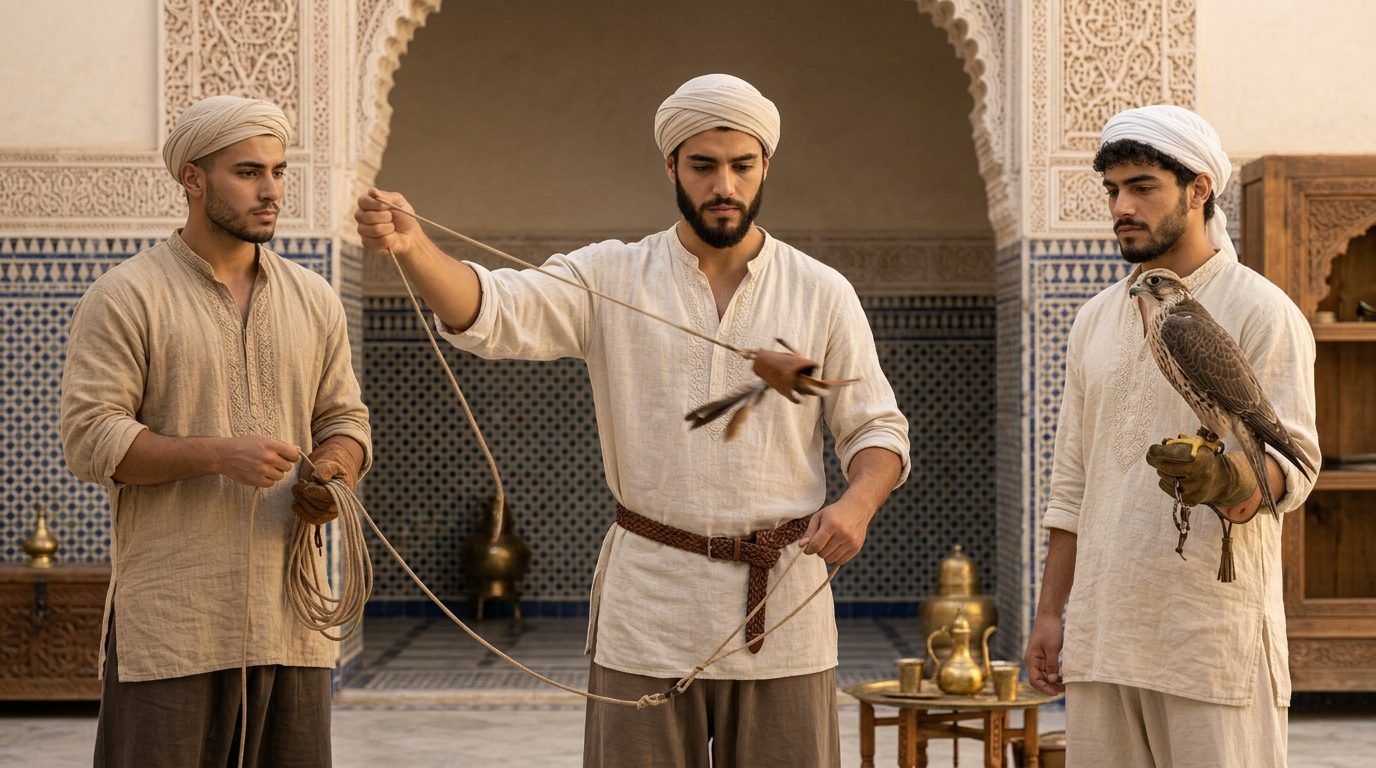
It covers the raptor’s head to keep it calm and accustom it to human presence. The first object of falconry and one of the most delicate: soft leather, cut to each bird.
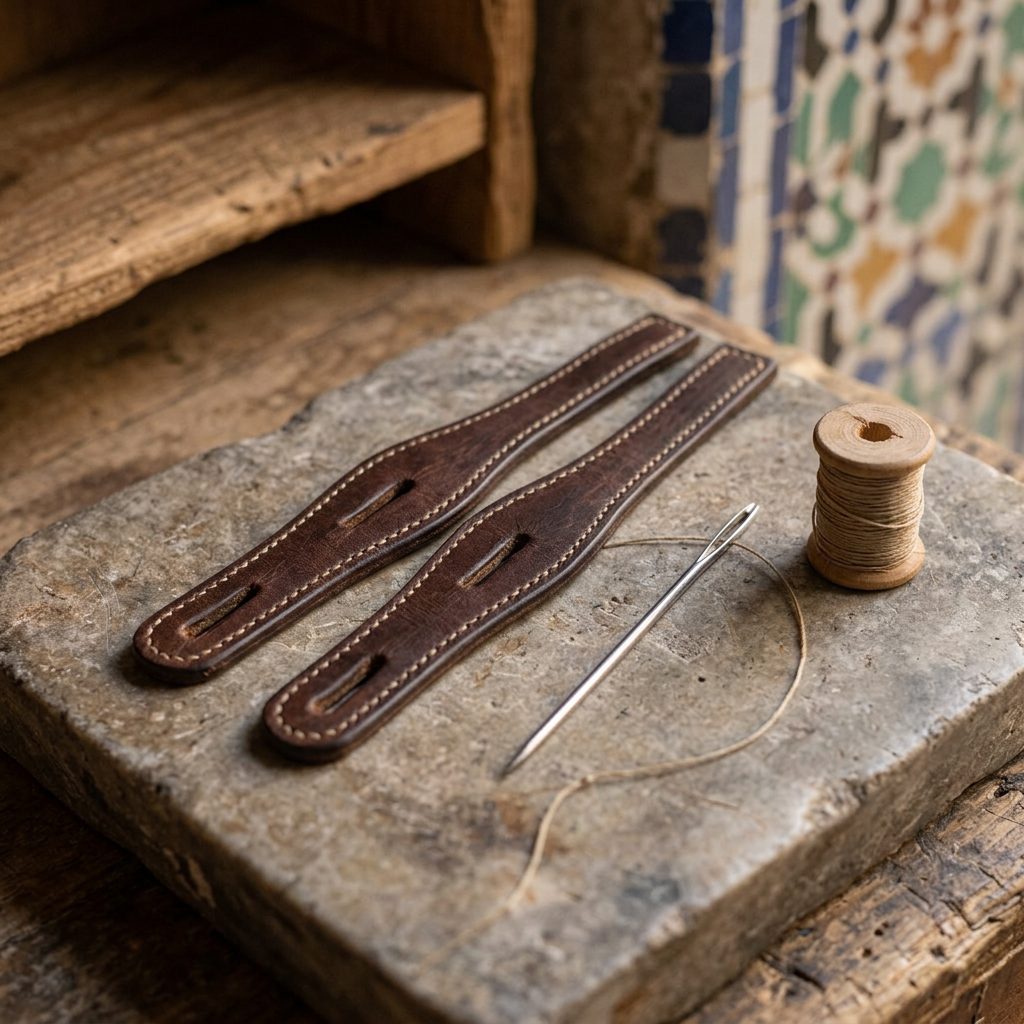
Leather straps fixed to the legs, held in the falconer’s hand. They must be supple and free of any seam that could wound: the thread between man and bird.
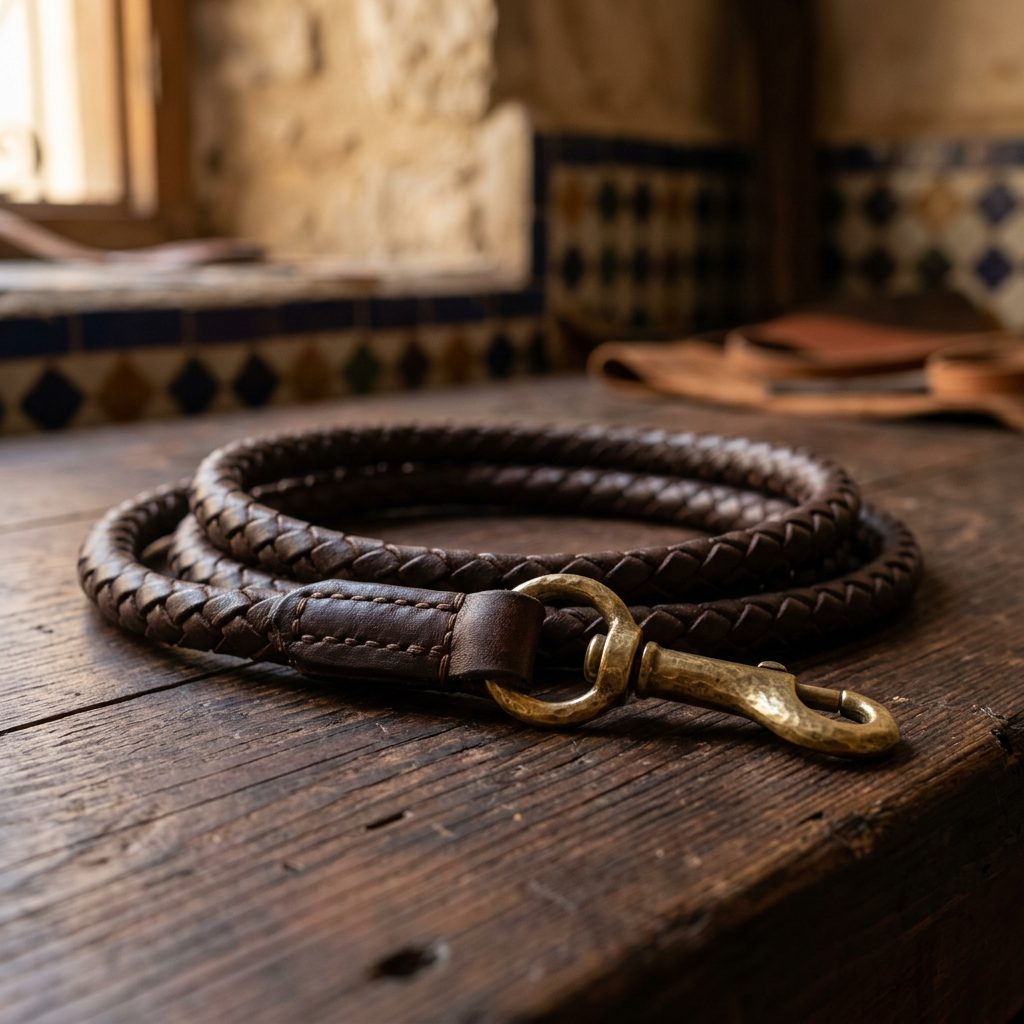
The leash ties the bird to the fist or perch; the swivel, a rotating metal ring, prevents tangling. The metal is the smith’s work, the leather the saddler’s.
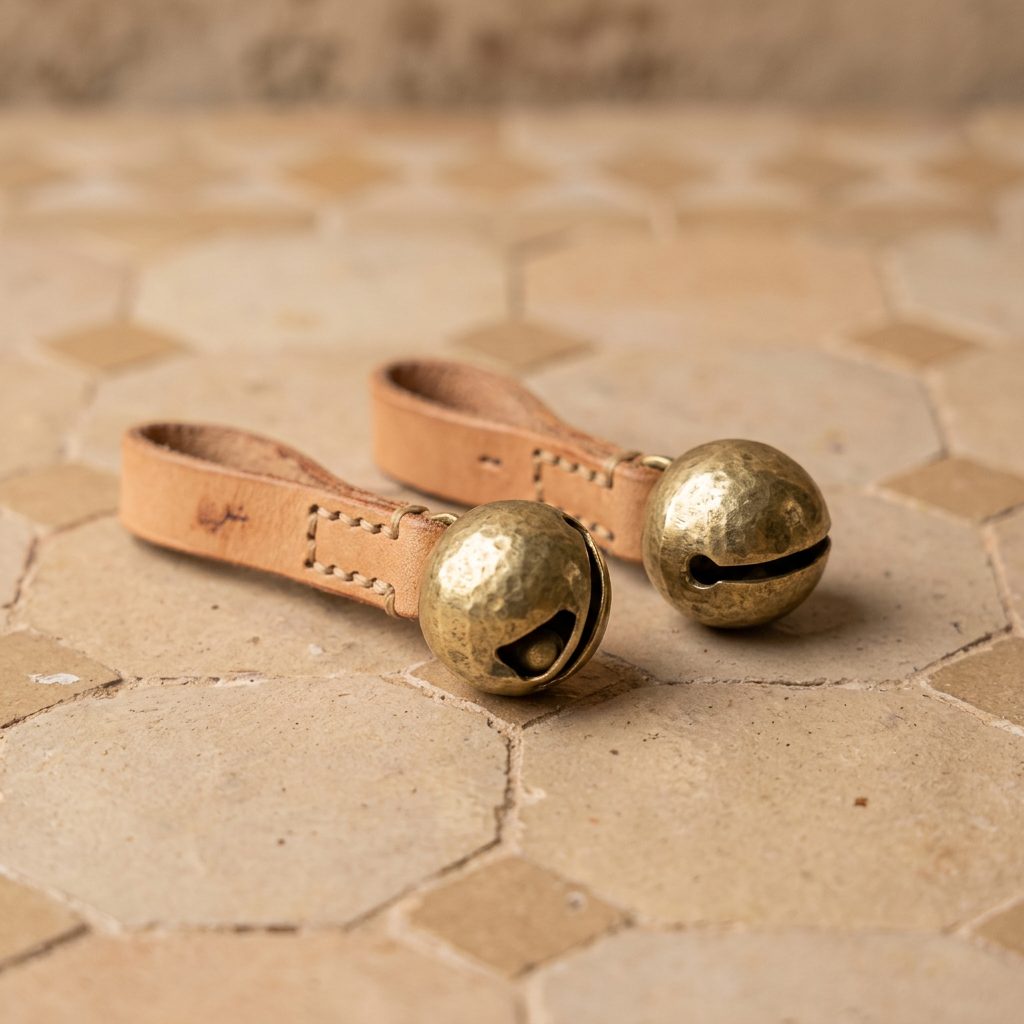
Small bells fixed to the legs or tail: they let the falconer find the bird in thick cover or when it lands out of sight.
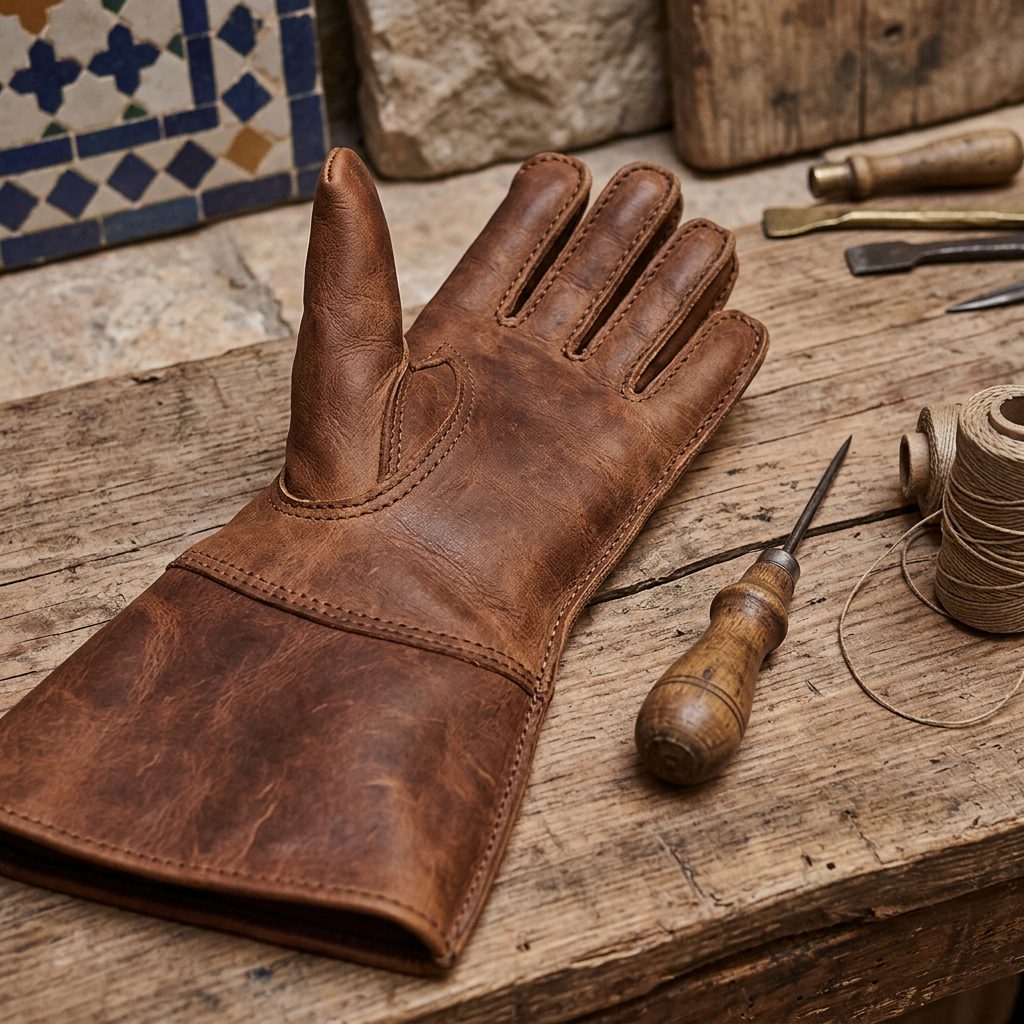
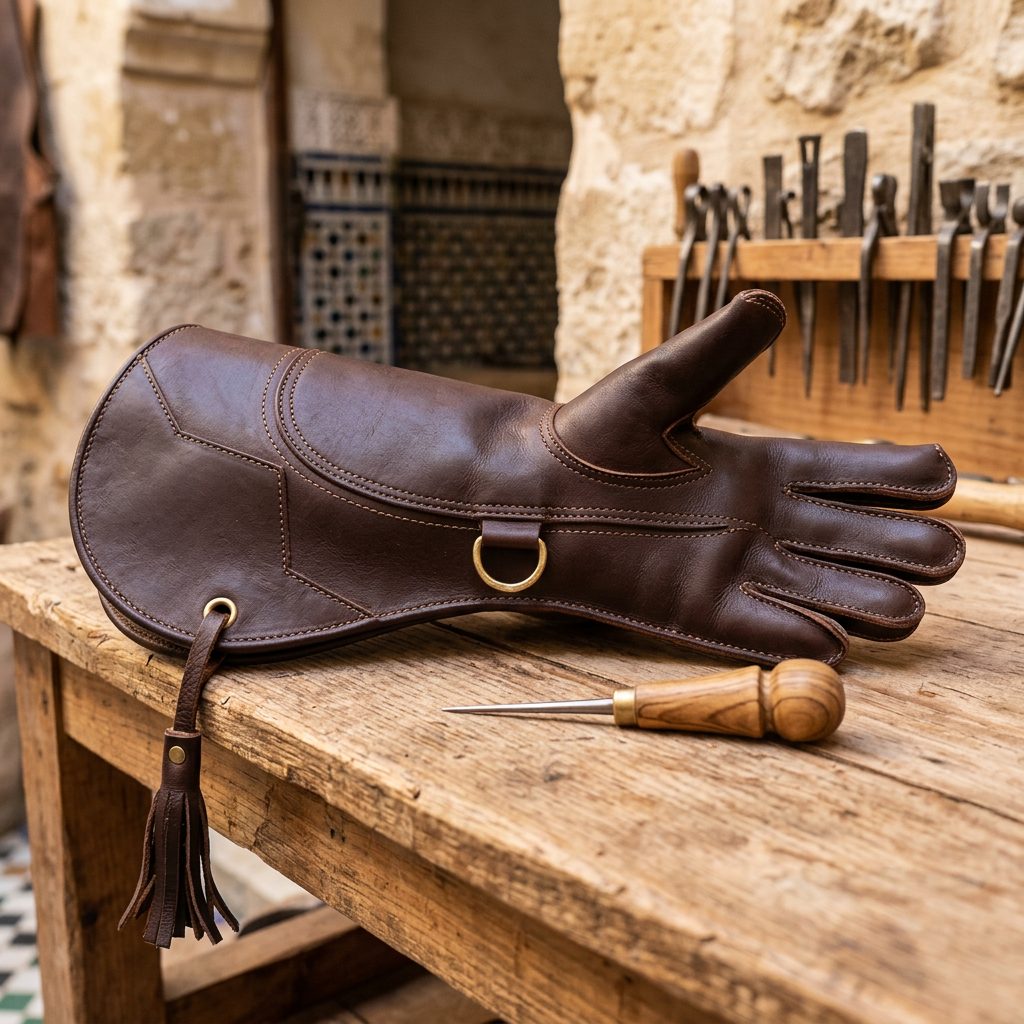
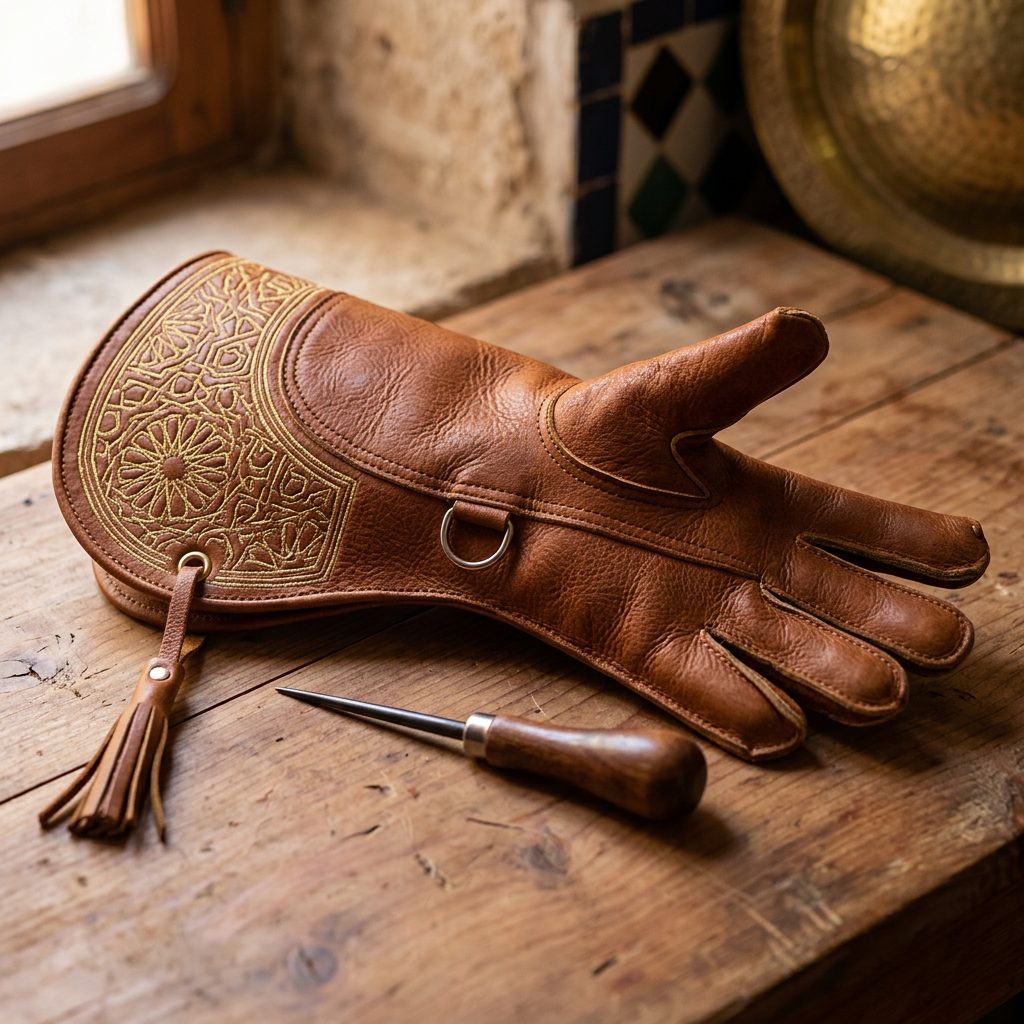
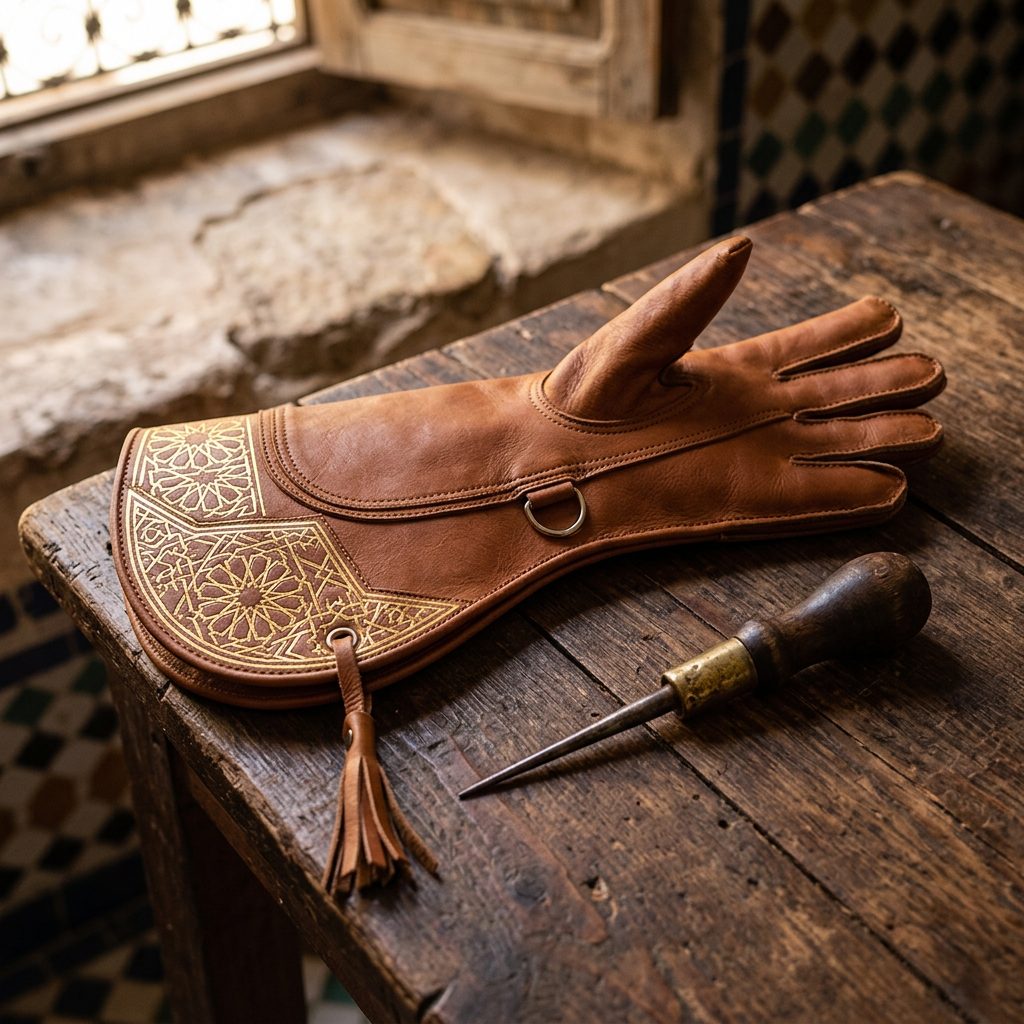
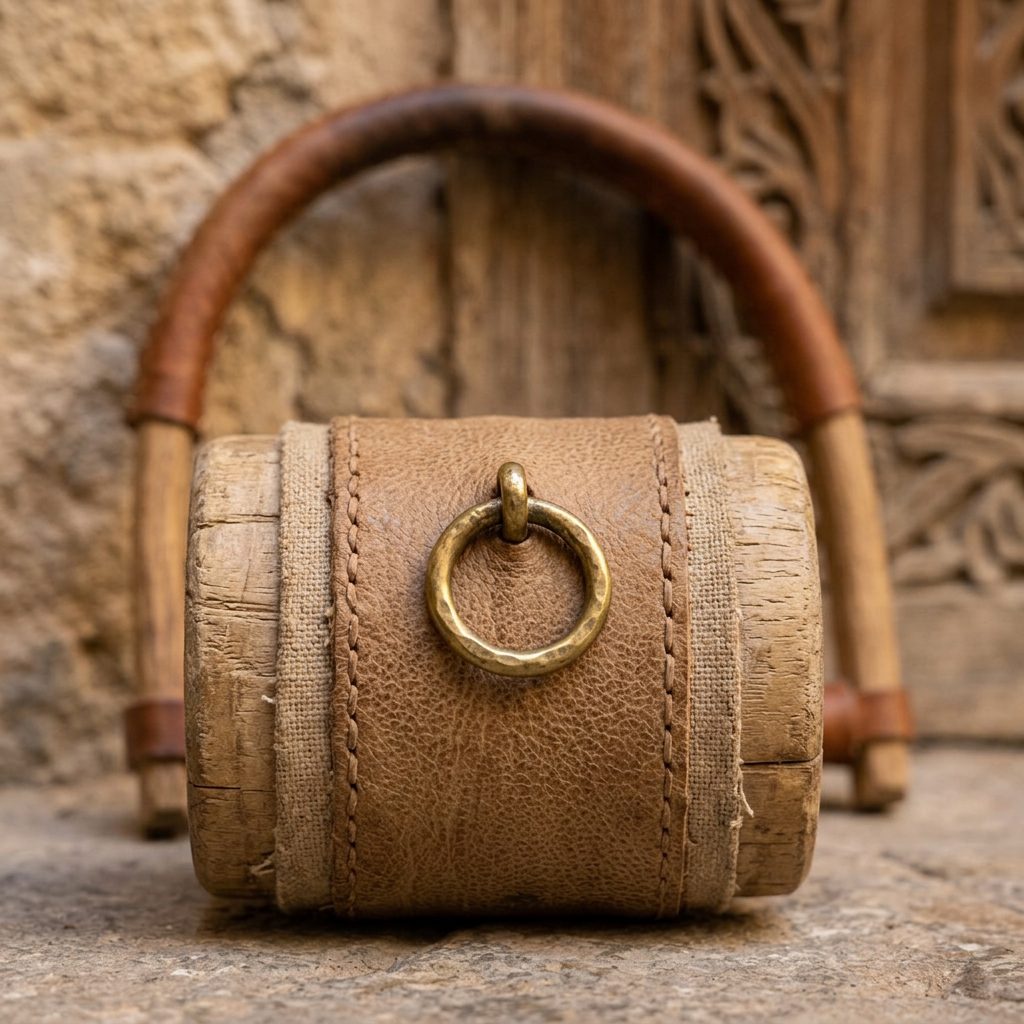
Thick leather protecting hand and wrist and giving the bird a place to perch. Stitched in the saddlery, doubled where the talon presses.
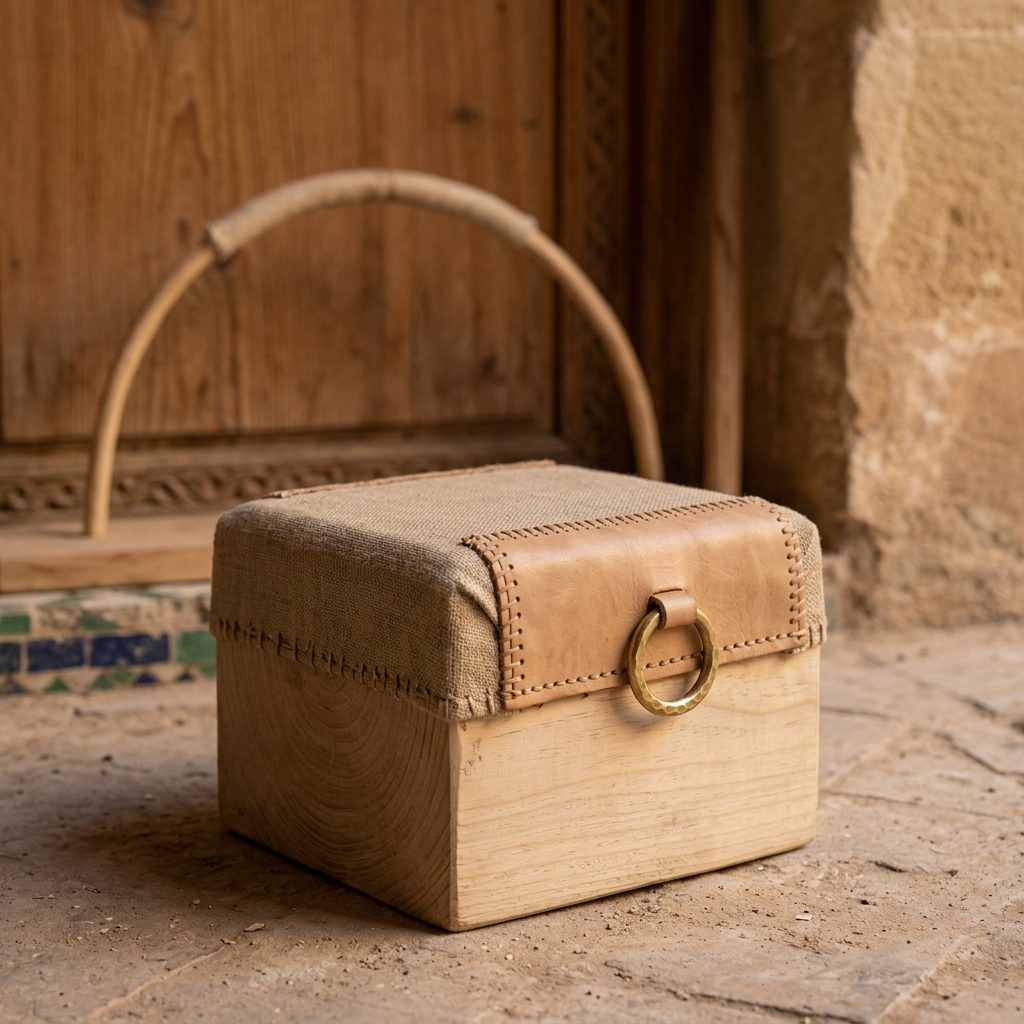
The block for falcons, the bow perch for other species: wherever the bird rests tethered. Seasoned wood, covered with leather or cloth so as not to hurt the feet.
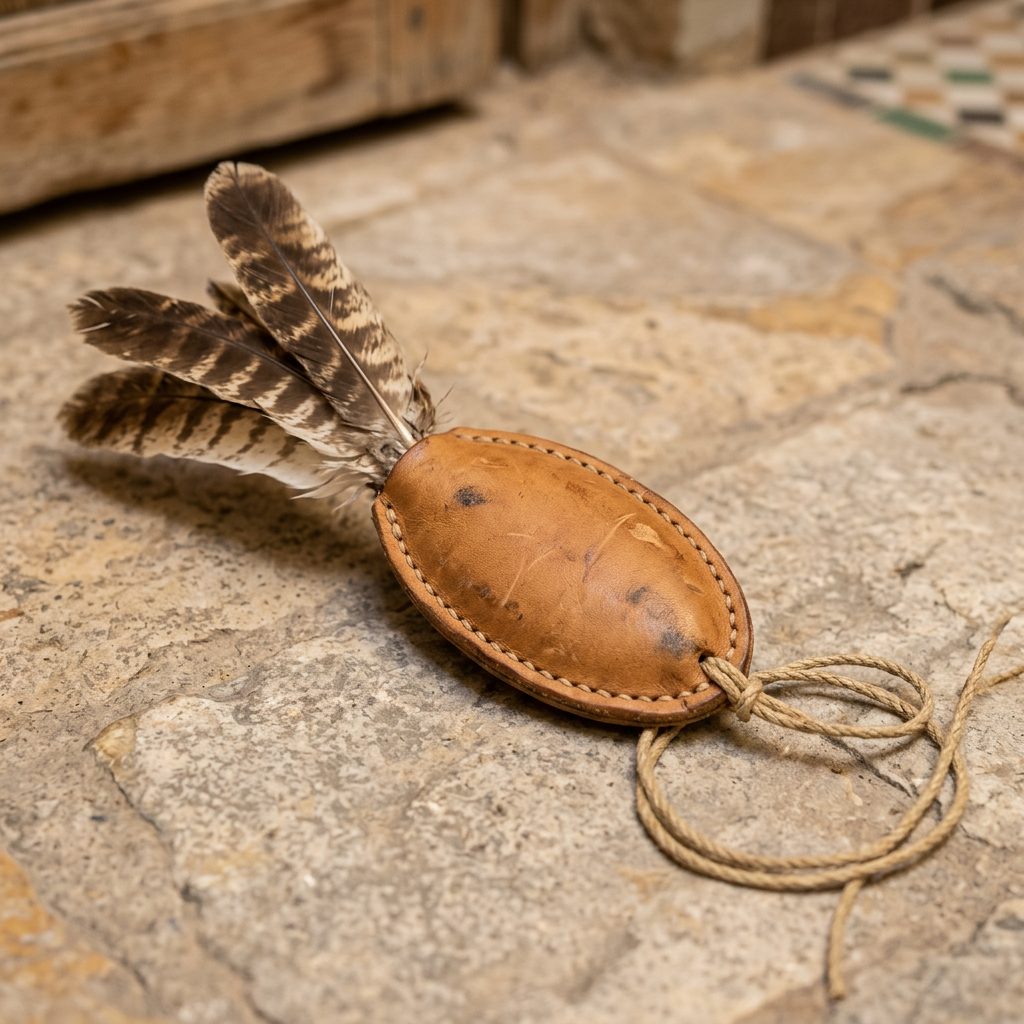
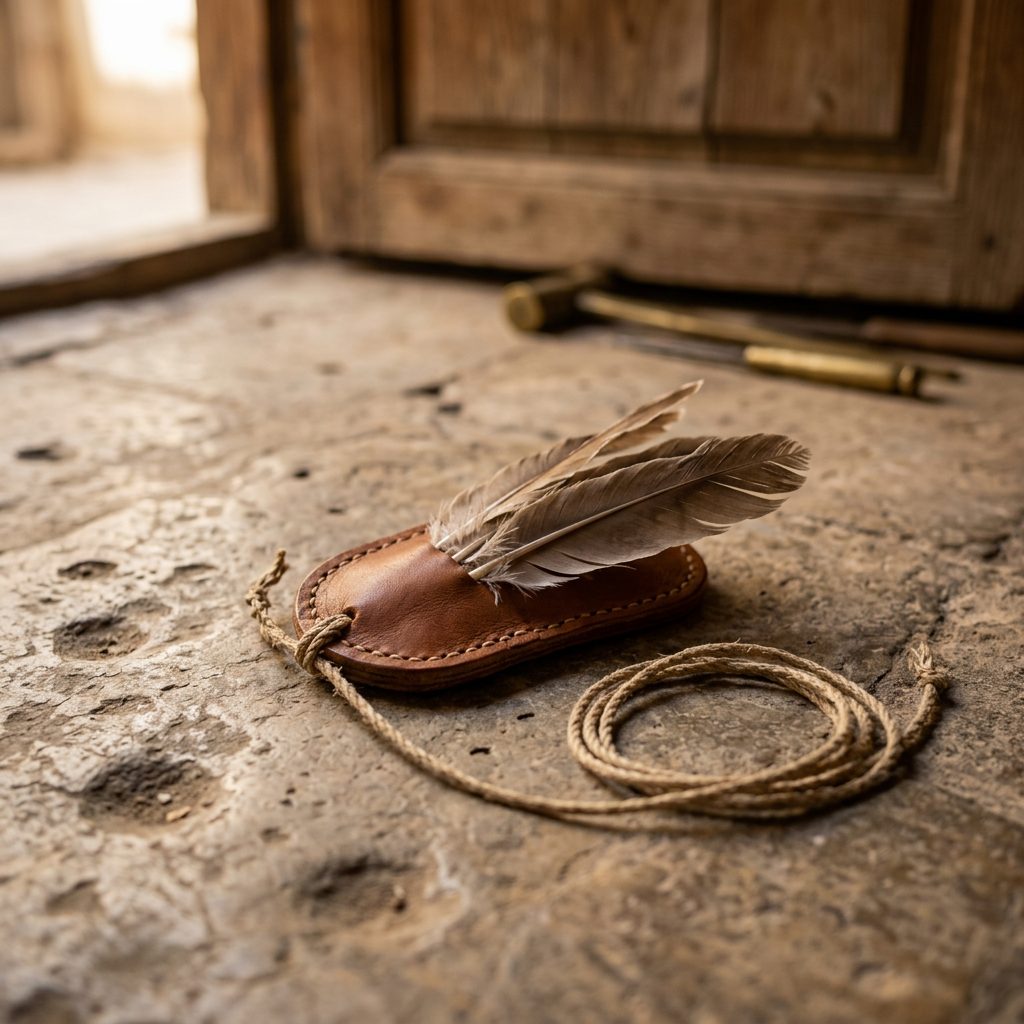
A bait of leather and feathers on a cord, whirled to call the bird back. It teaches the return to the fist, the heart of training.
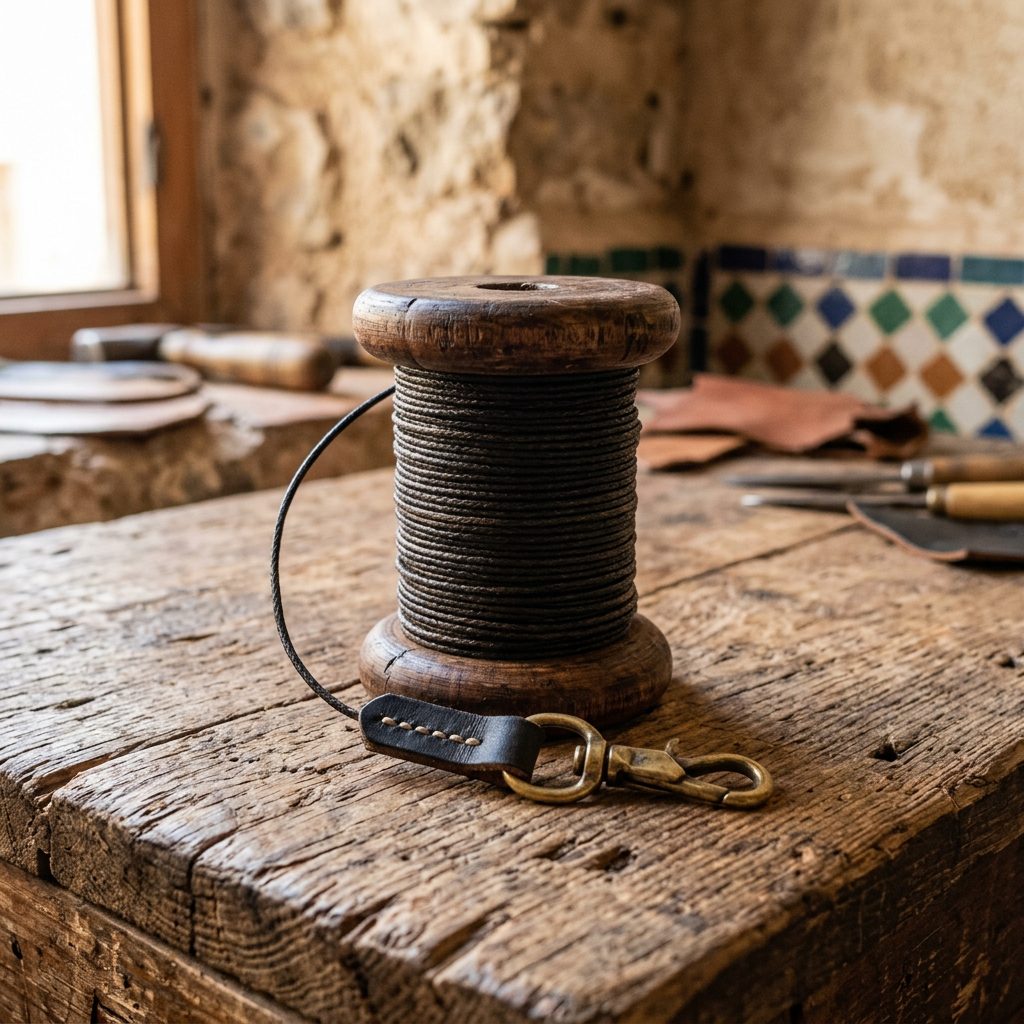
A light line attached to the jesses that lets the bird fly out without loss of control, until the recall is reliable.
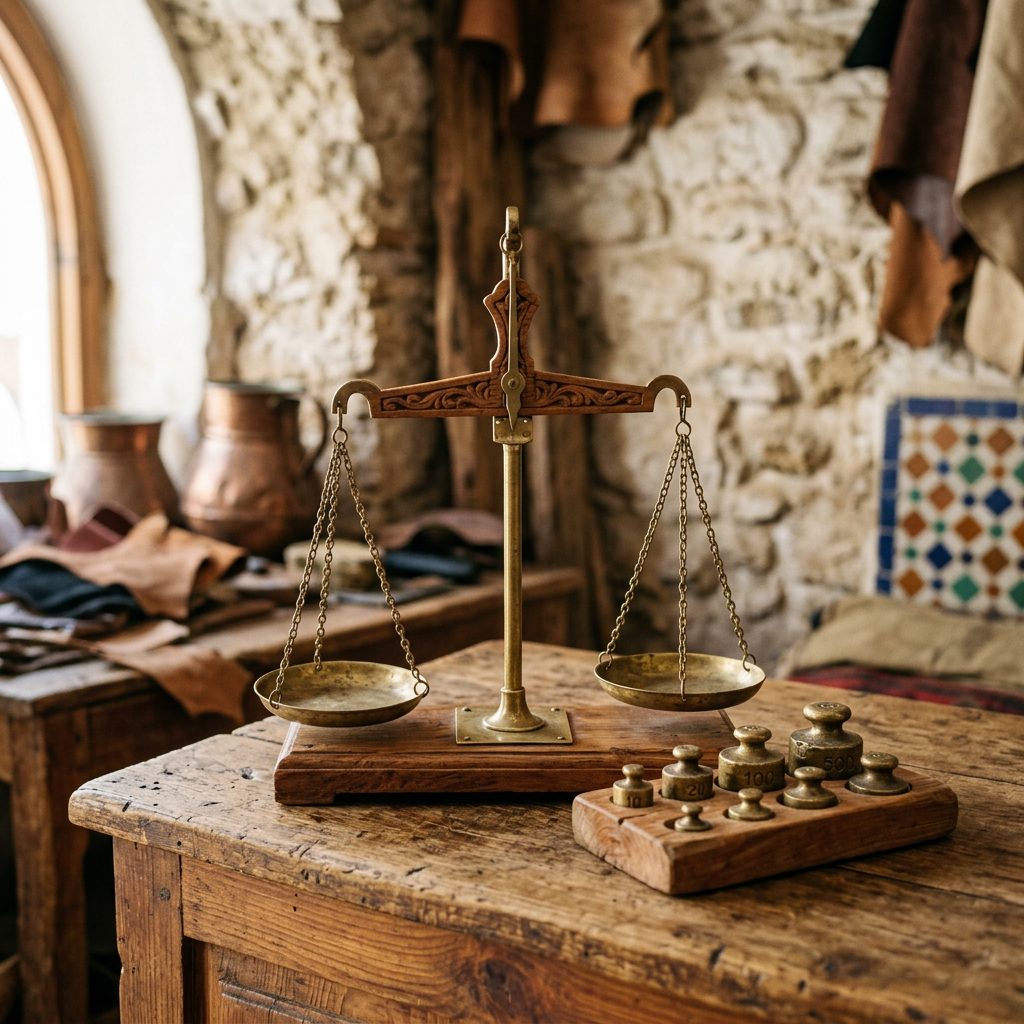
The bird’s weight governs its readiness to return: it is weighed daily, together with its food. Without a scale there is no responsible conduct.
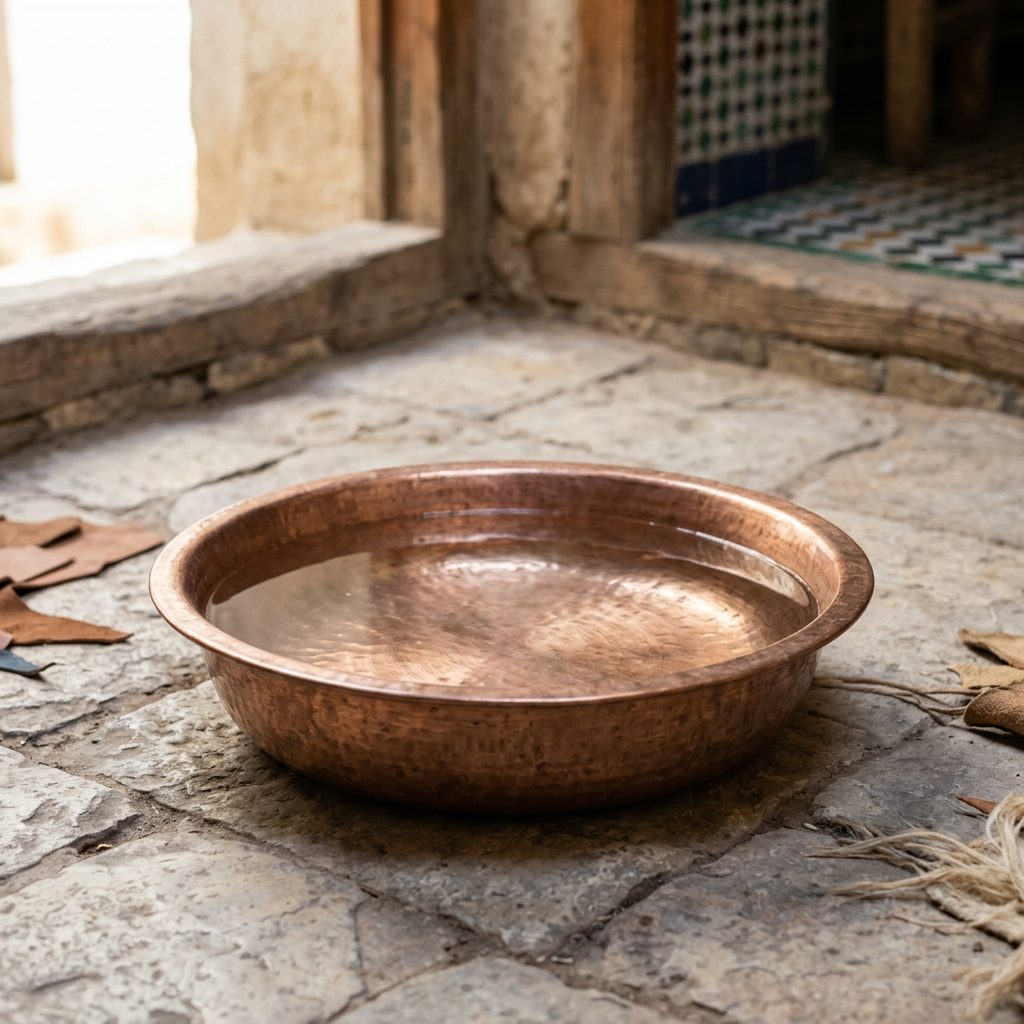
A shallow basin of clean water, offered regularly: the bird thus tends its plumage, which is its flying equipment.
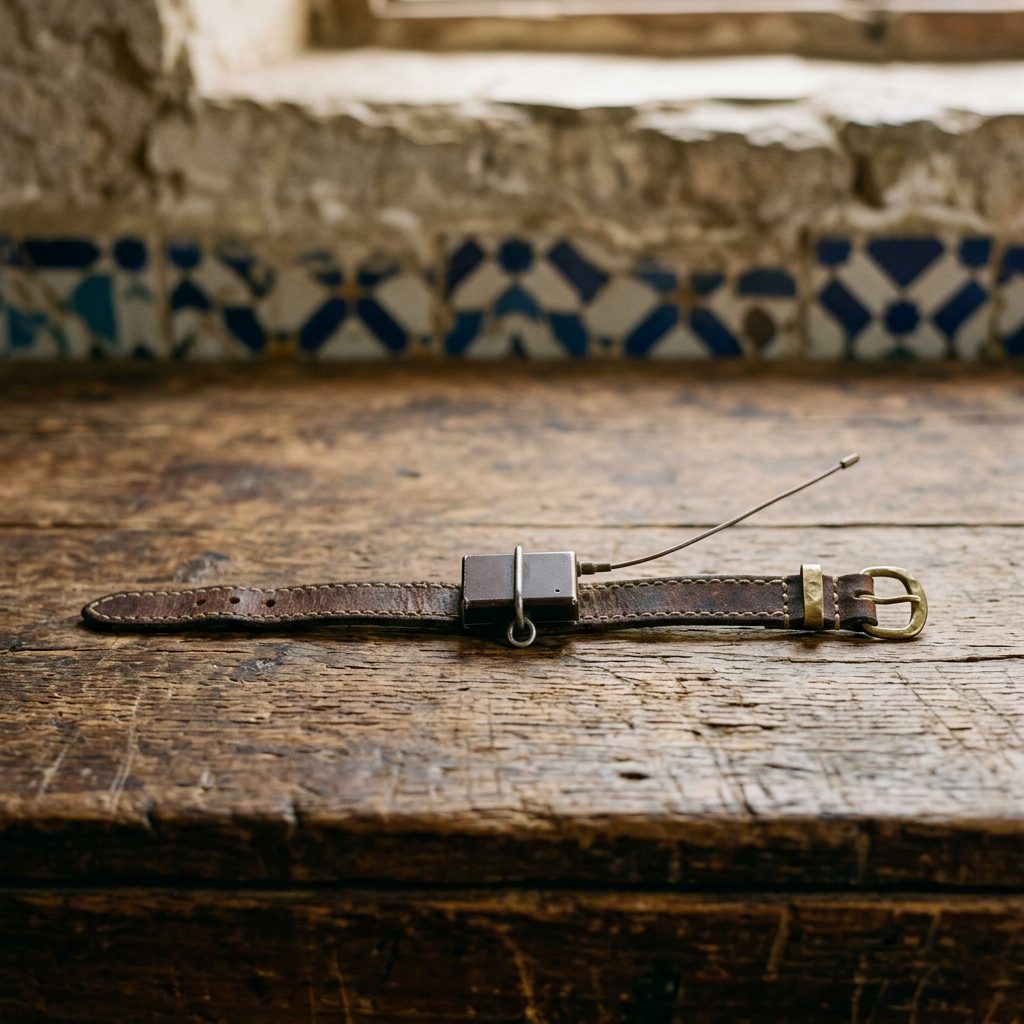
A small radio transmitter, today indispensable, locates a bird that has strayed. The only modern object in the kit, and no substitute for the recall.
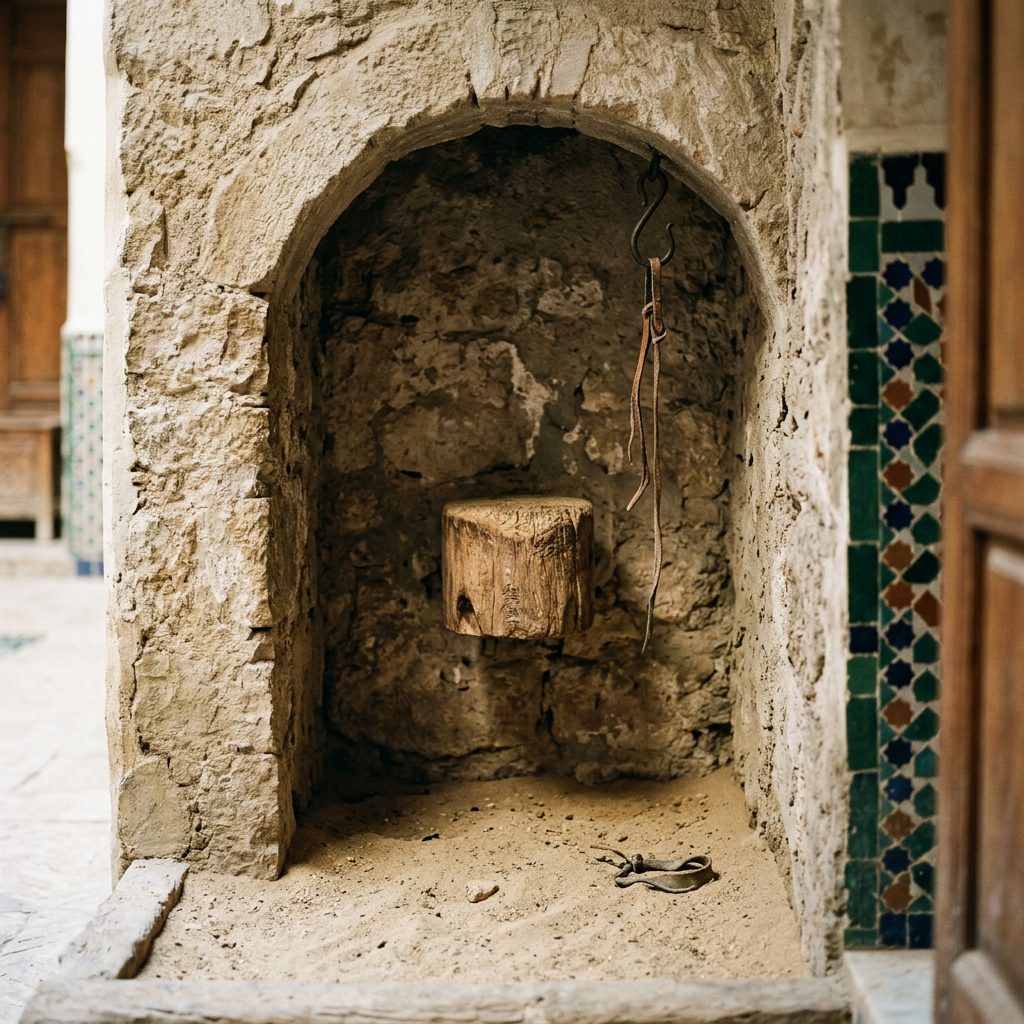
A sheltered, shaded and secure place where the bird lives between outings and moults. To be built with care and under veterinary supervision: the most demanding part of falconry.
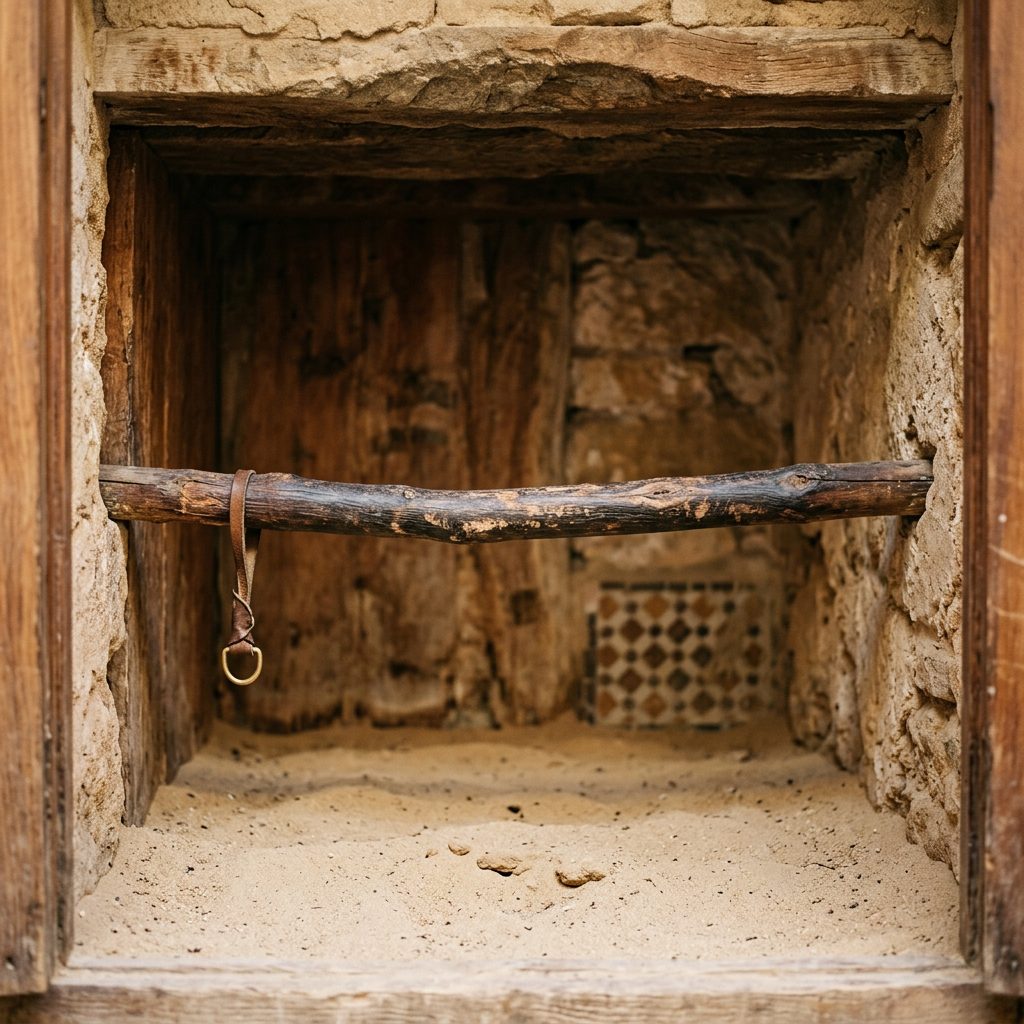
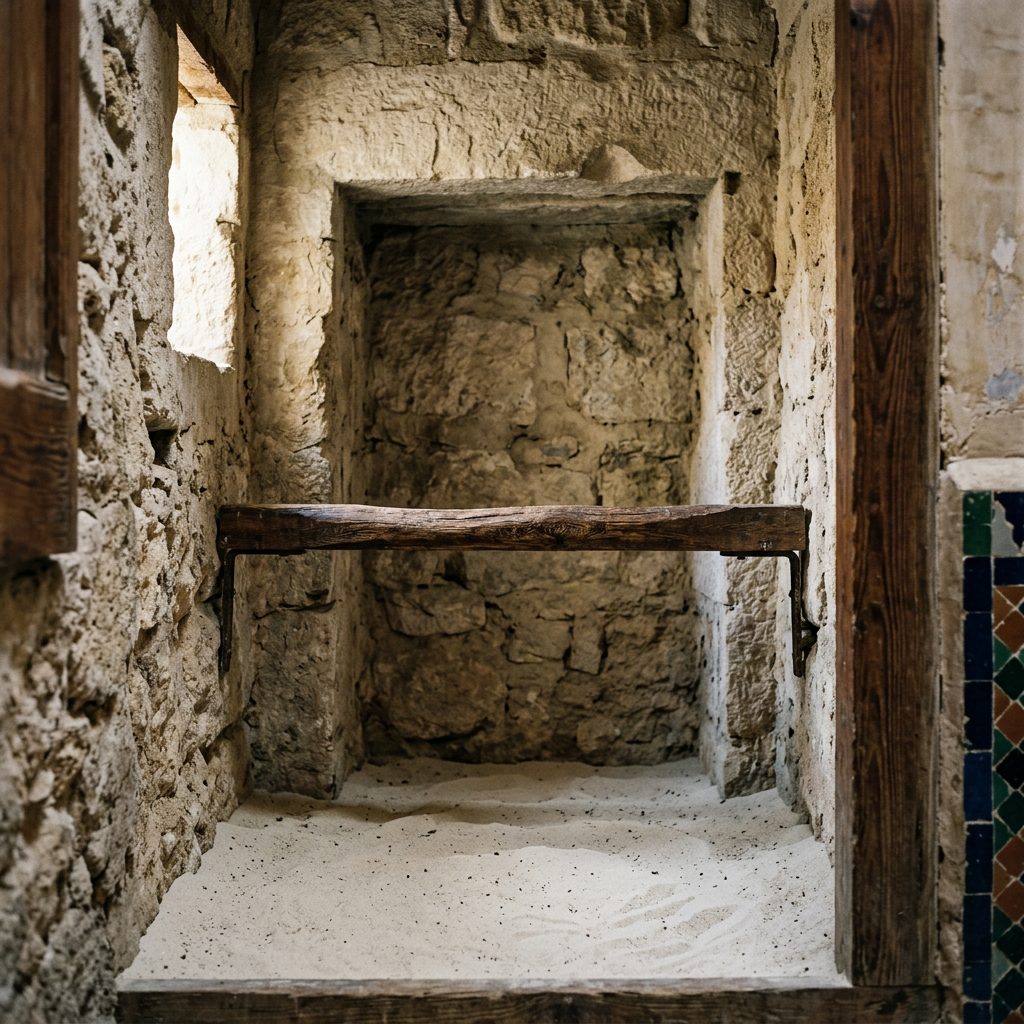
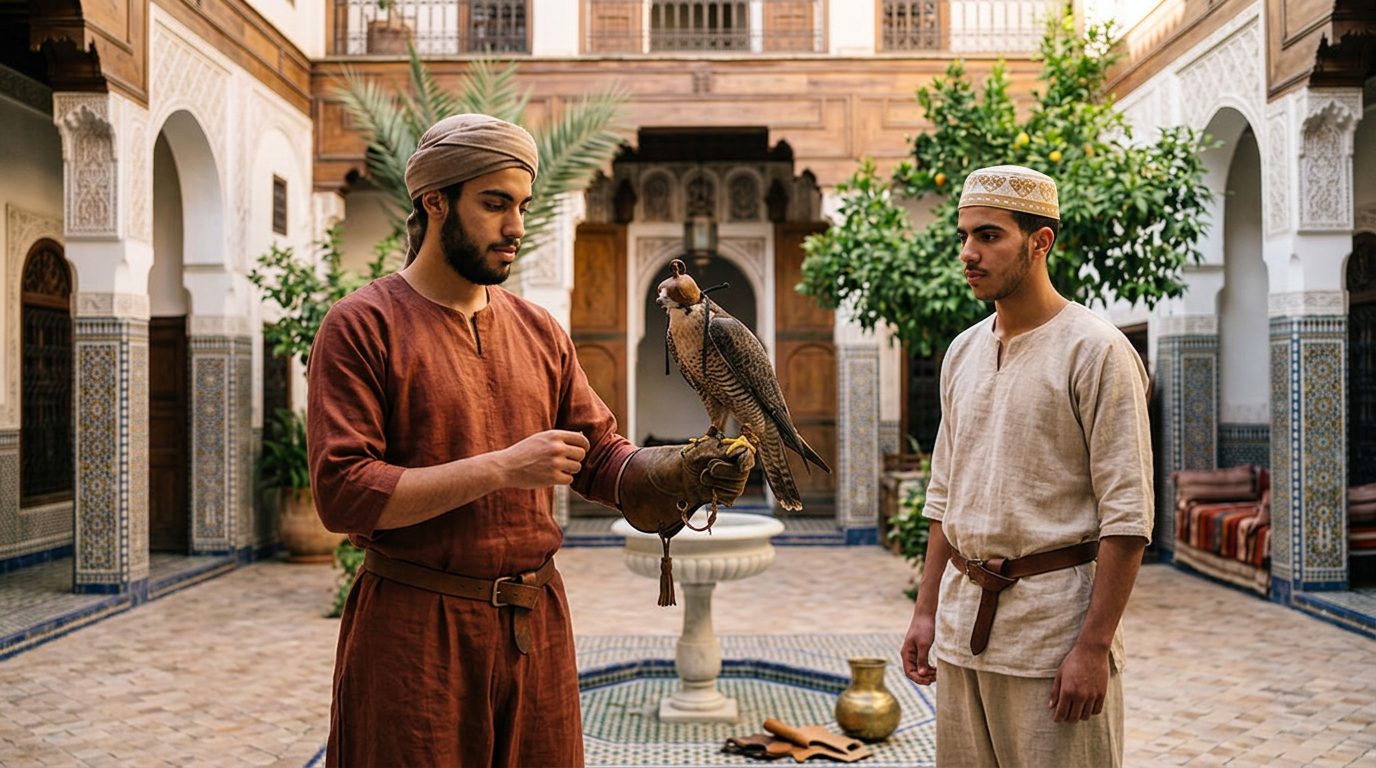
Hood, jesses, leash, glove and lure are work in leather and metal: they belong to the workshop, beside the saddlery. Whoever learns to stitch them learns why they must be supple, exact and free of roughness: what serves a living creature must be better made than what serves an object.
In the progression of the furūsiyya, falconry is not the foundation: it comes after wrestling, archery and the sword, beside riding, and only when the house has the spaces and conditions it needs. It asks for absolute patience and a mastery of gesture and silence acquired in the earlier years: training a raptor teaches one to do little, and to do it well. It is therefore proposed as a mature stage of the course, not as an entry activity.
The ancient texts and studies below document the Arab tradition of falconry (bayzara) and its passage to Sicily and Europe; this page describes a project’s kit and does not attest specific historical forms.
UNESCO, Falconry, a living human heritage (inscribed 2010, extended 2012, 2016, 2021)
Among the studies: B. Z. Kedar and E. Kohlberg, “The Intercultural Career of Theodore of Antioch,” Mediterranean Historical Review (2008); V. Martínez Enamorado, “Falcons and Falconry in Al-Andalus,” Studia Orientalia (2011); F. Viré, “Sur l’identité de Moamyn le fauconnier,” Comptes rendus de l’Académie des Inscriptions et Belles-Lettres (1967).
The furūsiyya · The archer’s instruments · The saddlery tools
The words of this page are in the common glossary; the works cited in the sources; the sister house is Al-Funduq aṣ-Ṣiqillī.