
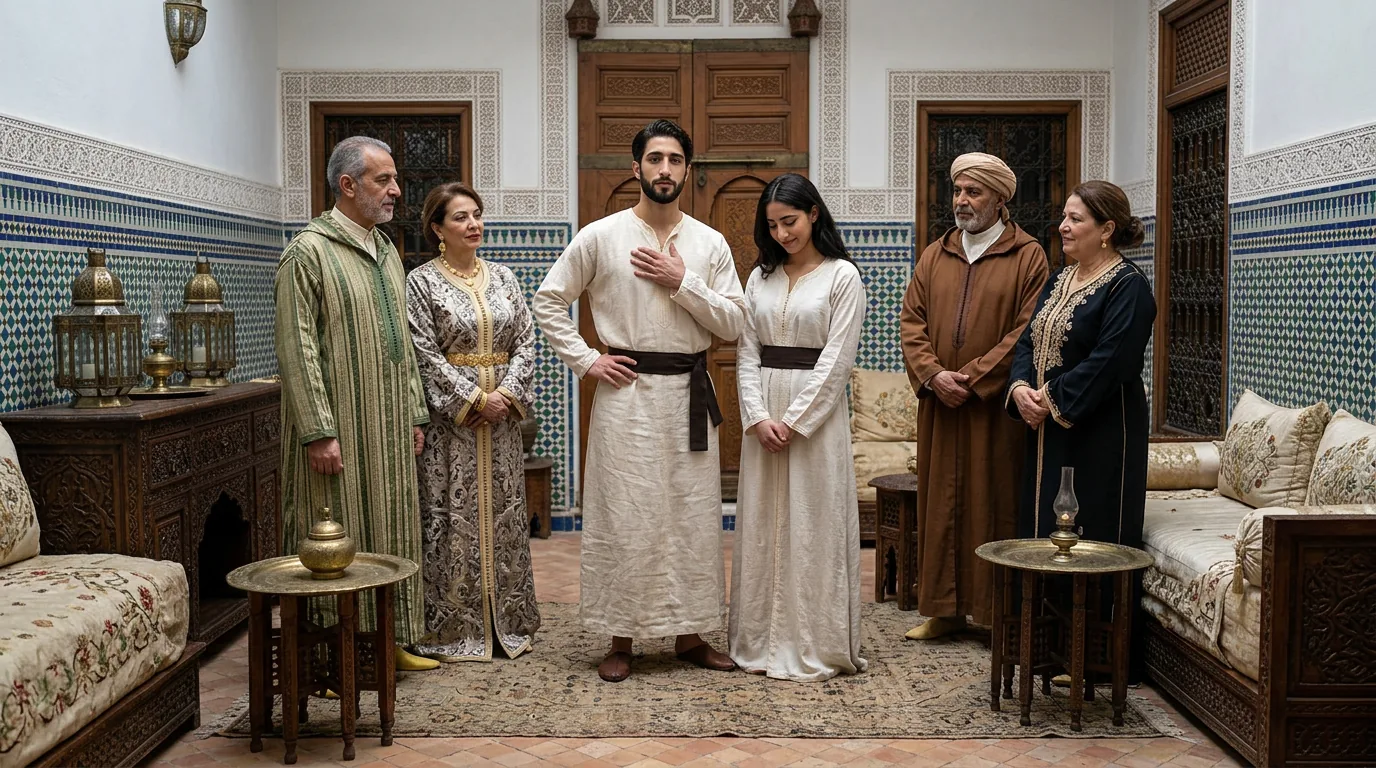
The khitbah
The promise that binds two families while the young man learns his craft.
The promise and the threshold
The residency asks for celibacy for the time of the formation, and those who live there can prepare to build, along with the workshop, a home and a family. In the urban tradition of the medina, a young man’s apprenticeship, whether as a ṣāniʿ on the way to mastery or a ṭālib over his books, kept his bond with his family intact and his domestic future open. It was indeed customary for the young man to be already formally betrothed (makhtūb): the promise of marriage (al-khitbah) bound the two families while he was still learning the craft, giving his ardour a sure goal, and the marriage came when the pupil had become a maʿallem and could support a workshop and run a home. At the Riad the khitbah is open to those who wish it; whoever chooses Ar-Riwaq→ remains celibate.
To this bond the house opens its parlour, and there it keeps it. The young woman comes accompanied by her mother or relatives, according to the custom and decency of ʿurf; the young man presents himself in the presence of his own. The inner inviolability (ḥurm) of the common house stays intact and the meeting takes place under the eyes of the families, in the dignity of a room designed to receive with gravity and tenderness.
These periodic meetings carry a teaching weight equal to that of the workshop or of prayer. They remind the resident why he stitches leather, why he carves plaster, why he submits to the discipline of the body and to rising before dawn: he trains to become able to keep, one day not far off, a family and a home of his own in the medina.
See also Family and community→.
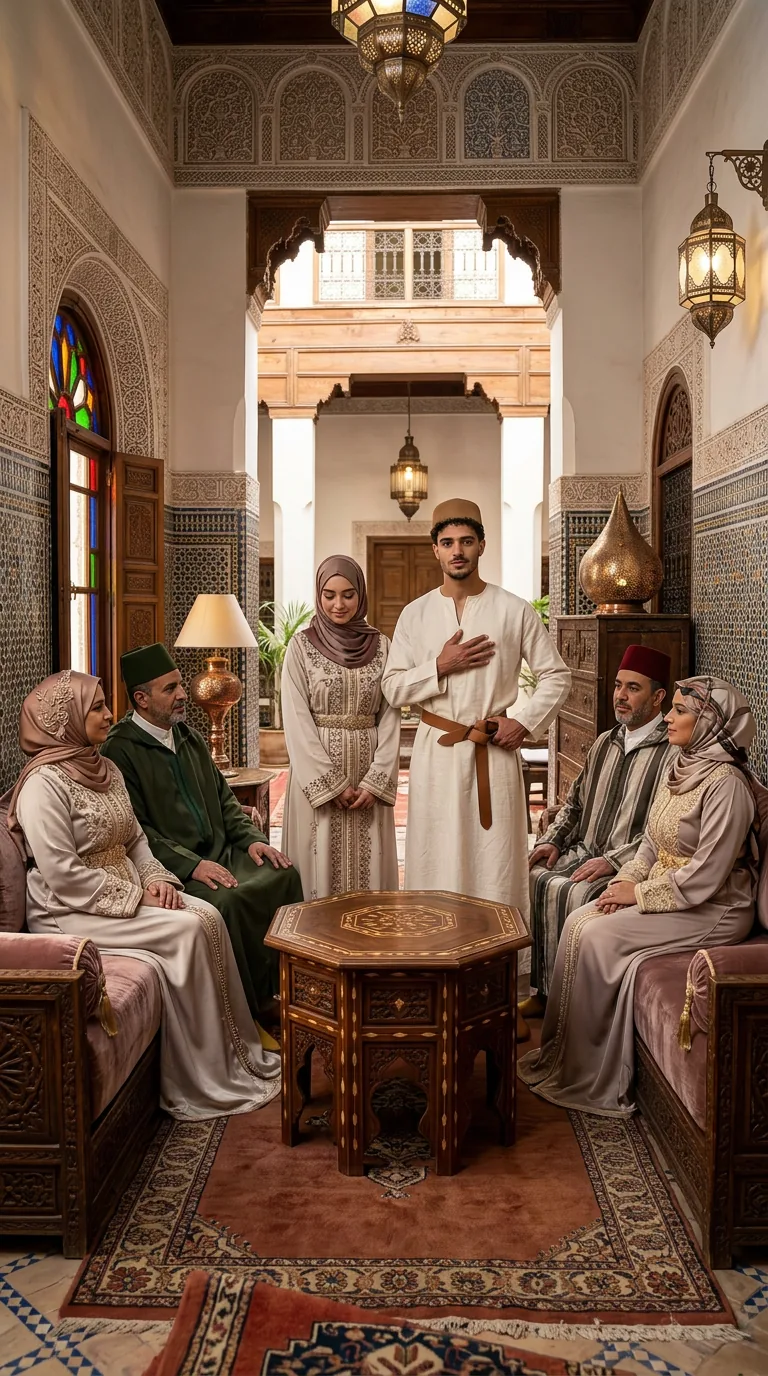
Family and community · The three parlours of the house
The words of this page are in the common glossary; the works cited in the sources; the sister house is Al-Funduq aṣ-Ṣiqillī.