Support the project
What is instituted in Fez may, without being altered, also be recognised on the other shore.
WHAT IS INSTITUTED
The face that can be shown
In Fez the crafts of the hand have never ceased. What is most often lacking is not the knowledge: it is the house in which that knowledge still forms men — and from which it may, without being altered, speak to the other shore.
The patron who carries Riad Al-Uns does not fund an image of the Maghreb made for Europe, nor a showcase of distress. He makes possible, in the medina and under a threshold of its own, a house of formation where the five prayers and the futuwwa order the day, and where the master’s gesture is transmitted until it becomes that malaka no evening school can give. From there — with no organigram between the shores, and with neither shore mistress of the other — the masters may one day also teach in Sicily, in a cousin house of mixed threshold in faith and culture, and secular, reserved for young men of full age. Thus, where so many Maghrebi young men in Europe are seen only as labour, there may appear, by the example of craft and rule, the high face of their civilisation: desirable, and no longer merely claimed.
The Riad remains the house in its own tradition. Al-Funduq as-Siqilli does not replace it and does not dilute it. It honours it, by showing that the rule written for the medina can hold, with another threshold, also outside the Maghreb. Who supports Fez supports the source; who recognises Sicily recognises the civic proof.
The common charter is Al-Mithaq. The house of Sicily is Al-Funduq as-Siqilli. Here one endows the walls and the formation; one does not purchase an orientation.
Riad Al-Uns does not yet exist. It is a precise vision, a place to be found, a community that has not begun. We are looking for those who can carry it through — not sponsors, but men and houses who understand that a culture is passed on by hands and never preserved in a display case, and hands are formed only with time and money.
Every year that passes without this house is a year in which a maalem grows old without having passed anything on, and in which a young man leaves without having received anything. That is the only ground of urgency this project recognises — and it is enough.
WHAT IS BEING FUNDED
Men, before walls
One can restore a house in the medina and have saved nothing but a work of architecture. What this project asks to be supported is what happens inside, and what comes out of it, which is far more than the building.
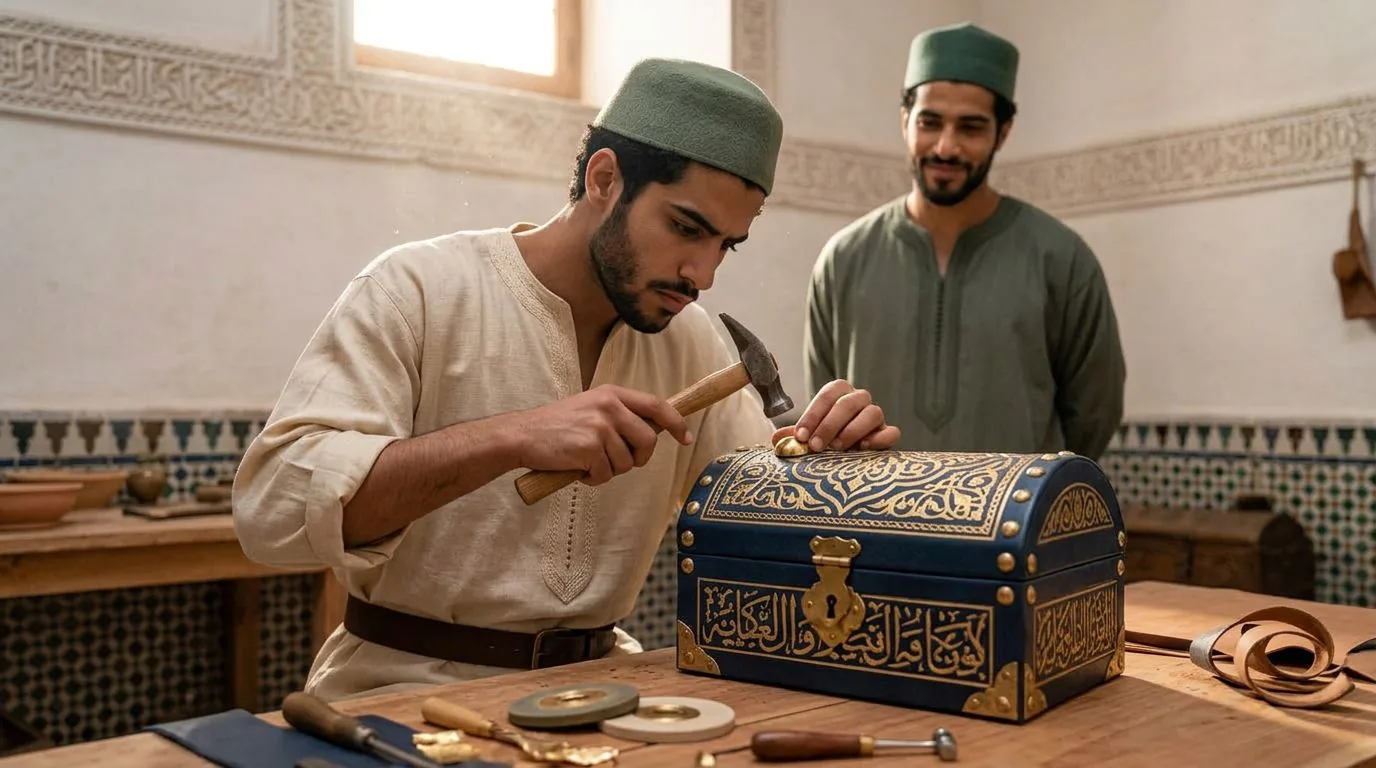
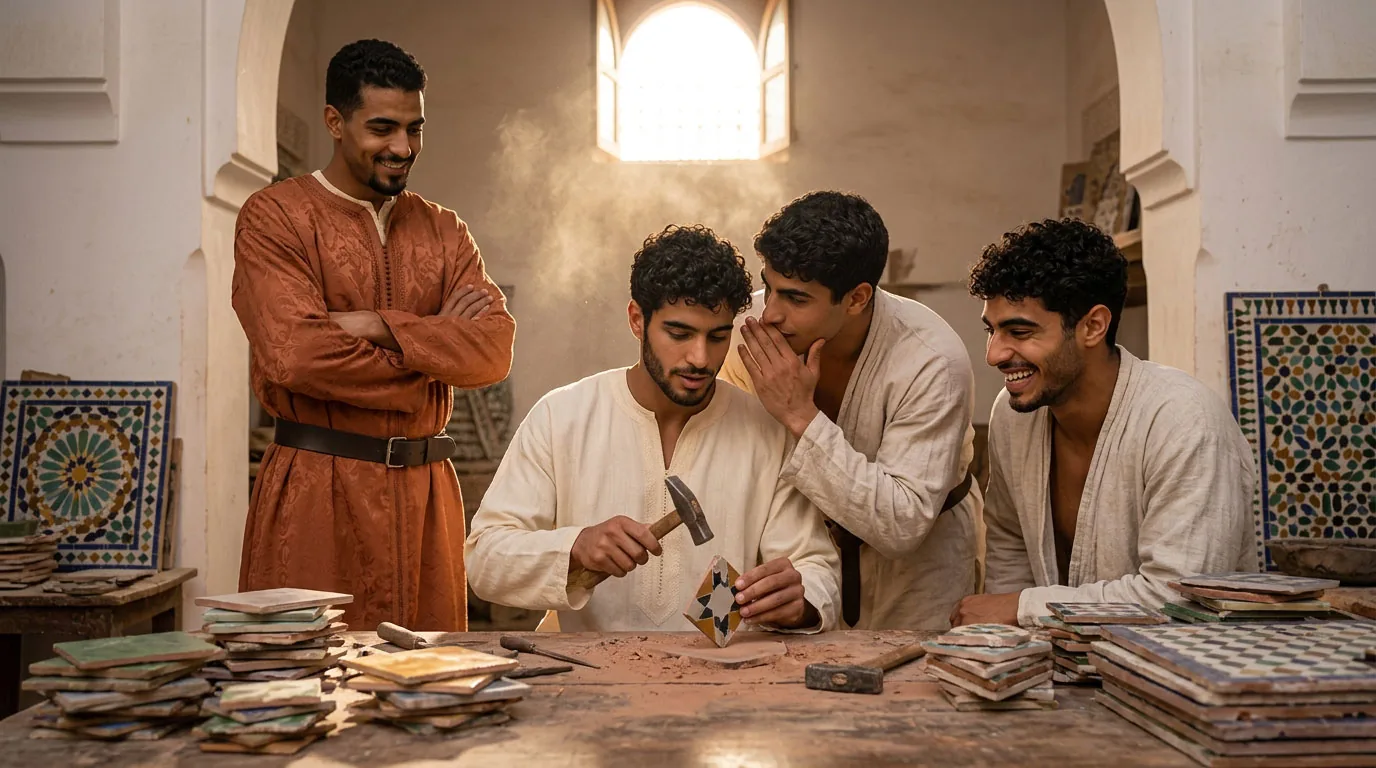
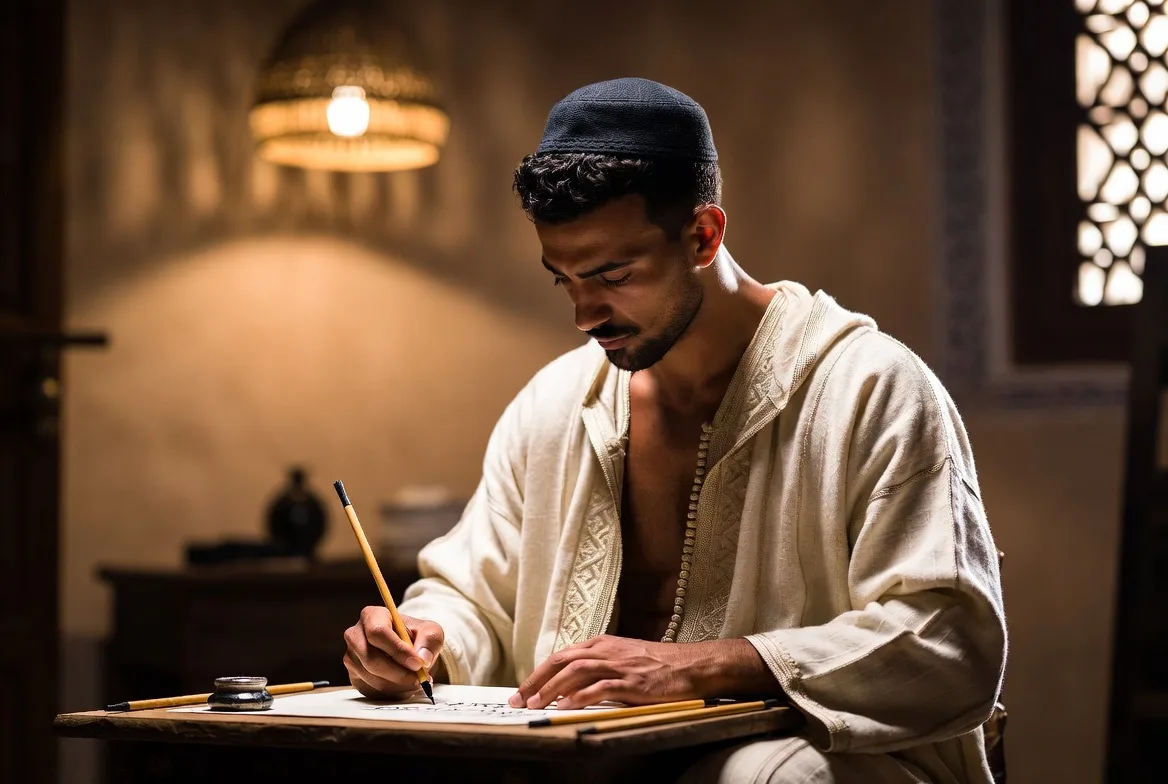
The young men who enter Dar al-Hiraf will not remain there all their lives: they will learn a craft of the hand — first the saddlery, the single workshop the house begins with, which brings together leather, wood and metal; then, each when there is a master and the endowment that keeps him, zellige, plaster and mocárabe, weaving, calligraphy, essences — and, with the craft, what makes it possible to master it: daily discipline, respect for the word given, loyalty to the man working beside you, measure in the use of goods. Then those young men will leave.
They will leave to become what a formed man becomes: faithful husbands, fathers able to raise their children, expert craftsmen able to keep a workshop and to train others there in turn, citizens useful to their community and faithful subjects of His Majesty the King of Morocco.
This is not a promise deferred until after the house. During the years of formation the khitbah is made between the families, the betrothed is received in the parlour accompanied by her kin according to the custom and the decency of the ʿurf, and the wedding comes when the young man has become maʿallem and can keep a workshop and a house. The formation is a road towards a hearth to be founded, and not a turning away from one.
That is where the reach of Riad Al-Uns is measured: not by the number of square metres restored, but by the number of hearths that will burn in twenty years in the medina of Fez, born of the human, character and professional formation given by the Riad on the principles of the futuwwa and the furūsiyya.
A CAUSE LARGER THAN THE HOUSE
The craftsmanship of the Kingdom
Moroccan craft disappears when a maalem grows old without having found anyone to inherit his knowledge, and not for want of beauty or of buyers. That moment cannot be retrieved: a lost craft cannot be reconstituted from photographs.
Safeguarding this living heritage is in Morocco a public cause, taken up by institutions, schools and associations whose place Dar al-Hiraf does not claim to take. The house brings what is most often lacking: duration. A common life in which the same operation is repeated every day for years, until it becomes malaka, the stable quality, the habitual endowment of which Ibn Khaldūn spoke, which a course of a few hours in a workshop does not give.
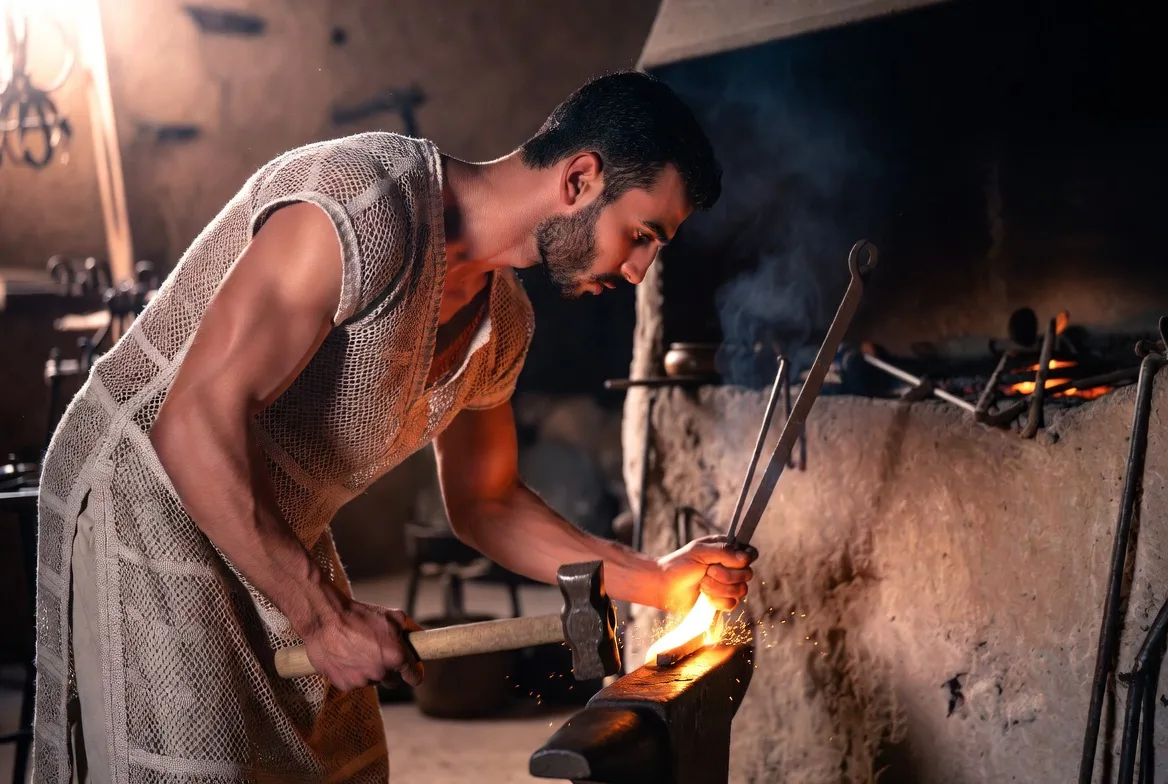
The chain of the furūsiyya — saddle leather, bits and stirrups, parade cloth — is the one the house begins with: it survives in Fez and in the Kingdom, held by the workshops that serve the tbourida and the feasts. It asks of the hand the same years as zellige or wrought iron.
To support this house is therefore to support two things at once: men who are being formed, and a craft that finds the natural seat in which to continue. Support given to the Riad turns into commissions to the guilds of the city, and, from the opening, into commissions for the saddlery, its woodwork and its metal fittings: hours of work with masters who practise.
THE ONE WHO COMMISSIONS
The unique piece
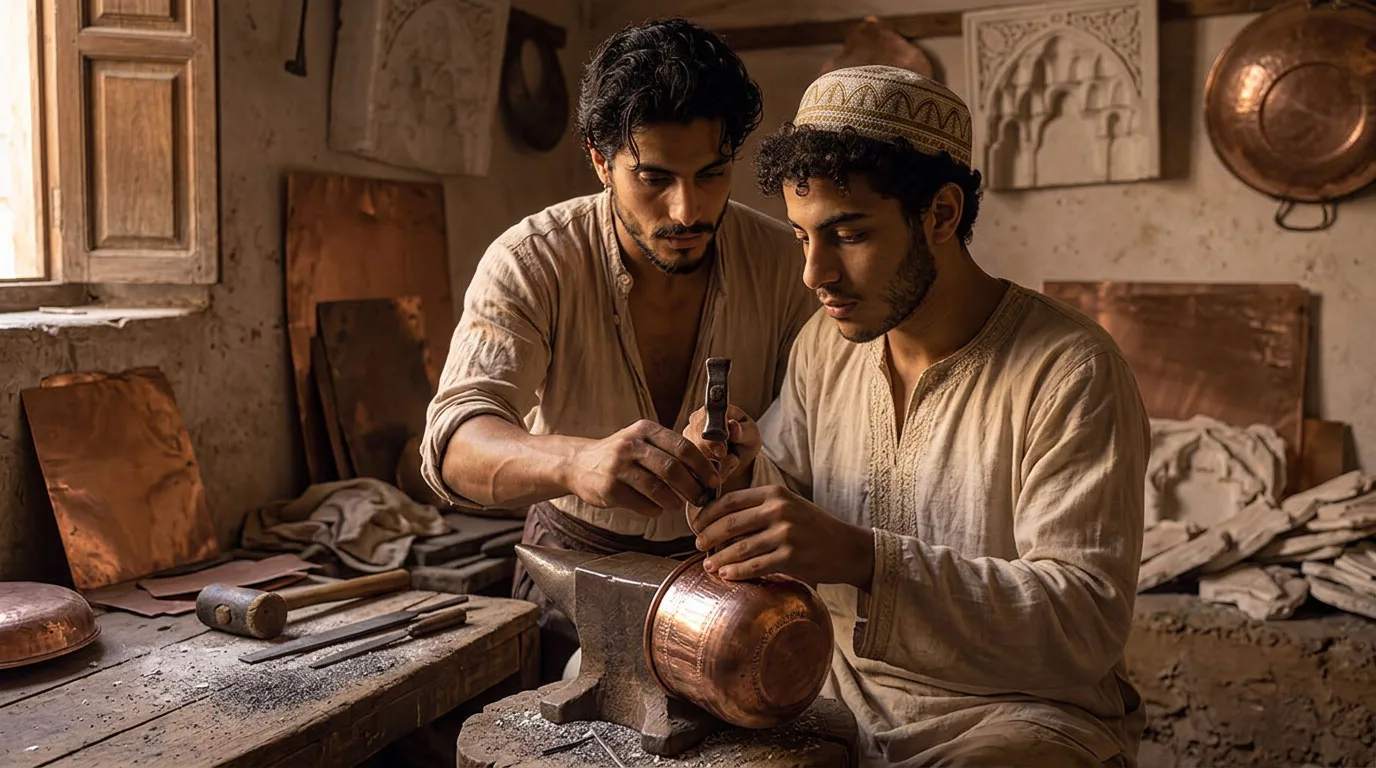
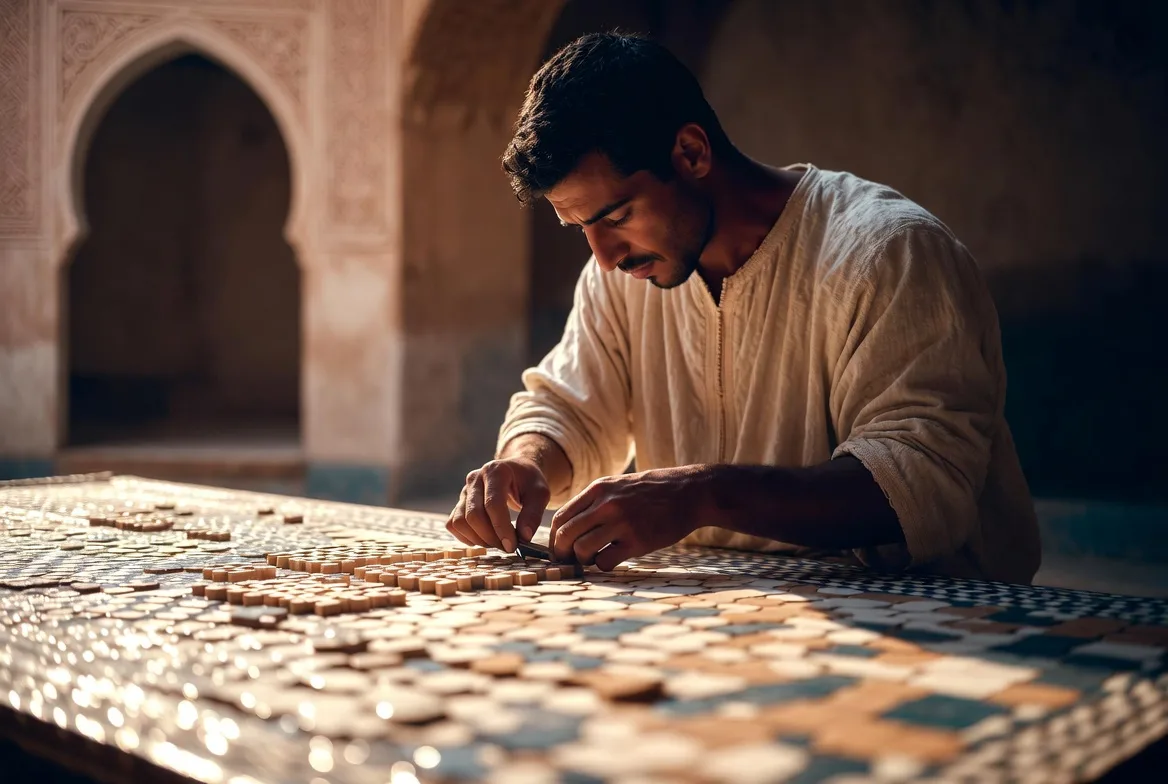
A market sells objects already made, while one who commissions orders a work that has yet to be executed, and in ordering it accepts the times and the limits that matter and the hand impose.
Because the house begins to teach before it opens, the building site of the Riad and of Al-Munya is already its first school: the ṣāniʿ learn there on the spot, beside the guilds of the medina that work there in plaster and cedar, zellige, iron and cloth, so that the hanging, the lamp and the door ordered there remain where they were made.
Whoever supports the acquisition and the restoration gives the workshops of Fez work that begins at once and, with it, a horizon that no passing sale can give, that of a client who returns: they have a commission before they have a shop window.
What is given therefore remains in the city, in hands that work, and the knowledge passed to the ṣāniʿ goes on operating when the one who supported it is no longer there, according to the custom, never interrupted in Fez, by which in this house duʿāʾ is made for the one who made it possible.
COMPANIES
Materials and services
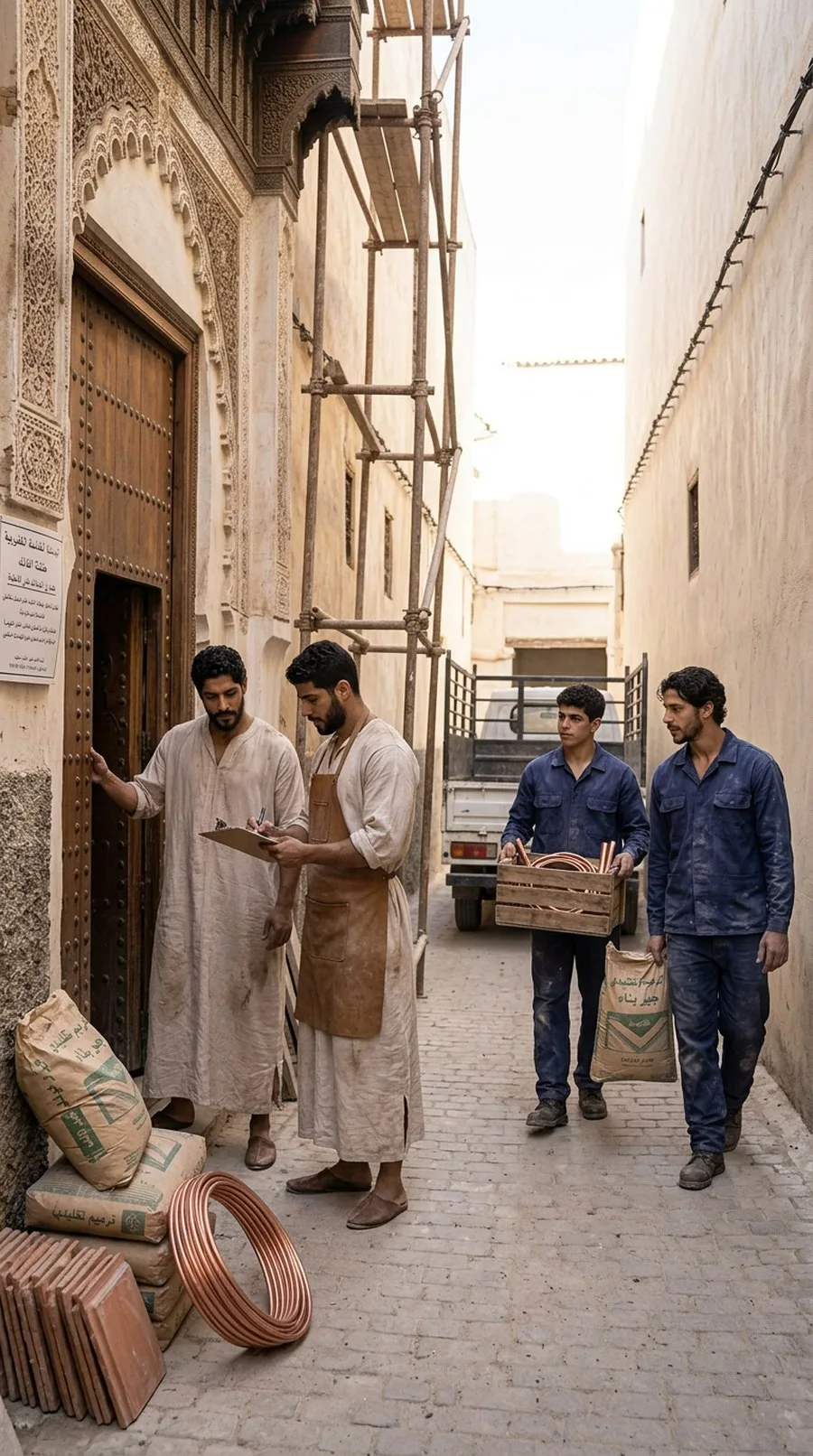
Beyond the visible work of the craftsmen — plaster, zellige, cedar, iron and leather — the restoration of the Riad and of Al-Munya calls for supplies and works that art craftsmanship does not execute: building materials, water and electrical networks, waterproofing of the terraces and of the hammam, bringing the sanitary fittings, the kitchen and the service rooms up to standard, scaffolding, transport and insurance.
Companies that wish to take part may do so by supplying the goods or by installing them, according to the lots of the site: cement, lime and mortars for the building works; cables, conduits, distribution boards, sockets, lighting and fire detection for the electrical installation; pipework, pumps, cistern, water heaters and drainage for the plumbing; extraction hoods, tanks and refrigeration for the kitchen; scaffolding and equipment hire for the duration of the works.
Each supply follows the architect’s specifications, who verifies its conformity before it is accepted, and is delivered to the site. One gives what the works need, and not what is left in the warehouse. Whoever wishes to propose a supply may write to us.
HOW TO SUPPORT
Three commitments, according to each man’s measure
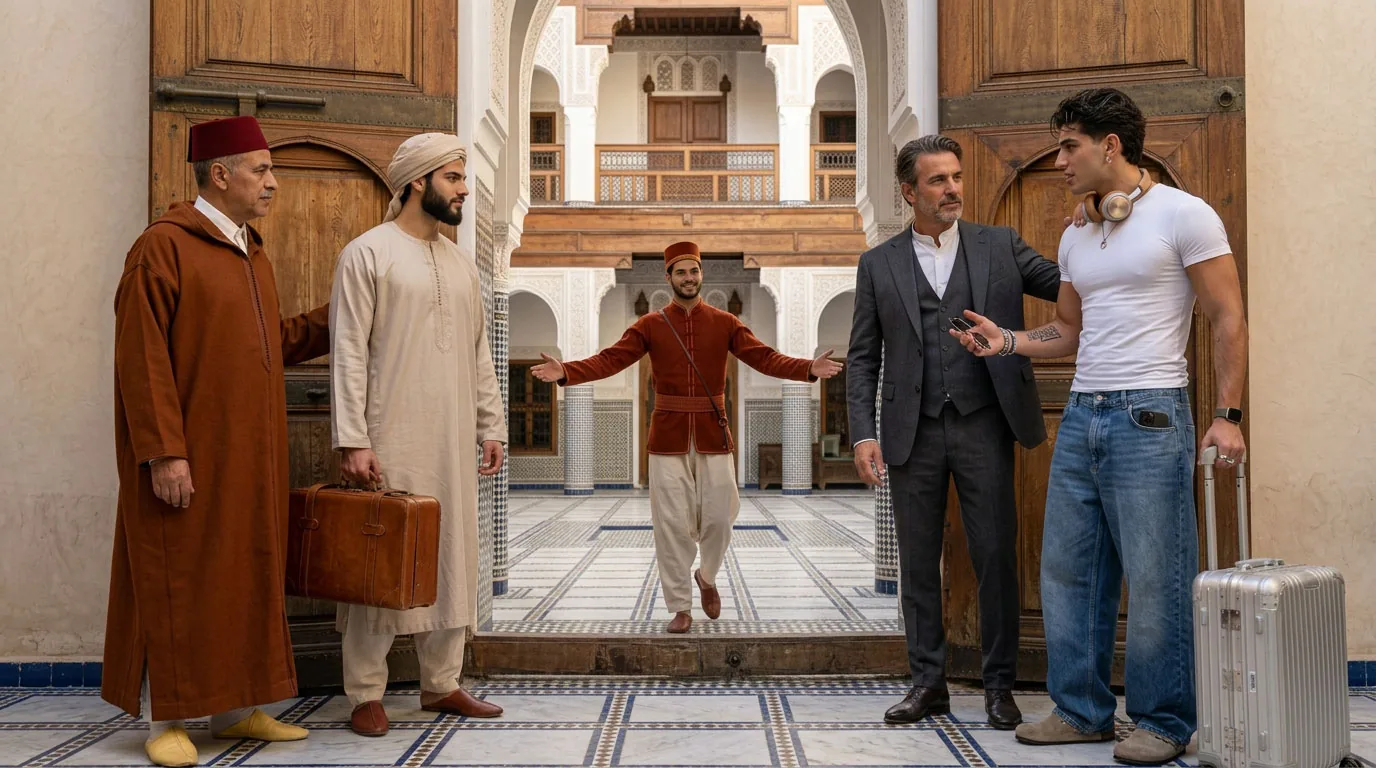
I — THE PLACE
The acquisition
Identify and acquire the property. Without this first step, nothing these pages describe begins.
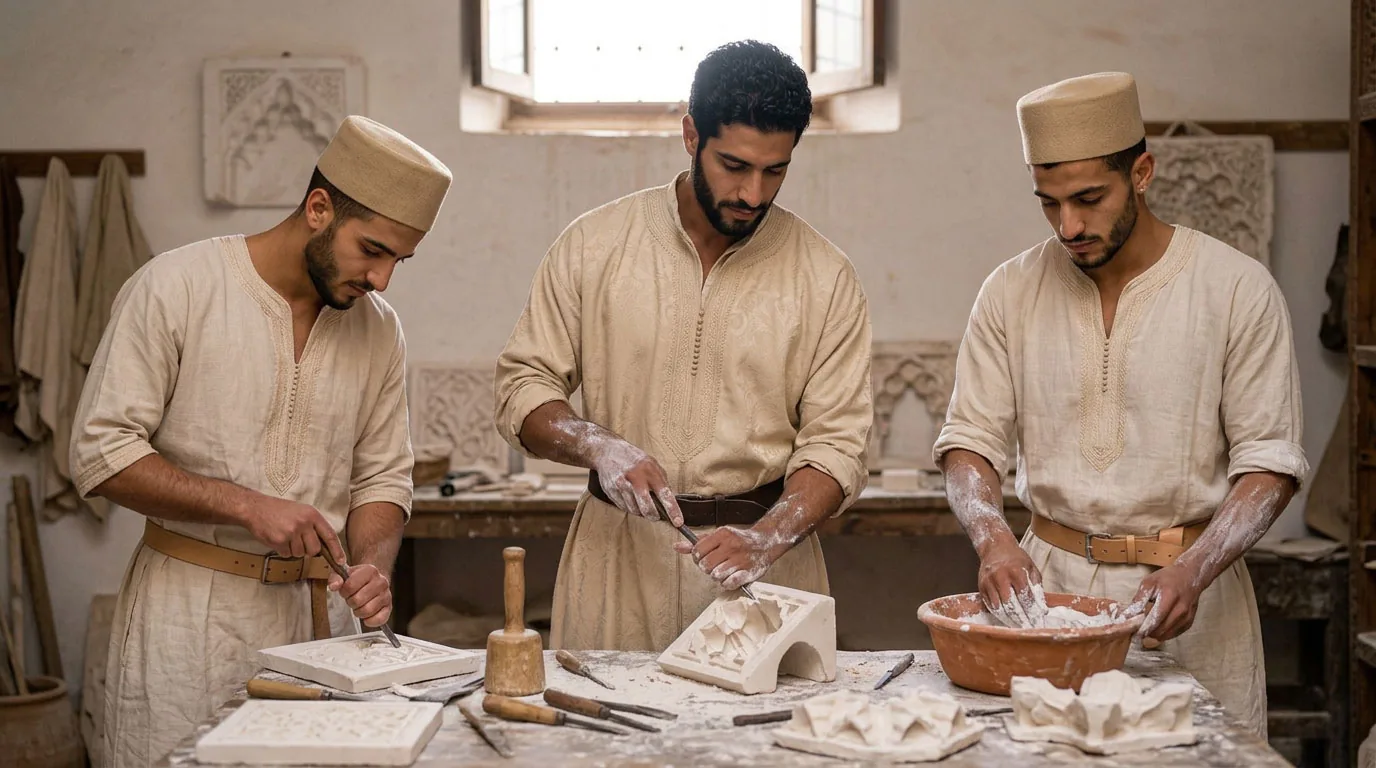
II — THE CRAFTSMEN
The restoration
To return the house to its proper state, with the right gestures and the right materials — since the building site is itself the first school.
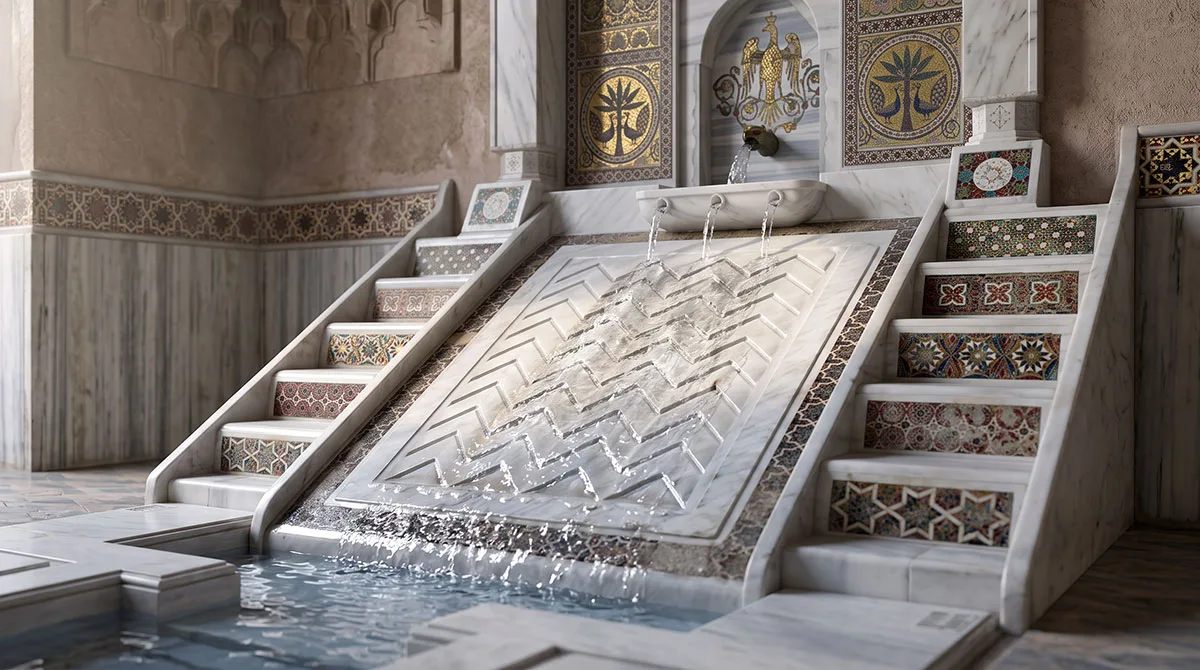
III — DURATION
The endowment fund
To endow the Riad with a capital whose fruits alone cover the ordinary life of the house, so that it never depends on next year’s generosity.
Of the three commitments, the third is the least understood and at once the most decisive, for a house bought and restored, but left without an endowment, lives as long as the enthusiasm that opened it and closes with it; and it is of this death that most safeguarding projects die, which almost never fail at the opening and almost always later, when those who had wanted them have ceased to attend to them.
The founding gift is therefore the one that ensures that in fifty years the fire of the workshop will still be lit, more still than the one that pays for the walls.
THE FORM OF THE PROPERTY
A property that can no longer be sold
The Kingdom has known for centuries the instrument suited to a foundation of this nature: the ḥubus, which elsewhere in the lands of Islam is called waqf. The property constituted therein remains immobilised, withdrawn from sale, gift, succession and seizure, and its fruits are destined in perpetuity to the purpose for which the founder willed it. On this the madrasas, fountains and libraries of Fez have lived for centuries, surviving far beyond those who founded them.
Riad Al-Uns will be constituted in this form, or in whichever among those provided by Moroccan law in force comes closest to it; the arrangements will be settled with the competent bodies before any acquisition.
What this changes for whoever supports the house is simple, and it may be the essential point of this page: one endows a property that, by the very act constituting it, cannot be sold again in ten years, turned into a guest house, or divided among heirs.
SUPPORTING ONE ELEMENT
Other ways of supporting the Riad
Not everyone is in a position to found a house. One may support a precise, identifiable part of it, and then follow its life:
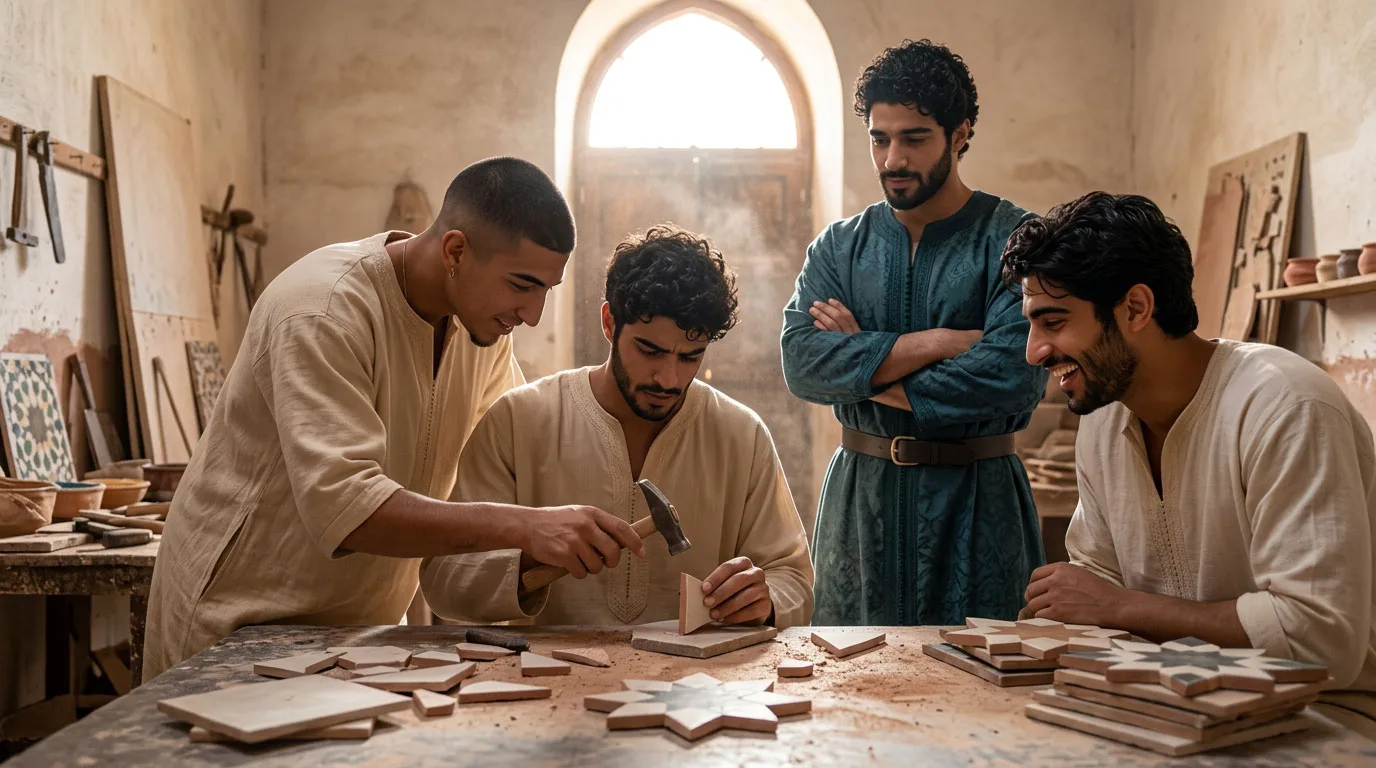
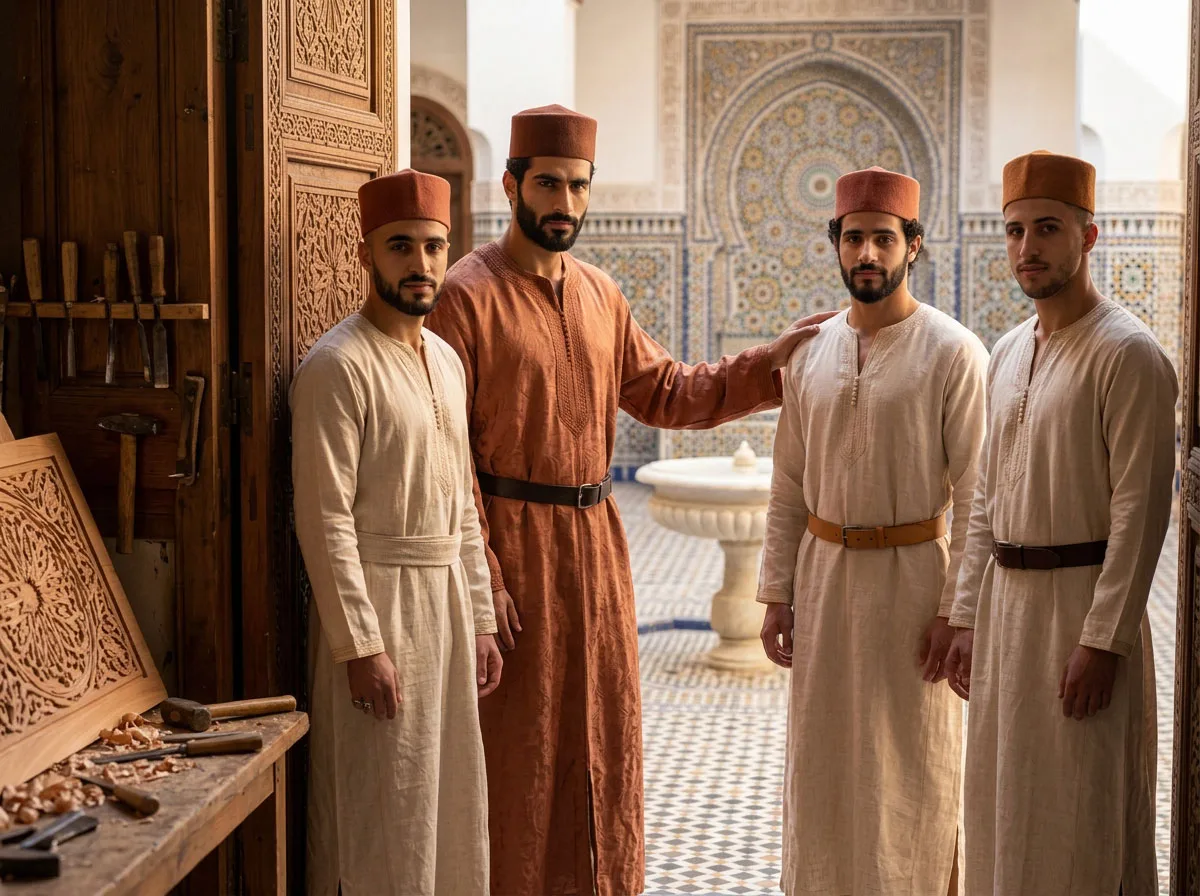
A maalem’s year
The remuneration of a master of the art for a full year of formation.
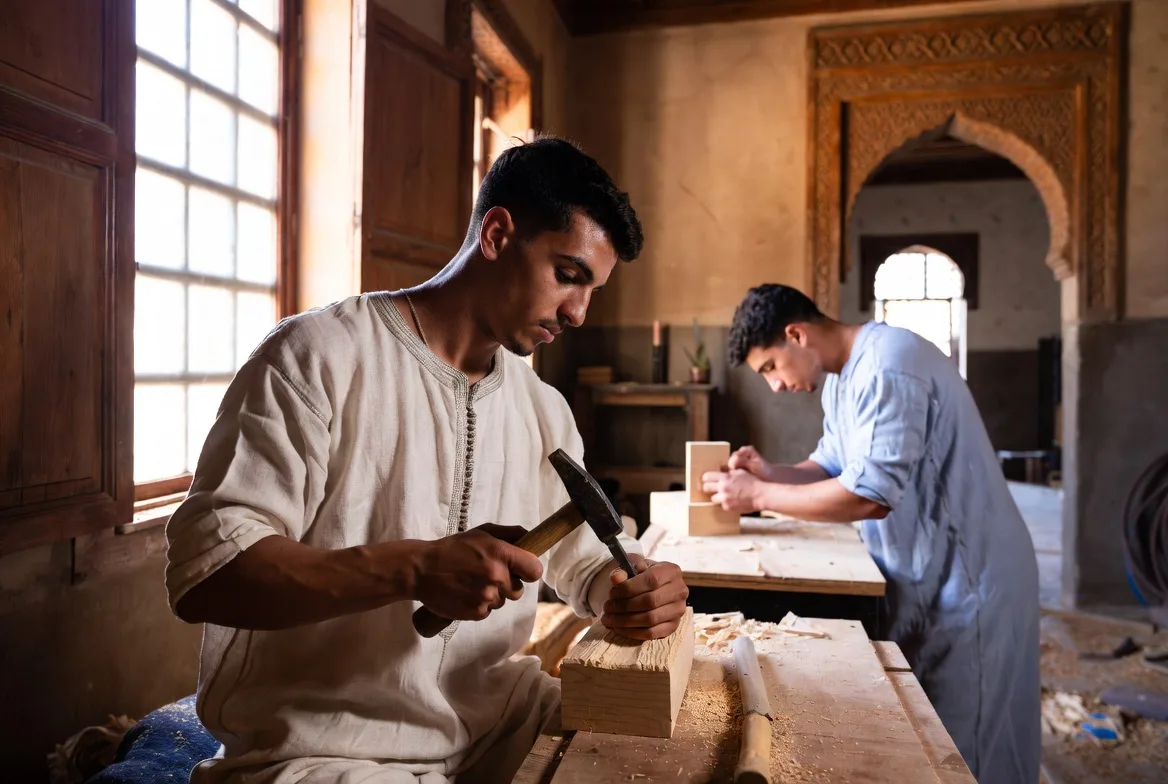
Setting up a workshop
The complete establishment of one of the workshops that follow the first — tools, benches, raw materials.
The formation of a sani
The path of a young man, from the first grade to mastery of his craft.
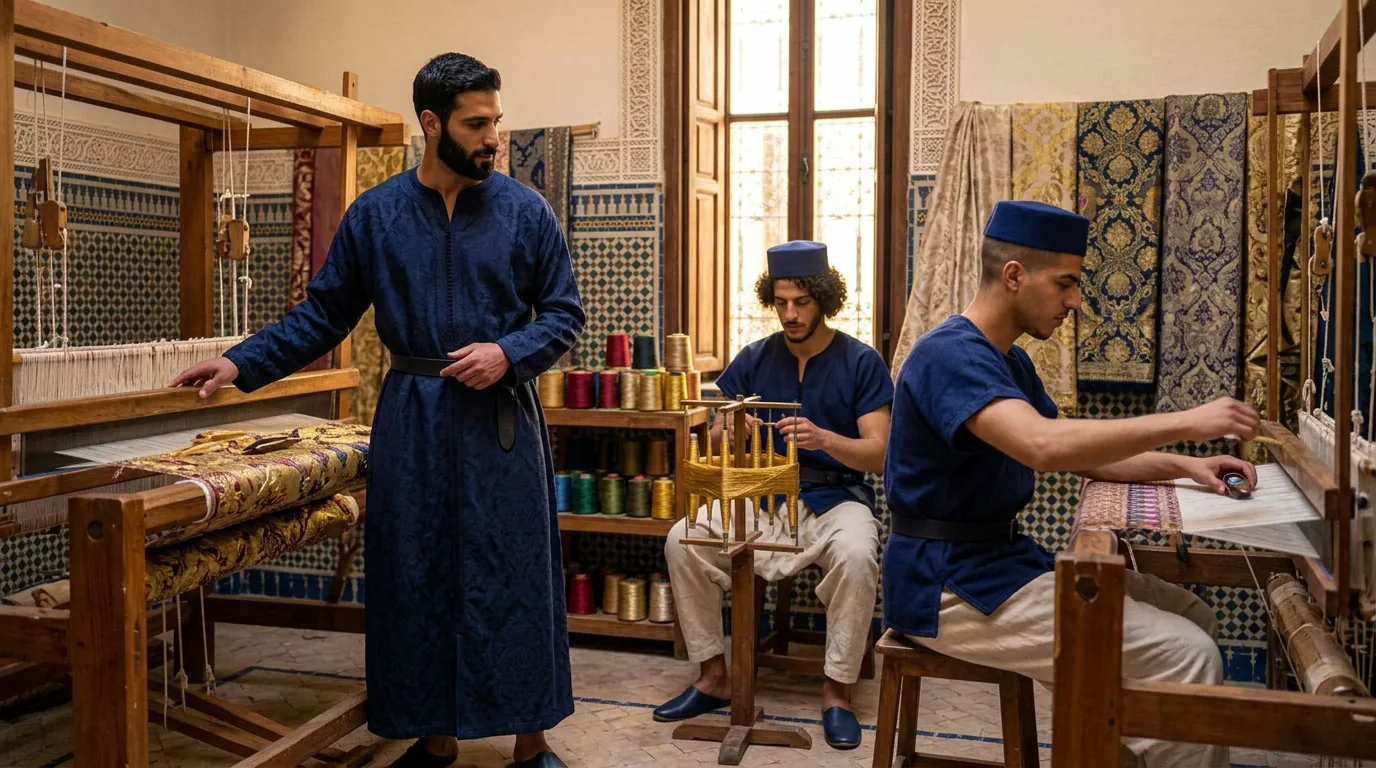
A tool, a loom
A lasting piece of equipment, which will serve successive generations of ṣāniʿ.
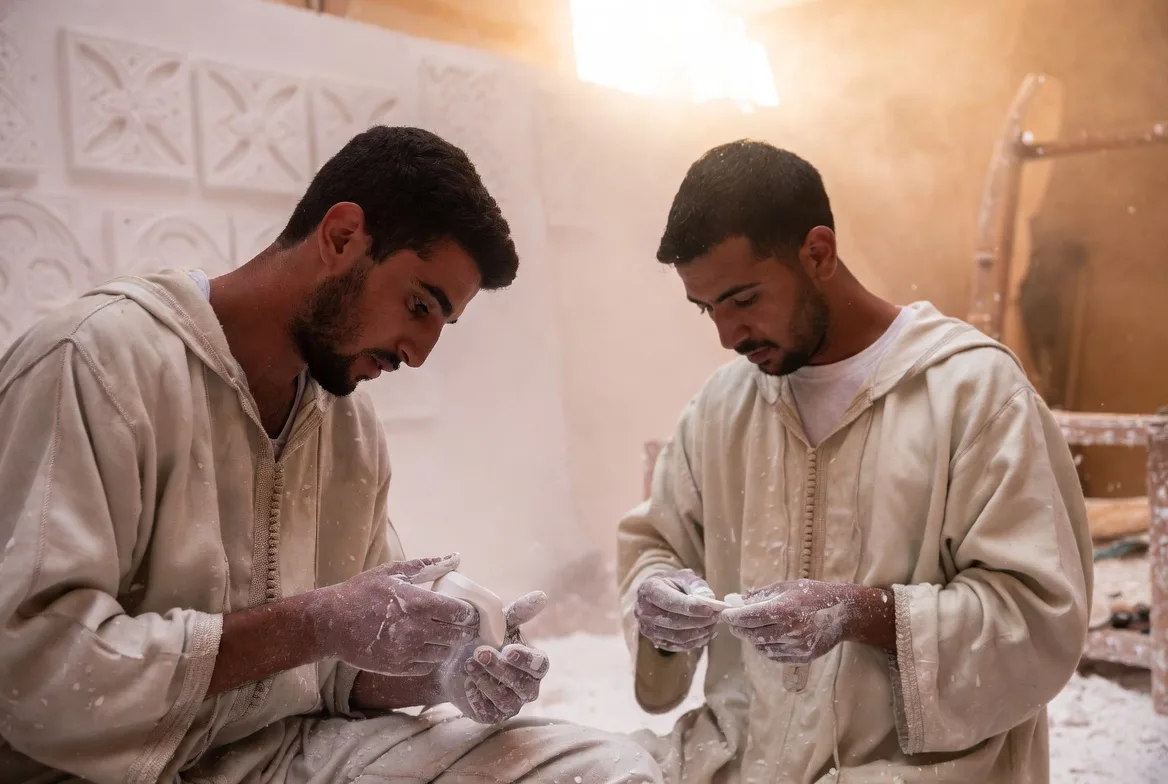
The matter of a work
The sums attached to each of these commitments appear in the dossier, communicated after a first exchange.
WHAT IS GUARANTEED
What money will not change
A patron has the right to know not only what his gift will make possible, but also what it can in no case produce. With means grow the quality of the restoration, the number of crafts taught and the solidity of the endowment; what remains fixed, whatever the means, is the number of residents, the pace of apprenticeship and the number of guests the House receives.
Of human measure the House is by statute, and not for scarcity of means: it will not become a hospitality establishment, will not turn into a museum and will not open a branch. These limits will be written into the deeds that govern it, and not entrusted to the goodwill of the moment.
That is what the motto says, and it holds for whoever gives as well: “The riad is for its own, not its own for the riad.”
THE CONDITION OF EVERYTHING ELSE
A house that can do without any man
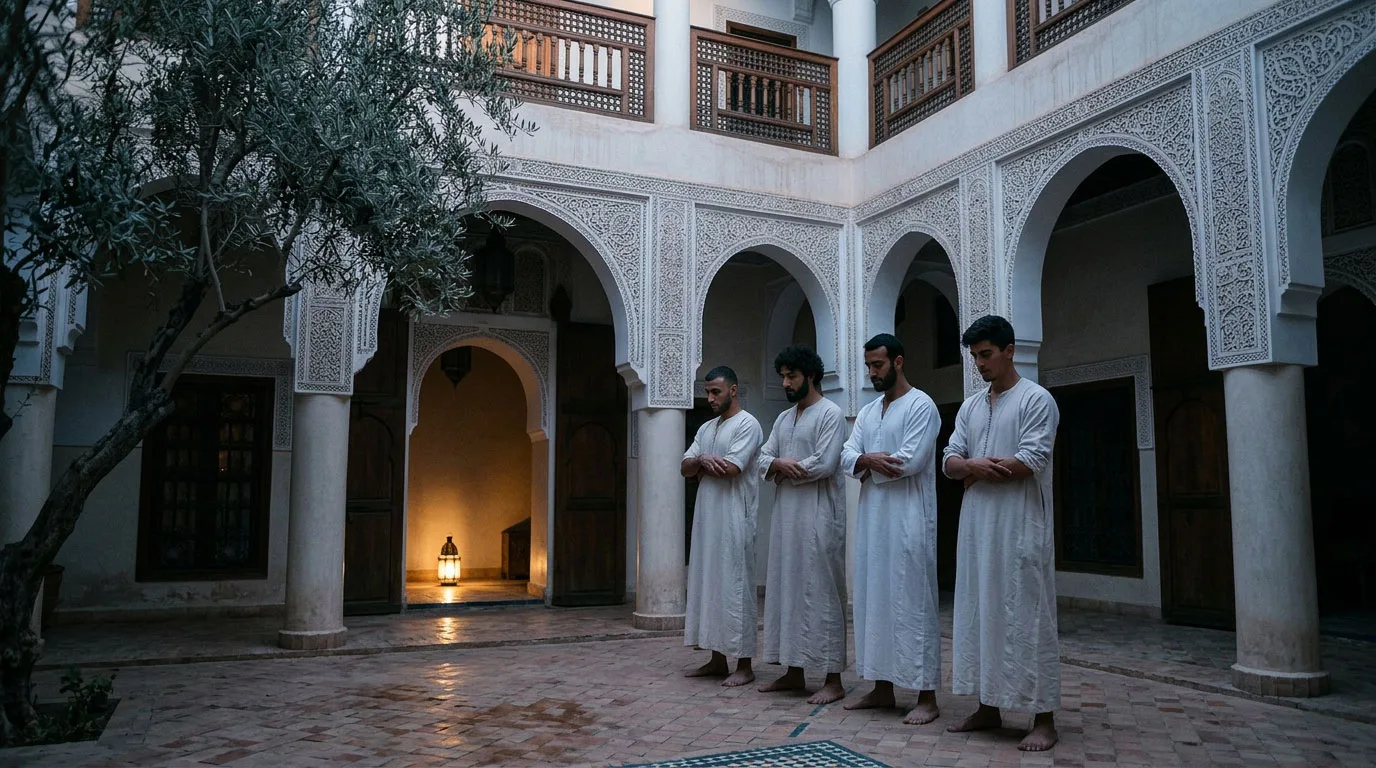
The House takes nothing from its guests. The vehicle that manages Dar al-Diyafa will pay it a fixed annual sum, and never a share of its own takings, and no single source may exceed a third of what the House lives on. Such provisions are ordinarily taken for accounting prudence, but their effect lies elsewhere.
They make it so that no one is indispensable to the House, and therefore that no place in it can be bought. The son of a conspicuous family is received, or is not received, by the same measure as the man who arrives without a name, and the benefactor who wished to obtain an exception would see as much at his first request; a school that lives on the fees paid to it cannot impose its own rule on the one who pays them, and everyone knows it, beginning with the pupil.
It is that independence which the permanent endowment funds, before the walls and before the crafts: a young man learns what he is worth only where his name does not work in his stead, and such a place ceases to exist the moment the House has need of him. Refusal is therefore the first thing a gift makes possible, and it holds for everyone, including whoever gives.
→ At-Tadbir · → Who we are looking for
THE BENEFACTOR’S NAME
Carved in plaster, cut in cedar, stamped in leather
In the cities of the Kingdom, the madrasas, the fountains, the hospitals and the libraries have for centuries borne the name of those who founded them, cut into carved plaster or marble and followed by an invocation for their soul. It is thus that a community keeps the memory of its benefactors and goes on praying for them when they have been gone for centuries.
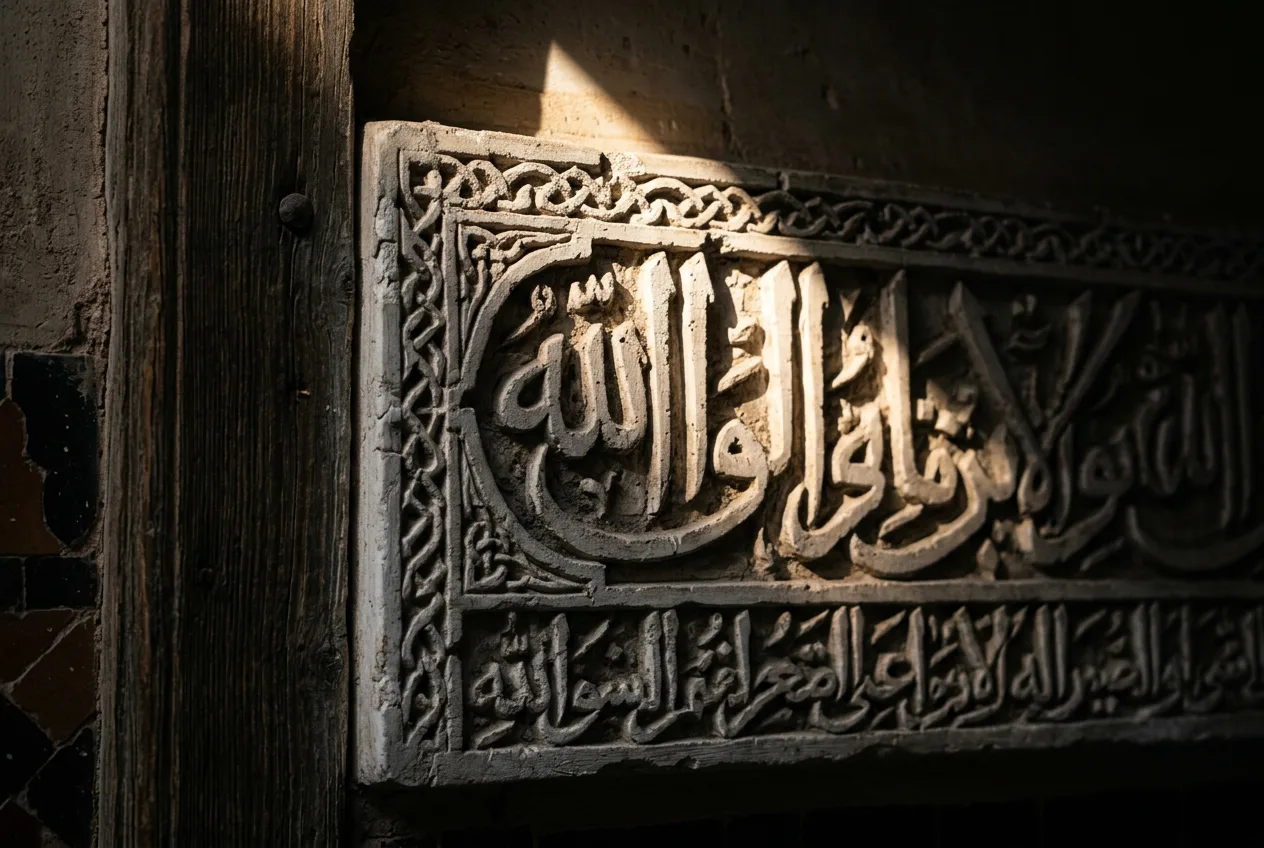
Riad Al-Uns will follow this usage. Whoever has made the house possible may have his name cut into the plaster of the entrance, in the language and the form he will have chosen, accompanied by the customary formula of blessing. For example:
حبّس هذه الدار فلان ابتغاء وجه الله تعالى — سنة ١٤٤٨
[Name] constituted this house as ḥubus in search of the face of God, the year 1448.
من فضل فلان، جزاه الله خيرًا
By the munificence of [name]: may God reward him with good.
على روح فلان، رحمه الله
For the soul of [name], may God have mercy on him.
A workshop, a library, a fountain or the endowment itself may likewise bear a name: that of the donor, that of his father, that of someone departed whose memory he wishes to make endure. If instead he prefers silence, anonymity is complete: no name is published without written consent, and the hidden gift has never passed, here, for the lesser of gifts.
The account rendered
An annual statement of the use of funds and of progress, addressed personally.
The house open
To be received at the Riad, to see the workshops at work, to know the masters and those who are learning.
A place, not a rank
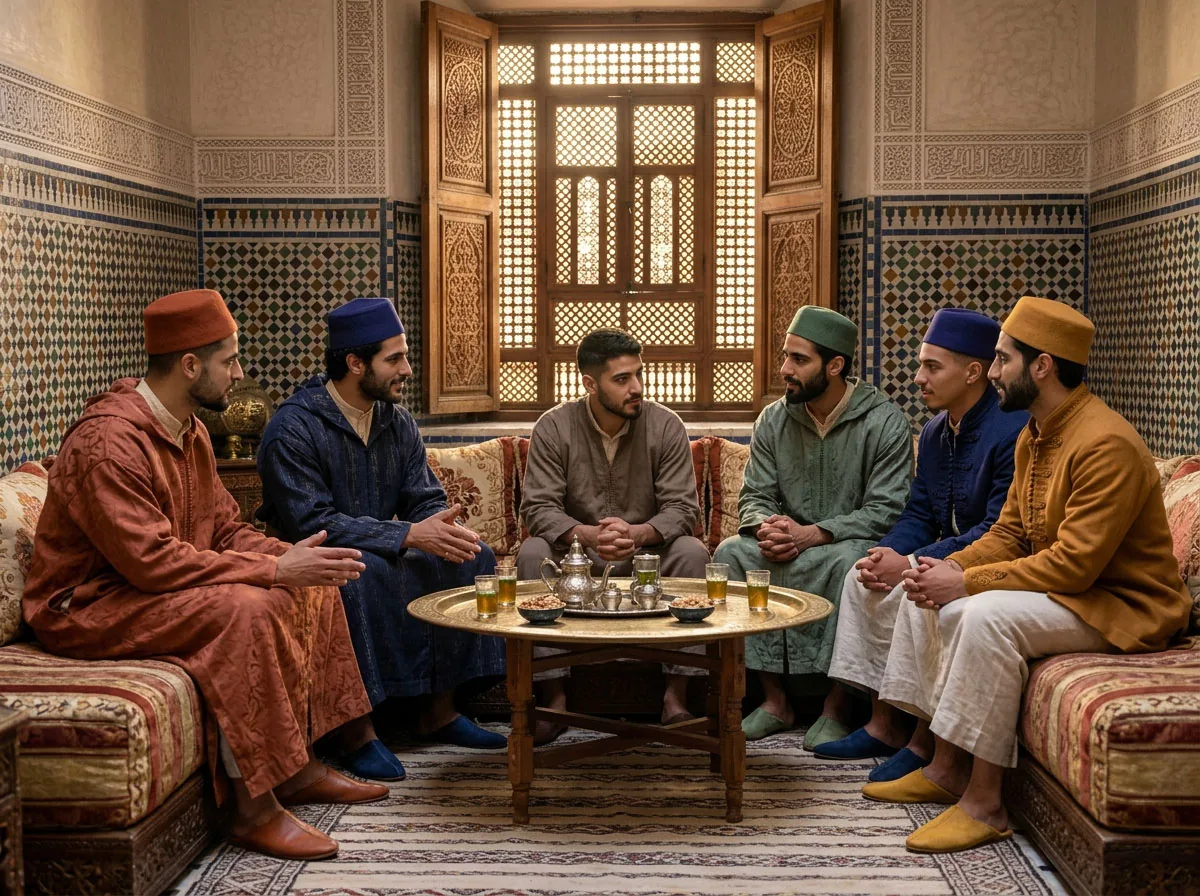
The futuwwa works in both directions: the man who supports is received as an elder brother, not as a client.
WHAT DOES NOT CEASE
An alms that continues
A well-known hadith, reported by Muslim, teaches that when the son of Adam dies his working comes to an end, save for three things: an alms that continues, a knowledge of which others avail themselves, and a pious son who prays for him.
It is rare for a single foundation to bring all three together, and this one brings them together by nature: the endowment is the alms that continues; the craft a maalem transmits to a ṣāniʿ is the knowledge of which others avail themselves, and which will still be transmitted when the one who funded it is gone; and in this house there is prayer, for parents, for masters and for whoever made each man’s formation possible.
This, more than any visible return, is what a patron receives in supporting the house: a work that goes on bearing fruit after him, and not a good that is consumed.
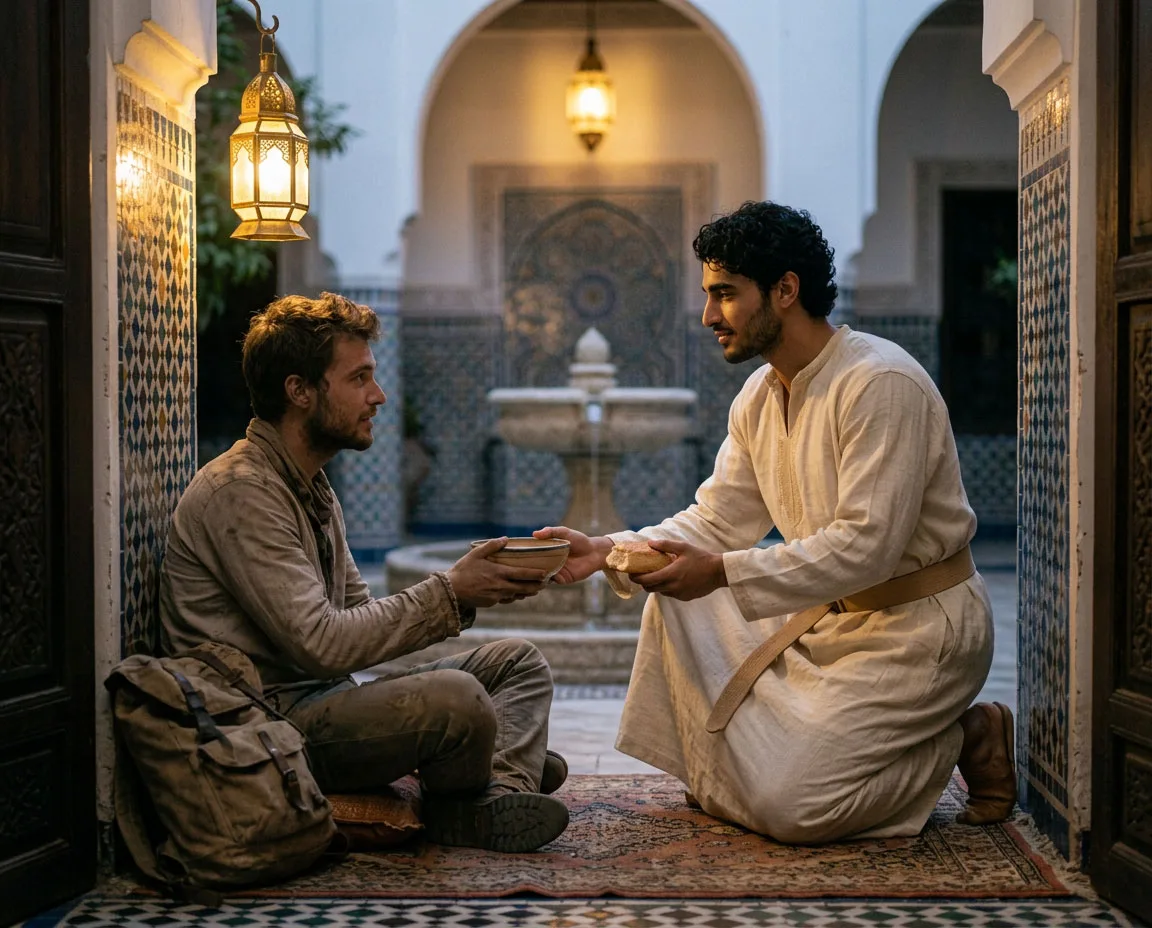
As-sakhā’* — generosity: what leaves the hand and does not come back.
THE LIMIT
To give does not imply to command
To honour a benefactor is a duty; to obey a funder is a bond of quite another nature, which the house does not assume. The gift confers no say over the rule of the house, over the choice of masters, over the admission of residents, over the rhythm of the days or over the crafts taught: no sum, however great, buys a direction.
The limit protects the house and, with it, the gift itself. A foundation that bends its own rule according to who funds it soon ceases to be what one had meant to support, and the benefactor finds he has paid for something else. What is promised here is that in thirty years the house will still be the one these pages describe, and it is promised in the only way such a thing can be promised: by writing it into the deeds that govern it.
The patron who seeks a docile instrument will not find here what he seeks, and it is worth saying so at the beginning rather than at the end. Whoever instead wishes to bring into being something that exceeds him is at home here.
FIRST STEP
Declare your availability
Nothing is decided on a website. This form opens an exchange and commits to no payment: the complete dossier, that is, the place, the programme, the figures, the legal form chosen and the timetable, is then sent personally to whoever shows serious interest.
Any person, family, company or institution that wishes to contribute to the continuity of this heritage is invited to make themselves known. Every message is read by the person responsible for the project, and by him alone.
What you would be willing to support (several choices possible)
Your name
Your information is neither published, nor passed on, nor used for any other purpose. A personal reply within a few days.
The information sent through this form is handled according to our privacy policy.
← Back to the project
Who carries the project
The author of the project
The project of Riad Al-Uns was conceived and developed by Pietro Siffi, who bears its intellectual responsibility and has written its programme, its internal rule and its doctrine for the building site. The design phase is carried out by the association Il Fondaco Siciliano — Associazione per le arti e i mestieri, under Italian law, of which he is the president.
The three stages of the structure
The undertaking will pass through three successive structures, each proper to its phase, and they must be distinguished, since a patron’s contribution does not go to the same entity depending on the moment at which it is consented.
The design falls to the association Il Fondaco Siciliano — Associazione per le arti e i mestieri. The acquisition and the works will be conducted by a consortium or a company formed for that purpose, which will carry the site to its completion and will be wound up with it. The house itself, once restored, will be held by an association under Moroccan law, whose governance will be settled with competent counsel and which is intended to receive the walls and to guarantee their destination.
This succession separates what must end from what must last. A building site has a term, and the structure that conducts it must be able to be closed once the accounts are rendered; a school has none, and the structure that carries it must be conceived to outlive those who founded it.
What is asked of the legal form
The property is intended to be placed beyond commerce, in whatever form Moroccan law will allow, so that the destination of the house ceases to depend on the intentions of whoever owns it. The arrangements are under study with Moroccan counsel, and nothing will be promised here that is not yet decided.
One point nonetheless, since it governs the financing: the property will remain capable of being mortgaged for as long as the debt contracted for the works is not extinguished, and will enter the inalienable perimeter only afterwards, by a separate deed. A house that cannot be mortgaged cannot be financed, and a house that can be sold cannot be endowed. The order of operations resolves the contradiction instead of denying it.
What protects the house beyond persons
A patron is entitled to ask what will prevent this house, in fifteen or thirty years, from becoming something other than that for which he will have supported it. The answer lies in the statutes of the entity that will hold the walls, and these will provide at least four dispositions.
A narrow object
The object of the association will be defined restrictively, and may not be widened.
Inalienability
A clause will forbid the sale, the transfer and the change of destination of the building.
Entrenched articles
A closed list of articles, including the two preceding, may be amended only by a reinforced procedure.
A guaranteeing body
Without power of management, it will hold a veto over the disposal of the building, the amendment of the object and the dissolution.
These are instruments of ordinary law, and they have this in common: none of them supposes the presence of any particular man.
If the founder stops
The answer must lie in the statutes rather than in intentions. The project is today carried by a small number of people, and that dependence is real; it is also ordinary at this stage of any undertaking of this nature. What will bring it to an end is the constitution of the Moroccan entity, the installation of its governance and the transfer of the walls. Until then, every document that binds the house records this dependence, and every patron is informed of it.
What can be verified
The statutes of the entity that will hold the walls will be communicated, once settled, to any person who has supported the house or considers doing so. The accounts of the works will be rendered to those who financed them. The register of the firms and craftsmen who have taken part, kept from the first day, will be open to their inspection. None of this is published, and all of it may be verified by those entitled to do so.
What is needed
Two needs of a different nature
A house of this kind has two needs that must not be confused, and that call for separate treatment, since they do not address the same people nor are they met by the same means.
The first is a need for capital, and it is settled once: acquiring the dwelling, restoring it according to the rules of the art, equipping the workshops, and holding enough to live through the first year before the house produces anything. This need is considerable, yet it is bounded, and once met it does not return.
The second is a need for income, and it is never settled: paying the masters, feeding and lodging those who learn, maintaining an old building, keeping the house in order. It returns every year, for as long as the house exists, and it is this need that decides whether the house will outlive those who founded it.
What is needed in order to begin
Before any acquisition, one must know whether the house can exist. This means finding the dwelling, securing its availability for the time required, having the condition of the fabric surveyed and establishing what it will allow, and obtaining from professionals in Fez the legal and technical opinions the operation calls for. It is roughly a year of work, and the only stage whose outcome is uncertain, since it may conclude that the house is not to be found, or not on these terms.
This first stage is also the only one in which the money committed may be lost without leaving anything behind. It is modest against the whole, and it is precisely the stage a clear-sighted support will fund first, because it buys the information on which everything else depends.
What is needed in order to build
Then comes the capital proper. The dwelling first, whether acquired or contributed. Its restoration, entrusted to firms of Fez working in the traditional techniques, over a span counted in years rather than months, for a site of this nature cannot be hastened without being spoilt. The services, which in an old house are concealed and cost accordingly. The equipment of the first workshops. And a reserve for the first year of operation, during which the house spends without yet receiving anything.
The amount is established item by item, with the ranges proper to a project whose dwelling has not yet been found, and it is communicated to those who consider supporting the house. It is not published here, since a figure displayed before the building is known would be a promise that nothing guarantees.
What is needed in order to last
The annual income is the real question, and the house does not claim to have resolved it entirely. It intends to answer it from several sources, none of which suffices alone and whose combination makes for security.
An endowment
In the legal tradition of the country, an income-bearing property — shops, a warehouse, dwellings — may be constituted as a perpetual foundation so that its revenue maintains an institution; it is thus that schools and libraries lived for centuries without depending on the generosity of each generation. An endowment of this kind settles the question instead of deferring it.
The work of the workshops
The productions are sold. The source is consistent with the vocation of the house, but it comes late, for those who are learning do not at once make what sells.
Hospitality
Stays and internships bring a real income, held by rule below the threshold at which the house would begin to arrange itself around its guests.
An adjoining activity
Distinct from the house in its accounts and in its walls, it is capped by statute at a fraction of annual resources, so that the house never comes to depend on it.
The forms of support
The house may be supported in several ways, and they are not all equivalent for the same needs.
In money, for the capital, at once or through a pledge over several years. By contributing a building in full ownership, which removes from the reckoning the heaviest and most uncertain item. By contributing a building in usufruct, which costs less to the one who consents to it, but leaves the walls with their owner and alters what may be promised as to permanence: it must then be said that permanence attaches to the institution and not to the building. Lastly, by constituting income-bearing property as an endowment, which is the most useful form of all, since it answers the need that nothing else covers, and which, for a family of the medina holding such property, commits less than a payment of equal value.
Each of these forms is received, and each is named for what it is. None opens a right over the house, over the admission of anyone, or over the conduct of the life led there: this point is written in the rule, and it holds for all.
The uncertainties
The dwelling has not yet been acquired
The project today bears upon a programme and not upon a building, and the search is conducted in Fez with the assistance of professionals who know the medina, its market and the usages attached to it.
Roughly a year is set aside for this work, before any commitment to build: inspection of the premises, surveys, legal opinions on ownership and on the authorisations. It is the only stage of the project whose outcome remains open, and it is designed for that.
An old building site does not follow the calendar
Restoring a dwelling of the medina according to the traditional techniques takes years rather than months, and the firms capable of doing so work at a pace that cannot be hastened without the work suffering for it.
The great restoration sites carried out in Fez over the past thirty years all confirm this. The timetable of the project is established on that real duration, and the house would rather open later than open badly.
The annual income calls for a lasting answer
A house of this kind is financed without excessive difficulty for as long as the matter is to acquire it and to restore it. What decides its fate is the expenditure that returns each year: the masters, those who are learning, the upkeep of an old building.
Its own resources contribute without sufficing alone, and by construction: the productions of the workshops come late, since those who are learning do not at once make what sells; hospitality is held by rule below the threshold at which the house would begin to arrange itself around its guests.
The answer is the constitution of an endowment of income-bearing property, according to the legal tradition of the country, whose revenue maintains the institution without depending on the generosity of each generation. It is the question on which a contribution is most useful, and the one the house wishes to settle early.
The masters are few
The men who still hold certain of these crafts in their old form are counted, in Fez, in single figures rather than in tens, and they are growing old.
This is the reason the house exists, and it is also what governs its timetable: every year without transmission is a year in which a maalem grows older without having transmitted, and in which a young man goes away without having received anything.
What is done before committing
No acquisition is concluded before the condition of the fabric, the regime of ownership and the required authorisations have been established by professionals of the place, and the provisions entered in the budget for uncertain works are calculated with prudence rather than to the nearest figure.
The financing will come chiefly from persons and families rather than from institutions, and both the timetable and the conduct of the project are established accordingly.
The words of this page are in the common glossary; the works cited in the sources; the sister house is Al-Funduq aṣ-Ṣiqillī.