Events
What the house brings to the medina, work and bonds, and the doors it opens to it: full-moon nights, the majlis, music, storytelling, the repair bench, the derb cup.
مَا زَالَ جِبْرِيلُ يُوصِينِي بِالْجَارِ، حَتَّى ظَنَنْتُ أَنَّهُ سَيُوَرِّثُهُ
“Gabriel kept commending the neighbour to me,
until I thought he would make him an heir.”
Prophetic tradition, Ṣaḥīḥ al-Bukhārī, no. 6014; Ṣaḥīḥ Muslim, no. 2624
A house of the crafts that lived shut in on its patio would form good craftsmen and bad neighbours. The Riad lives in a derb, and the derb must know it: so, through the month and the seasons, it opens its doors to those who live around it.
What the house brings to the medina
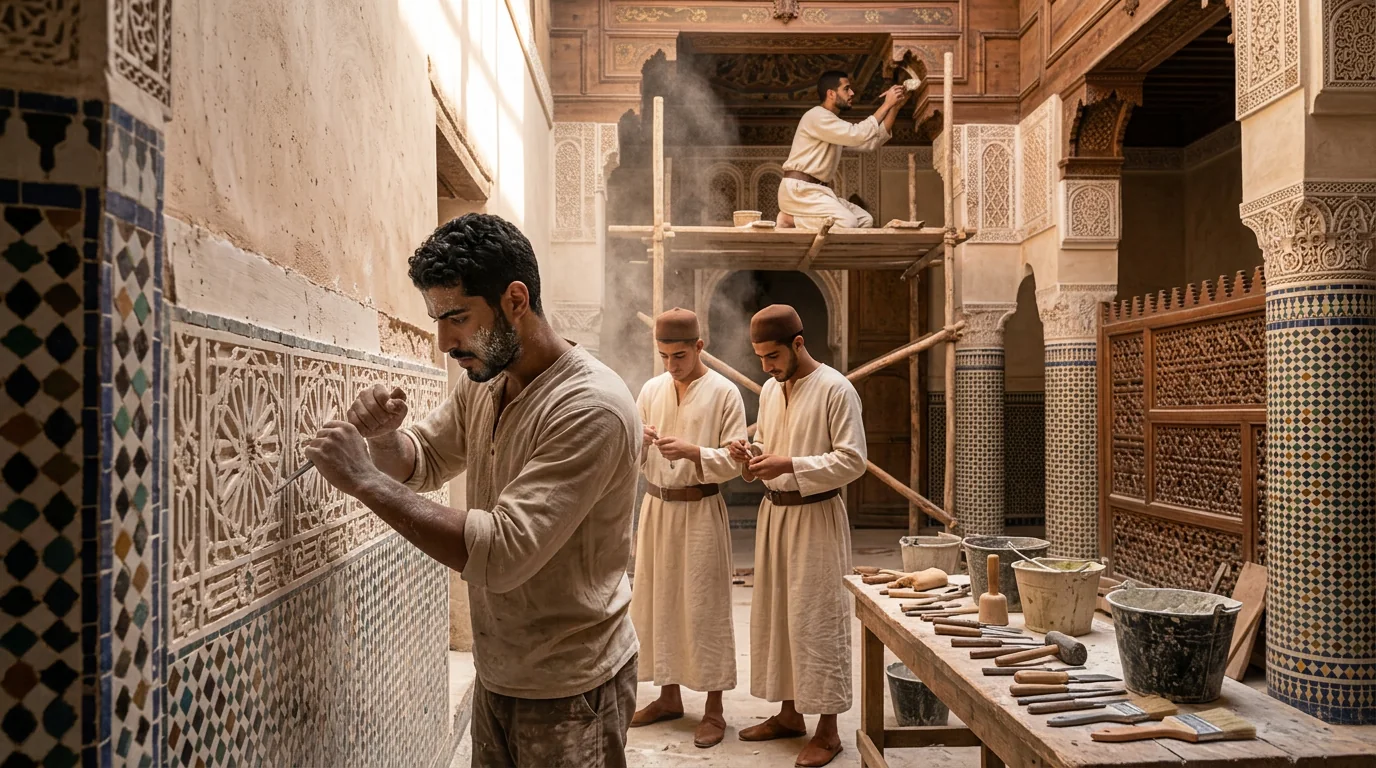
The Riad’s first gift to the city is work. The restoration of the whole house will employ the craftsmen of Fez: a specialist firm for the structure, the restorers and maʿallem of the medina for lime, plaster, wood and zellige. Beside them, the house’s apprentices learn by restoring the house they will live in; then, with Al-Warsha→, they raise again, one by one, the houses of the derb in which, once masters, they may settle by buying them at cost. The building site does not close when the house opens: it stays open, and for years brings craft and wages to the quarter.
The second gift is bonds. The evenings, gatherings and services described on this page serve to cultivate a real tie with the people of the medina and of Fez: they show the house as it is, its rhythms, its table, what it does for the poor and for its neighbours. A house that lets itself be seen has no need to explain itself.
And this, too, is how the Riad finds its pupils. A young man who has played in the derb cup, brought a babouche to the repair bench or listened to the nouba in the garden already knows what is done here before he asks; and the masters, for their part, recognise there who has the hand and the character. Many ṣāniʿ will come from these evenings rather than from a call for applications: it is the way in that Dar al-Hiraf prefers, as Who we are looking for→ explains.
Events open to all, men, women and families, are held in the parts of the house that give onto the outside: the garden, a courtyard towards the derb, the hall that looks onto the patio. The patio, the workshops and the dormitories remain the residents’ home, which the quarter sees and senses, and which does not for that become a place of passage.
Full-moon nights
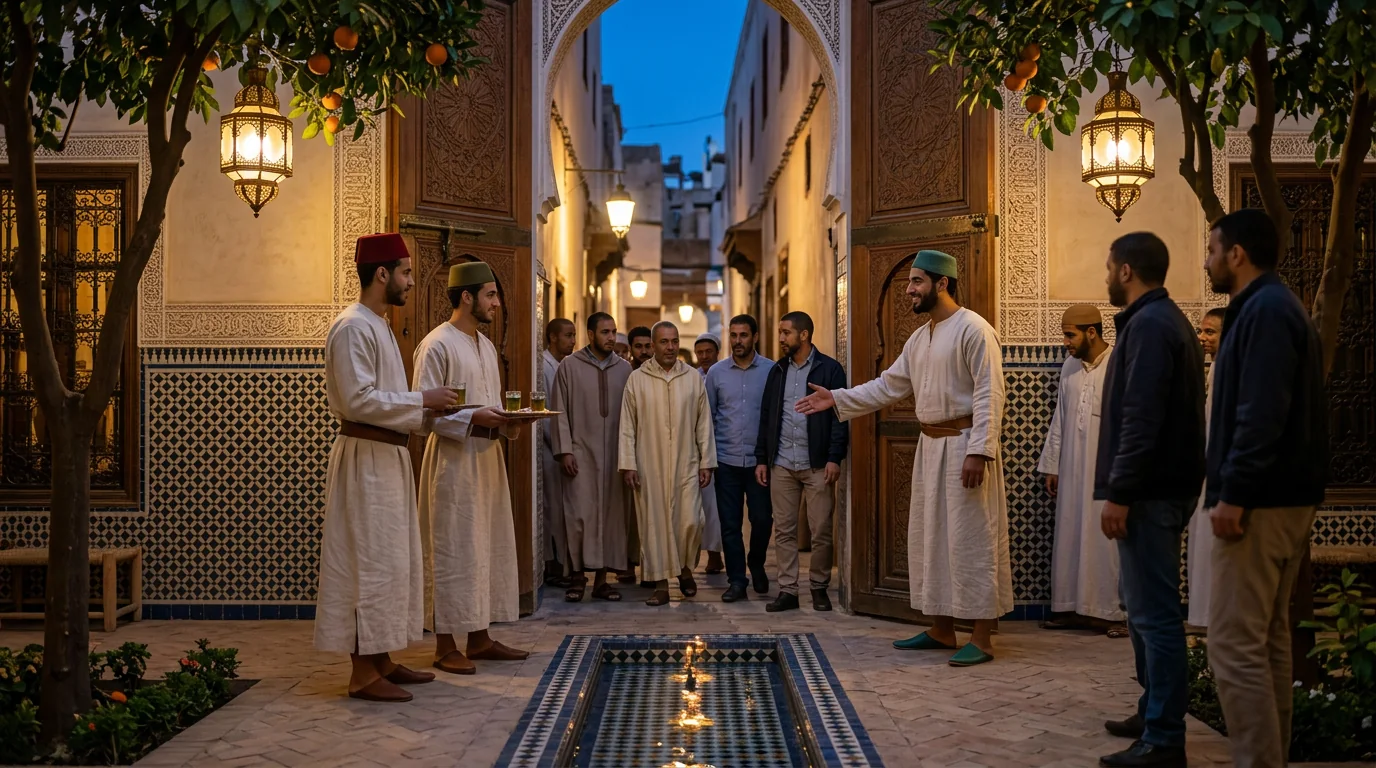
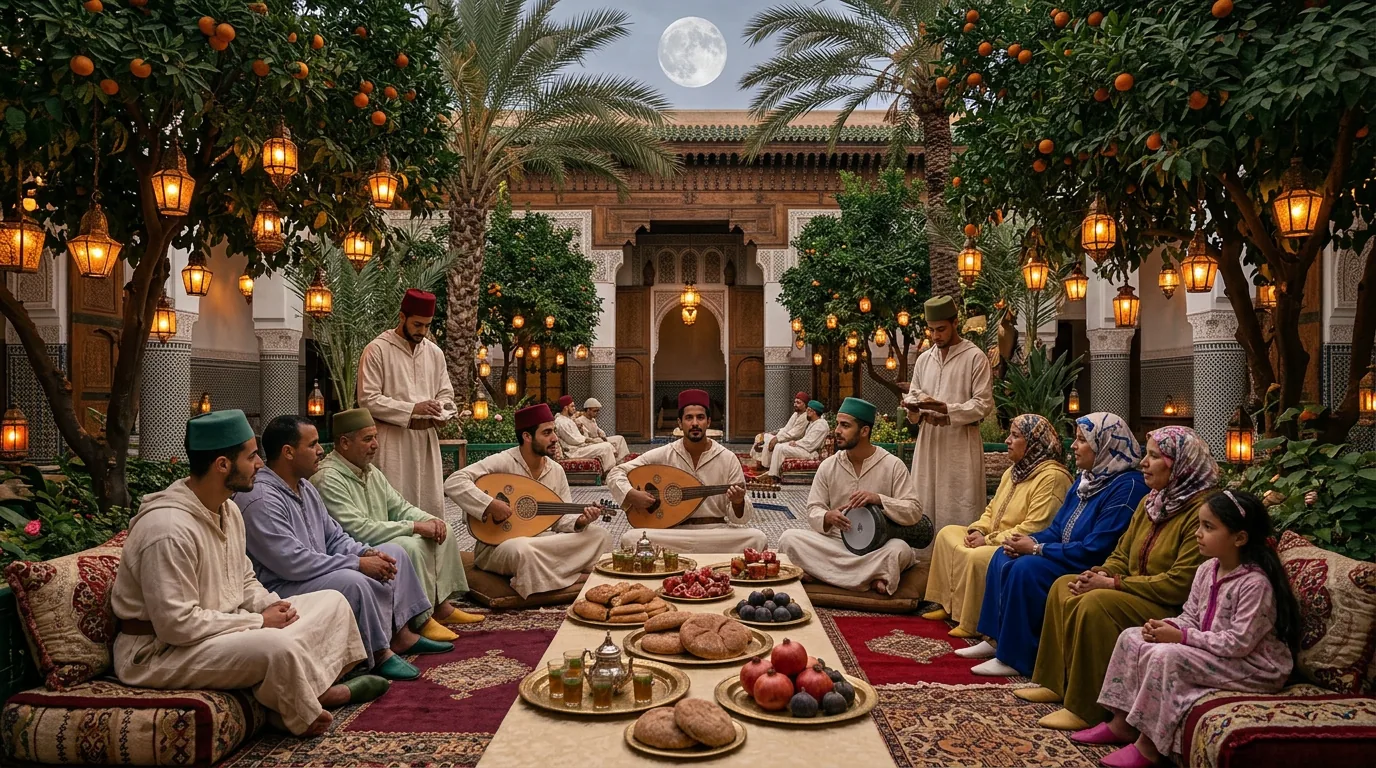
One evening a month, when the moon is full, the Riad opens its door to the quarter. The garden lights up with lanterns, the water does the rest. There is the nouba or the malḥūn, the sung poetry of the craftsmen of Fez and Meknes; tea is poured, and the house offers what the vegetable garden and the orchard have given those days: pomegranates, figs, the house’s bread. A few ṣāniʿ show a passage of taḥṭīb.
No one is invited and no one is turned away: whoever passes through the derb and hears the music may come in. It is the oldest way a house knows of telling its neighbours that it is lived in.
The music season
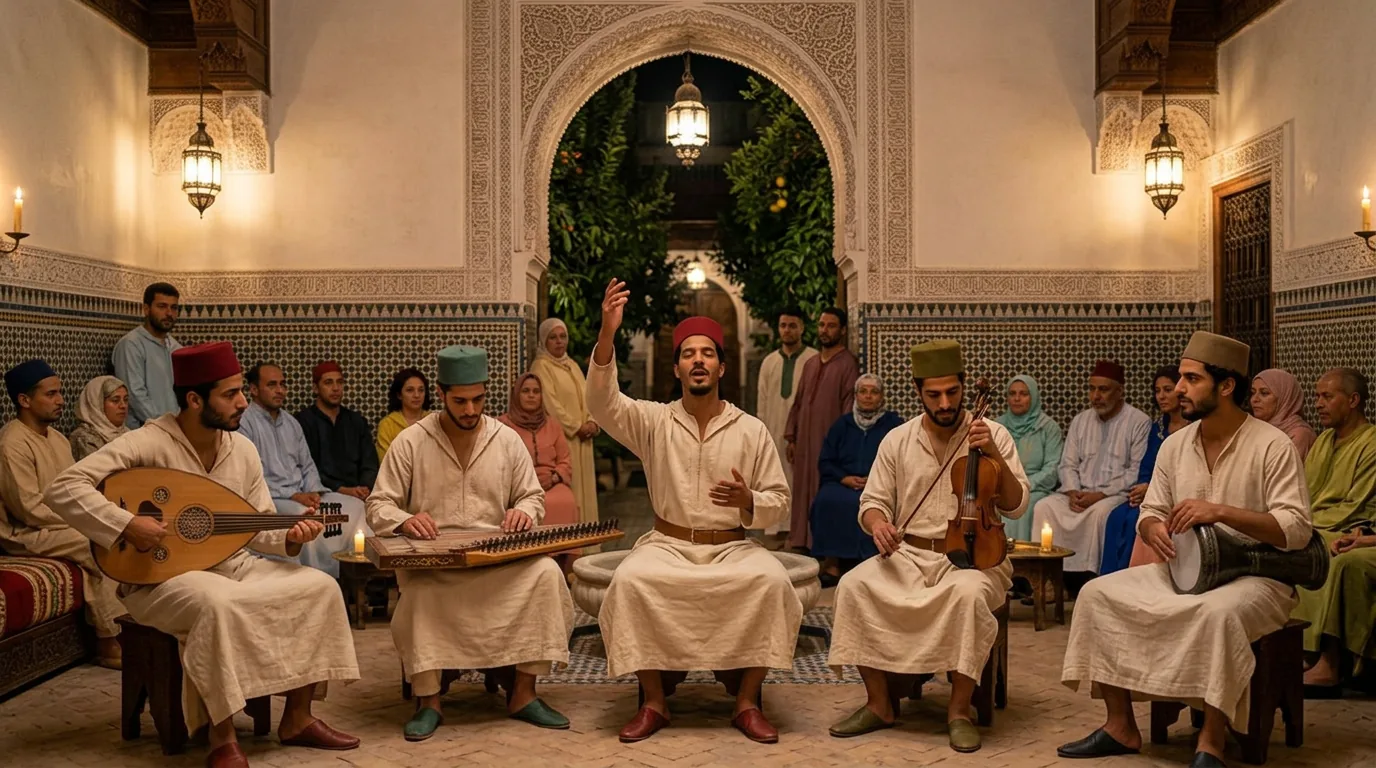
In the hall that looks onto the patio, a few concerts each season: the Andalusian nouba, the malḥūn, the gnawa, a night of samāʿ for the Mawlid. When Fez hosts the Festival of World Sacred Music, the Riad holds its own evening off the festival, with the musicians who stay on in the city.
Residents who study music play beside the masters: it is their way of giving back to the city what they have learned.
The open majlis
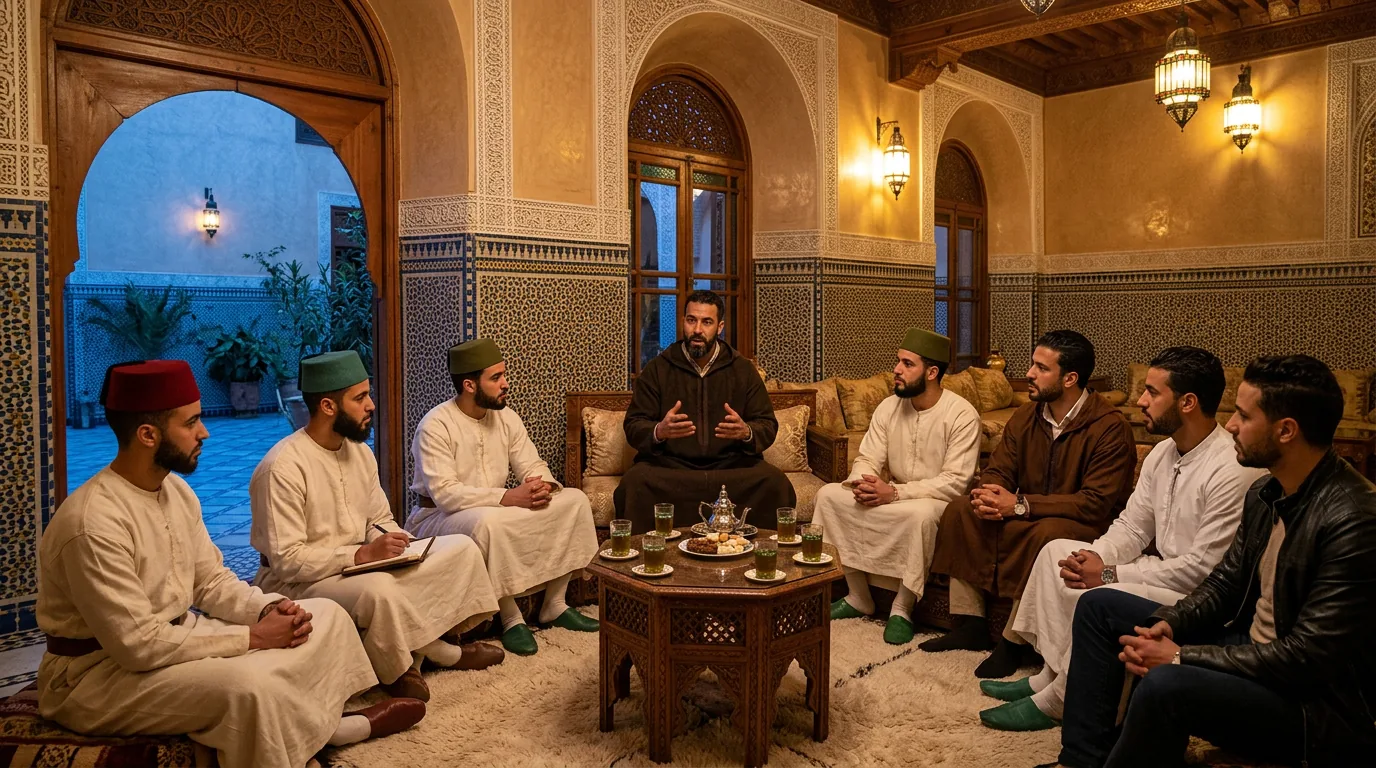
One evening a month, a public word. A scholar, an old maʿallem telling of his craft, a historian of Fez, a poet, a doctor, an architect of the medina. He speaks, then the talk goes on over tea, without a platform and without hurry, as it always has in the city’s majālis.
The themes follow the life of the house: water and coolness, the history of the guilds, the horse, the kitchen, restoration, language.
The halqa of tales
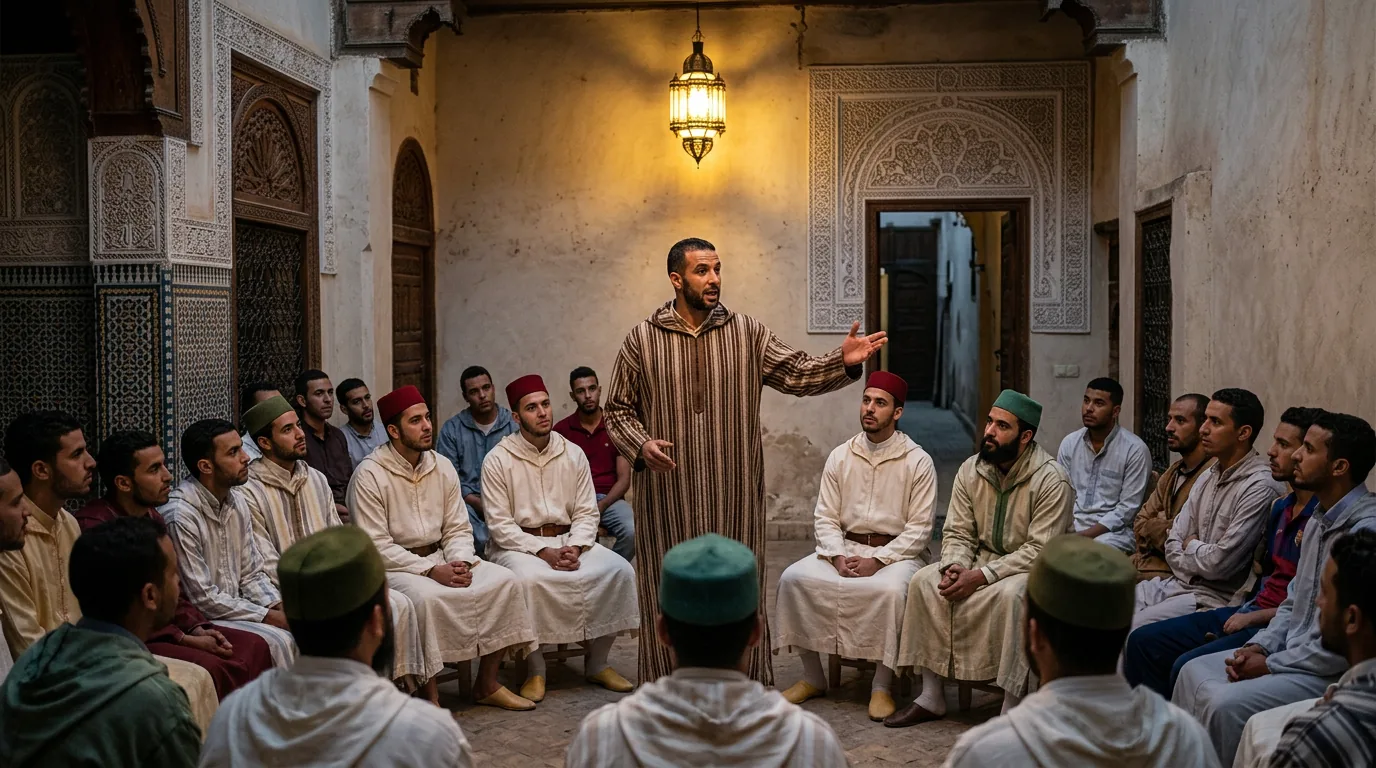
The storytellers of the medina, the ḥlāyqiyya, are disappearing like the crafts. The Riad invites them to tell their stories in the courtyard towards the derb, in a circle, as they did in the squares: the tales of ʿAntar, the maqāmāt, the travels of Ibn Baṭṭūṭa, the Fez of Leo Africanus.
Storytelling too is knowledge passed from mouth to ear, and the house treats it as it treats a workshop.
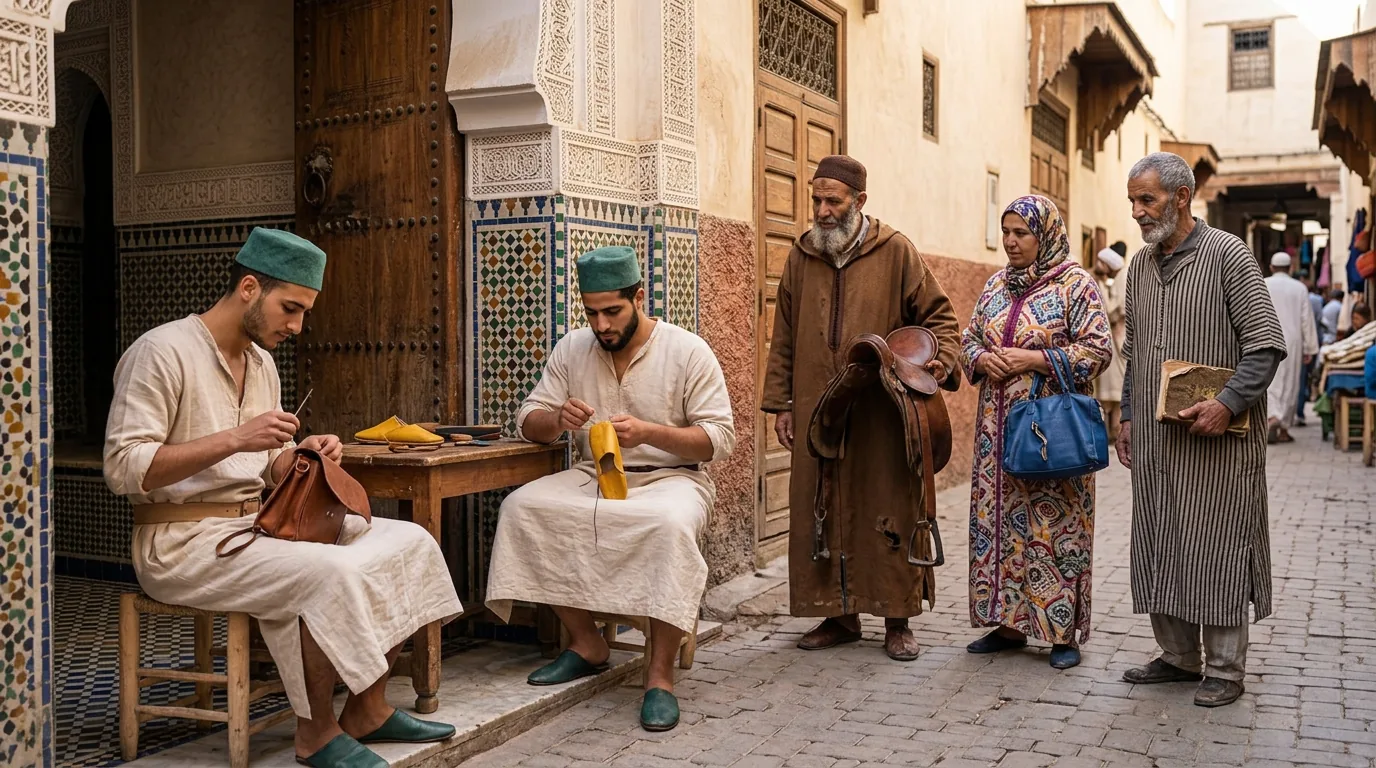
The repair bench
One morning a month the apprentices sit at the bench outside the door and mend what the neighbours bring: a bag come unstitched, a babouche, a saddle, a broken book, a chair with a limp. The repairs are free, or for a voluntary offering that goes to the families’ fund.
Much is learned by mending what another man made, and nothing binds a workshop to its quarter like an object that goes home repaired.
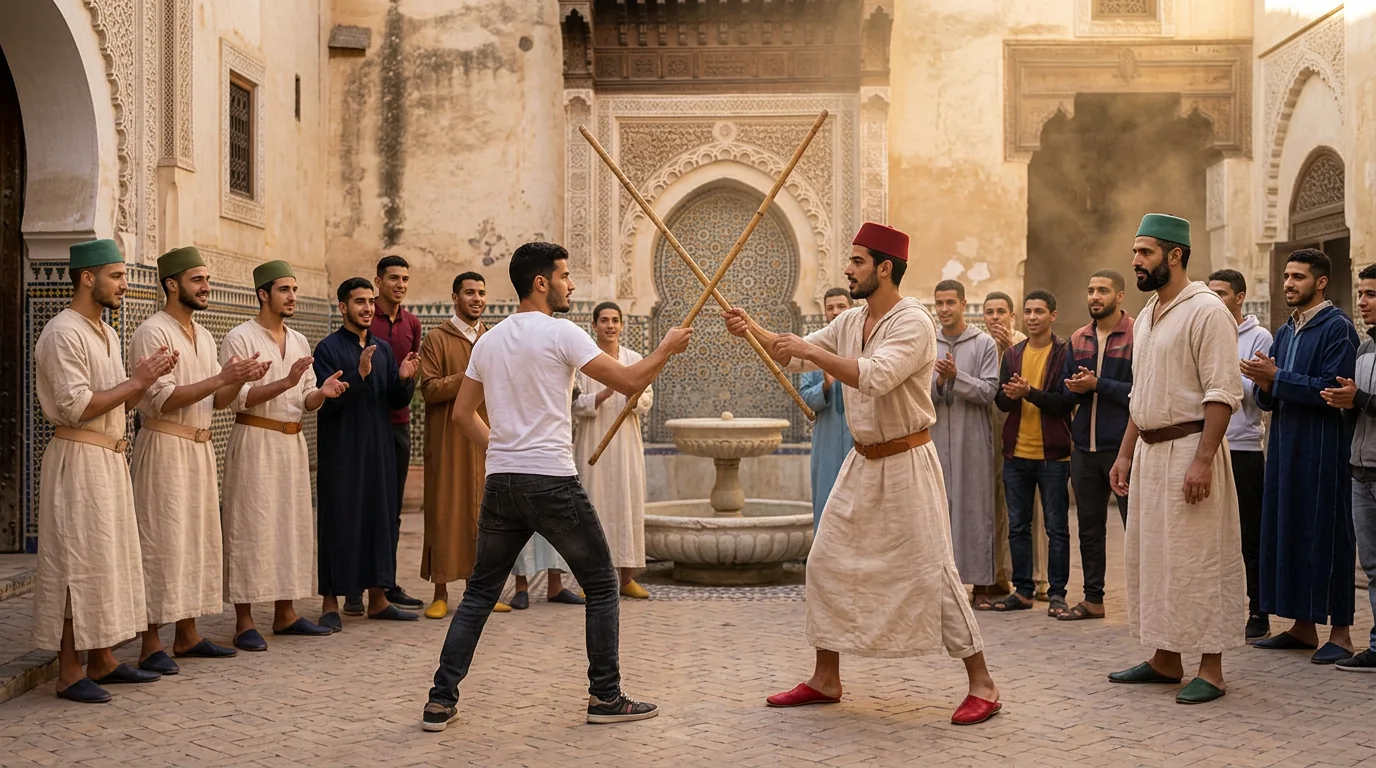
The derb cup
Once a season, a tournament between the young men of the house and those of the quarter, on the square or the pitch: football, wrestling, taḥṭīb. The teams are mixed, the neighbours cheer.
The robe of honour goes to the best for merit and loyalty, and it may go to a young man of the quarter: so the house honours its neighbours, not only its own.
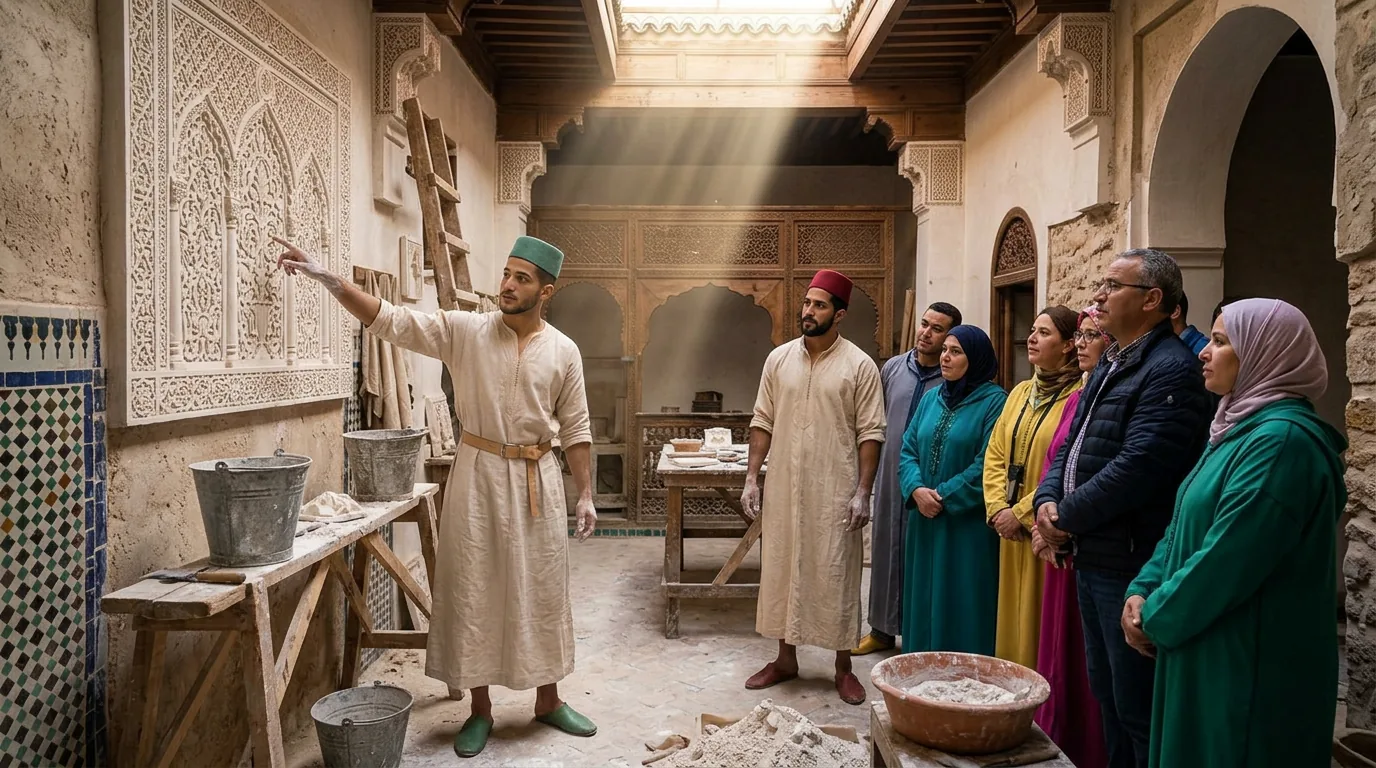
The open building site
In the month Morocco dedicates to its heritage, in spring, Al-Warsha opens the houses of the derb it is restoring. The apprentices lead the visits: they show the lime, the wood, the plaster, and explain what they do and why they do it that way.
Those who live in the medina see their street rise again, and come to know the men who raise it.
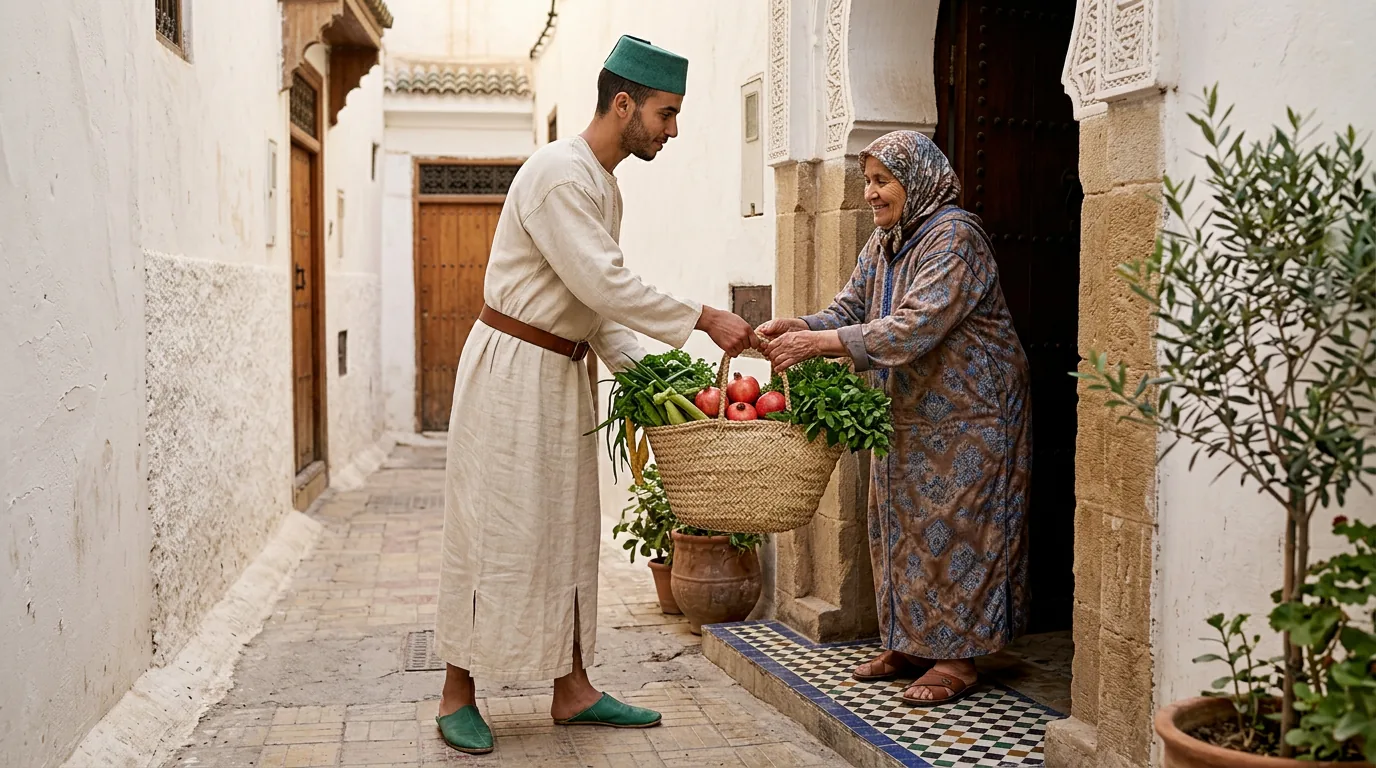
The garden basket
What the vegetable garden and the orchard give in excess is not wasted: each week a basket goes to the families the Riad looks after and to the oldest neighbours. A small and regular gesture, beside the great evenings.
The calendar
| When | What | Where |
|---|---|---|
| Every week | The garden basket | At the doors of families and neighbours |
| Every month, at full moon | Full-moon nights | The garden |
| Every month | The open majlis | The hall on the patio |
| Every month, one morning | The repair bench | Outside the door, in the derb |
| Every season | The music season; the ḥalqa of tales | The hall on the patio; the courtyard towards the derb |
| Every season | The derb cup | The square or pitch of the quarter |
| In spring | The open building site | The houses of the derb |
| During the Festival of Sacred Music | The evening off the festival | The garden |
| For the Mawlid | A night of samāʿ | The hall on the patio |
How to take part
Full-moon nights and the repair bench are open to whoever passes, without booking. For the majlis, the concerts and the site visits places are limited: the programme will appear in the Newsletter→, and anyone who wishes to come may write to the house→. The events are free; those who wish may leave an offering, which goes to the families the Riad looks after, as Charity and service→ describes.
See also The day and the week→, Music and chant→, Tahtib and gnawa→, Garden and kitchen garden→, Encounters→, Experiences→.
The words of this page are in the common glossary; the works cited in the sources; the sister house is Al-Funduq aṣ-Ṣiqillī.