Leatherwork
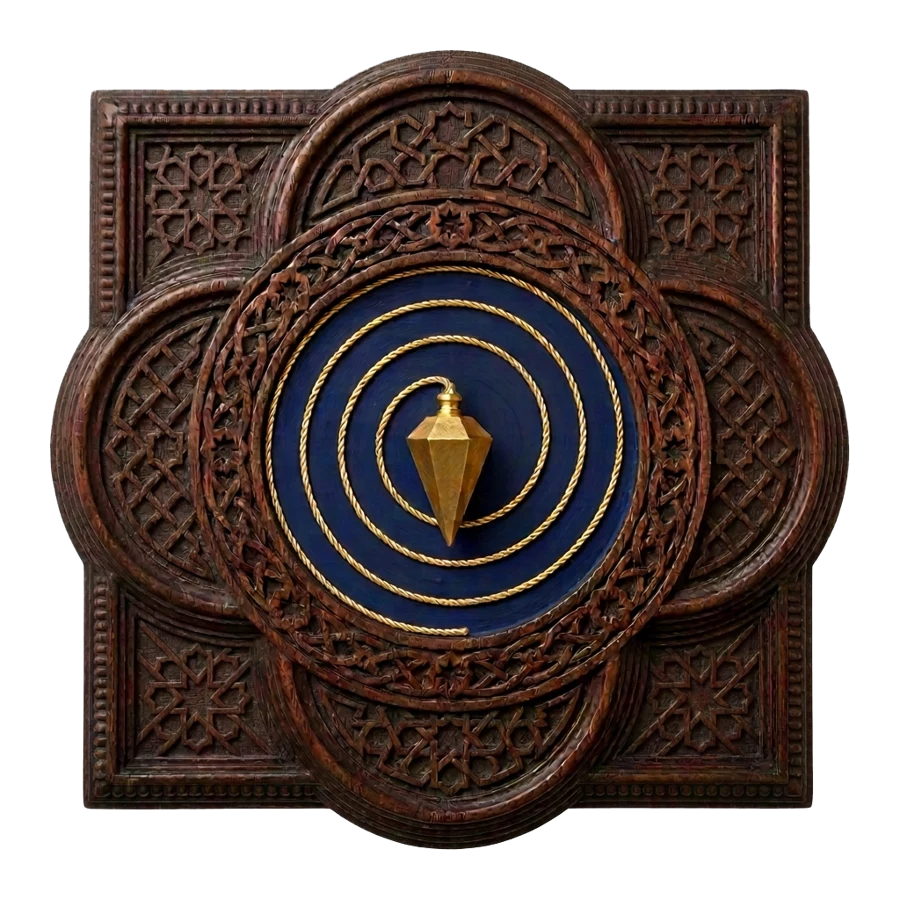
السرّاج
Fez red
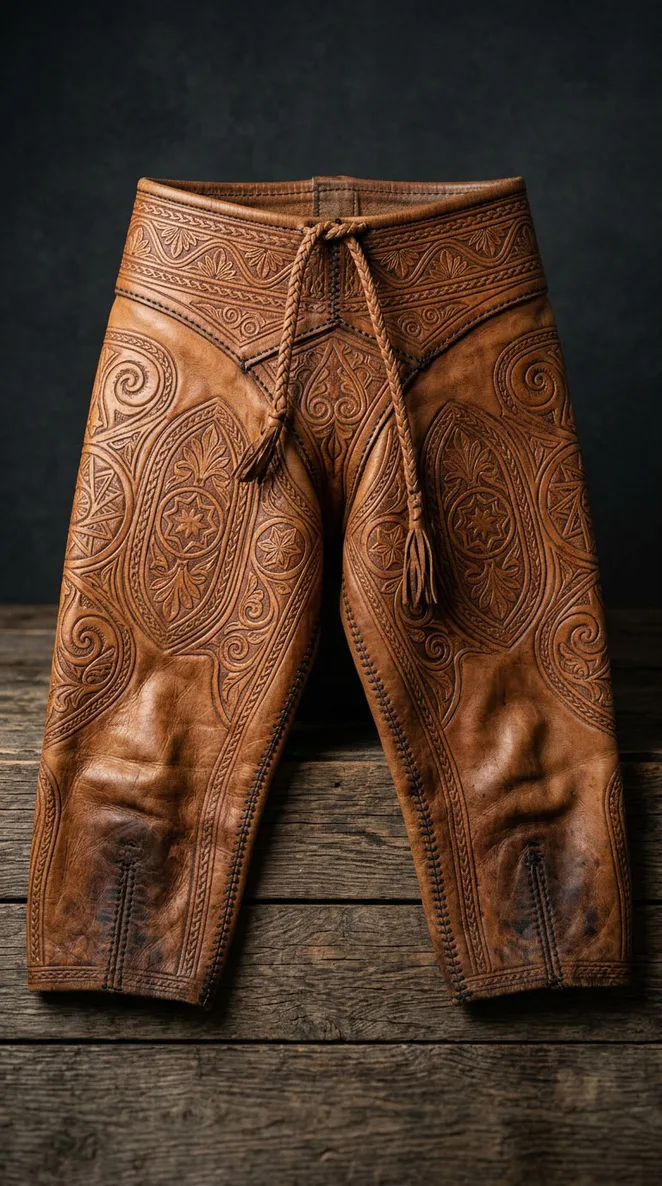
Leather cut, stitched and tooled: the saddle, the girths, the reins, and the leather of wrestling. →
Furusiyya in its first sense: the horse, before the bow and the sword.
The word furūsiyya (فروسية) comes from faras (فرس), the horse: in the strictest sense, before wrestling, the bow or the sword, furūsiyya means riding itself. It is the first and oldest of the Arab-Islamic chivalric disciplines, the one that gives its name to all the others.
الخَيْلُ مَعْقُودٌ فِي نَوَاصِيهَا الْخَيْرُ إِلَى يَوْمِ الْقِيَامَةِ
“Good remains tied to the forelocks of horses until the Day of Resurrection.”
Prophetic tradition (Bukhārī, no. 2850)
In the treatises written in Mamluk Cairo and Nasrid Granada, furūsiyya covers the care and training of the horse, the harness that dresses it, the practice of arms and the bearing of the one who carries them: the farrier, the saddler and the master-at-arms belong there to a single body of knowledge.
The two houses take it up as a discipline alongside the crafts, because the saddle and the harness need several workshops working together, and because the hand that makes them must know the horse that carries them. The order remains that of the treatises: first the body, then the horse, then the weapon.
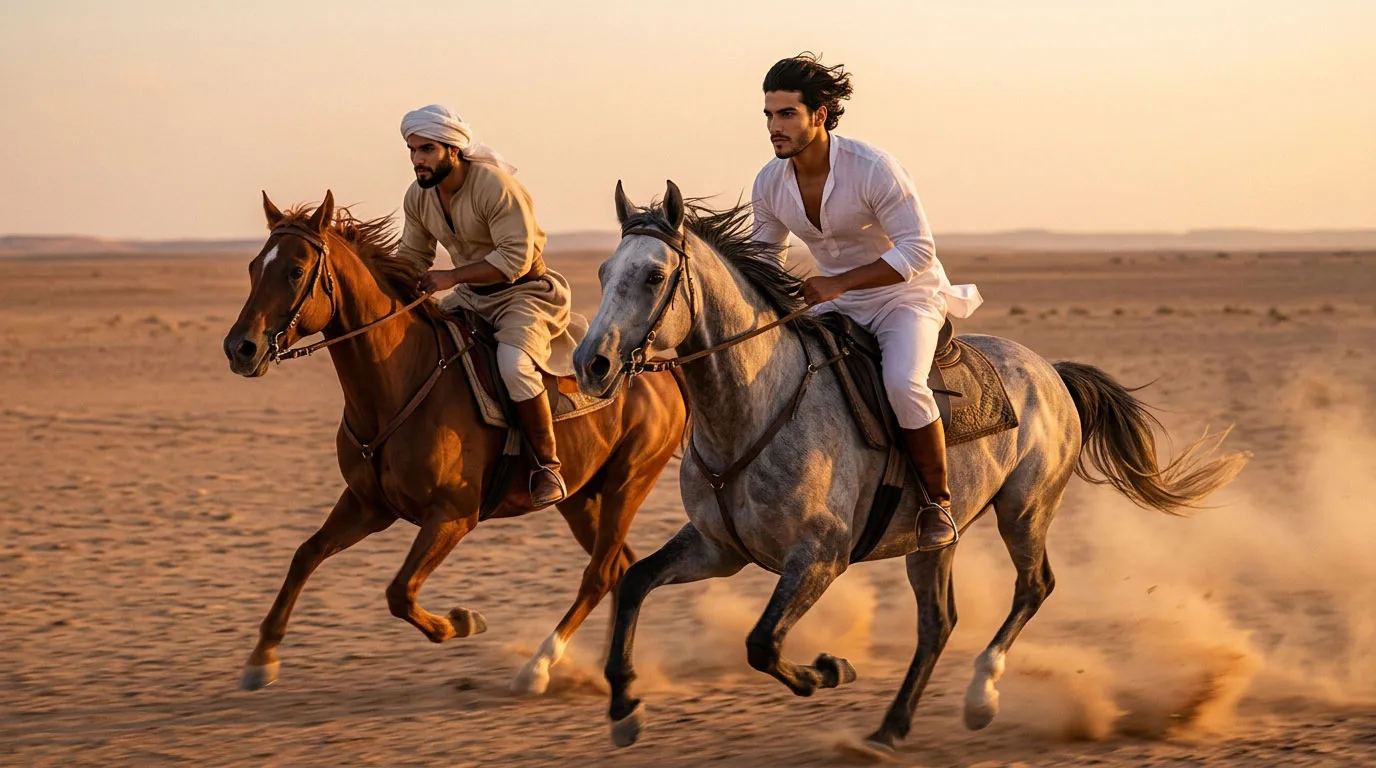
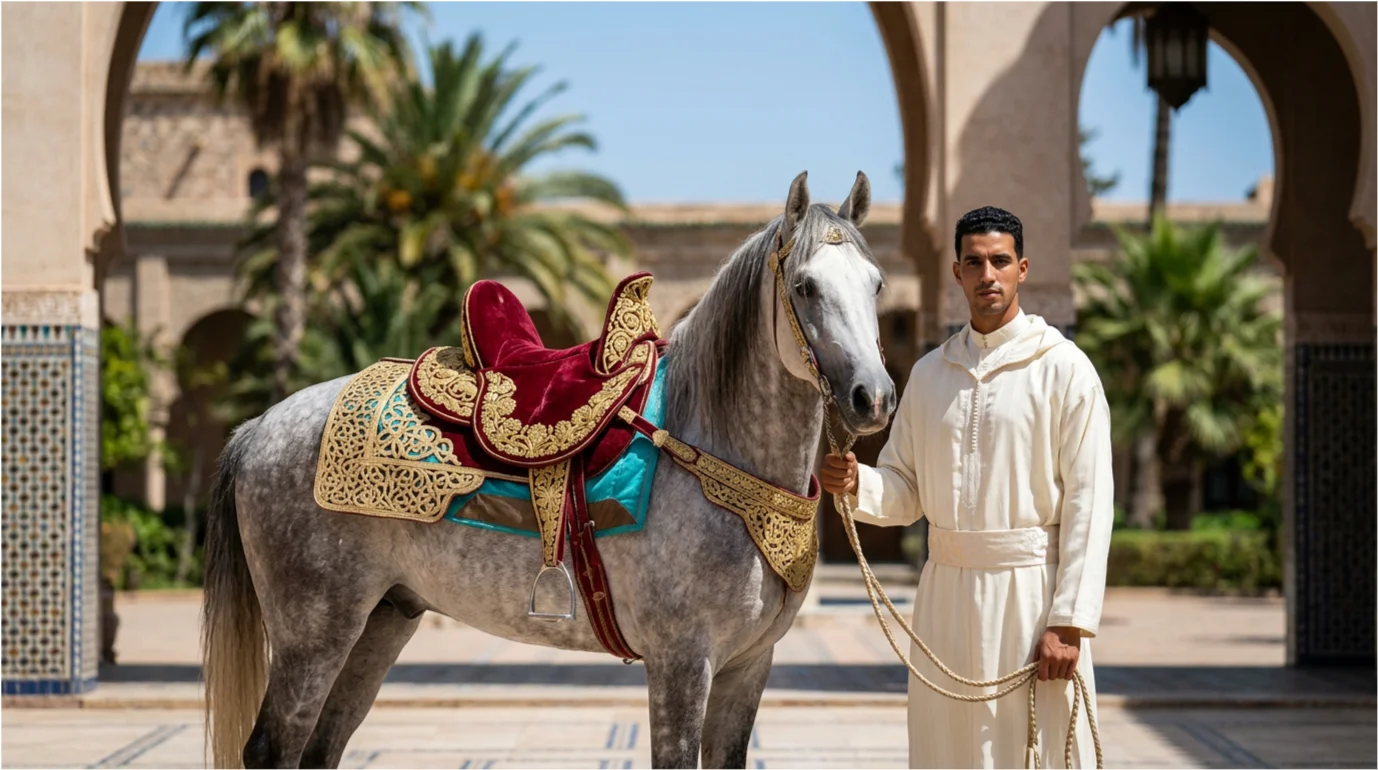
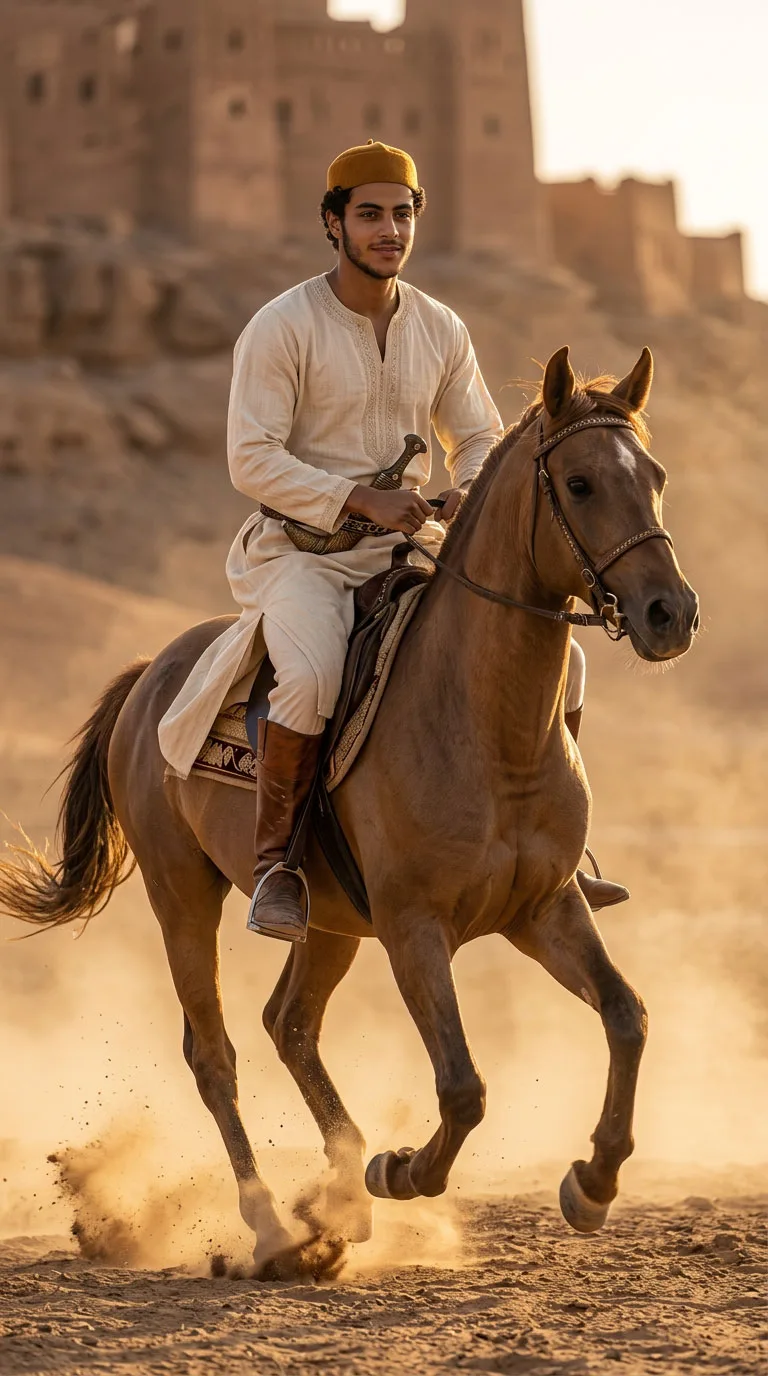
The medina has no room for horses. The animals are kept outside the walls, at a riding stable or a tbourida yard in the Fez region, and the residents go there on set days. The first year is for care: grooming, feeding, leading in hand, recognising lameness and fatigue. Then comes the seat, at walk and trot, and only afterwards the gallop. If the space of the house allows, the garden will also keep a horse, so that the workshop has before its eyes the animal it works for.
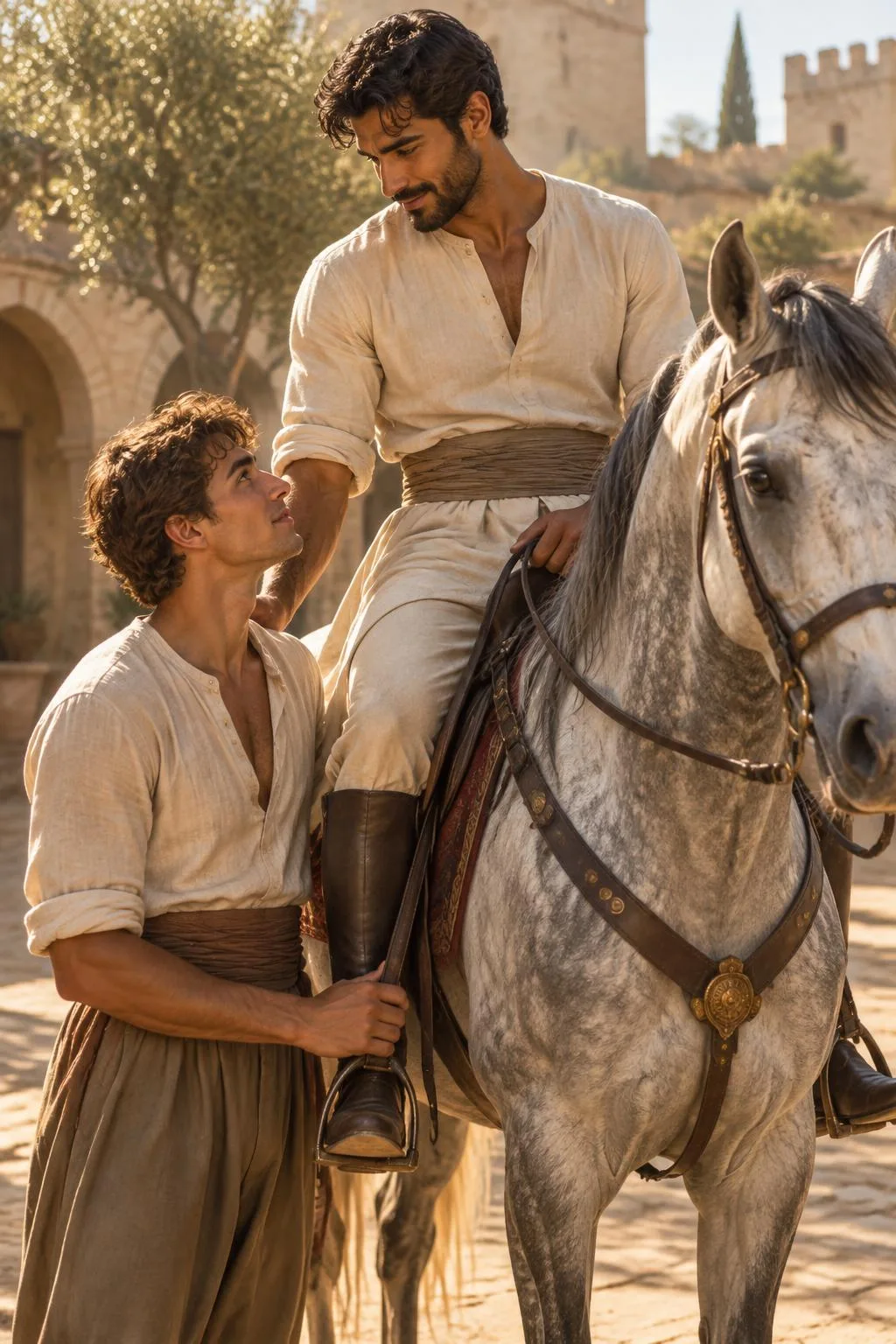
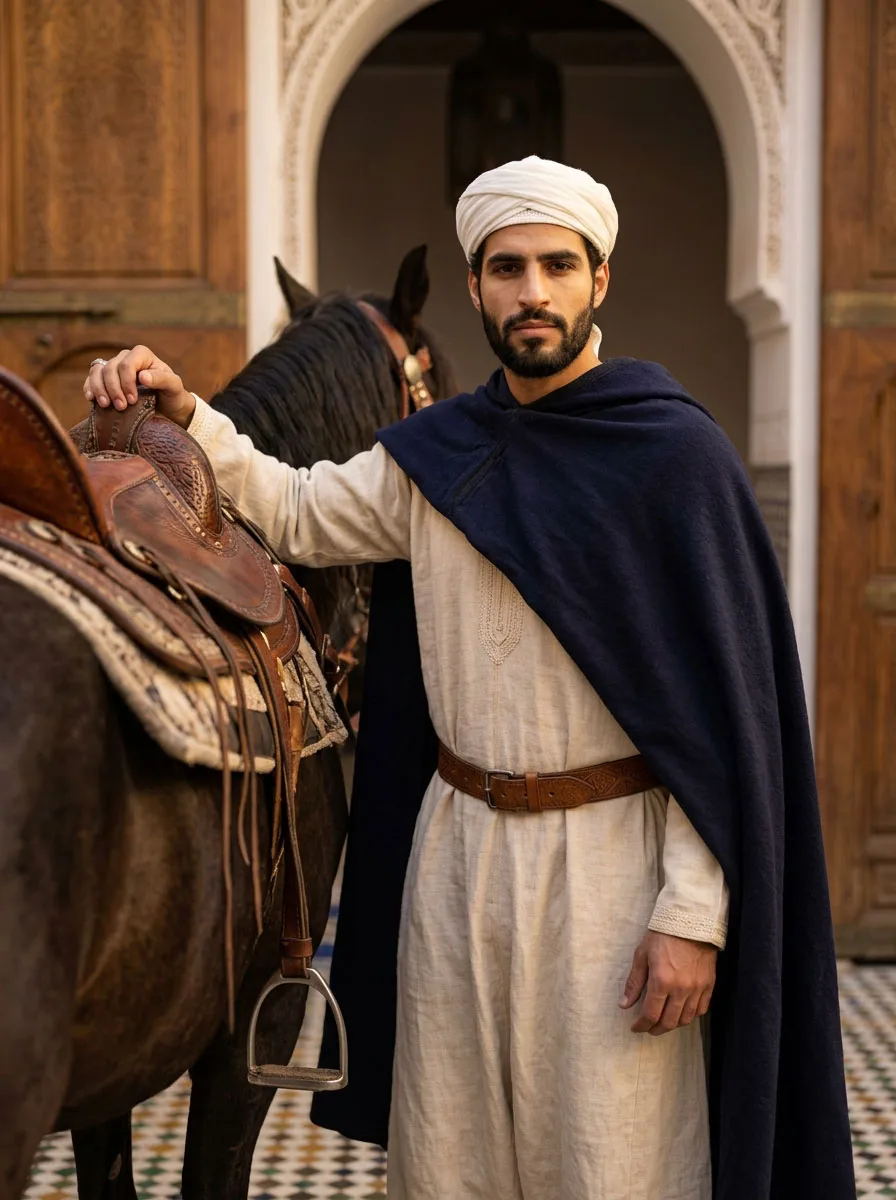
For riding, the companions wear the riding dress: the linen serwal tucked into tmag boots, the short qamīṣ and the work belt; in winter, the selham. It is described in Al-Kiswa, the dress→.
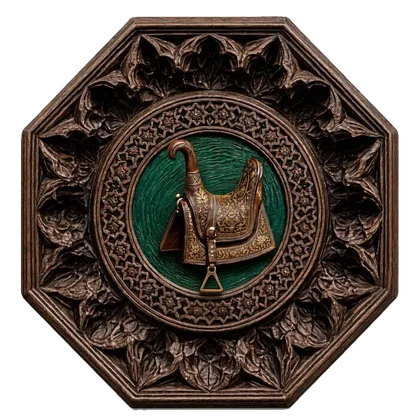
«Poi sono quelli che fanno selle di cuoio, e usano di far tre coperte per sella, l’una sopra l’altra, più fina quella di mezzo e l’ultima di minor bellezza, e tutte di cordovano. Questi lavori ancora sono eccellenti e mirabili, e sono circa a cento botteghe.»
[Then come those who make leather saddles; they are wont to put three covers on each saddle, one over the other, the finest in the middle and the last of lesser beauty, all of cordovan. These works too are excellent and admirable, and there are about a hundred shops.]
Leo Africanus, Description of Africa, book III, Fez, “Various artisans, shops and squares” (Italian text; English in brackets)
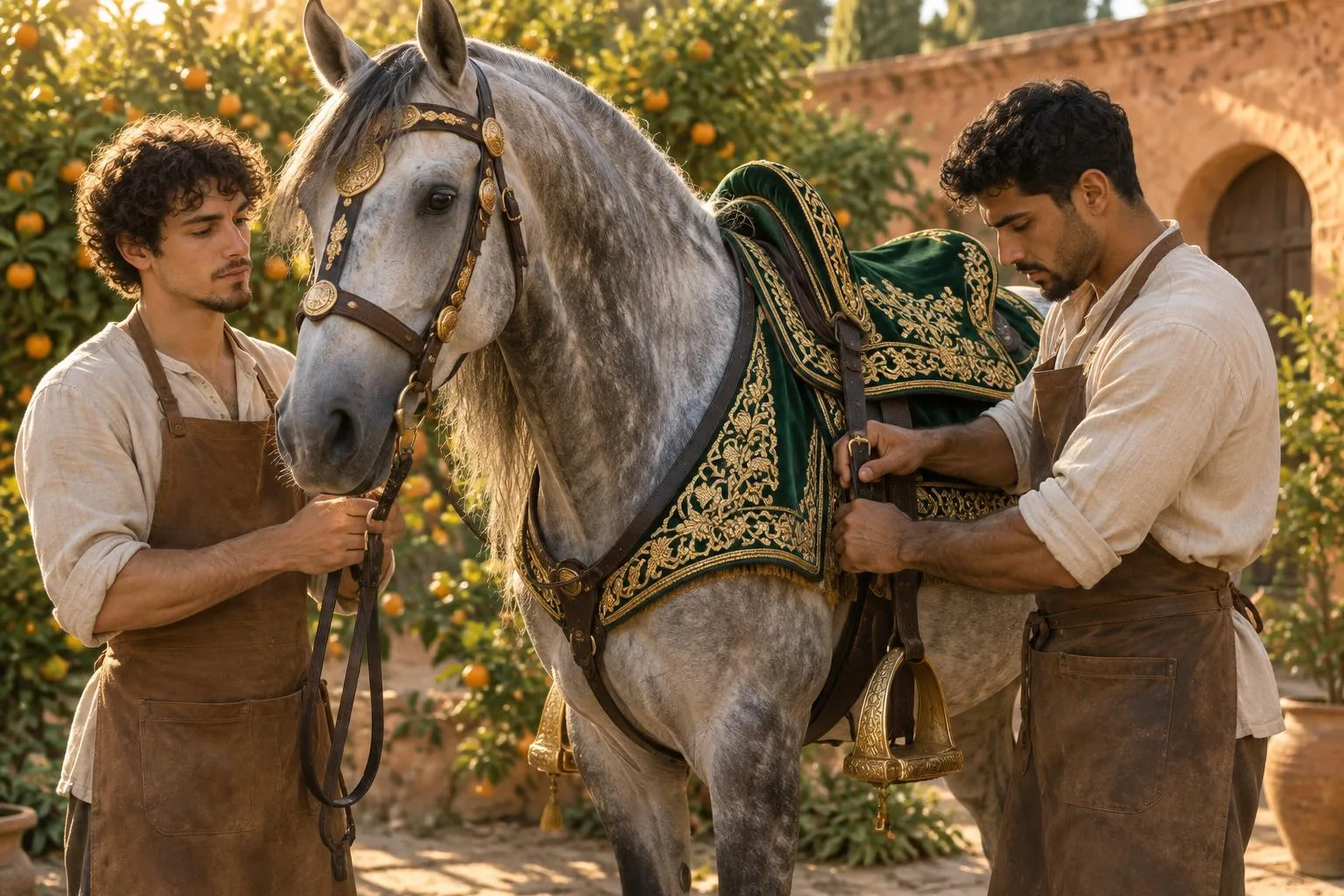
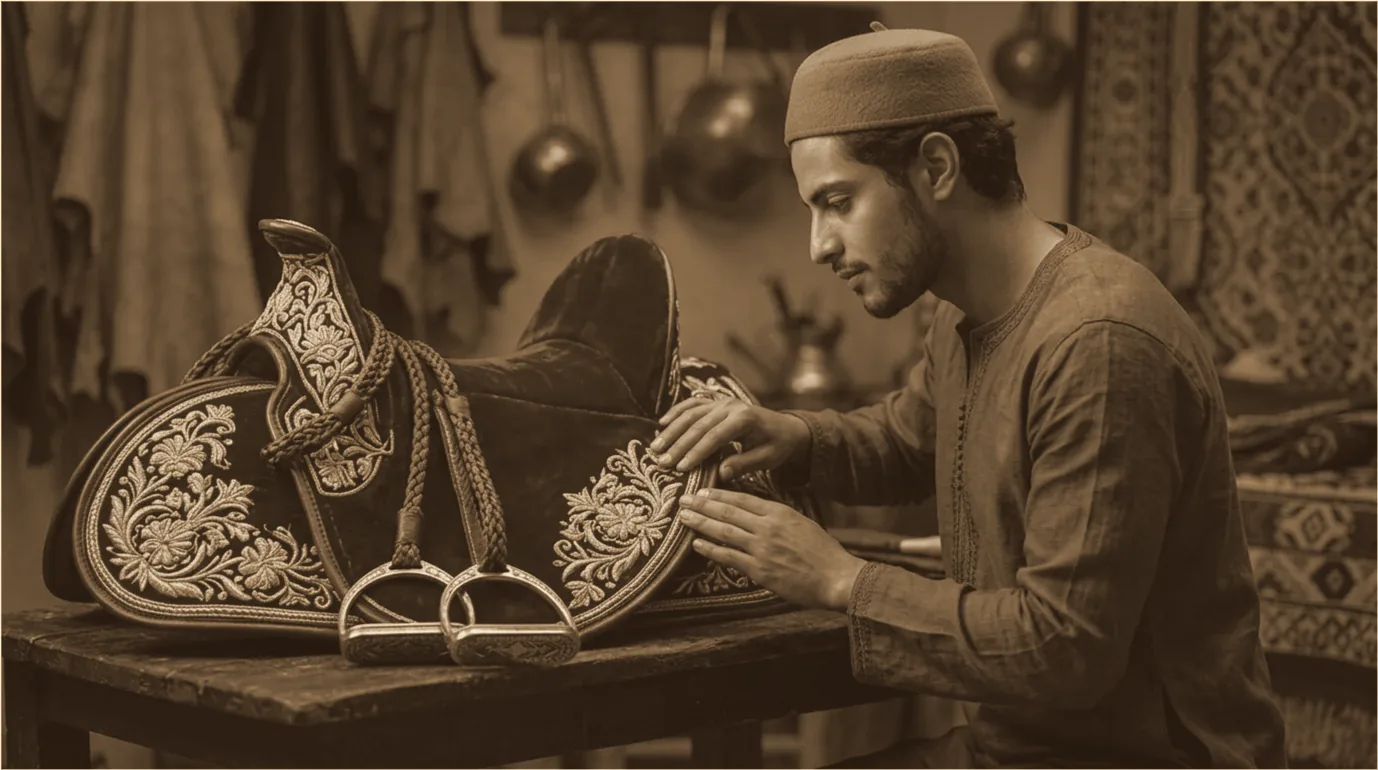
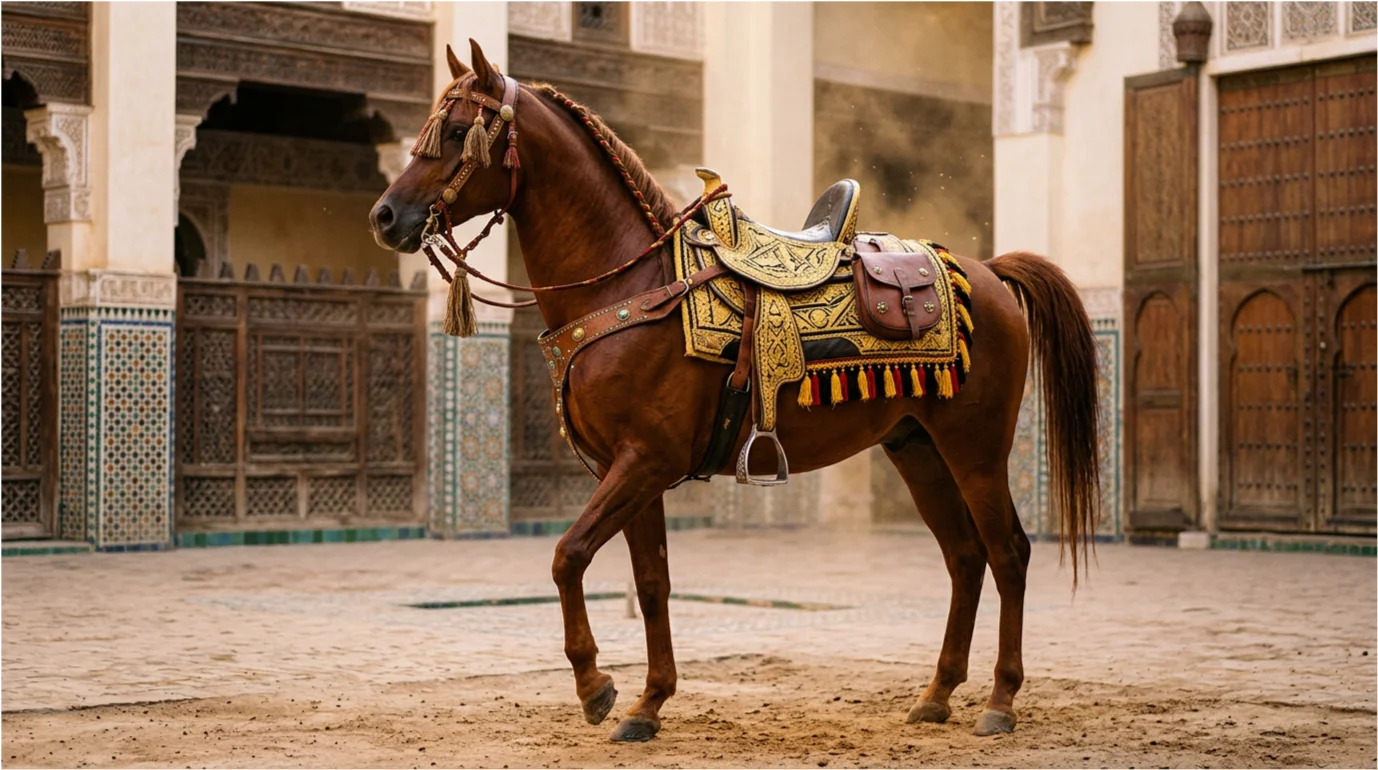
The saddler’s workshop works leather, the wooden saddle tree, gold embroidery on velvet and the metals of the harness. The saddles that come out of it will be made to be ridden: on the house’s horse and, to commission, also as ceremonial saddles, including those of Tbourida, the Moroccan equestrian art inscribed by UNESCO on the intangible cultural heritage of humanity.
The ʿudda, that is bit, saddle, leather, metal and parade cloths, is where several crafts meet: a work of fine saddlery needs the maʿallem of leather, the one of iron and chasing, the one of textiles. It is work to commission, for those who can recognise it: a piece that lasts and honours the one who made it.
The detail of each piece, and its figure for character, are set out in Al-Udda, the harness→.
See also The furusiyya→.
See also, in Ragusa, The Furusiyya→.
The bit, the saddle, the rule. What is placed on the horse figures what the house places around the man.
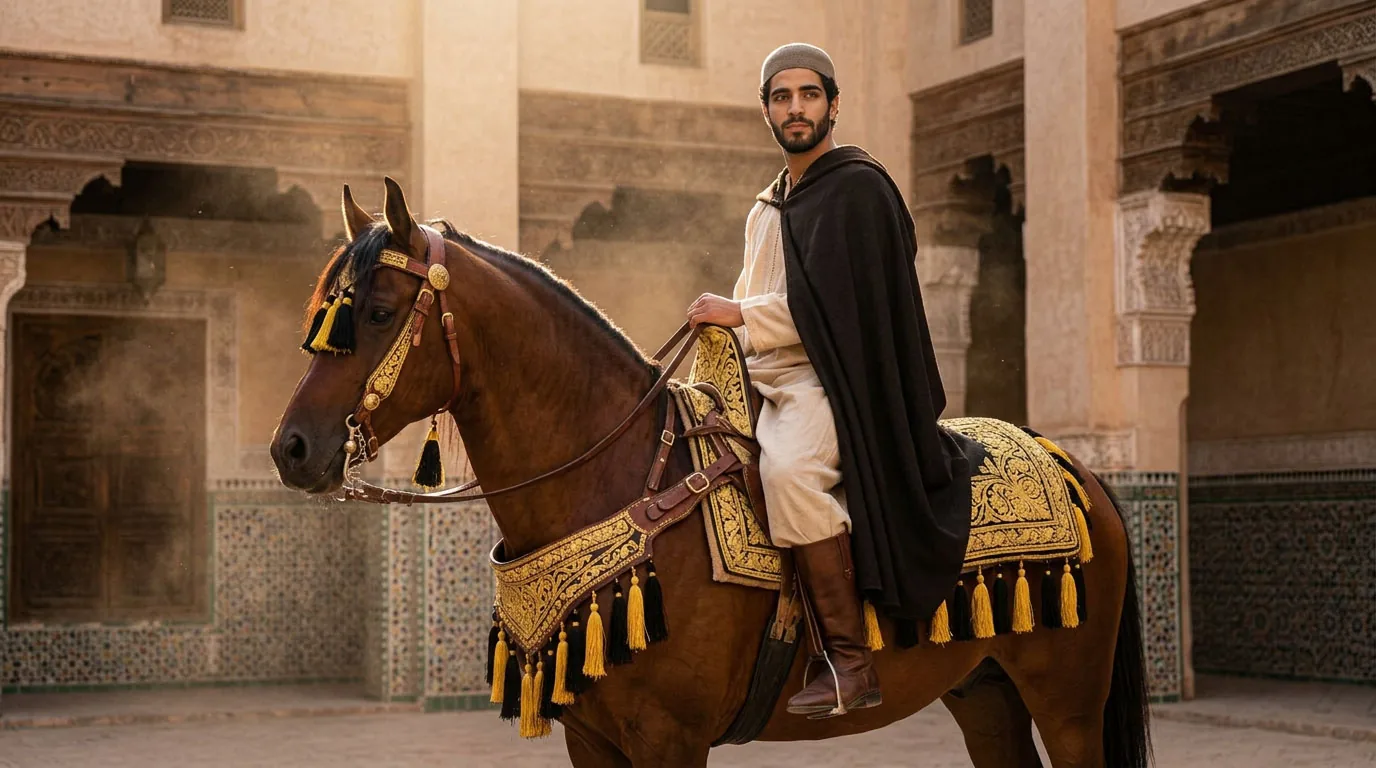
وَأَعِدُّوا لَهُم مَا اسْتَطَعْتُم مِّن قُوَّةٍ وَمِن رِبَاطِ الْخَيْلِ
“Prepare against them whatever you are able of force and of horses held in tether.”
Qur’an, al-Anfāl 8:60
الْخَيْلُ مَعْقُودٌ فِي نَوَاصِيهَا الْخَيْرُ إِلَى يَوْمِ الْقِيَامَةِ
“Goodness is tied to the forelocks of horses until the Day of Resurrection.”
Prophetic tradition (Bukhārī, no. 2850)
Furūsiyya gives a body to the formation of character. Before it is a symbol, it is a practice: the art of the horse. The ṣāniʿ are made to undergo the physical experience of mastering an animal still untamed, so that they understand, in the gesture itself, what it is to command oneself.
The bit figures, by choice and by tradition, the restraint a man sets on what would prevail in him. The passions are good or bad according to the use made of them. They are bridled as a colt is schooled: to direct its strength and keep it.
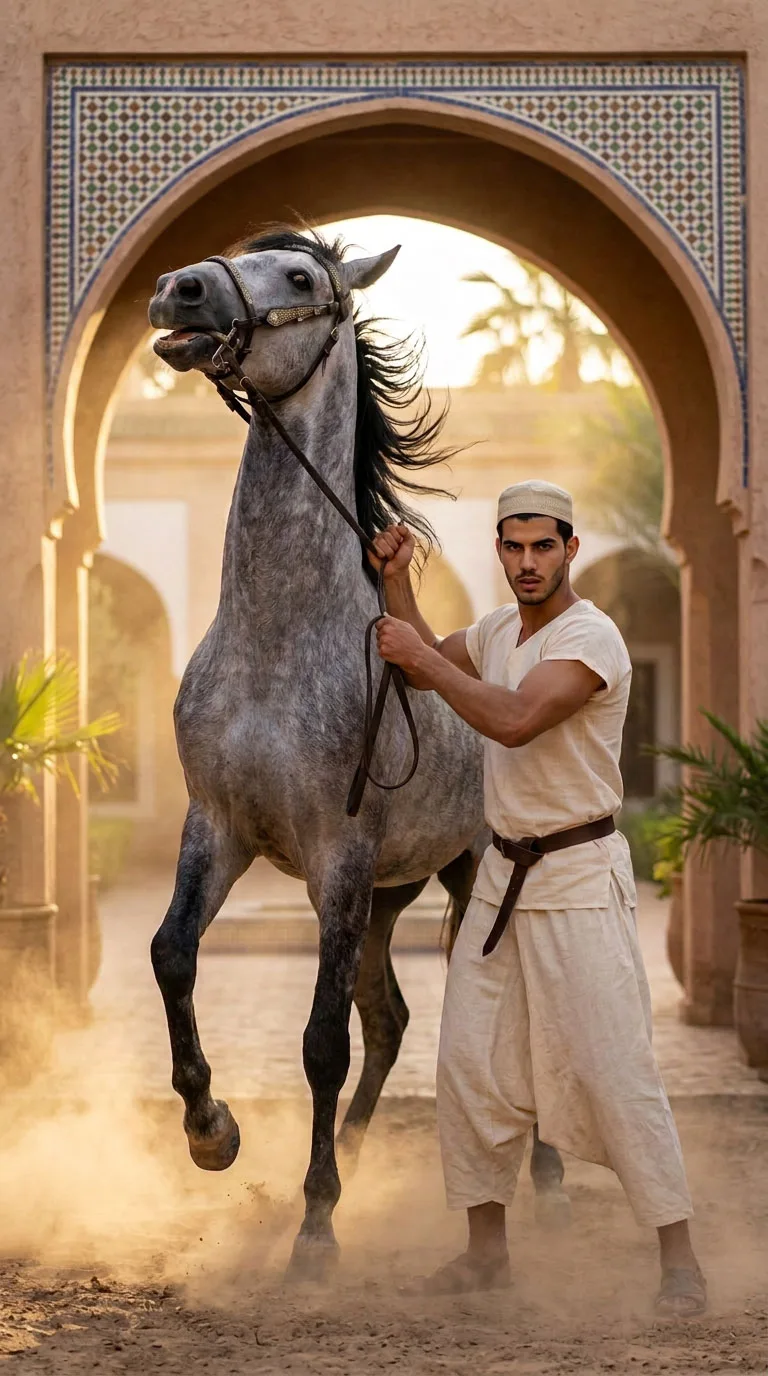
The colt that rears and tries to unseat the rider is like the one who enters Dar al-Hiraf. The community provides the bit, the bridle, the spurs and the saddle; holding firm is his part.
Each piece of the ʿudda has a task on the horse and a meaning for the man. The same logic runs through futuwwa, brotherhood and javanmardi: the house offers the frame; the man must stand firm.
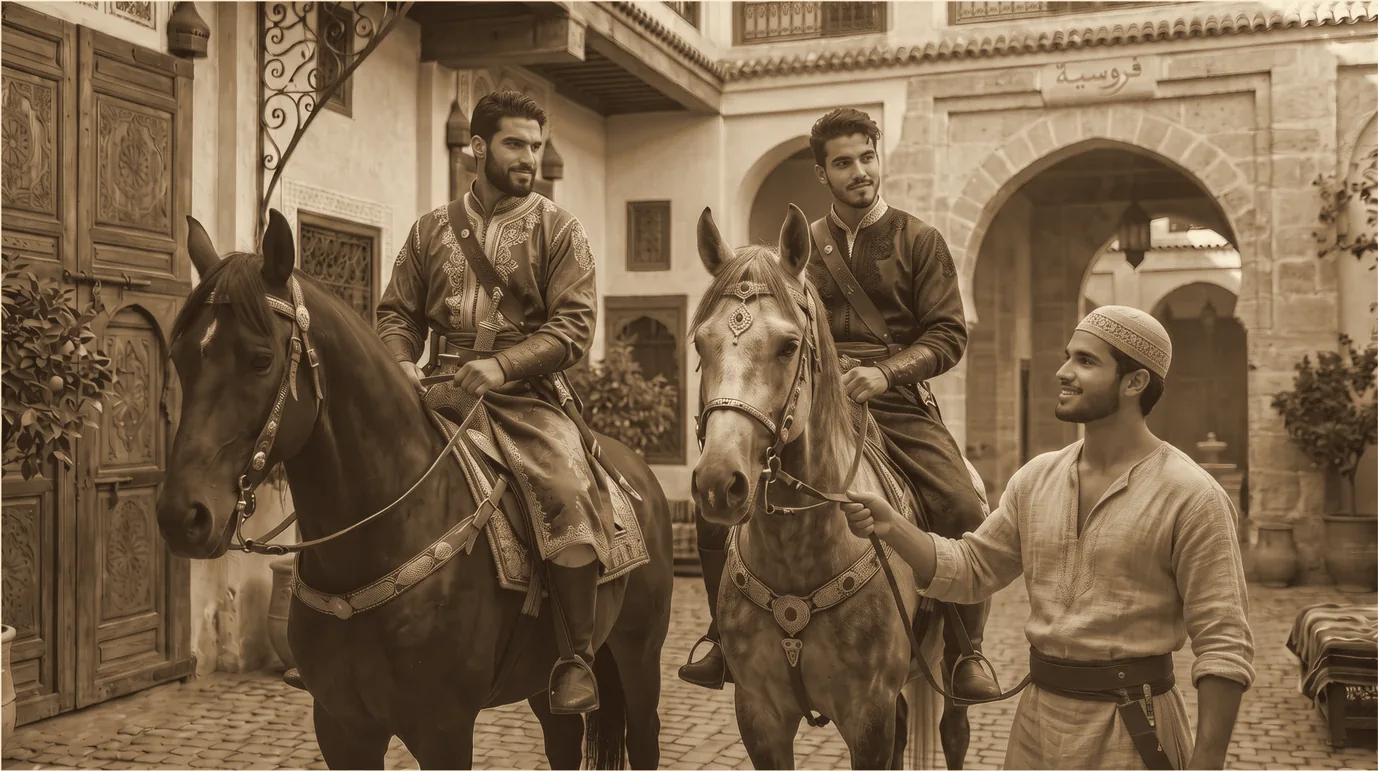
رِبَاطِ الْخَيْلِ
ribāṭ al-khayl, horses held ready
The verse says more: ribāṭ al-khayl, horses tethered, held ready, within reach. The root is that of ribāṭ: the tie that holds, the post one keeps, the fact of remaining where one has been placed.
The lead rope (ar-rasan) keeps the horse available. A horse that wanders gets lost, and on the day it is needed it is sought in vain. What the rope does for the horse, the order of the day does for the man: it holds him at his post, ready for what will be asked.
To watch without being called, to stay at one’s post when nothing presses: this is the least spectacular part of the formation, and the first. It governs the order of the house, described in The day and the week→ and in At-Tadbir, governance→.
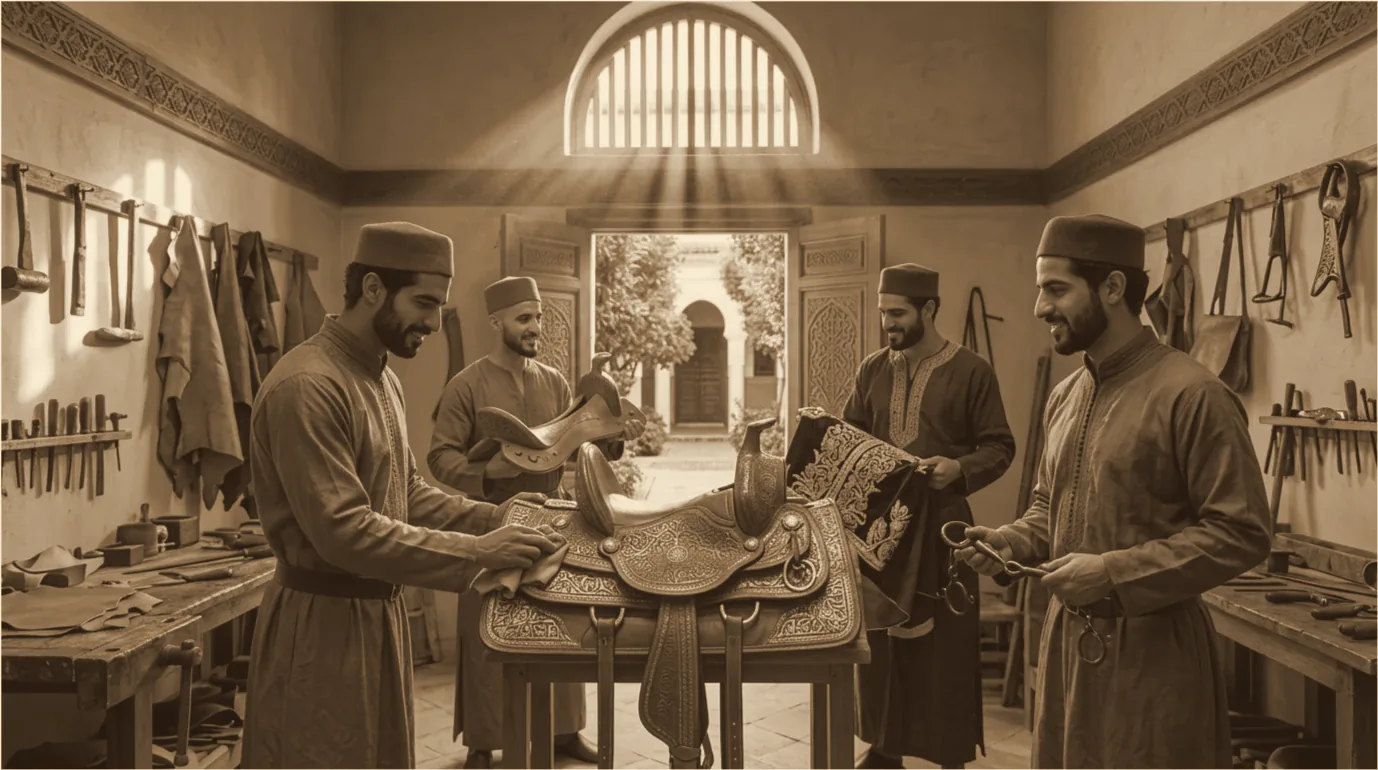
الحِرَف
al-ḥiraf, the crafts
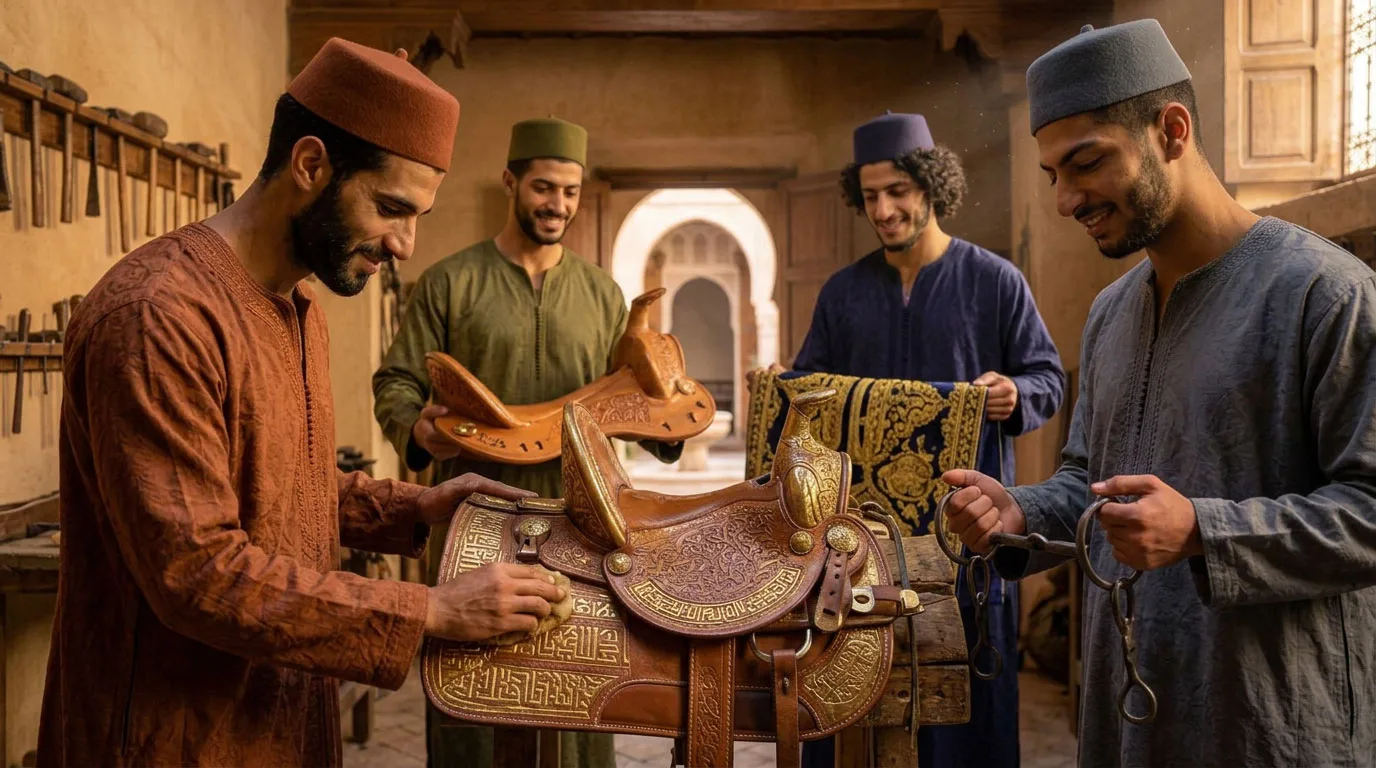
Every piece of the harness comes from a workshop. One workshop gathers saddlery, iron and wood: the leather of the saddle, the bit, the stirrups and the spurs, the tree, and the wood of the Riad itself. The housing, woven then embroidered in gold thread, the sqalli, may be made by the guilds of Fez until Dar al-Hiraf has a resident embroiderer; the buckles are chased and the leather dyed.
What is admired on the horse on a feast day is therefore, first of all, months of workshop. Furūsiyya and Dar al-Hiraf are one thing in the house: the rider carries what the craftsman has made, and the craftsman sees his work tried by the gallop, for what is badly stitched comes apart at the first charge, so that each judges the other with no need for words.
For the patron, the return has three faces. The worksite of the complex, entrusted to hands from Fez and, where they are lacking, from the Kingdom. The young men who learn crafts still alive and under threat, and build their future on them. The craftsmen of the city, whom a house working to the measure of the craft drives to rise in quality. To support here is to commission work and open a way, and to give Fez and the Kingdom fresh lustre through what forms men and keeps a craft alive.
See the crafts of the hand in The disciplines→ and The instruments of the saddlery→.
The ʿudda comes from a workshop: the first the house opens, the saddlery→, which brings together leather, metal and wood in its three workshops. A parade saddle is made of many pieces and takes months of work, depending on the work and the workshop.
السرّاج
Fez red
Leather cut, stitched and tooled: the saddle, the girths, the reins, and the leather of wrestling. →
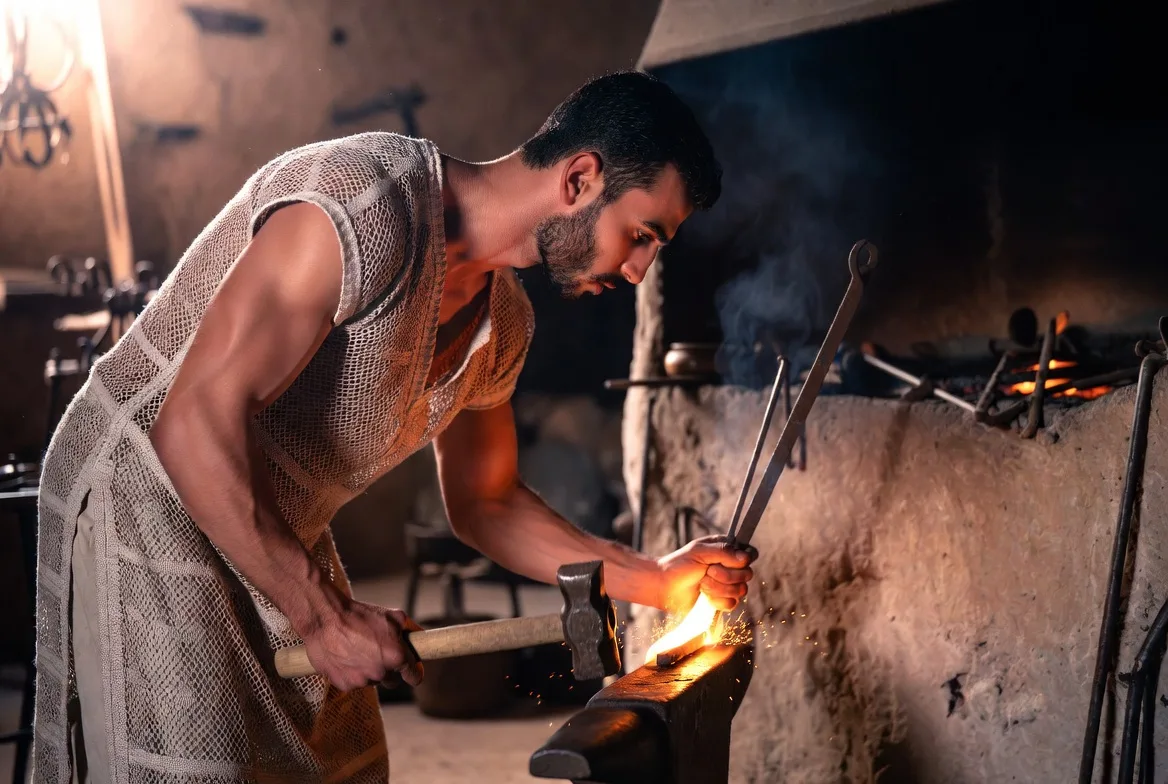
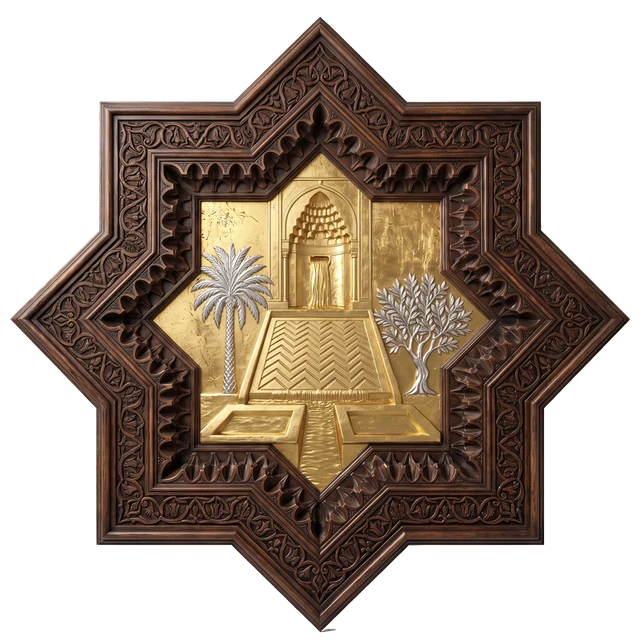
الصفّار
Verdigris
Copper and brass beaten, iron worked in the fire: bits, stirrups, buckles. →
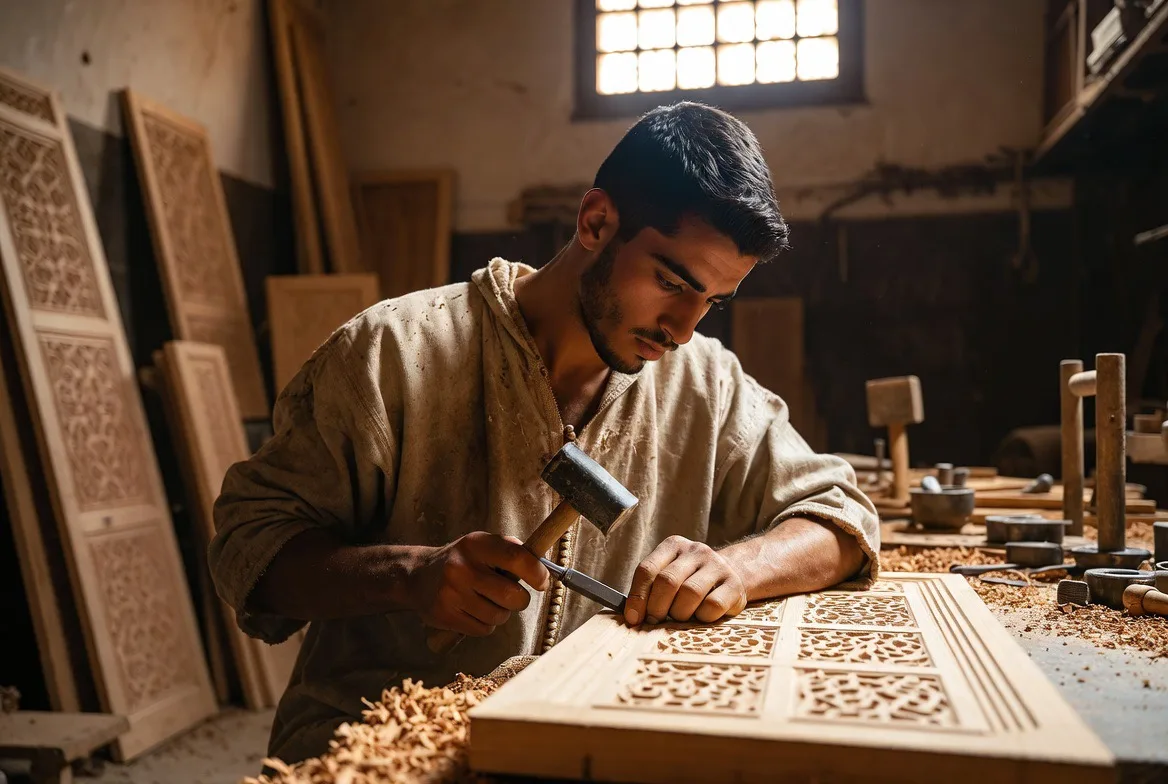
النجّار
Olive green
Atlas cedar: the saddle tree, the lance shafts, and the wood of the Riad itself. →
What precedes rests on a written tradition. Furūsiyya has its own literature, and the harness fills whole chapters of it.
Ibn Akhī Ḥizām, the caliph’s equerry in ninth-century Baghdad, Kitāb al-furūsiyya wa-l-bayṭara: training and care gathered in a single book.
Al-Ṭarsūsī, twelfth century, Tabṣirat arbāb al-albāb: arms and equipment described piece by piece.
Ibn Hudhayl al-Andalusī, Granada, fourteenth century, Ḥilyat al-fursān wa-shiʿār ash-shujʿān, “the adornment of horsemen”: the book that ties the equipment most explicitly to the moral bearing of the man who wears it.
Ibn Qayyim al-Jawziyya, fourteenth century, al-Furūsiyya al-Muḥammadiyya: chivalry taken as a discipline of character before being a military art.
A word on the saddle. The Maghrebi saddle descends from the Andalusi saddle ridden a la jineta: short stirrups, bent leg, weight on the knee, the horse led by the voice and by shifts of balance rather than by the strength of the arm. It is a school of finesse before it is a school of force, and Spain, which learned it from this side of the sea, left it its name.
Furūsiyya forms the body; the ʿudda gives it its figure. The house trains men to make them steady: it offers them a frame (bit, bridle, saddle) and asks them to hold to it.
See also The furusiyya→, Javanmardi→, The futuwwa→ and At-Tadbir, governance→.
العُدّة
al-ʿudda: the tack, the horse’s equipment
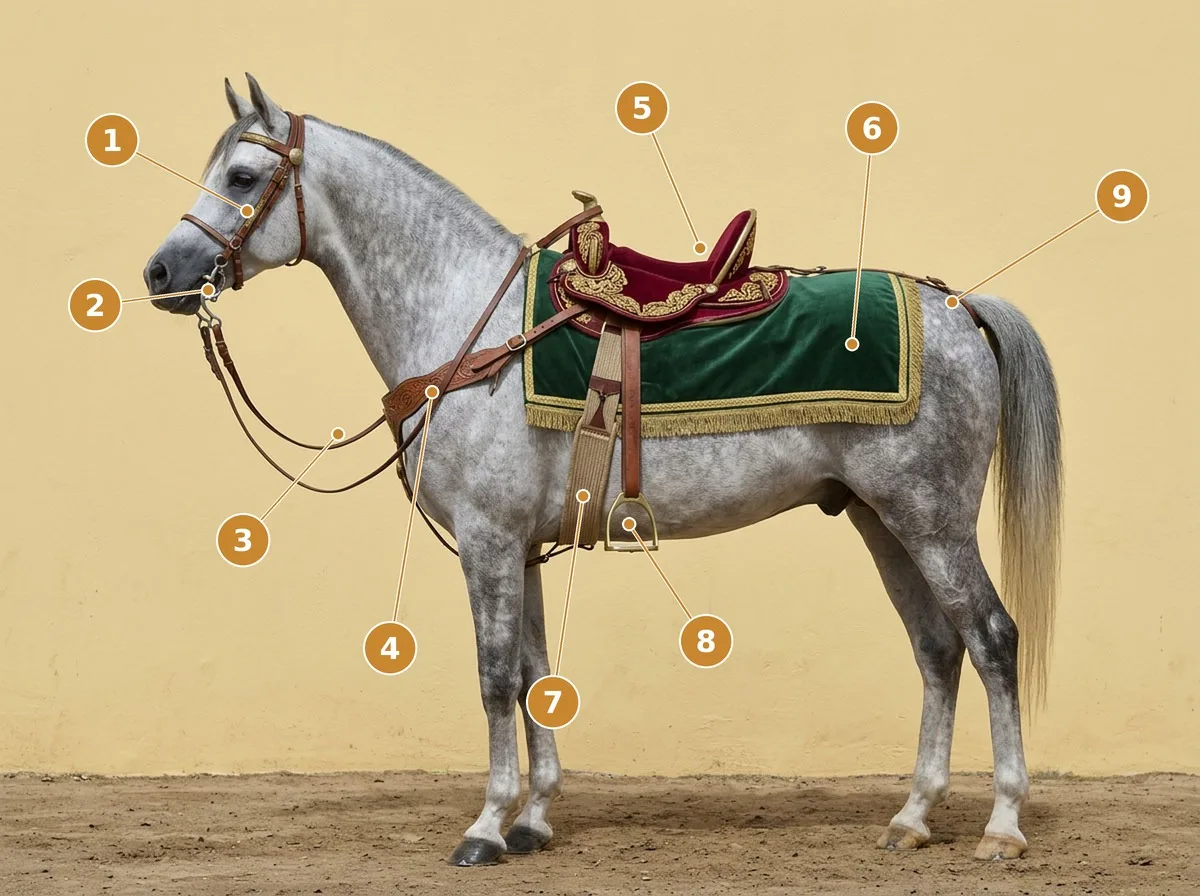
Each piece has a task on the horse and a meaning for the man.
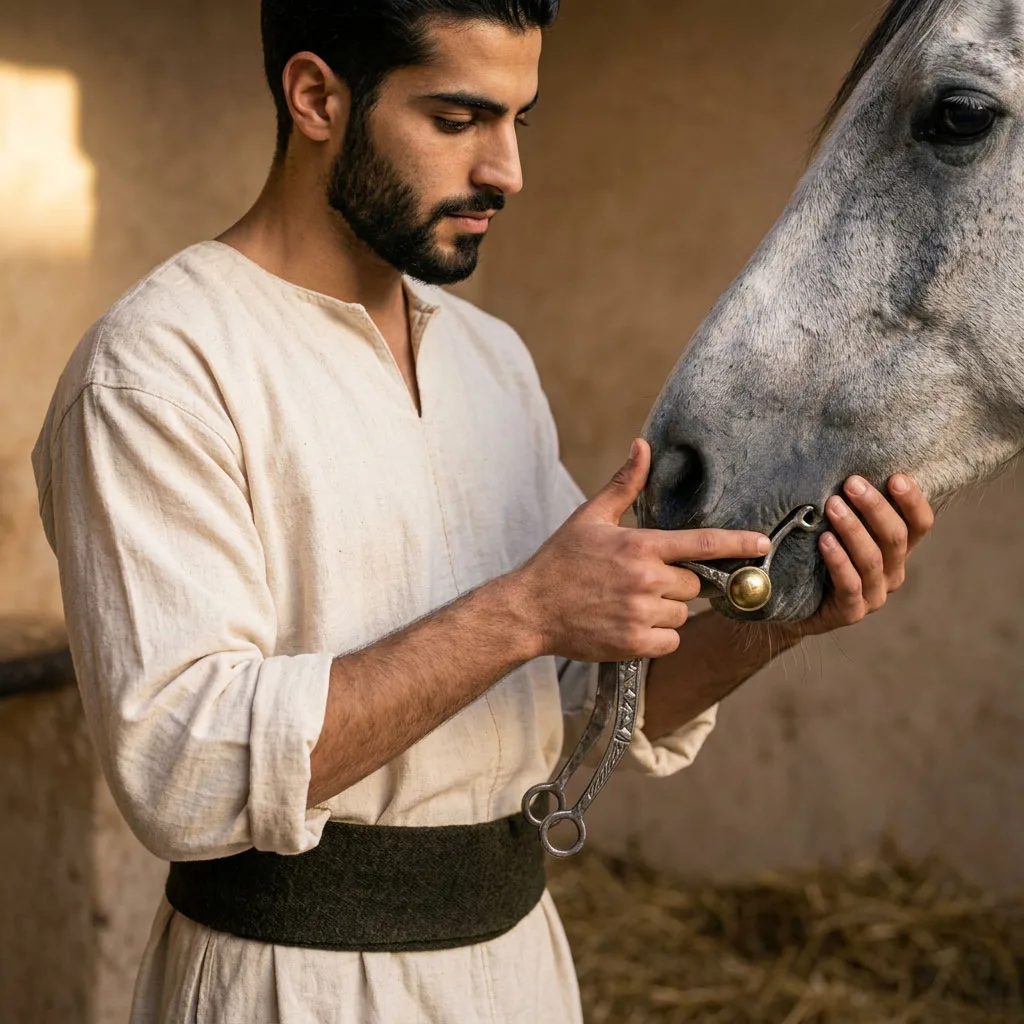
الحكمة
al-ḥakama
It speaks to the horse’s mouth and passes on the hand with no need of voice. In the man it is the restraint set on what would prevail in him.
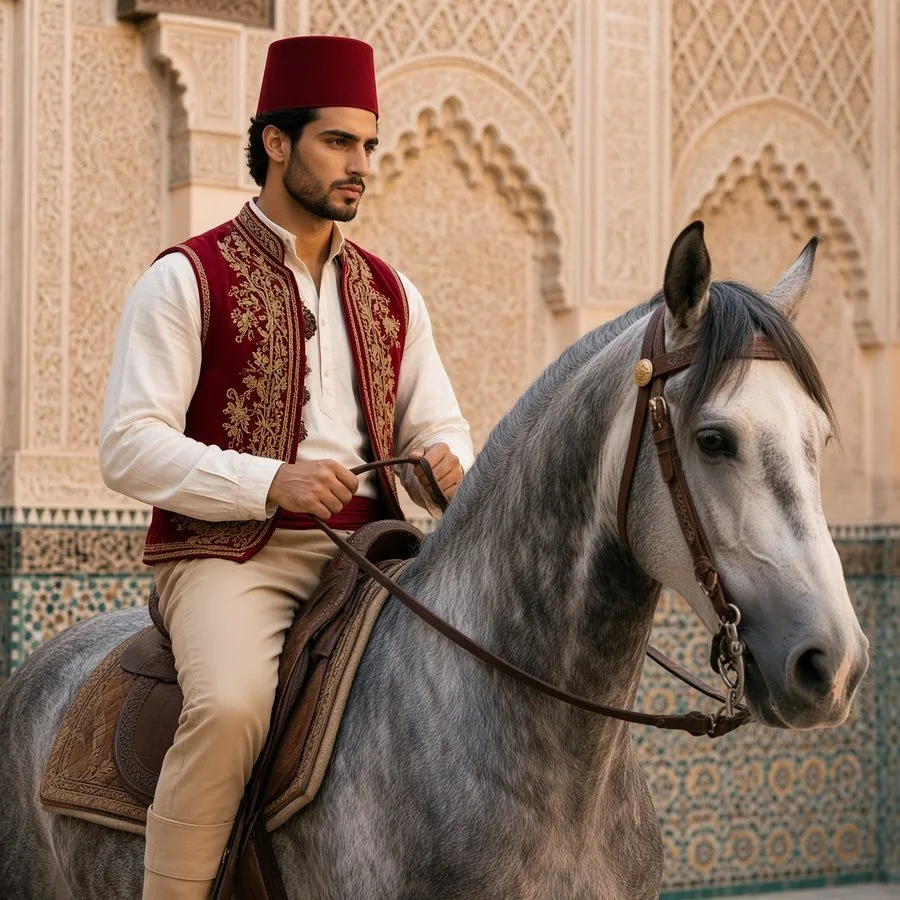
العنان
al-ʿinān
They carry the hand’s intention to the bit and bring back its answer. In the man they are intention: what one wants, held with measure.
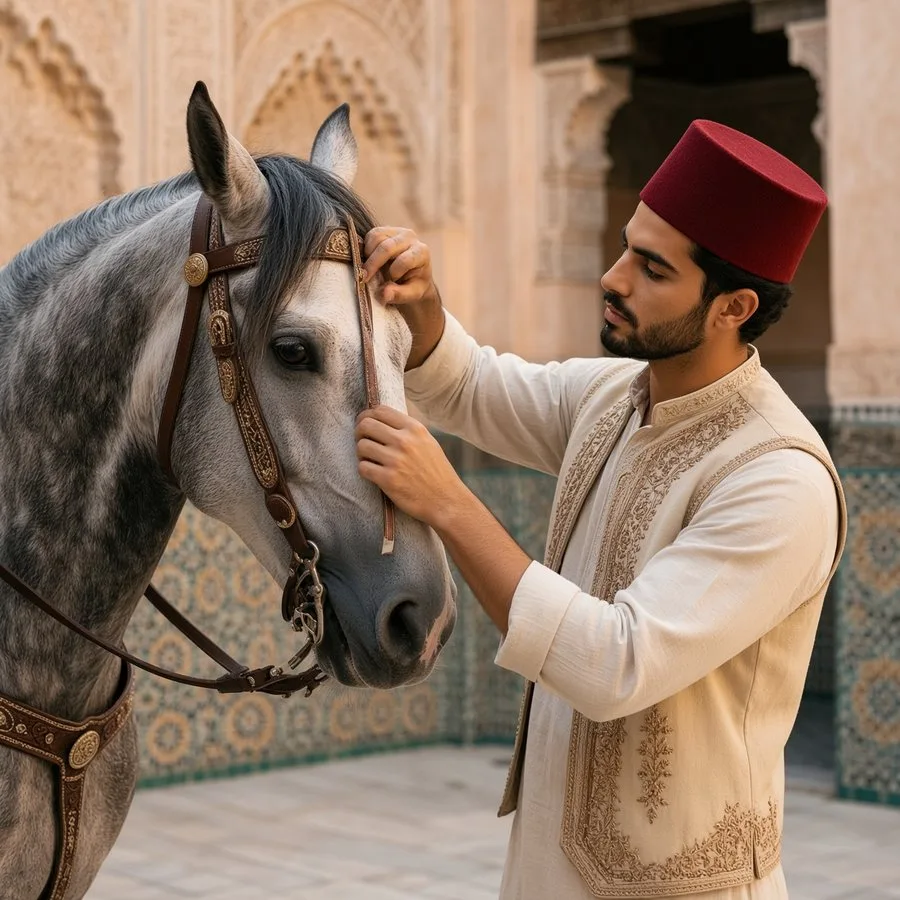
اللجام
al-lijām
It holds the horse’s head and gives the bit its seat. In the man it is orientation: knowing where one looks before moving.
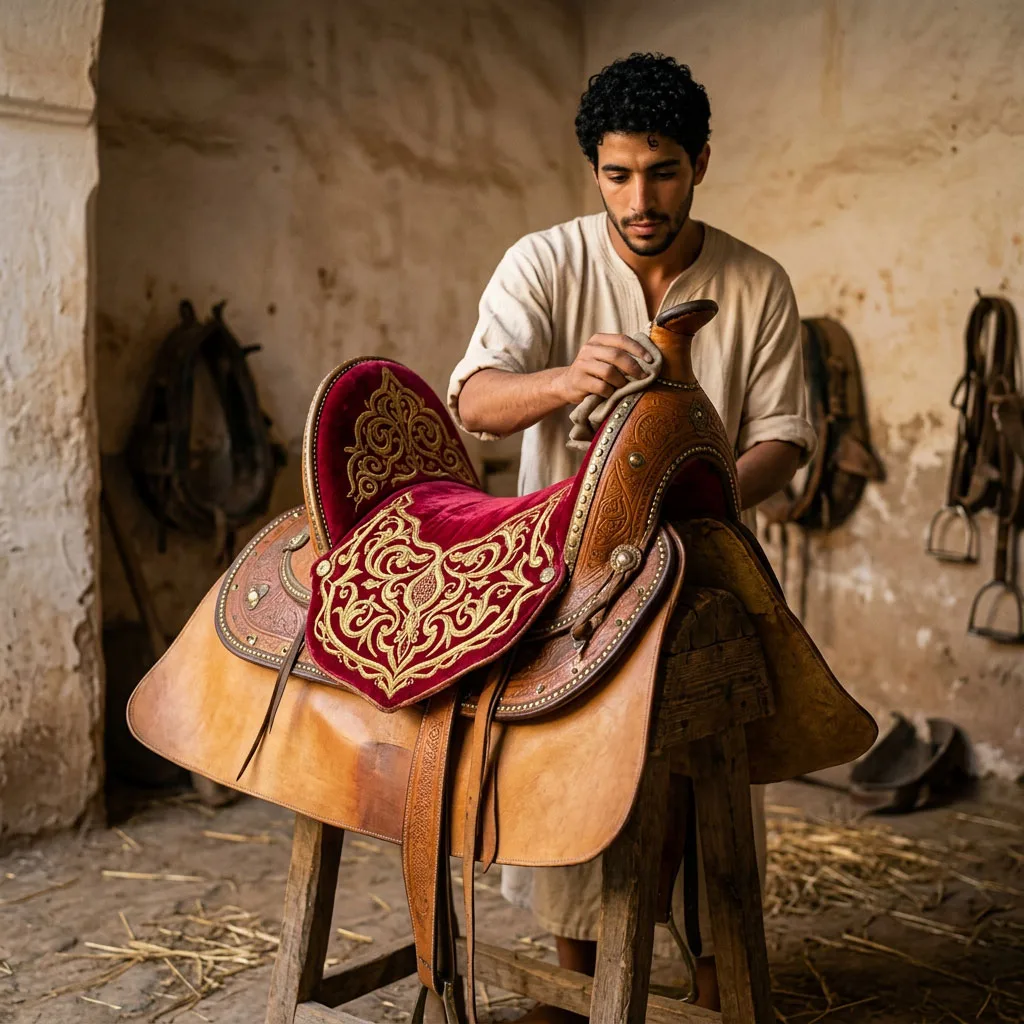
السرج
as-sarj
It gives the rider his place and the horse a well-spread weight. In the man it is the rule, which gives each his place.
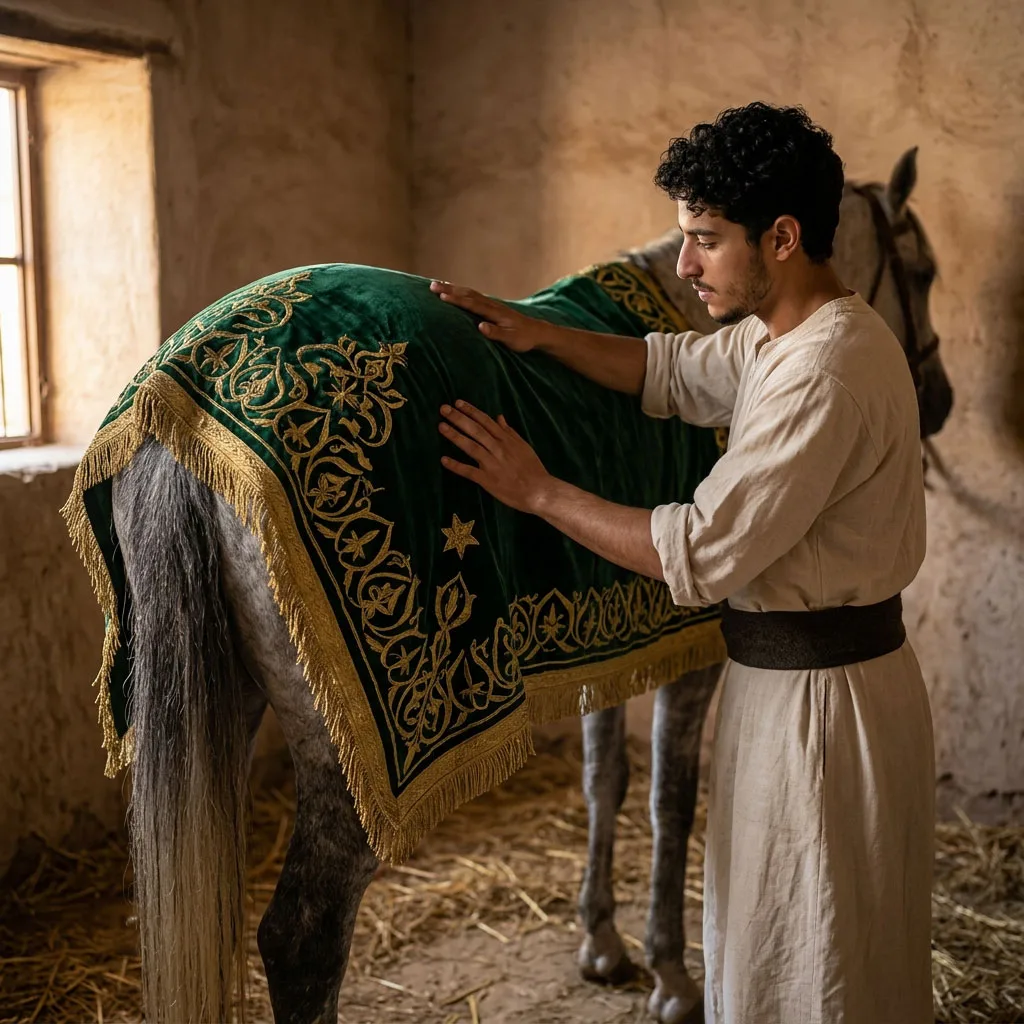
الجل
al-jull
It covers the back and honours the mount on feast days. In the man it is what is shown, worn without vanity.
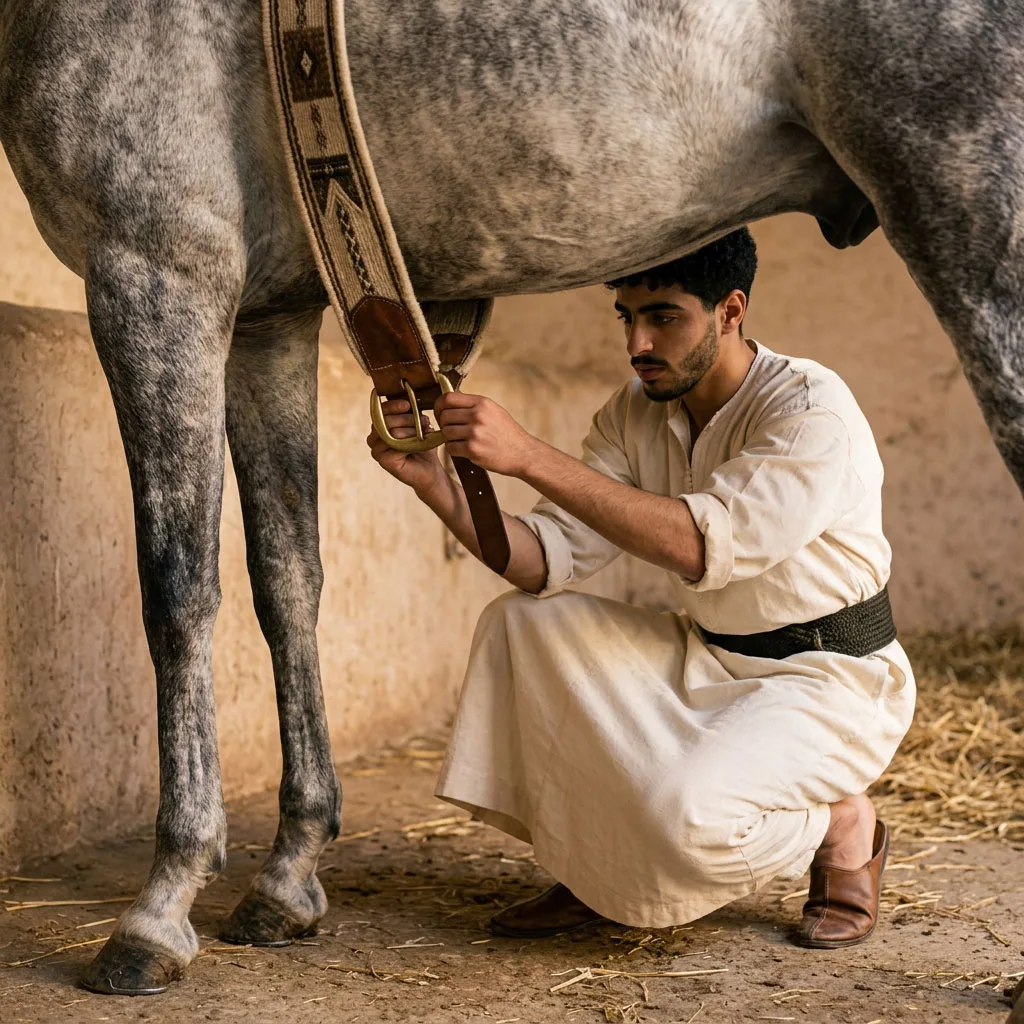
البطانة
al-biṭāna
It binds the saddle to the horse’s body while leaving it its breath. In the man it is measure: holding firm without stifling.
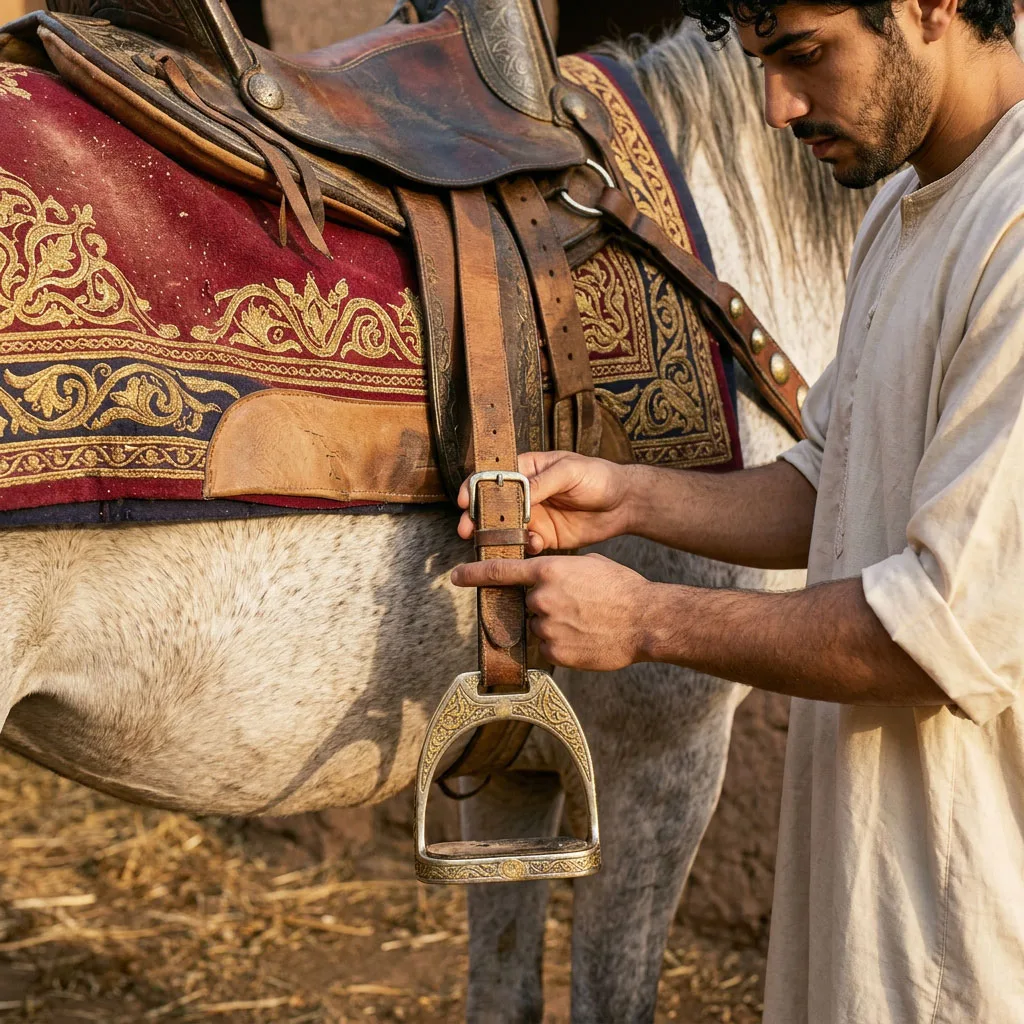
الركاب
ar-rikāb
They take the rider’s weight and give him support. In the man they are the companions one leans on and who carry us.
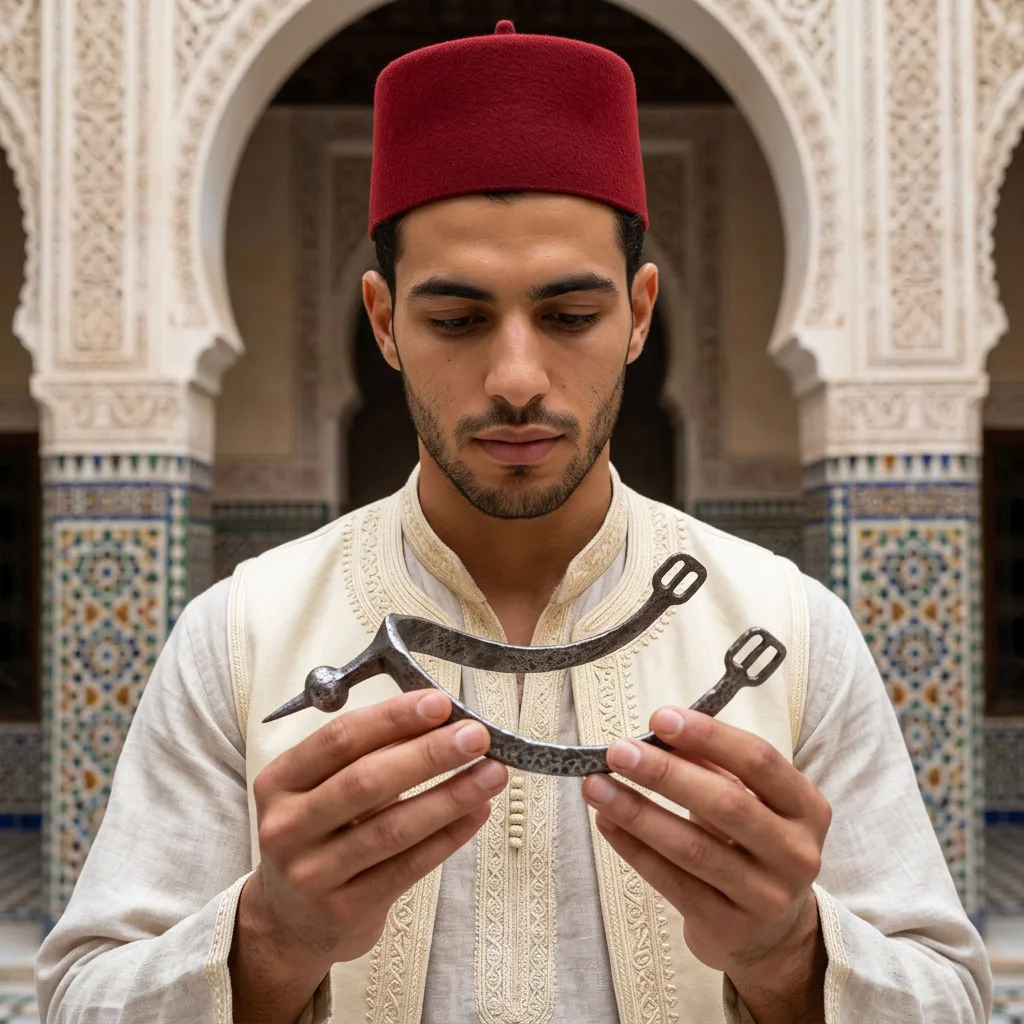
المهماز
al-miḥmāz
They wake the horse when the leg uses them with measure. In the man they are demand, which rouses without breaking.
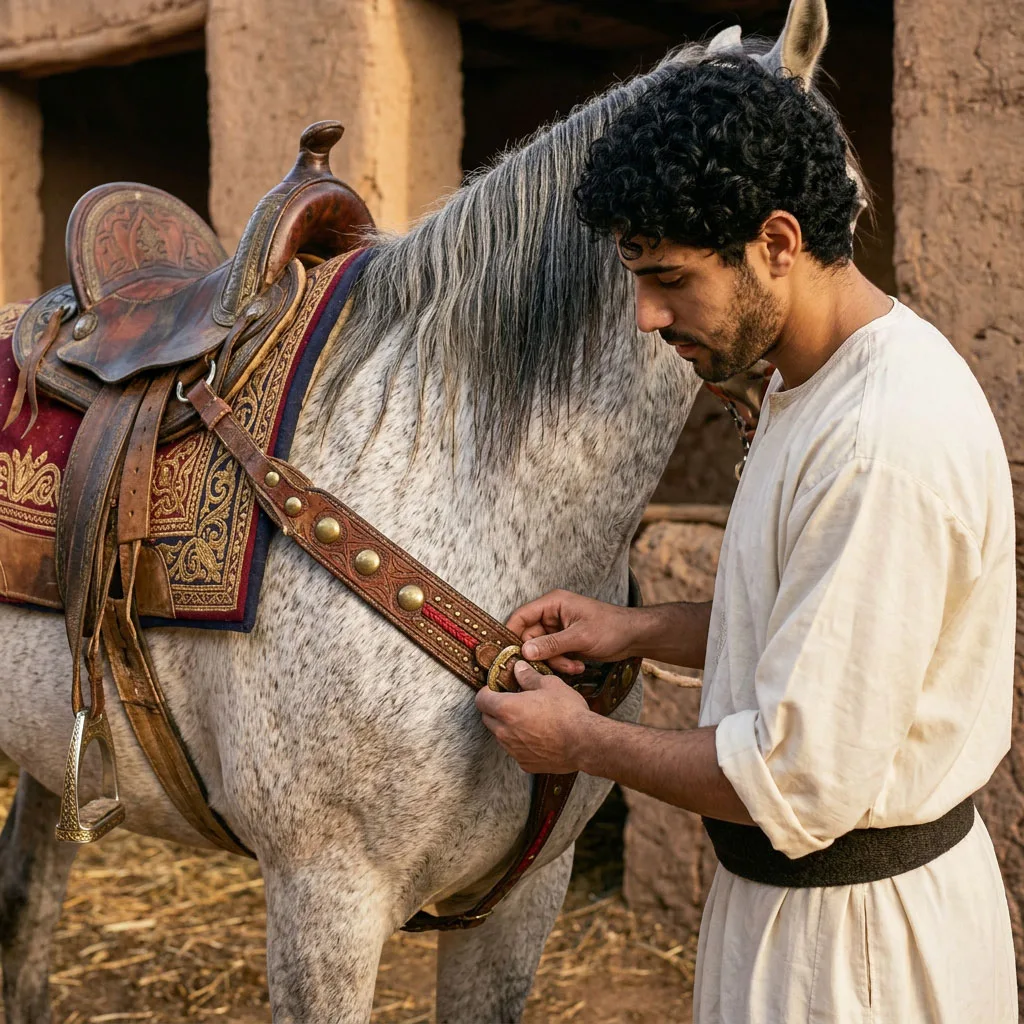
اللبب
al-labab
It holds the saddle forward, uphill and at speed. In the man it is what supports him in front: the aim he moves toward.
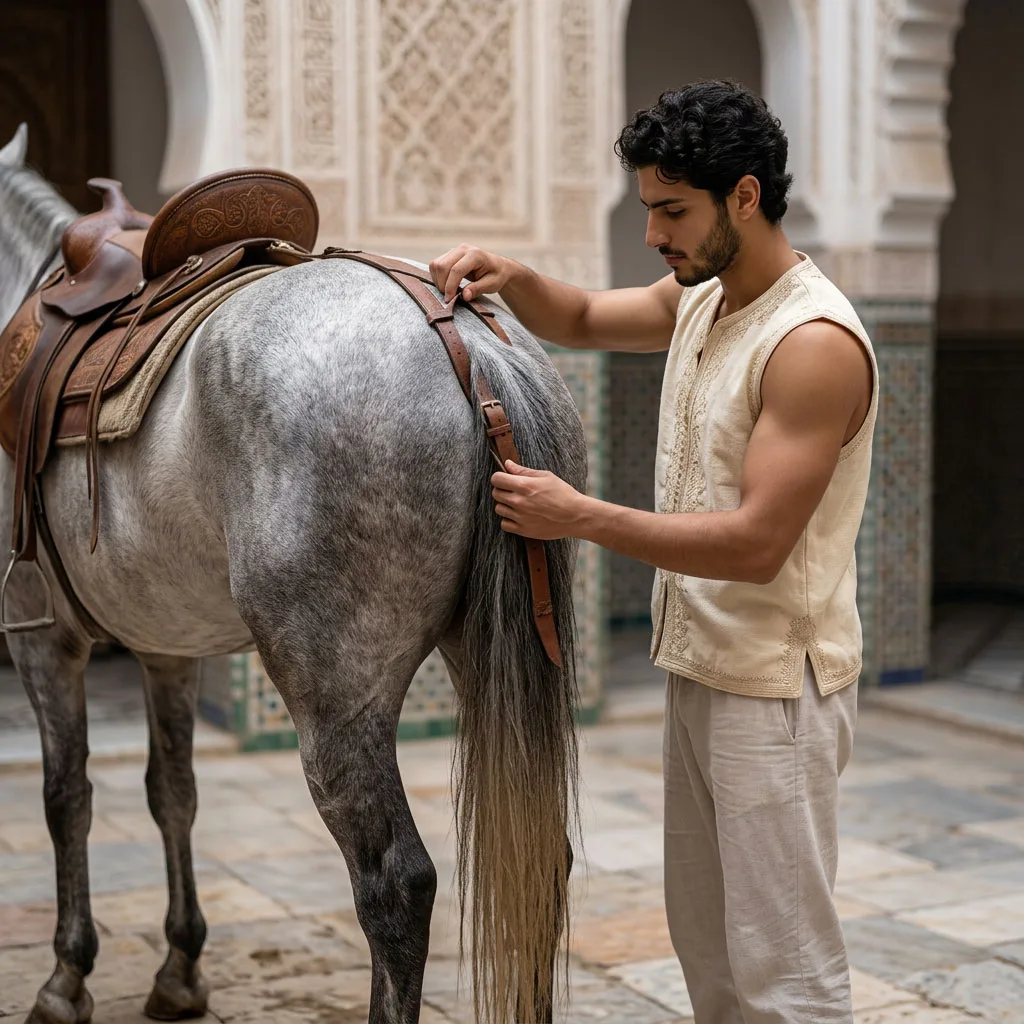
الحقّب
al-ḥaqab
It holds the saddle back, downhill. In the man it is what holds him from behind: the memory of what he has received.
The community provides the bit, the bridle, the spurs and the saddle; standing firm falls to the ṣāniʿ.
See also Al-Udda, the harness→.
Each piece of the harness, set on the real things of the house.
Each piece of the harness has a meaning for the man. Here that meaning settles on the real things of the house.
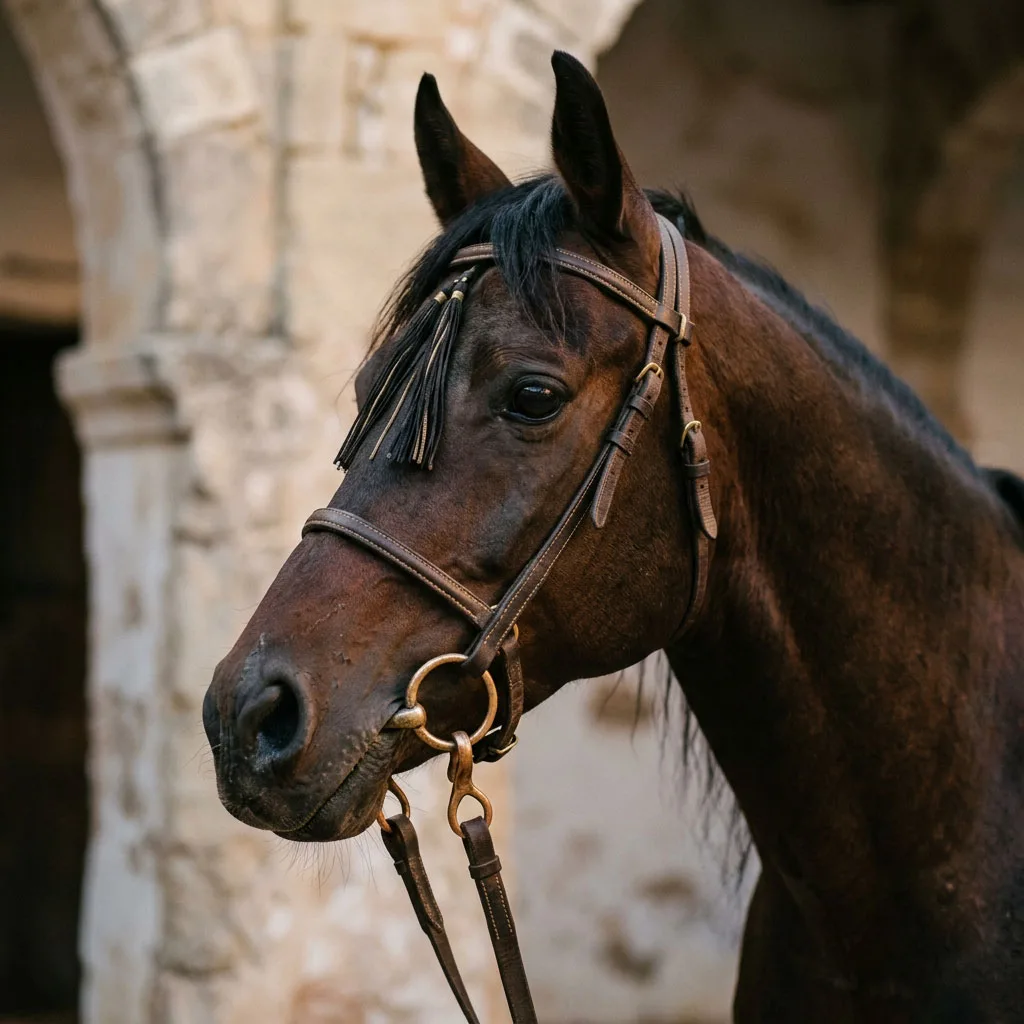
اللجام
al-lijām, the bridle
The bridle holds the brow and gives the bit its seat. First apprenticeship: to receive a measure, so that strength, intact, can be guided.
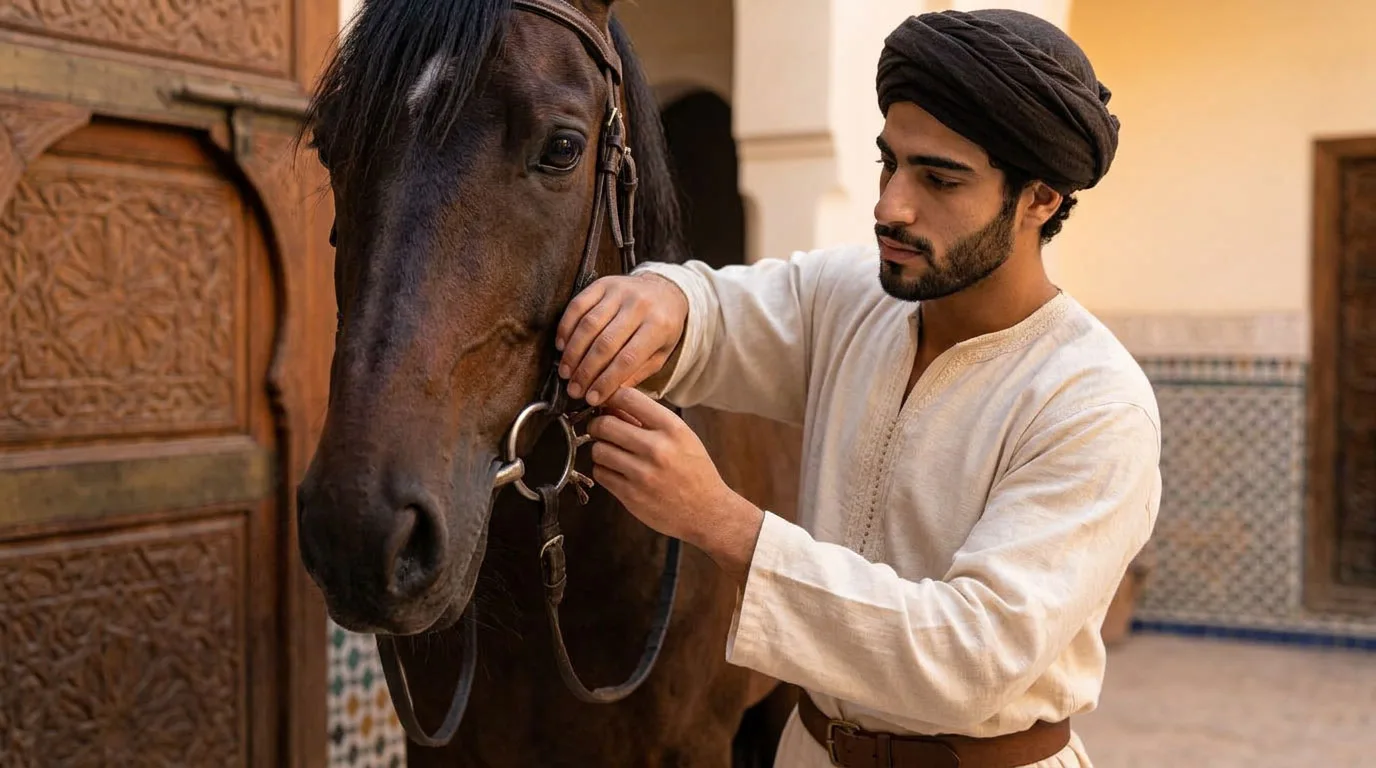
الحكمة
al-ḥakama, the bit
The bit leaves the horse its fire and gives it a language, and in the same way the passions are bridled and stay alive.
الرِّفق
ar-rifq, gentleness, forbearance
A bit too harsh wounds the mouth and closes the horse; a spur badly held opens the flank. The piece meant to give a language becomes an instrument of constraint, and the horse, instead of obeying, defends itself.
The tradition is precise on this: one does not brand an animal’s face (Muslim, no. 2116), nor use it as a seat for conversation (Abū Dāwūd, no. 2567); one unloads it before sitting down (Abū Dāwūd, no. 2551), and custom has it watered first.
إِنَّ الرِّفْقَ لَا يَكُونُ فِي شَيْءٍ إِلَّا زَانَهُ، وَلَا يُنْزَعُ مِنْ شَيْءٍ إِلَّا شَانَهُ
“Gentleness is in nothing without adorning it,
and it is taken from nothing without disfiguring it.”
Prophetic tradition (Muslim, no. 2594)
Restraint thus serves measure, and the last word belongs to measure. A discipline that breaks is a breakdown, and a spoiled mouth stays spoiled. What holds for the rider’s hand holds for authority in the house: see At-Tahkim, arbitration→.
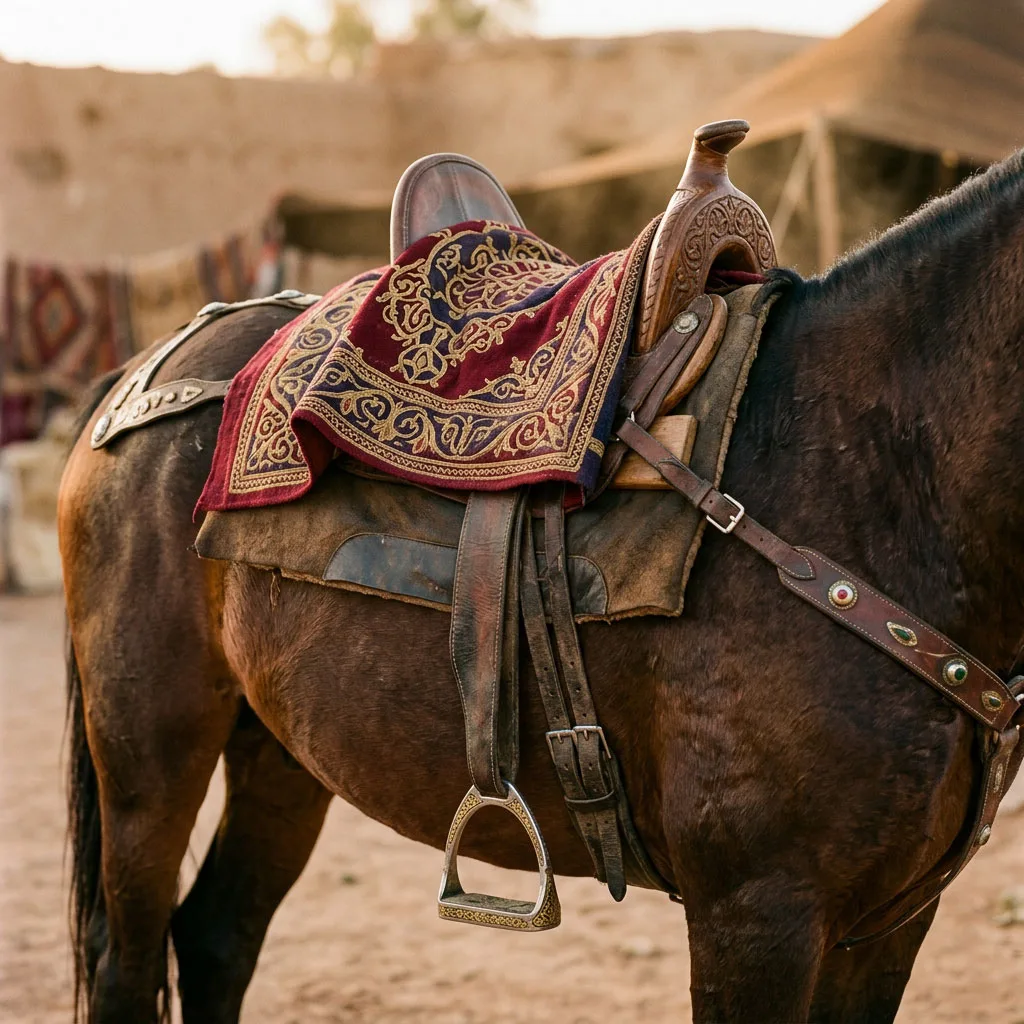
السرج
as-sarj, the saddle
The saddle (as-sarj) gives the seat. The Moroccan saddle, of Andalusi descent, has a high tree covered in velvet embroidered in gold thread, ṭarz fāsī or drawn thread, and belongs to parade and war harness rather than to riding as a sport. In the house the rule does the same work: it makes continuity possible. It is also, on a larger scale, the sense of At-Tadbir, governance, which gives the house its seat.
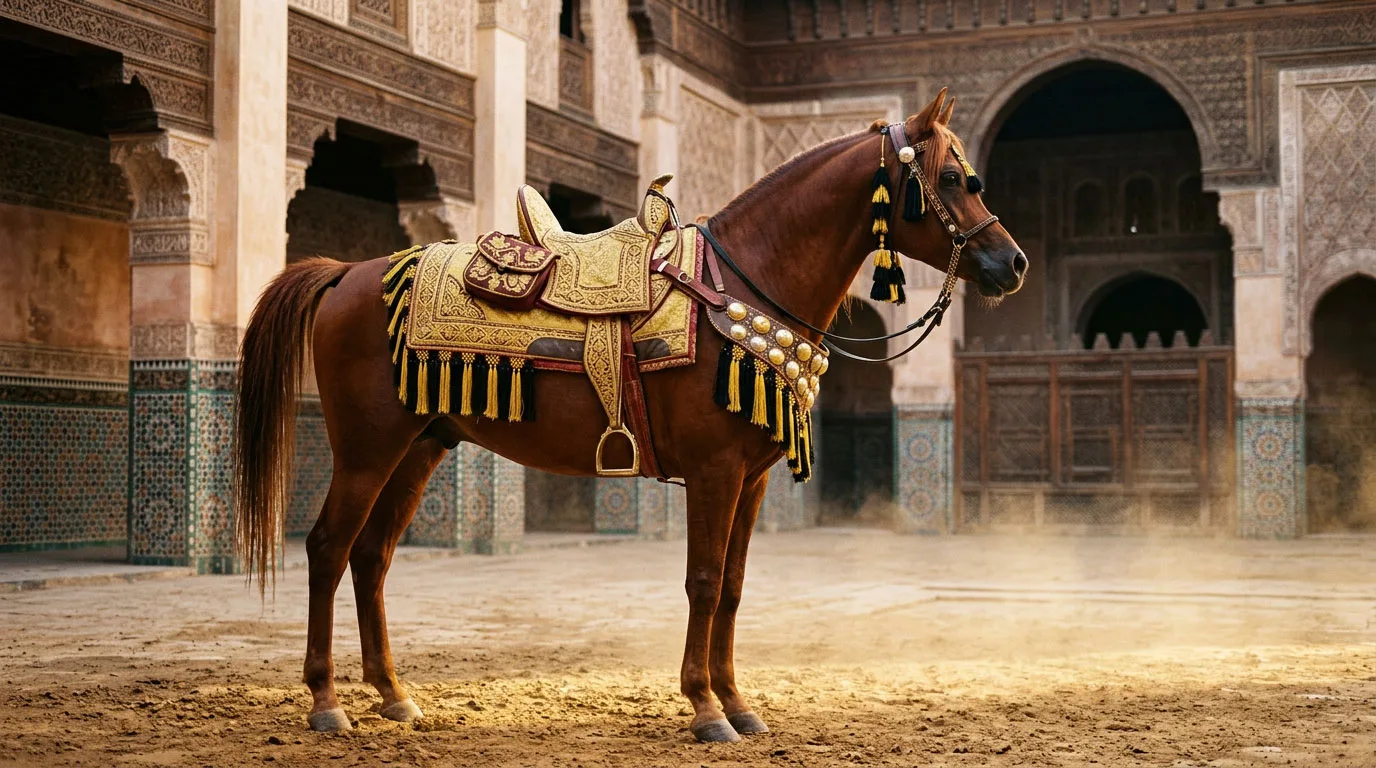
العُدّة
al-ʿudda, the tack
Housings and breastplate: what the horse wears outwardly, in parade and war harness. The ʿudda may be rich, provided it stays sober in spirit: what is shown honours, or betrays.
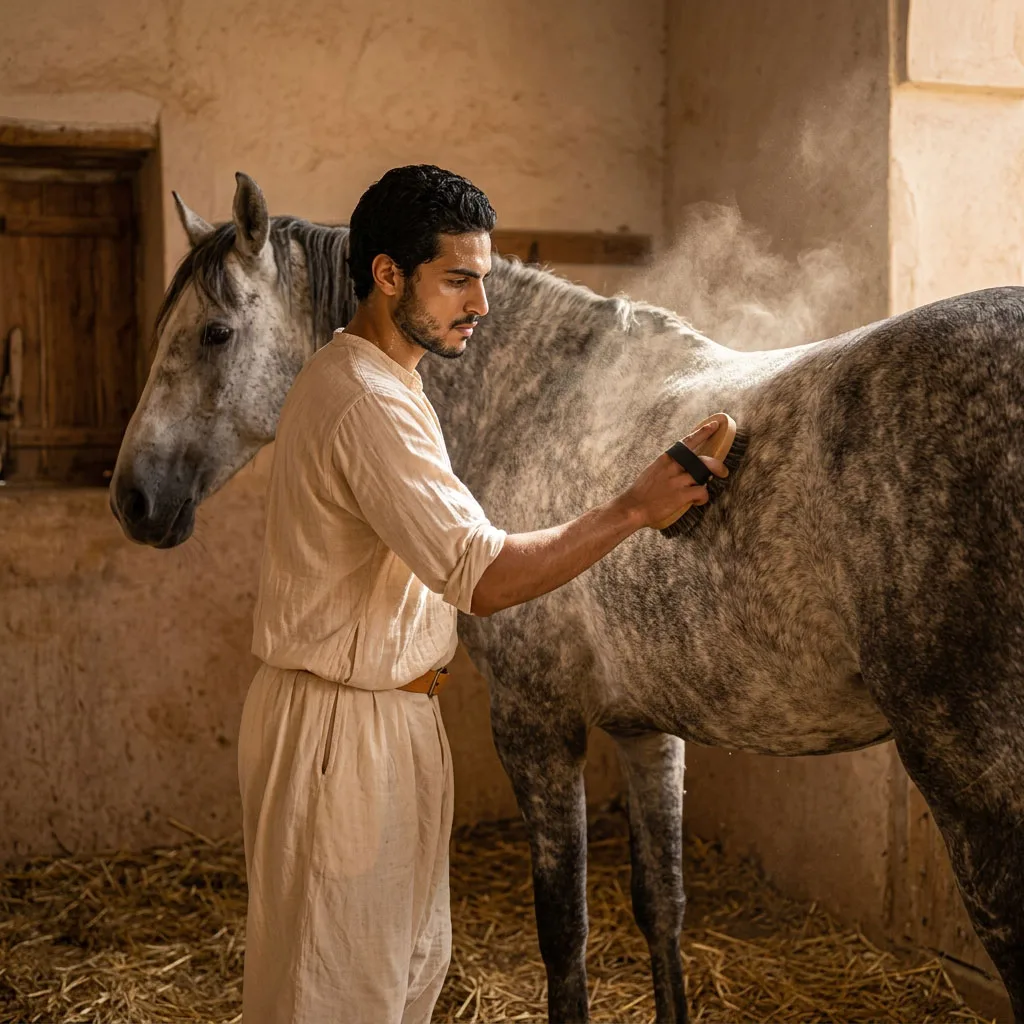
العِنَايَة
al-ʿināya, care
The ten pieces of the ʿudda are the ones that are seen. The tack, however, begins lower and earlier: the shoe (an-naʿl) checked before going out, the felt (al-labad) laid under the saddle so that the wood does not wound the back, the curry-comb passed over the coat, the leather greased and the buckles wiped once the horse is back in.
All this stays hidden. A nail badly set shows at the third kilometre, and the start keeps silent about it. A girth never cleaned stays invisible until the day of the outing, when it gives way.
It is the exact counterpart of the parade. What is shown honours on condition that what is hidden has been done. A man is judged by what he does when no one is watching; the horse always notices. The day of the house is built on these gestures: see The day and the week→.
See also Al-Udda, the harness→.
The harness seen by the one who rides and the one who serves.
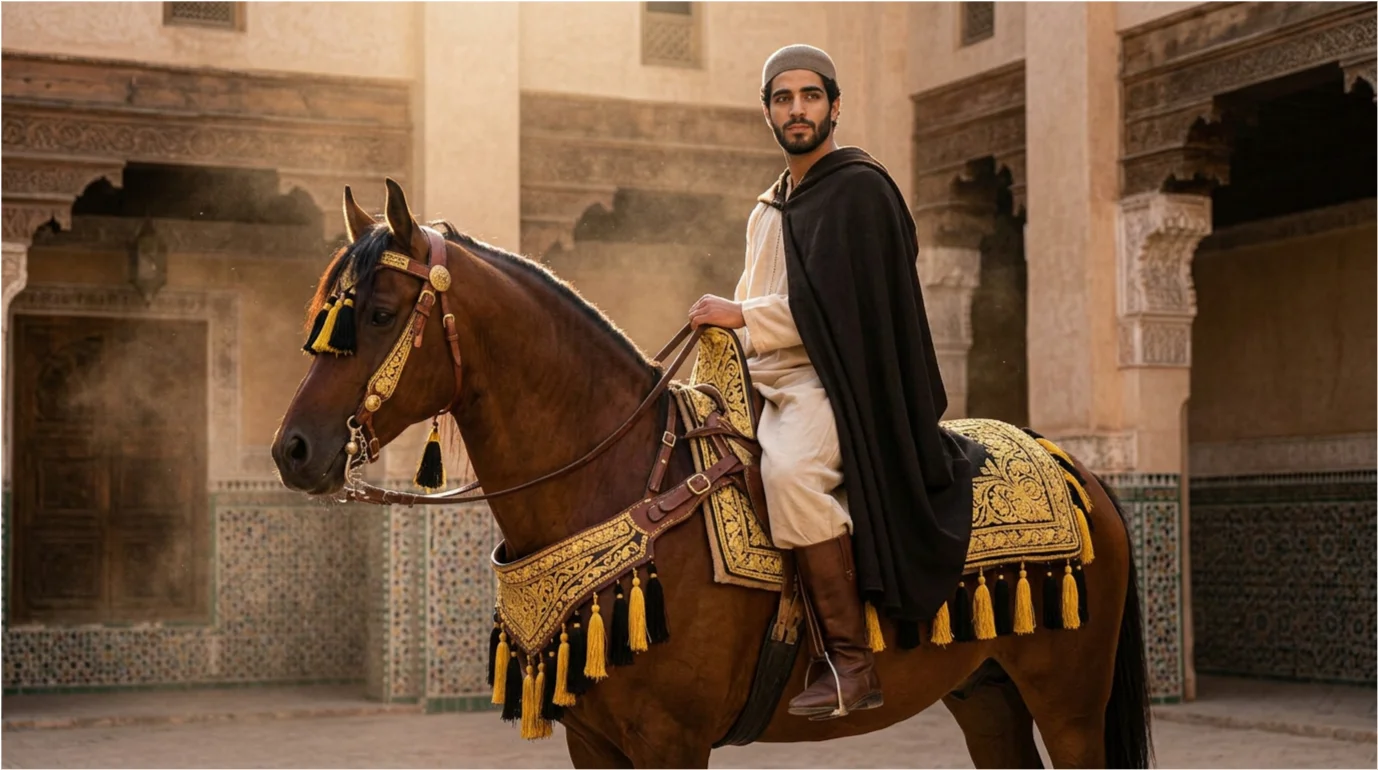
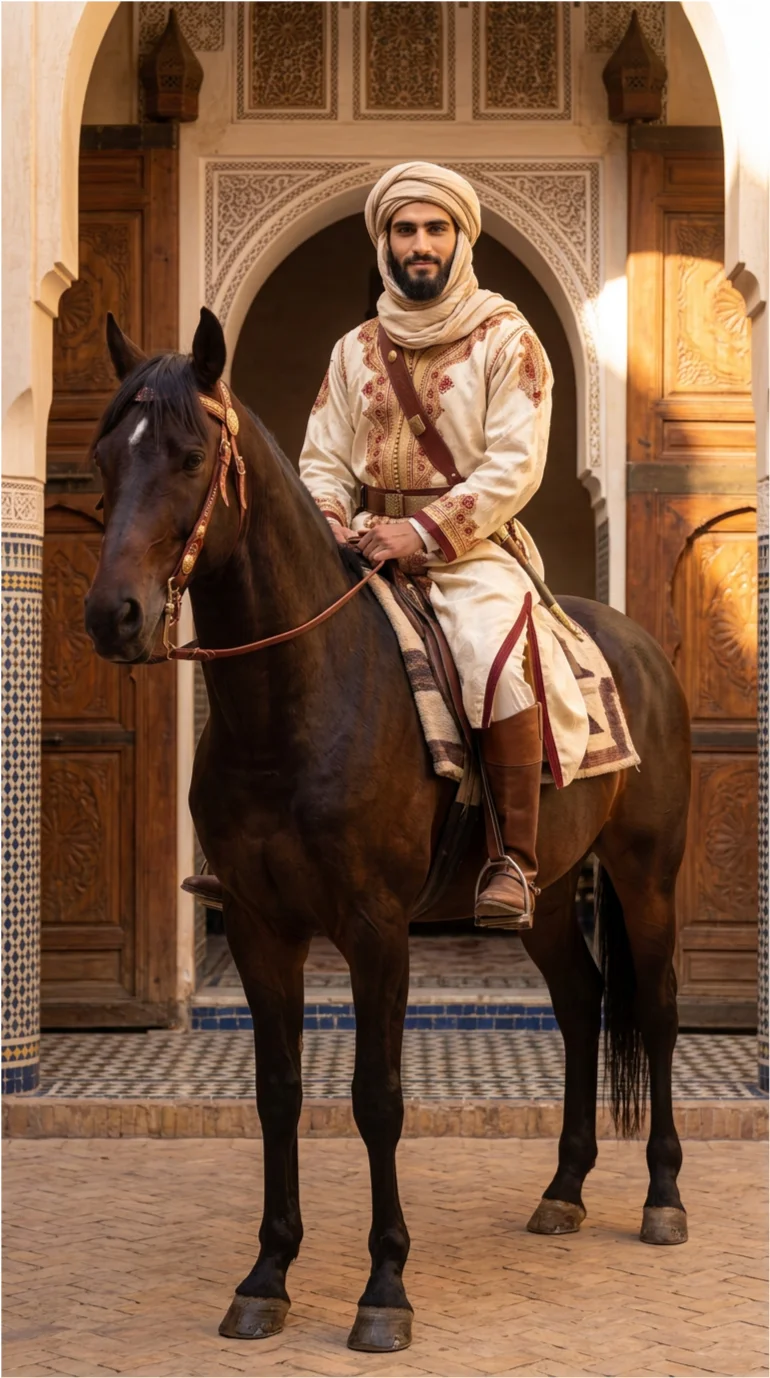
الفارس
al-fāris, the rider
Authority shows in the way a man holds himself on horseback, that is, in the command he has over himself, more than in ornament.
السَّرْبَة
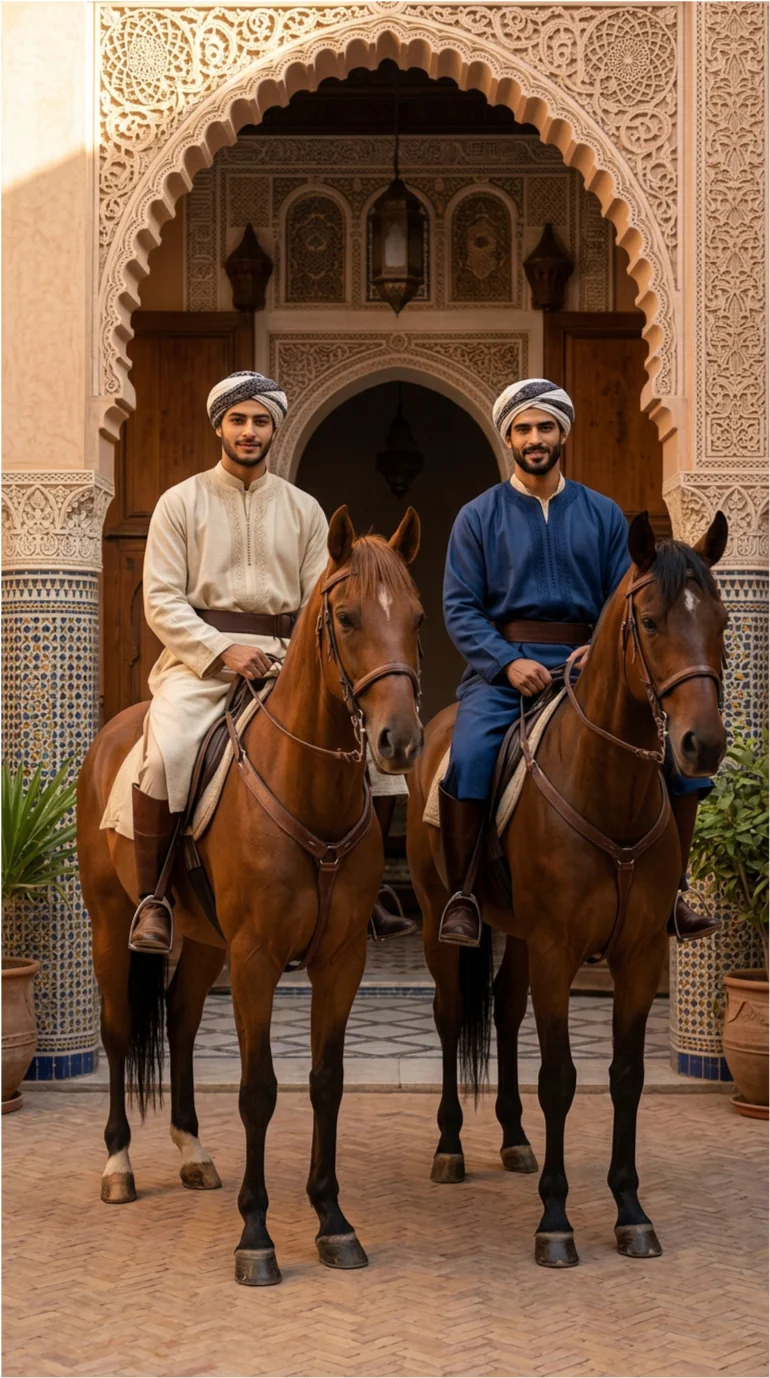
as-sarba, the aligned troop; the tbourida, the ride of the guns
So far, one man and one horse. In Morocco furūsiyya also shows itself as a troop. The tbourida lines up a sarba, fifteen riders or so and sometimes more, under the authority of the ʿallām, who holds the centre of the line and gives the start.
The difficulty is to set off together, to hold the line along the whole length of the track and to make the guns thunder in a single shot. One rider ahead or one behind is enough, and the line is lost for all: the troop is judged on its unity, more than on its best rider.
It is the most exact figure of common life, and it comes from practice: they set off together and arrive together, and the honour is undivided. This is what The futuwwa→ and Brotherhood and uprightness→ say.
السائس
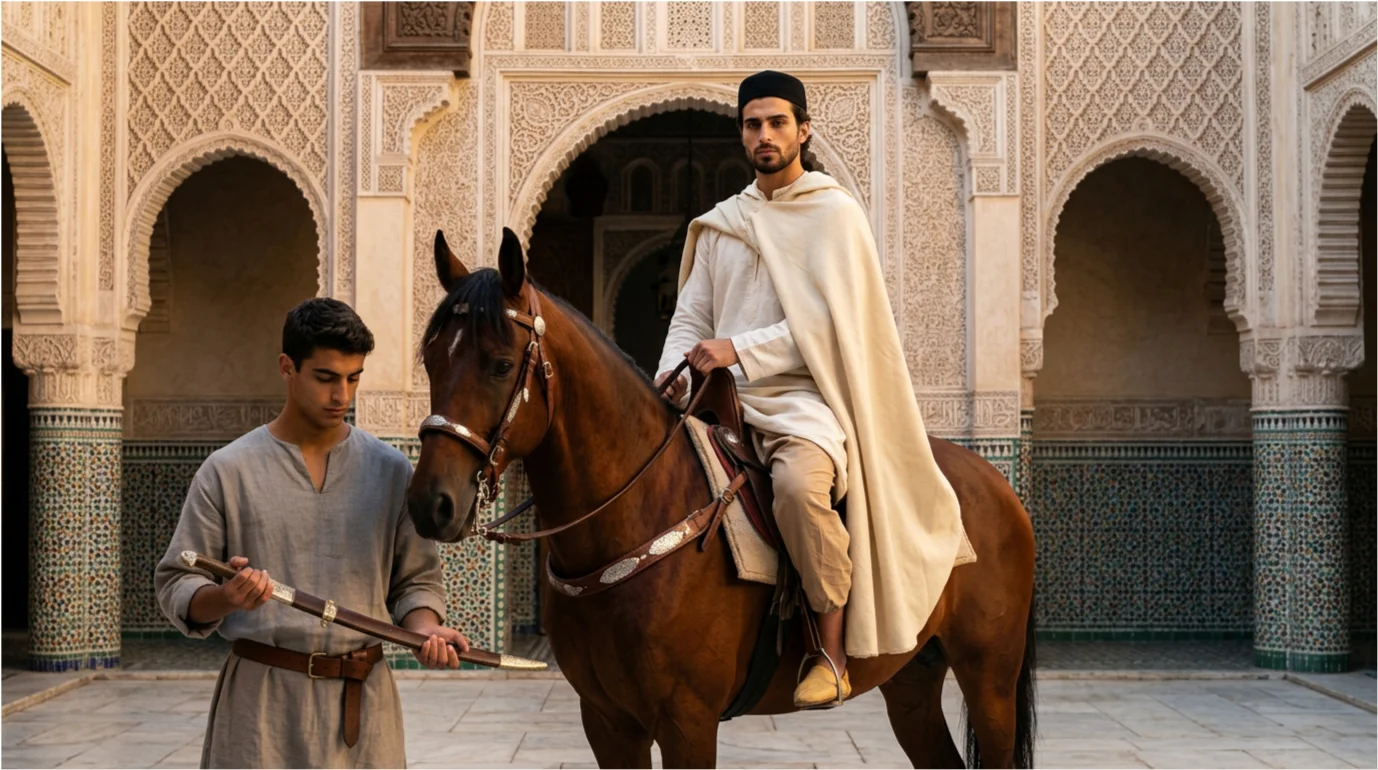
as-sāʾis, the groom
The sāʾis holds the horse, and it is the gesture that makes furūsiyya possible. Whoever is further on in the craft also accepts the humble office: it is the same demand as the futuwwa.
المُهر
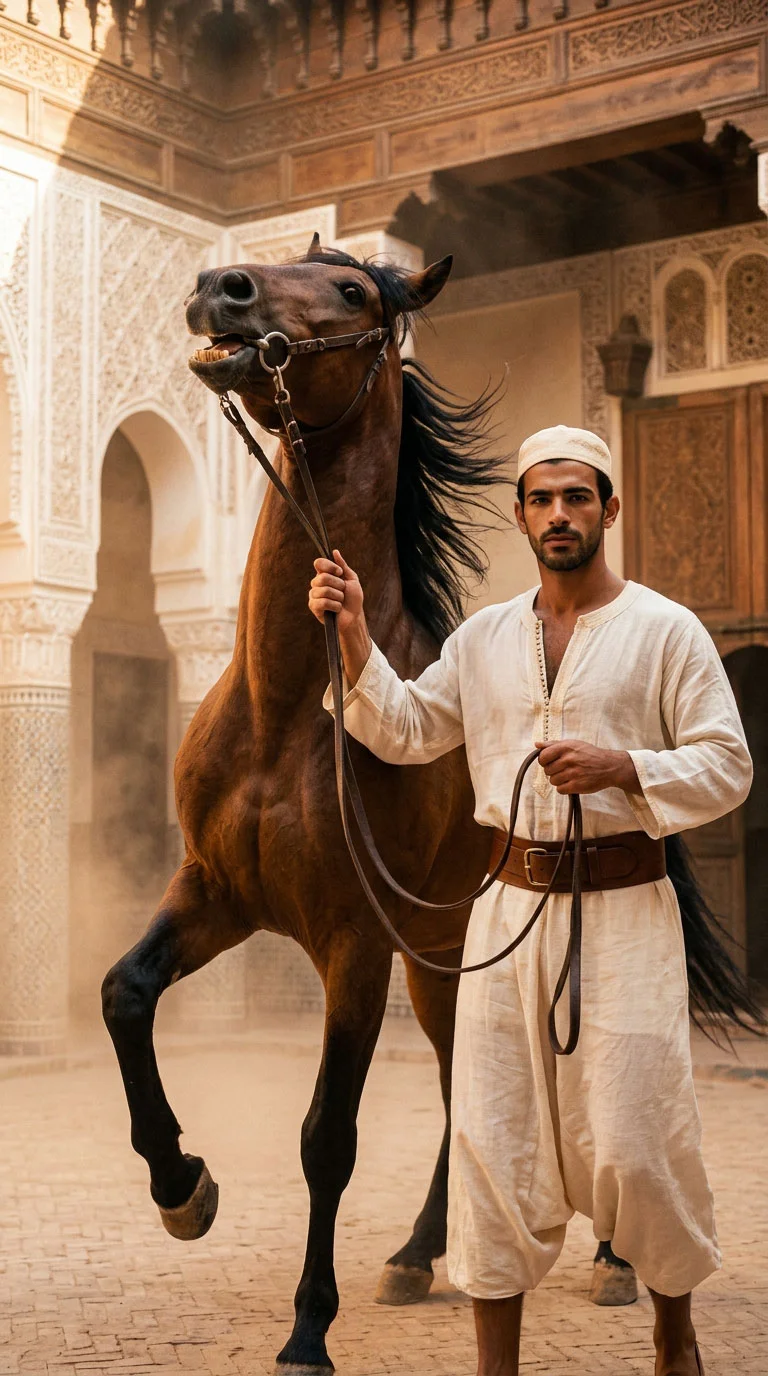
al-muhr, the colt
The colt that rears shows strength before measure, and it is a promise. The community offers the bit; holding firm is his part.
He is the same young man the house is looking for: one who has strength and accepts being led. See Who we are looking for→ and The residency→.
See also Al-Udda, the harness→.
The words of this page are in the common glossary; the works cited in the sources; the sister house is Al-Funduq aṣ-Ṣiqillī.