Brotherhood and uprightness
Friendship, honour, loyalty, chivalry, discipline: what futuwwa hands on through gesture and companionship.
The futuwwa→ reaches beyond the apprenticeship of the workshop: it is a way of being a man among other men, bound by honour as much as by gesture, by the given word as much as by the craft learned. Its page sets out its demands; what follows gives five ways in which they are lived, and each is found, intact, in the oldest Arabic poetry and wisdom.
Friendship among men
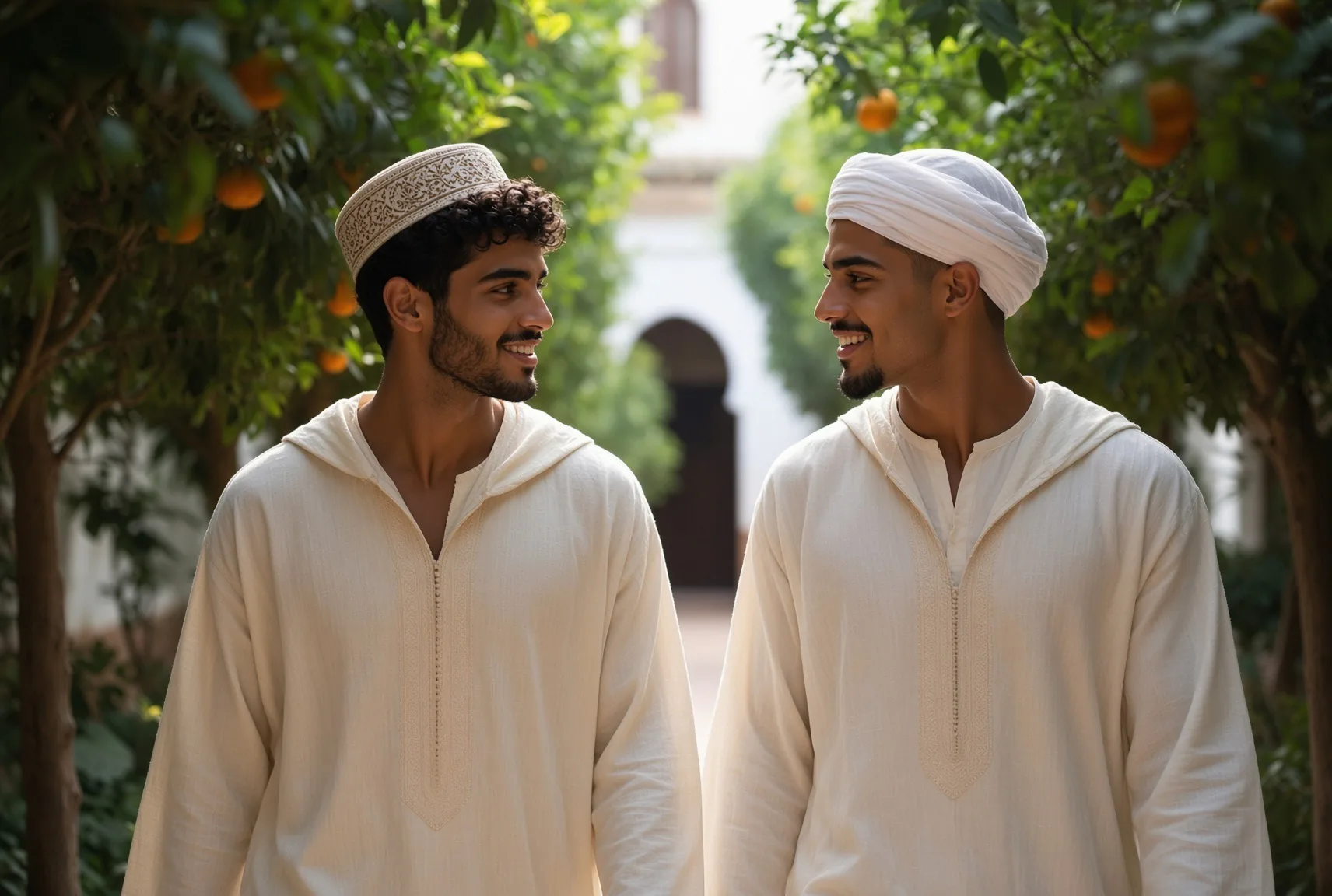
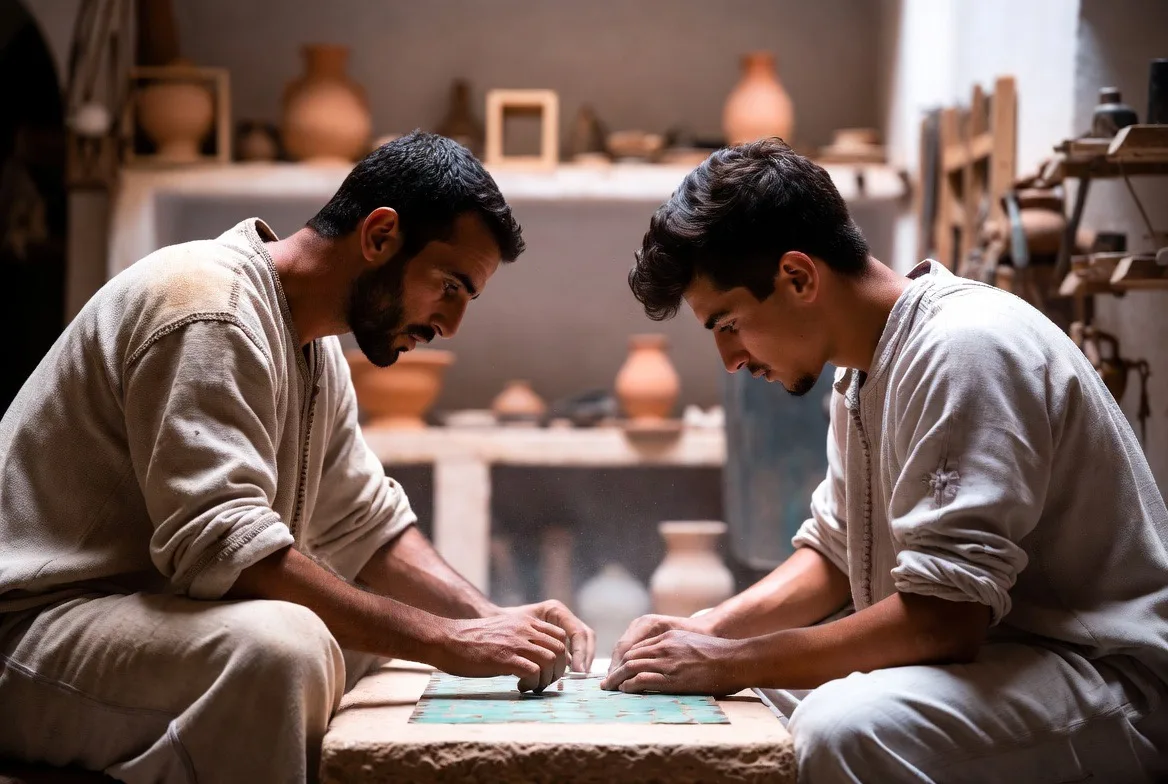
In the traditional Arab-Islamic world, male friendship is an alliance that is built and put to the test, often in a shared experience: the journey, the craft, the workshop. Two men who share the workshop, the table and the prayer become brothers through the time spent side by side.
Tradition has devoted whole books to it: al-Sulamī’s Ādāb aṣ-ṣuḥba, Abū Ḥayyān al-Tawḥīdī’s epistle on friendship and the friend (al-Ṣadāqa wa-l-ṣadīq), the book of the Iḥyāʾ that al-Ghazālī devotes to the duties of brotherhood and companionship. Its duties, the man one takes as a friend and the place the house leaves him are treated in As-Sadaqa→.
Honour (sharaf, ird)
Honour, in the Arab tradition, lies in what a man owes to his name, to his word, to those who bear the same name as he. To lose it leaves a wound that nothing repairs as quickly as it was made.
It is this honour that ʿAntara ibn Shaddād sings in his Muʿallaqa, cited in Tahtib and gnawa→: courage in combat has meaning because it defends a name, a word, a community. At Dar al-Hiraf this honour is handed on at a smaller scale, with the same demand: to keep what one has promised, to deserve a master’s trust, to do honour to the gesture one has been taught.

Loyalty (wafa)
Wafāʾ (وفاء), faithfulness to the given word, to the commitment made, to the friend in trial, holds a central place in classical Arab ethics: even today, in the popular imagination, betraying a pact remains one of the gravest faults a man can commit.
Futuwwa binds the ṣāniʿ to his master by a promise, and wafāʾ assumes that one stays faithful even when no one is checking, even when it costs. It is this same loyalty that Dar al-Hiraf seeks to form: towards the master, towards the brothers of the workshop, towards the word given to a future family.
Chivalry (furusiyya)
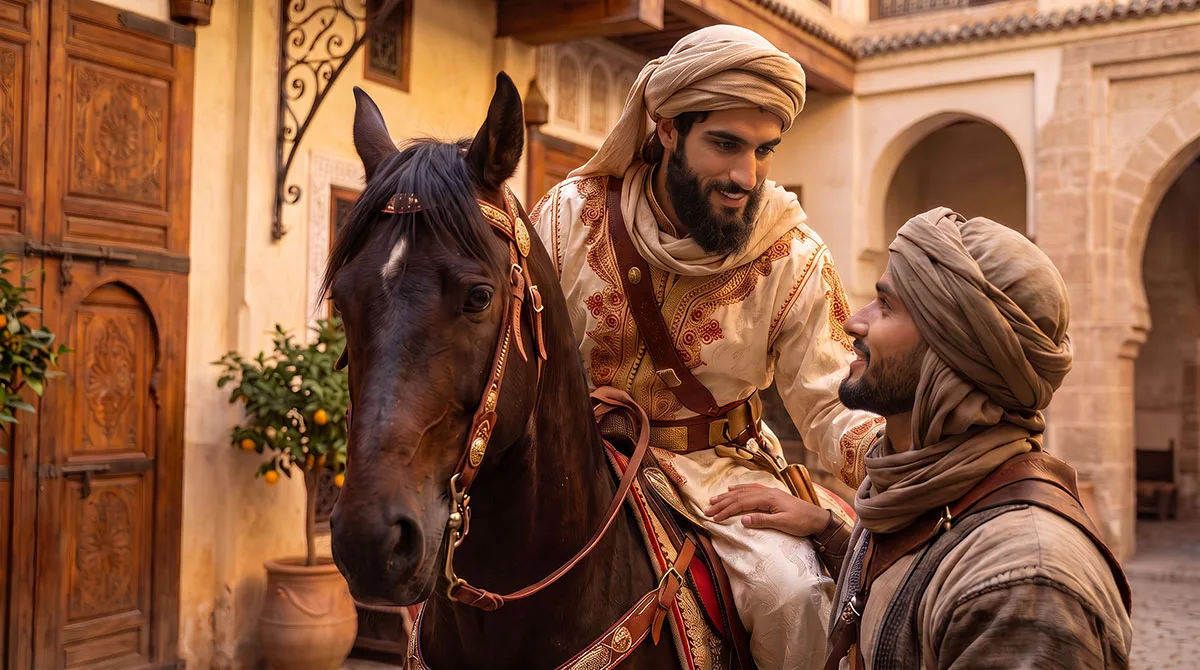
Arab-Islamic chivalry, described in The furusiyya→, places the trained body at the service of courage and restraint: strength there finds its measure, and it is measure that makes it chivalry.
Discipline
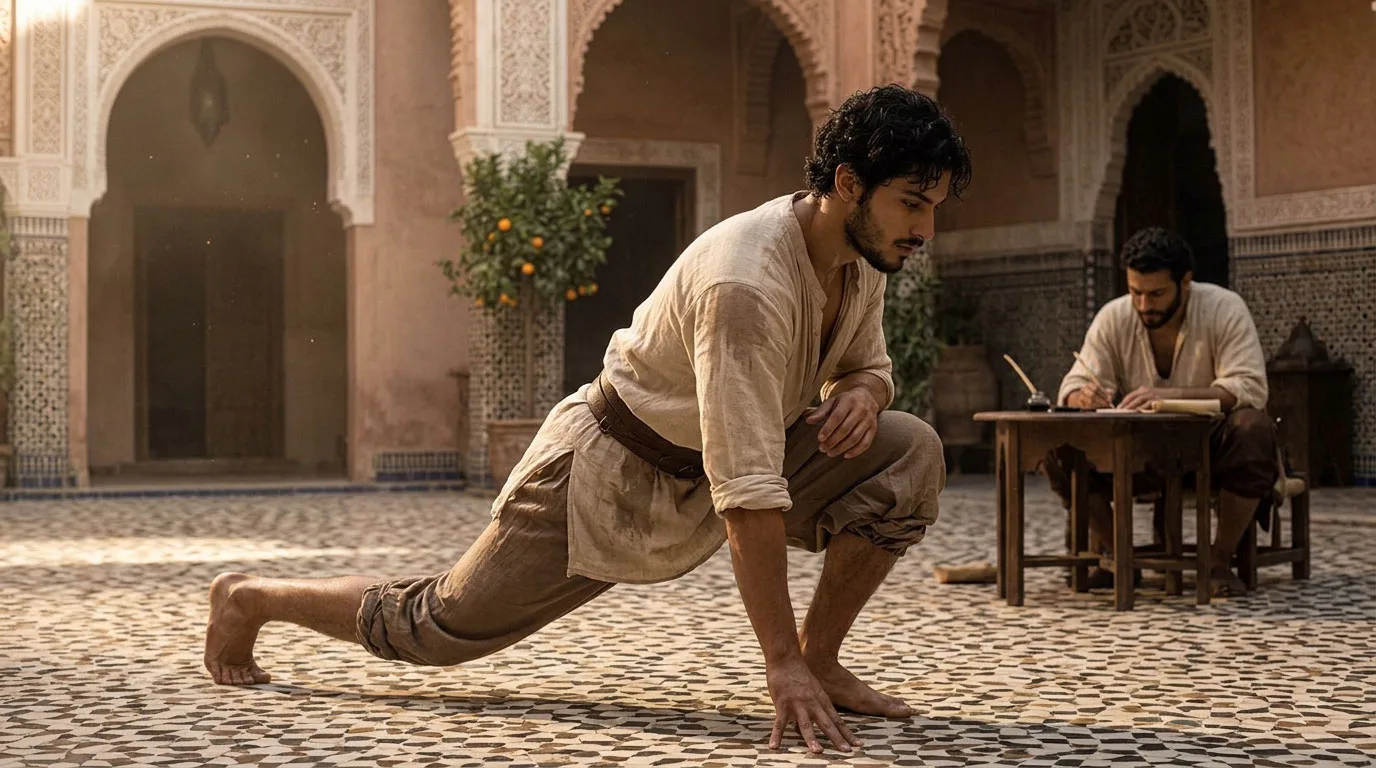
Friendship, honour, loyalty and chivalry are sustained by discipline: the patient repetition of the gesture, the renunciation of ease, the acceptance of a rhythm chosen by others. It is the thread that links the disciplines of Music and chant→ and of the furusiyya→ to the daily life of the house.
What is handed on endures; what is let fall must be won back, at greater cost than keeping it would have been.
A formation for today
What Dar al-Hiraf hands on is a backbone: a form that holds the whole man.
Many young men grow up today without having received, in a coherent way, what friendship, honour, loyalty and discipline concretely require of them. The world around them changes its landmarks faster than it can hand them on, and crafts are lost for lack of hands to receive them, as The vision→ recalls.
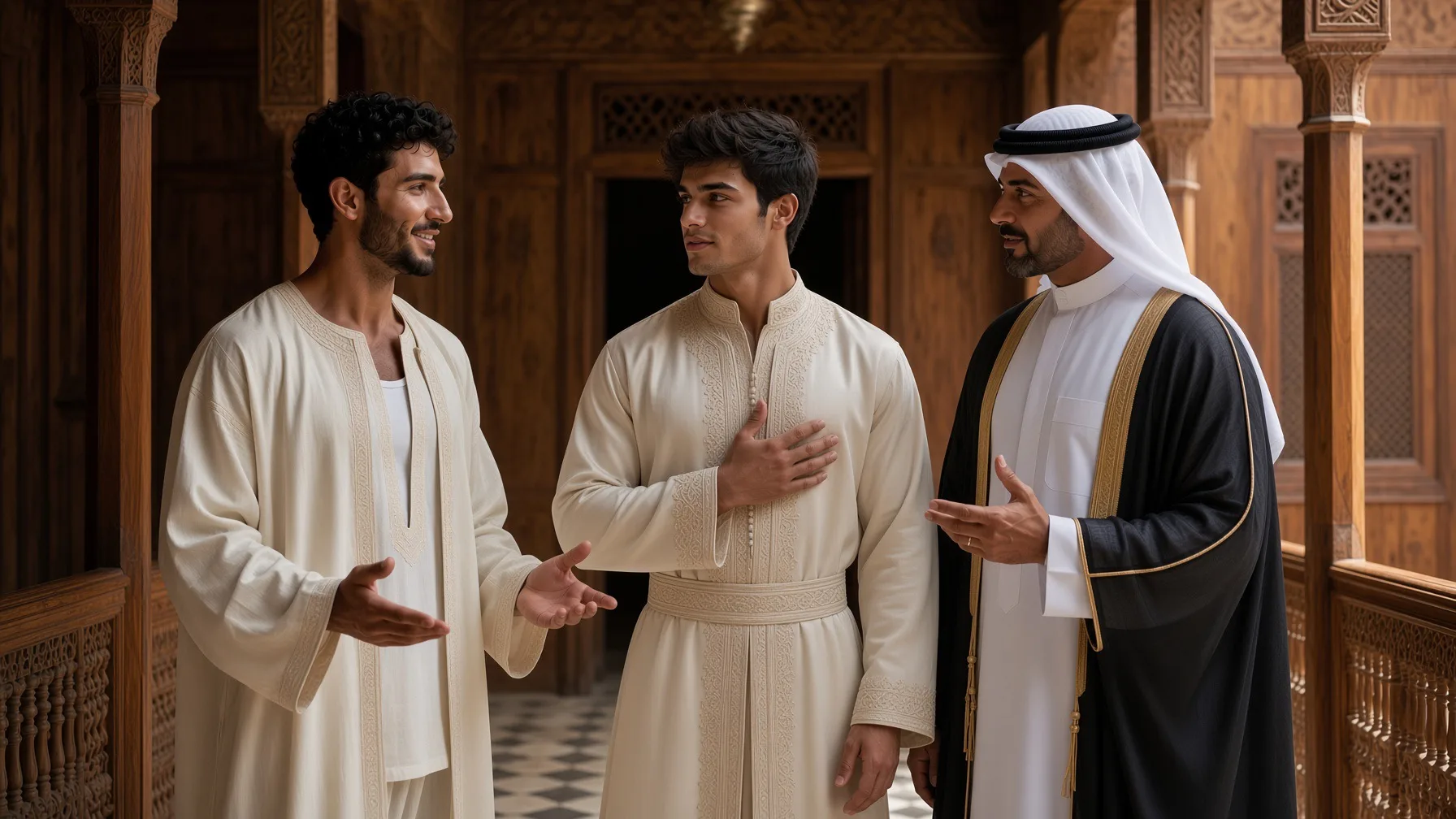
Dar al-Hiraf offers a place where a young man learns, through the repeated gesture and the company of masters and brothers, what it means to keep a word, to bear an honour, to stay faithful over time. This foundation comes before everything else: a man who knows what he carries can then face any world and remain himself.
This is what the man who enters the house comes looking for, and what families find again in the man who leaves it: foundations. A man formed here leaves able to endure, to hand on, and to found in his turn what others before him have carried.
This formation is handed on by living it: in a short stay→, a craft immersion→ or the residency→ at Dar al-Hiraf.
See also The house of the crafts→.
The words of this page are in the common glossary; the works cited in the sources; the sister house is Al-Funduq aṣ-Ṣiqillī.