Solidarity among artisans
Welcoming fellow craftsmen whose workshops have been destroyed or made unusable
A craft is handed on for as long as a master and an apprentice work together. Where war parts them, the patterns, the tools and the names of the gestures remain; what is missing is someone to put them into another’s hands.
01When transmission breaks
In cities struck by armed conflict the workshops close, the masters leave, the apprentices scatter. A craft can survive in notebooks, templates and tools and still be lost, if no one works any longer beside the person who knows it. The house is made for the opposite case: a master and young people working together for years, in the same workshop.
02What the houses will be able to do
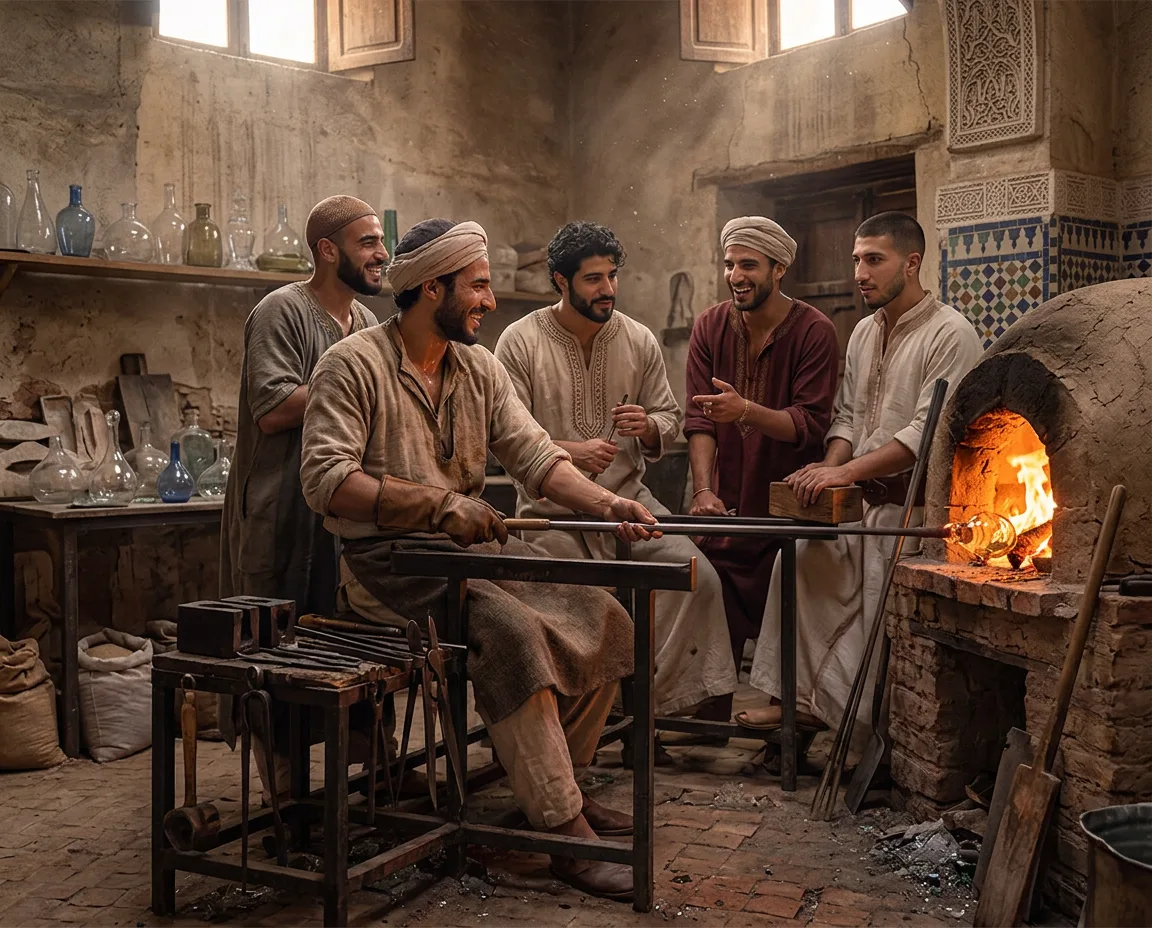
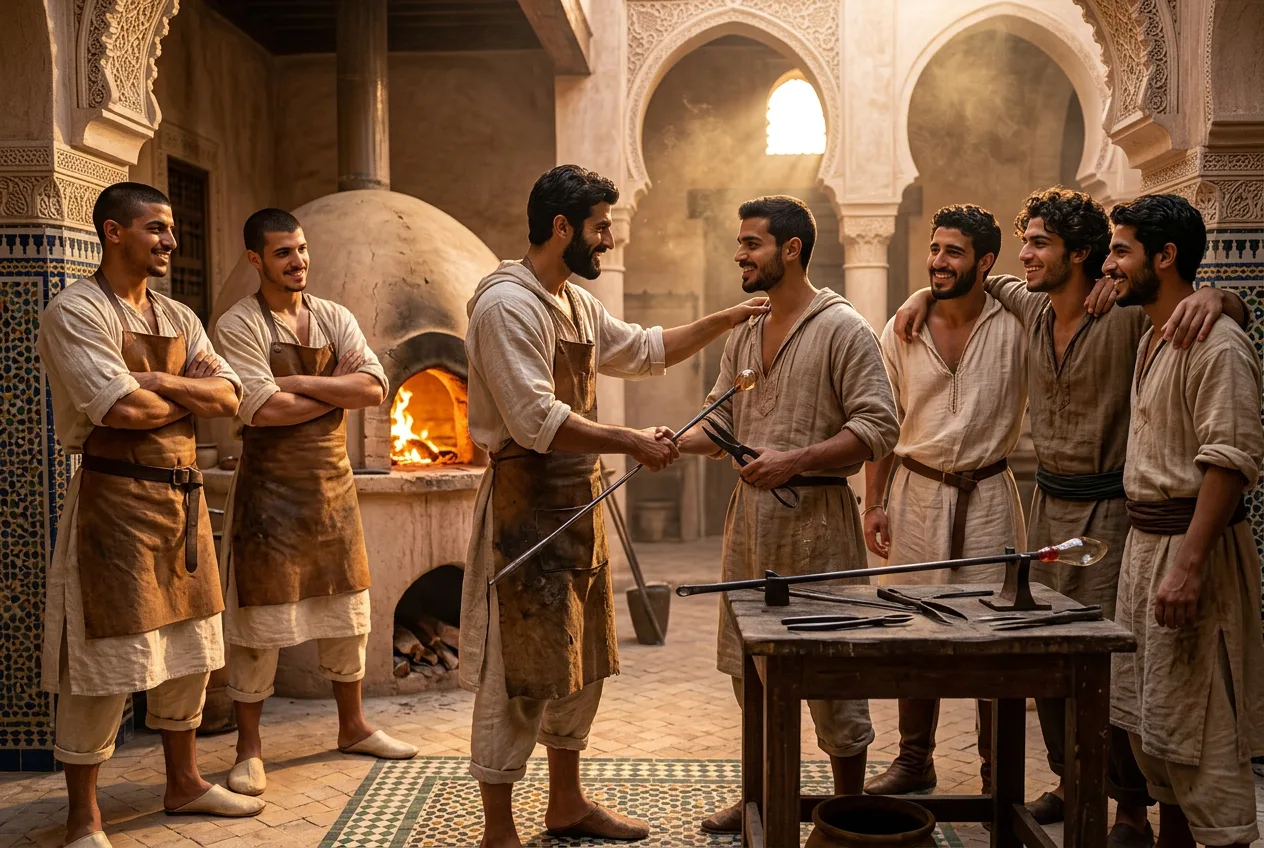
When the houses are in a position to receive, they will be able to welcome among their masters craftsmen from theatres of war where their workshop has been destroyed or is otherwise unusable. The master received will have the conditions of every other master of the house and will work in the workshop of his discipline.
Alongside the young people of the place, he will be able to train young people who wish to learn his tradition. They will be admitted under the same criteria as the others, with no quota or reserved place by origin, and free to stay or to leave.
The welcome will be selective and tied to the disciplines of the workshops: the house receives a master because his discipline has a workshop to work in, not by virtue of a general commitment.
03Masters compared
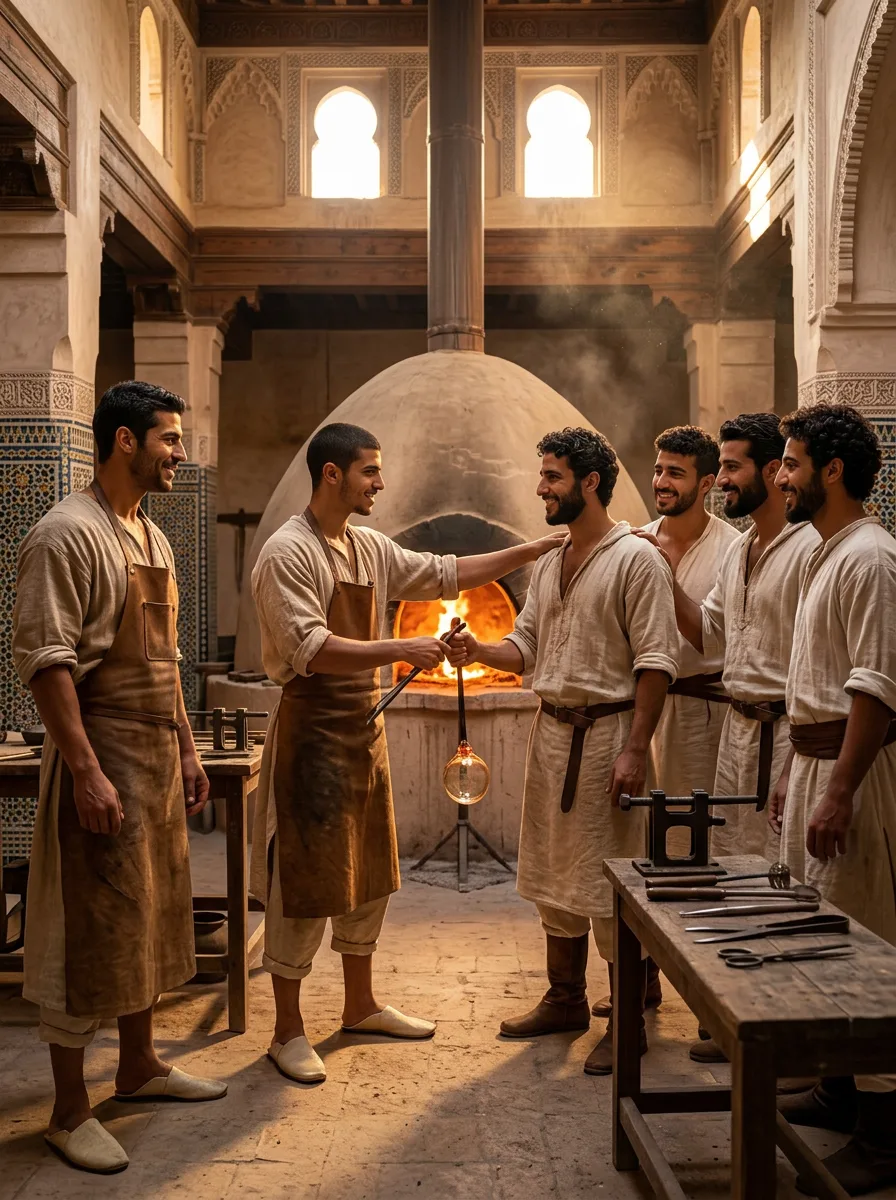
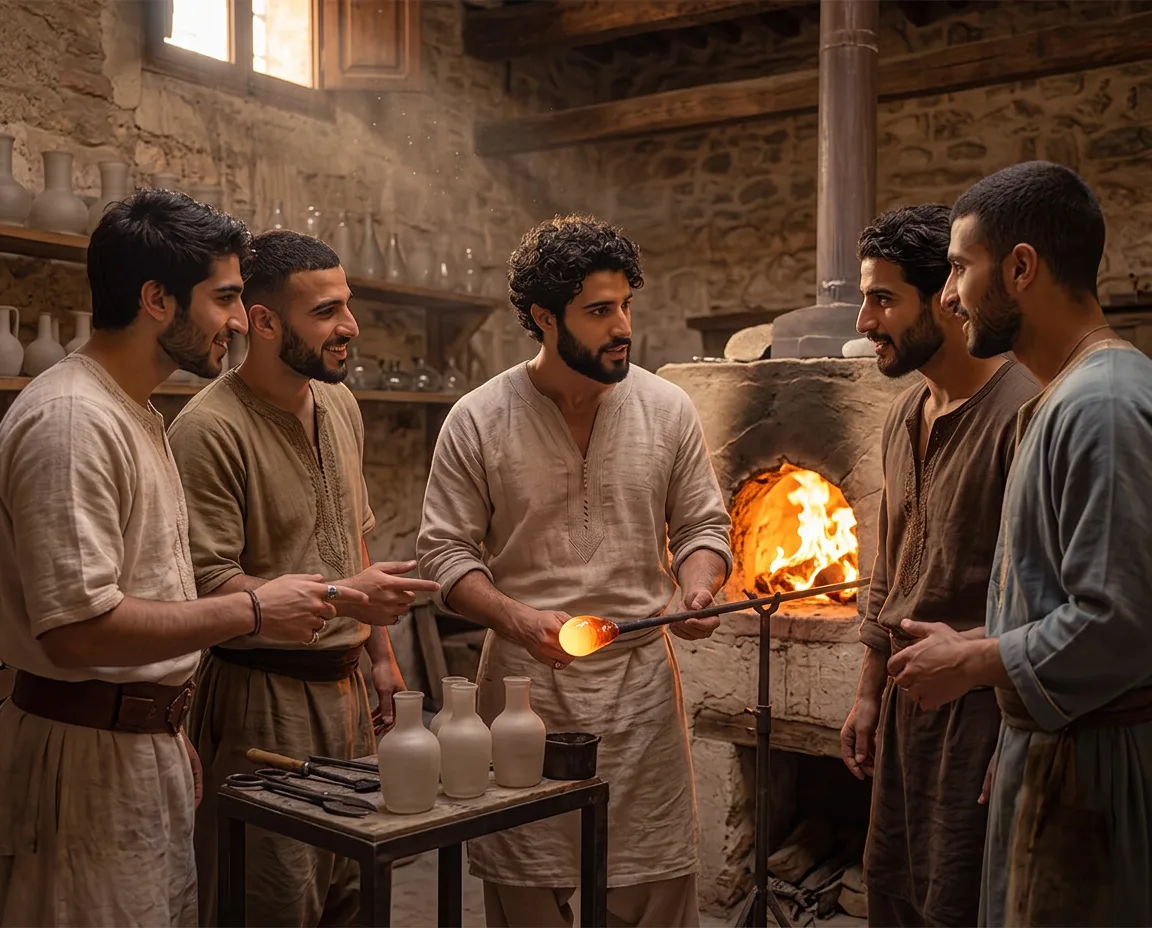
Masters from different cities who practise the same discipline will be able to stand before the same wood, the same loom, the same clay, each with his own patterns, his own tools and his own names for the same gestures. They will show one another a technique, discuss another, and from the comparison will come what their traditions share and what sets them apart.
It is a dialogue between equals, conducted with the hands, and a conference does not replace it.
04One saddle is not another
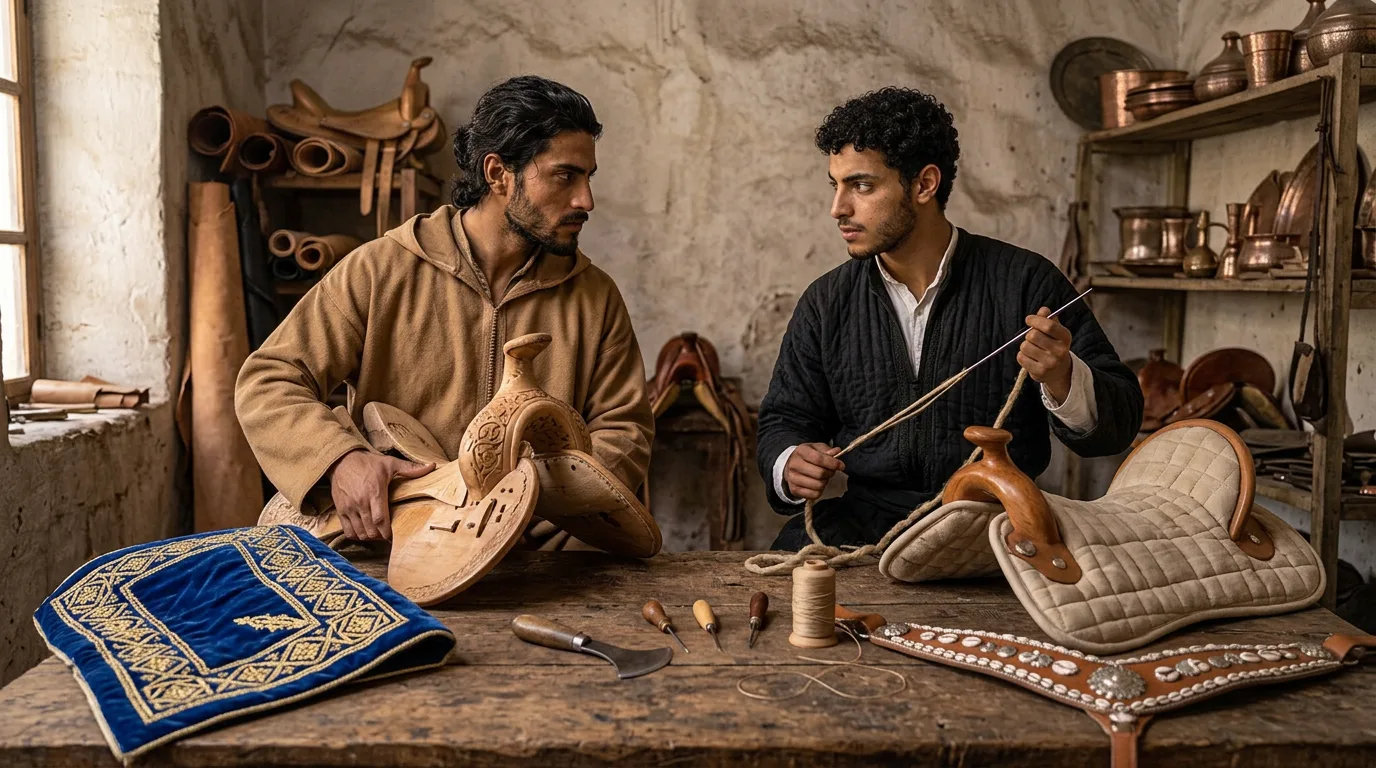
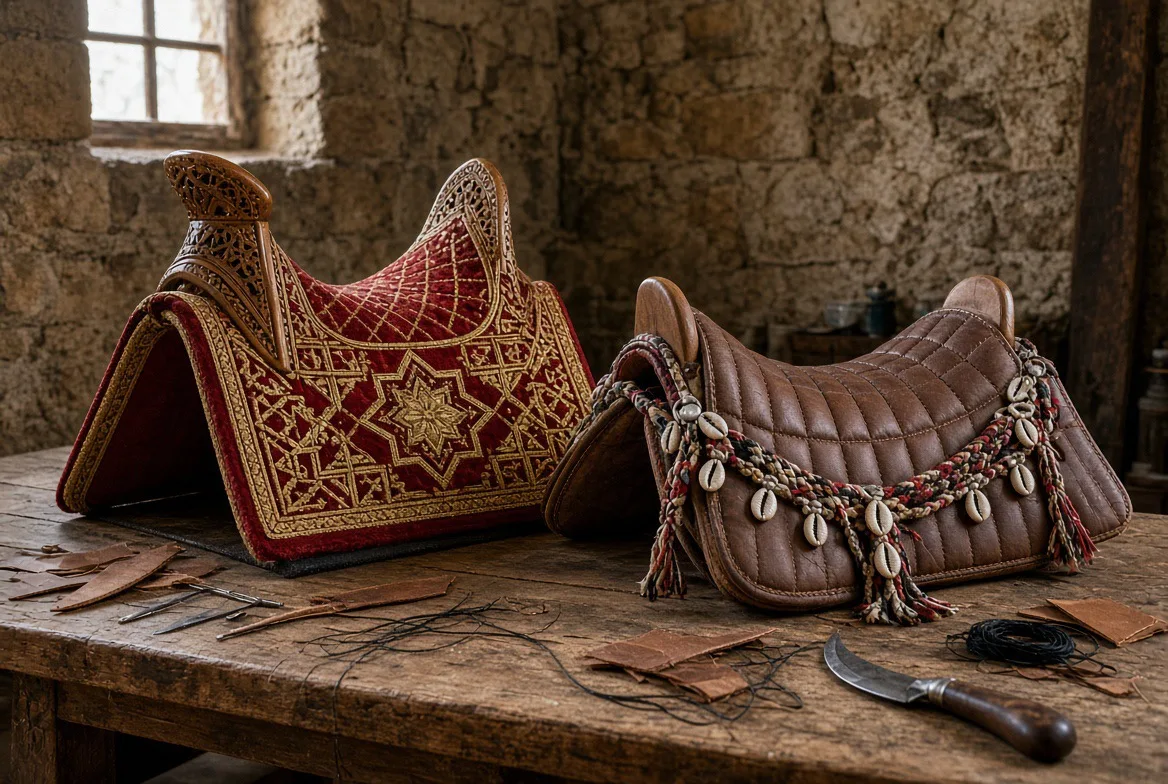
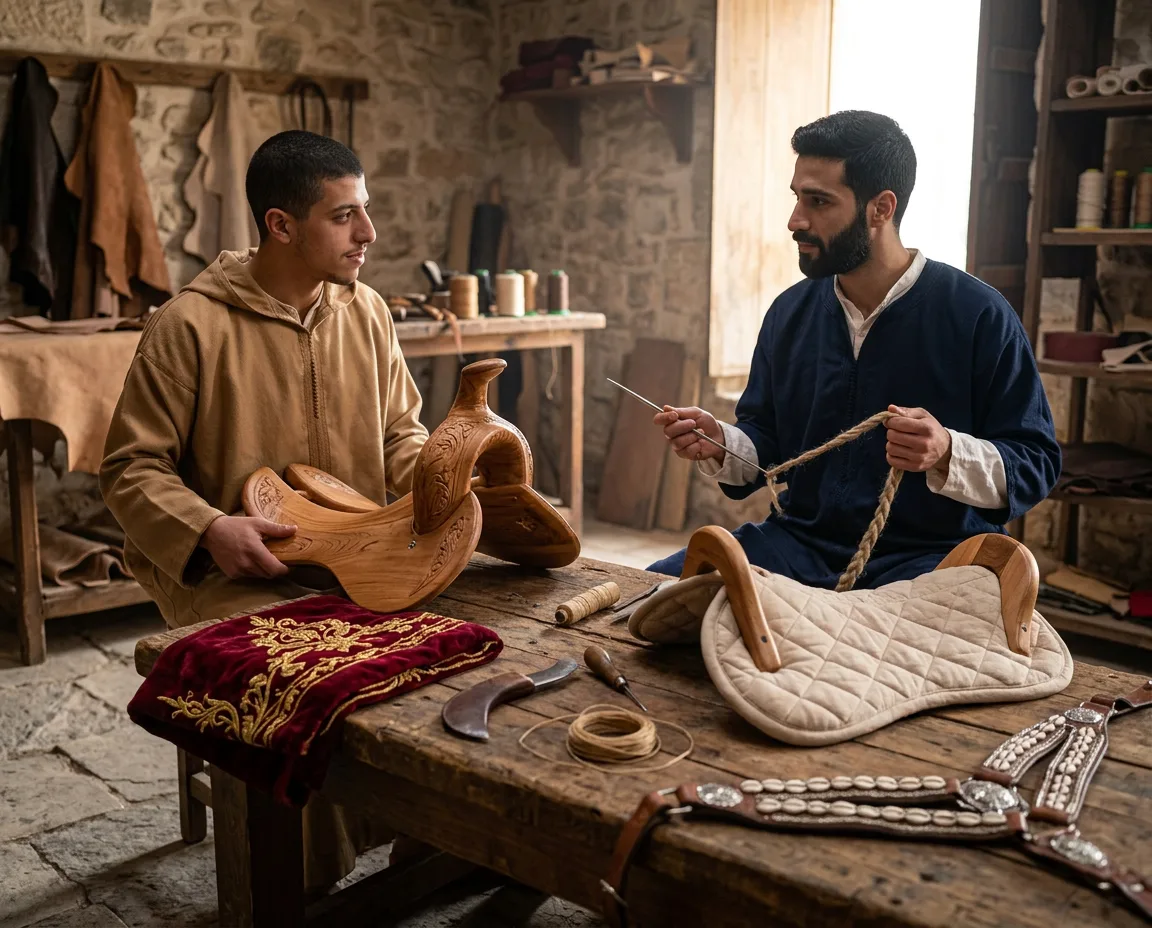
The comparison between masters is not only about techniques: it is about objects. A saddle of Fez and a saddle of Damascus serve the same purpose and are not made the same way.
In Fez the tree, of cedar or orange wood, arrives bare from the carpenter, and the saddler covers and pads it; the stitching is done with two needles and a single thread, and in the parade embroidery the gold threads lie on the surface and are held by hidden silk stitches, without passing through the leather.
In Damascus, according to the description given by Syrian Heritage, the saddler, called a suruji, begins with a padding shaped in jute and filled with cotton or wool, fixes the stirrups and the girth to it, and fastens two pieces of wood at front and back; the seat is stitched with a long needle and braided wool threads and covered in leather, then in embroidered cloth. The martingale was of silver, or of wool and shells.
Two masters meeting in a workshop would discuss exactly this: where one begins, what is stitched, what is left to the carpenter. As for the Damascus tradition, the same source counts only one master still at work today.
05What the 2003 Convention says
The UNESCO Convention for the Safeguarding of the Intangible Cultural Heritage (Paris, 2003) defines safeguarding as follows, in Article 2, paragraph 3:
“Safeguarding” means measures aimed at ensuring the viability of the intangible cultural heritage, including the identification, documentation, research, preservation, protection, promotion, enhancement, transmission, particularly through formal and non-formal education, as well as the revitalization of the various aspects of such heritage.
UNESCO, Convention for the Safeguarding of the Intangible Cultural Heritage, 2003, Art. 2, para. 3
The Convention does not speak of exile. The reading the houses give it is their own: to safeguard a body of knowledge requires that someone be able to hand it on, wherever he is.
06Crafts at risk
The sources below are press articles and calls issued by international bodies, of different dates. The figures are those each one reports, for the year in which it reports them: they are not a census. They show where transmission is most fragile, not how many masters remain today.
Syria. According to an AFP report of January 2016, some 18,000 craftsmen were registered with the national union in 2009, and by the end of 2015 70 to 80 per cent had left the trade, often after their workshops in Damascus and Aleppo were destroyed. The mother-of-pearl inlay workshops of Damascus and its outskirts had fallen from 30 to three or four. A survey of July 2016 also lists as endangered Aleppo soap, with more than sixty soap factories hit by shelling, hand weaving, copperwork, Damascus wooden mosaic and stained glass.
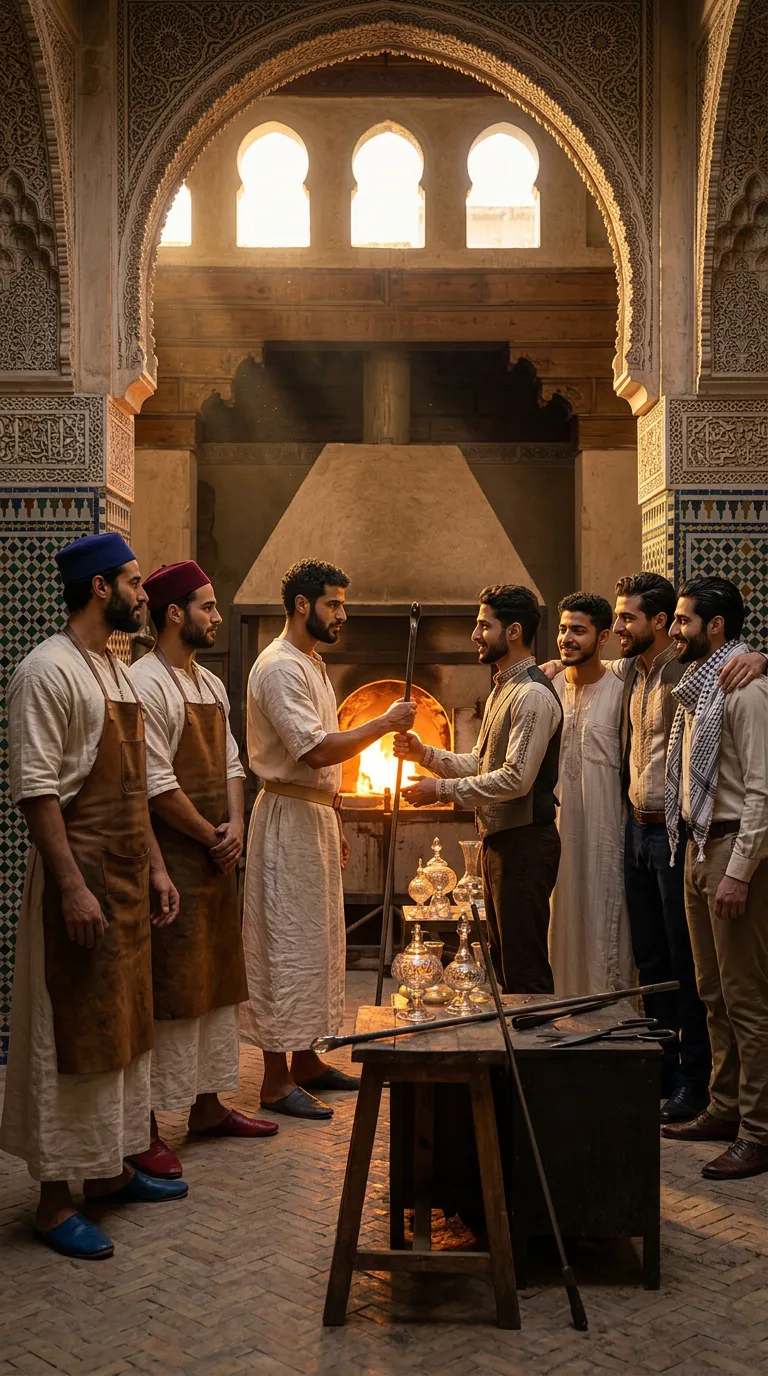
Lebanon. A 2012 report describes glassblowing at Sarafand, in the south: only two workshops in the country, among them that of the Khalifeh family, who light their furnace one month in three because running it costs about 200 dollars a day. In Tripoli, soap and hammered brass were fading before a revival programme begun in 2010. The causes given are falling demand, costs and the economic downturn.
Palestine. The European Union-funded call for projects, reported by the Palestinian portal Masader, names six crafts at risk of disappearing, among them glassblowing, weaving, pottery, mother-of-pearl and olive-wood carving. A 2021 study by the Heinrich Böll Foundation, by contrast, lists as declining the basketry of straw and olive branches, wool weaving and sheepskin tanning, replaced by imported goods and plastic, and notes that pottery, glass, soap and olive wood have found a market as crafts for visitors.
Iraq. Baghdad’s coppersmiths’ souk once had 68 coppersmiths, a craftsman told Al Jazeera in 2018; about ten remained, and few actually beat copper, because of cheap imports, low incomes and the cost of premises. In Mosul, according to Shafaq News in July 2026, wool weaving is down to a handful of craftsmen, the blacksmiths’ souk keeps one or two workers busy where it once kept dozens, and the coppersmiths have largely disappeared: the markets were damaged in the battle of 2017, and reconstruction restored the buildings without reviving the trades. Forty years of conflict have also broken the transmission of traditional boatbuilding, Al-Fanar Media noted in 2021.
Which of these crafts could find a workshop in the houses depends on the disciplines the workshops will have: the welcome remains selective and is promised to no one.
07What remains to be settled
The houses are not yet operating: this page describes a horizon, not a programme. Residence, status and lodging for the masters received will be settled case by case with the competent bodies, and no welcome will be promised before there is a workshop, a master to run it and the conditions to receive him.