Short stay
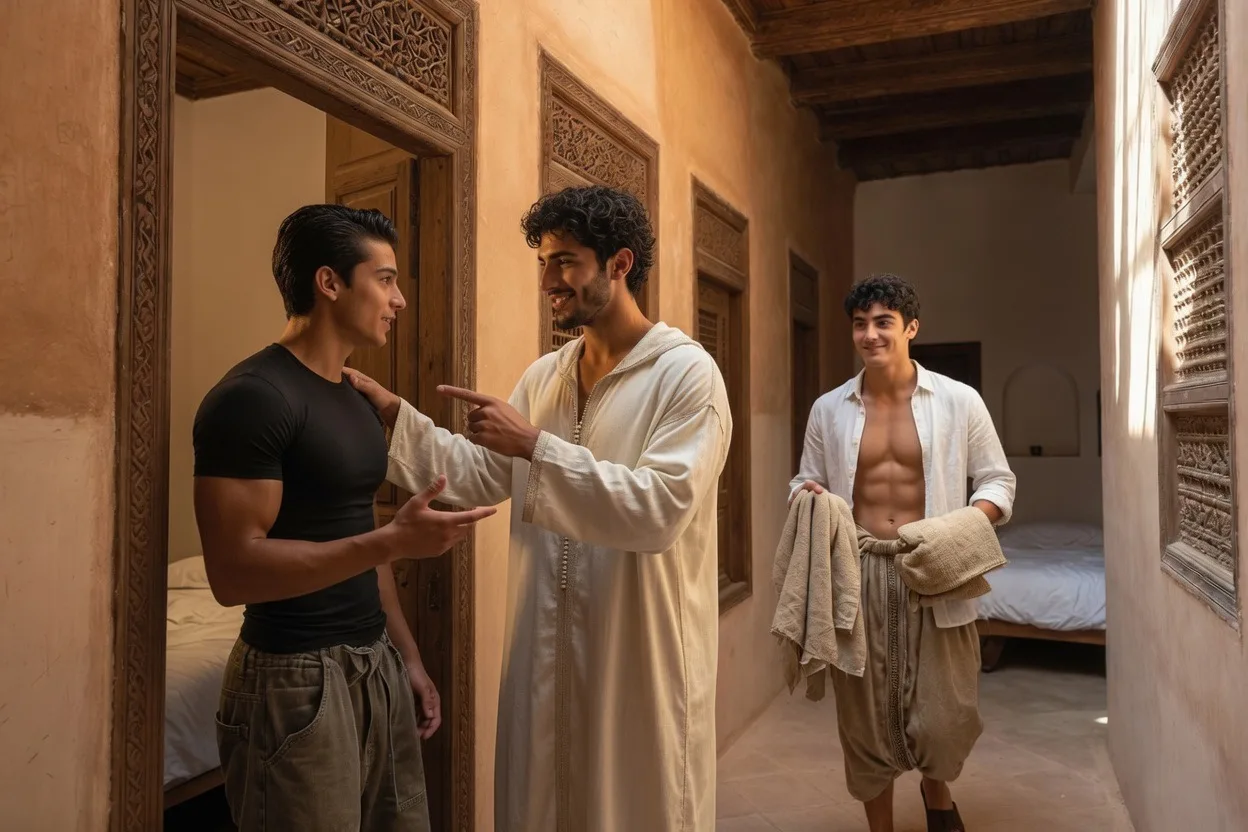
A limited time, in the rhythm of the house — without commitment: to come to know the life of the community and take part in it, to work alongside the others, to carry out a few small tasks.
ReadA house of formation in the medina of Fez:
masters and apprentices live and work together, under a common rule.
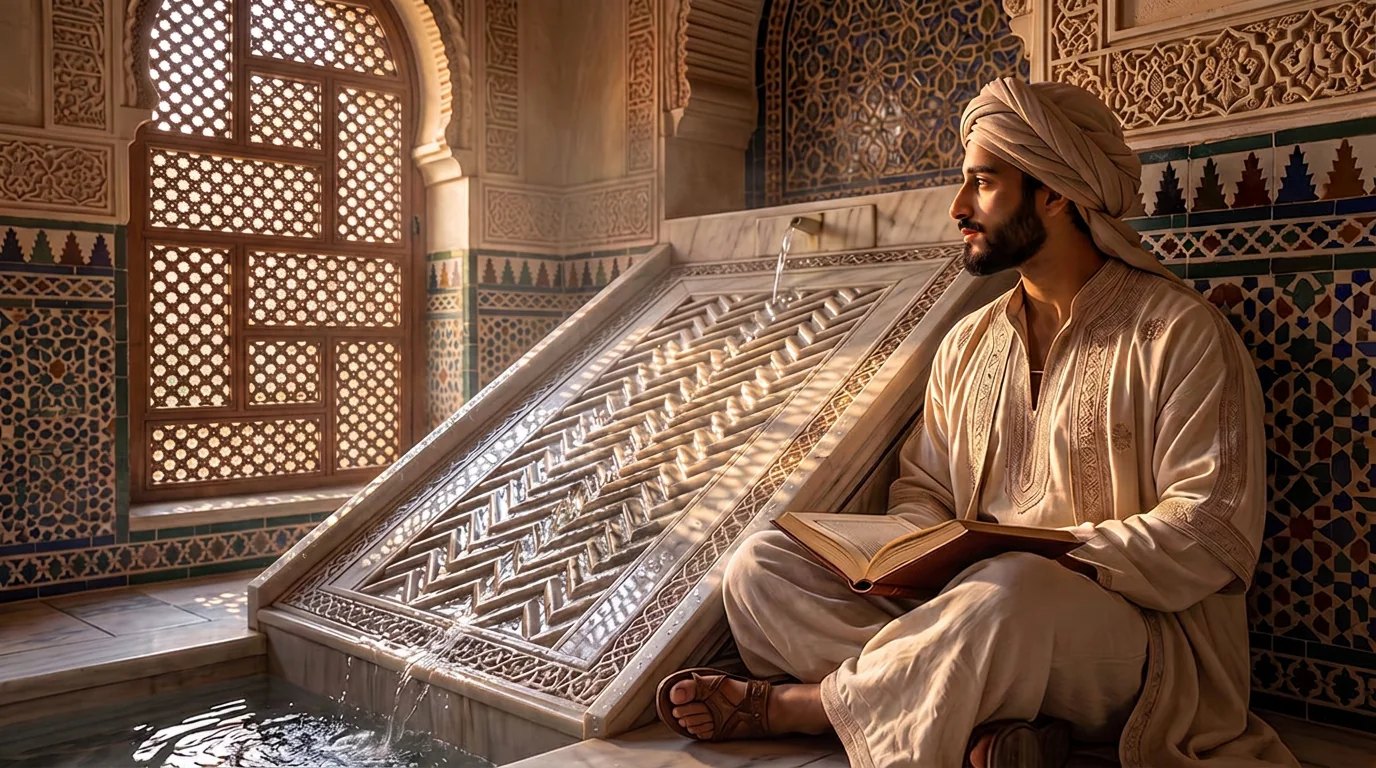
“From the garden one entered the small inner courtyard through a very low door, and a corridor barely wide enough for one person to pass. In the middle of the courtyard there was a fountain. The whole building was surrounded by a very high wall.”
— Edmondo De Amicis, Marocco, 1876, chapter “Fez” (translated from the Italian)
Riyāḍ al-Uns will have its seat in a courtyard house in the medina of Fez. The house has yet to be found: the search is being made with architects of the city. One enters by admission. Masters and apprentices live there, and only those who live there work in the workshop as apprentices. The day is marked by prayer, by the hours of the craft and by the rule that is signed on the threshold.
The first workshop is the saddlery, and it holds together three materials that in Fez had workshops of their own: wood, iron, leather. Leo Africanus, in Book III of the Descrizione dell’Africa, saw on a single street those who made the saddle-trees, those who ornamented stirrups and bits, those who stitched three covers of cordovan, one upon the other, the finest in the middle. This is the order of the first sign. Then, when there are a master and the means, the zellīj, plaster, weaving, bookbinding with calligraphy, and last of all the essences.
The garden of the house, when there is one, has a different measure from the orchards outside the walls that Leo saw around Fez — tall trees, branches of the river running through them, a watering in the month of May, so much fruit that they seemed a wood. That is the measure of the outskirts. Within the wall, the measure is the courtyard: the fountain, the channel, the shade. Water is shown, and measured.
Whoever is a guest of Al-Munya, the house beside the house, is received elsewhere. They share its spaces and hours only in so far as the day of the house makes them common.
Riyāḍ is the inner garden: the courtyard closed to the street and open to the sky, the form of the house in the Maghreb and in al-Andalus. Al-uns is the intimacy of those who are together without mistrust, the opposite of the desolation that Arabic calls waḥsha. The name therefore speaks of a house in which the courtyard, the craft and the common day educate the same person. It was chosen for this meaning.
الرِّياضُ لِأَهْلِهِ، لَا أَهْلُهُ لِلرِّياضِ
“The riad is for its own, not its own for the riad.”Nec domo dominus, sed domino domus honestanda est
Al-Uns is a presence to be inhabited, and not a service to be consumed.
What these pages describe does not yet exist. Riyāḍ al-Uns is a project: a settled programme, a place still to be found, a community that has not begun. These pages set out what is to be instituted.
We seek patrons able to carry this project to completion: not to fund an image of the Maghreb made for Europe, but to institute in Fez, under a threshold of its own, the high face of the medina’s crafts — and to make possible, without diluting that source, the cousin house in Sicily. Certain elements may also be supported one by one — a loom, the fitting of a workshop, the first year of a master of the art — each accompanied by a recognition commensurate with the contribution.
An undertaking of this nature is not conducted alone. The stake is set out on the Support page.
Three independent paths, reserved for adults — short stay, craft immersion and residential path. Whoever is a guest of Al-Munya, the house beside the house — in Dār al-Aṣl if the House invites him, in Dār al-Diyāfa if he is a nadīm or a guest of one — is received elsewhere, and is not bound to share either the spaces or the rhythms of the house, except as concerns the hours of the day.
A limited time, in the rhythm of the house — without commitment: to come to know the life of the community and take part in it, to work alongside the others, to carry out a few small tasks.
Read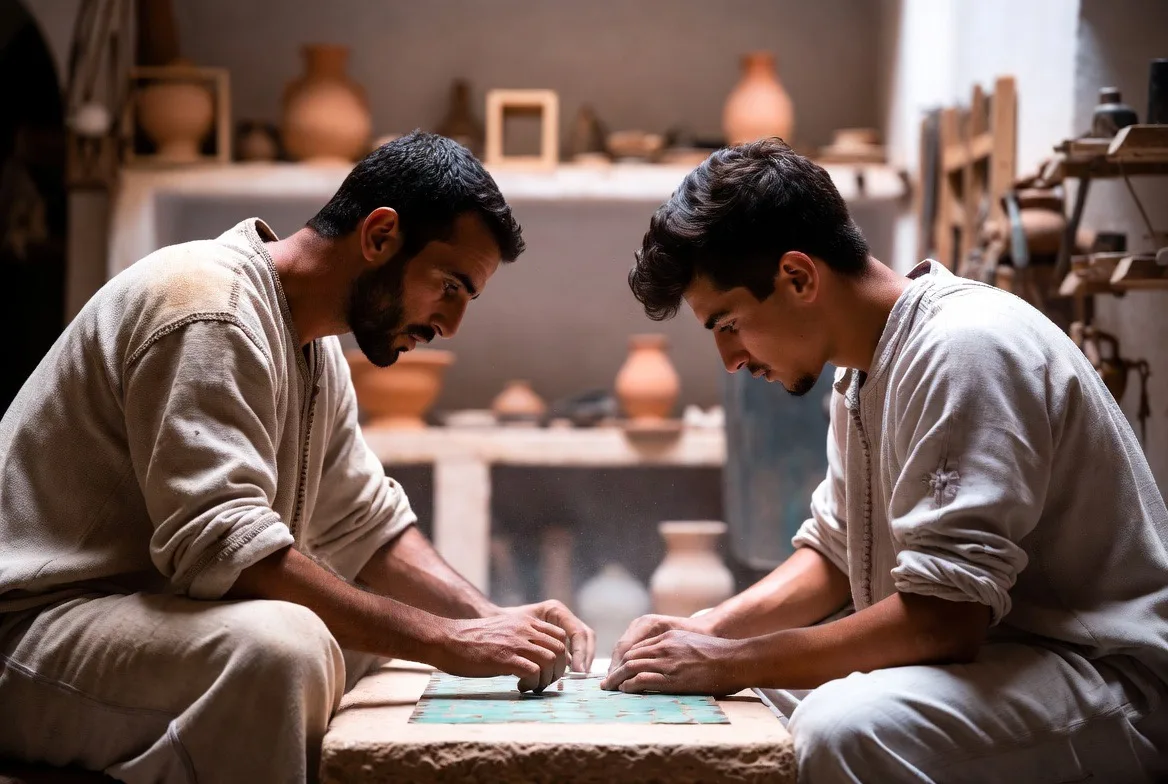
A few weeks to become familiar with a craft — before taking a more demanding decision.
Read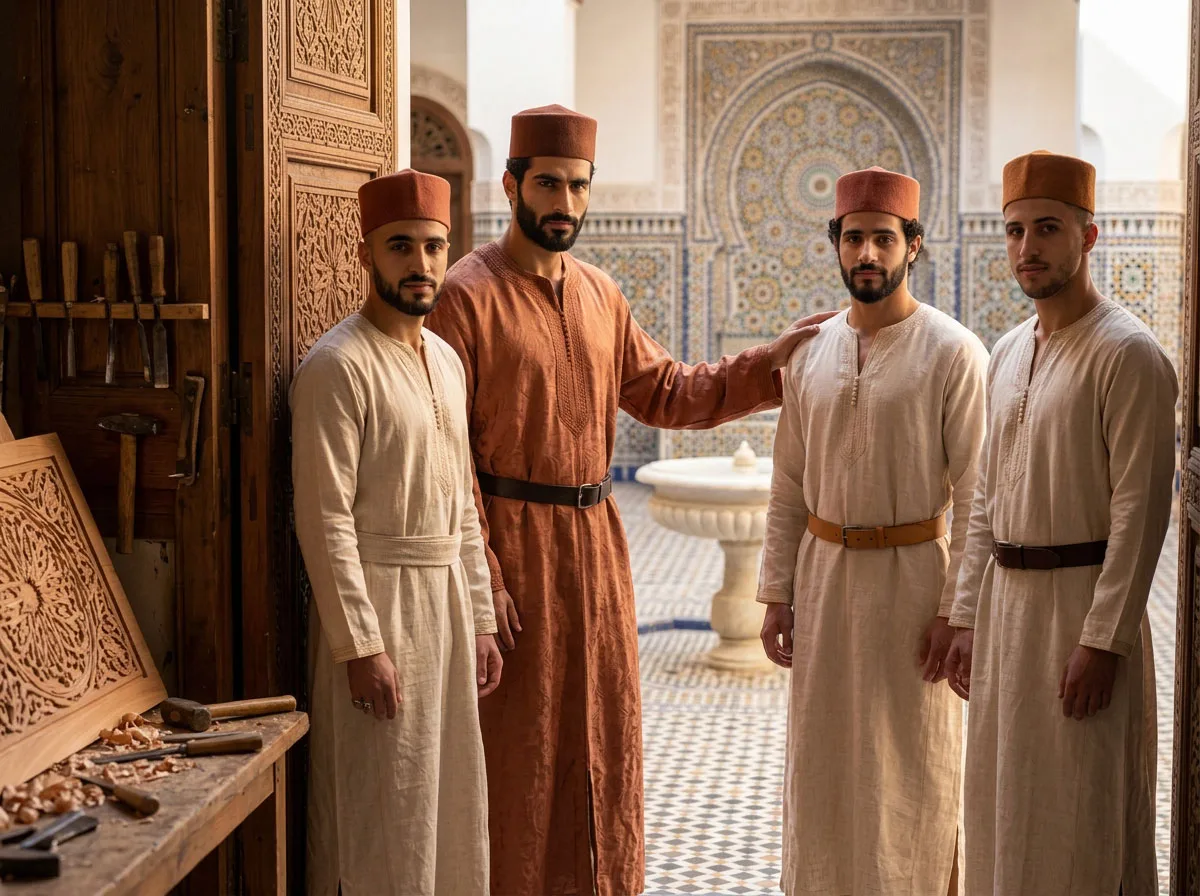
The long commitment: a weighed choice, made in the determination to live according to the rules of the futuwwa and the furusiyya, in order to grow and improve physically and spiritually: prayer, study, sport, work, common life.
Read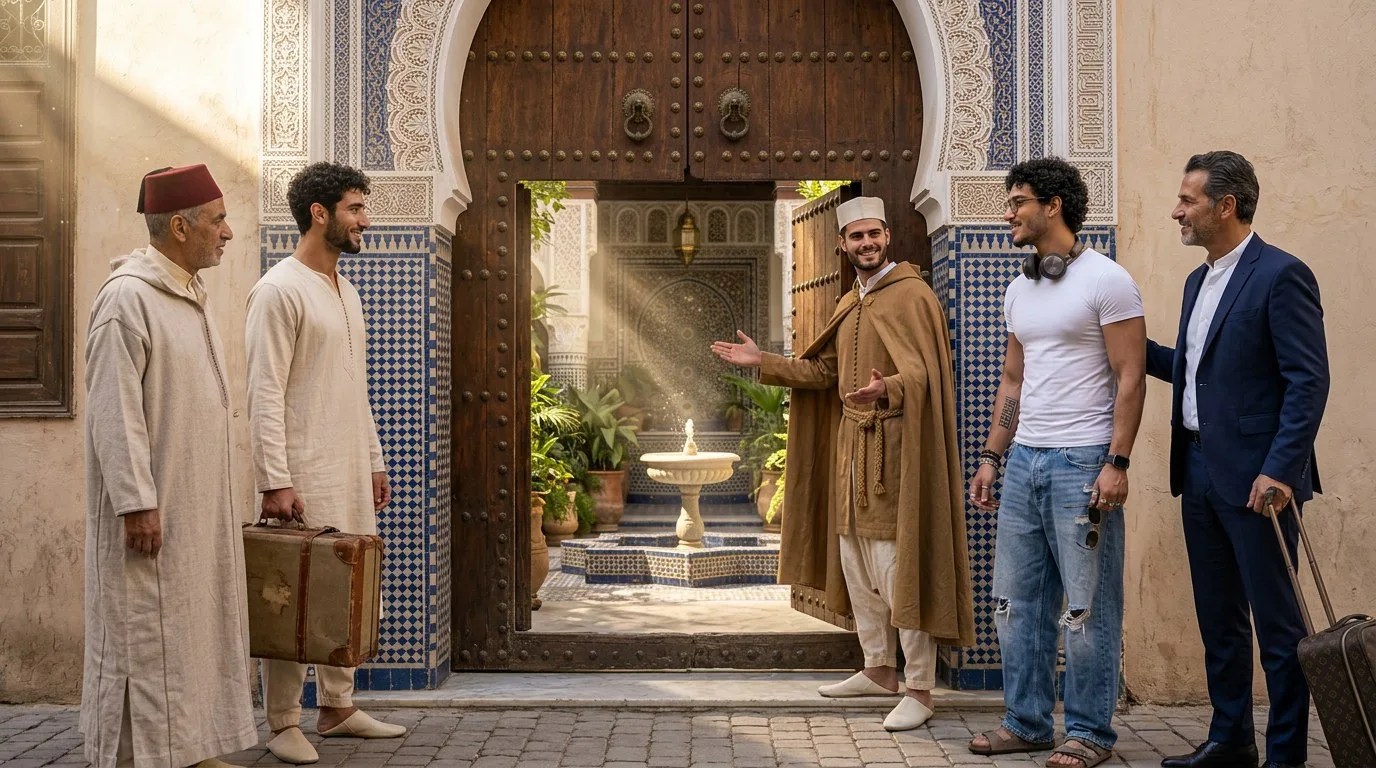
The house does not keep the remains of an extinguished world: rather, it allows those who choose it to know and to love what never needed a season in order to be true, and which does not go out of fashion. The garment that masters and apprentices wear thus becomes the outward sign of an inner habit — habitus, in Latin, means precisely “way of being”.
The garment, essentially the same for all — save minimal differences — also avoids the distinction based on social status, on what one owns and not on what one is. Two young men may cross the same door on the same day, one in a djellaba, the other in jeans, and not come from the same world. They are given the same clothing, the same room, the same table, and the same work. After a few weeks, no one can tell any more how the one or the other was dressed on the day he arrived.
No one leaves Dār al-Ḥiraf without having left, in its walls, a work of his own hand. A panel, a door, a basin, an inscription above a threshold: something that remains, and is not taken back.
One does not come to carry away an object: one leaves a work that remains in the house.
“A heritage community consists of people who value specific aspects of cultural heritage which they wish, within the framework of public action, to sustain and transmit to future generations”Faro Convention · art. 2, b