
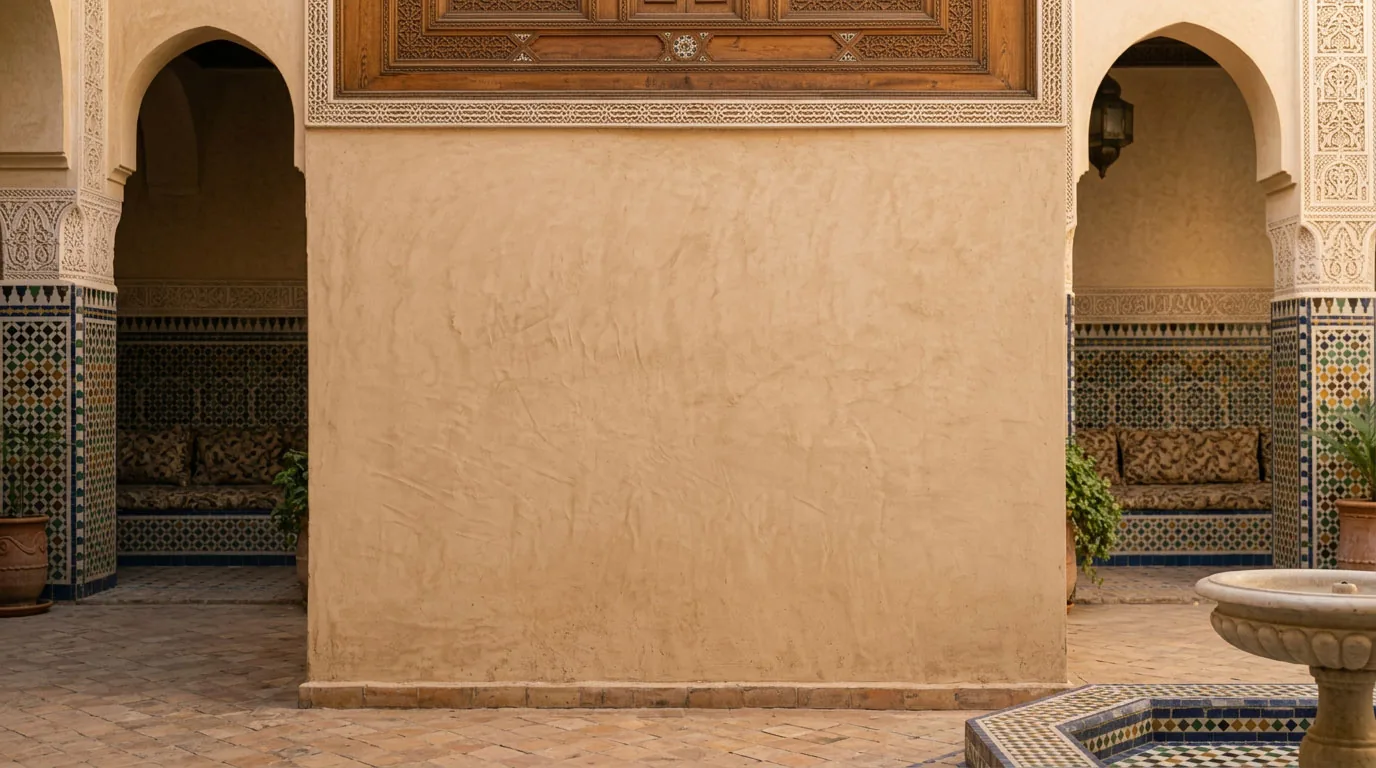
The building site
Here, the time of building
There are two building sites, not one: the one that restores the house, led by established masters, and the school’s own, which opens afterwards and never closes again.
The house is not restored with ṣāniʿ. It is restored so that there may be ṣāniʿ.
THE HOUSE ITSELF
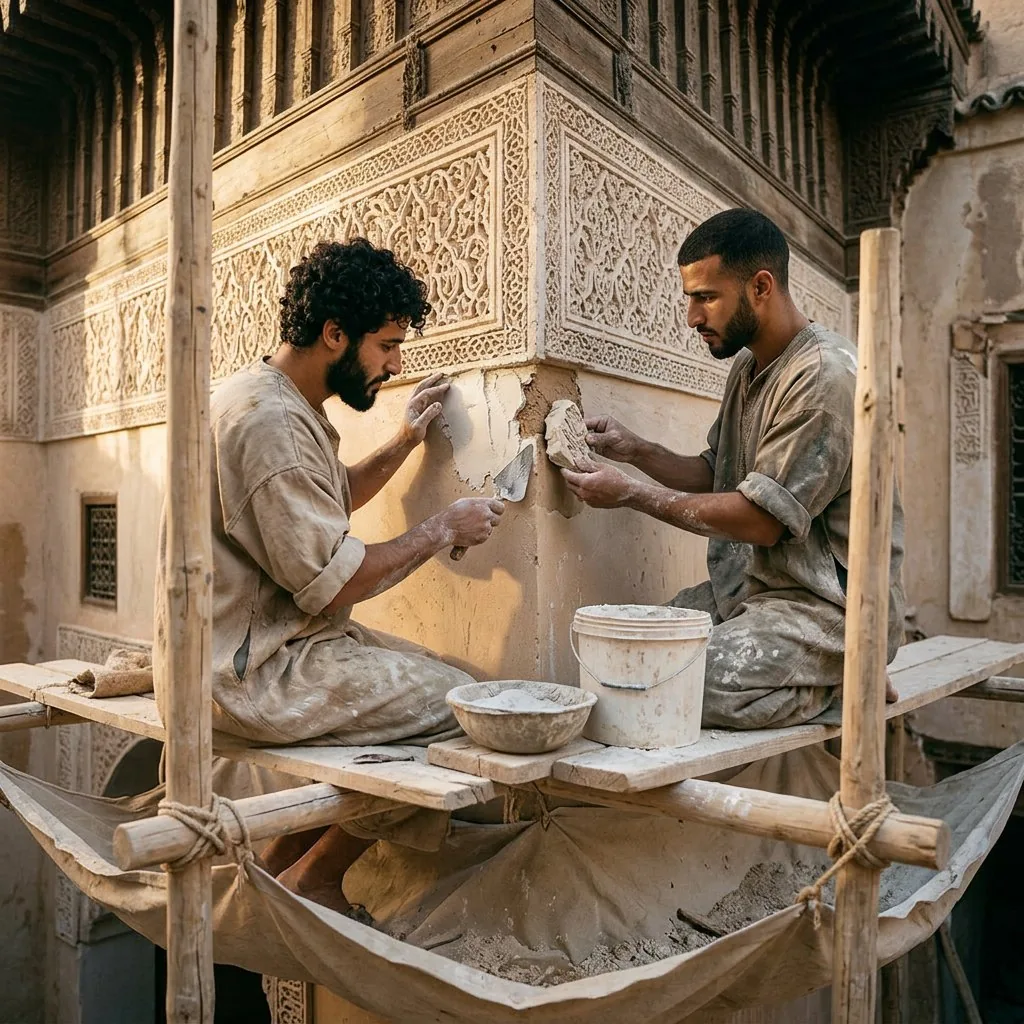
Who restores the house
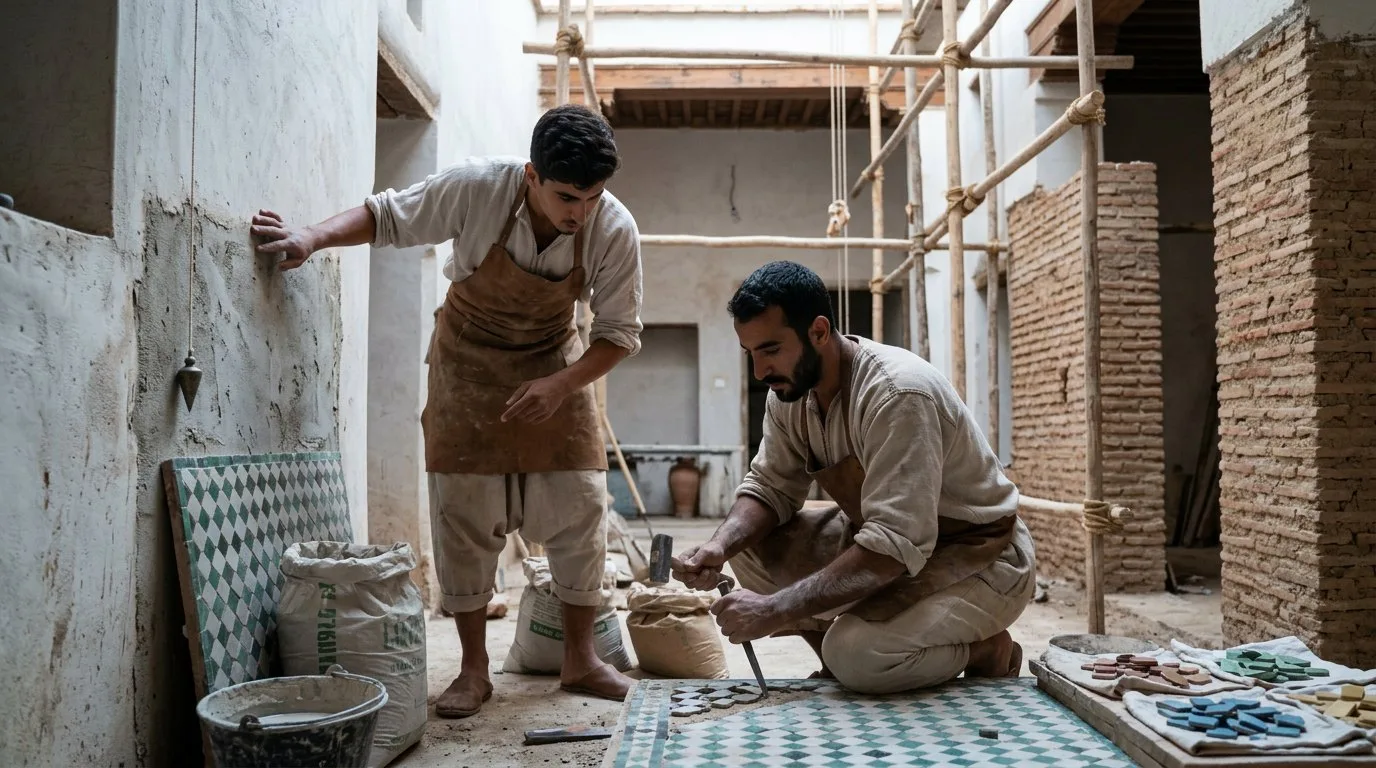
The old building, of the fondouk type, once found and acquired, will be restored by established masters, under works supervision and according to the procedures a listed building requires. The ṣāniʿ do not intervene there.
Heritage prudence would be reason enough; a simpler one is added to it. The ṣāniʿ are also the residents, and as long as the house is a building site, there is nowhere to lodge them.
Established masters, and the techniques of the medina: the Nara Document on Authenticity counts traditions and techniques among the sources on which the authenticity of a property is judged, alongside its materials:
“Aspects of the sources may include form and design, materials and substance, use and function, traditions and techniques, location and setting, and spirit and feeling, and other internal and external factors.”
DURING THE WORKS
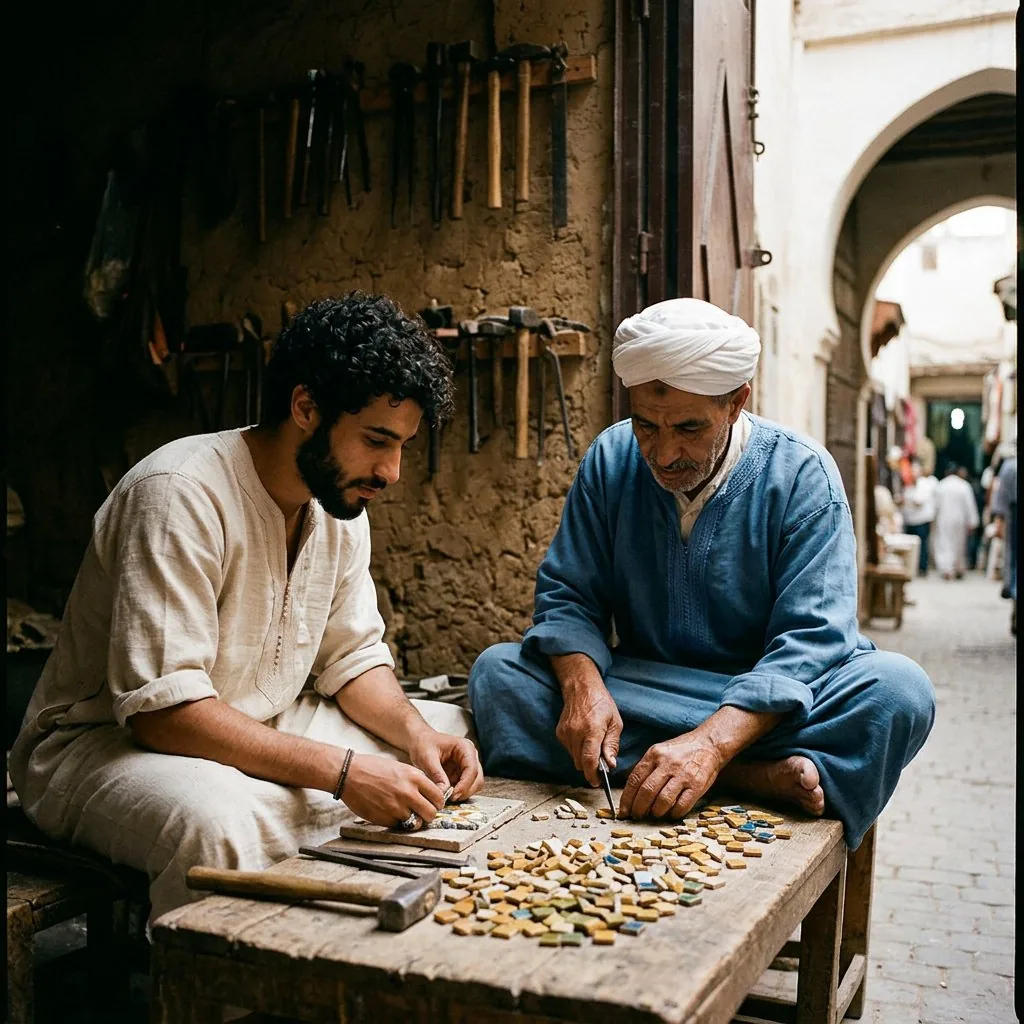
The first intake trains in the medina
That period is not lost to them. During the works, the first intake trains in the masters’ workshops in the medina, according to the usage that has always governed apprenticeship in this city — each sleeping at his own family’s.
It enters the house when the house is finished, and enters it already half formed.
LOGISTICS
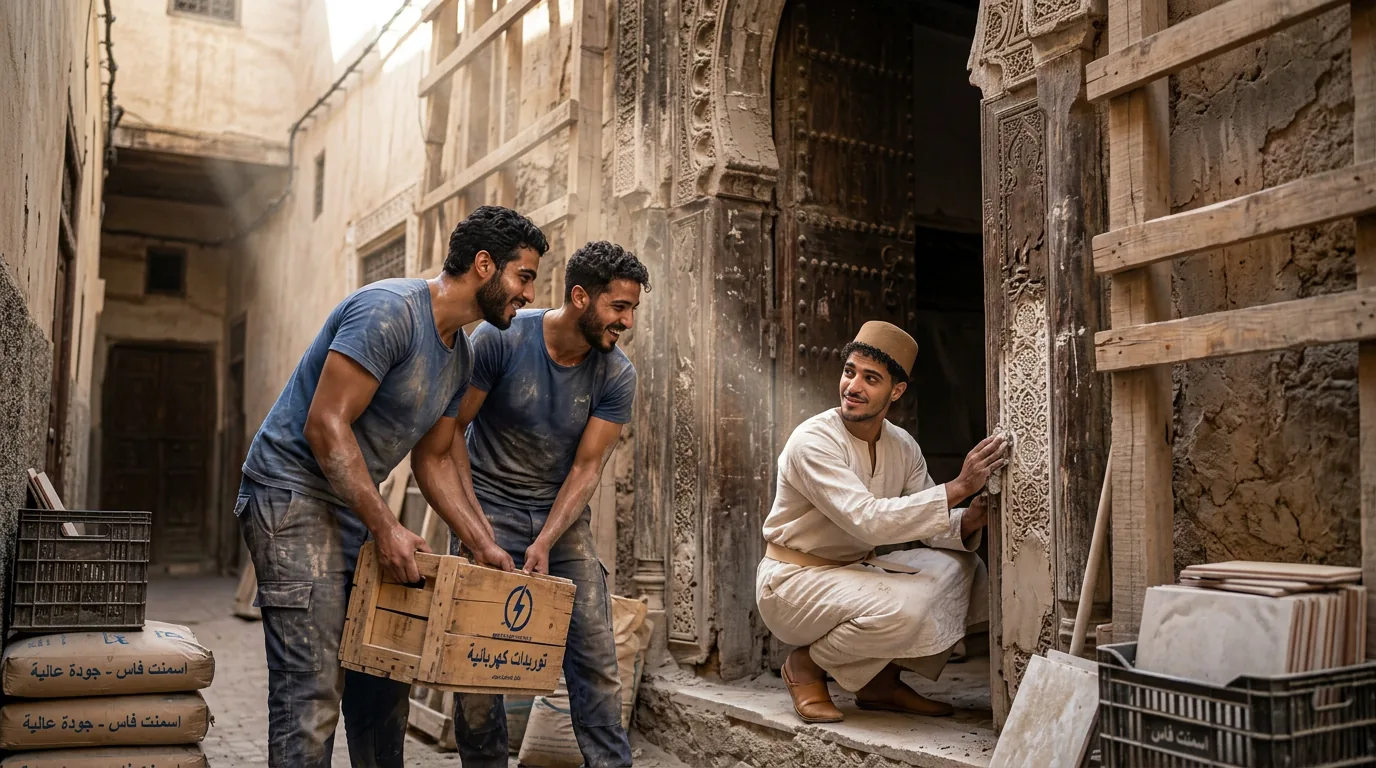
Everything comes in on men’s backs
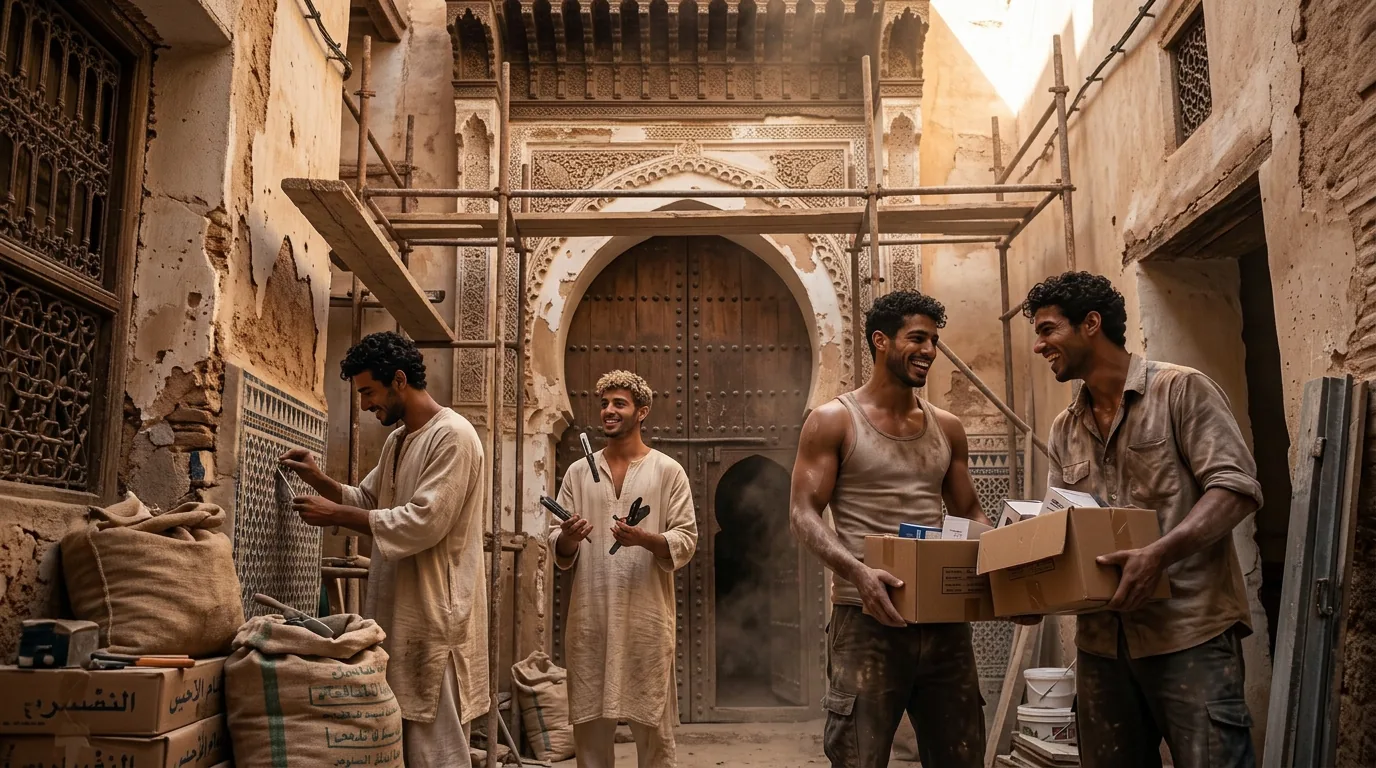
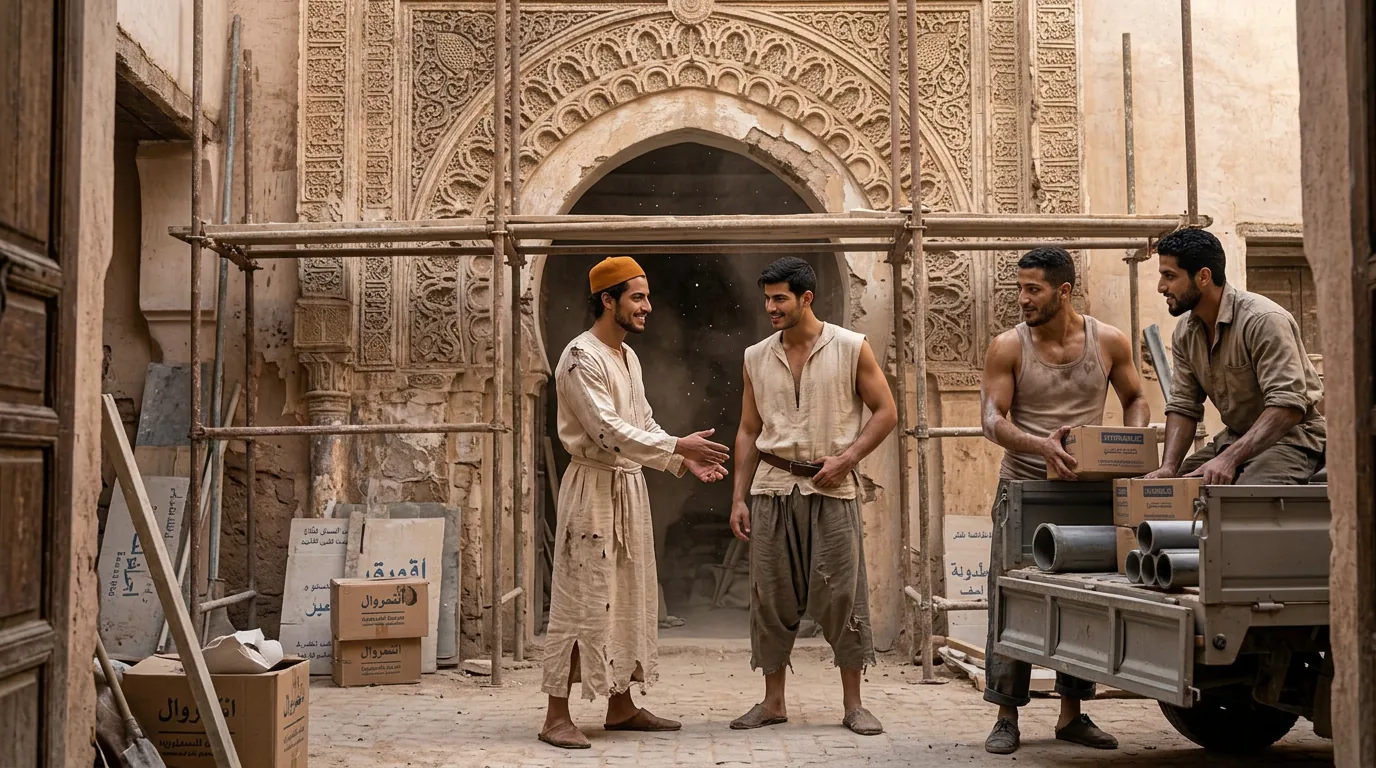
No vehicle reaches the house. In the Fez medina the alleys narrow to the width of two shoulders, and whatever must reach the worksite — cement, lime, cedar, crates of zellige, bags of plaster — is passed from hand to hand or drawn on a cart by a man.
The constraint has a consequence that is easily missed from a distance. It makes every delivery dearer, it imposes materials a man can carry, and it forces small orders placed often rather than one order placed once.
It has another, less obvious. The worksite employs the arms of the quarter, and the money that feeds it stays in the streets it enters. Whoever supports the works buys matter, and with it days of work paid in Fez at the price of the trade.
AFTER THE OPENING
The school’s building site
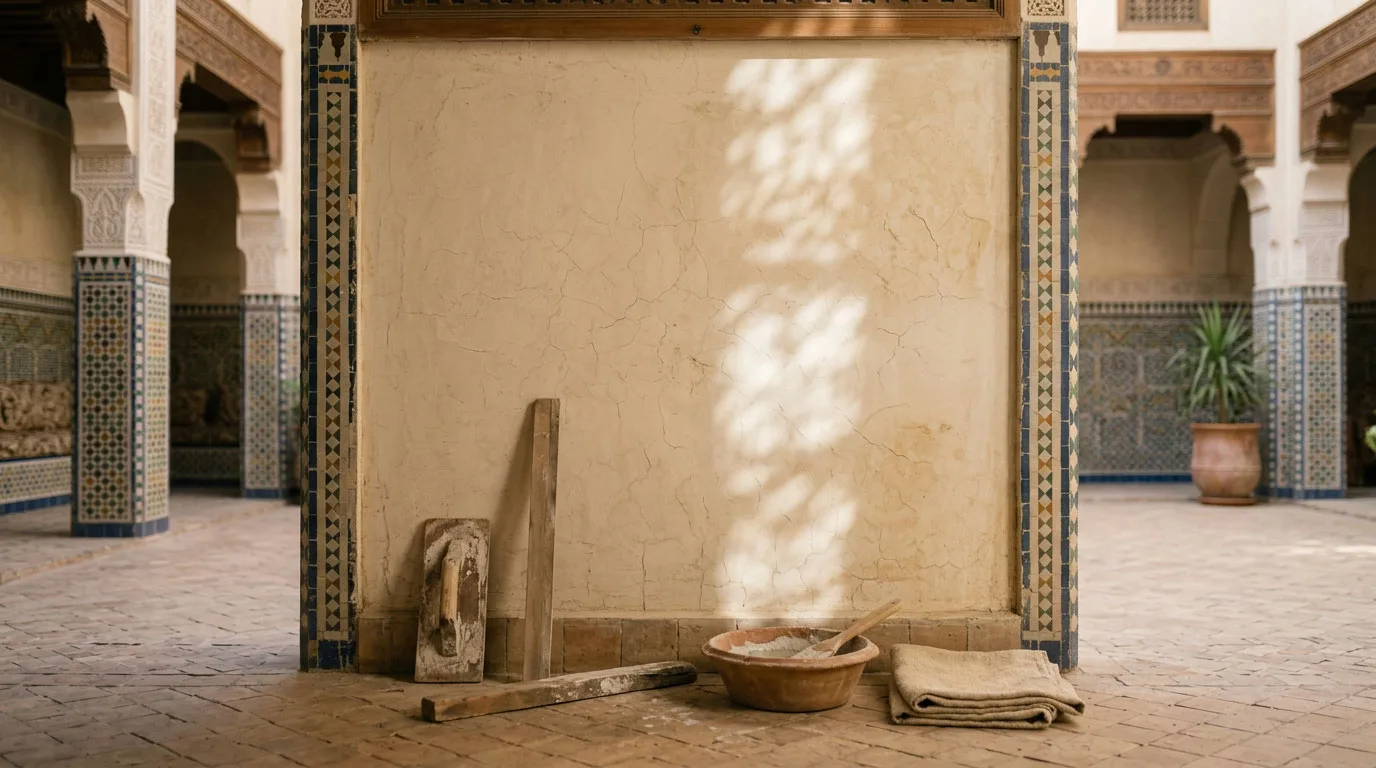
Once the house is open, the school’s own building site opens in turn and never closes again. It advances in the order in which the ṣāniʿ become able to try their hand.
First come the outbuildings — stores, terraces, service rooms, linen room — then the garden with its channels, its basins, its trellises and its enclosing wall: works modest enough for a possible mistake to be repaired, and real enough for it to count.
Then come certain parts of Al-Munya, the adjoining house — each phase led by the school’s workshops under the direction of a master.
THE SIGNATURE
What is signed can be repaired
Every finished work bears, discreetly and outside the field of the composition, the formula ʿamal (عمل), the name of the hand that executed it and the year. Where a ṣāniʿ worked under a master’s direction, both names appear.
The usage is no vanity: if, thirty years later, a joint gives way, it will be known which workshop is to answer for it. The corporations gave weight to this deferred responsibility, and it is for that, not for honour, that the craftsman has always consented to sign.
THE RHYTHM
One workshop, then growth
The house opens with a single workshop, saddlery: see Dar al-Hiraf. The reserved wing, or the adjoining volume, comes when the masters and the resources are there. The door towards Al-Munya remains untouchable.
WHAT REMAINS
When the building site falls silent
The wall stops waiting. The work remains. The man who led it carries away a malaka — mastery of the craft — not the house. One does not carry away the Riad.
الرِّياضُ لِأَهْلِهِ، لَا أَهْلُهُ لِلرِّياضِ
The words of this page are in the common glossary; the works cited in the sources; the sister house is Al-Funduq aṣ-Ṣiqillī.