The crafts of the hand
The saddlery, its three materials and the workshops planned, told in the order of their opening. Read the chapter.
The house of crafts: learning an art by living beside those who teach it.
Dar al-Hiraf is the place of craft formation in Riad Al-Uns. It is neither a succession of courses nor a showcase of trades: whoever enters it for a long path lives in the house, works beside a master and shares with the others the time of prayer, of study and of the table. The craft is learned within this common life, not apart from it.
The house begins with the saddlery. A harness calls for different hands: leather for the saddle and the reins, metal for the bit and the stirrups, wood for the saddle-tree. The three kinds of work meet in a single piece, the ʿudda, and teach each man to answer for the work of the others as well.
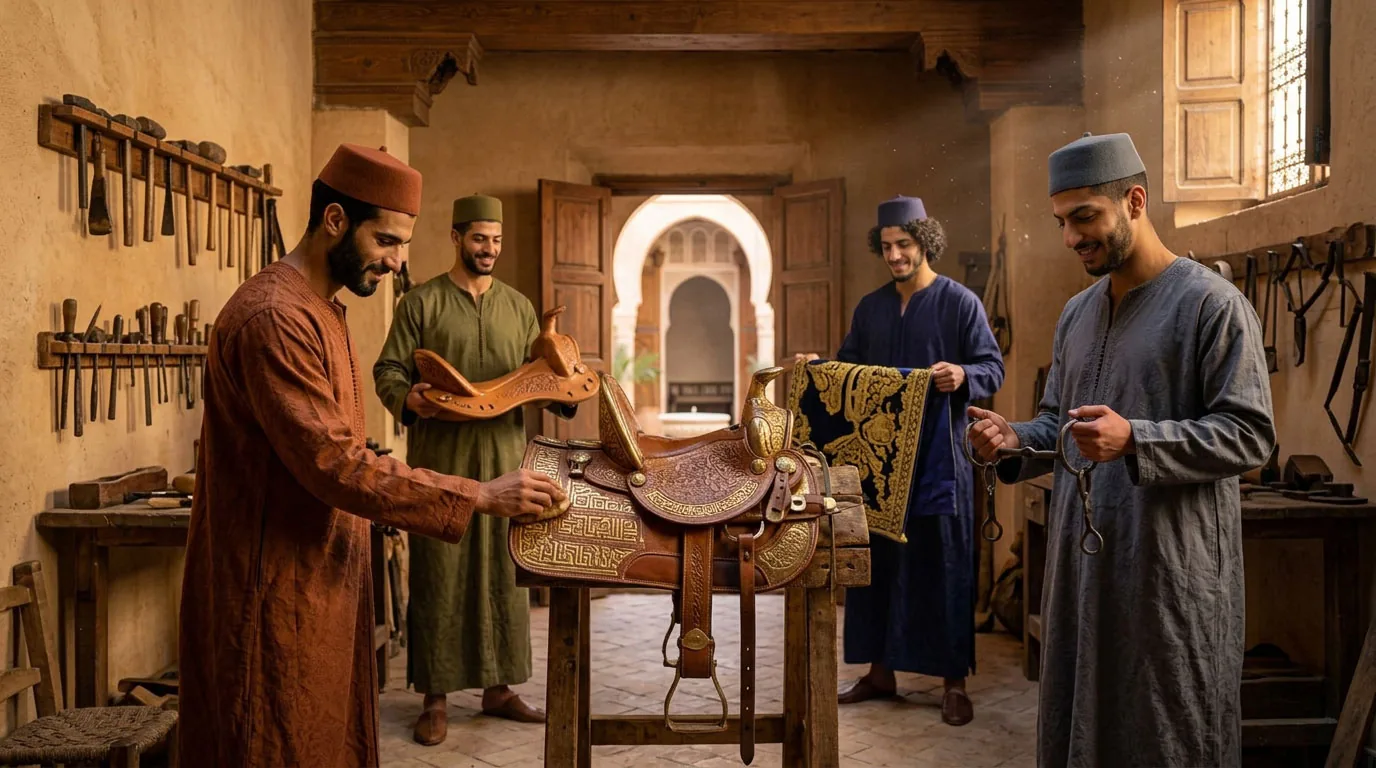
It is the first nucleus, not the inventory of all that the house will be. The other workshops may open in time, when there are masters, tools and pupils to sustain them. Work on the house itself goes hand in hand with work on objects: learning to build also means caring for the place in which one lives.
The saddlery, its three materials and the workshops planned, told in the order of their opening. Read the chapter.
The harness brings together leather, wood and metal in a single work, in the service of the horse and of the one who rides it. Read the chapter.
The apprentice watches, tries, errs and returns to the gesture. The master entrusts him with tasks in the measure of what he can do and answers for his progress; skill is not declared in advance and does not coincide with the time spent in the workshop. The work completed, the care of the tools and the attention paid to others make visible what has been learned.
The futuwwa gives this relationship a moral horizon: the word kept, loyalty towards one’s companions, service and the responsibility of passing on. It does not replace the practice of the craft; it asks the craft to form the character as well.
The bond between master, apprentice and companions, in the tradition that guides the house. Read the chapter.
Mastery is recognised through the work and the trials sustained, not through seniority alone. Read the chapter.
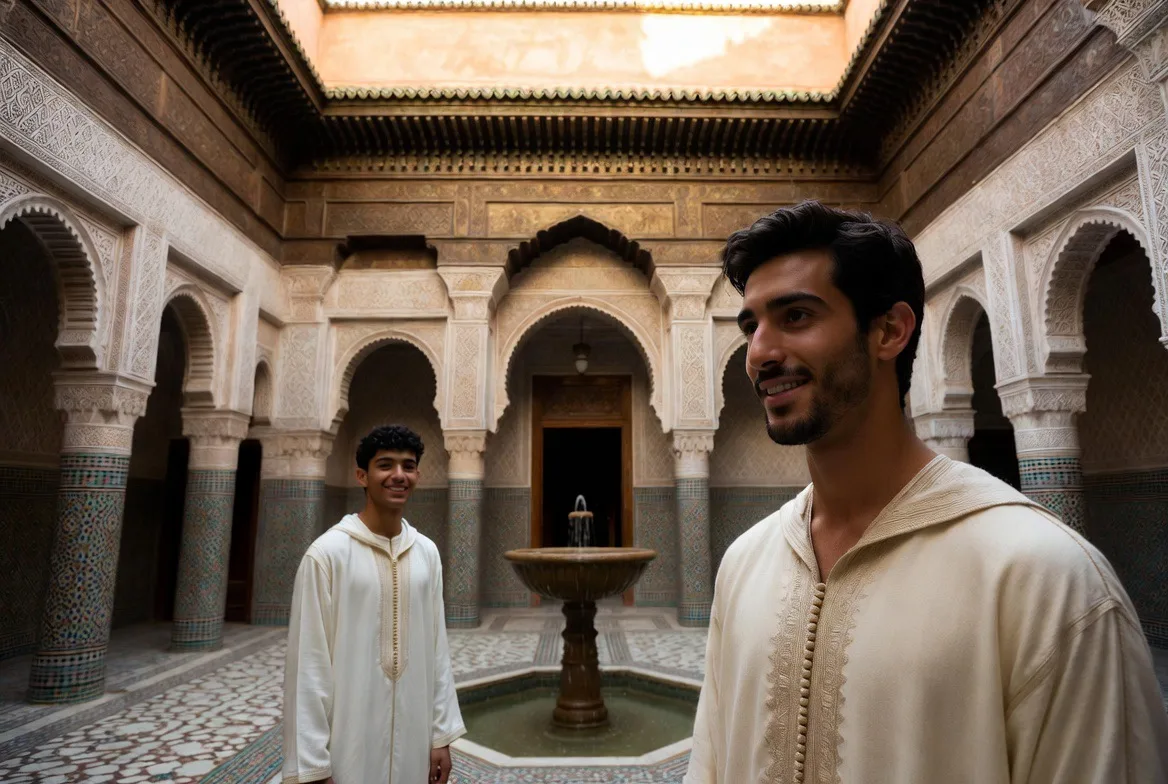
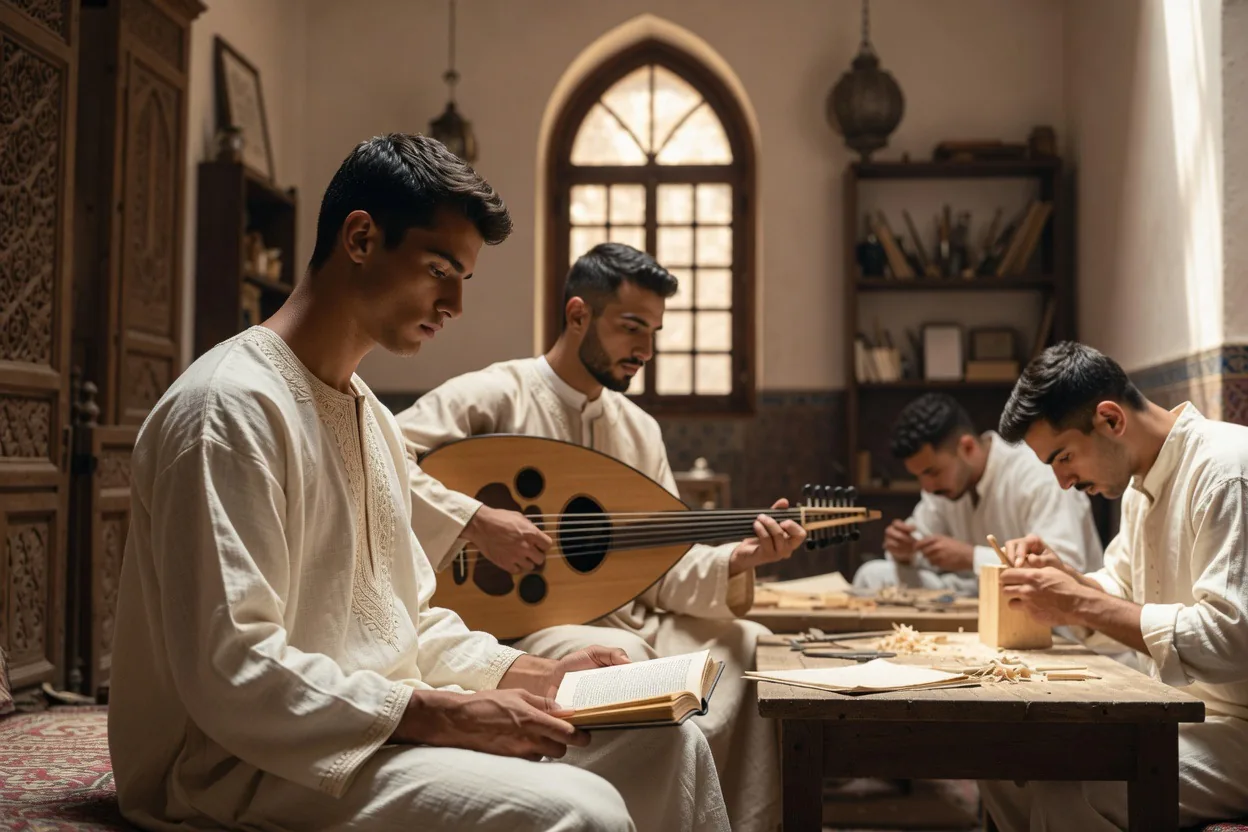
The workshop is a part of the day, not the whole day. Prayer, reading, meals, rest and duties towards the community give the work its measure. The body and the voice are trained as well: the furusiyya cultivates strength and discipline; music and chant call for listening, memory and attention to others. They are distinct fields, united by the same demand for practice.
Living together does not mean staying for ever. The short stay allows one to come to know the house; the craft immersion brings one close to a workshop; the residential path asks instead that one take on the common rule over time. Each has its own times and its own commitments.
A first time in the life of the house, not to be confused with apprenticeship. Read the chapter.
A few weeks of practice beside a master. Read the chapter.
The choice to live and be formed under the rule of the house. Read the chapter.
Formation does not end with a certificate. In the Athar, the work executed by the pupil and recognised by the master leaves a trace in the house; it then falls to the one who made it to pass on what he has received. Some will go on elsewhere, taking with them the craft and the rule they have learned. Others, having become young masters, will choose to remain together in the stable community of Ar-Riwaq.
The work left in the house and the duty to teach in one’s turn. Read the chapter.
The community of the young masters who remain to keep the house and the workshops. Read the chapter.
The words of this page are in the common glossary; the works cited in the sources; the sister house is Al-Funduq aṣ-Ṣiqillī.