After the formation
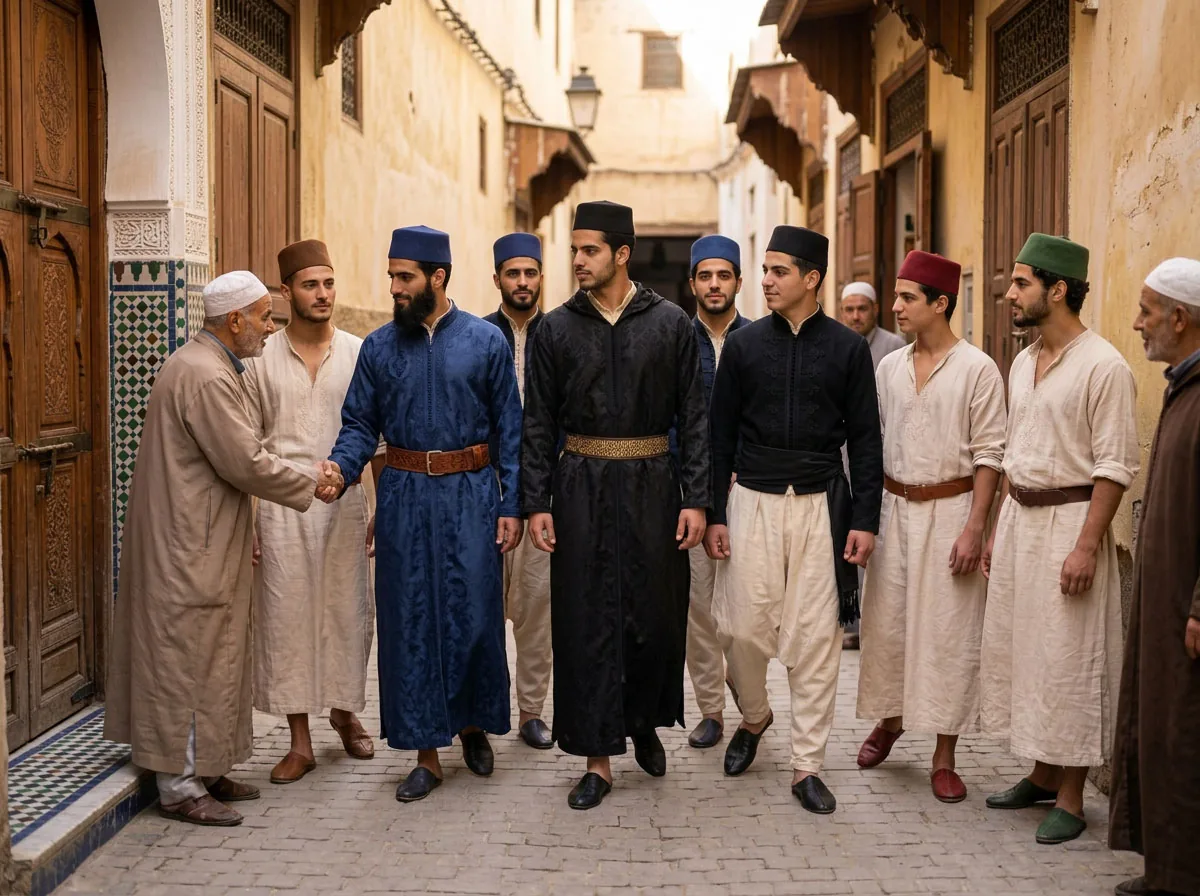
One leaves Dar al-Hiraf as one leaves a home: with a craft in one’s hands and what is needed to begin.
At the end of the formation five paths open, none imposed, and each a full outcome. Whoever chooses to stay, without marrying, enters the stable community of Ar-Riwaq→, with lodging and pay. The others may be hired by a client, who owes nothing to the house even when he hires an apprentice before the end; open a workshop of their own elsewhere; buy a house-workshop in the medina, if the fund allows, under written criteria and as neither a right nor an obligation; or work, for a period or for good, in the workshop of a funduq of the network, as the page The network→ explains. This page describes what they take with them.
One leaves able to last. The residency forms a man for what follows: a craft in his hands, a discipline of the day, a word that binds and, when the time comes, the means to support a family.
Whoever leaves the house, apprentice or master, loses neither the bond with his companions nor the recognition of the craft learned up to that point. He takes with him what has been prepared over years, and a part of it already remains in the walls.
What has been laid down in him
A mastered craft, more than a diploma to frame: the ability to work alone, over time, outside the frame of the house. The master handed on a gesture; the man must be able to take it up outside, keep a table with it and one day hand it on. The title of master is earned through the work: see Al-Athar→.
A word. Futuwwa continues beyond the door: the loyalty, measure and sobriety asked for in the house are still asked for outside.
The means to lead a household. Whoever becomes a maʿallem and leaves will be ready, in his time, to take a wife, to honour her and to raise children. The craft practised, the discipline of the day and the word given are the same cloth as the honour of a house: whoever can serve in the workshop will be able to serve a home.
What the house has set aside for him
A name in the walls. Every finished work bears the formula ʿamal (عمل), “work of”, the name of the hand that made it and the year; and, when it is by a ṣāniʿ under a master, both names. It is the only title that counts in a craft of the hand: a client in the medina goes to see the work, and can, because the work is set in a building that can be visited. See Al-Warsha→ and Al-Athar→.
The workshop in the medina
The work of the years on the building site accumulates on a craft account. The balance may become, if he wishes, the first share of the workshop-house he will buy from the house at cost, without interest, year after year: often one of those the school itself has restored in the derb. He will thus already have paid, with his own work, for part of the house he will live in.
Tools. A master setting up needs irons before he needs advice. The futuwwa fund will advance him what is needed to equip the first workshop, without interest: a qarḍ ḥasan, repaid for what it is worth.
A fund with its own rules. The ṣandūq is a system of provident cover, and whoever leaves remains bound to it under the fund’s rules, not the house’s: illness, marriage, burial, the debt on the house that is cancelled if one dies too soon. It is help among brothers, without any privilege. See As-Sanduq→.
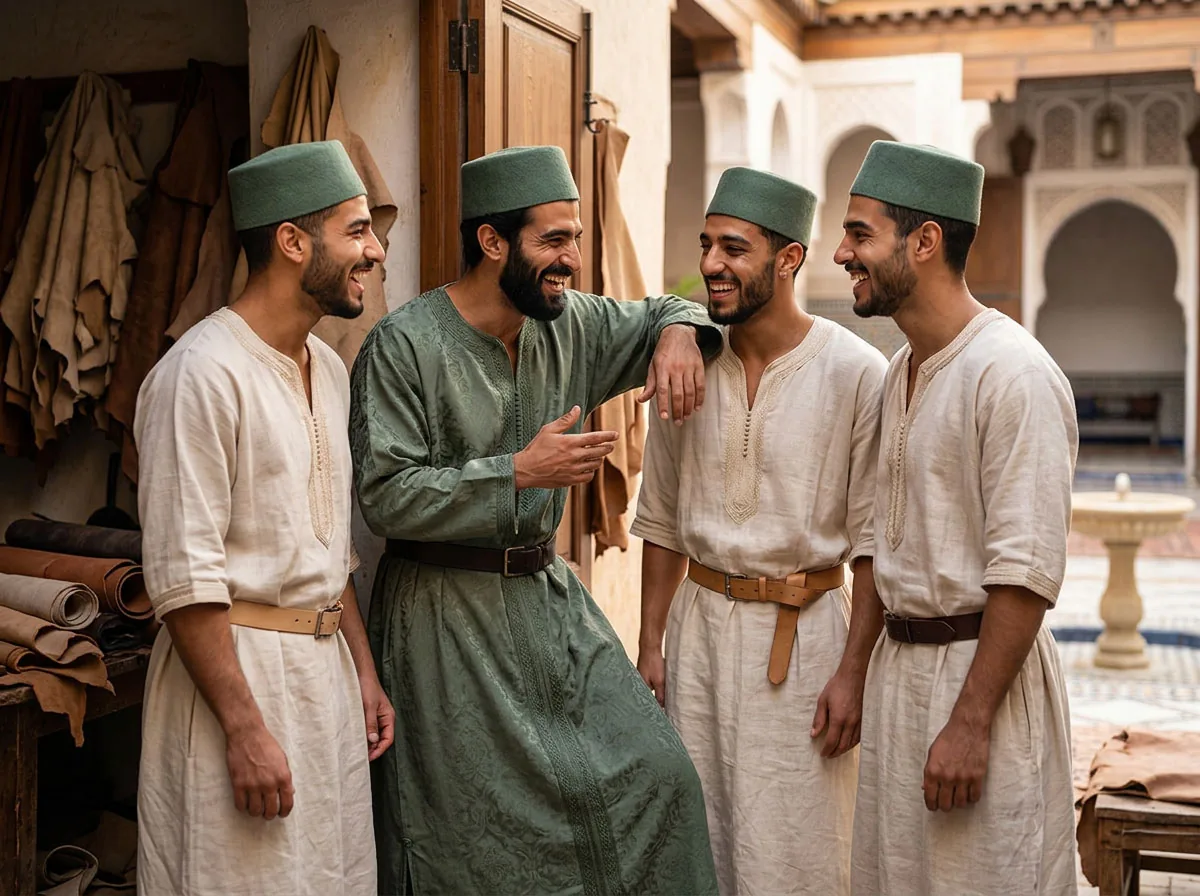
What stays with the house
The life of the Riad, its workshops and its admissions stay with the house and those who live in it. Whoever has left remains a member of the association and bound to the house, by his companions, by esteem and by the craft; he no longer votes in the assemblies of those who live in it, and has neither privilege nor a place he would own.
The house keeps the memory of the works and of the men who knew how to last: a memory, rather than a list of privileges.
The son of a maʿallem trained here approaches like everyone else, by the same threshold.
Outside, the same rhythm
The ordinary horizon is a life in which craft, household and word agree. Dar al-Hiraf prepares for it and then lets go: outside, nobody is in debt to an institution that would hold on to its men.
For some, a working tie with a workshop of the house may remain, by necessity of the craft and not by statute. It will be decided case by case, with discretion, without becoming an acquired right.
الرِّياضُ لِأَهْلِهِ، لَا أَهْلُهُ لِلرِّياضِ
“The riad is for its own, not its own for the riad.”
Motto of the Riad
This holds for those who have left as well. The house gave them a frame, and they honoured it: that is the whole account between them. The rest, the name in the wall, the share of a house, the tools, is theirs as something earned.
The words of this page are in the common glossary; the works cited in the sources; the sister house is Al-Funduq aṣ-Ṣiqillī.