
At-Tahkim
التحكيم
The arbitration of tensions of honour — then, if need be, the trial under rule.
At-tahkim designates, in the classical language, recourse to a third party to decide. At Riad Al-Uns, it orders speech first, then — only if speech is not enough — a trial drawn from the disciplines of the house.
It does not replace the authority of the Ash-Shaykh. It gives peers a path to close what, left to rancour, would poison the table and the workshop. See also At-Tadbir and the Furusiyya.
FIRST STAGE
Arbitration
I
The third muqaddam
For a light tension between ṣāniʿ — pride, a word too sharp, workshop rivalry — a muqaddam who is not party to the conflict hears both, in turn, without interruption. He proposes a closing.
II
The majlis of the muqaddam
Two or three muqaddam (an odd number). A maalem sits if the matter touches the craft. It is resorted to when the first arbiter is too close to one of the parties, or when the case requires it.
III
The Ash-Shaykh
He decides — assisted, where appropriate, by the faqīh — what touches the rule of the house, faith, a guest, or too wide a difference of grade. These matters do not go to trial.
The arbiter proposes an outcome: a word kept, a gesture of repair, a shared duty, silence on a point. If both accept, the matter is closed. Whoever refuses to appear without serious cause goes to the superior, not to the trial.
Grades concerned: ṣāniʿ and ṣāniʿ; ṣāniʿ and nāʾib. A conflict with a maalem or the shaykh belongs to authority and makes no matter for trial.
وَإِن طَائِفَتَانِ مِنَ الْمُؤْمِنِينَ اقْتَتَلُوا فَأَصْلِحُوا بَيْنَهُمَا
“If two groups of believers fight, make peace between them.” — Qur’an 49:9
SECOND STAGE
The trial
If arbitration has not closed the matter and both consent, the third party orders a trial drawn from the disciplines already practised. The form is not chosen by those who are angry. Witnesses of the house attend. The third party declares the beginning and the end.
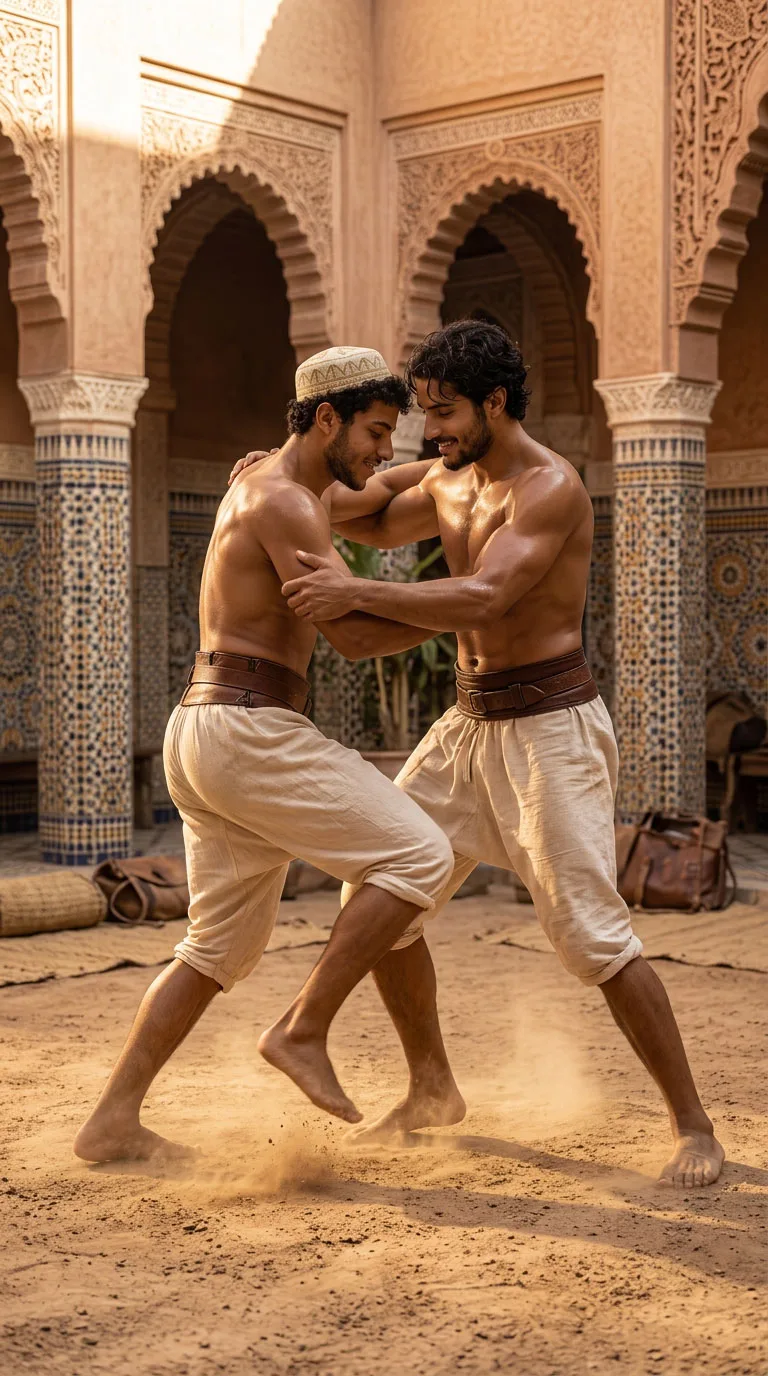
المصارعة
al-musaraa
Musaraa
Regulated wrestling. It measures control of anger and respect for the limit. The most natural form when pride has been hurt in the body-to-body of common life.
One resists, yields when the rule says so, rises again. The third party stops the bout. Afterwards, silence.
لَيْسَ الشَّدِيدُ بِالصُّرَعَةِ، إِنَّمَا الشَّدِيدُ الَّذِي يَمْلِكُ نَفْسَهُ عِنْدَ الْغَضَبِ
“The strong man is not the one who throws others down in wrestling; the strong man is the one who controls himself in anger.” — hadith (Bukhari, Muslim)
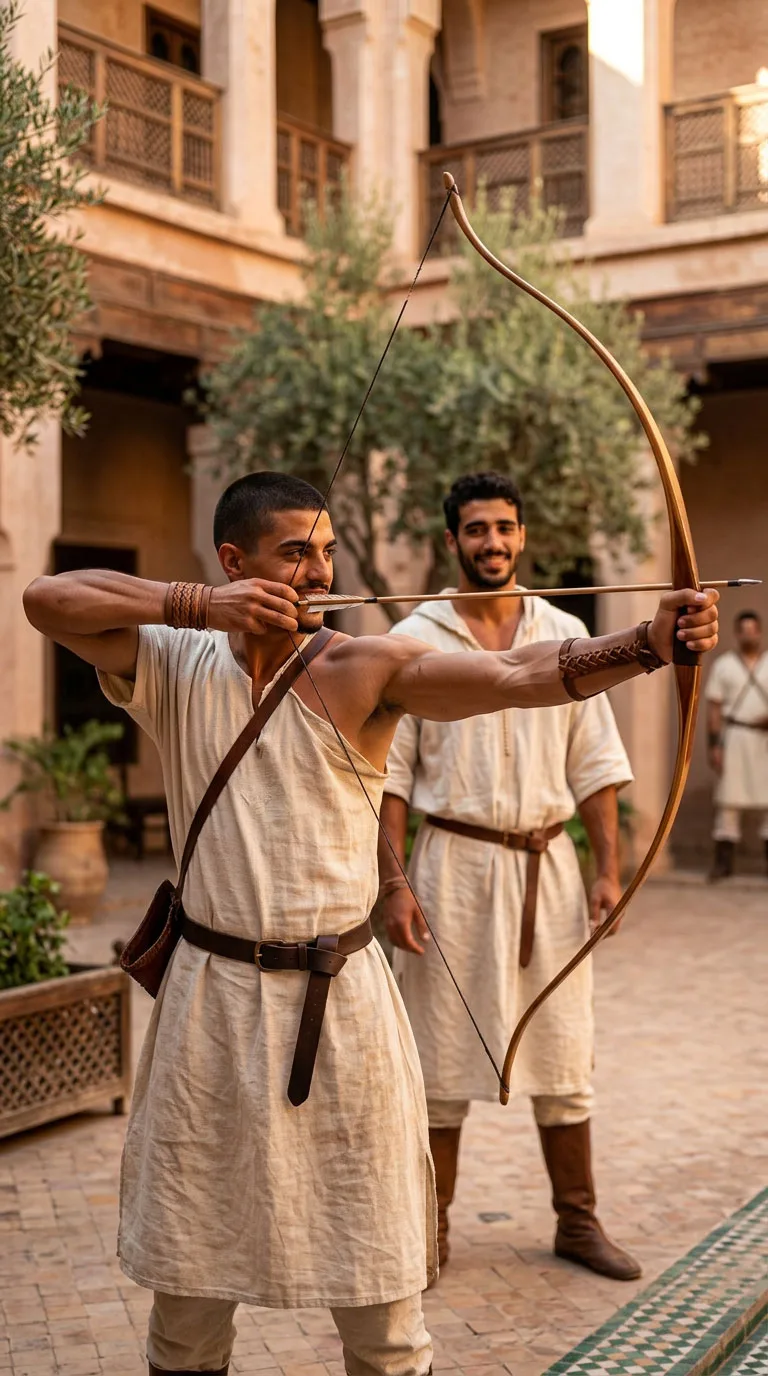
الرمي
al-ramy
Ramy
Archery. Calm under the gaze. It is resorted to when physical contact would be excessive for the matter, and precision under pressure says more than force.
Same bow, same distance, same number of arrows. Whoever trembles has lost before releasing. The trial forms the eye and the breath as much as it closes the dispute.
وَأَعِدُّوا لَهُم مَّا اسْتَطَعْتُم مِّن قُوَّةٍ
“Prepare against them whatever you are able of power.” — Qur’an 8:60. The Tradition reads here, among other things, shooting.
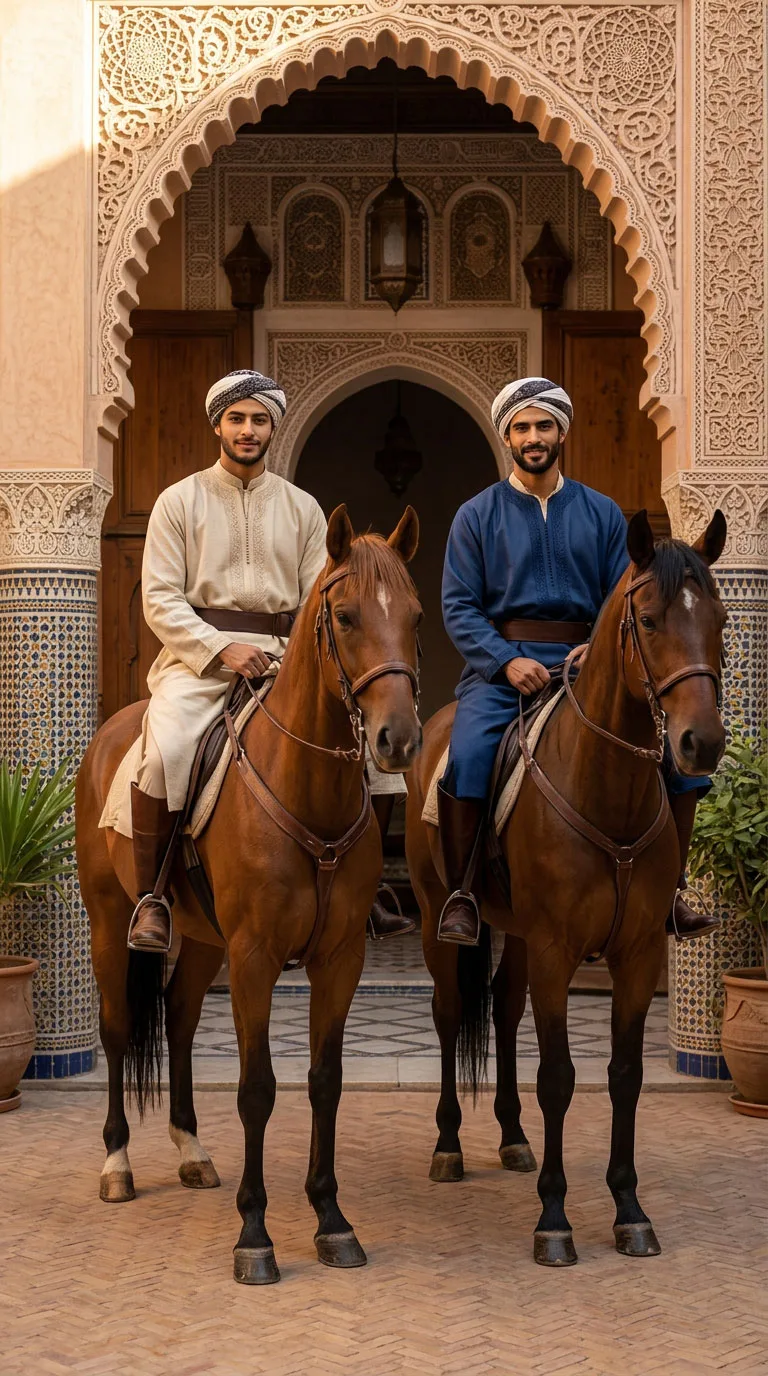
الفروسية
al-furusiyya
Furusiyya
Race or seat under rule, only if both are trained. Rare. It measures mastery of the self more than the defeat of the other — the same lesson as the colt and the bit.
The horse is not an instrument of vanity. Whoever launches it to humiliate has already lost the trial in the eyes of the house.
الْخَيْلُ مَعْقُودٌ فِي نَوَاصِيهَا الْخَيْرُ إِلَى يَوْمِ الْقِيَامَةِ
“Goodness is tied to the forelocks of horses until the Day of Judgement.” — hadith (Bukhari)
→ See Furusiyya · The harness
الحرفة
al-hirfa
Hirfa
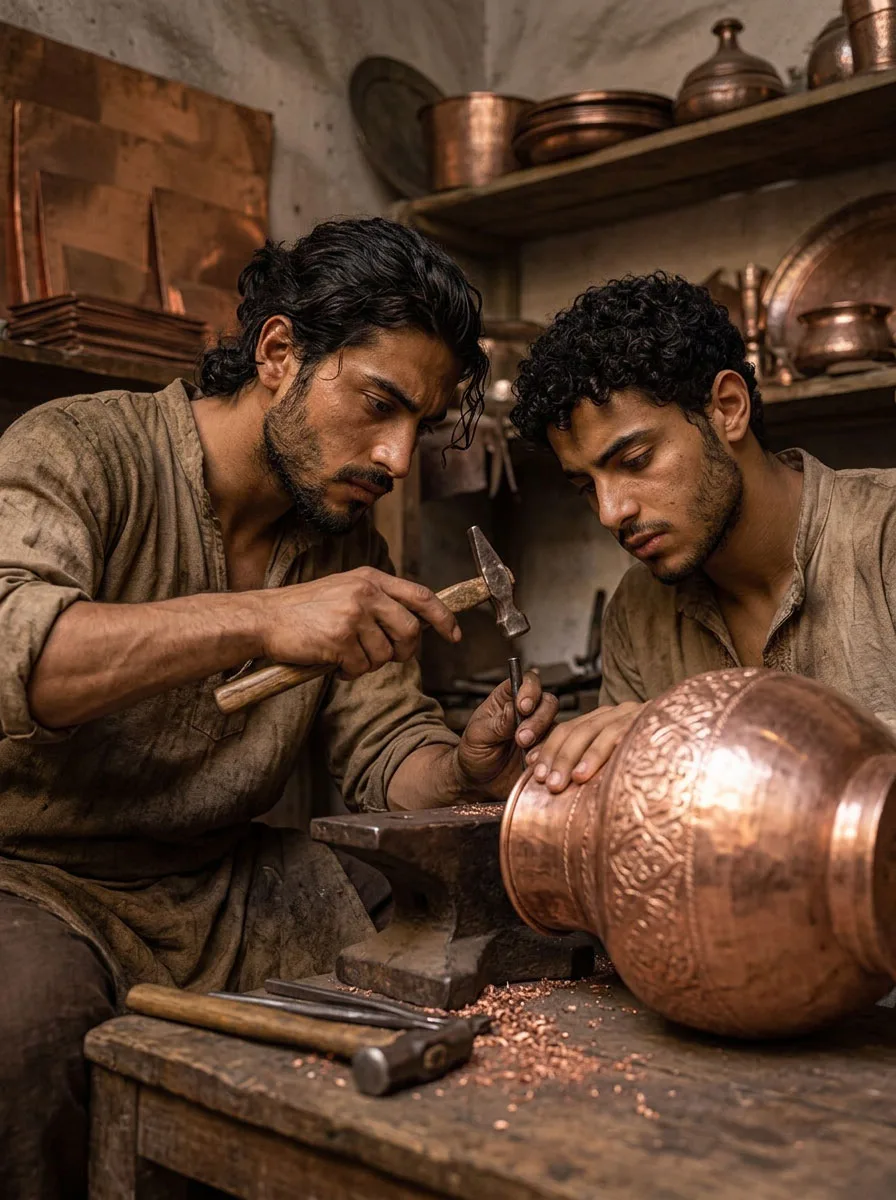
Same gesture, same time, under the eye of the maalem. When the tension was born in the workshop. What carries the day is not vanity, but patience and the steadiness of the hand.
A panel of zellige, a line of calligraphy, a wood joint: the work decides. The maalem declares the end. The pride that wanted to “win” discovers that it had only to do well.
“The work is the witness; the hand, the accused.” — craft saying, in the spirit of the Futuwwa of the guilds.
RULE
What founds the trial
Admitted
Consent of both
Form chosen by the third party
Witnesses of the house
Beginning and end declared
Victory to the one who kept the rule of the trial
Silence afterwards: the matter is not reopened
Excluded
Real weapons, blood, brawl
Public humiliation or an outside public
Matters of faith, of rule, of guests
Too wide a difference of grade
Punishment disguised as a trial
Revenge on the same matter
The regulated trial is not an exception to the ban on violence. Outside this procedure, under this third party and under these forms, raising a hand remains a cause for removal. The internal regulations (art. 1 and art. 11) set this frame.
Whoever wins does not tell the story. Whoever loses does not undo himself in words. The house has seen; that is enough, and the Futuwwa forms precisely to this restraint, which consists in sustaining the trial without drawing from it either glory or rancour.
The detail is set out in the regulations handed to each resident.
← Dar al-Hiraf · Glossary
The words of this page are in the common glossary; the works cited in the sources; the sister house is Al-Funduq aṣ-Ṣiqillī.