Riding
Furusiyya in its first sense: the horse, before the bow and the sword.
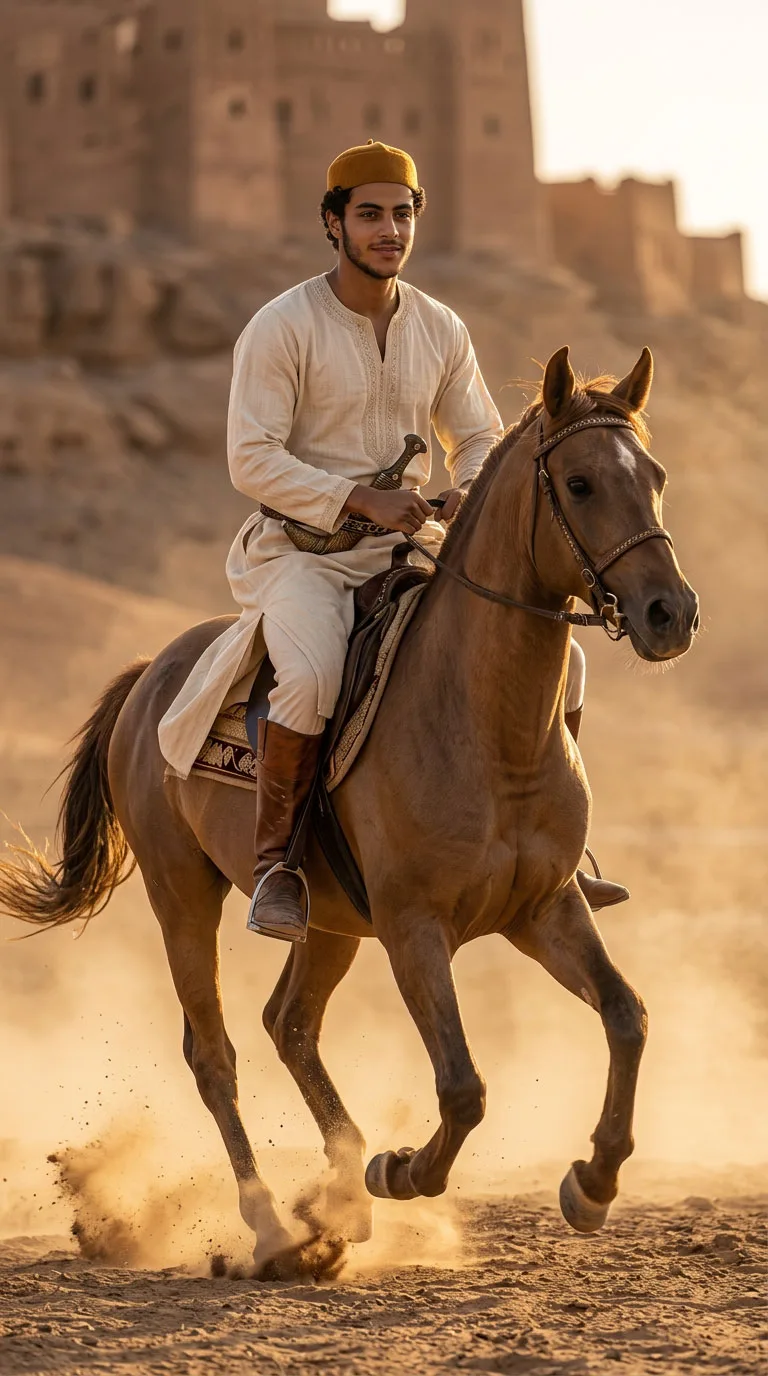
The word furūsiyya (فروسية) comes from faras (فرس), the horse: in the strictest sense, before wrestling, the bow or the sword, furūsiyya means riding itself. It is the first and oldest of the Arab-Islamic chivalric disciplines, the one that gives its name to all the others.
الخَيْلُ مَعْقُودٌ فِي نَوَاصِيهَا الْخَيْرُ إِلَى يَوْمِ الْقِيَامَةِ
“Good remains tied to the forelocks of horses until the Day of Resurrection.”
Prophetic tradition (Bukhārī, no. 2850)
The classical treatises of furūsiyya, set in order above all under the Mamluks, taught seat, handling and care of the horse before mounted combat: the same progression Dar al-Hiraf follows today, the body, then the horse, then the weapon.
Where one rides
The medina has no room for horses. The animals are kept outside the walls, at a riding stable or a tbourida yard in the Fez region, and the residents go there on set days. The first year is for care: grooming, feeding, leading in hand, recognising lameness and fatigue. Then comes the seat, at walk and trot, and only afterwards the gallop.
Saddlery
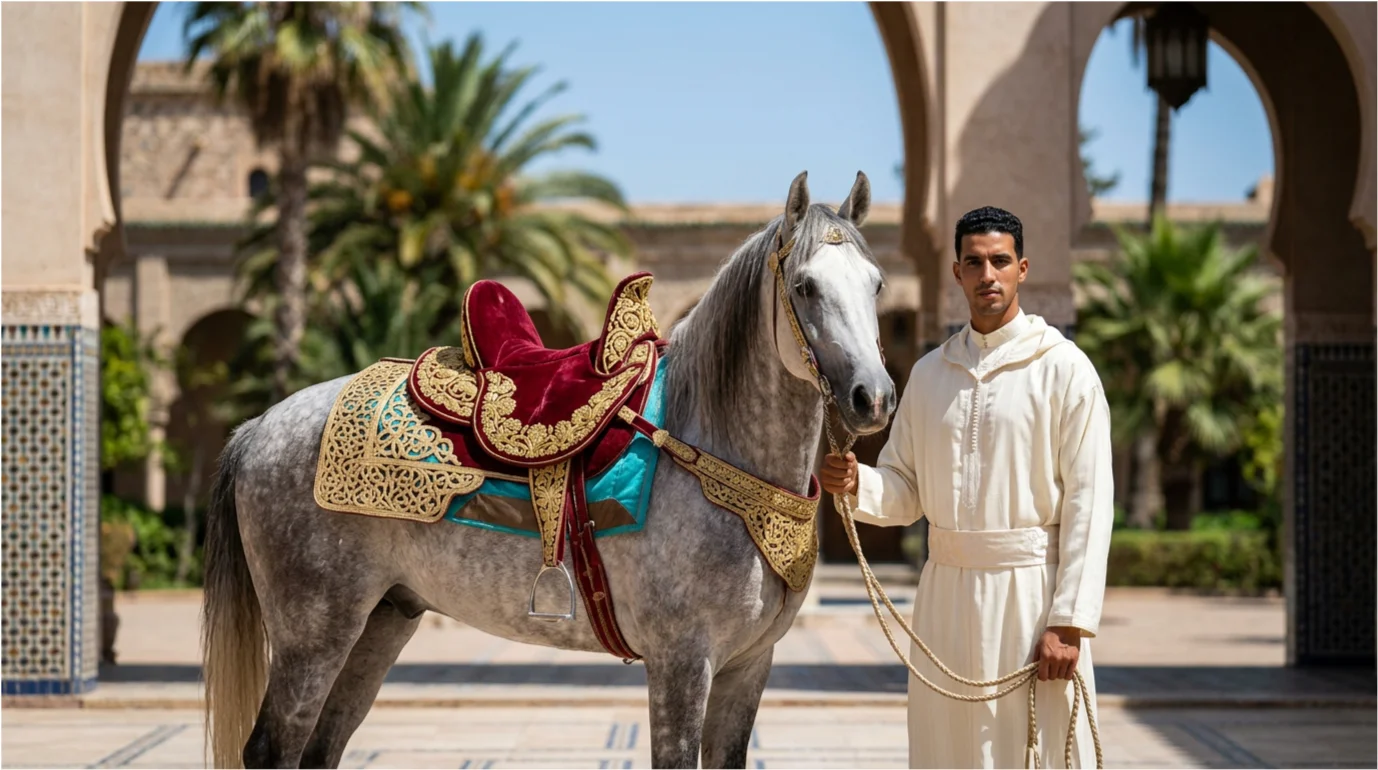
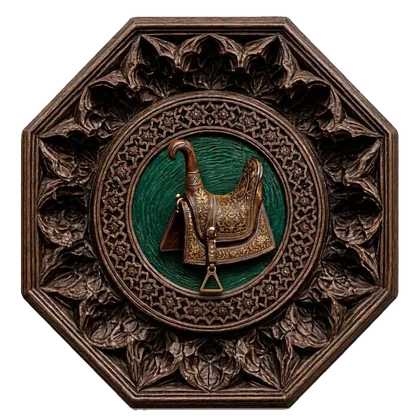
What is put on the horse stands for what the house sets around the man. The ʿudda (bit, saddle, leather, metal, parade cloths) is the point where several crafts meet. A single work of fine saddlery calls for the maʿallem of leather, the one of iron and chasing, the one of textiles. Commissioned work, for those who can recognise it: a piece commissioned because it lasts, and shown because it honours the one who made it.
The detail of each piece, and its figure for character, are set out in Al-Udda, the harness→.
See also The furusiyya→.
The words of this page are in the common glossary; the works cited in the sources; the sister house is Al-Funduq aṣ-Ṣiqillī.