Sword, lance and wrestling
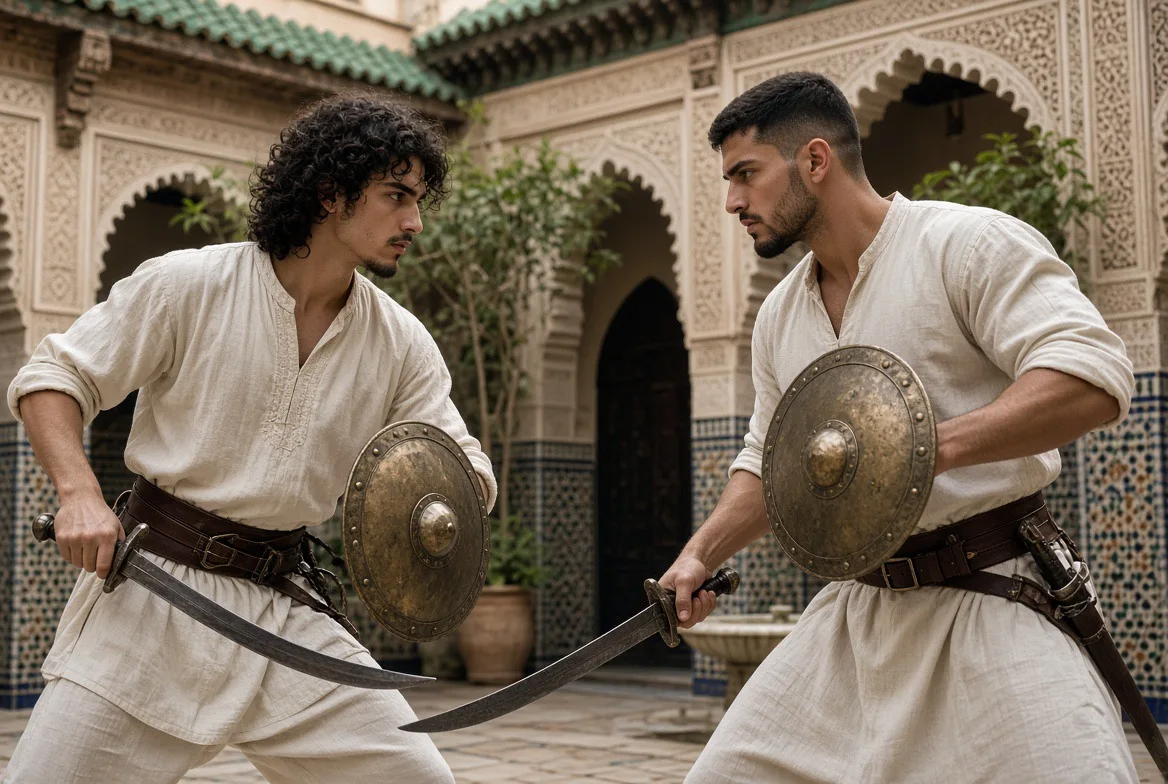
Fencing with the curved sword and the small round shield.
The sword and the shield
Fencing with the curved sword and the small round shield, attested among the medieval Arabs alongside the lance and wrestling. Two men, the guard that protects as much as it threatens: the same spirit of measure as taḥṭīb. Like the bow and wrestling, it belongs to the line of furūsiyya: the training of the body before any specialisation.
الخيلُ والليلُ والبيداءُ تعرفني والسيفُ والرمحُ والقرطاسُ والقلمُ
“The horses, the night and the desert know me,
and the sword, the lance, the paper and the pen.”
al-Mutanabbī
This verse, one of the most famous in Arabic literature, holds sword and pen together: the formed body and the cultivated mind are a single discipline.
From the treatises to practice
No classical school of Arab swordsmanship has come down to us from master to pupil. What remains are the furūsiyya treatises, which describe its strokes, guards and training, and a few kindred living traditions, such as the sword dances of the Arabian Peninsula and Tbourida.
The houses will reconstruct this discipline from the texts, with a stated method and the help of scholars of historical fencing, and keep it alive like the other disciplines of the body: regular practice, under a master, with training weapons. On feast days it is shown in public.
For this discipline the everyday ghandūra is enough, sleeves rolled and fastened above the elbow to free the movement, with a reinforced belt with a double loop to take the scabbard. Only the turs (تُرس, the shield) has a making of its own: leather stretched over a wooden core, adorned with an eight-pointed star, held by a forearm strap and a central grip.
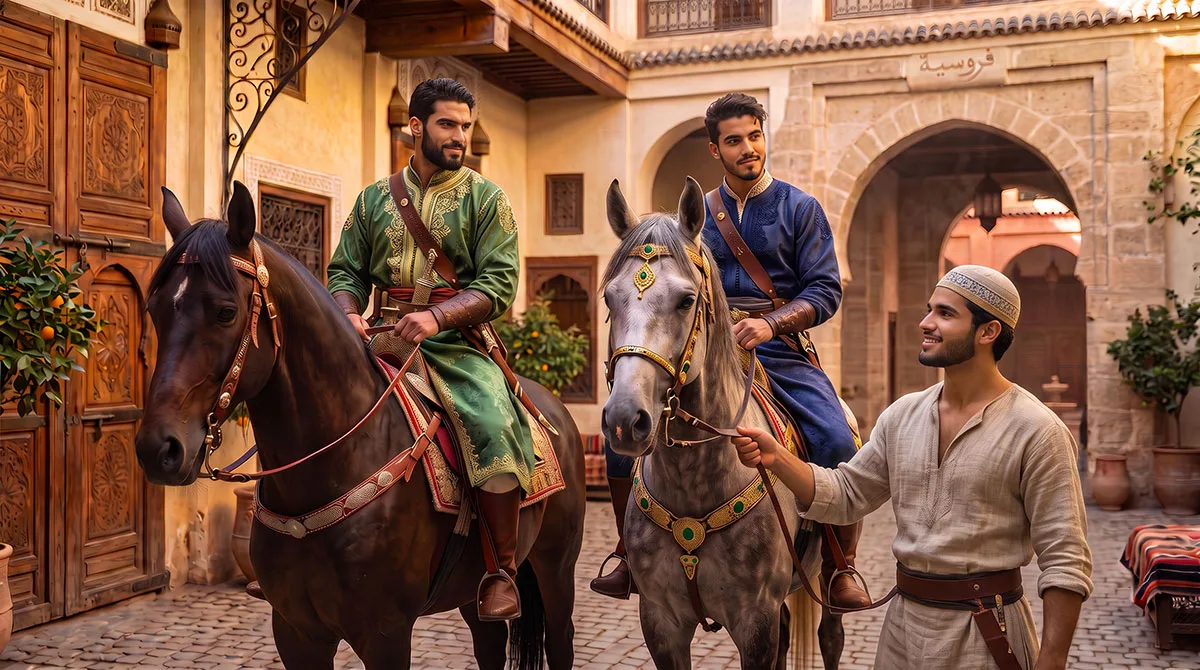
Dress for feast days
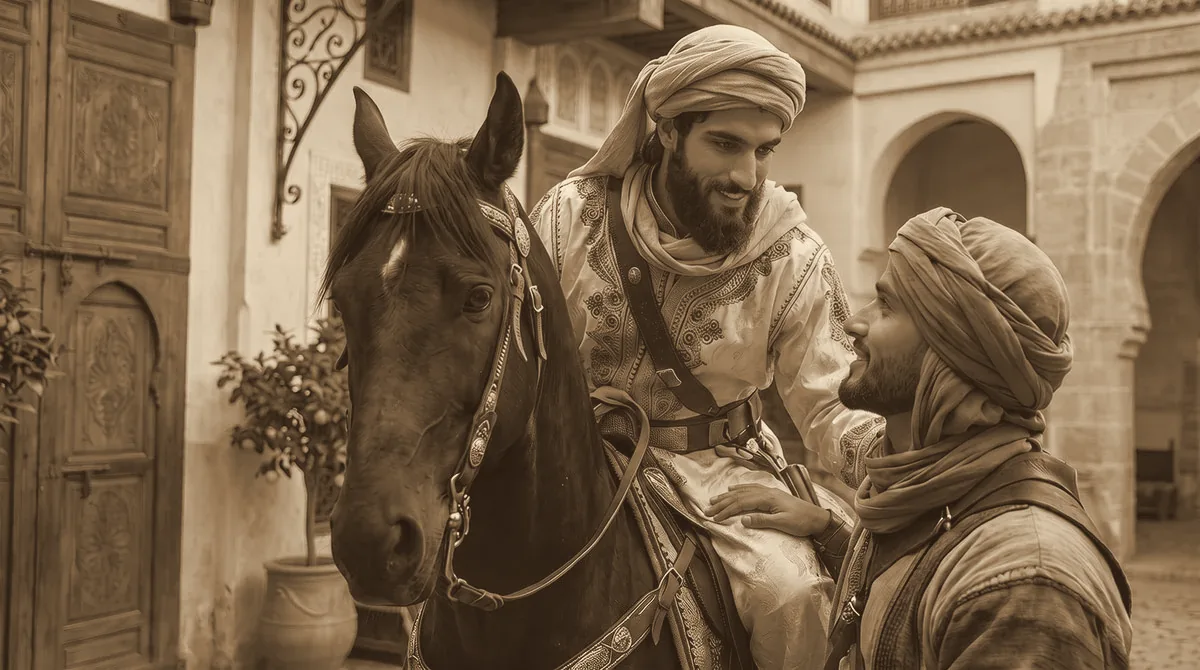
On feast days the companions wear the house dress and the sword sheathed at the side.
Saddlery
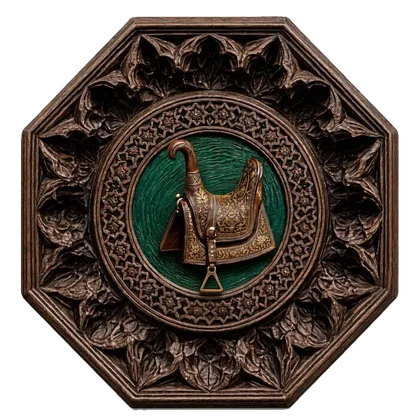
The turs comes from the saddlery, which brings together leather, wood and metal.
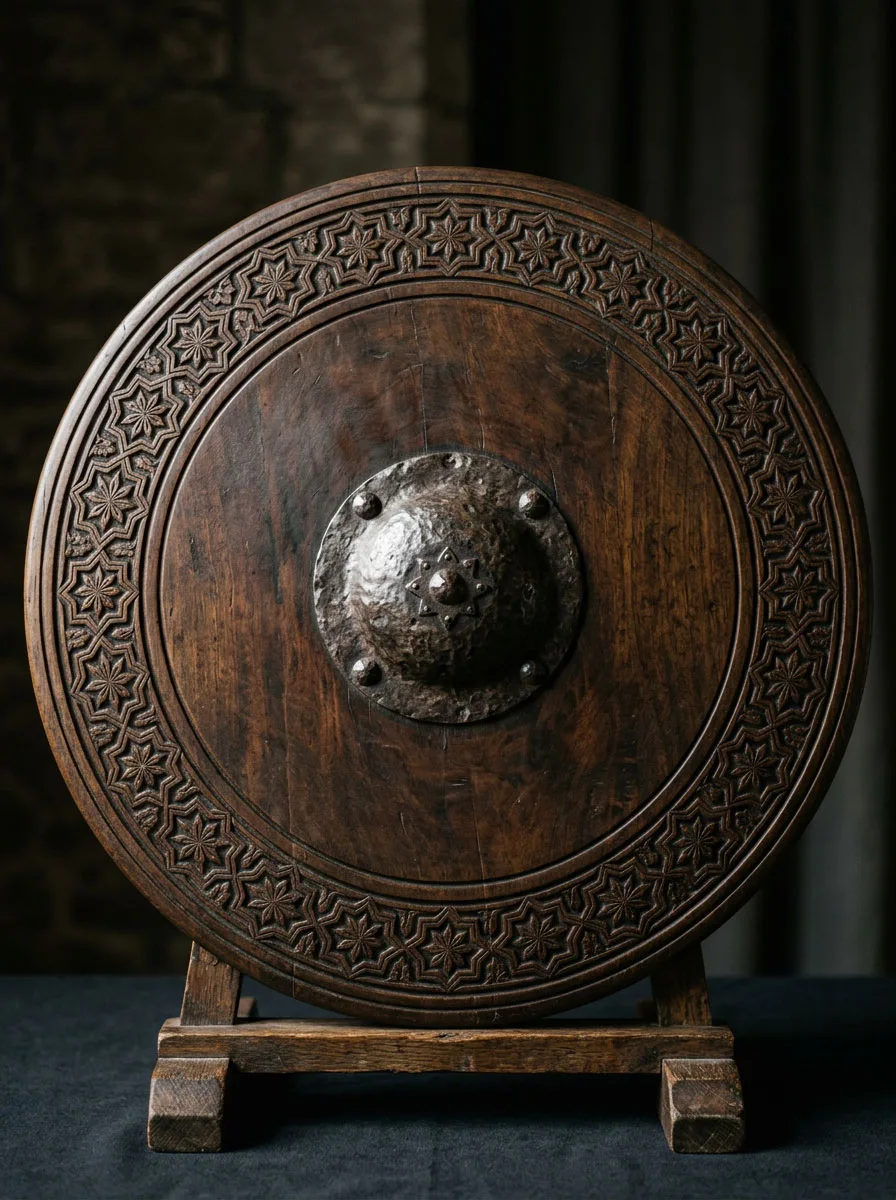
The turs, front face with the eight-pointed star
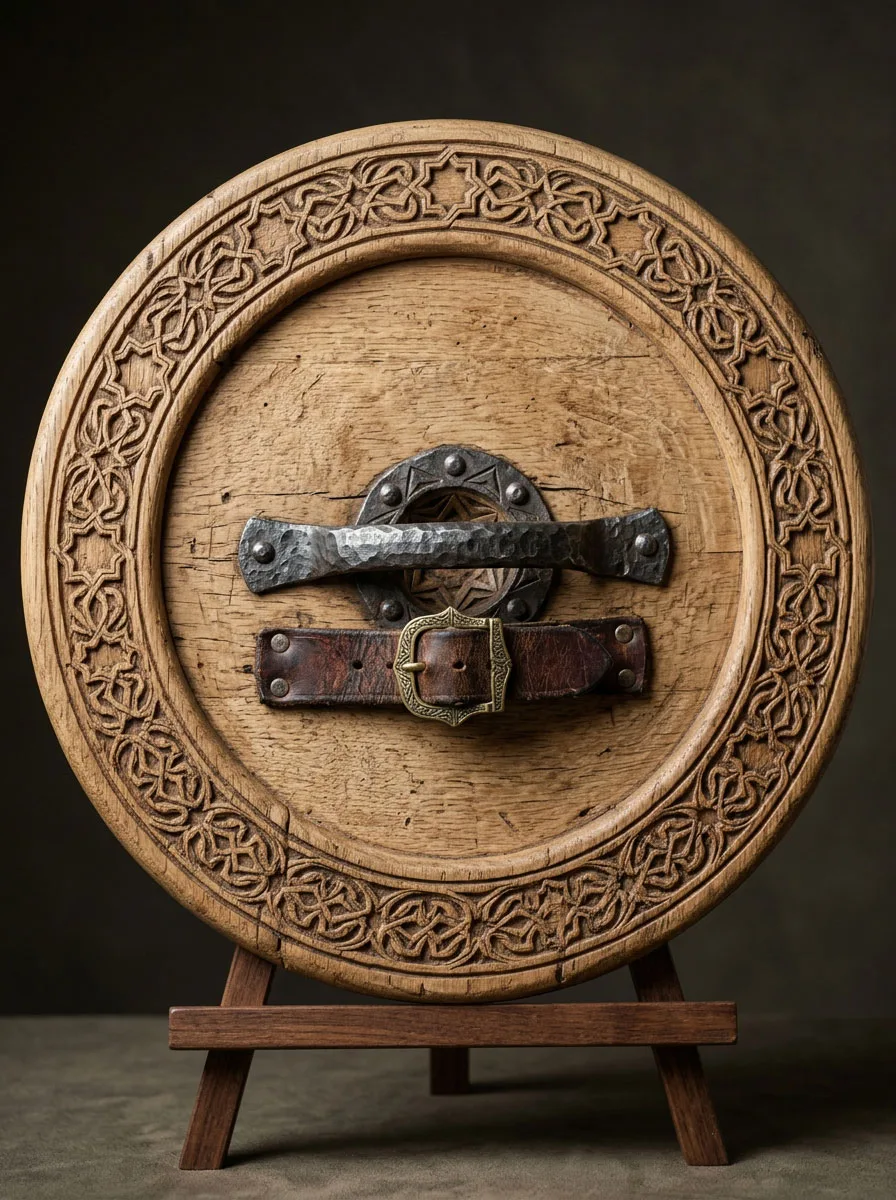
The turs, back with the grip and the strap
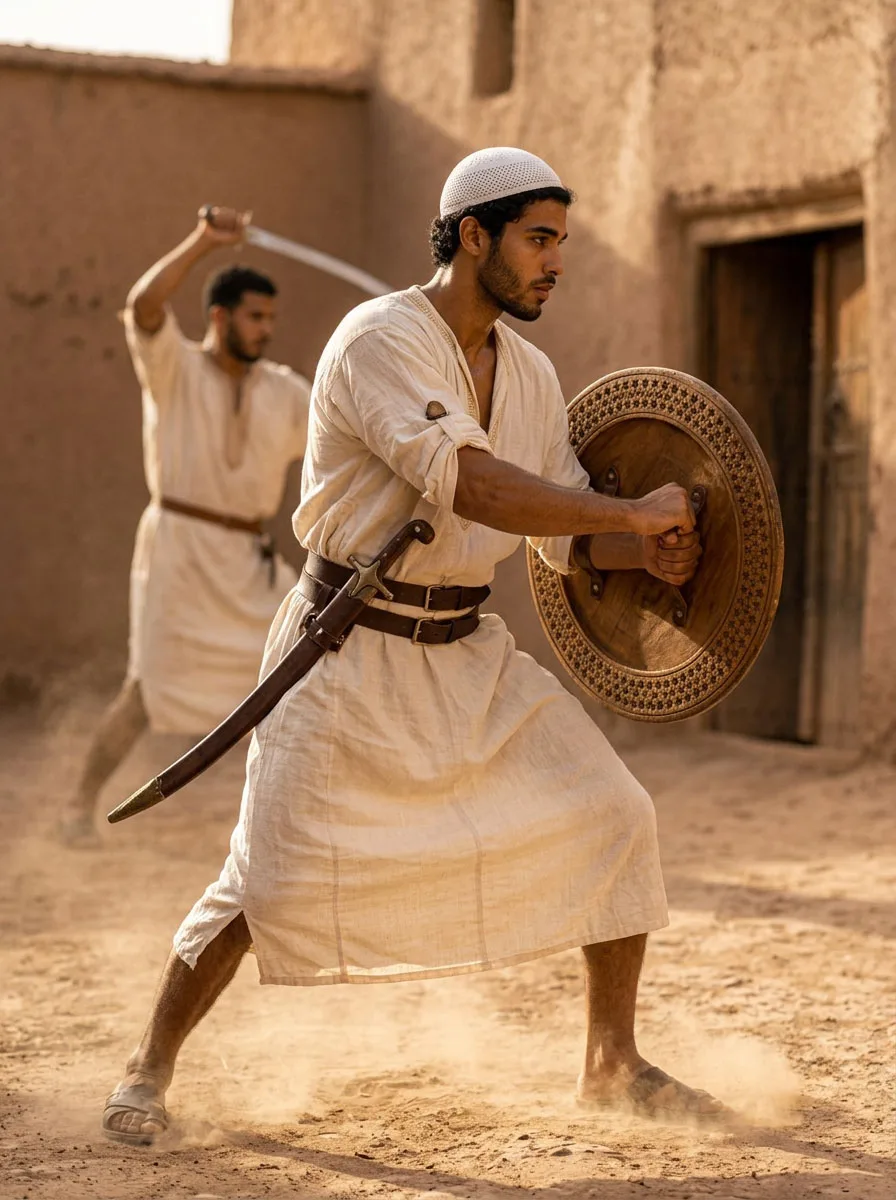
Sayf wa-l-turs: training with sword and shield
See also The furusiyya→.
The lance
The measure at three paces.
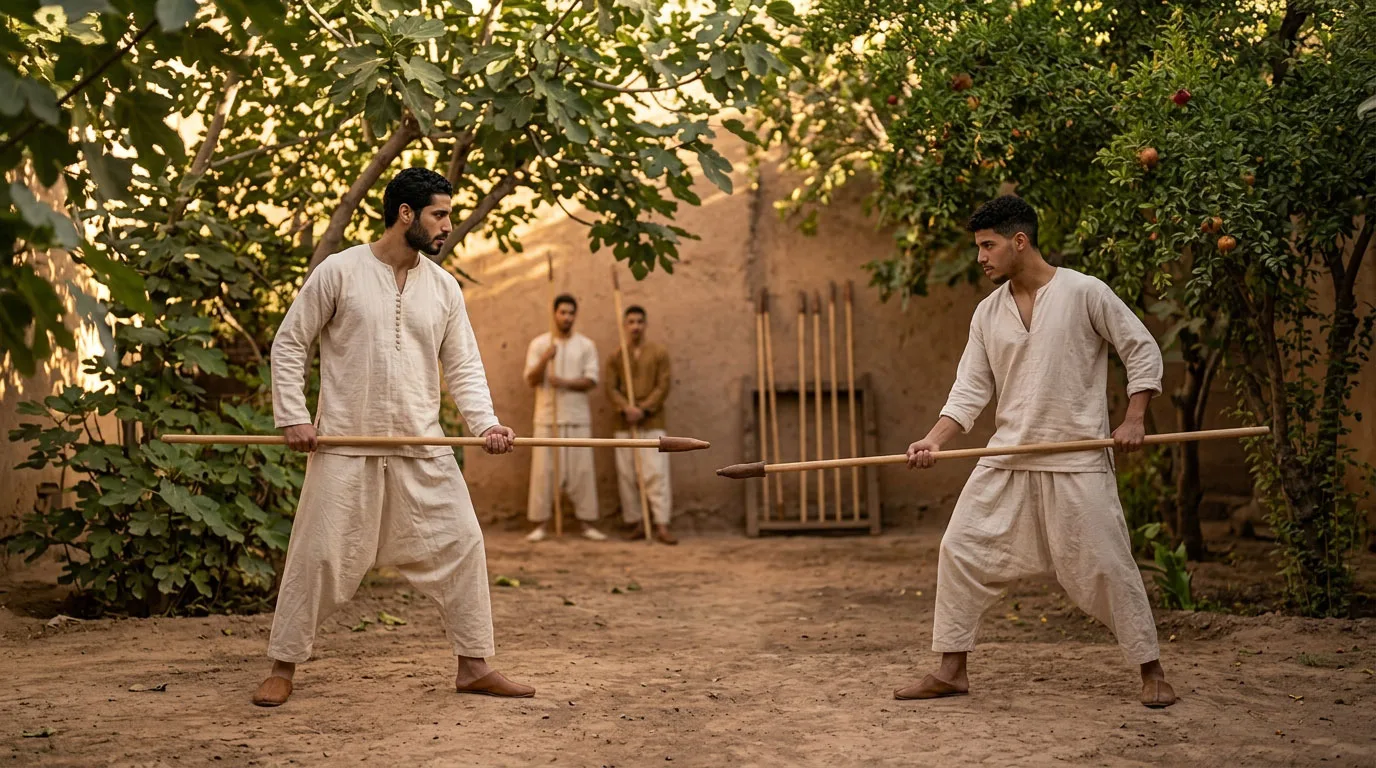
The fourth art of the canon of furūsiyya was still missing from the house. Ibn Akhī Ḥizām set the lance game at the summit of the horseman’s science, and the Mamluk manuals, the Nihāyat as-sūl as well as the seventy-two bunūd of Najm ad-Dīn al-Aḥdab ar-Rammāḥ, devote more exercises to it than to any other weapon. What the lance teaches of its own can be put as a distance: the bow trains the instant before the gesture, wrestling the body to body, the sword the measure of an arm, and the lance the measure of three paces.
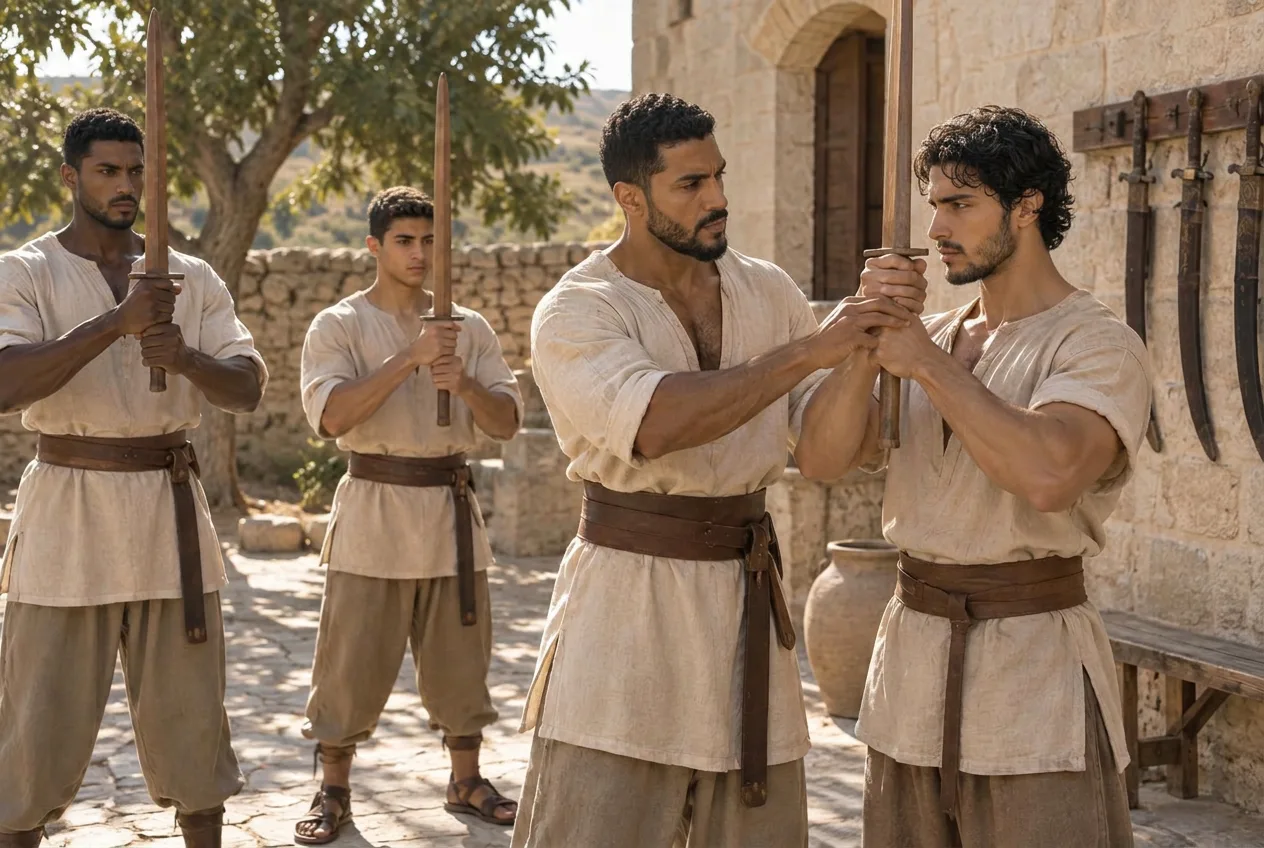
A man learns there to hold the three metres in front of him, to read his opponent before the bodies meet, and to carry his gaze to where the shaft will go. It is a discipline of the eye as much as of the arm, and it is practised slowly: it is an exercise, and stays one.
Cabinetmaking
النجّار
Olive green
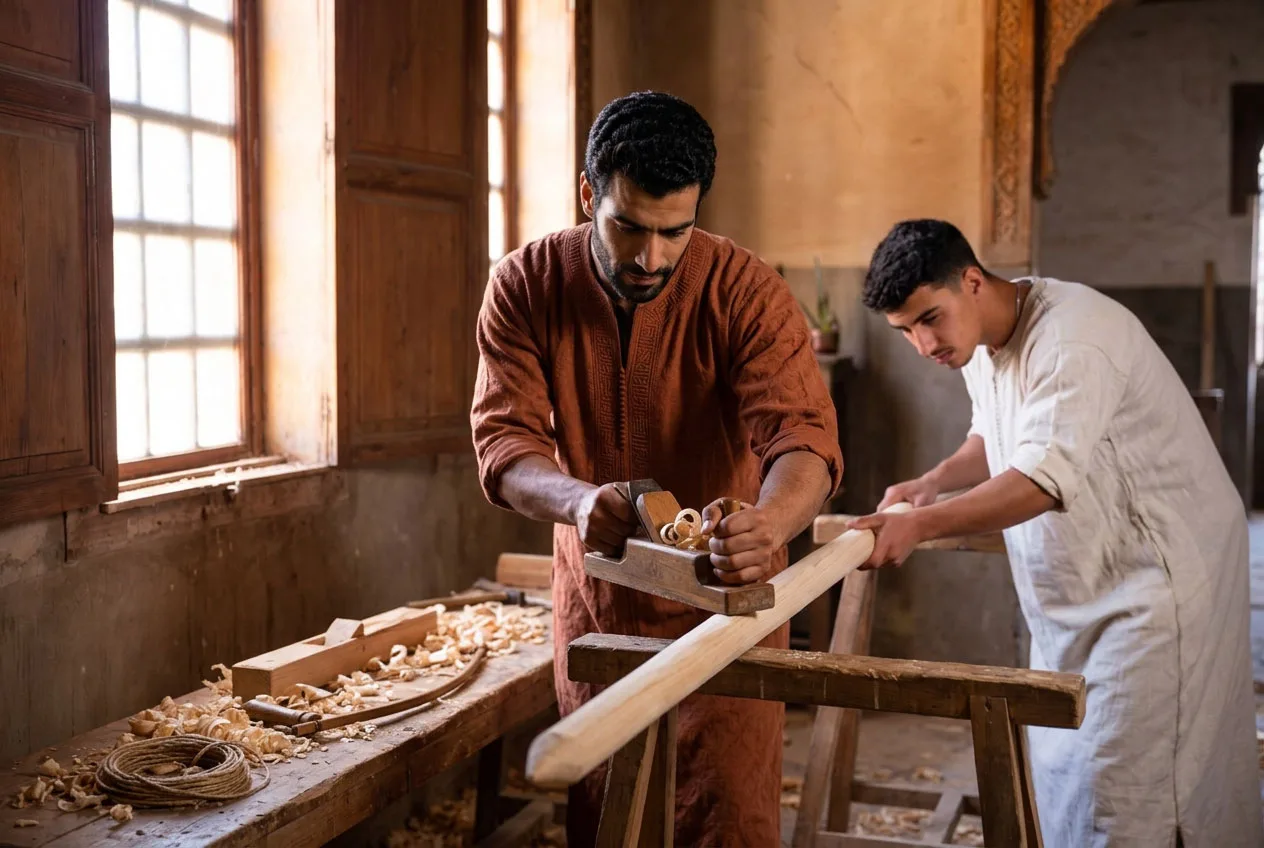
The shafts come from the cabinetmaking workshop, straightened with the plane and checked along their whole length.
The ash is turned, straightened with the plane, then checked by the very man who will use it. It is the rule of the house: its workshops make the instruments of the disciplines taught there, from the shafts to the horse’s harness. A shaft made here and broken at the first exercise is made again here.
الثِّقافُ ما تُسوَّى بِهِ الرِّماحُ، وَتَثقيفُها تَسوِيَتُها
“The thiqāf is that with which lances are straightened, and straightening them is called tathqīf.”
Ibn Manẓūr, Lisān al-ʿArab
The root th-q-f first names this workshop labour, the crooked wood passed and passed again through a bored block until it runs straight, and it is on this root that modern Arabic formed thaqāfa, the word that today means culture. The descent must be stated with care, since the modern sense is recent and comes from a calque; the reading of the classical dictionaries is nonetheless certain, and the gesture they describe is exactly the carpenter’s.
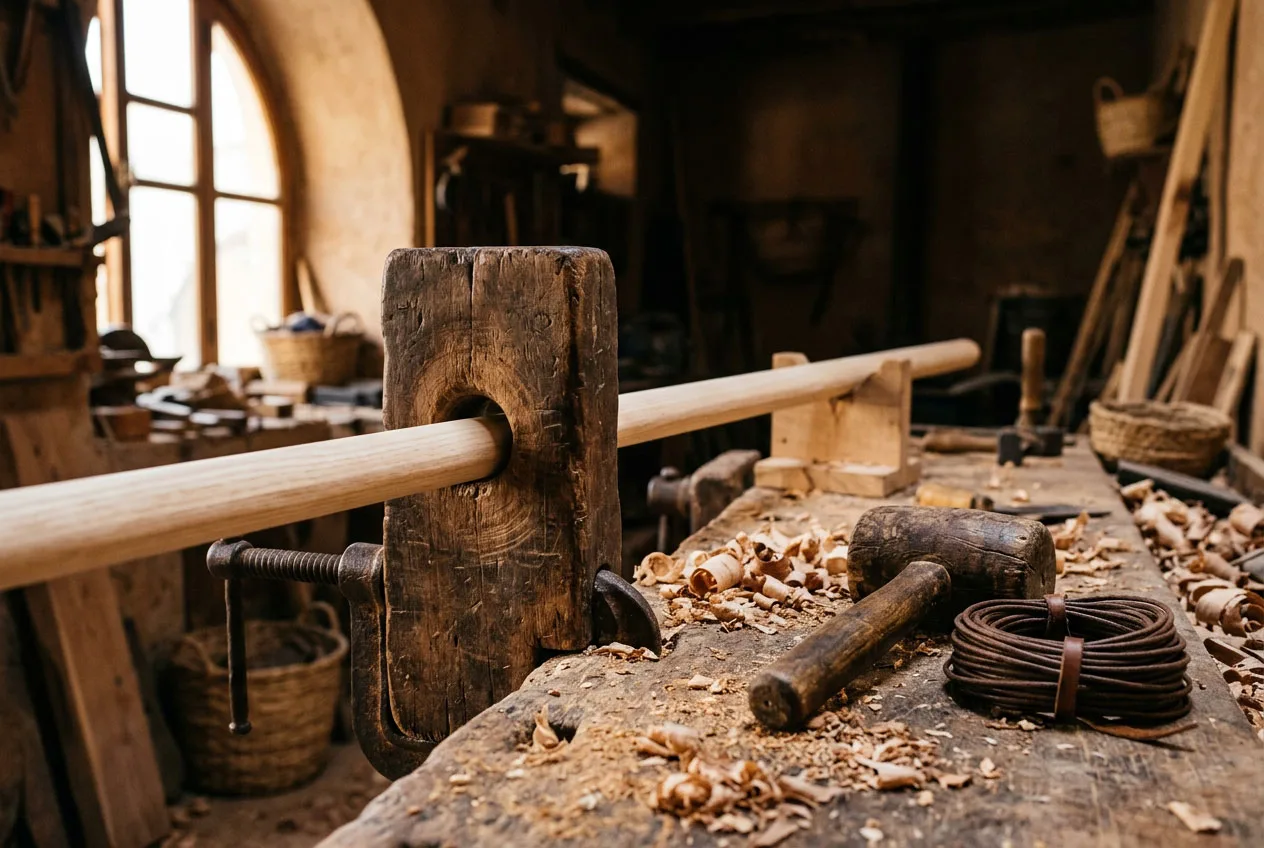
The thiqāf, a pierced block clamped to the bench, in which the shaft is straightened.
The first year is done on foot, in the shaded part of the garden and on beaten earth, two sessions a week at the end of riyāḍa, on days other than those of ground wrestling. The shafts measure from two metres twenty to two metres eighty and stay plain wood, with a rounded end or a cap of stitched leather. Mounted work, with the rings and the birjās, will come later and outside the medina, on the riding ground, once the seat is sure: the horse must first accept the shaft around its head and flanks, and this is obtained in the stable, over several months.
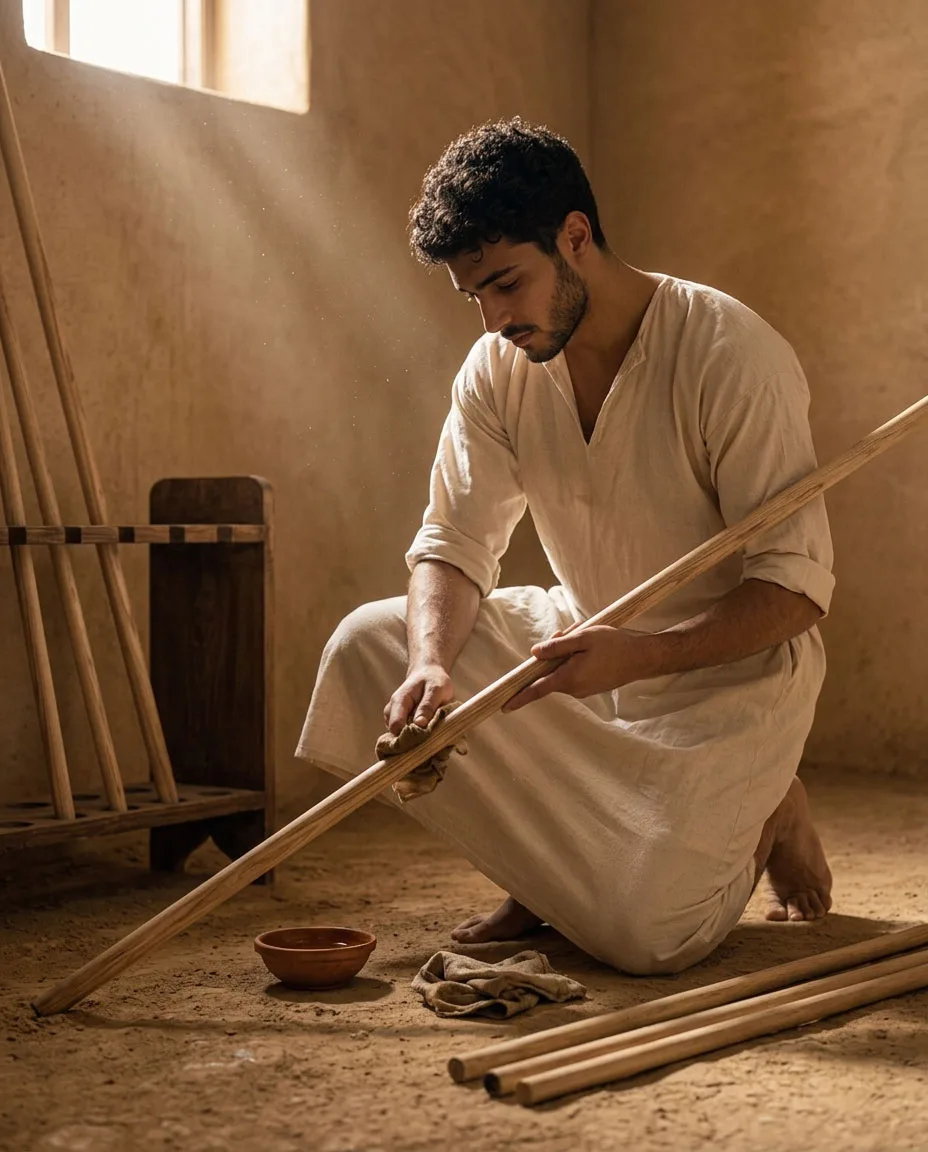
The muʿāwin oils the wood and looks for cracks before the session.
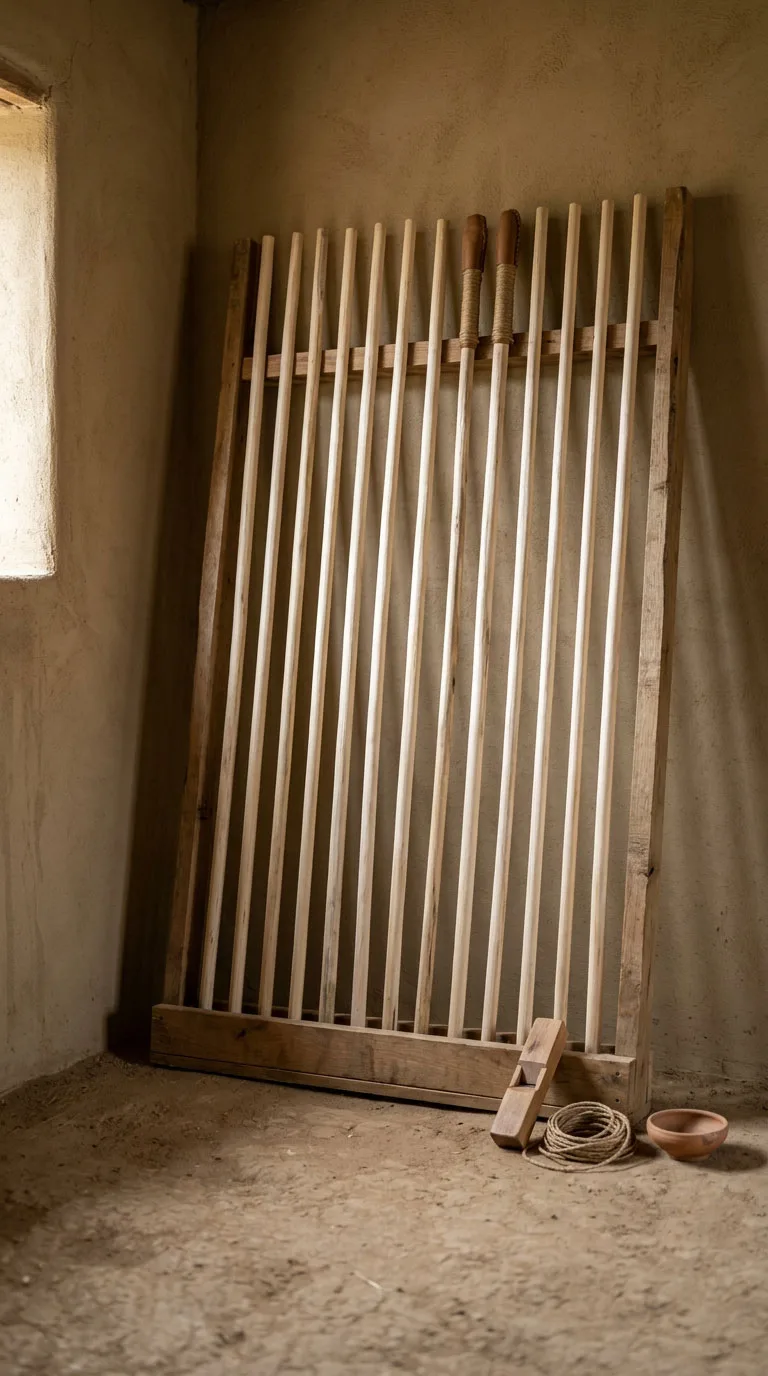
The rack, made by the cabinetmaking workshop, where the shafts stand upright and dry.
See also The furusiyya→.
Wrestling
Body to body, respect, measure. A tradition of formative combat.
وَلَقَدْ شَفى نَفسي وَأَبرَأَ سُقمَها قَولُ الفَوارِسِ وَيْكَ عَنتَرَ أَقدِمِ
“My soul was healed, its sickness eased,
by the horsemen’s cry: ‘Woe to you, ʿAntara, forward!’”
ʿAntara ibn Shaddād, Muʿallaqa
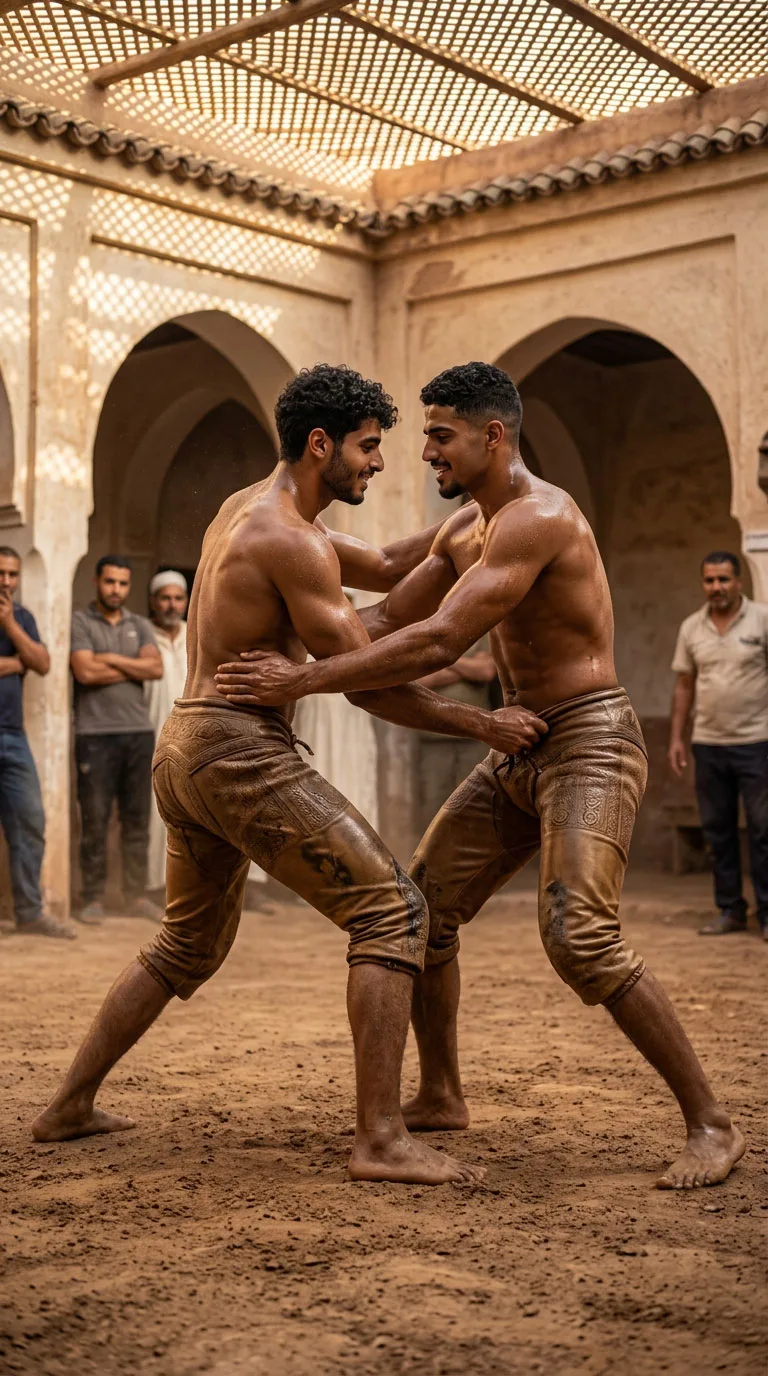
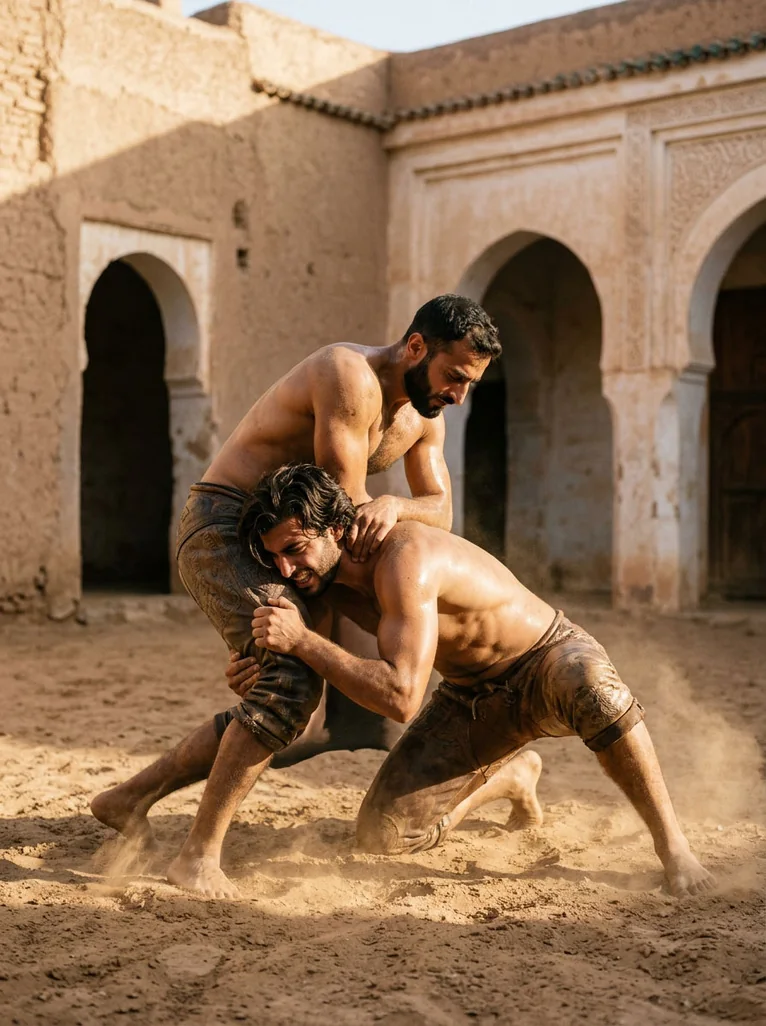
Wrestling teaches the opposite of violence: respect for exact measure, mastery of the move that could wound and is held back. Body to body with a brother, it is a school of restraint as much as of strength.
This practice belongs to a tradition far older than the Riad: muṣāraʿat al-nūba, Nubian wrestling, already traced in the tombs of ancient Egypt and still alive today in Sudan, where it remains, after football, the second public discipline of the body. It is fought standing, on sand: only the controlled fall of the opponent counts.
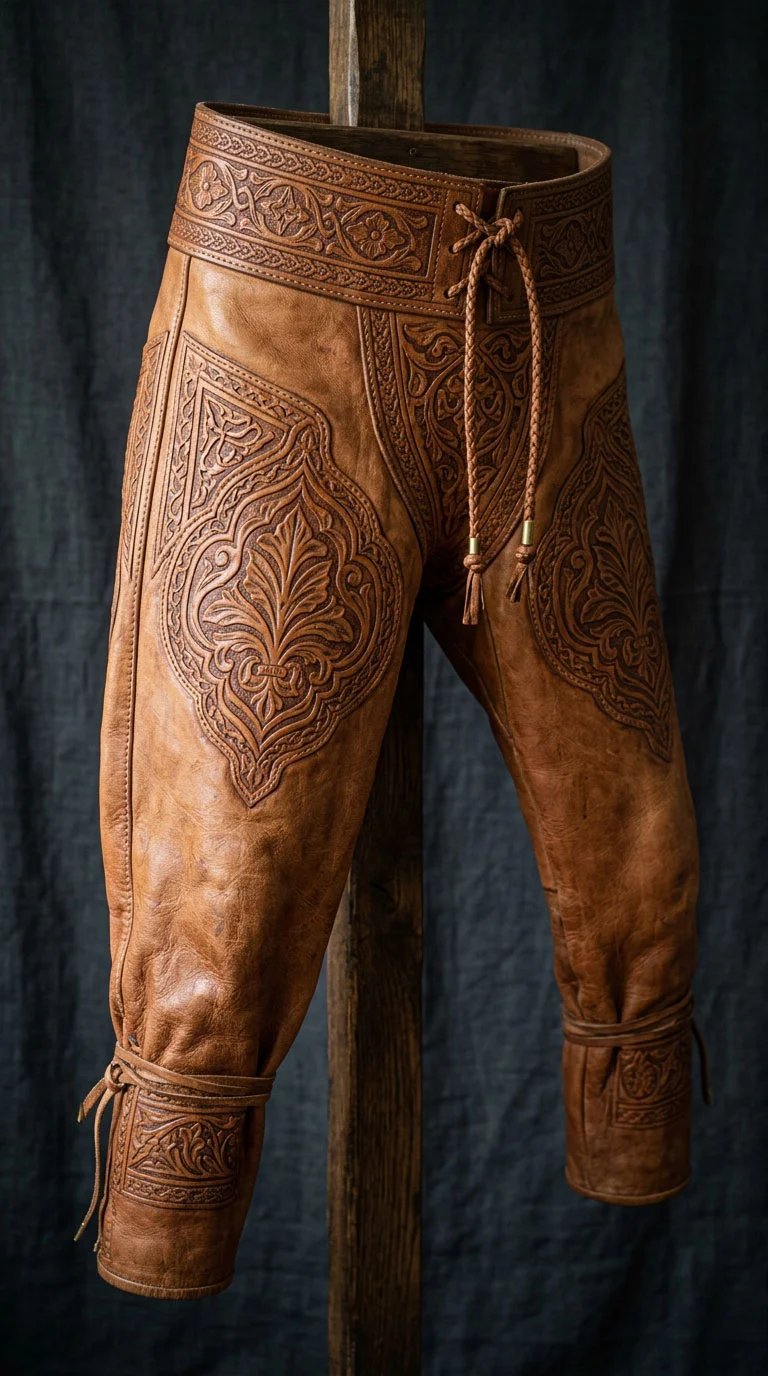
Beside this standing wrestling, Dar al-Hiraf keeps a second form, of Ottoman lineage: yağlı güreş, oil wrestling in which the hold continues on the ground. It keeps its worked-leather trousers (kispet) and the ground work, without the oil. The two schools stand side by side, two gestures under the same demand for measure, and the ground form belongs to the house’s inner training.
The zurkhane, the house of strength
Wrestling is joined by an exercise of strength of Persian origin, the zūrkhāne, the “house of strength”. It takes place in the gowd, the octagonal pit, to the beat of a drum and a chant that set the pace of training under the guidance of the morshed; the equipment is the clubs (mil), the weighted shields (sang) and the chained training bow (kabbāde), which is lifted and swung to build shoulders and back. Dar al-Hiraf welcomes it as a practice of the body handed on from master to pupil, without ranks or insignia.
See also The furusiyya→.
See also, in Ragusa, The Furusiyya→.
The words of this page are in the common glossary; the works cited in the sources; the sister house is Al-Funduq aṣ-Ṣiqillī.