20 · Tension
The parts that hold the bow and the draw, with effort spread and ordered.
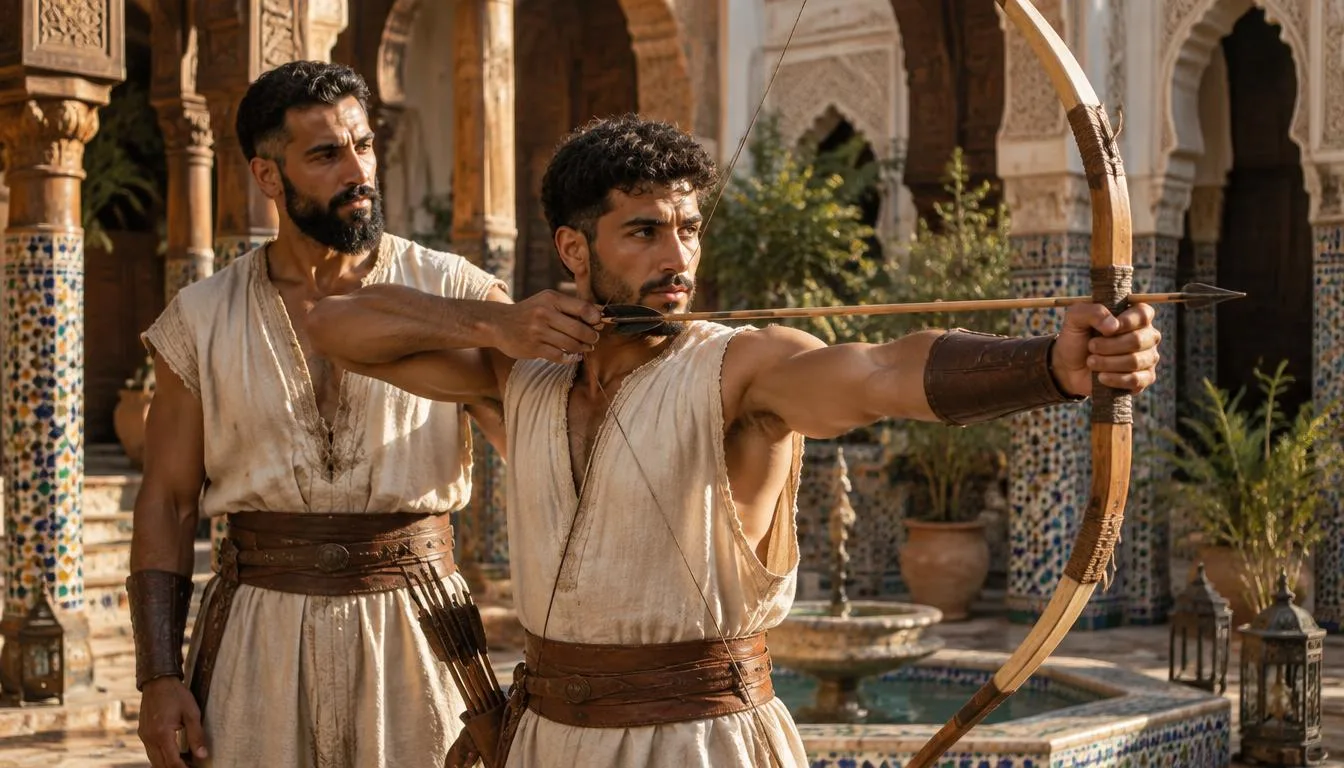
The traditional Maghrebi bow, the kit and the dress.
Al-Qanun and the discipline of the thirty-four points.
In the Riad archery belongs to the furūsiyya, alongside riding and the sword. In Arabic it is called rimāya, and the archer rāmī. The pupil learns to tell necessary effort from needless strain, to find the same posture every time and to finish the movement without haste: precision comes from an order of actions.
The course will open with a qualified instructor. Bow, arrows, quiver and guards will be made in the house workshops, beginning with the saddlery→; the objects are described one by one on the page The archer’s instruments→.
Arabic archery treatises describe bows, materials and methods that change from one region to another; the Maghreb knew many of them, in constant dialogue with the Islamic East. The house will study them by comparing the sources, keeping apart what the texts attest, what is read into them and what is chosen today.
Two texts guide the study. The first is the Al-Qānūn, a treatise of Syrian and Mamluk tradition linked to the name of al-Yūnīnī, edited with a commentary by Giovanni Amatuccio: the discipline of the body comes from it. The second is the anonymous North African manual translated by Nabih Amin Faris and Robert Potter Elmer as Arab Archery (1945), which describes bows, thumb guards and quivers.
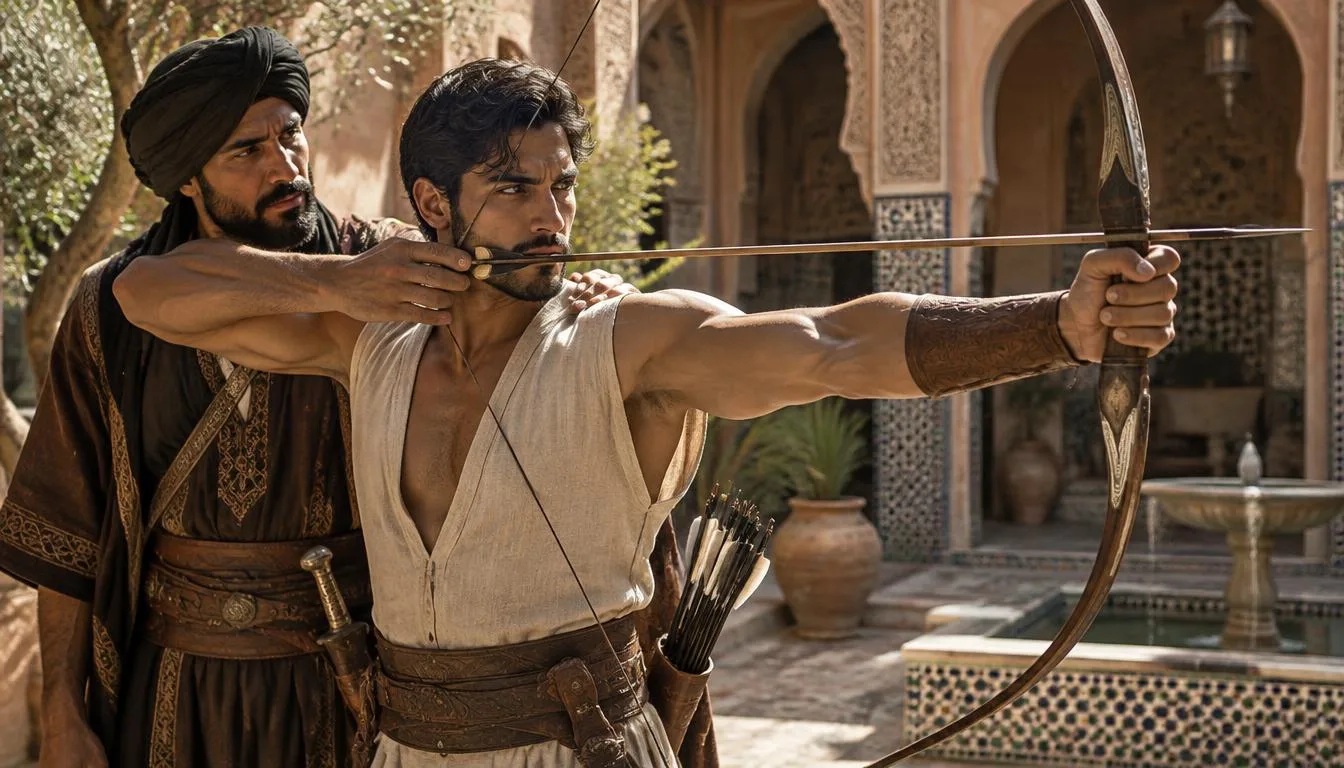
The treatise divides the archer’s body into thirty-four points: twenty to tighten, eleven to release, three to hold still. Tension, release and stillness support one another. Some points name a muscle, others a joint, a finger, a part of the face; the last three concern attention.
The parts that hold the bow and the draw, with effort spread and ordered.
The parts that stay loose: the face, the neck, the breath.
The calm of the decisive moment. In the old vocabulary, eyes and heart also mean presence and attention.
Some entries in the edition are paired, and the table is read together with the editor’s commentary. Right and left refer to an archer who draws the string with the right hand.
1–4.Little, ring and middle fingers and thumb of the right hand
5.Right wrist
6.Right elbow
7.Right upper arm
8.Upper muscle of the right forearm
9–11.Little, ring and middle fingers of the left hand
12.Left wrist
13.Left elbow
14.Lower muscle of the left forearm
15.Right shoulder
16.Right flank
17–18.Shoulder blades
19.Belly
20.Spine
21.Index finger of the right hand
22.Middle muscle of the right forearm
23.Index finger of the left hand
24.Thumb of the left hand
25.Upper part of the left forearm
26.Neck
27.Left flank
28.Left shoulder
29.Waist
30–31.Lips
32–33.Eyes
34.Heart
Bow, string, arrows and quiver form a whole, and are matched to one another before they receive any ornament.
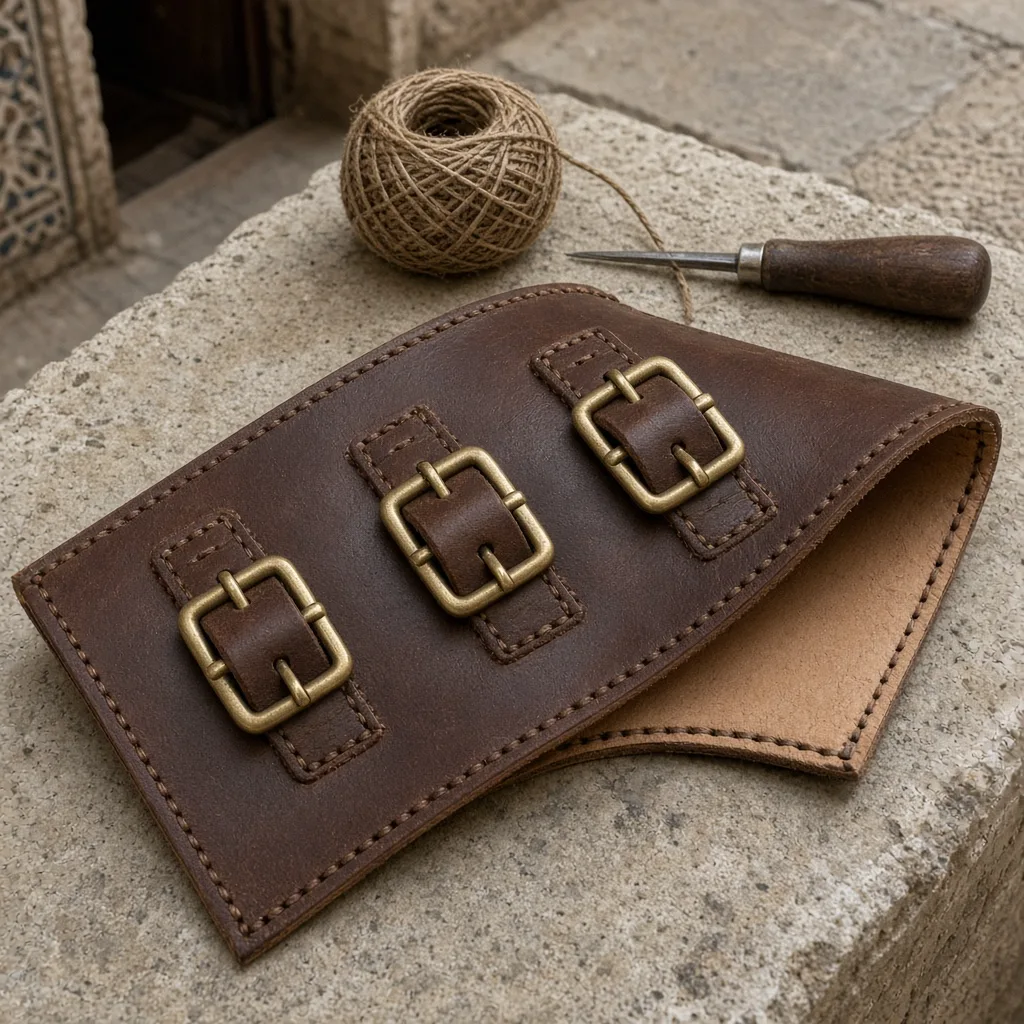
The leather of the cases, the guards and the quiver comes from the saddlery, which will also look after it.
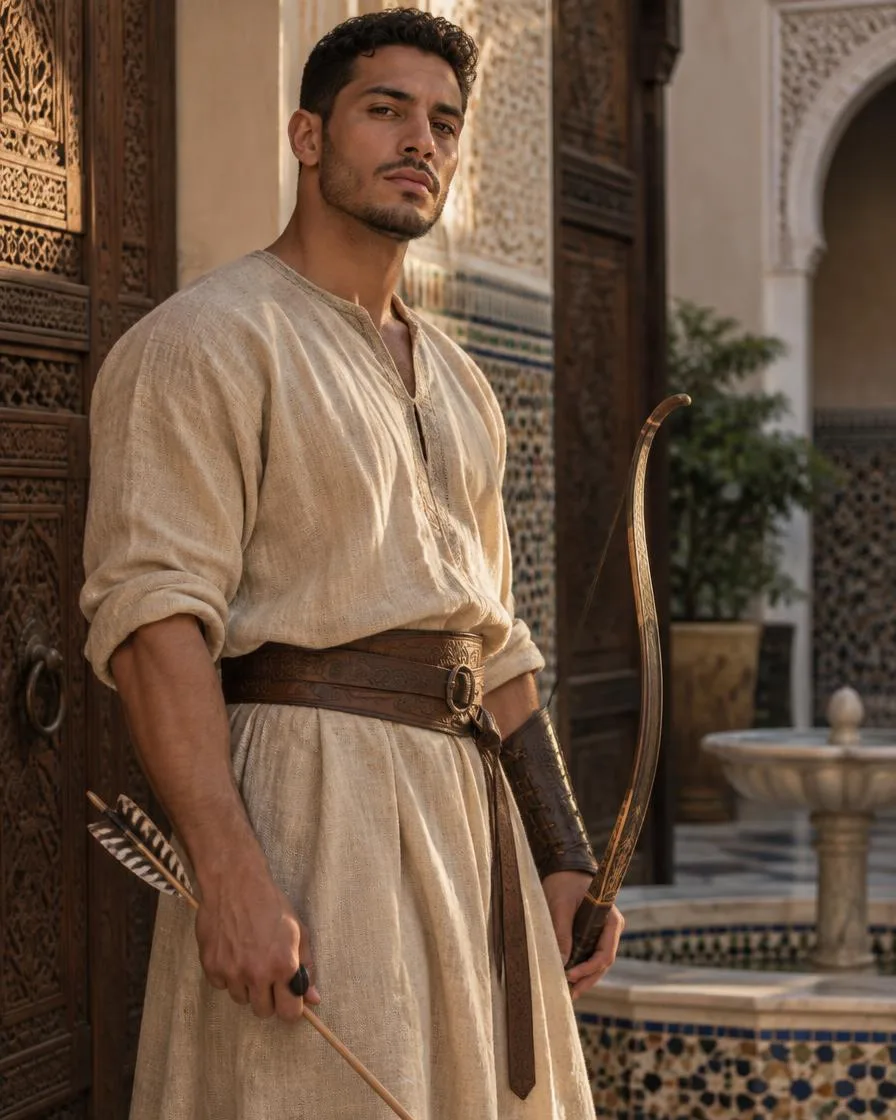
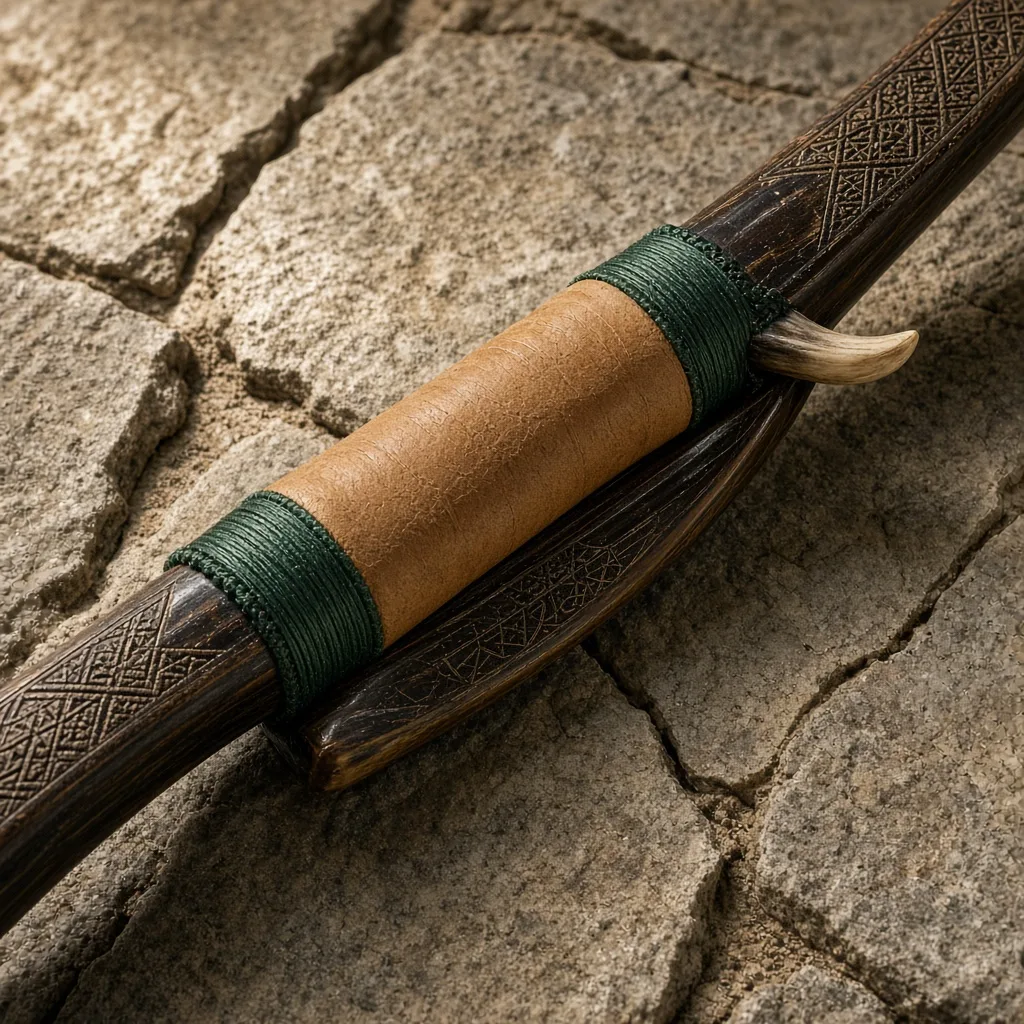
The bow (qaws) has a grip, two limbs and the tips that hold the string. The manuals distinguish wooden bows from composite bows of wood, horn and sinew; wood, reinforcement and draw weight will be chosen to suit the pupil. Every session begins with a check of the limbs.
The string (watar) has sound loops and a reinforced centre where the nock sits. The kit also holds a spare string and a cake of wax. The string is always loosed with an arrow nocked.
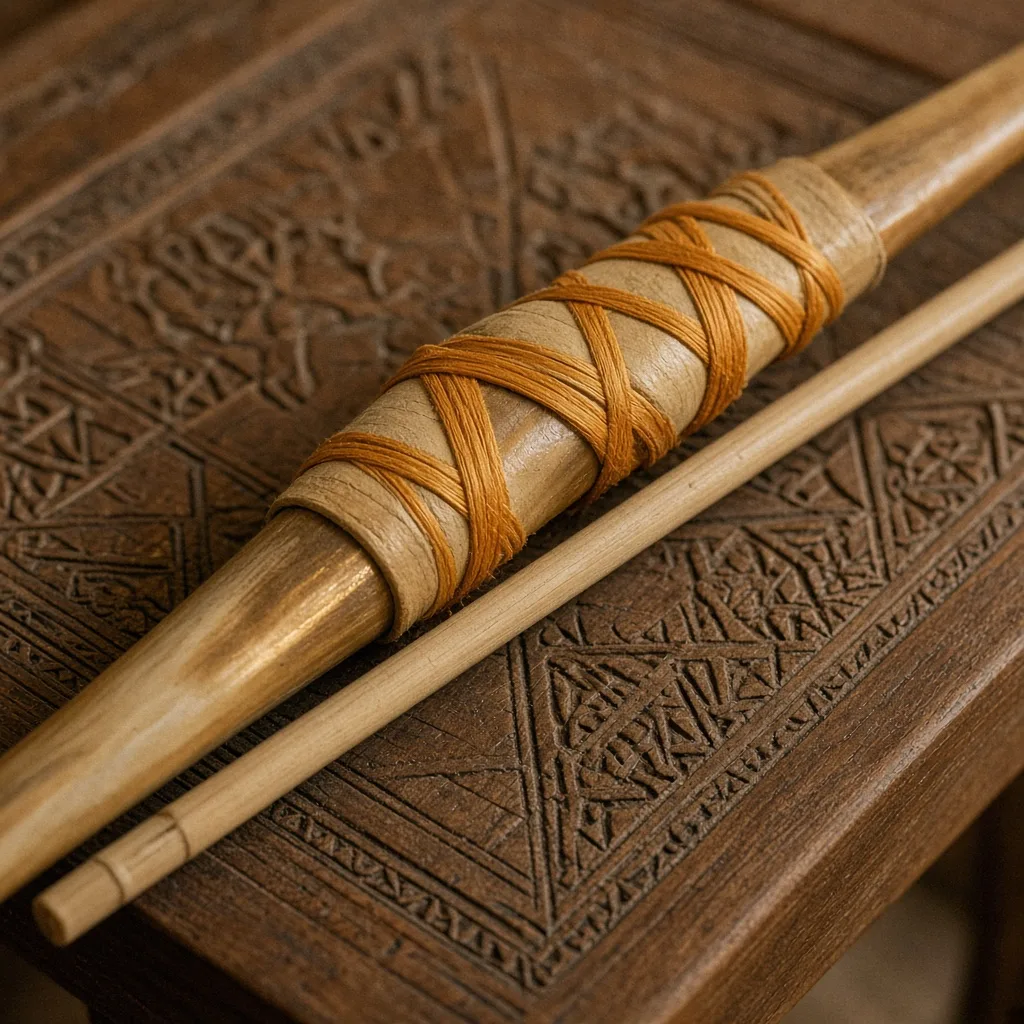
Each arrow (sahm) has a shaft, a head, fletching and a nock. Straight wood, even weight and regular feathers give a predictable flight; for the target, rounded heads are used. An arrow with a cracked shaft, a damaged nock or loose feathers goes back to the workshop.
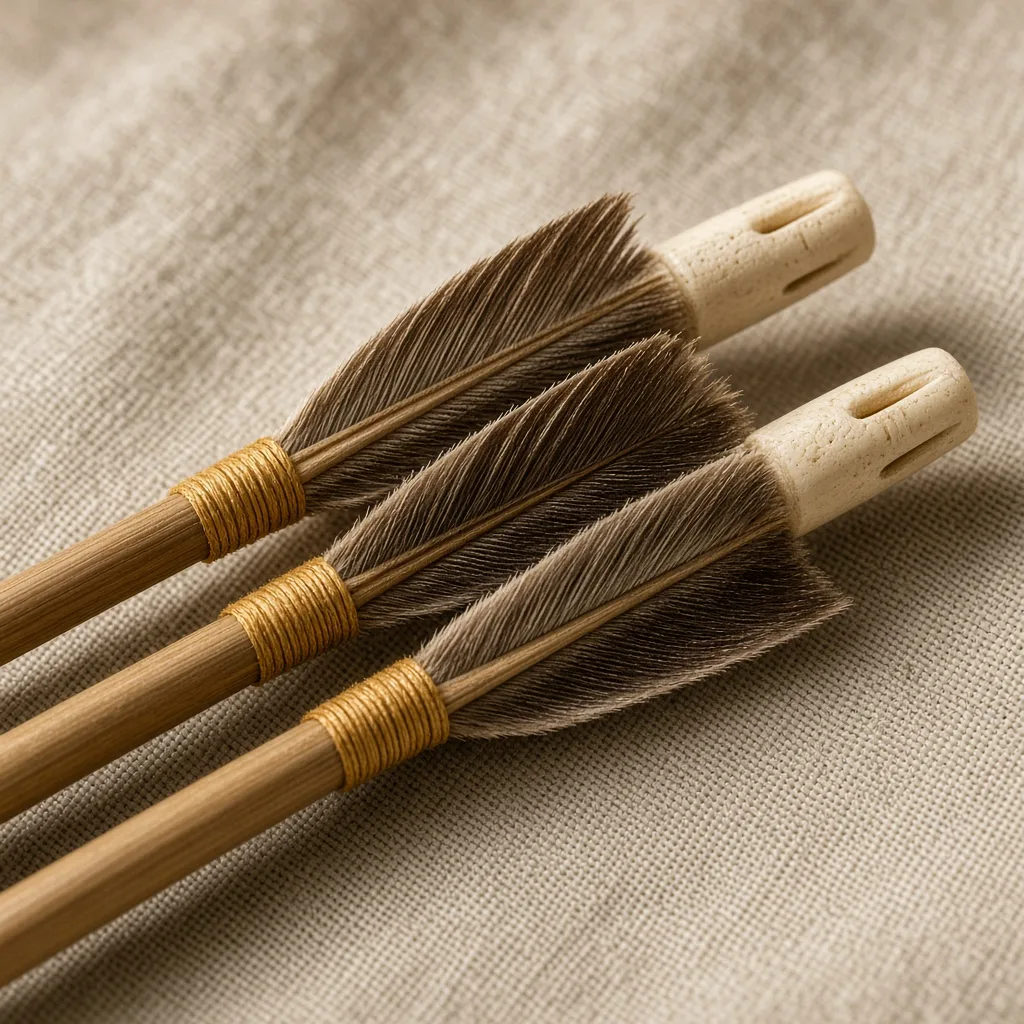
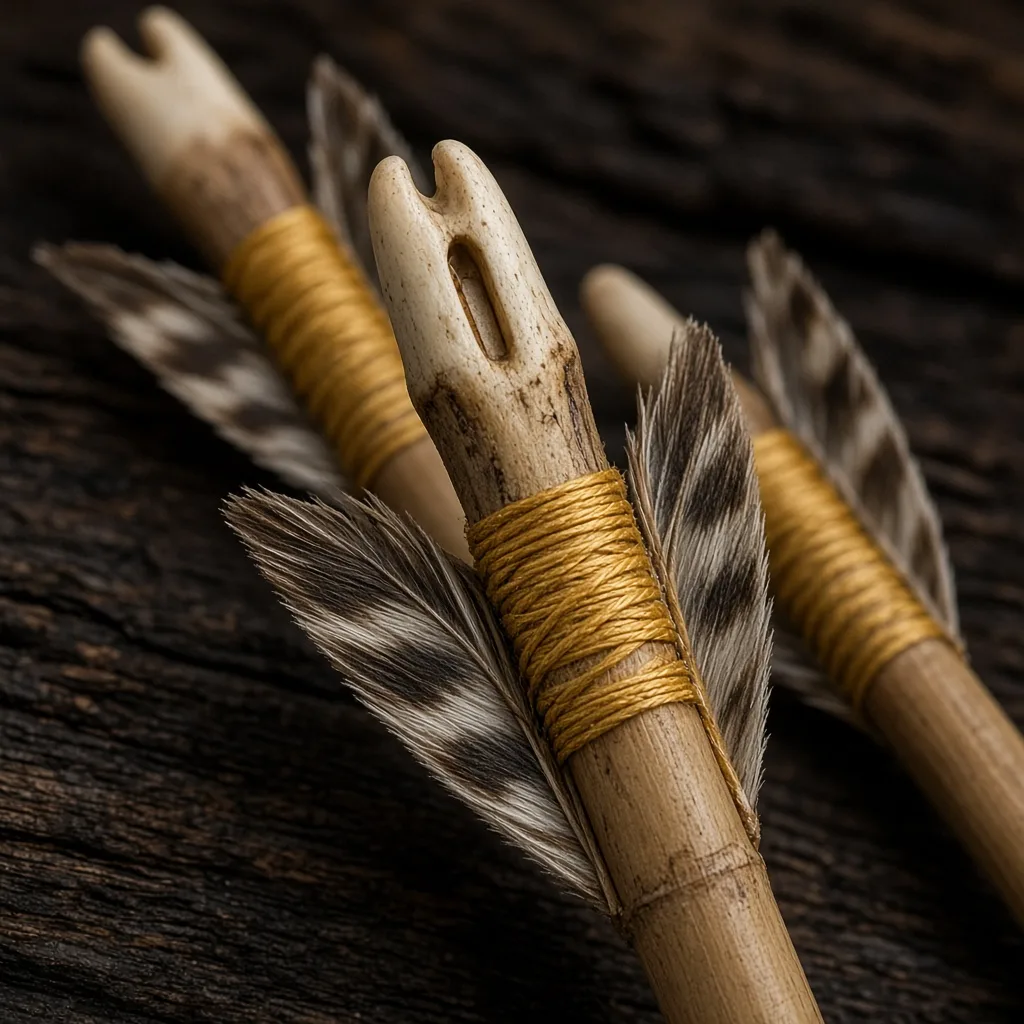
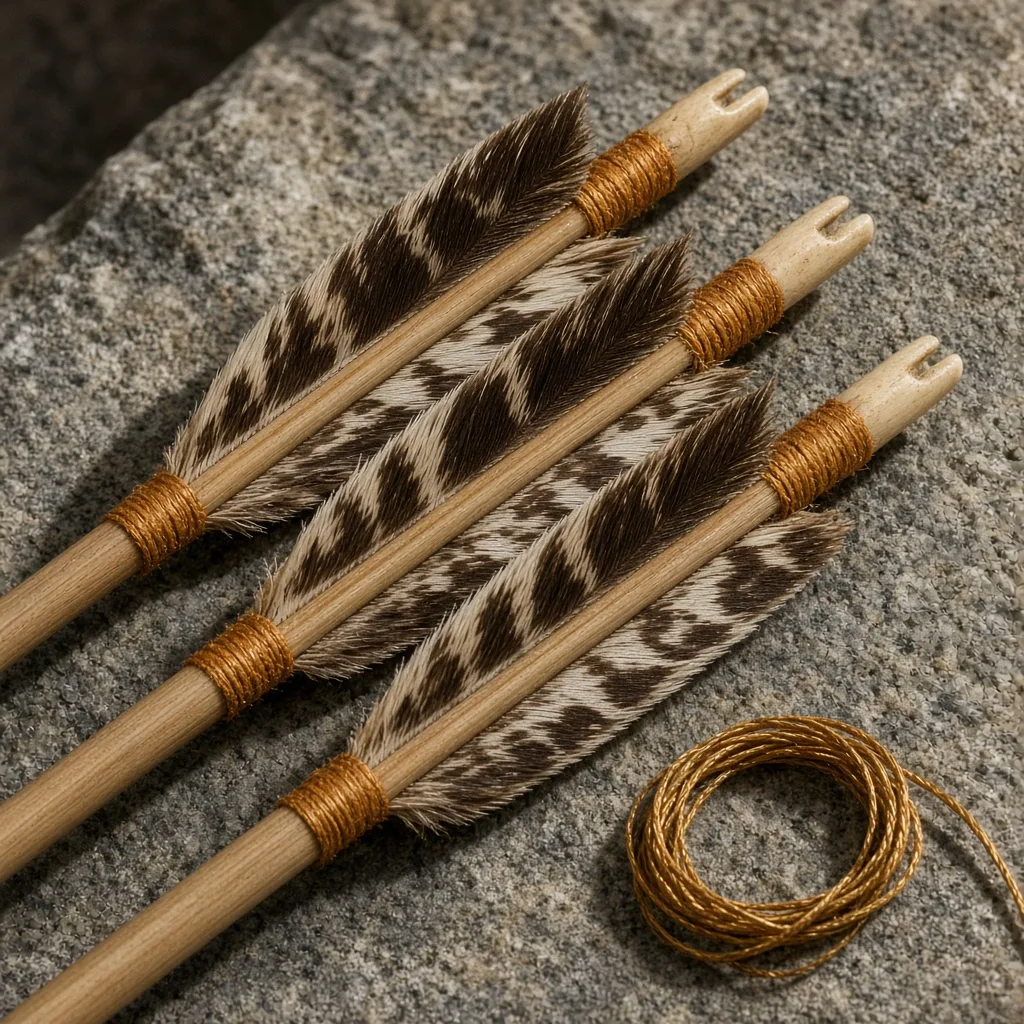
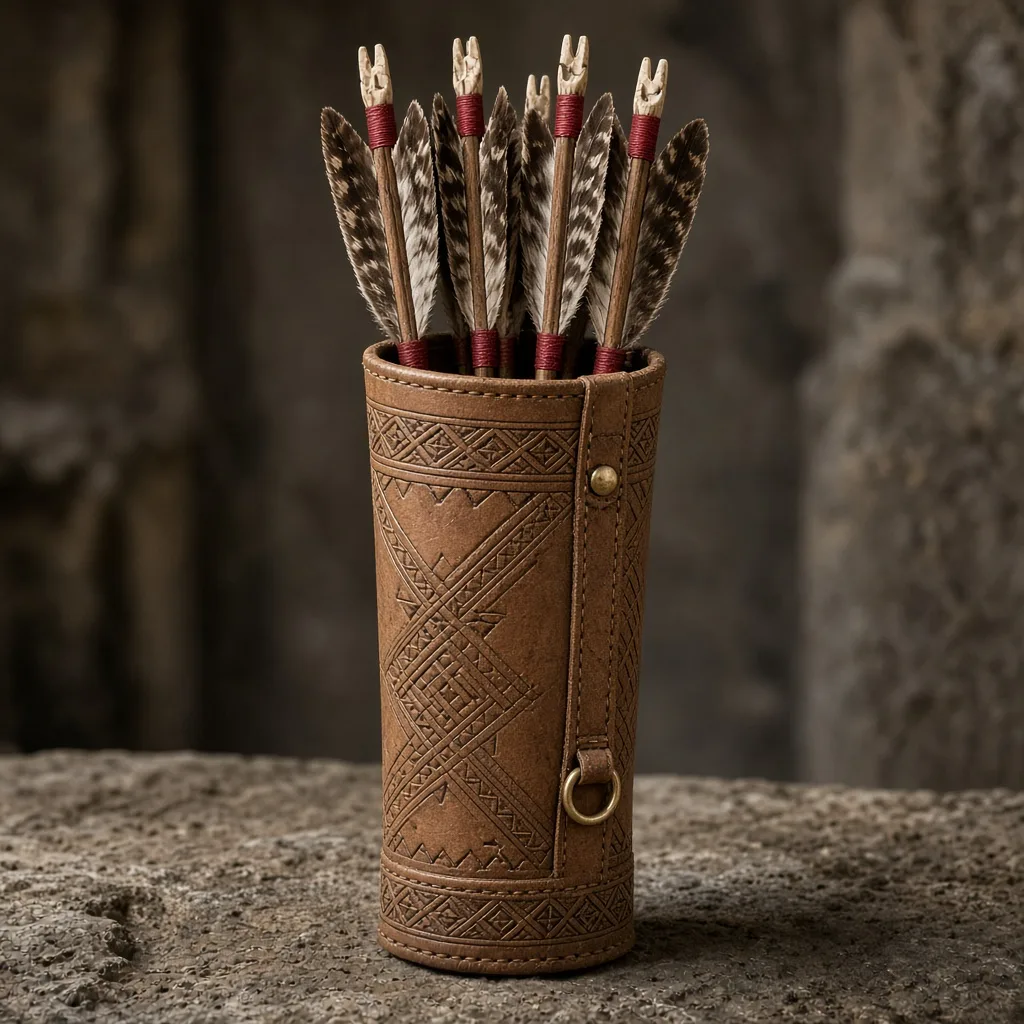
The quiver (kināna) keeps the arrows in order and protects the feathers. The North African manual describes a strap over the left shoulder with the quiver on the right side of the back; the house will try this and other ways of carrying it on the field. Base, mouth and seams are made to last; a leather case protects the bow in transit, and the belt carries quiver and accessories while leaving the breath free.
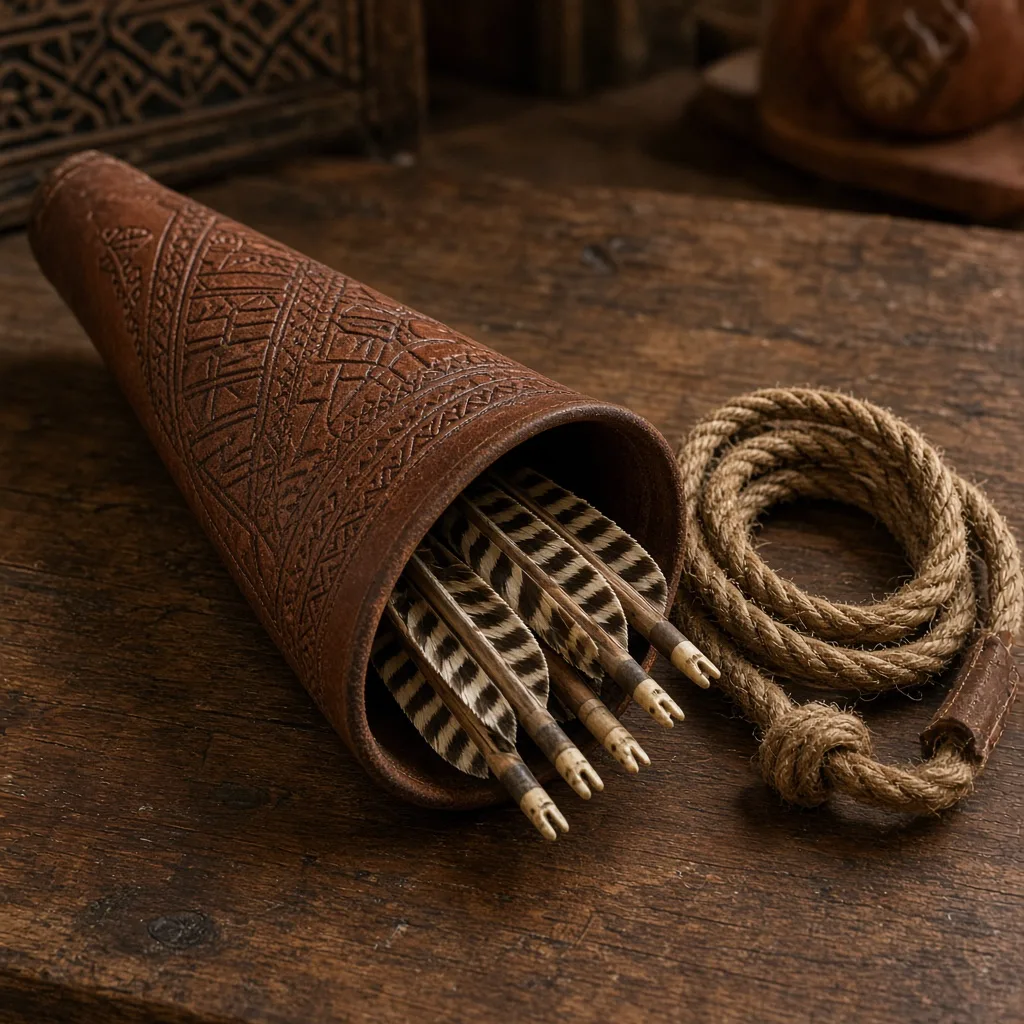
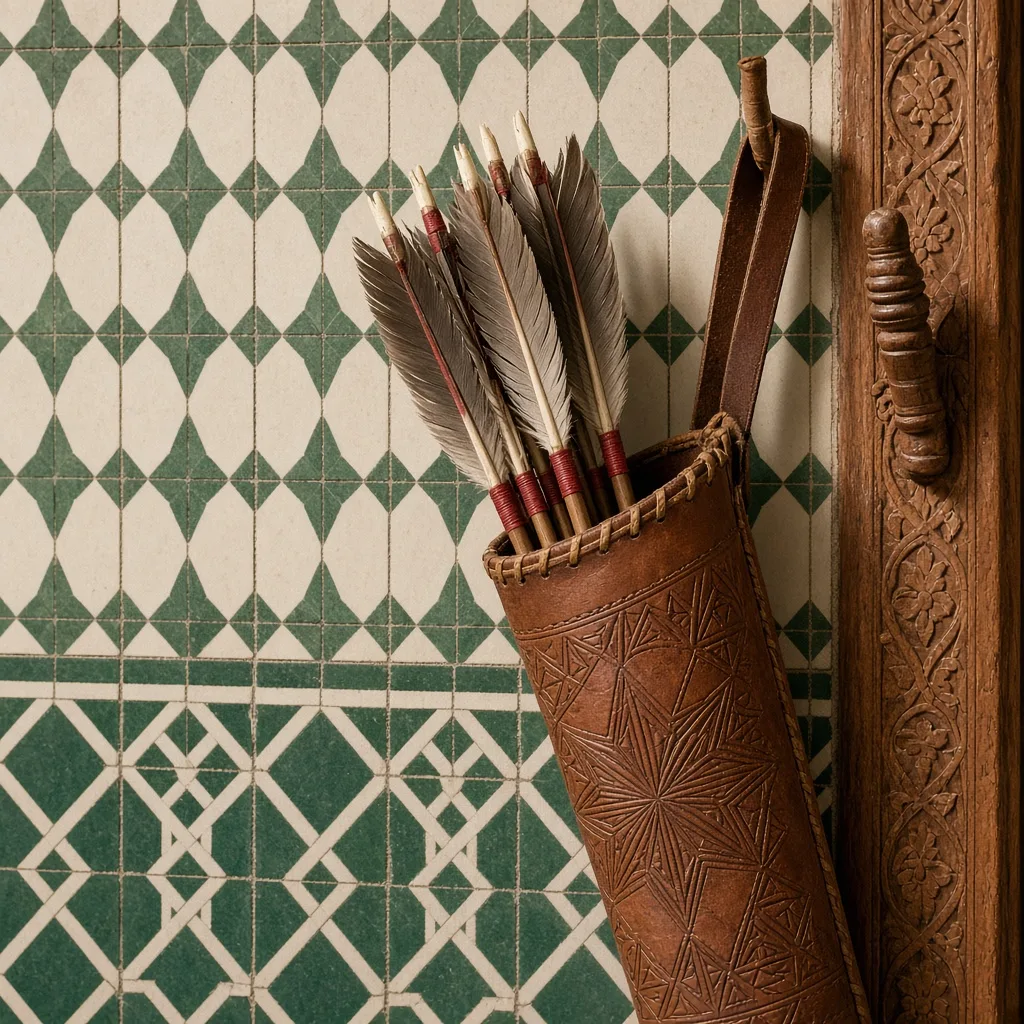
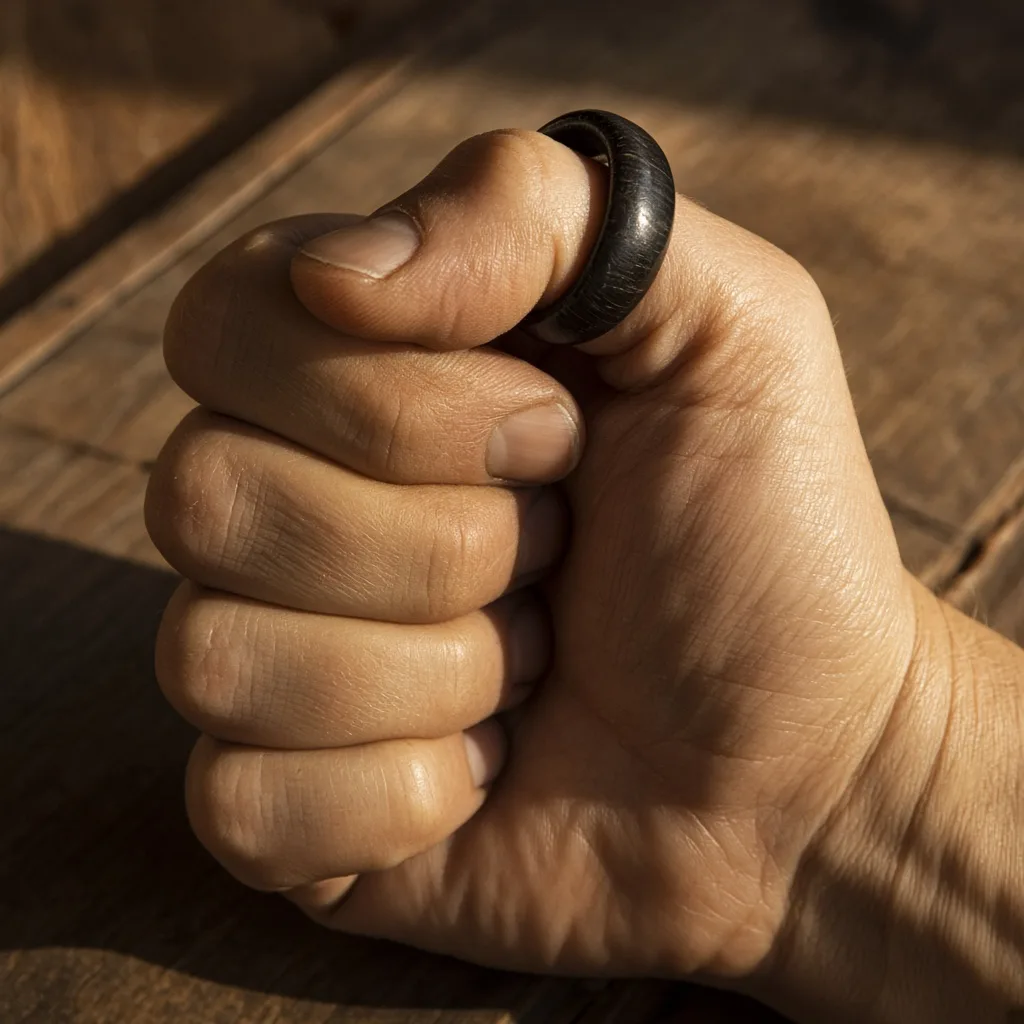
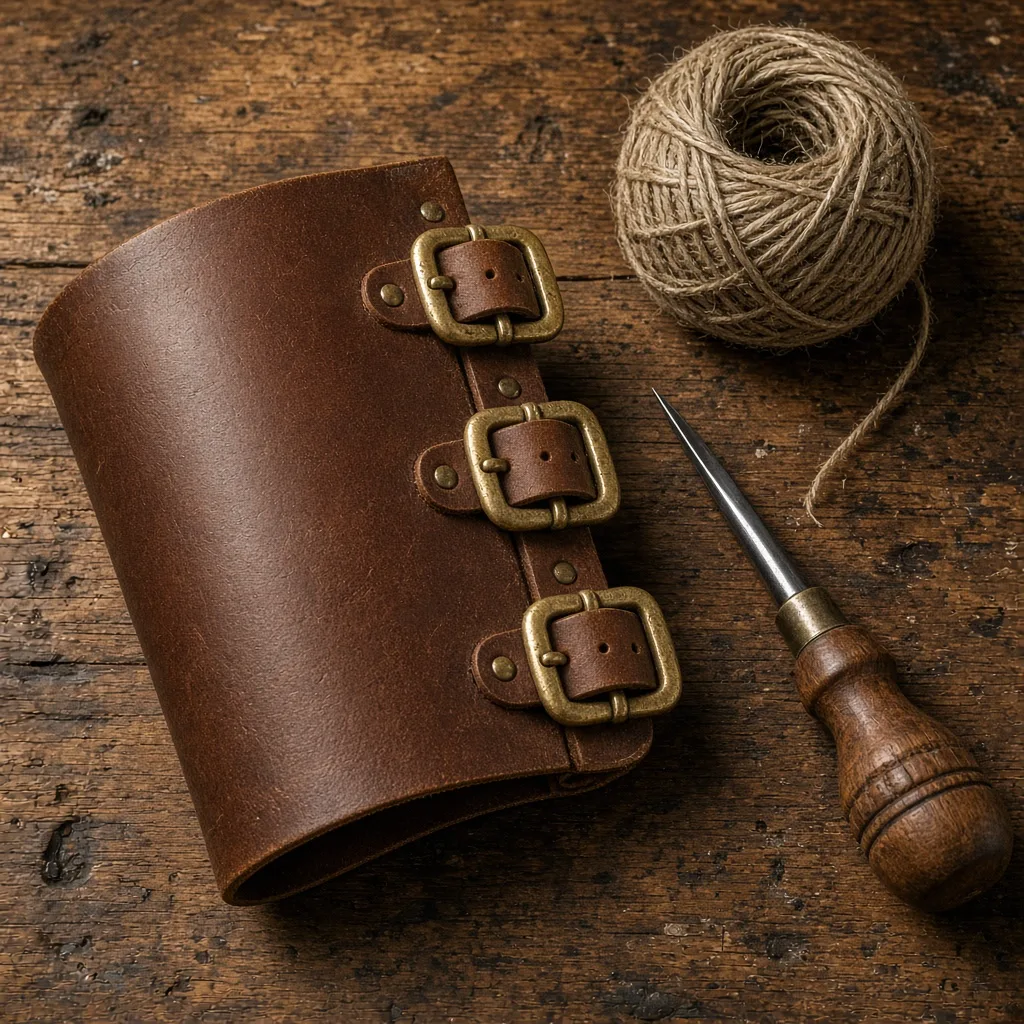
The manual translated in Arab Archery describes a leather thumb guard: the saddler will sew it to fit each hand, so that grip and release stay sure. The leather bracer, laced to the forearm that holds the bow, shields arm and sleeve from the slap of the string.
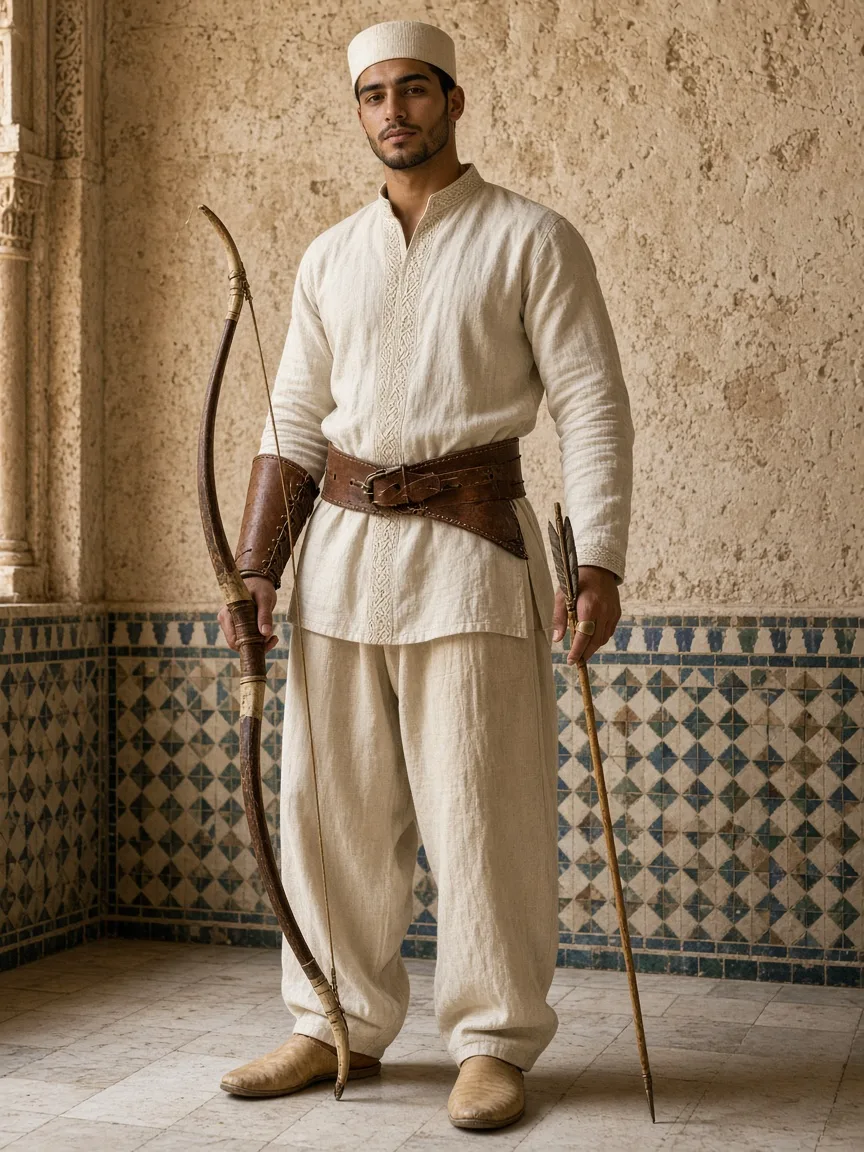
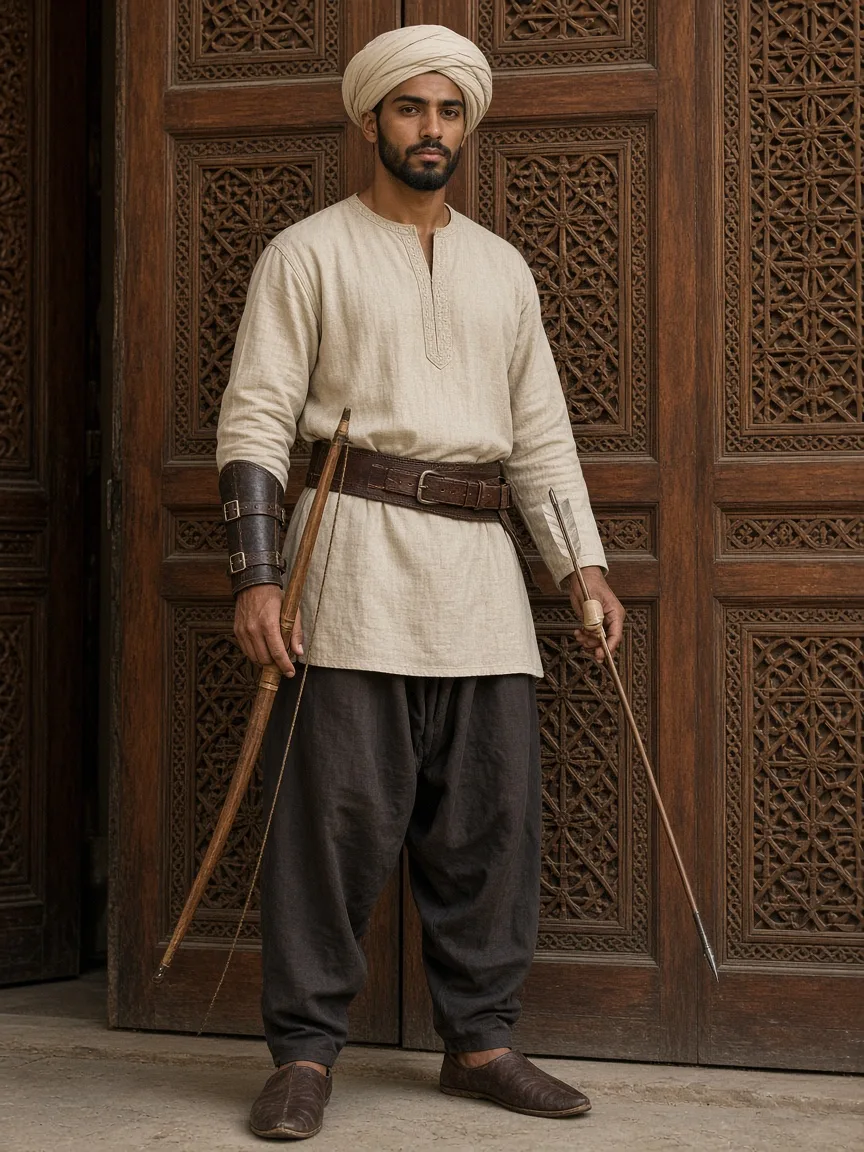
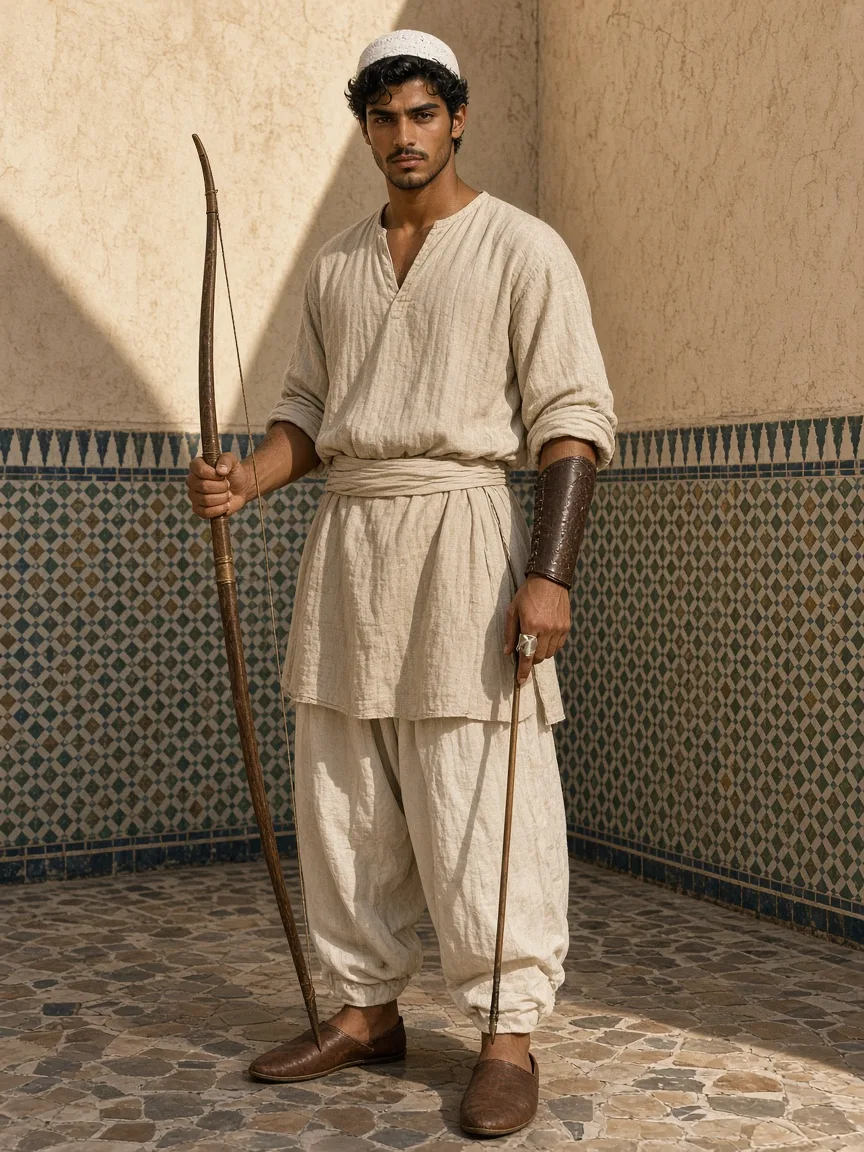
The archer wears the house attire described in Al-Kiswa→: a tunic of natural cloth, loose sirwāl that leave the stance steady, a leather belt, closed shoes, and the cap or the turban. Sleeves fit just closely enough to clear the string; hoods and loose ends stay out of the line of the shot. Pale cloth lets the movement be read.
The cut will be settled with the tailors and the instructor, on the real movements of shooting. Master and apprentice dress alike: the master’s authority shows in his shooting.
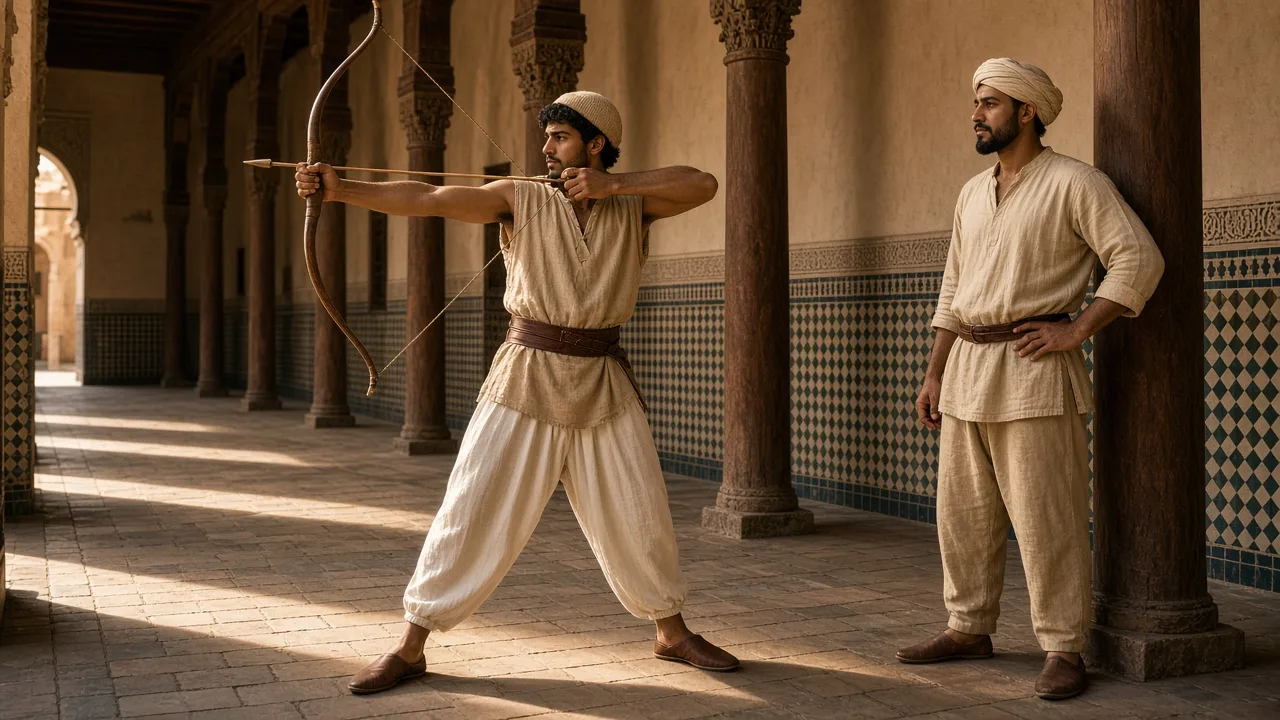
Shooting takes place on a dedicated field, with a shooting line, a butt and a safety zone, under the instructor’s guidance. While shooting, everyone stands behind the line; arrows are collected at the signal.
The course begins with posture, before the strung bow, using suitable training tools. Load and duration increase by degrees; fatigue or pain call for a pause.
The master follows the continuity of the movement: preparation, grip, draw, aim, release, follow-through. The target confirms; the movement teaches. The treatise gives the words for what the body is doing.
Giovanni Amatuccio, Al-Qānūn al-akbar ar-ramy. La grande regola del tiro con l’arco, 2013
N. A. Faris, R. P. Elmer, Arab Archery, Princeton, 1945
J. D. Latham, Archery in the Maghrib: the oriental background, 1970
→ The Furūsiyya→ · → The archer’s instruments→
The bow, the string, the arrows, the quiver, the guards and the belt: the objects with which the shot is prepared.
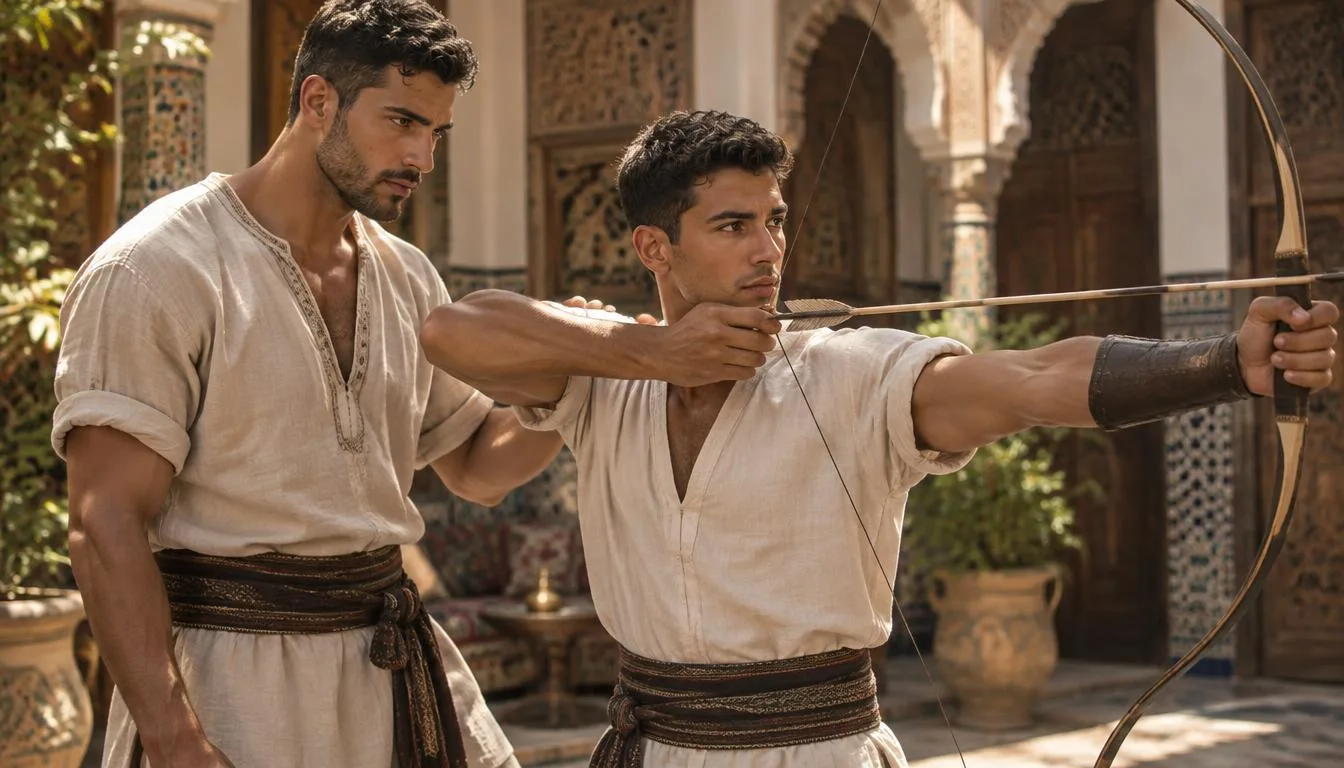
As in the saddlery, the instruments here are a library: each one teaches a movement. This page lists the archer’s kit according to the discipline described in the chapter on archery→, and names the workshop for each: the bowyer, the smith, the saddler.
The objects will be made in the house workshops, to the measure of whoever uses them. The forms shown here are the working basis from which the masters will start.
Wood, horn and sinew joined in one flexible body. It is the central instrument of the discipline, chosen to match the archer’s strength.
Braided, waxed fibre, always kept in pairs: one on the bow, one in the quiver. Wax protects it from damp and friction.
A straight, trued wooden shaft, natural feathers, a cut nock, an iron head. Weight and stiffness are matched to the bow.
Leather sewn by the house saddlery, worn at the side or on the back. It protects the feathers and keeps the arrows in order, ready to hand.
A leather ring or stall on the thumb that holds the string. The saddler will make it to fit each hand.
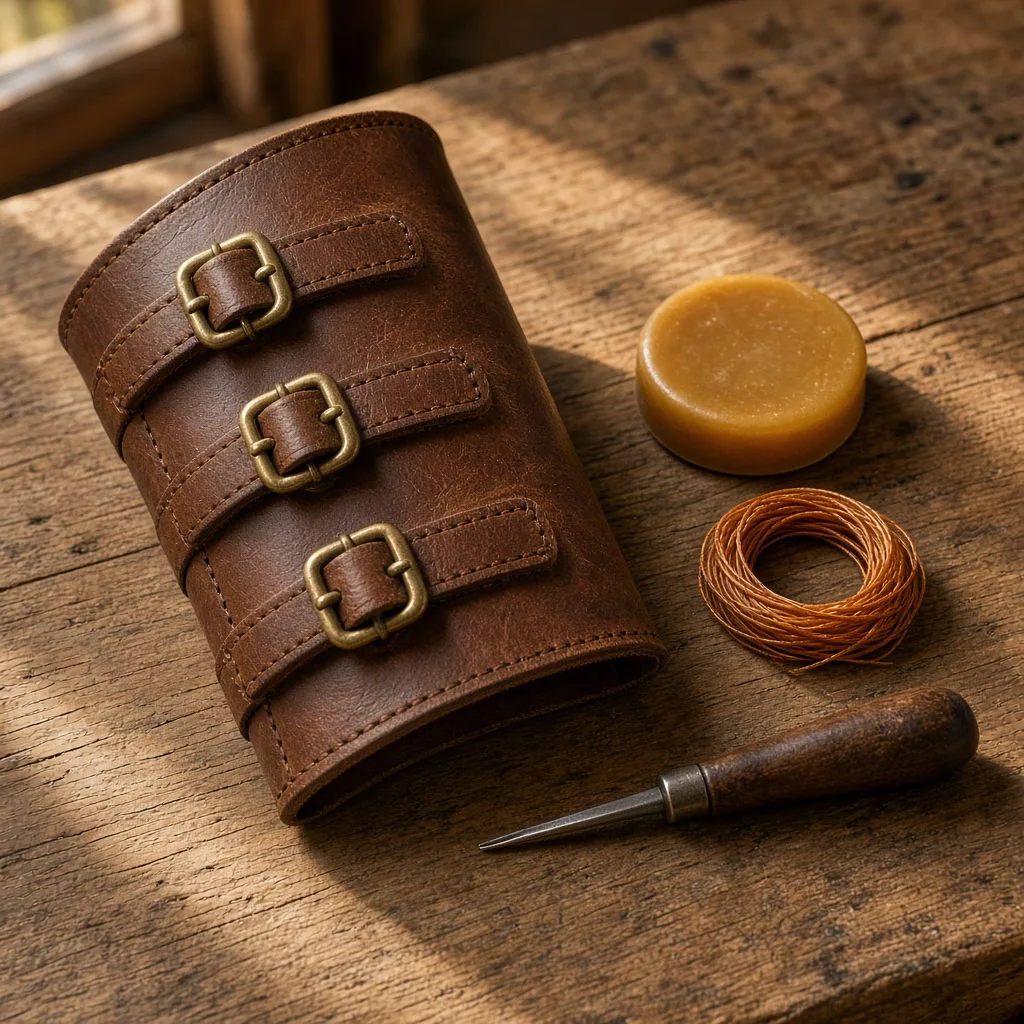
A leather band on the bow arm that shields it from the string at release and holds the sleeve in place.
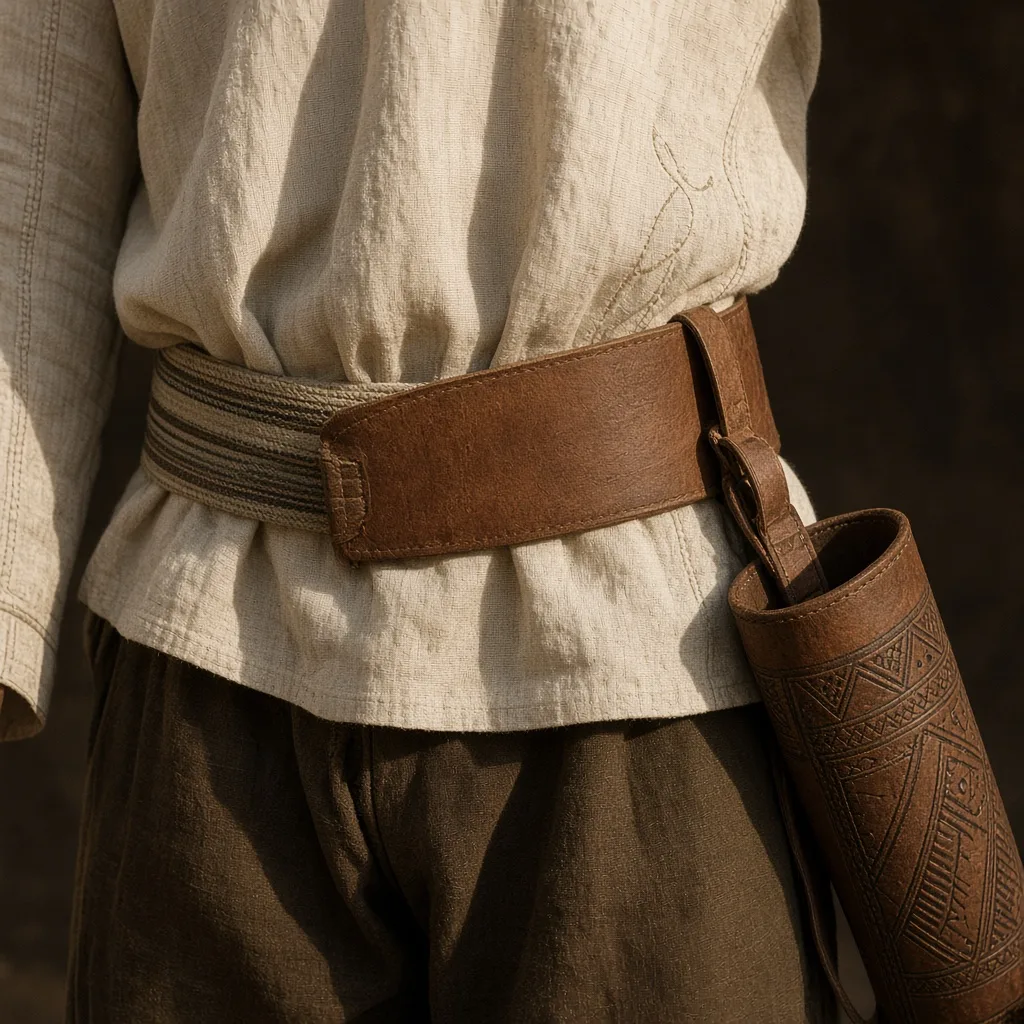
Loose, plain clothing, sleeves that clear the string, a belt that carries the quiver: dress made for the movement, like the attire of Al-Kiswa.
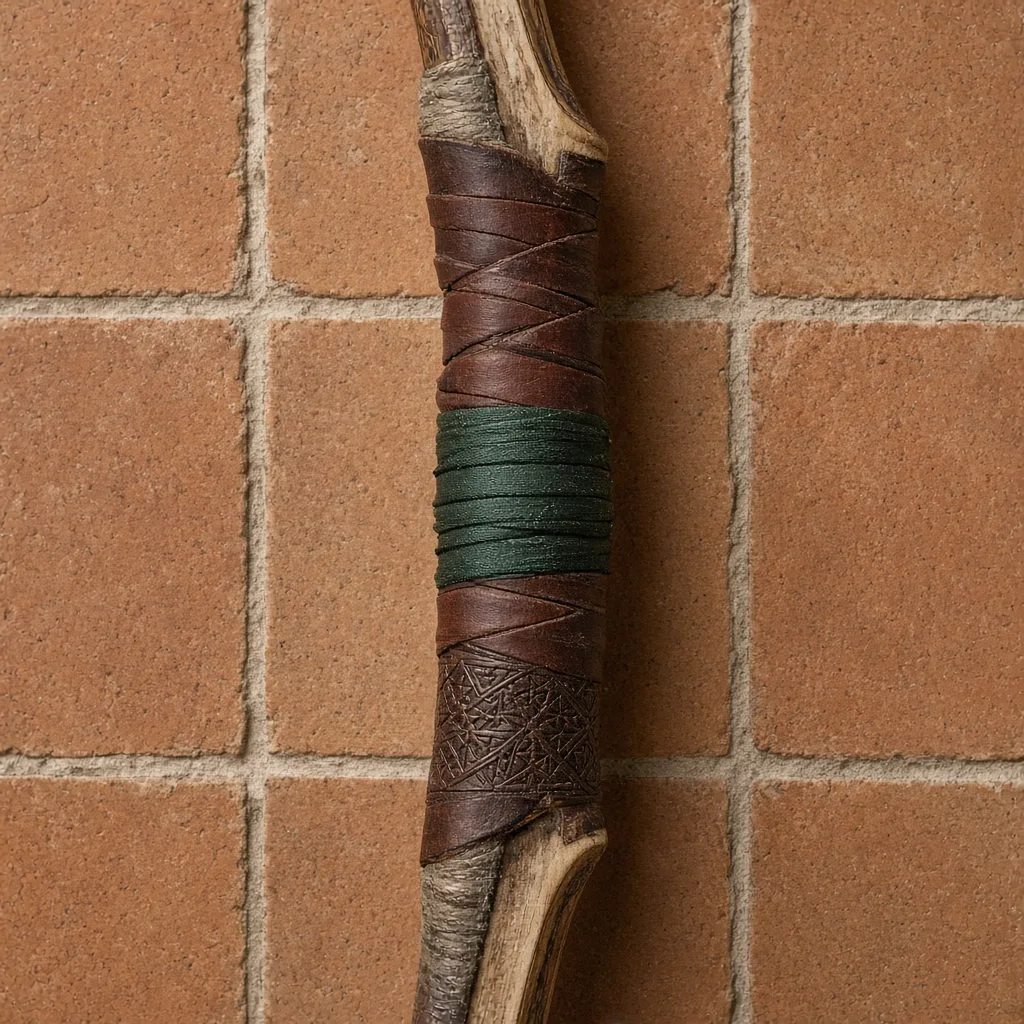
The grip is bound in leather, thread or silk: it gives the hand purchase and protects the wood. Each archer feels it differently, and the saddler rebinds it when it wears.
The quiver is born in the saddlery: the leather is cut, dry-tooled with the house patterns, sewn round a rigid base and finished with a reinforced mouth. Once made, it stands beside the bow, lies with the spare string, hangs on the armoury wall.
Bow in hand and quiver at his side, the archer stands upright, weight on both feet, shoulders loose. It is the posture every shot begins from, and the first the master corrects.
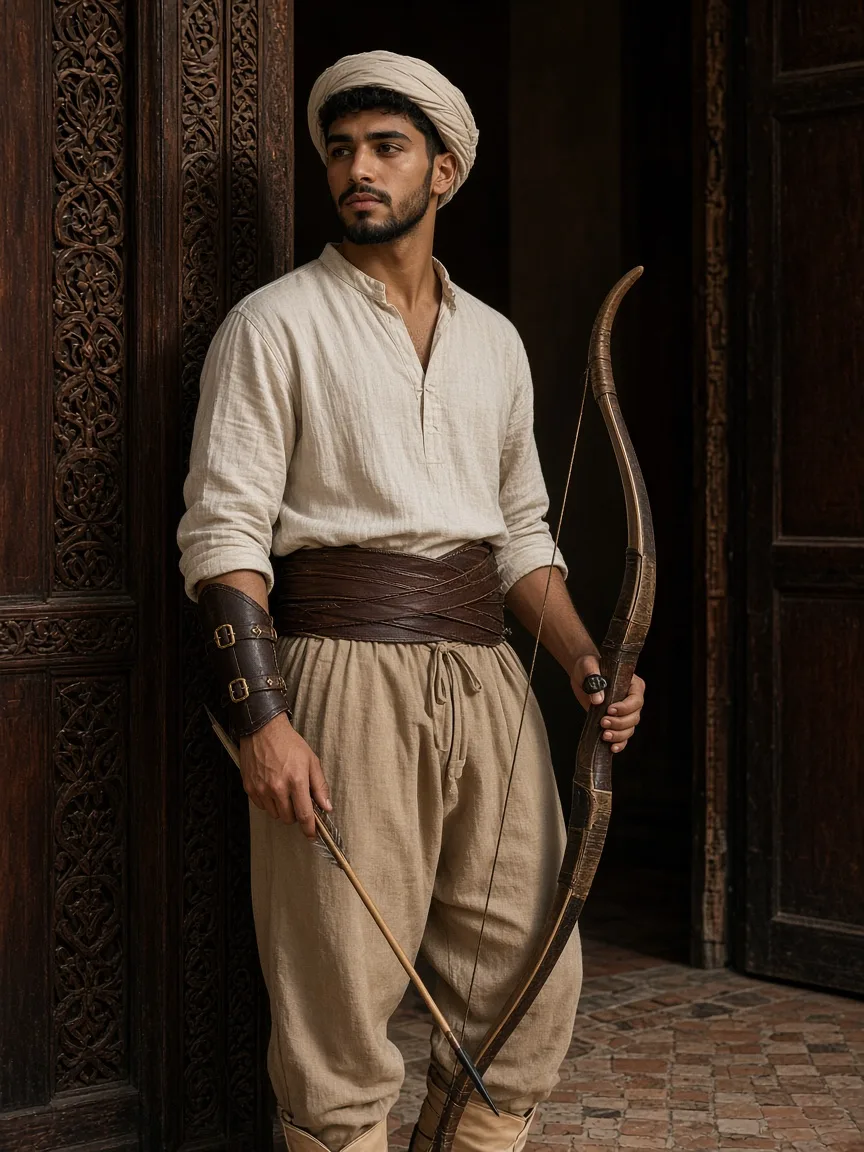
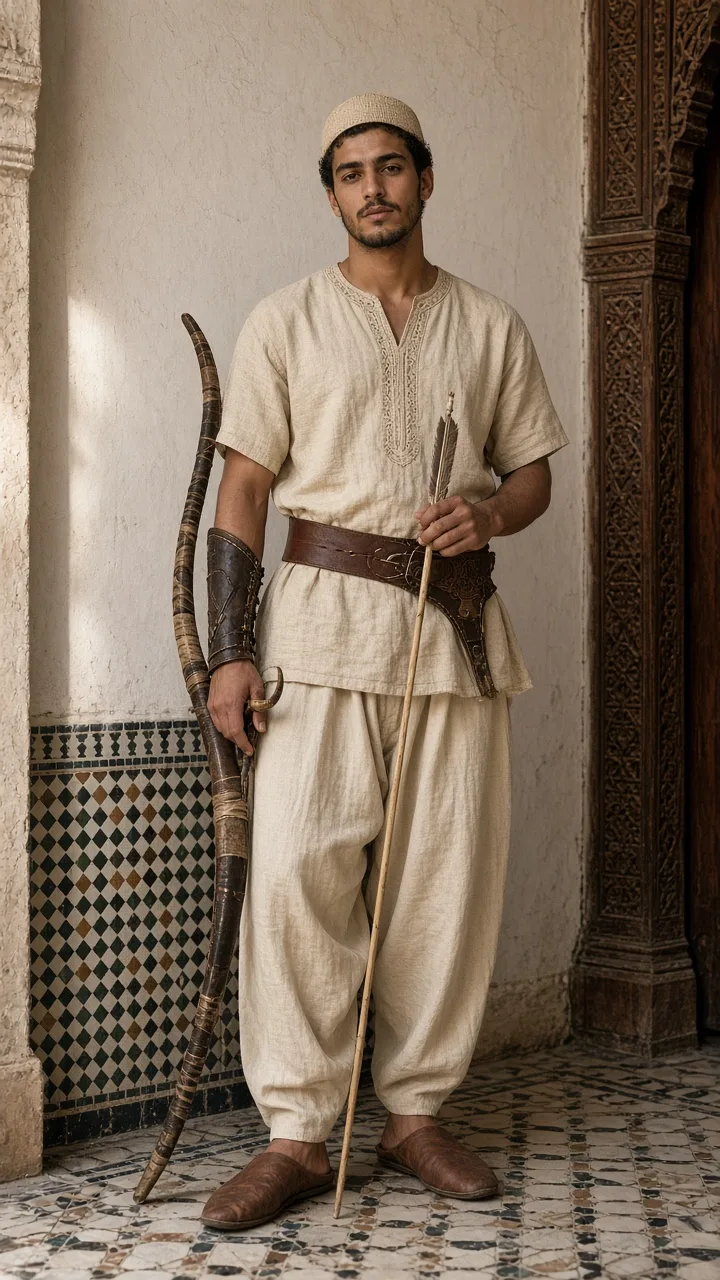
A composite bow fears damp and swings of heat: it rests unstrung in its leather case, away from the sun and from cold walls. The string is checked at every session and changed at the first sign of wear; arrows are inspected along the shaft, the feathers and the nock. The bowyer, the smith and the saddler will mend what breaks, and the pupil, watching them, learns how the things he uses are made.
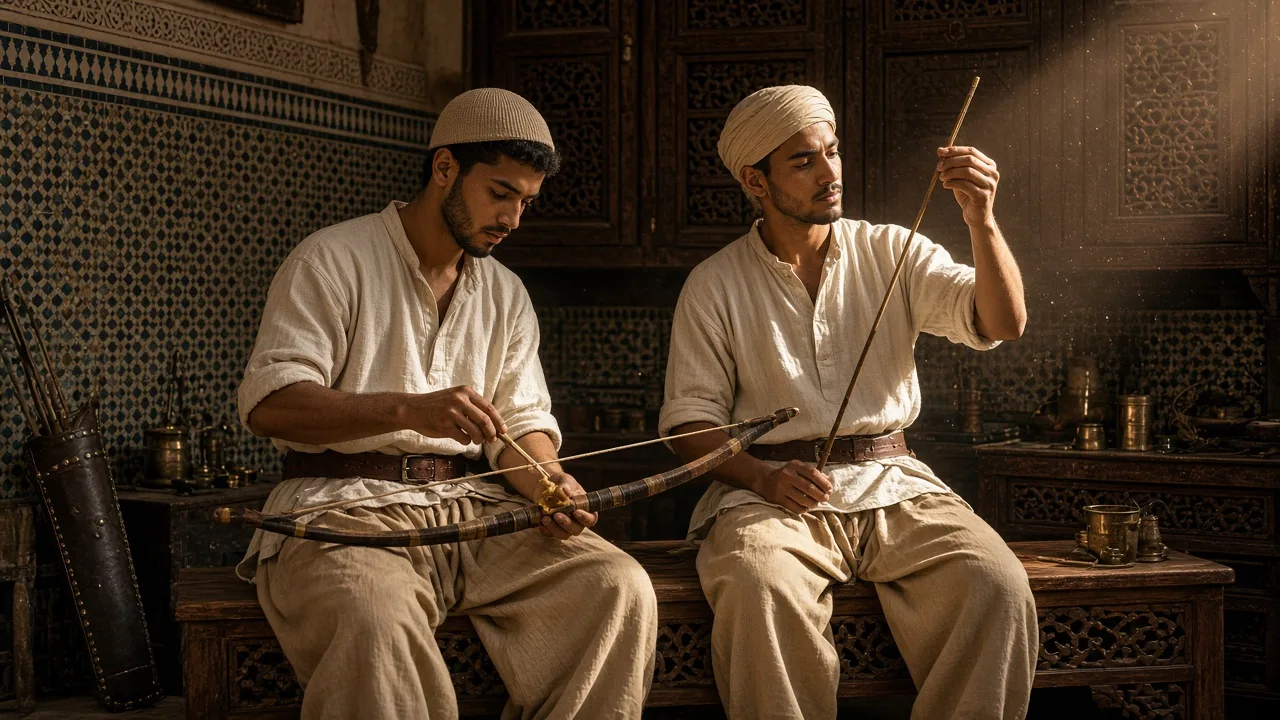
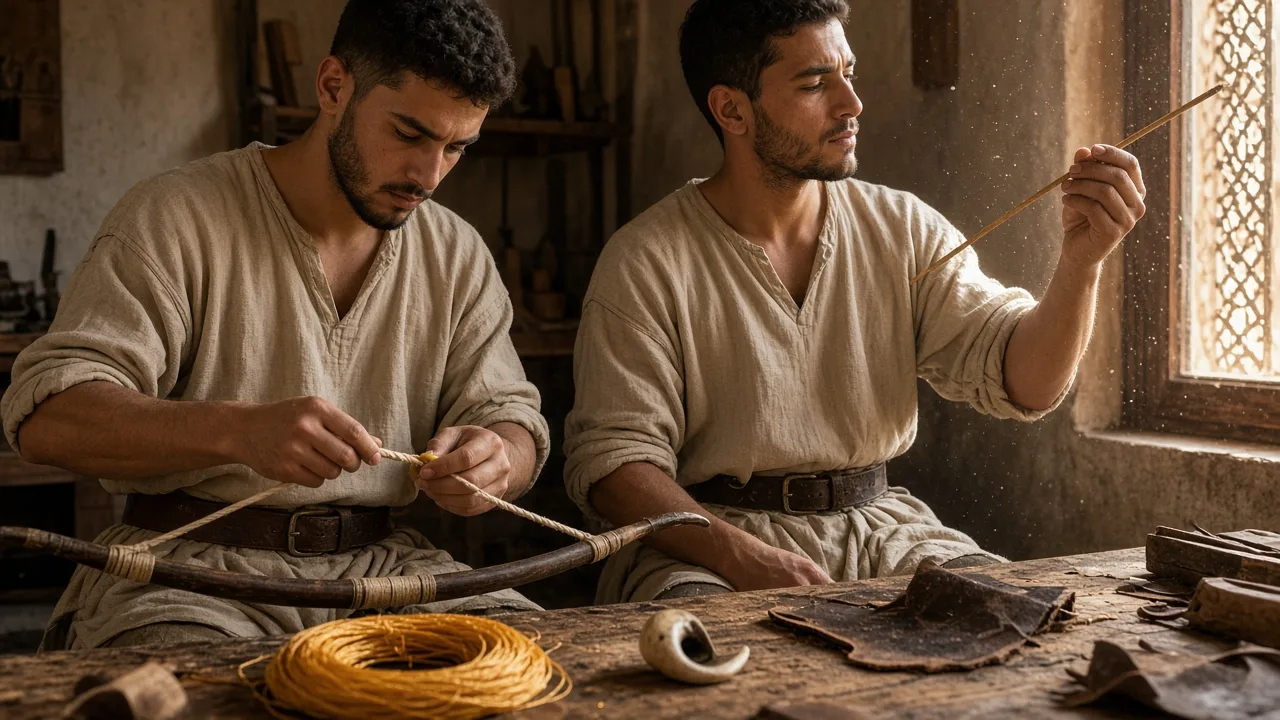
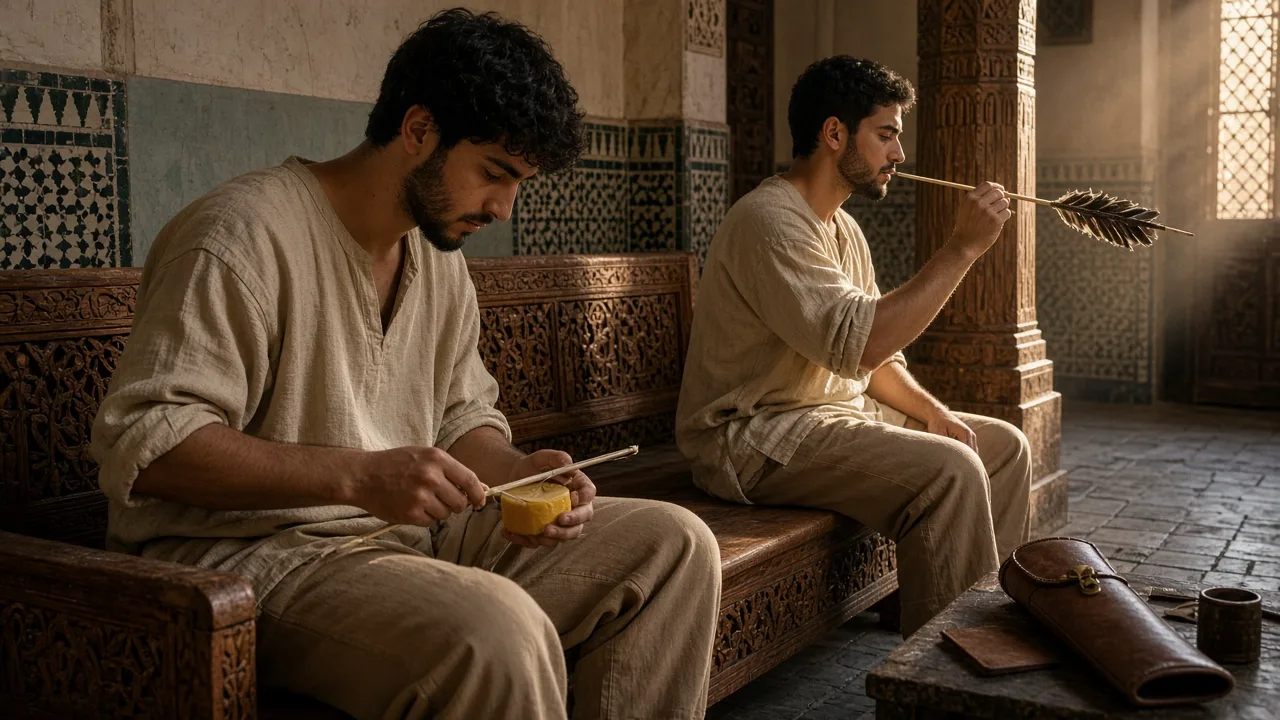
For the history of the discipline and the thirty-four points of the body, see the chapter on archery→.
The furusiyya · Horse riding · Al-Kiswa, the clothing · Falconry · The saddlery tools
The words of this page are in the common glossary; the works cited in the sources; the sister house is Al-Funduq aṣ-Ṣiqillī.