Hospitality and welcome
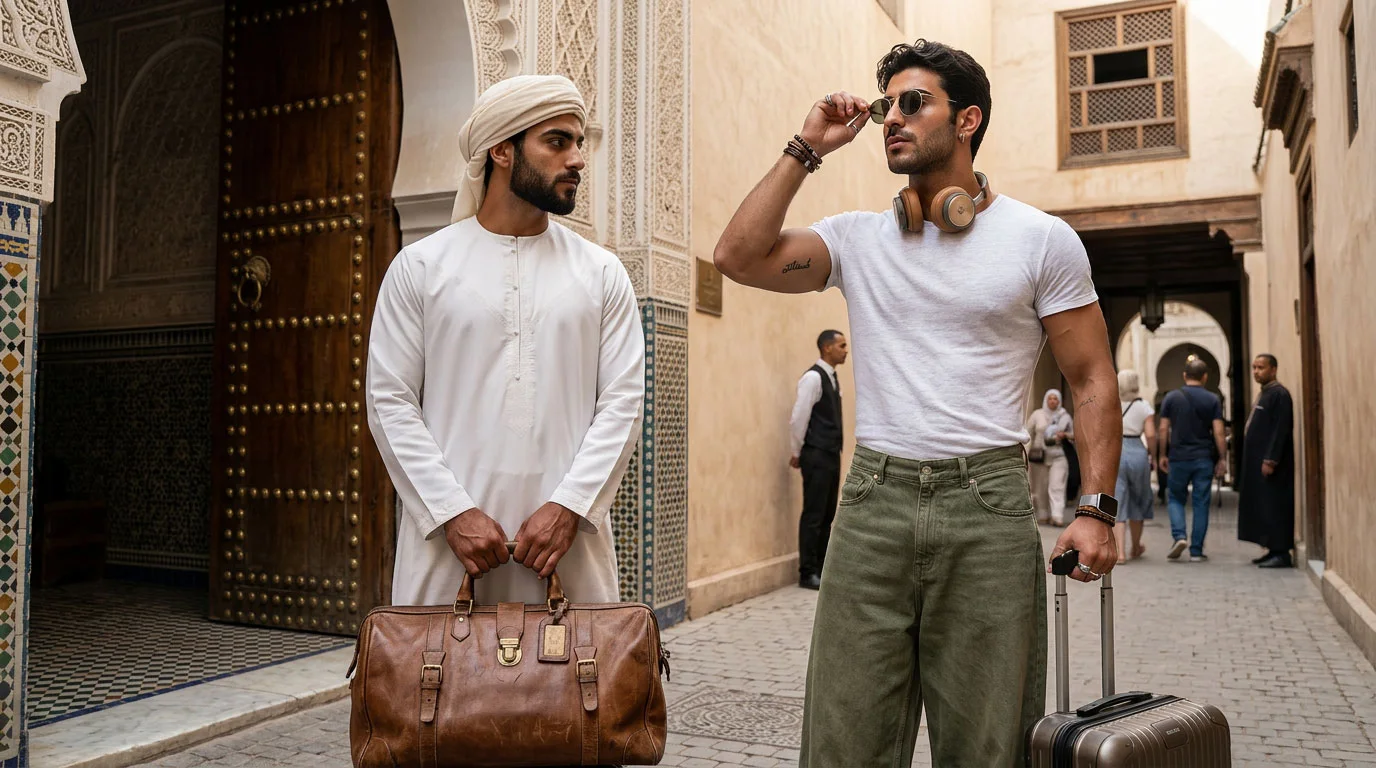
The threshold of the guest: a welcome without display, guided by the same rule as the houses.
The guest and the house
For Al-Munya, the guesthouse beside the houses, hospitality is a sacred duty towards those who share the house’s philosophy of life. To this duty answers the generosity of the nudamāʾ, who enjoy the hospitality of the house and support its ordinary running with their own means. The hours are those of the house, not those of the world outside.
مَنْ كَانَ يُؤْمِنُ بِاللَّهِ وَالْيَوْمِ الآخِرِ فَلْيُكْرِمْ ضَيْفَهُ
“Whoever believes in God and the Last Day, let him honour his guest.”
al-Bukhārī, Ṣaḥīḥ, no. 6018; Muslim, Ṣaḥīḥ, no. 47
What the guest finds
Two houses receive the guest: Dār al-Aṣl, without charge, those invited by the community; Dār al-Diyāfa, at their own expense, the nudamāʾ and their guests.
An independent and comfortable room, rooms in half-light for reading and meditation, a laden table to share with the other guests, a garden in which to rest, a space for prayer. Dār al-Aṣl and Dār al-Diyāfa alike are places where the beauty of the architecture and the furnishings is the outward expression of the inner beauty of an age-old civilisation.
Whoever comes to commission a work, to stay longer or for the sake of study can let the house know in advance: the house distinguishes the ways of staying, and for each it offers its guests an unexpected and singular excellence. The poor and the rich, the unknown and the public figure alike find themselves immersed in a space that makes them feel part of a greater order, one that transcends time.
The path in brief
- Door
- Guest of Al-Munya
- The thresholds
- Dār al-Aṣl · Dār al-Diyāfa
- Where
- Fez and Sicily
- Pages
- Dār al-Aṣl · Dār al-Diyāfa
Where to begin
For those who come for a retreat, to work in quiet, or to know a house at close quarters.
The stops
- Al-Munya, the guesthouse
The house beside the house: its own entrance and estate, the same emblem in Fez and in Sicily.
- The stay
Few guests at a time: it is the first thing the house offers.
- A short stay at the Riad
Three to seven nights in the rhythm of the house, with no commitment.
See also: Hospitality at the Funduq
- How one enters the Riad
The doors of the house: the short stay, the craft immersion, the residential path. One reads, writes and waits for the answer.
- The training stays
From two weeks to six months and more, for the sons of ruling families: the life of the young men of the community, to forge character and not to become masters.
- The Riad’s open evenings
The full moon in the garden, music, the majlis, storytelling: the evenings when the house opens its doors to the medina.
See also: At the Funduq