Music and chant
الآلة
Three disciplines of sound and speech — never a performance, always a transmission.
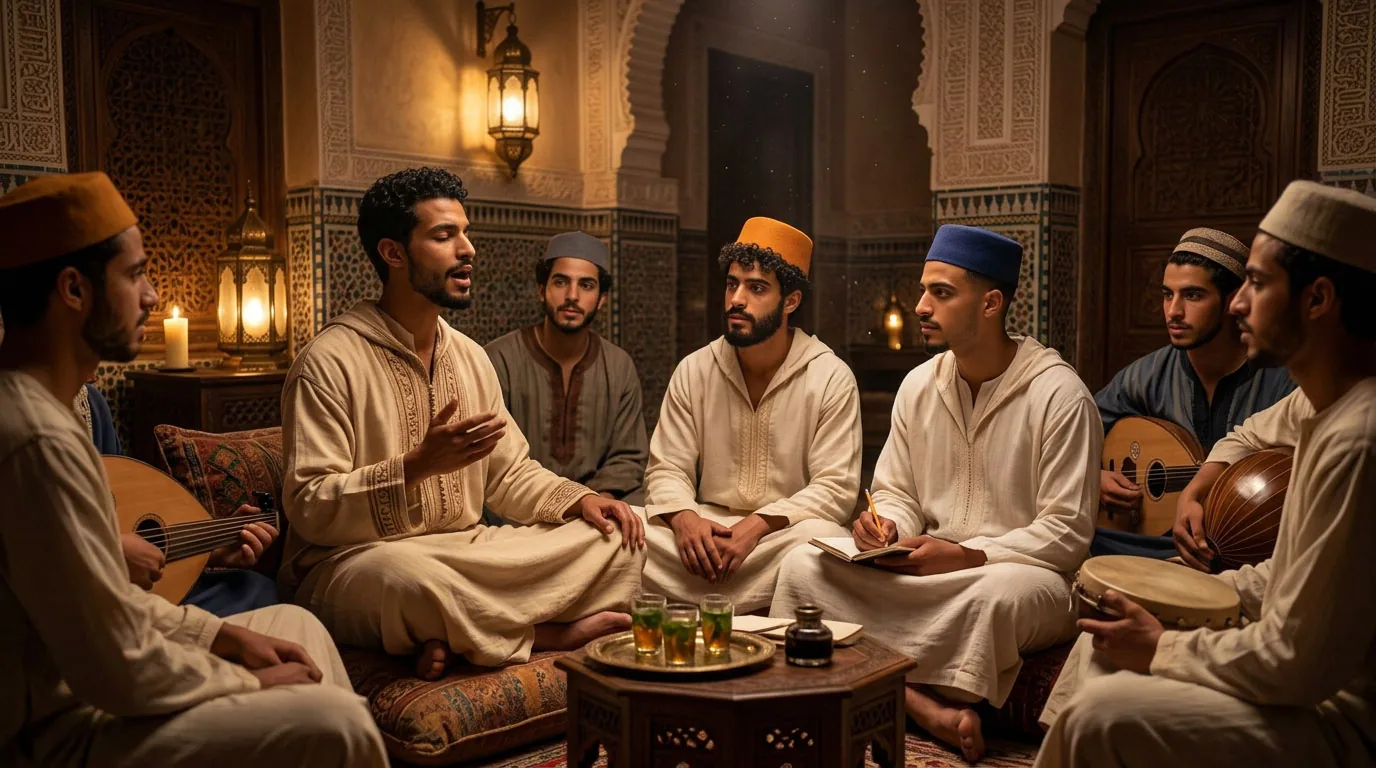
At Dar al-Hiraf, sound is learned like matter: through repetition, patience, and a master’s quiet authority. What follows brings together three disciplines of this kind — one governs learned sound, the second sung speech, the third listening. What is learned through the body in movement — the staff, the rhythm of the brotherhoods — is treated apart, in the choreutic discipline.
A TRADITION IN EXILE
Al-Âla — Andalusian music
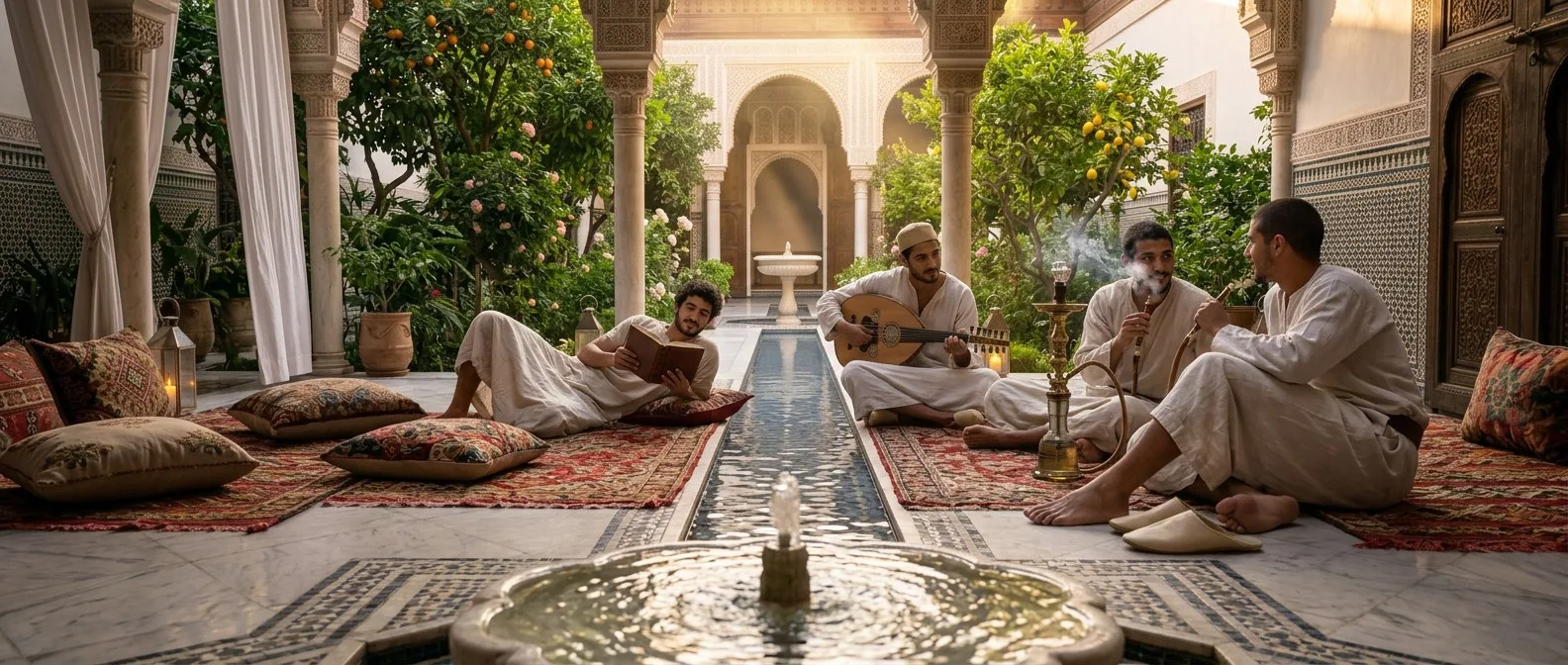
Andalusian music (al-âla, الآلة, literally “the instrument”) has its roots in the courts of al-Andalus, particularly Granada under the Nasrids. After 1492 and the fall of the last Muslim kingdom of Spain, Andalusian musicians went into exile in the cities of the Maghreb — Fez, Tetouan, Rabat — and transmitted their art there across the generations of masters who followed.
It is a chain of oral transmission, master to disciple, and not a fixed repertoire, running unbroken across five centuries.
LISTEN TO AN EXAMPLE OF AL-ÂLA
Hajj Abdelkrim Raïs, al-Brihi Orchestra of Fez — tushiya, an instrumental prelude.
The nouba
The nouba (نوبة) is the structuring form of al-âla: a long musical suite, organised into movements of increasing tempo, each with its own sung poems. Eleven nouba survive today out of the twenty-four that oral tradition reports as having originally existed — a loss that the masters of Fez regard as one of the very reasons to preserve what remains.
LISTEN TO AN EXAMPLE OF NOUBA
Hajj Abdelkrim Raïs, al-Brihi Orchestra of Fez — nouba al-Ḥijāz al-Kabīr, a ṣanʿa of the basīṭ.
The instruments
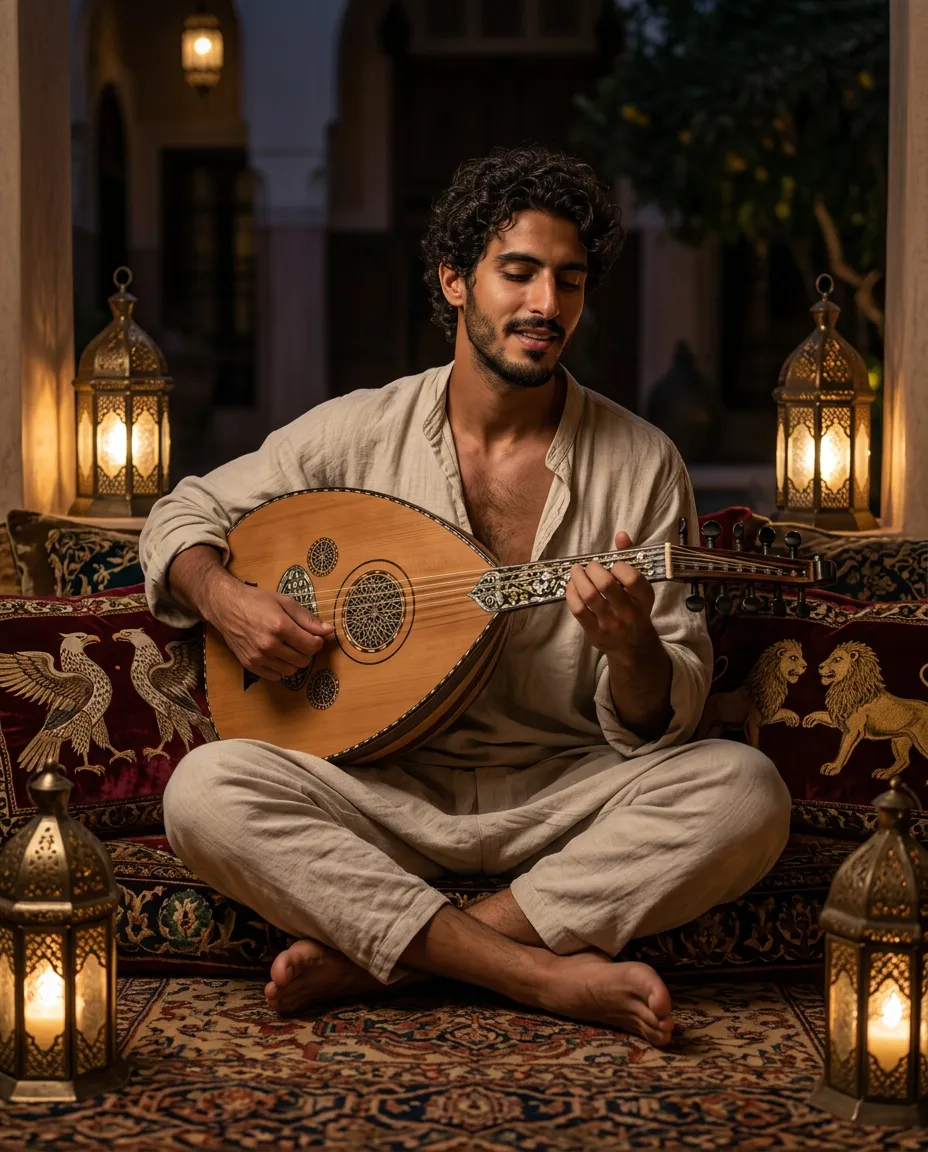
عود
The short-necked, fretless Arab lute, the harmonic heart of the ensemble.
LISTEN TO AN EXAMPLE OF OUD
Saïd Chraïbi — a taqsim in maqām ḥijāz, from Holm bi Fès.
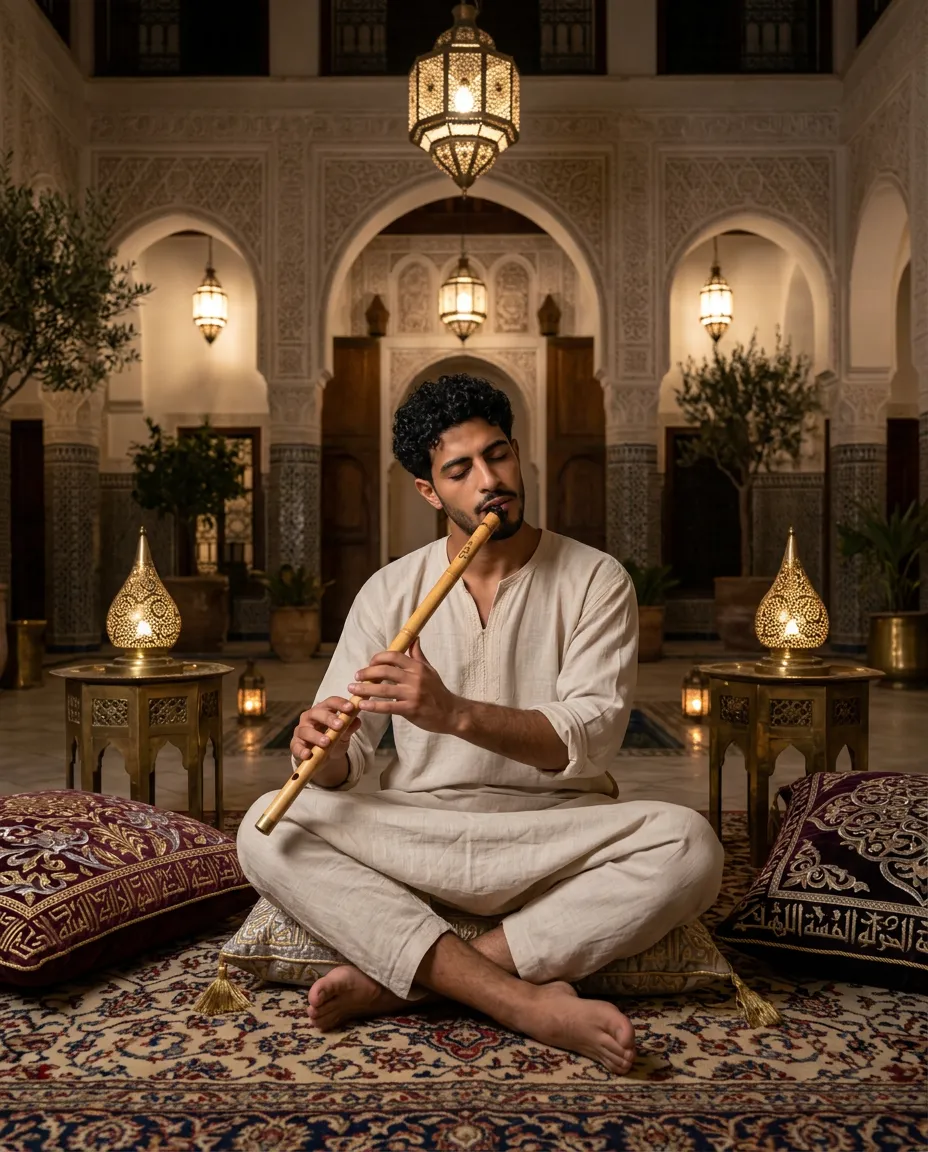
ناي
The oblique reed flute, with its deep, veiled sound, long associated with spiritual as much as secular expression.
LISTEN TO AN EXAMPLE OF NEY
Sufi Music Ensemble — a nāy taqsim.
The voice — carried, never forced; the nouba is sung as much as it is played, and the lead singer (munshid, منشد) carries the poem as much as the melody.
شَرِبْنَا عَلَى ذِكْرِ الْحَبِيبِ مُدَامَةً سَكِرْنَا بِهَا مِنْ قَبْلِ أَنْ يُخْلَقَ الْكَرْمُ
“In remembrance of the Beloved we drank a wine; we were drunk with it before the vine was created.”
Ibn al-Farid — 12th–13th century
This verse, one of the most celebrated in mystical Arabic poetry, belongs to the spiritual repertoire that the Andalusian tradition made its own: the wine is the intoxication of the divine presence, and not that of the cup.
DISCIPLINE OF SUNG SPEECH
Malhun — the word that is transmitted
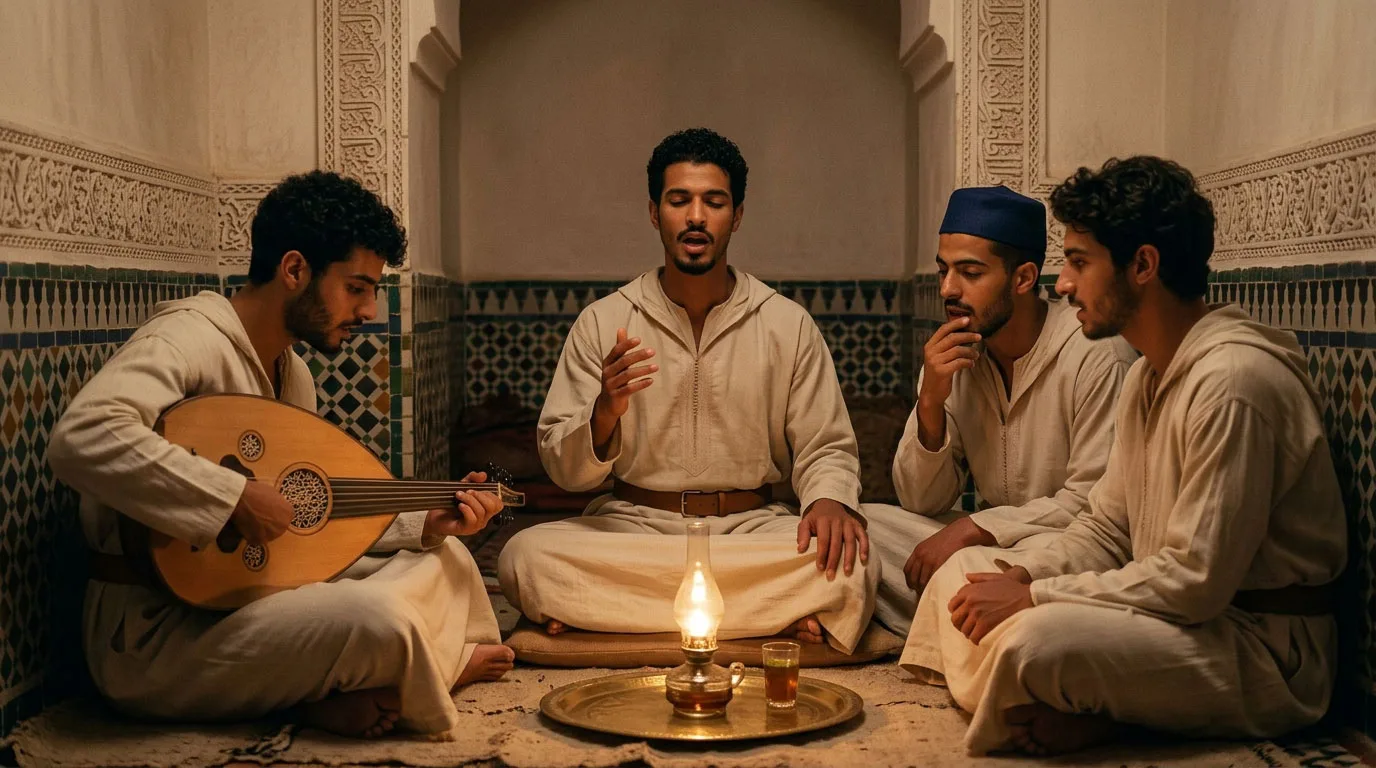
Born in the cities of Morocco — Tafilalt, Marrakech, Fez, Meknes, Salé — and recognised by UNESCO in 2023 as intangible cultural heritage of humanity, malhun is an art of rhythmic, sung speech, historically bound to the world of the craft guilds of the medinas. A shaykh al-malhun passes on a repertoire to a handful of disciples, following the same rhythm of apprenticeship as that of zellige or calligraphy: the memory of the gesture passing from one mouth to another, from one generation to the next.
It is this direct kinship with the world of the workshop that makes malhun one of the most natural transmissions at Dar al-Hiraf.
The malhun repertoire is built around the qasida (قصيدة) — long poems, often running to several dozen verses, sung a cappella and then taken up by a small ensemble (violin, ʿūd, percussion). Themes range from mystical love to praise of the Prophet, passing through very concrete evocations of the craft world — tools, gestures, materials. Among the great names handed down from generation to generation is Sidi Qaddour al-ʿAlami (18th century), still sung today in Fez and Meknes.
LISTEN TO AN EXAMPLE OF MALHUN
Hajj Houcine Toulali — malhun of Meknes; a qasida of Sidi Qaddour al-ʿAlami.
DISCIPLINE OF LISTENING
Sama — the listening that gathers
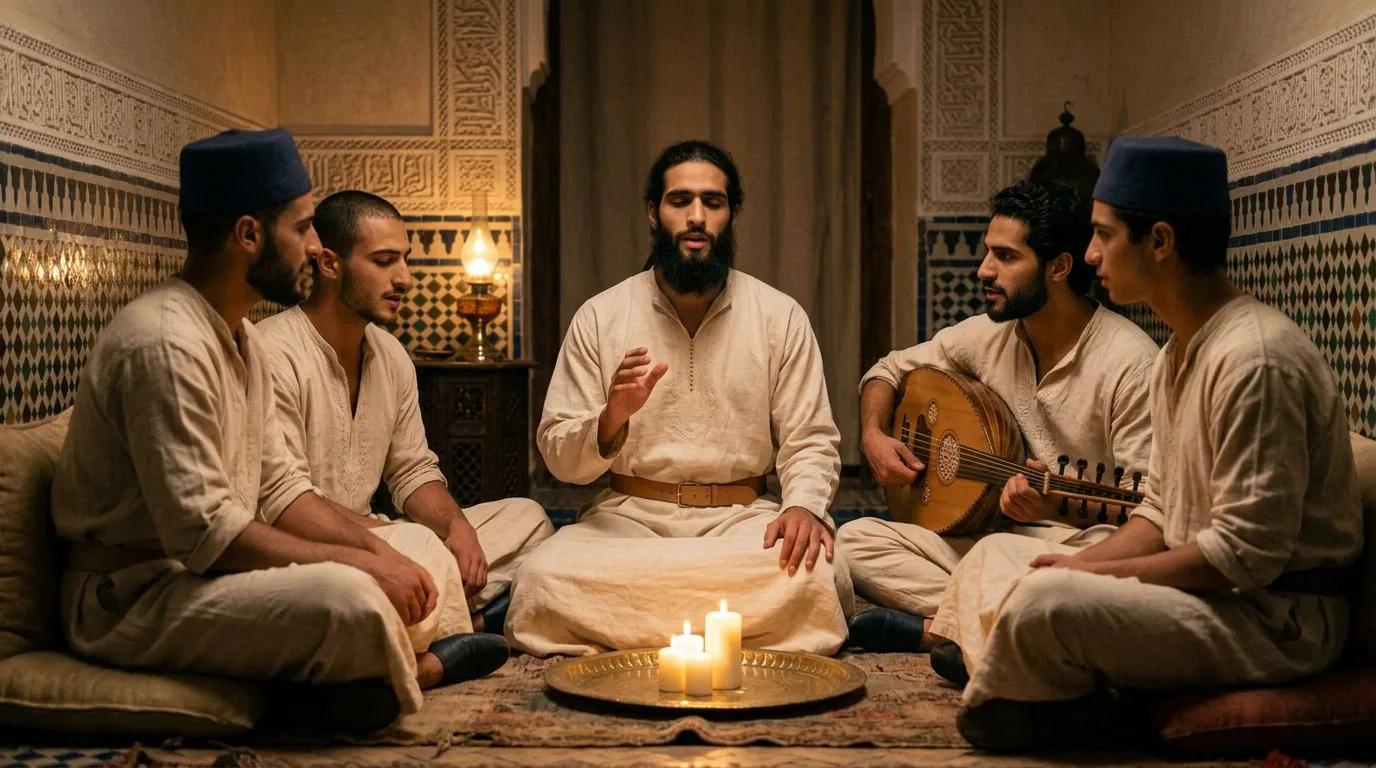
Samāʿ (سماع) — literally “listening” — designates, in the Sufi tradition, the gathered audition of chants and mystical poetry, practised to free the heart from the dispersion of the world. In the Maghreb, this vigil takes the name of hadra (حضرة): collective dhikr, often in a circle, carried by the bendir and sometimes the nāy, with a measured swaying of the body — quite distinct from the rotation of the Mevlevi dervishes, an order born in Konya, in Anatolia, foreign to the tradition of the Riad.
Samāʿ never won unanimous approval: the Mālikī jurists, the dominant school in Morocco, long remained cautious towards instrumental music in worship, whereas al-Ghazālī, in his Iḥyāʾ ʿulūm al-dīn (إحياء علوم الدين), made one of the most influential defences of it — on condition that the intention remain pure. It is in this measured spirit, never in excess, that certain evening gatherings of the house close with a silent listening.
LISTEN TO AN EXAMPLE OF SAMĀʿ
Cofradía Al-Shushtarí, Omar Metioui — dhikr and samāʿ, 1999.
WHY AT DAR AL-HIRAF
Transmission, not performance
These three disciplines share the same logic as zellige or calligraphy: a master, a repeated gesture — a melodic phrase, a verse, an act of listening — until the voice or the ear possesses it without thinking. Never a performance given to an audience; a knowledge transmitted in the silence of the workshop or the recollection of an evening gathering.
The words of this page are in the common glossary; the works cited in the sources; the sister house is Al-Funduq aṣ-Ṣiqillī.