Futuwwa
الفتوة
The ideal that gives form and direction to Riad Al-Uns.
THE NAME AND ITS MEANING
The fata and his qualities
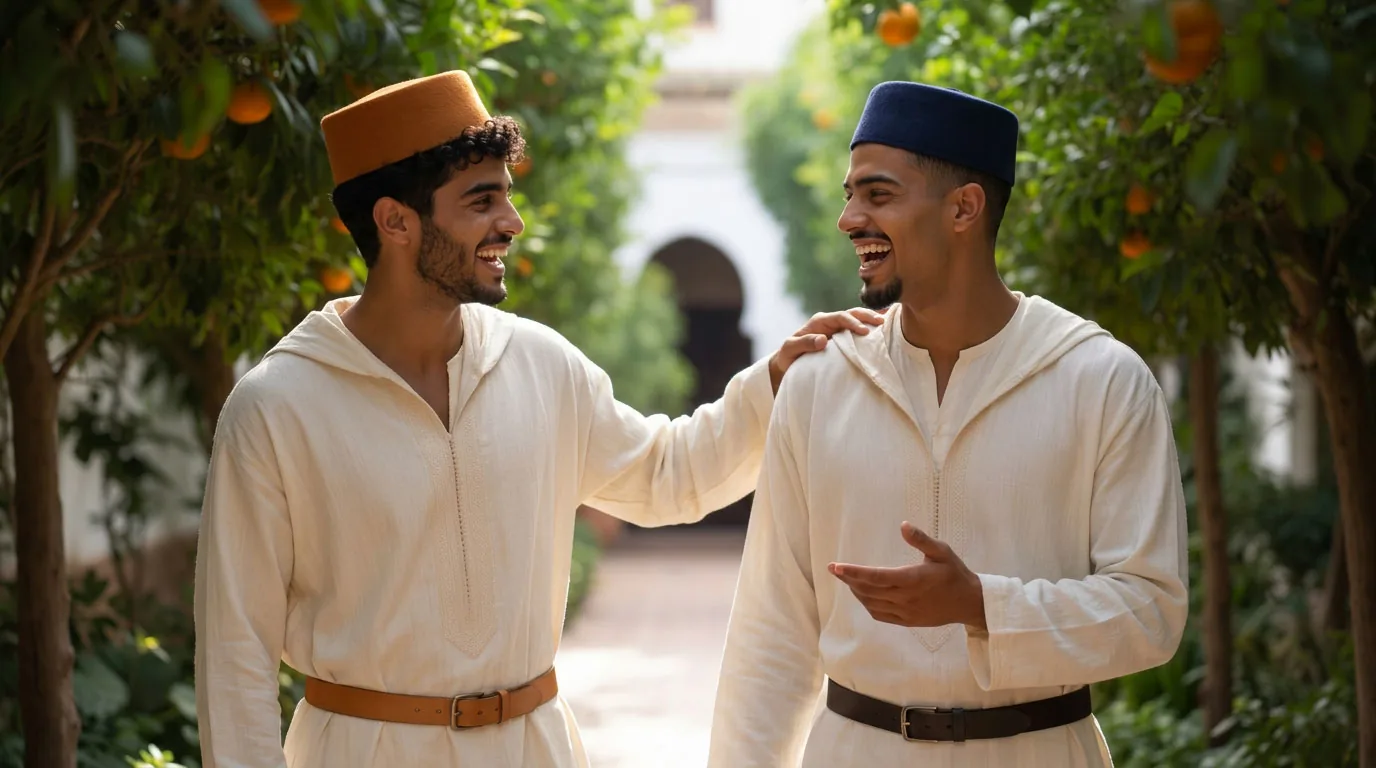
Fatā (فتى) means “young man”. Futuwwa is the quality of the fatā — not youth in the sense of age, but an inner disposition: the capacity to be generous to the point of self-sacrifice, loyal unto death, courageous without vanity, master of oneself before being master of others.
In the classical tradition, the Futuwwa is a path and not a feeling — with its rules, its degrees, its signs, an ethics of body and speech, and an initiation.
ROOTS
A history, not a legend
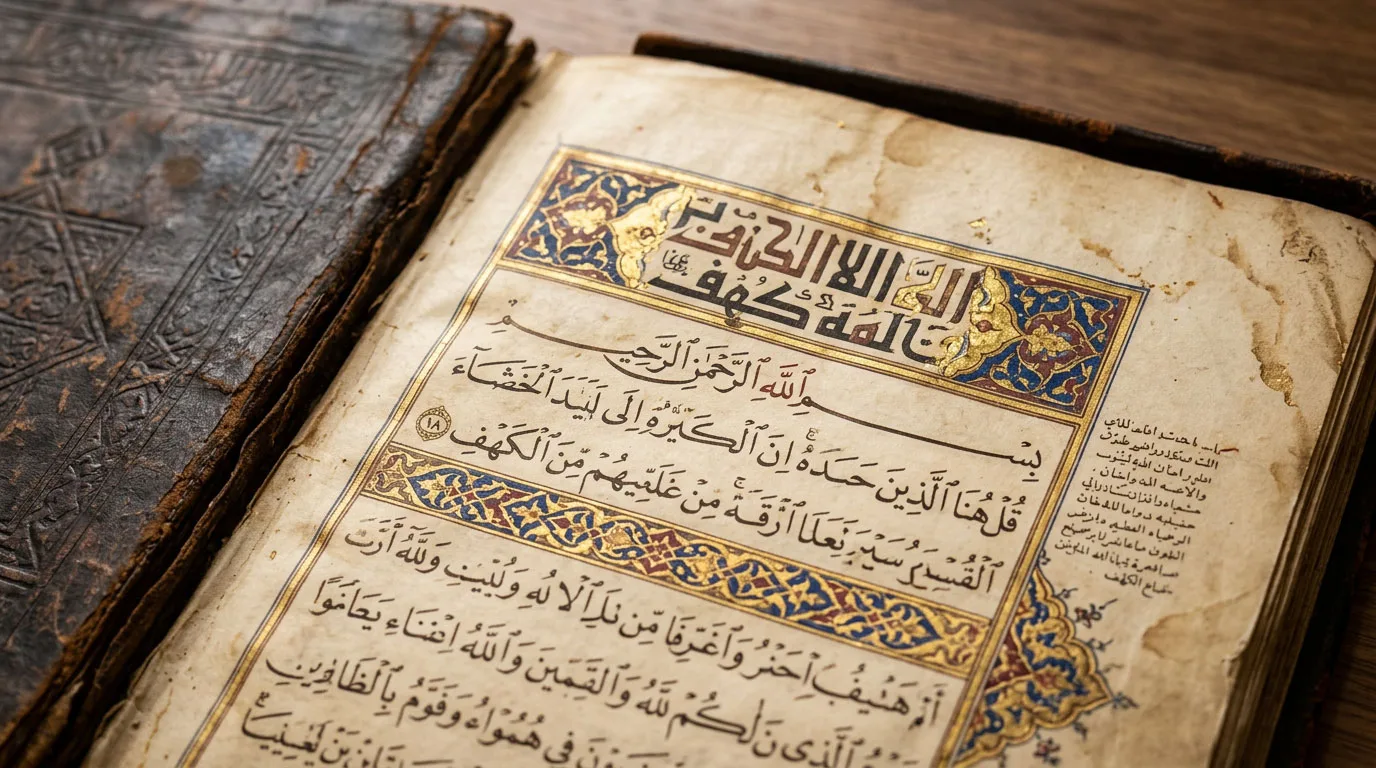
The Futuwwa arose in the urban Abbasid milieu and developed between the 10th and 13th centuries. It organised itself into brotherhoods of young men — often craftsmen, sometimes soldiers or urban guards — bound by a pact of fraternity and a rigorous code of conduct.
The caliph al-Nāṣir (late 12th – early 13th century) sought to institutionalise it across the whole Islamic world. Manuals of Futuwwa appeared, describing the required virtues, the rules of common life, the master–disciple relationship, the outward signs — belt, garment, the way of tying the shadd (شد) — and the degrees of commitment.
Many of these brotherhoods were linked to the craft guilds (asnāf, أصناف). The craft was never only a technique, but the vehicle for transmitting an ethic. Learning to work wood, metal or cloth meant learning to answer — for a gesture, for a given word, for a responsibility.
The Futuwwa is in intimate dialogue with Sufism, without merging into it. It is more earthly, more oriented towards action and service in the city. The ideal fatā is one who protects, who gives, who does not betray, who knows how to contain his own strength.
THE VIRTUES
A stable core
The classical texts insist on six requirements. Some — loyalty, courage, discipline — are developed in greater depth, through lived experience and companionship, in Brotherhood and uprightness. Here is the full doctrinal core:
سخاء
Sakha
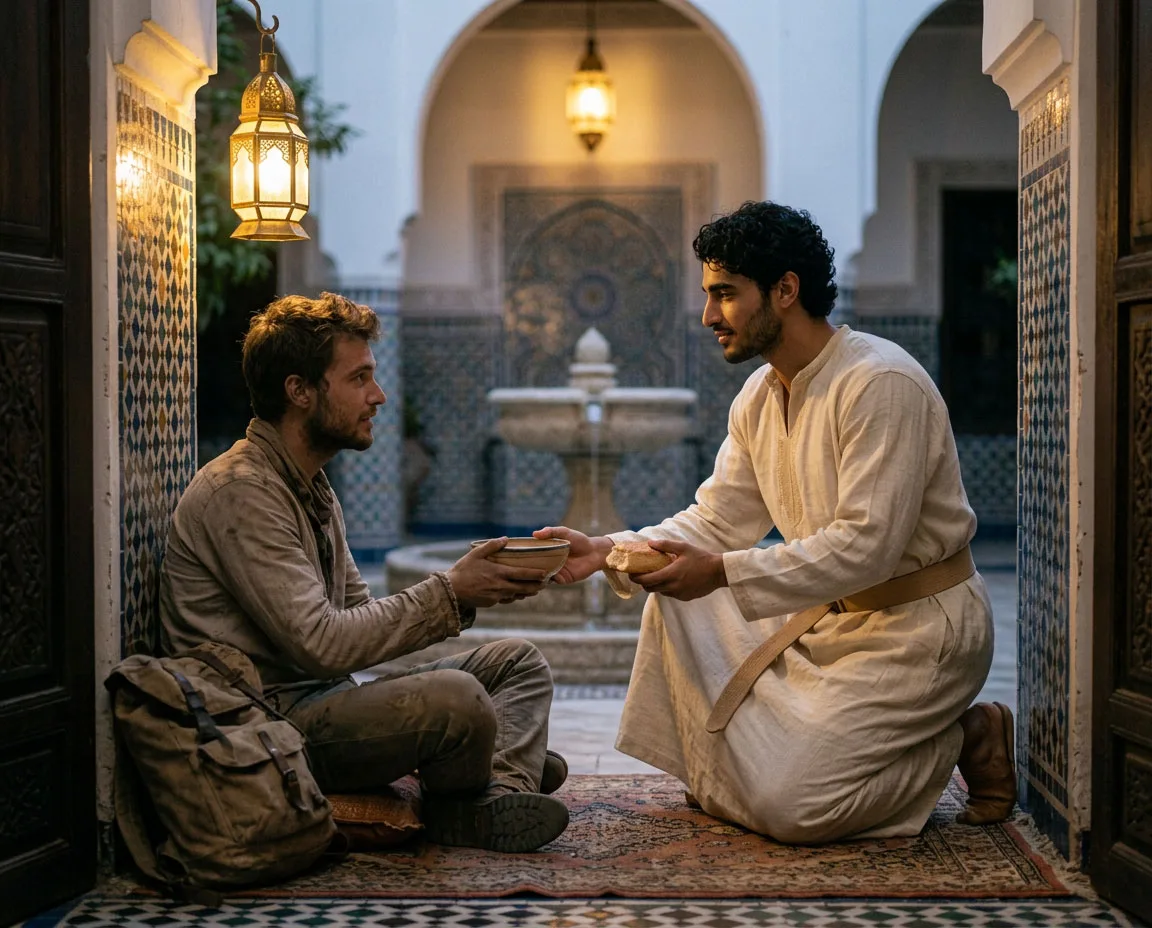
Sakhāʾ — radical generosity: giving before being asked, giving what costs. In the pre-Islamic Arab tradition, Ḥātim al-Ṭāʾī became its absolute embodiment — so much so that the expression akram min Ḥātim (أكرم من حاتم, “more generous than Ḥātim”) remains, to this day, the ultimate measure of munificence in the Arabic language.
وفاء
Wafa
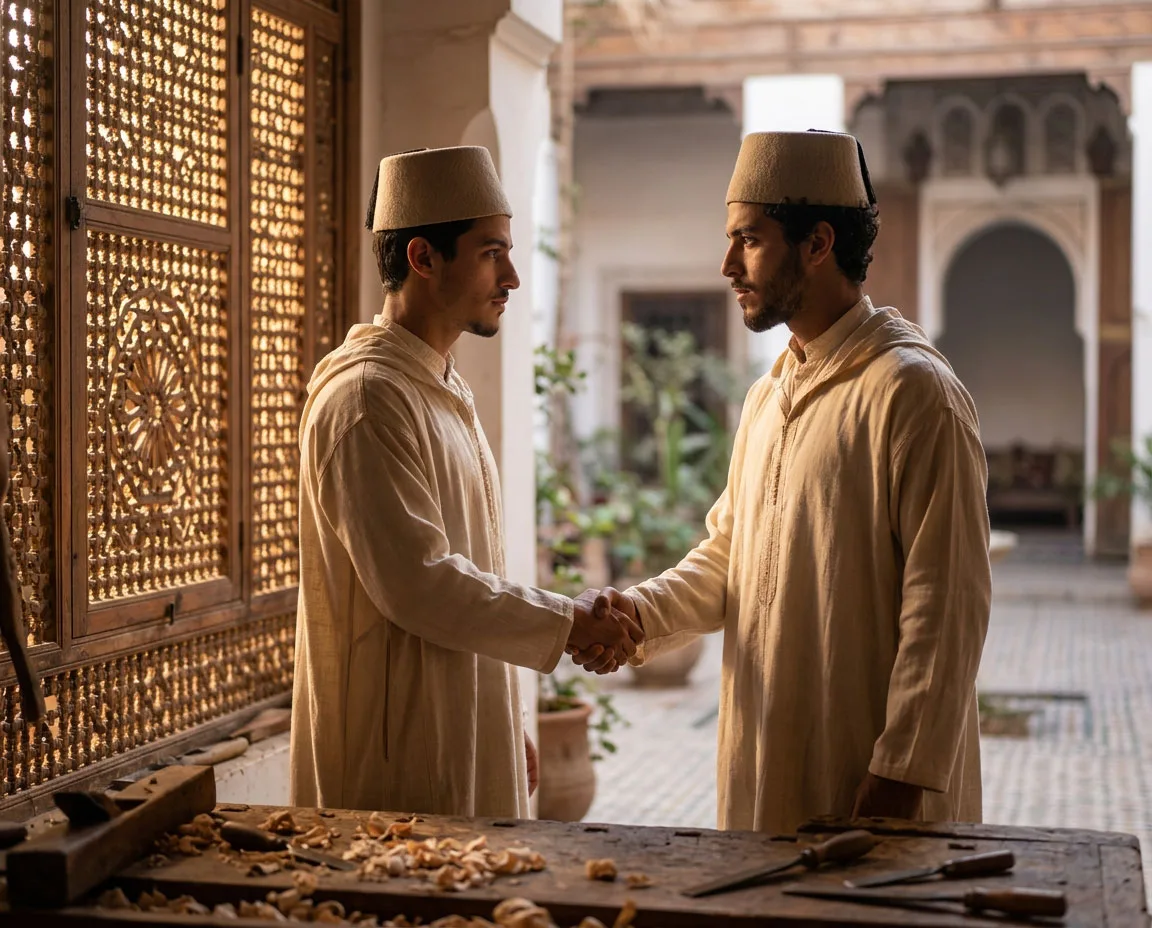
Wafāʾ — fidelity to the given word, to the master, to the brothers, to the pact — until it costs, and especially then. The pre-Islamic poet al-Samawʾal ibn ʿĀdiyā, who preferred to watch his own son die rather than betray a trust placed in his keeping, bequeathed to the Arabic language the expression awfā min al-Samawʾal (أوفى من السموأل, “more faithful than al-Samawʾal”). In one of his most quoted verses:
إذ المَرْءُ لَمْ يَدْنَسْ مِنَ اللُّؤْمِ عِرْضُهُ فَكُلُّ رِدَاءٍ يَرْتَدِيهِ جَمِيلُ
“When a man’s honour is unstained by any baseness, every garment he wears becomes him.”
شجاعة
Shajaa
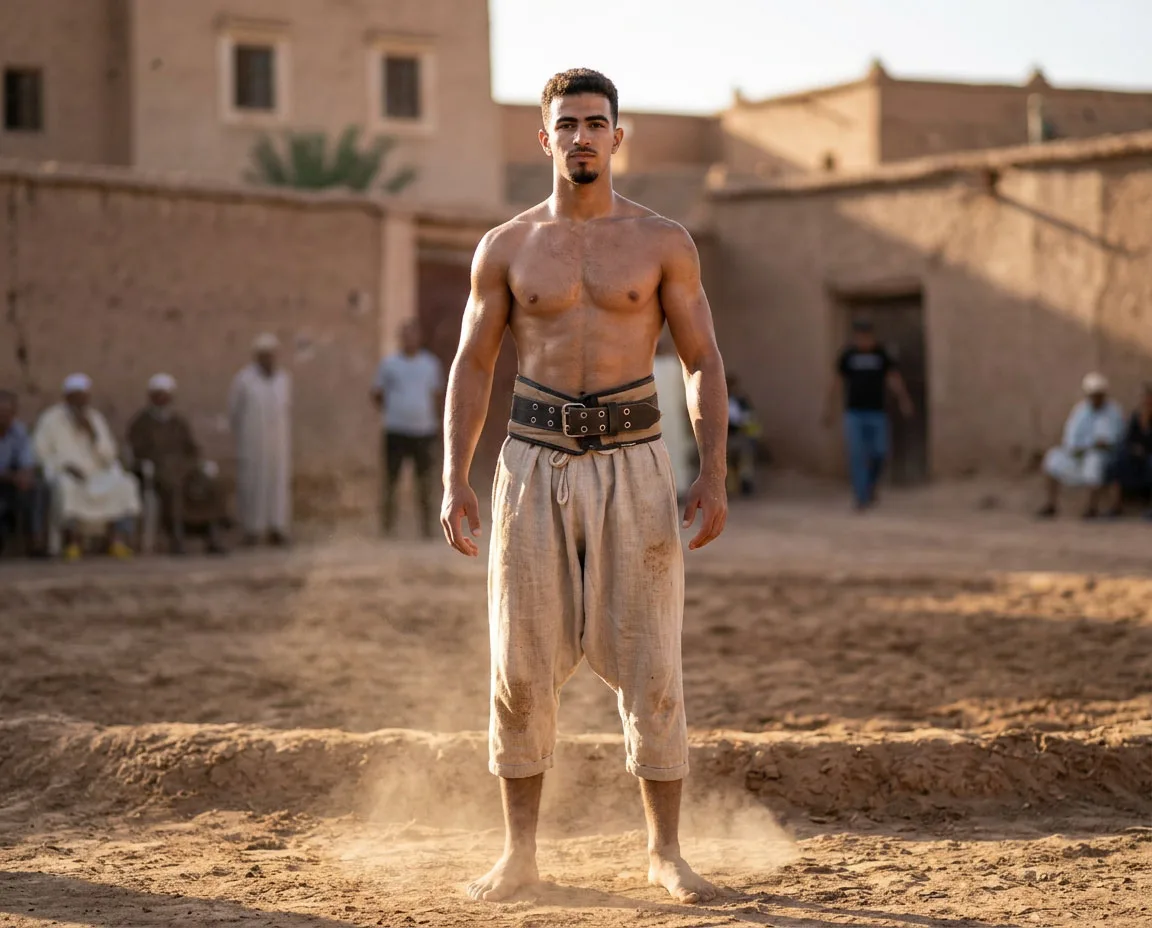
Shajāʿa — courage, not only in the face of danger but in self-mastery — the capacity to contain one’s own strength rather than deploy it without measure. Al-Mutanabbī put it thus, in a verse that became proverbial:
عَلى قَدْرِ أَهْلِ العَزْمِ تَأْتِي العَزَائِمُ
“Resolutions rise to the measure of those who hold them.”
صدق
Sidq
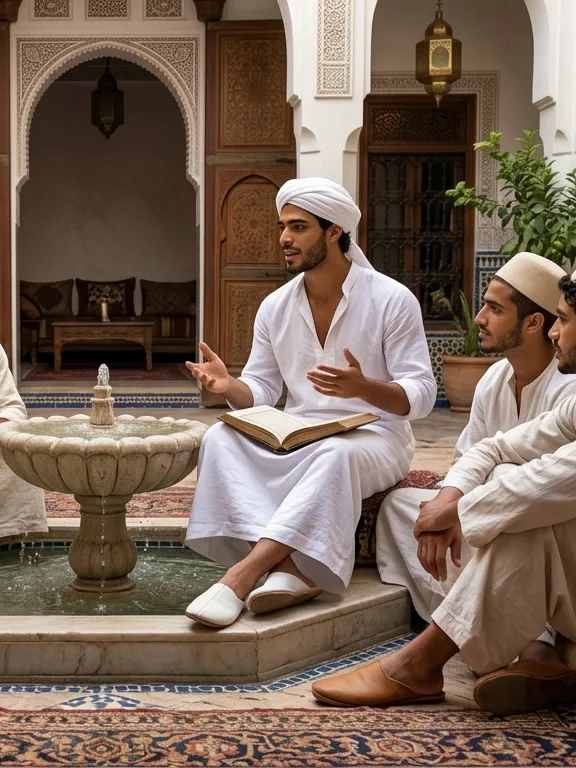
Ṣidq — truthfulness: word and deed coincide, without discrepancy, without exception of circumstance. An authentic hadith (reported by Bukhārī and Muslim) states it plainly:
عَلَيْكُمْ بِالصِّدْقِ فَإِنَّ الصِّدْقَ يَهْدِي إِلَى البِرِّ
“Hold to truthfulness, for truthfulness leads to righteousness.”
النفس
Mastery of the nafs
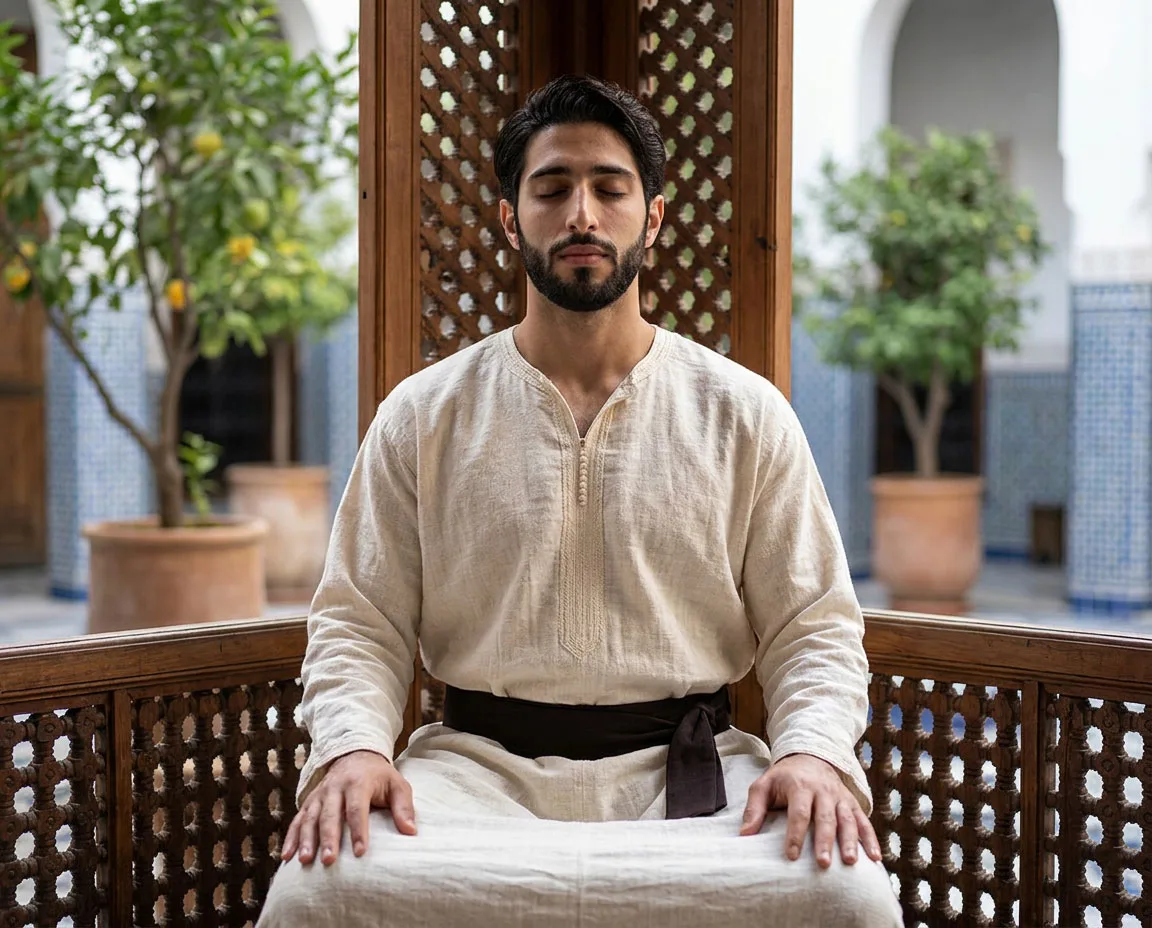
Strength without self-mastery is nothing but violence. The nafs (النفس) — the lower soul, the seat of impulses and pride — is what the fatā learns to govern before claiming to govern anything else: his workshop, his household, one day perhaps a family.
الخدمة
Service
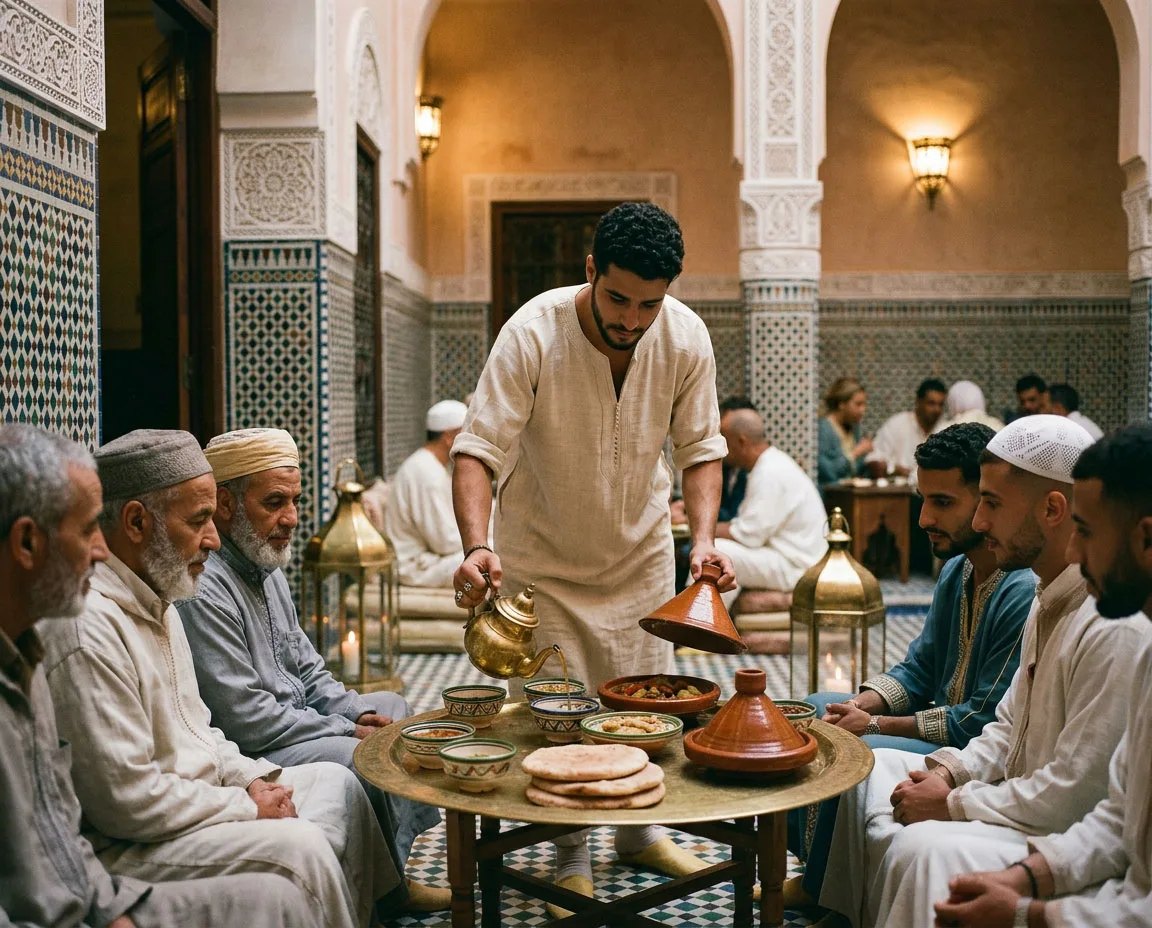
The fatā exists for others before existing for himself. This is an order of priorities rather than a renunciation of self: competence, strength and generosity have meaning only when placed in the service of something greater than oneself.
These virtues are not abstract “values”. They are exercised daily: at table, in work, in prayer, in silence, in the way one speaks and walks.
WHAT CAN BE SEEN
Initiation and signs
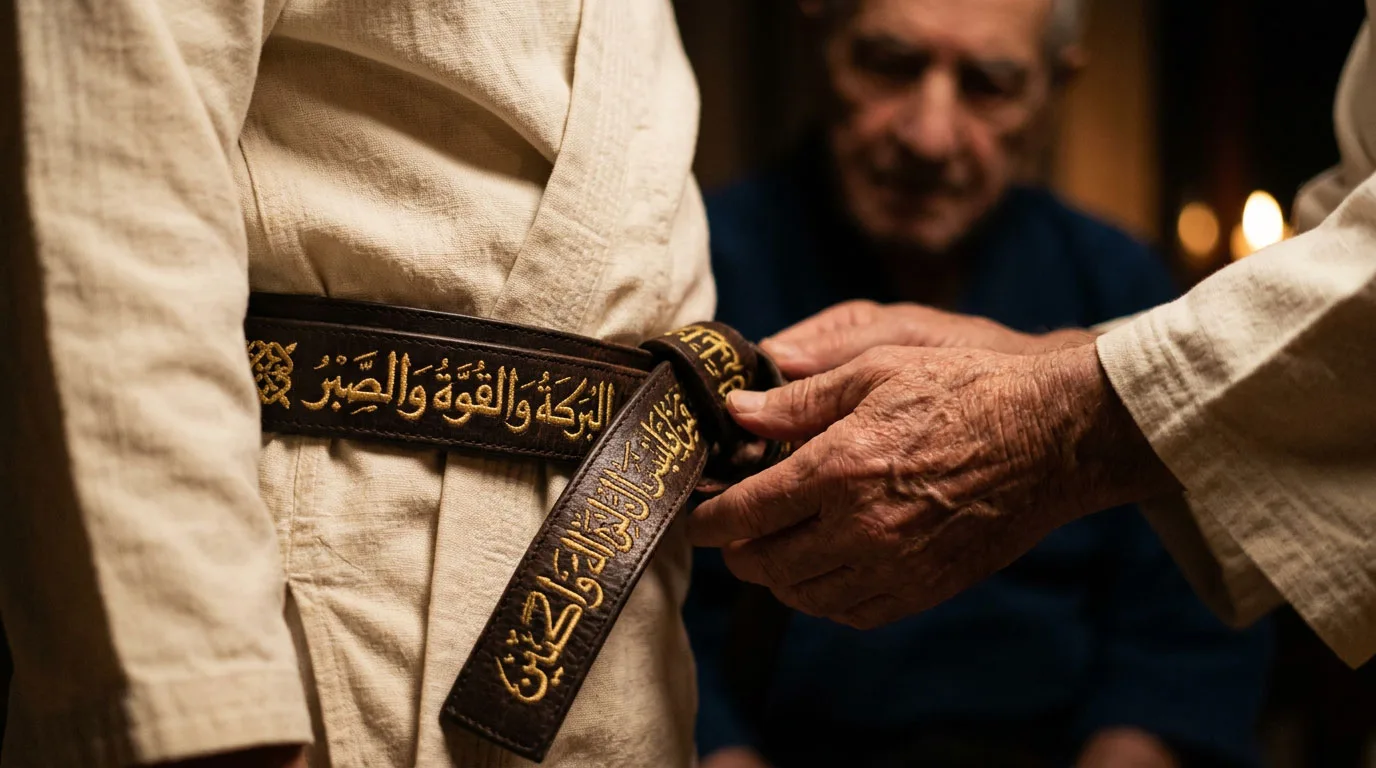
Traditional Futuwwa involved a formal passage. The young man was accepted, received a belt tied in a precise manner, sometimes a particular garment. These signs were not costumes — they were the visible memory of a commitment made.
This is where one understands why, at Riad Al-Uns, dress (Al-Kiswa) is not incidental. The garment, the belt of rank, the way of covering the head, the distinction between working attire and solemn attire belong to the same logic: making visible and constant what one has decided to be.
THE LINK WITH THE CRAFT
Futuwwa and Dar al-Hiraf
The link with Dar al-Hiraf is direct. In the tradition, the master of an art did not transmit technical gestures alone — he transmitted an adab (أدب), a way of being in the craft and in life. The disciple learned to answer for his craft as one answers for a responsibility: with precision, with patience, with honour.
This is the formative heart of the Riad: not to produce beautiful objects, but to form men capable of carrying a craft and, one day, a family. Men who know how to endure.
THE FORMED BODY
Futuwwa and physical disciplines
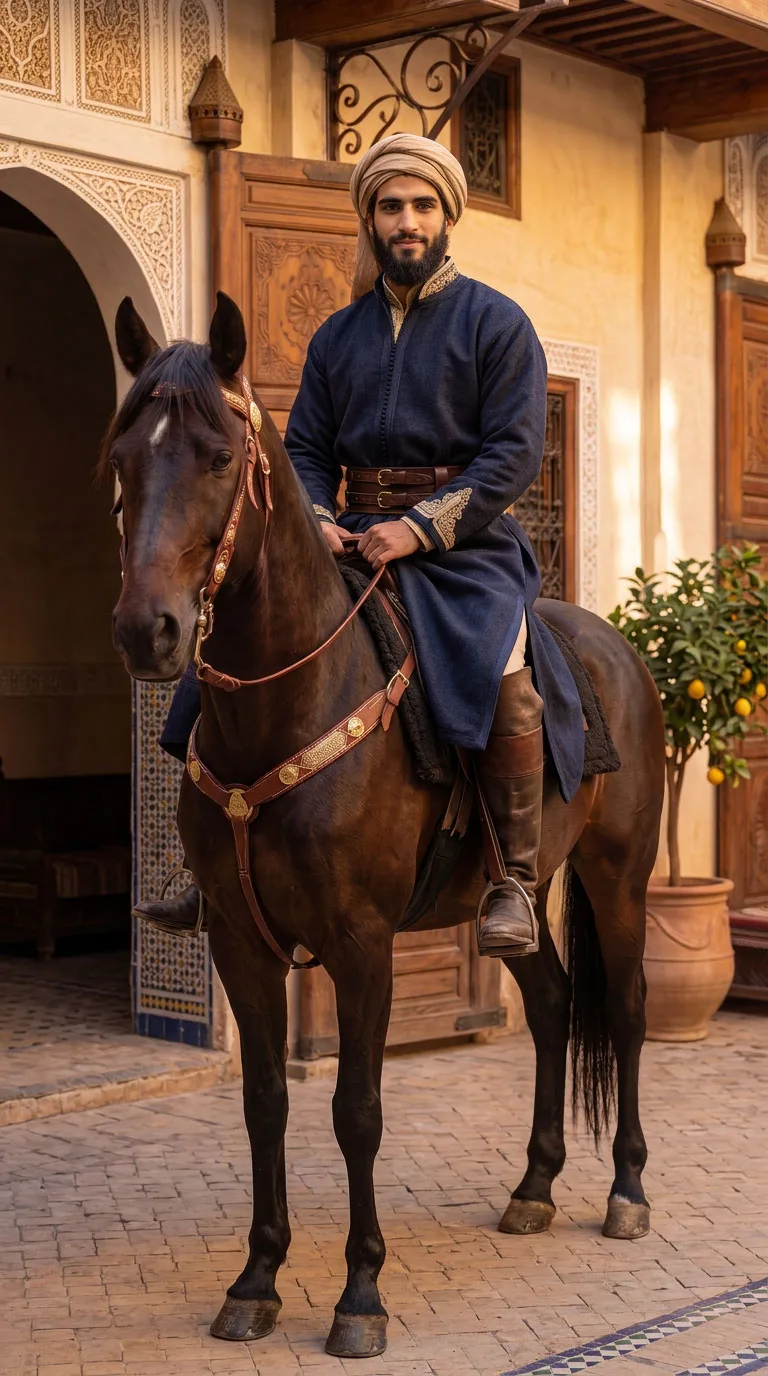
The medieval manuals of futuwwatnāme codified wrestling, archery and horsemanship as formative disciplines on the same footing as craft and prayer — the trained body is never separate from the character it shapes. These three disciplines were not mere physical training: they taught the fatā measure in effort, control of the breath before control of the gesture, and respect for the opponent or the mount as an extension of the respect due to others.
Dar al-Hiraf follows the same logic: force without measure is not the Futuwwa, it is its negation. A rider who brutalises his mount, an archer who shoots without inner discipline, a wrestler who seeks to humiliate rather than to measure his strength — all betray through the body what speech or craft might betray otherwise.
Horsemanship, archery and the Musara (wrestling) find their full development in Furusiyya, the Arab-Islamic chivalric discipline.
THE FORM RECEIVED
What beauty obliges
The Qur’an says of man that he was created fī aḥsan taqwīm, in the fairest of forms (at-Tīn 95:4). The form is therefore given in advance and given complete: no one may claim it as a merit he has earned; the only question that remains is whether the inside will answer to it.
Arabic sets the two terms a breath apart, since khalq denotes the constitution of the body and khuluq the character, and the vowelling alone divides them. The prayer said before a mirror, reported from Ibn Masʿūd, draws from that nearness a request rather than a statement, and the man who says it acknowledges, in one and the same movement, that he has received something and that the thing received binds him.
Ibn Qayyim al-Jawziyya, in the Rawḍat al-muḥibbīn, distinguishes an outward beauty from an inward one, the latter made of knowledge, intelligence, generosity, continence and courage. He adds that it adorns the outward form even when that form is not beautiful, and that it clothes the man who bears it in beauty, in authority and in sweetness, al-jamāl, al-mahāba wa-l-ḥalāwa. The movement therefore runs from the inside outward, and not the reverse.
From this comes the whole manner of the house. It cares for the architecture, the garden, the dress and the discipline of the body because the visible must answer to the invisible, and never so that the visible may stand in its place. A well-made man who fails in measure gives the lie to what he received, whereas a man with no particular advantage comes to command respect after some years of work and of a word kept.
→ The formed body · → Al-Kiswa
WHY TODAY
A possibility of form
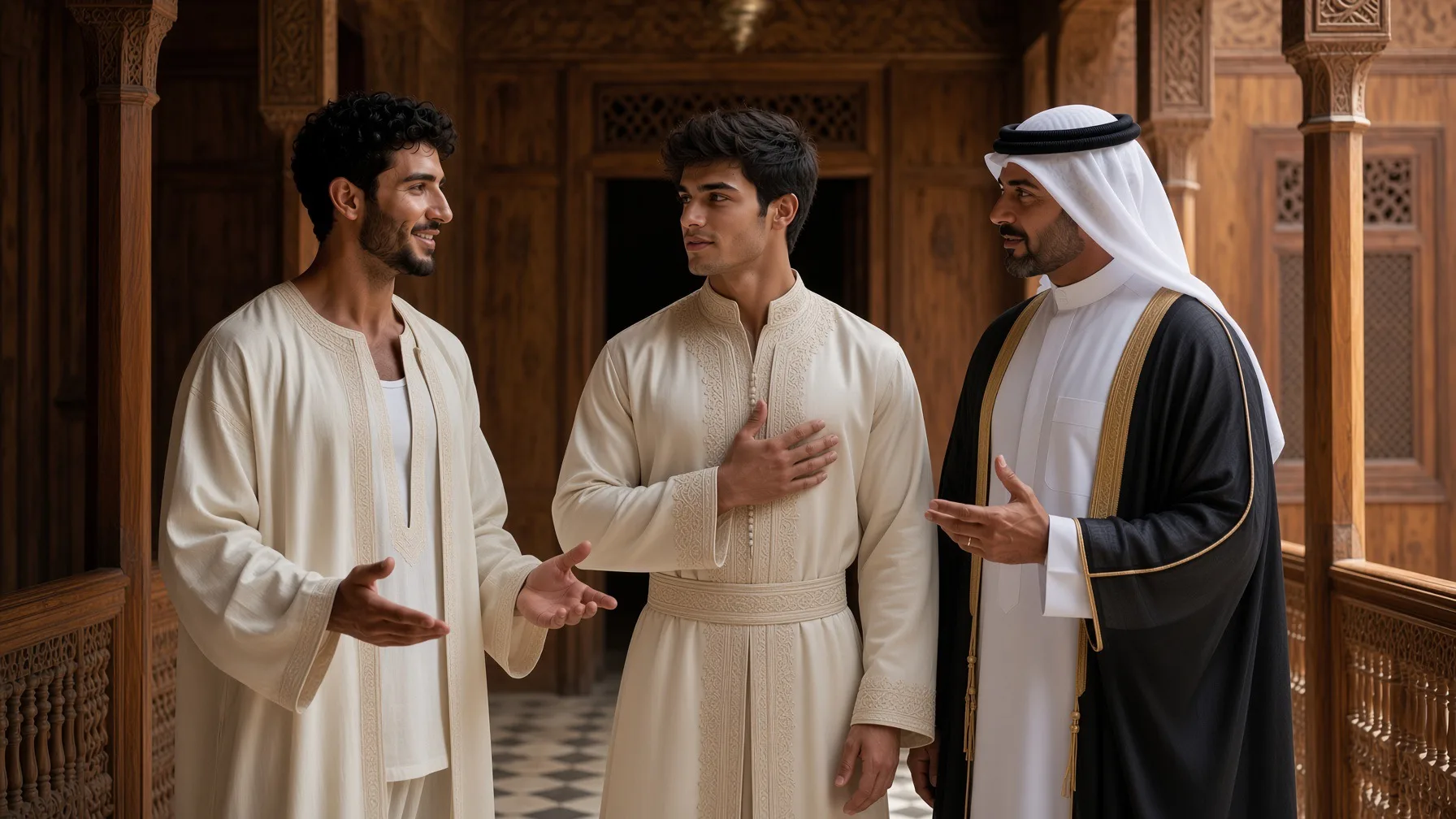
Historical Futuwwa has almost disappeared as an institution. It remains, however, as a possibility of form.
Riad Al-Uns, far from any antiquarian reconstruction, is a contemporary attempt to recover the formative power of this ideal within a community of single young adult men: a prayer that structures the day, manual work that disciplines the character, a common life under a rule of beauty and measure, a preparation for adult responsibility.
The Futuwwa, in this sense, is the horizon towards which the whole house is oriented, and not a subject of study.
The fatā does not merely feel young.
He is the one who has decided to become worthy of being called a man.
CONTINUE
← Back to Dar al-Hiraf
The words of this page are in the common glossary; the works cited in the sources; the sister house is Al-Funduq aṣ-Ṣiqillī.