Ceramics
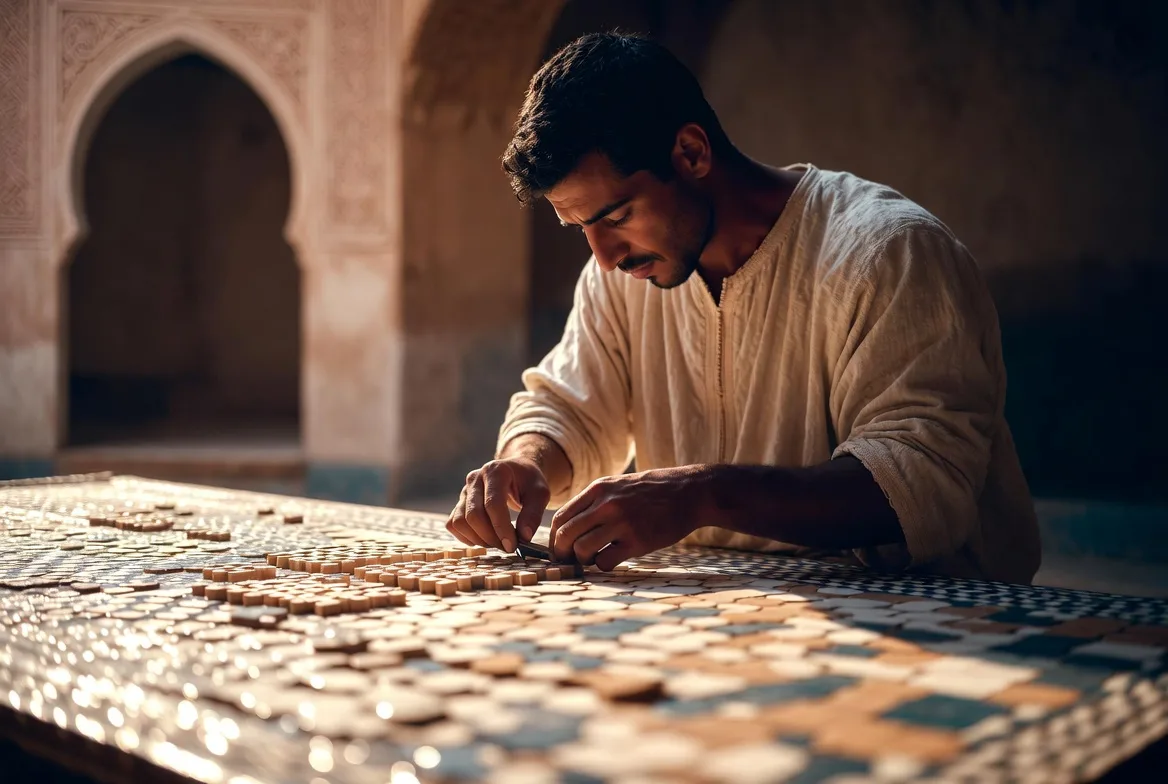
الفخّار
Fez blue
Geometry, cutting, setting. The interlace as a language of unity. →
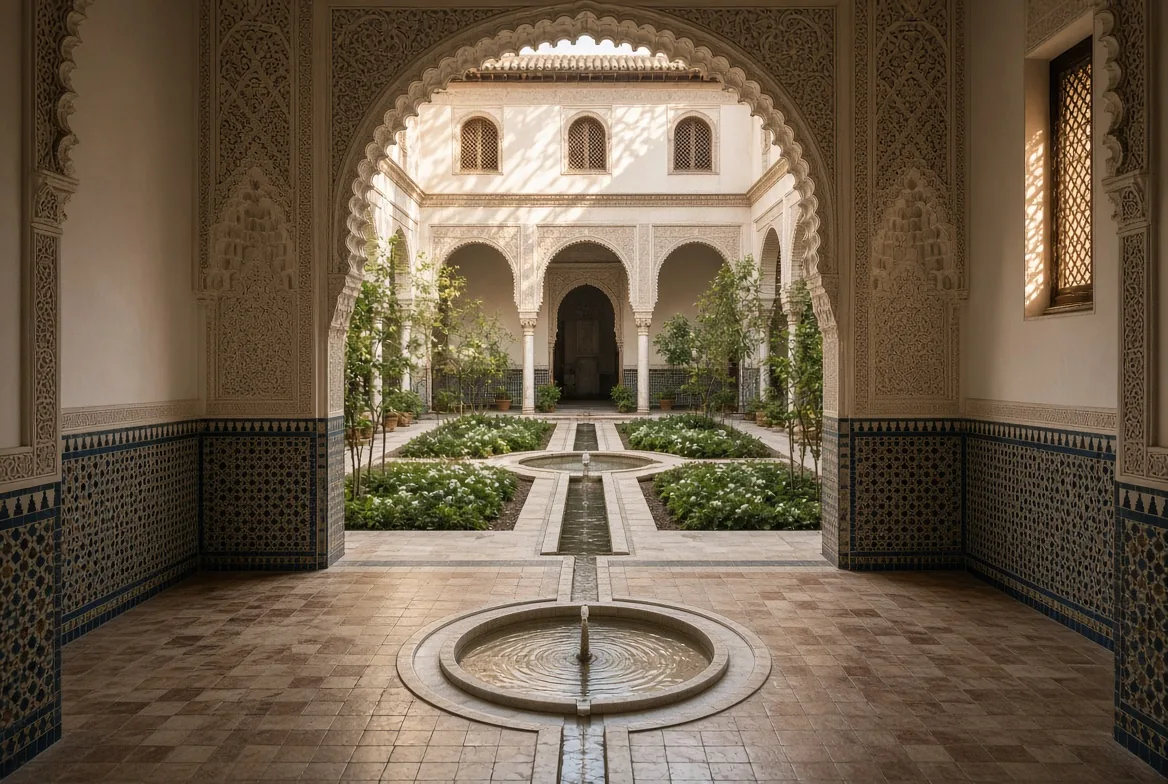
The riad as a climatic, social and spiritual device: patio, rooms, workshops, hammam, garden, water and air. An inhabited house.
This section describes the house so that it can be understood. Everything here has a task: the courtyard governs the temperature of everything else, the water governs the courtyard, the threshold governs who comes in. Every device has a function before it has a form, and that is what distinguishes an old house from a décor that imitates one.
Four ways in: the matter and the crafts; the programme and the works; the order of the rooms; the passive climatic devices.
The three materials of the house, and the workshops that work them.
الفخّار
Fez blue
Geometry, cutting, setting. The interlace as a language of unity. →
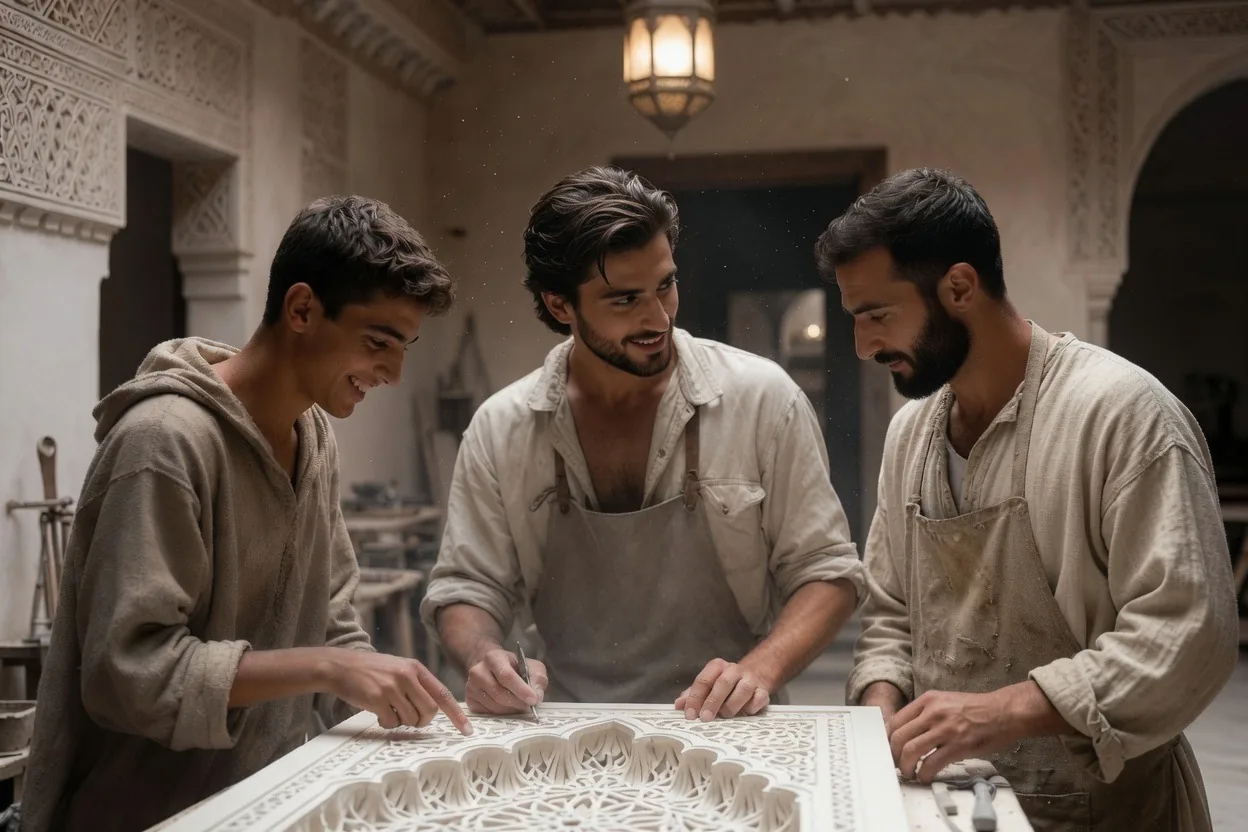
الجبّاص
Pale sand
Muqarnas, relief, light filtered by worked gypsum. →
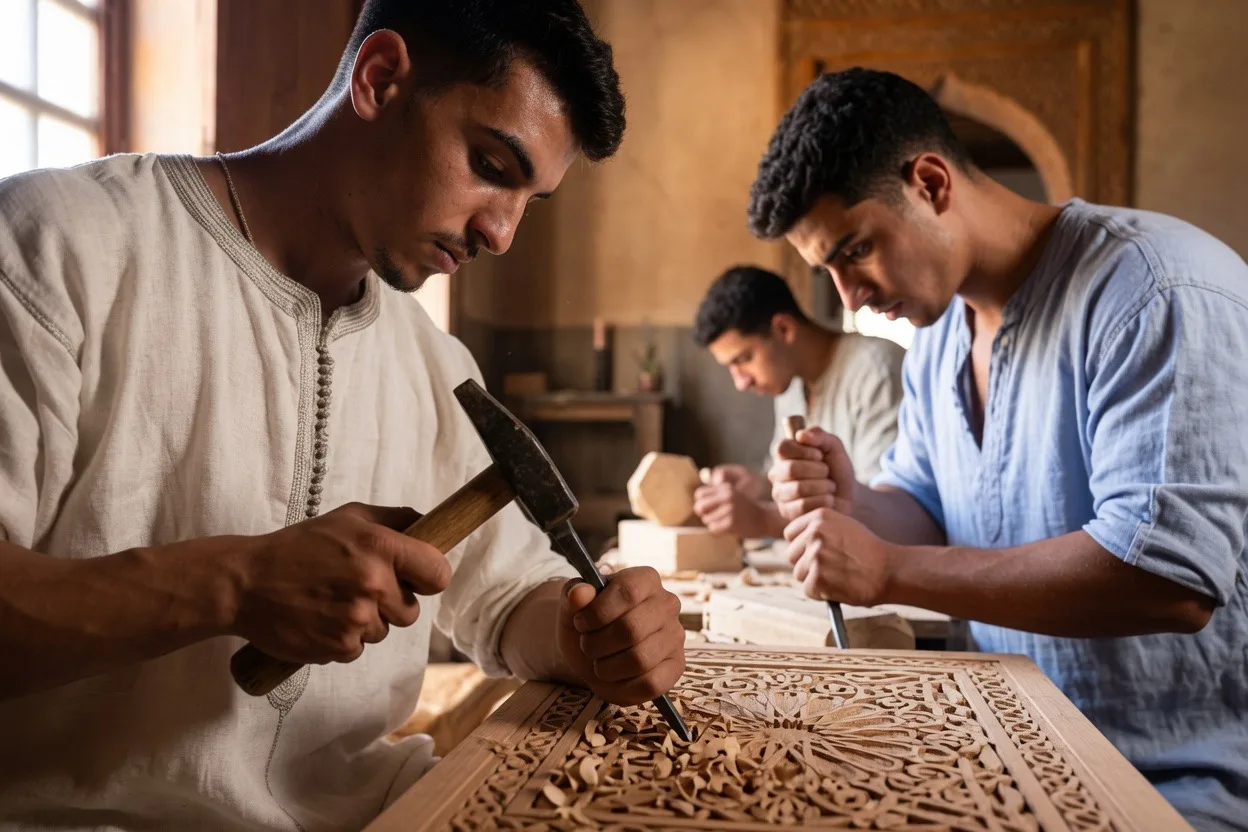
النجّار
Olive green
Cedar, noble materials worked by hand. →
What the house must do before it is drawn, the manner of building it belongs to, and the order of the works.
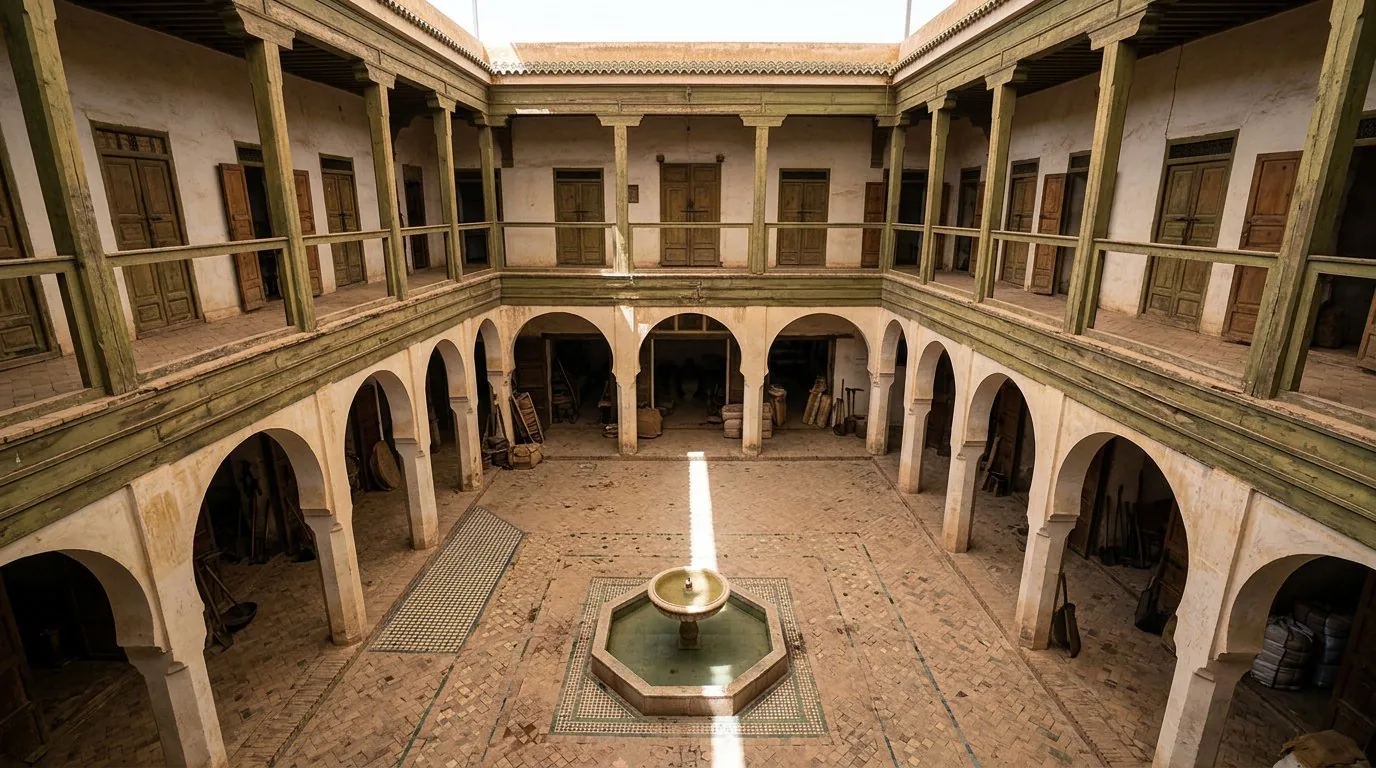
The programme before the drawing: what the house must do, and what it excludes. →
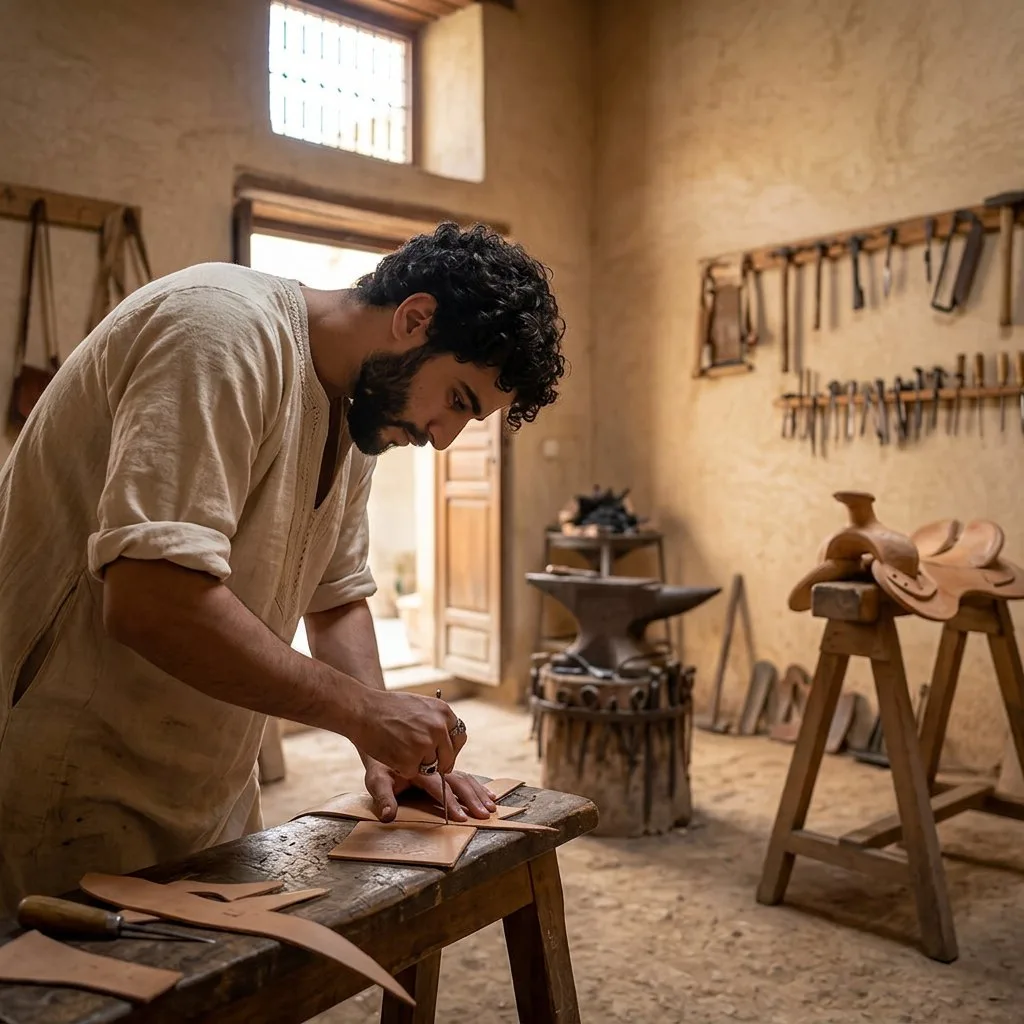
The programme in square metres, room by room, at the opening and at full establishment. →
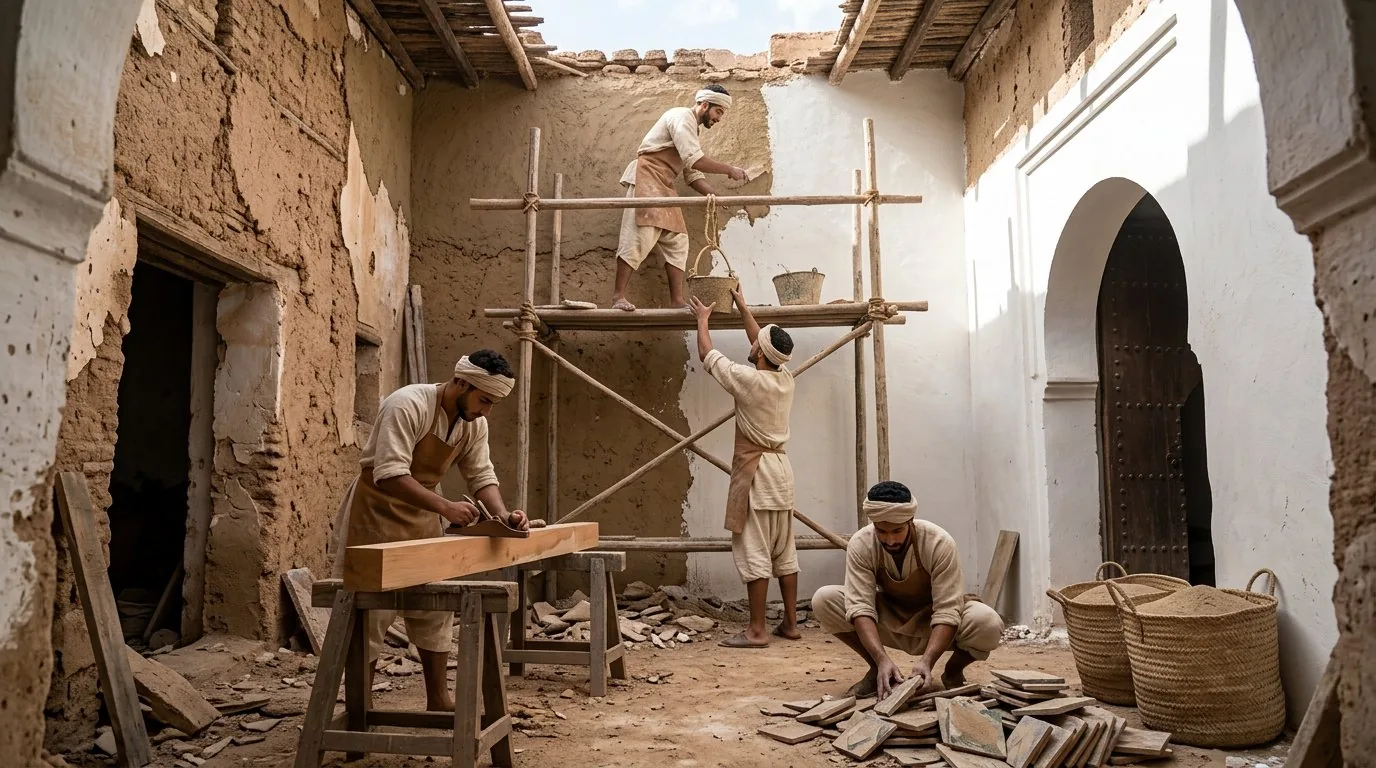
A way of building that needs, in order to last, those who possess its art. →
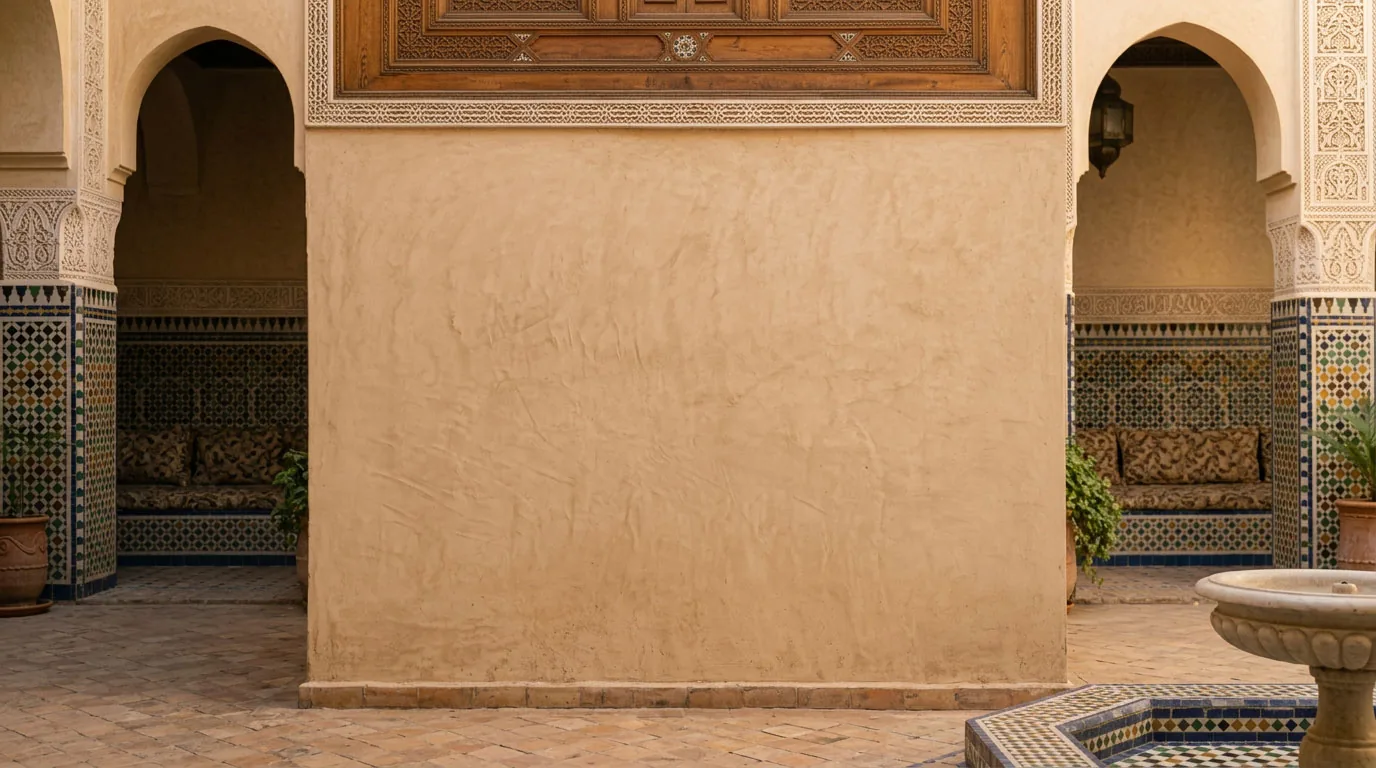
Who restores the house, in what order, and where the first intake is trained. →
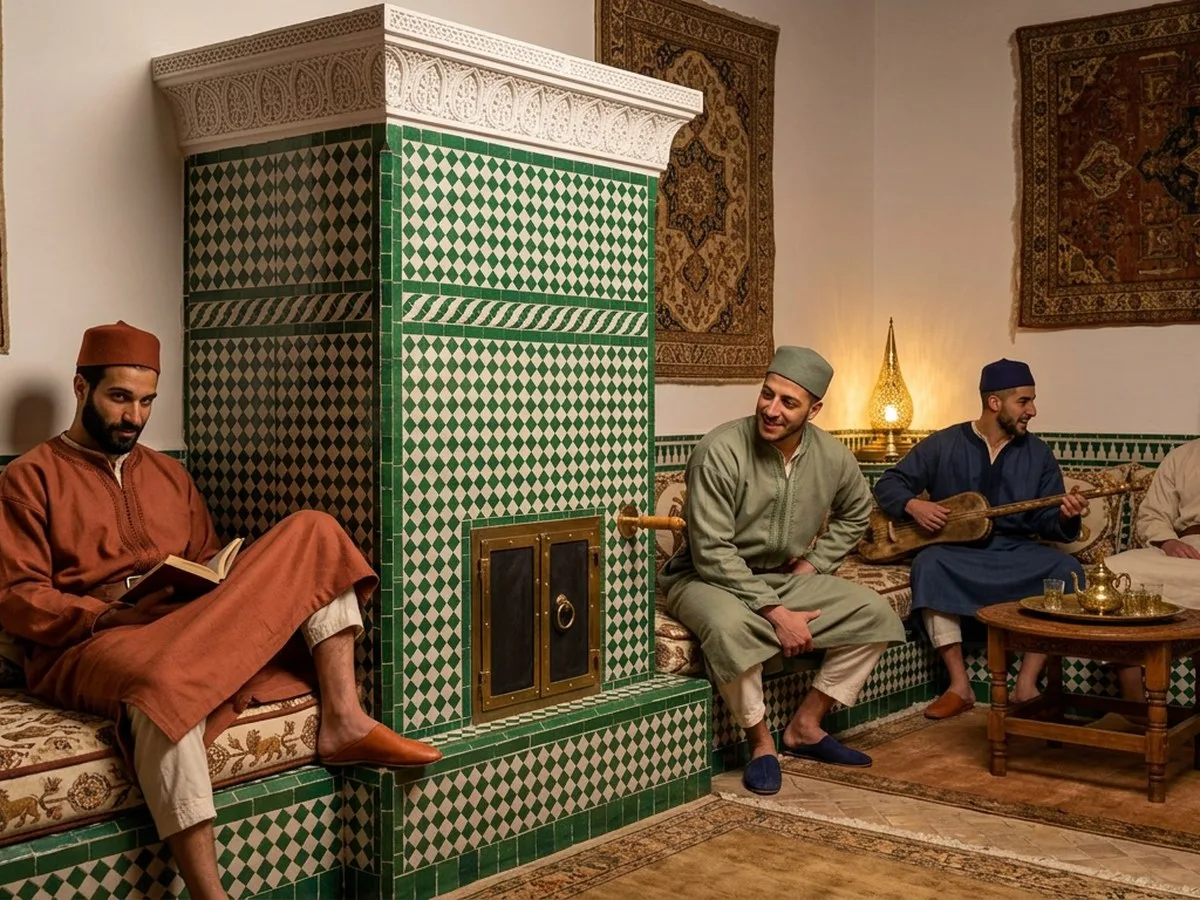
The rooms, one by one, in the order in which life uses them.
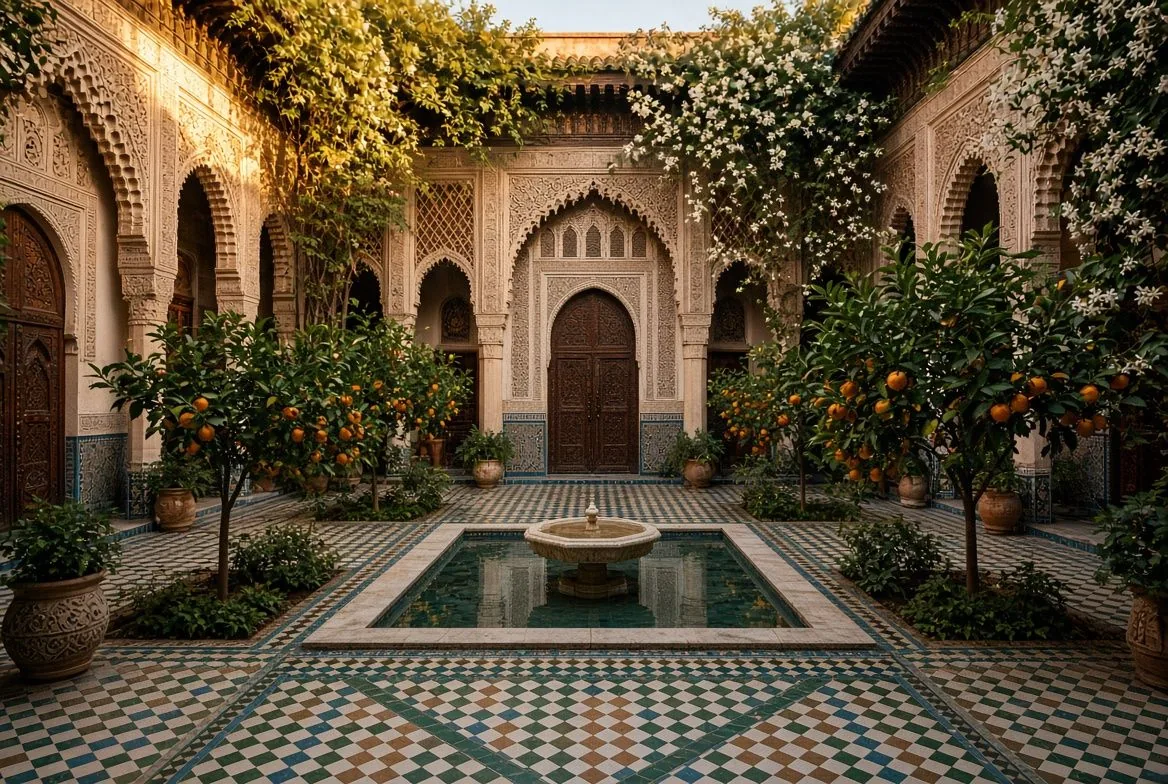
The order of the rooms: the nucleus, sleeping, the body, knowledge, the threshold. →
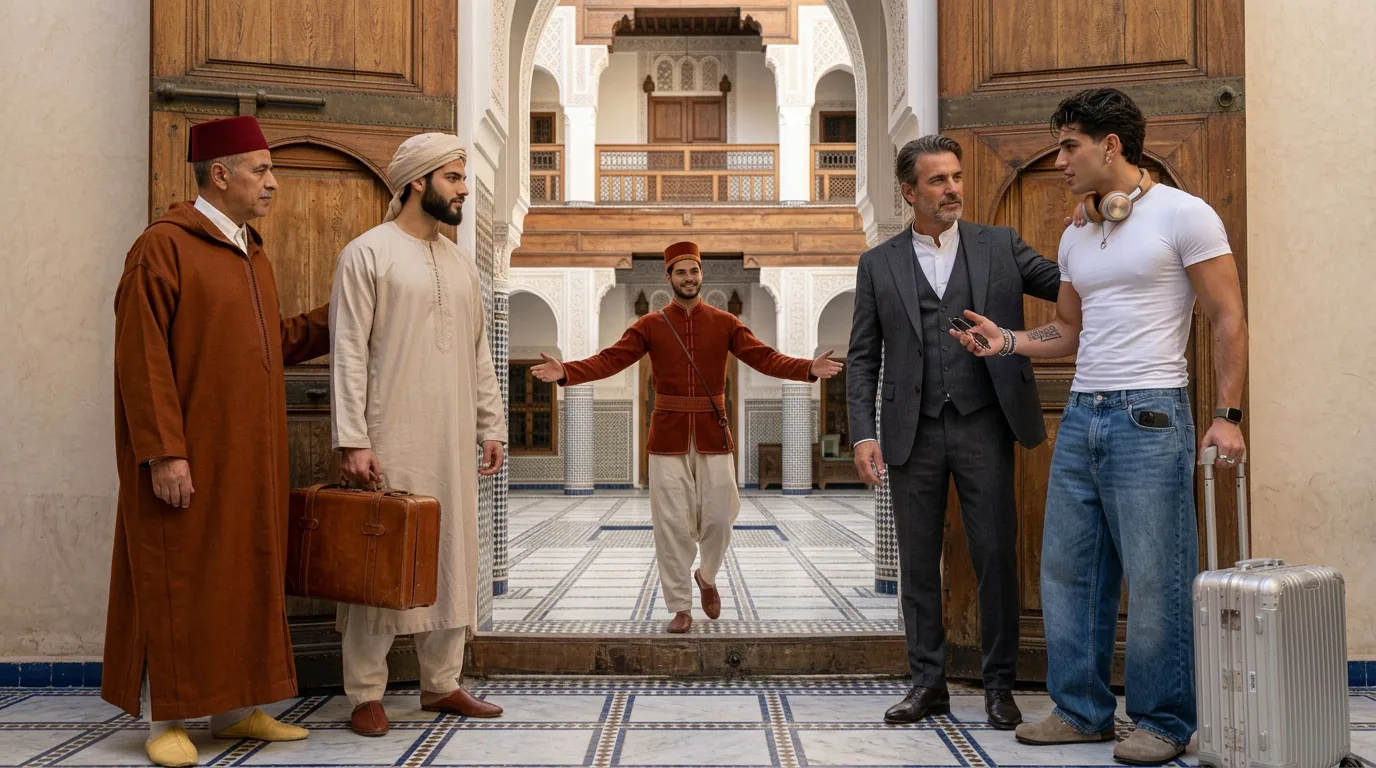
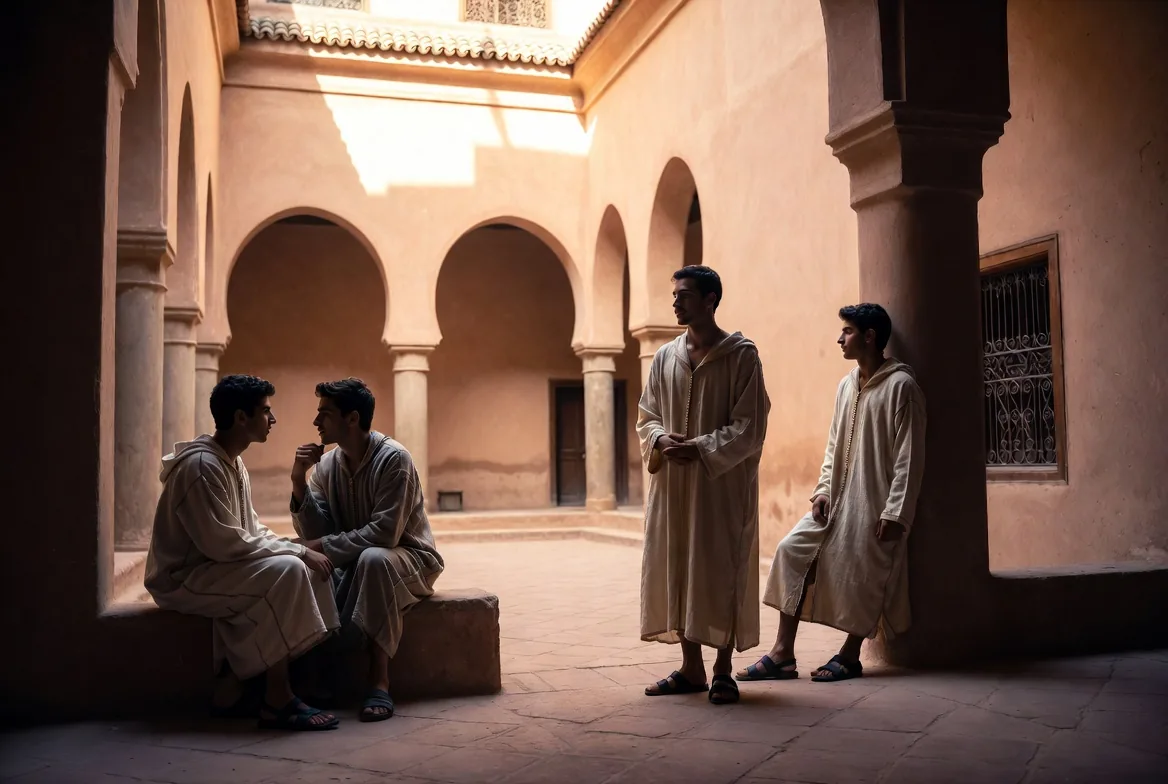
Driba, parlours, dormitory: what the house shows and what it keeps. →
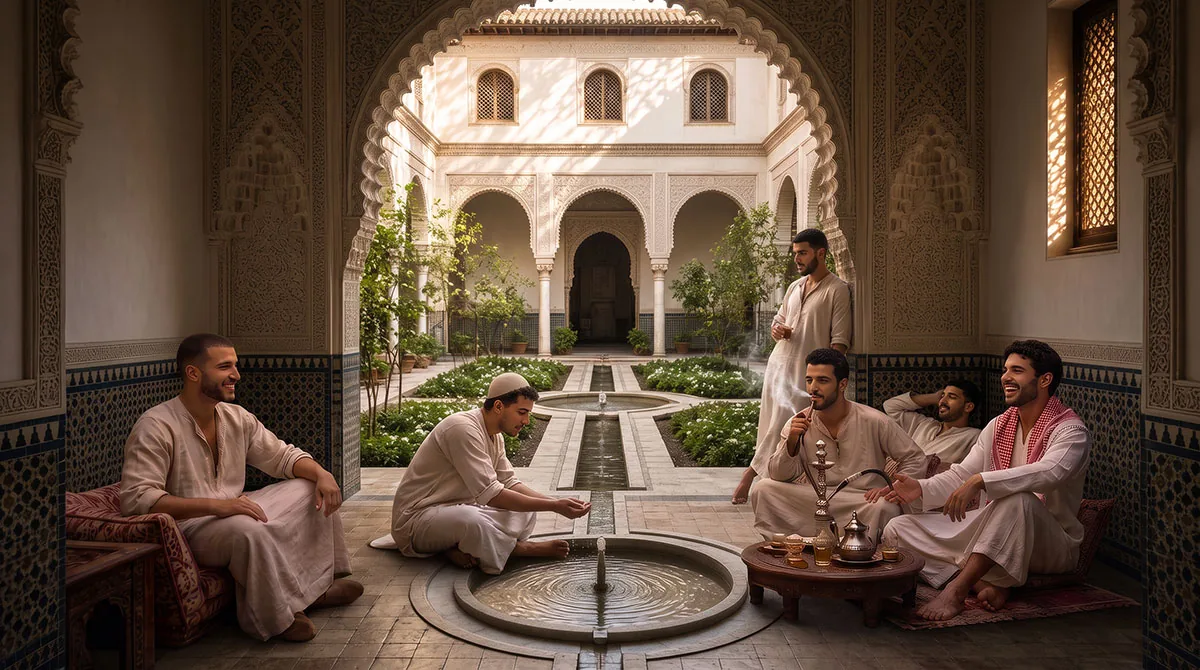
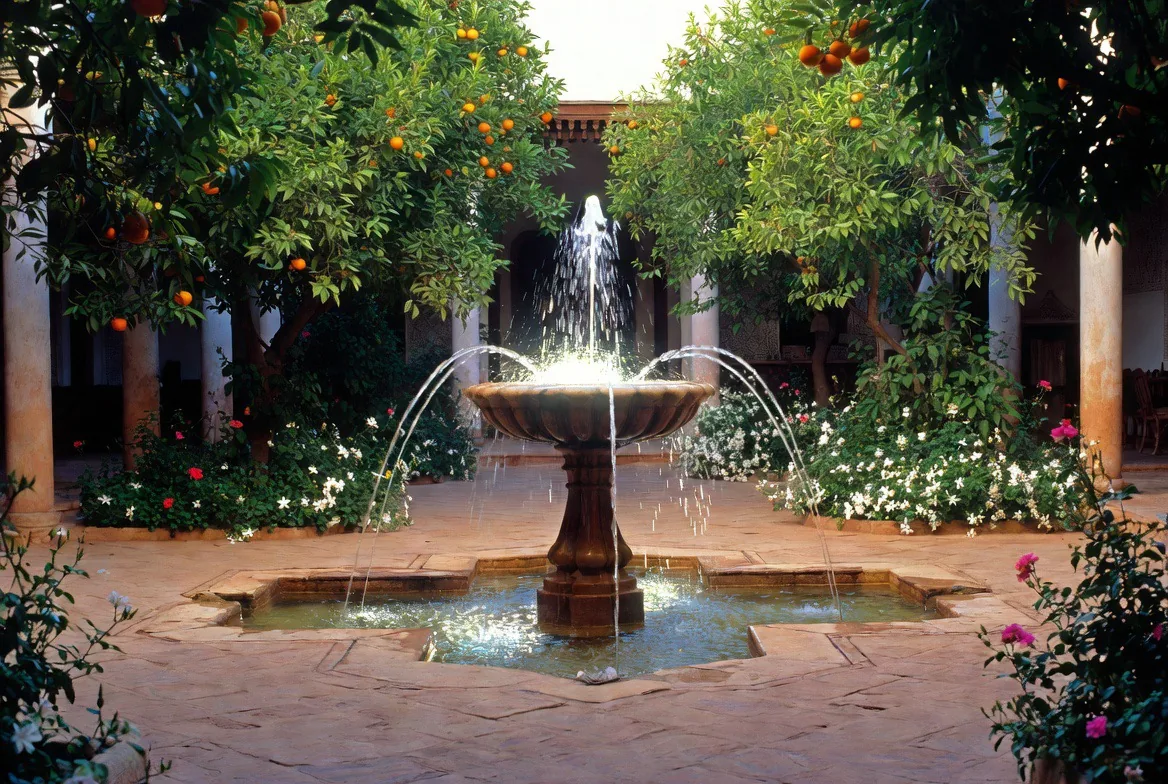
Inner courtyard, fountain, reflection of the sky: the silent heart of the house. →
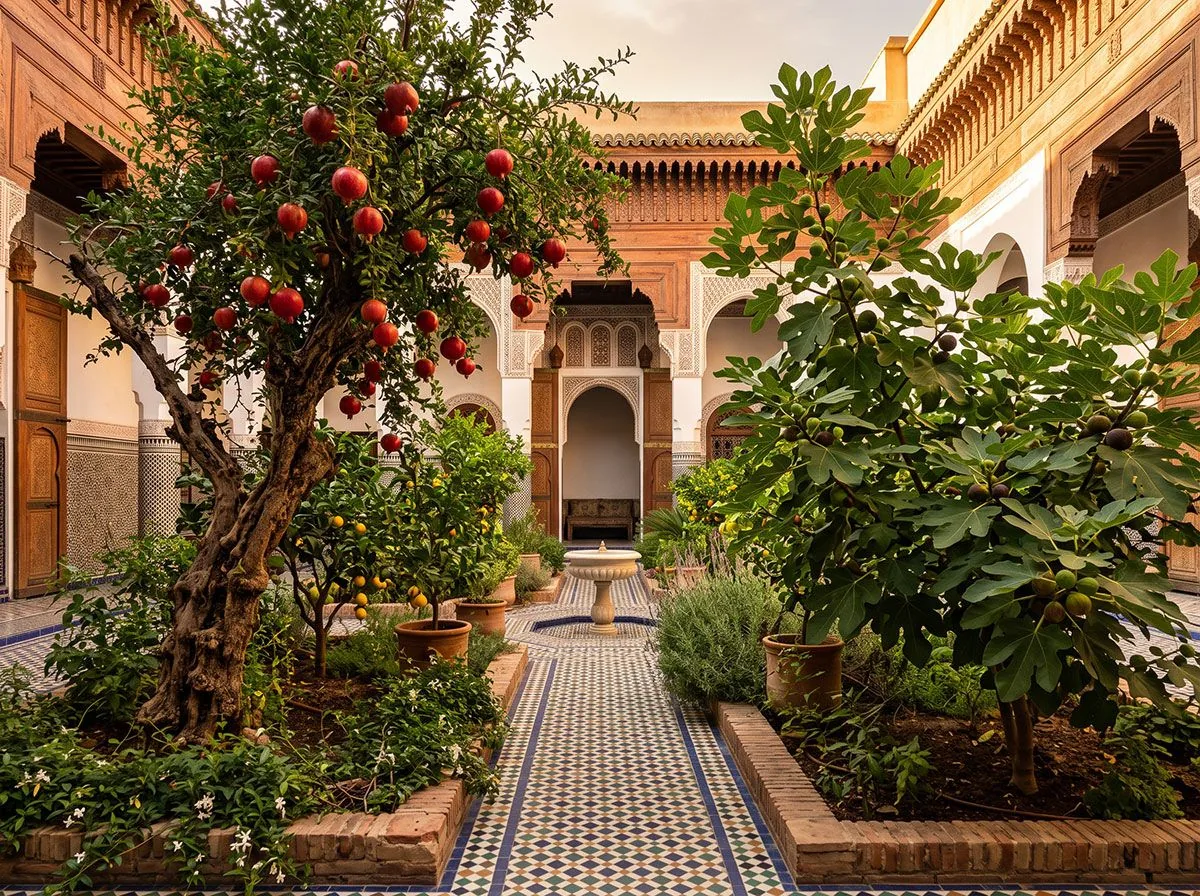
Chahār Bāgh, secret garden, kitchen garden: an ordered and productive space. →
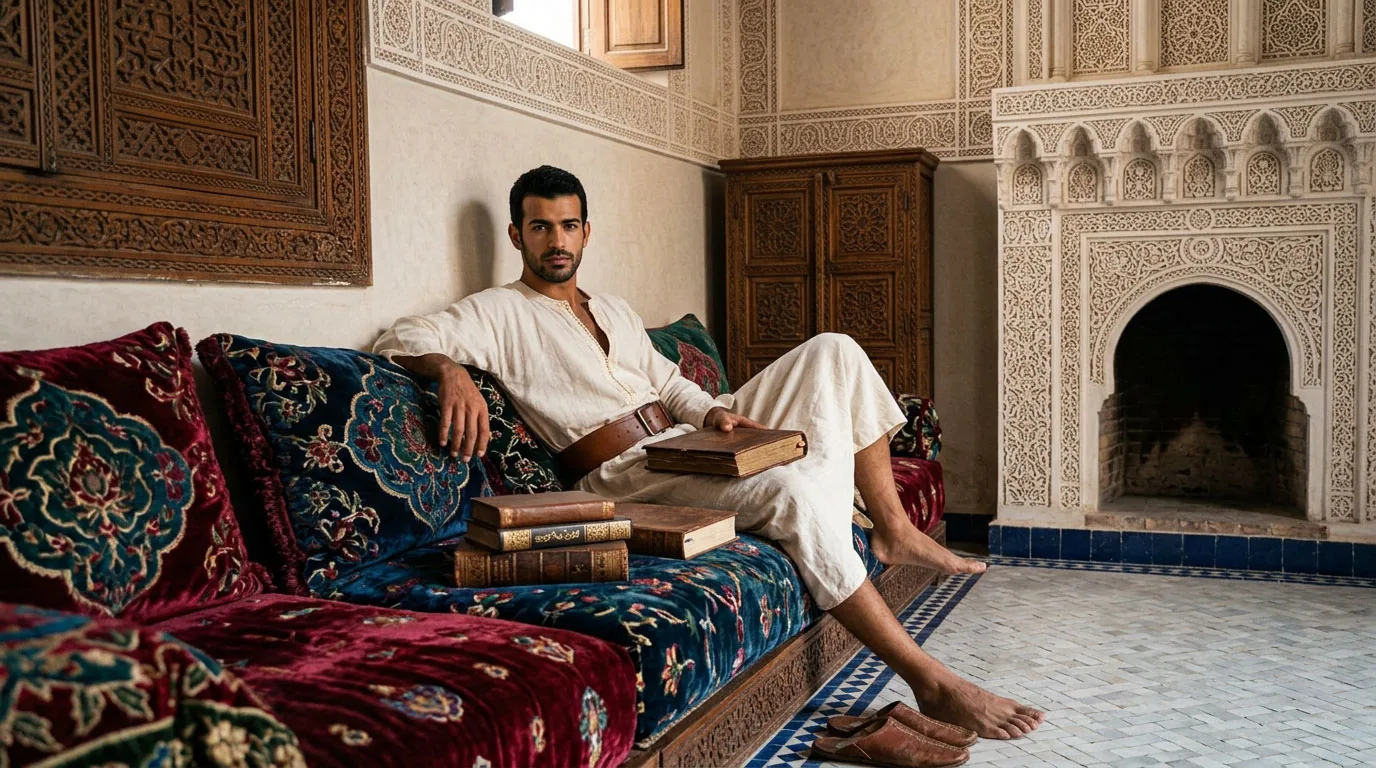
The locked deposit of the volumes. One asks for a book, and receives it. →
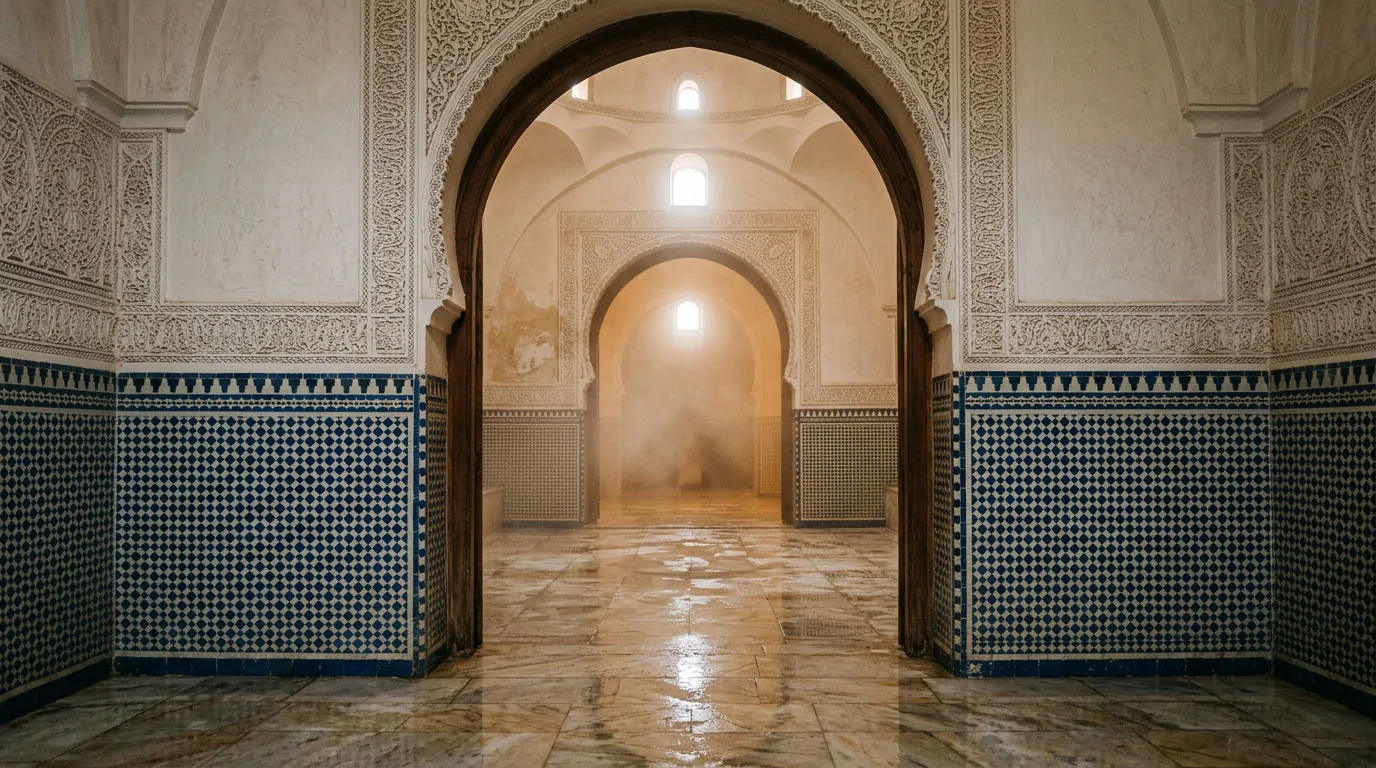
The farnatchi, the chebka, the three rooms, and two gestures only. →
Water, air and mass: how the house tempers itself without machines.
The words of this page are in the common glossary; the works cited in the sources; the sister house is Al-Funduq aṣ-Ṣiqillī.