
Al-Khizana
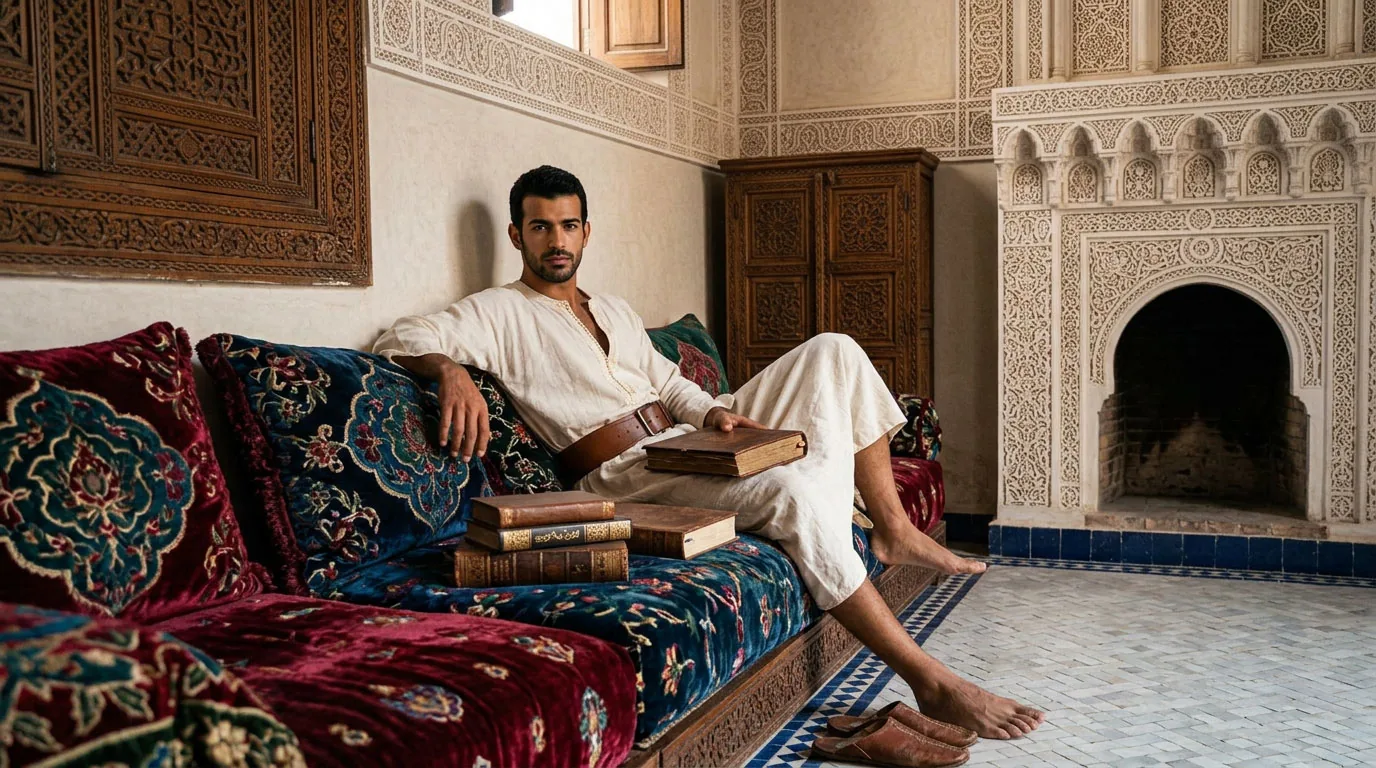
The locked deposit of the volumes, on the Riad’s side. One does not read or linger in the khizāna; the volume is carried away. One reads in the study rooms, in one’s chamber, in the gardens or at the patio. Al-Khazin carries the book and takes it back.
خِزَانَة
khizāna — chest, cabinet, deposit of what is kept
In the Islamic tradition, the khizāna is a deposit and not a reading room: cabinets, volumes put away, a key. One reads elsewhere — in the study rooms, in one’s chamber, in the gardens or at the patio. Access lies in a gesture: to ask, to receive, to return — and not in a stroll among the shelves.
THE PLACE
The deposit and the places of reading
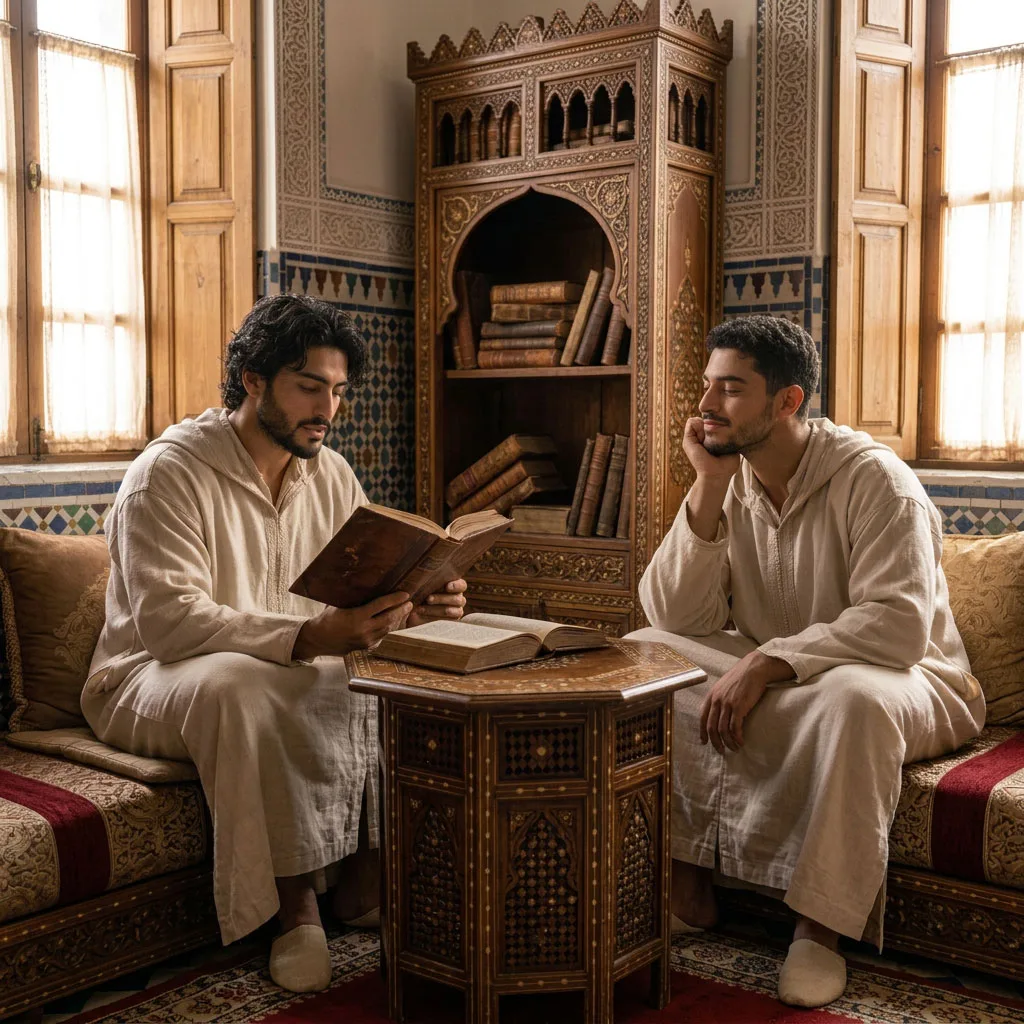
The khizāna itself is the cabinet — or the cabinets — under lock. One does not remain there. The volume is opened in a study room, in one’s chamber, in the gardens or at the patio. Books are not left scattered about the house. They return to the deposit.
This knot is also the passage between Al-Munya, the apartment of honour and the Riad — the only room the three can reach when the door is opened from the inside. Knowledge, here, is a threshold as much as a deposit.
THE GESTURE
One asks for a book
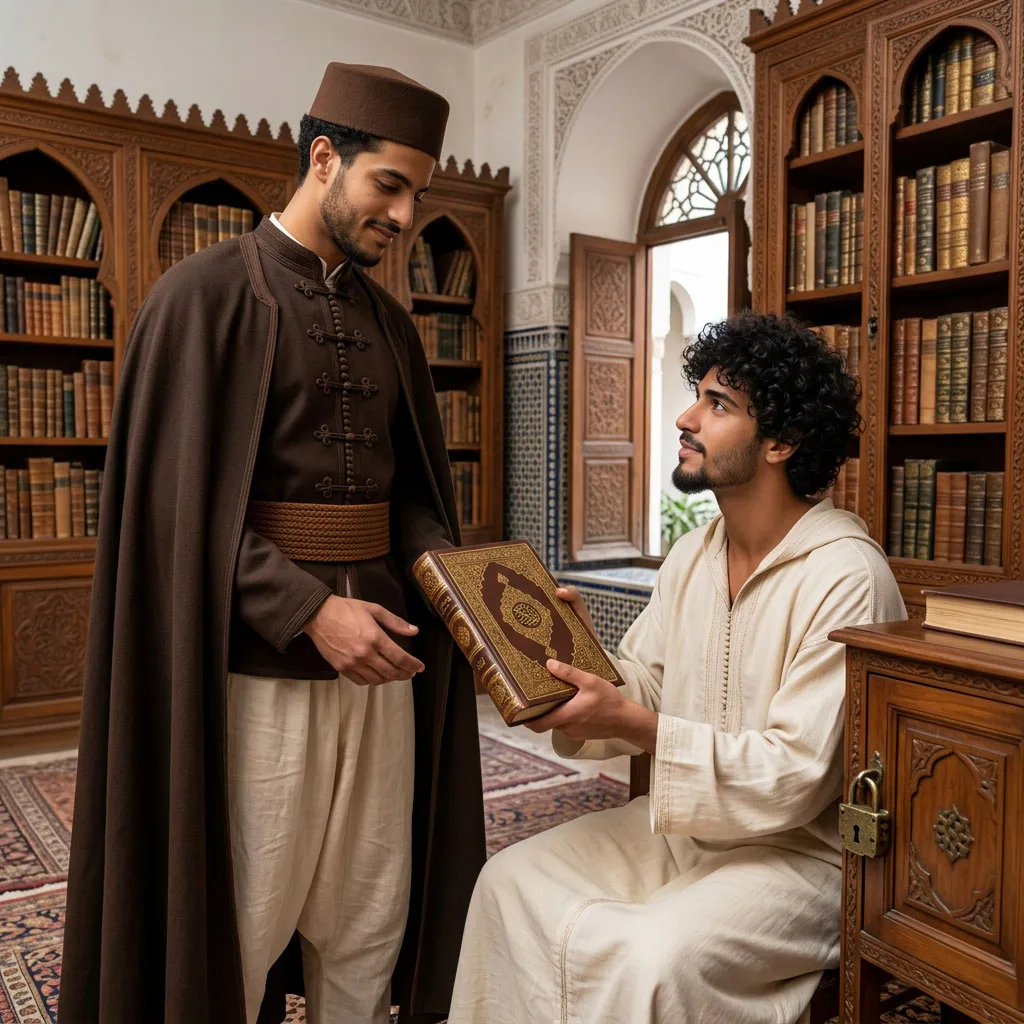
Whoever wishes to read addresses Al-Khazin. The volume is carried to the place of reading. It is taken back. Nothing is borrowed “for later” without measure. One does not help oneself in the cabinets.
Mistrust has nothing to do with it. It is the same principle as for the workshop: the tool belongs to no one in particular. It circulates under a rule, so that the gesture remains just.

THE CHARGE
Al-Khazin
Behind this gesture stands a figure: Al-Khāzin.
الخَازِن
al-khāzin — the keeper of the deposit
A charge of the house, as the Bawwab keeps the threshold. It goes to a resident who has no place in a workshop, but it is a charge in its own right, not an accessory task.
The cut is everyone’s — serwāl and jabador, cap, slippers. What changes is the colour, and only where the house puts it: the jabador, the coat and the cord take ink brown, after the iron-gall ink of the manuscripts, for the whole duration of the charge. That brown sits next to the terracotta of the book workshop and the red of leather, because he keeps what the binder repairs. His cap does not change, but keeps the tone of the workshop he comes from — or stays undyed if he has not yet been received into one.
He carries the book to the one who reads, takes it back, puts it away. He watches over the state of the volumes, has them restored if need be, knows what is missing and what may enter.
Acquisitions are not a personal taste. They follow what the house judges worthy of being transmitted. Al-Khazin is the passage between the cabinet and the reading, and not a librarian of an open hall.

WHAT IT KEEPS
What deserves to be kept
Treatises of craft, readings of adab, copies bound to furūsiyya, texts that form the character as much as the hand. Nothing that serves the news. Nothing that is consumed.
The volumes are gathered here to be read, studied and consulted in the course of the work, so that the ṣāniʿ who finds himself before a difficult setting-out, a proportion or a recipe for render may ask for the book that will enlighten him, keep it as long as he needs and return to the volume until the difficulty is undone.
IN THE ORDER OF THE HOUSE
A knowledge, not a décor
The organisation of the spaces places the khizāna at the knot of knowledge and threshold. It is a room of formation, like the workshop, like the oratory, like the table.
الرِّياضُ لِأَهْلِهِ، لَا أَهْلُهُ لِلرِّياضِ
The words of this page are in the common glossary; the works cited in the sources; the sister house is Al-Funduq aṣ-Ṣiqillī.