As-Sanduq
الصندوق
The chest of the Futuwwa — what the craft brotherhoods have always been as well, besides a belt and a rule.
What is remembered of the Futuwwa is its virtues and its signs: generosity, loyalty, the knotted belt, the degrees. What is forgotten is that it always had, besides, something very concrete — a chest.
The craft guilds, from the Maghreb to Anatolia and as far as the arti of Venice, all kept a common fund: for the sick man who could no longer work, for the widow, for the burial, for the young master setting up who had nothing to buy his tools with. It was not a charity attached to the craft: it was the craft itself, seen from the side where it protects its own.
What it covers
Six things, in the order in which they arrive in a life:
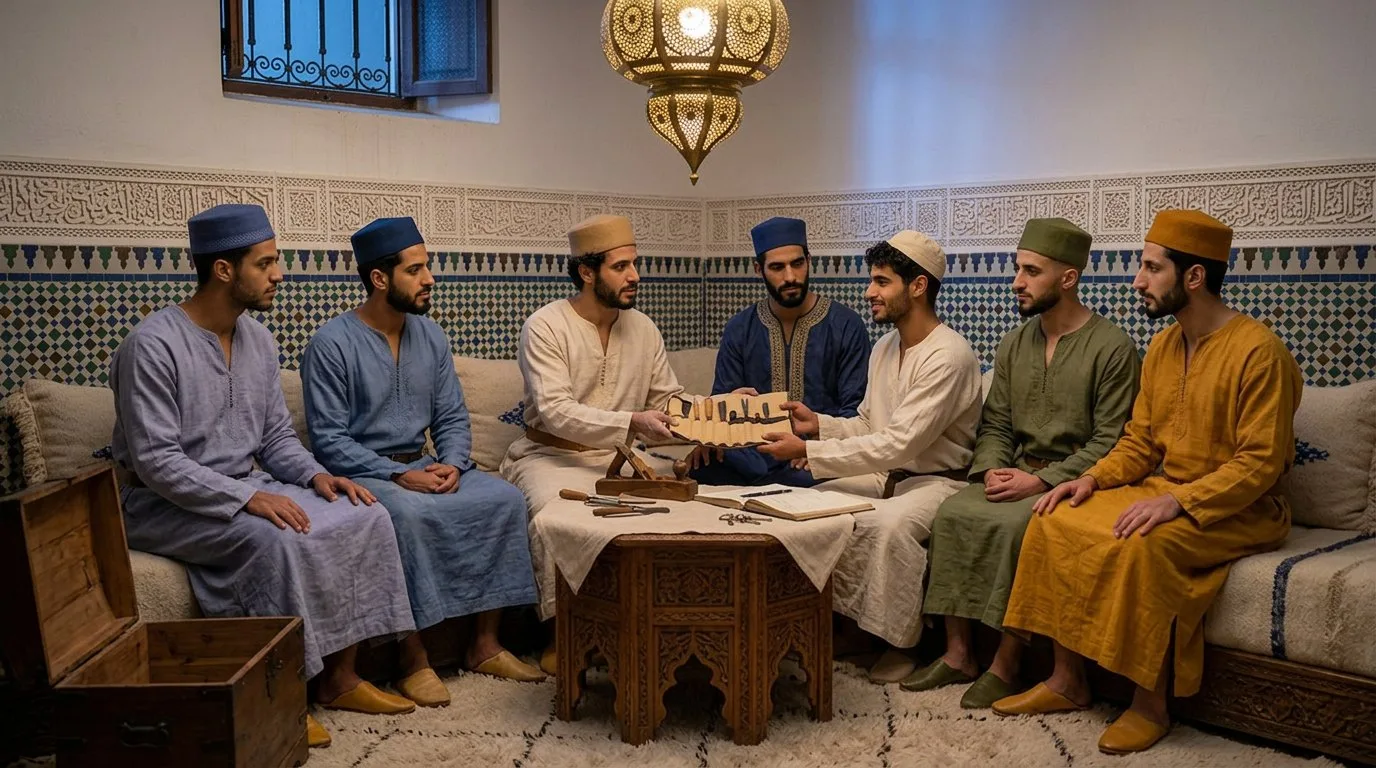
— The tools of the first workshop, for the man who completes the path and sets up on his own. An interest-free loan: a master who establishes himself needs tools before he needs advice.
— Help towards marriage. The task the house sets itself is to form men able to practise a craft and to lead a household; at twenty-eight, the real obstacle is money.
— Maintenance during illness, for as long as the hands cannot work.
— Extinction of the remaining debt on the house-workshop, in case of death or incapacity. A family does not inherit a debt. The cover is taken out under the deed of cession itself, in the form of a decreasing mutual assurance known as takaful, and the fund intervenes only residually, should it not answer or not suffice.
— The funeral costs of the member and of his own. It is the oldest of the functions, and the least optional.
— Exceptional relief, for what nobody had foreseen.
Members are the residents, the naib, and the masters who have completed the path and set up on their own. Each pays the same contribution; the man with no income is exempted without losing any of his rights. The fund does not work as an insurance, and no one is admitted to it in proportion to what he has paid in.
Who administers it, and who does not
Three elected members administer it, chosen among the masters established on their own and the naib, for two years. The charge is unpaid.
Neither the Ash-Shaykh, nor the muqaddam, nor the faqih, nor anyone holding authority over the residents may sit on it. It is the one rule that prevents a fund from becoming, within two generations, the instrument by which whoever governs secures the loyalty of whoever receives.
The house pays into the fund. Its contribution gives it no voice.
مَن ذَا الَّذِي يُقْرِضُ اللَّهَ قَرْضًا حَسَنًا فَيُضَاعِفَهُ لَهُ أَضْعَافًا كَثِيرَةً
“Who is it that will lend to God a goodly loan, so that He may multiply it for him many times over?”
— Qur’an, sūrat Al-Baqara (II), 245 — the source of the name of the interest-free loan, the qard hasan
THREE KEYS
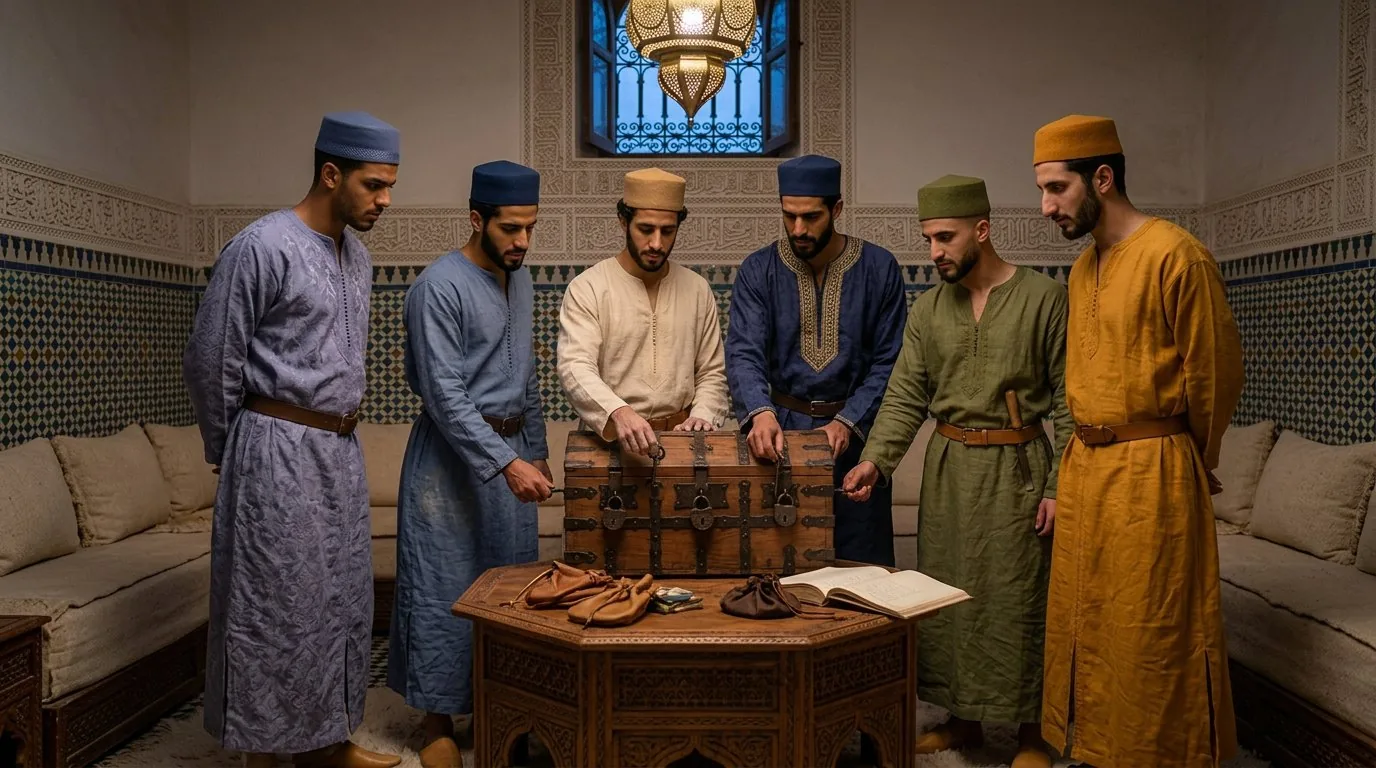
The chest opens only when the three keys turn together. What belongs to all is never in one man’s keeping.
Neither merit nor conduct
The criteria are written, posted, and the same for everyone. No request is weighed by seniority, piety, diligence or sympathy. Every request receives a written and reasoned answer; a refusal goes before the assembly of members.
And one rule that surprises, until the reason for it appears: relief may never be refused — or granted — on account of a breach of the regulations. The discipline of the house and the assistance of the fund are two separate orders. A fund that can punish is not a fund, it is a lever; and the day relief becomes conditional, the man who needs it stops telling the truth about his own conduct. Mutual aid and sincerity are lost at a single stroke.
Three locks
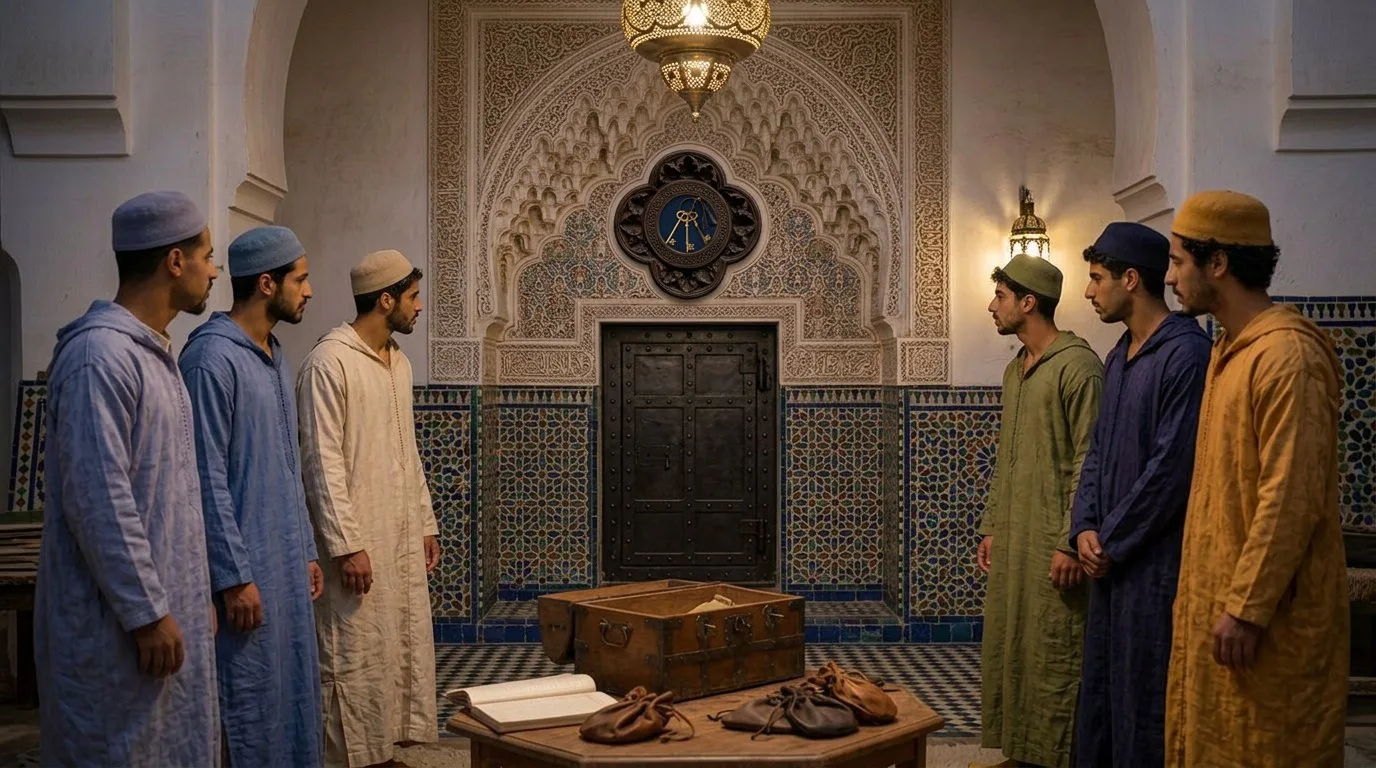
The guilds’ chest had several locks and several keys, held by different men: no one could open it alone. The Riad’s has three.
The accounts are closed once a year before the assembly, with the sums paid out set out by category and without names: what was given to whom is not said. Alms take their value from the discretion with which they are made, and relief between brothers is no different.
The words of this page are in the common glossary; the works cited in the sources; the sister house is Al-Funduq aṣ-Ṣiqillī.