Who we are looking for
We are looking for young men who have matured a conscious decision: to no longer submit to a world that no longer transmits anything solid — neither a craft exercised over time, nor a discipline of the body, nor a given word that commits.
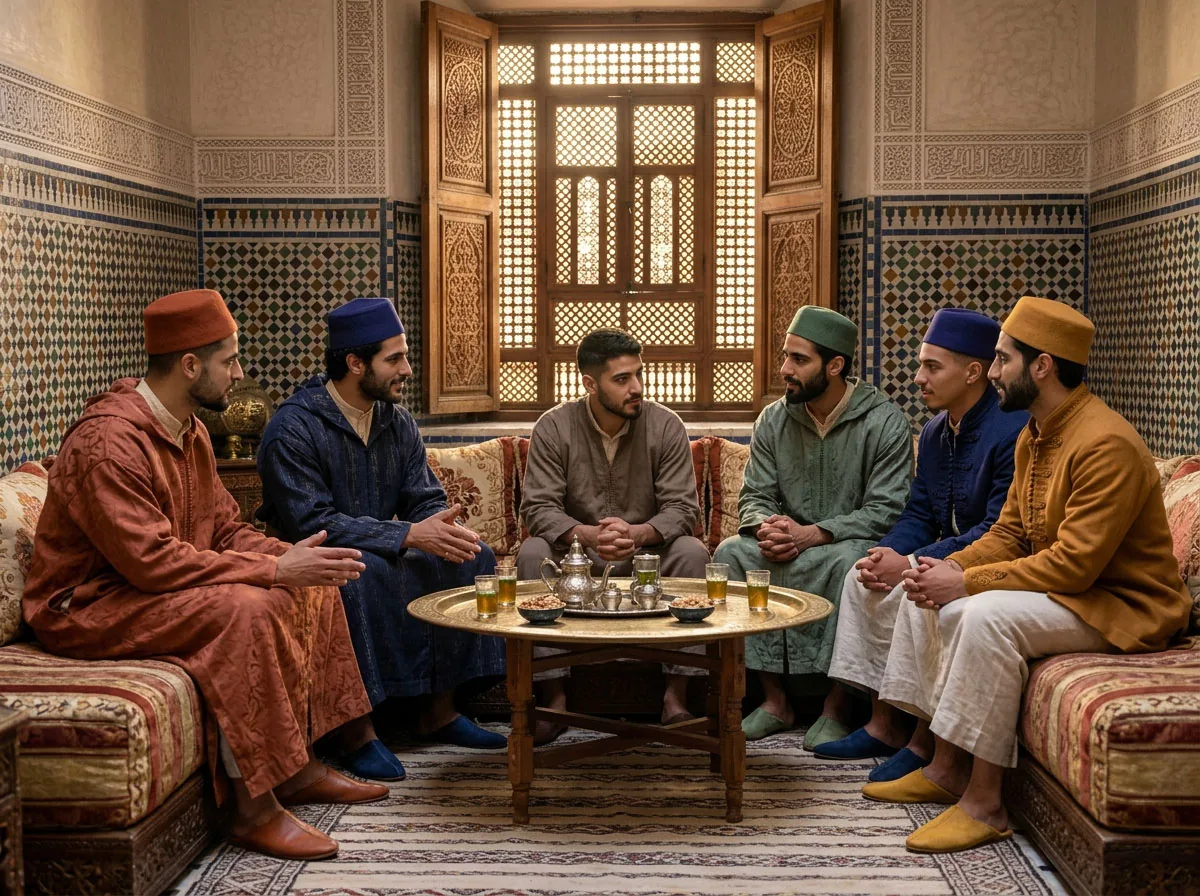
We are not looking for mere passing residents. We are looking for those who are ready to become an active and responsible part of a traditional intentional community, founded on the futuwwa, on the transmission of a craft, on the prayer that structures the day and on the brotherhood built through shared trial.
WHAT WE ARE LOOKING FOR
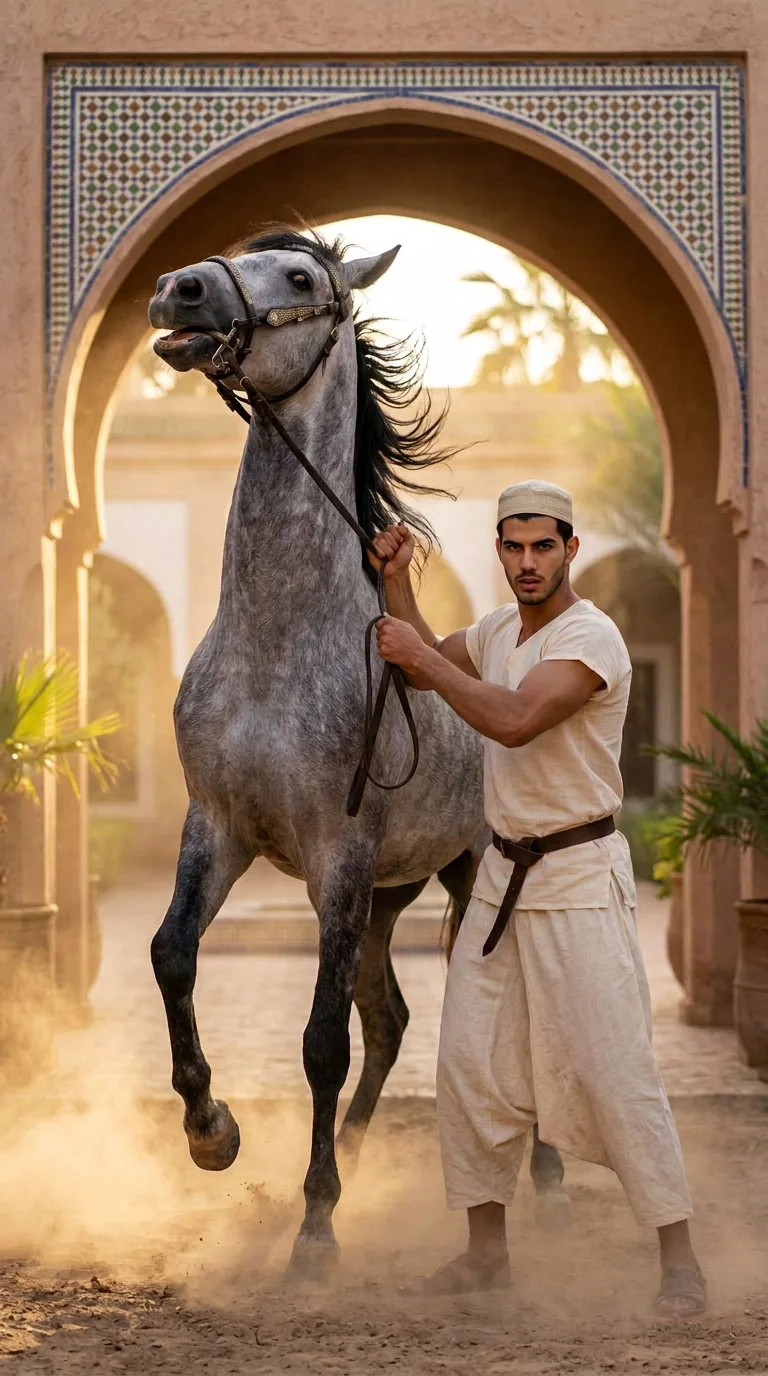
“Not the one already trained, but the one who has the force and accepts to be led.”
The colt that rears shows force before measure, and not a defect. The house offers the brake — the rule, the master, the companions. It falls to the young man to abide by it.
→ Al-Udda
THE CONTEXT
Why now
The traditional crafts — calligraphy, zellige, weaving, perfumes, Andalusian music — risk disappearing along with those who still carry them. At the same time, many young men today grow up without having received, in a coherent way, what honour, loyalty and discipline concretely require — swallowed up by a pace that leaves room neither for the patience of the gesture, nor for the measure of the word.
Riad Al-Uns responds to this not with nostalgia, but with residence: a craft is not saved by describing it, it is saved by forming someone capable of carrying it on.
THE DEEP MOTIVATIONS
What guides this choice
Formation of character
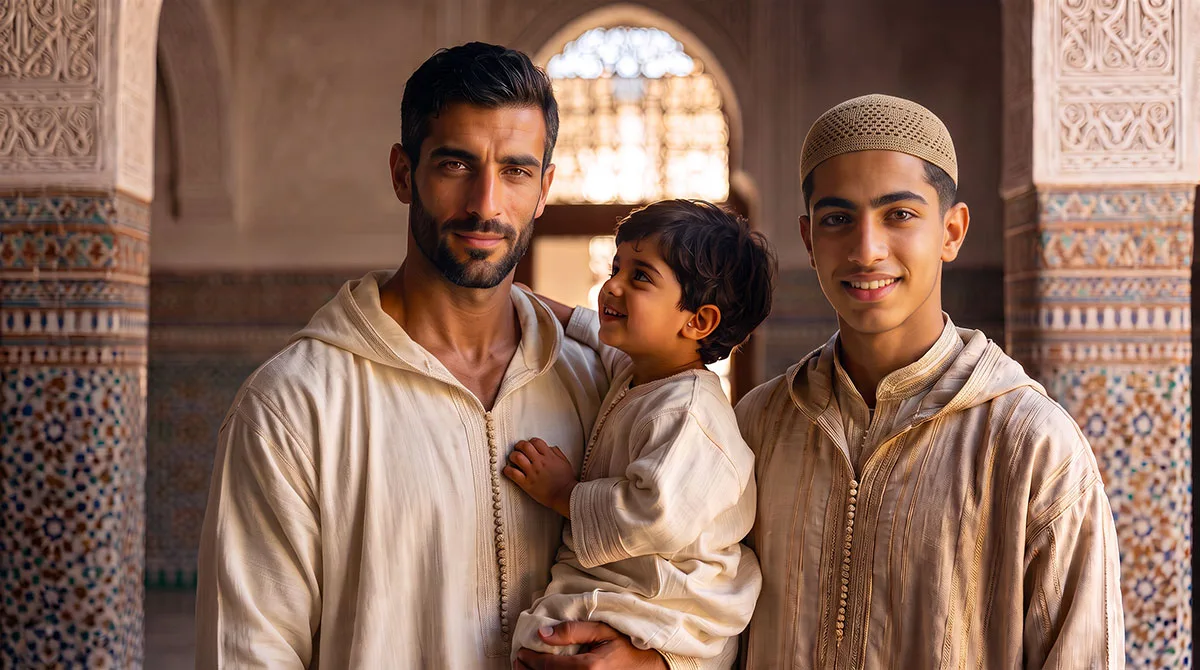
You want to grow alongside present men, under the guidance of masters who transmit a craft as much as a way of being — rather than being educated by anonymous entities and institutions.
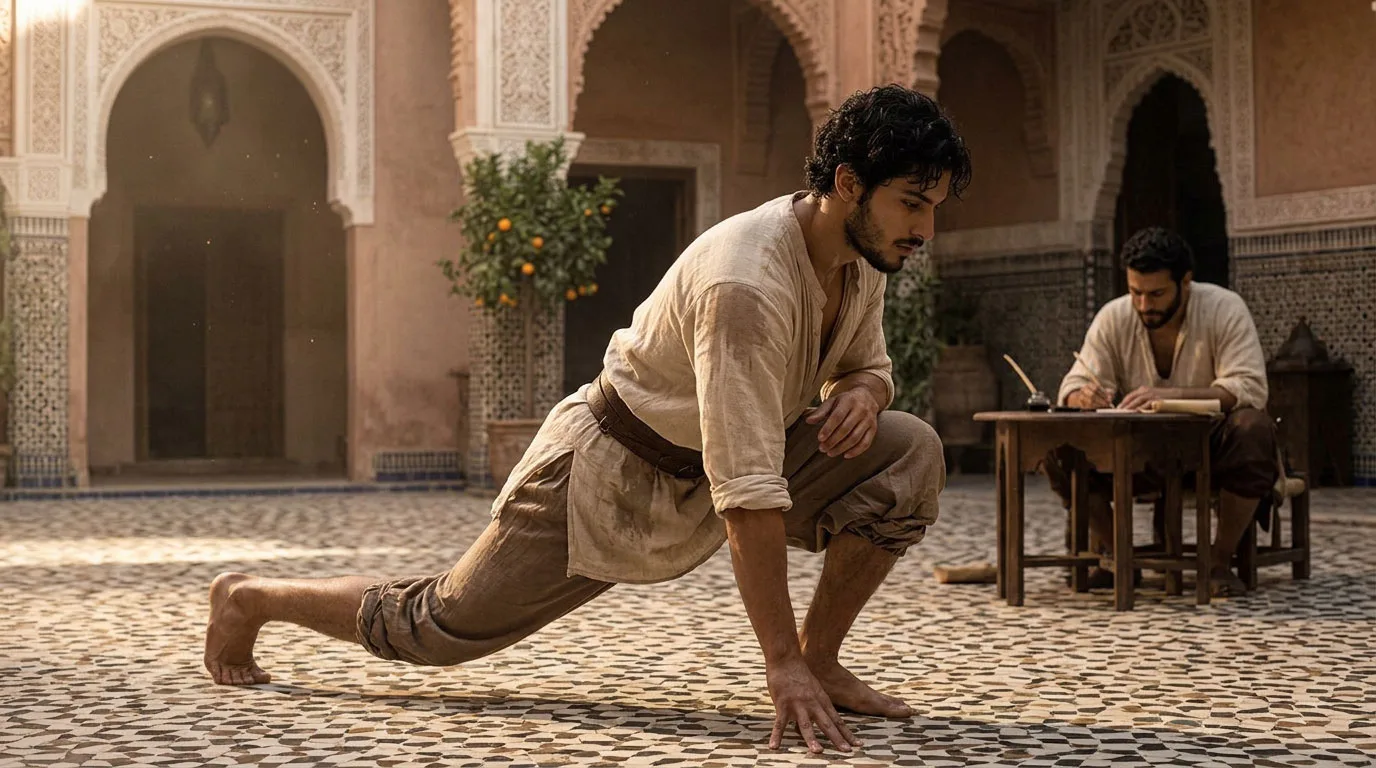
Stability and discipline
You seek a clear and predictable rhythm — prayer, work, the body, the table — where one can build oneself without the constant anxiety of the unexpected.
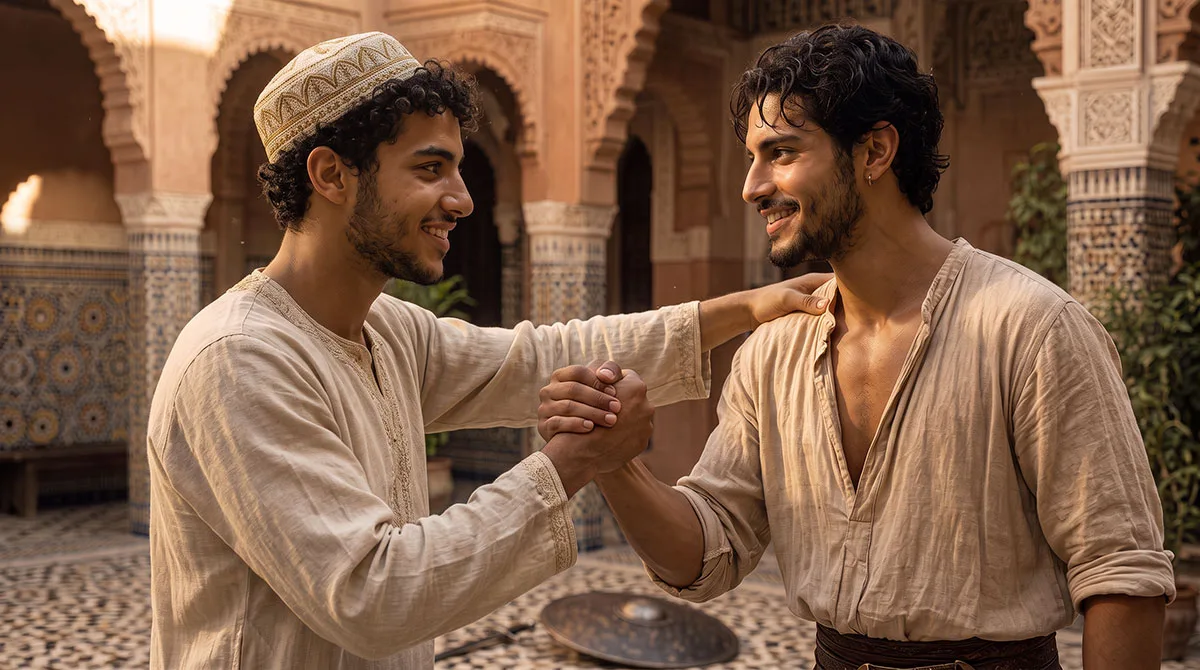
Brotherhood
You want to build real bonds, tested in the shared gesture — the workshop, the table, prayer — rather than living relationships that remain on the surface.
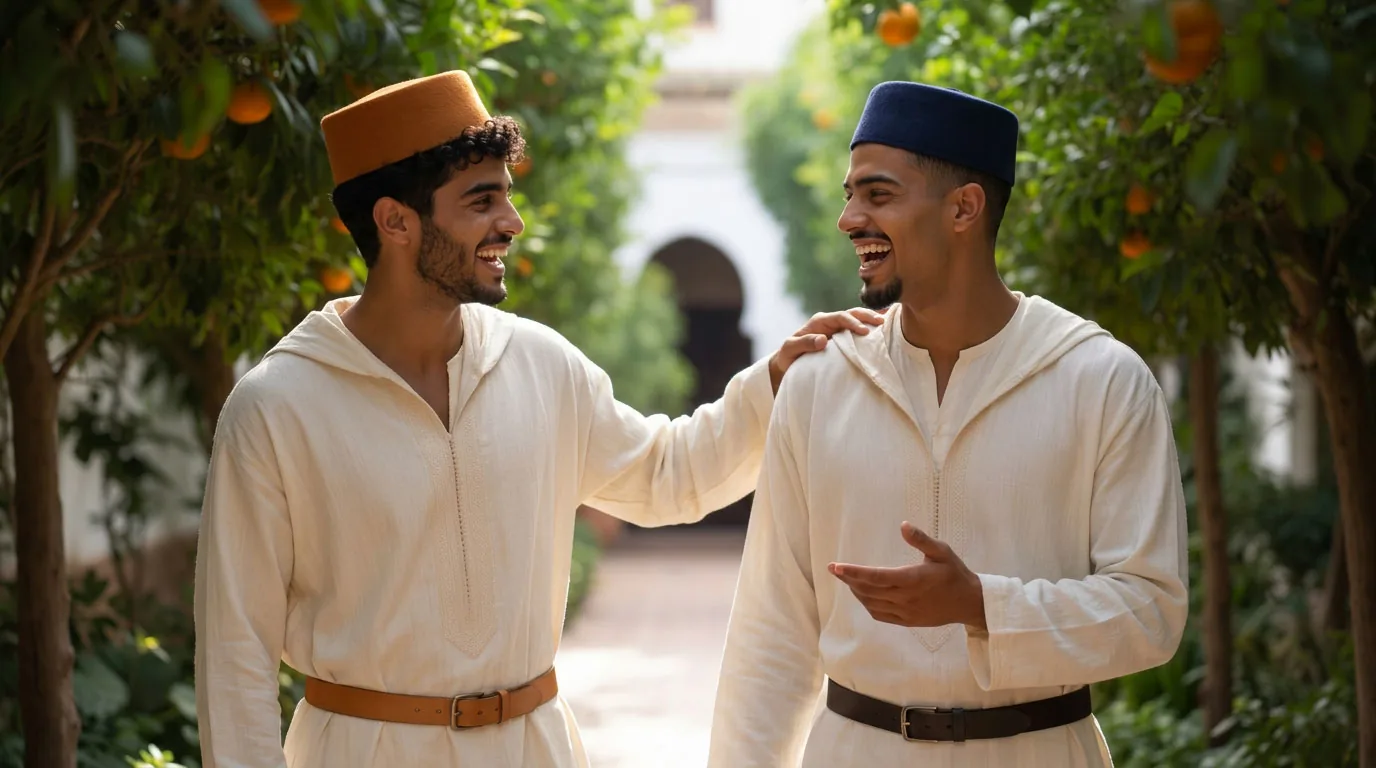
Transmission of the futuwwa
You know that generosity, loyalty and self-mastery are lived day by day, and not declared in words.
THE IDEAL PROFILES
Three profiles, one path
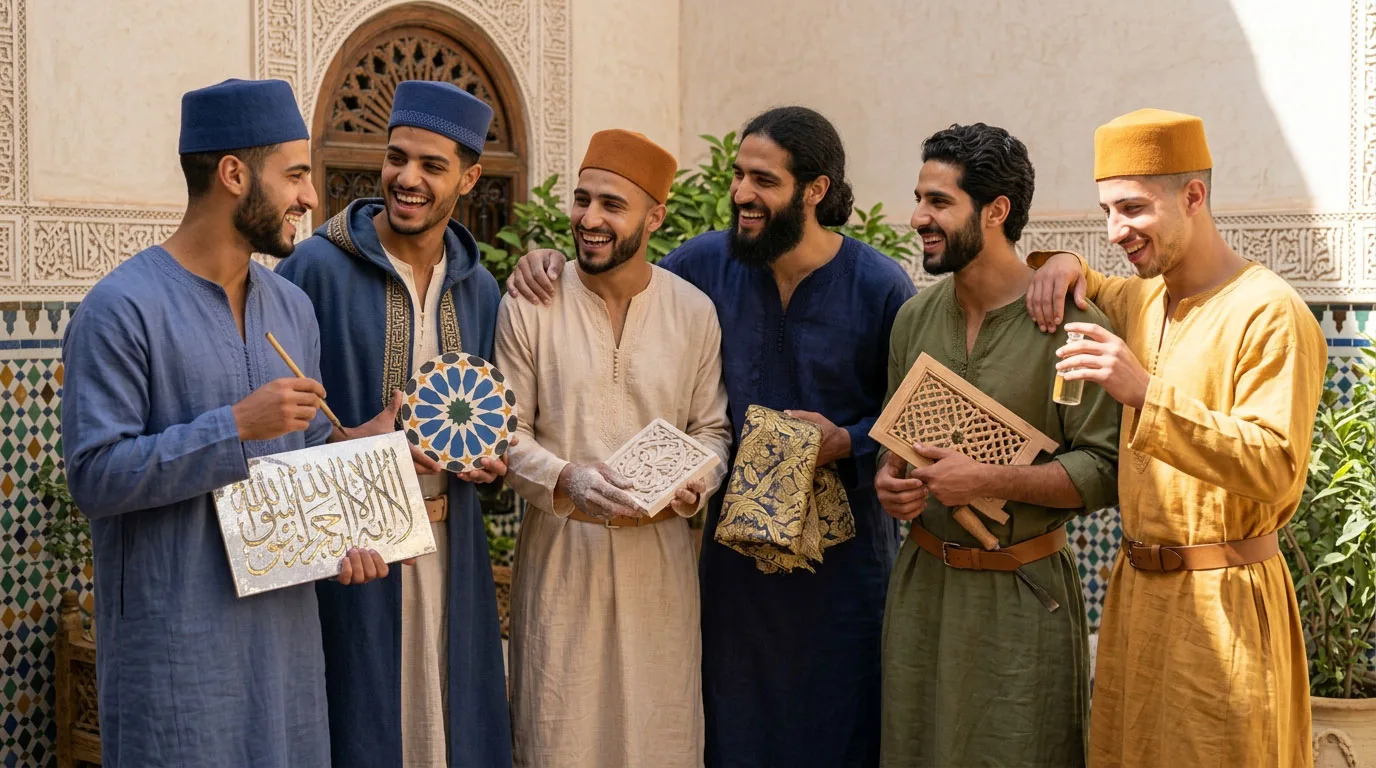
HIGH PRIORITY
Craft-oriented
They believe in the value of manual work, of concrete skill and of intergenerational transmission. Some already know what they want to learn; others are still searching. They look far ahead, knowing that crafts almost extinct today will soon be sought after.
HIGH PRIORITY
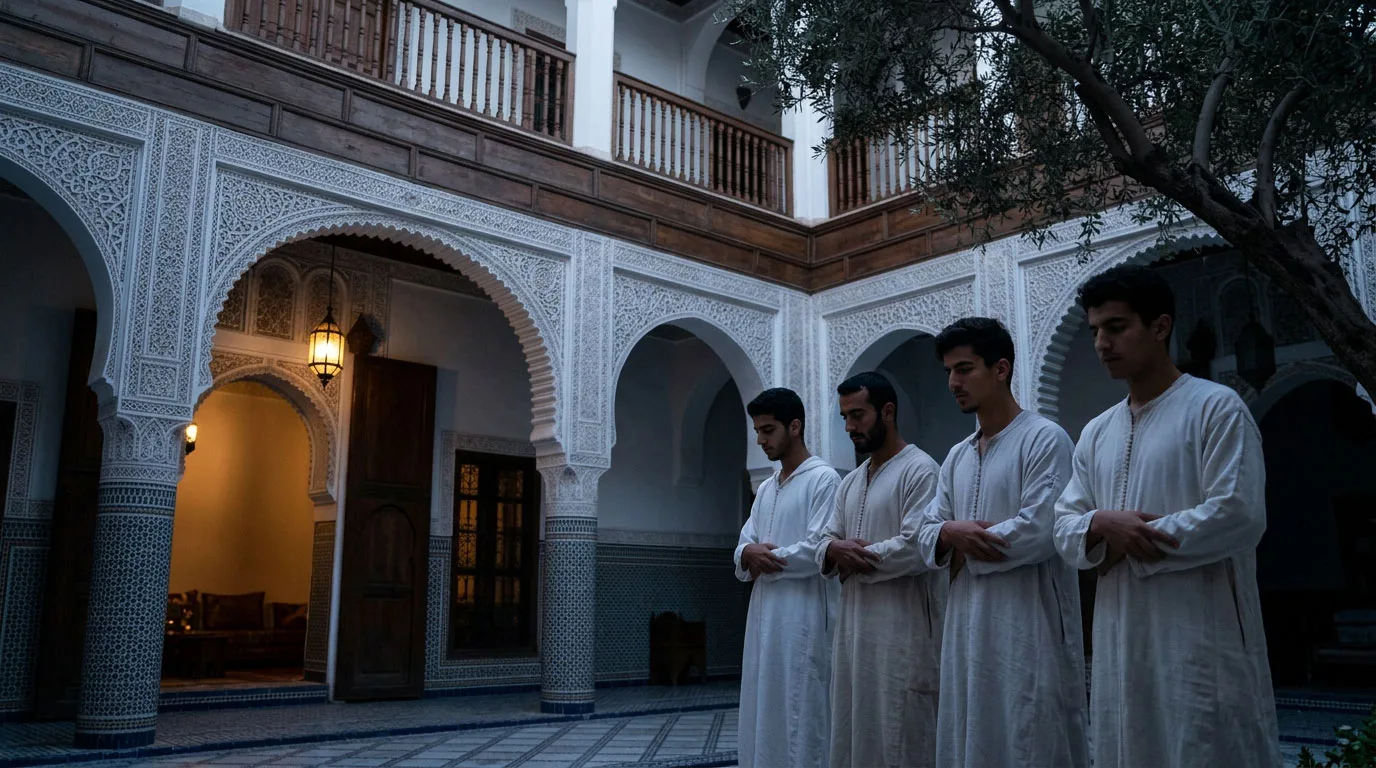
Oriented toward spiritual and moral formation
For them, the spiritual dimension is not optional. They seek a setting where prayer, study and the discipline of character are lived naturally, carried by a community that holds them together rather than leaving them to individual will alone.
HIGH PRIORITY
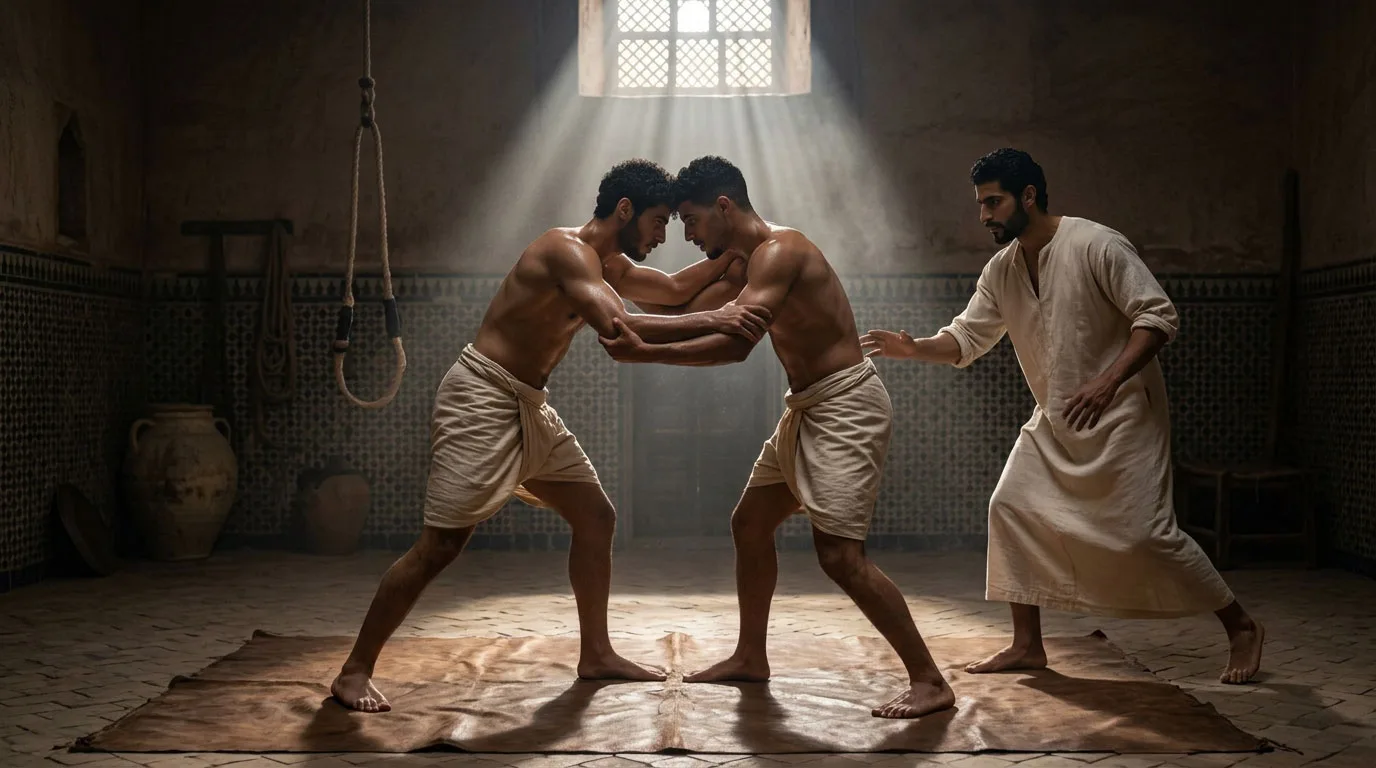
Oriented toward physical discipline
They want the futuwwa to be lived in the body too — the Muṣāraʿa, archery, horsemanship, the zurkhāne — not as performance, but as a school of measure and self-mastery.
THE PATH
The path of entry
The path is the same for everyone, and it is set out gesture by gesture in How one enters: six gestures, gradual and reciprocal. It is a mutual acquaintance and not an enrolment — and it can stop at any of the six, on either side.
The reading
of the rule and the context
The letter
presentation and intention
The conversation
the exchange at a distance
The immersion
the trial stay on the ground
The residence
the year or the three-year community cycle
The work — Al-Athar
the visible completion
→ How one enters
LET US GET TO KNOW EACH OTHER
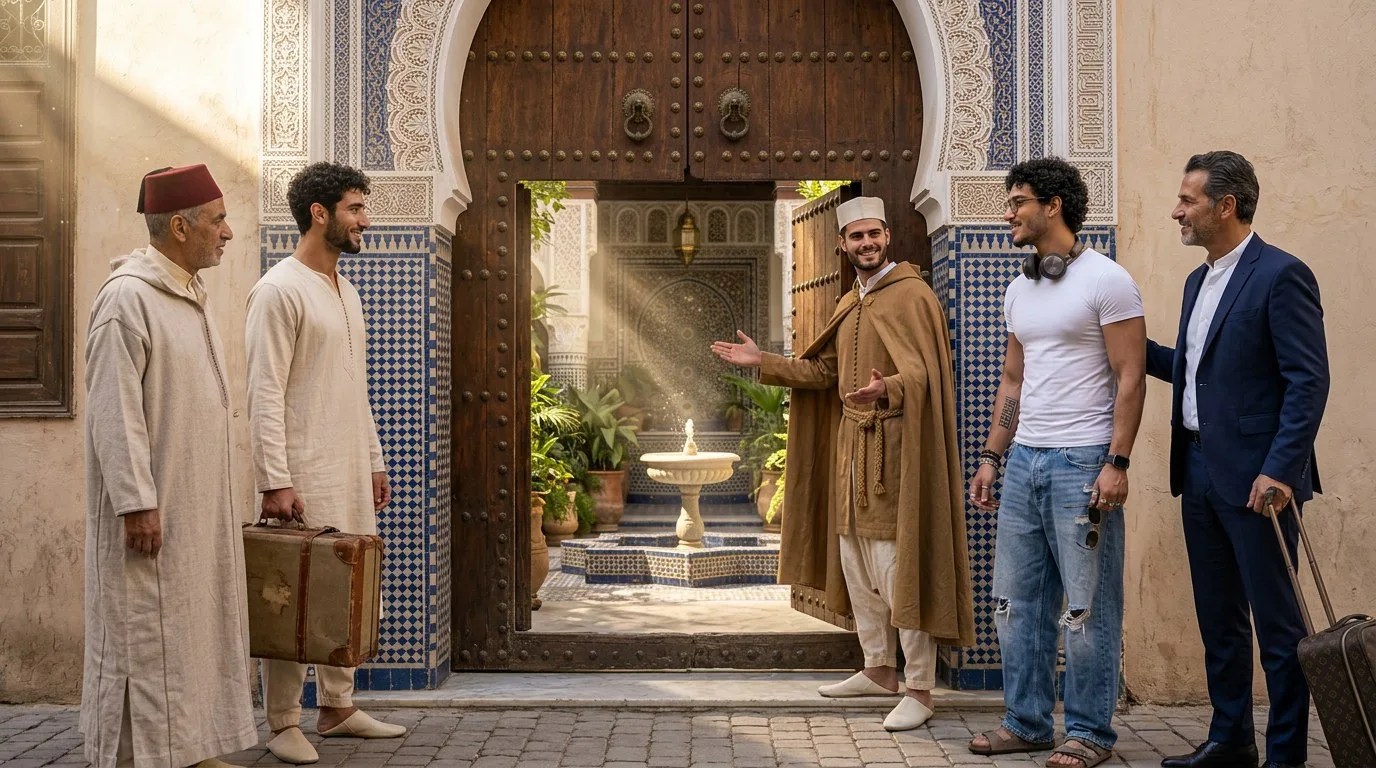
Take the first step
If you recognise yourself in one of these profiles, write to us. State your age, the craft or discipline that interests you, and what brings you to Riad Al-Uns.
The information sent through this form is handled according to our privacy policy.
The words of this page are in the common glossary; the works cited in the sources; the sister house is Al-Funduq aṣ-Ṣiqillī.