Al-Munya
The guesthouse beside the two houses: a measured hospitality, in Fez as in Sicily.
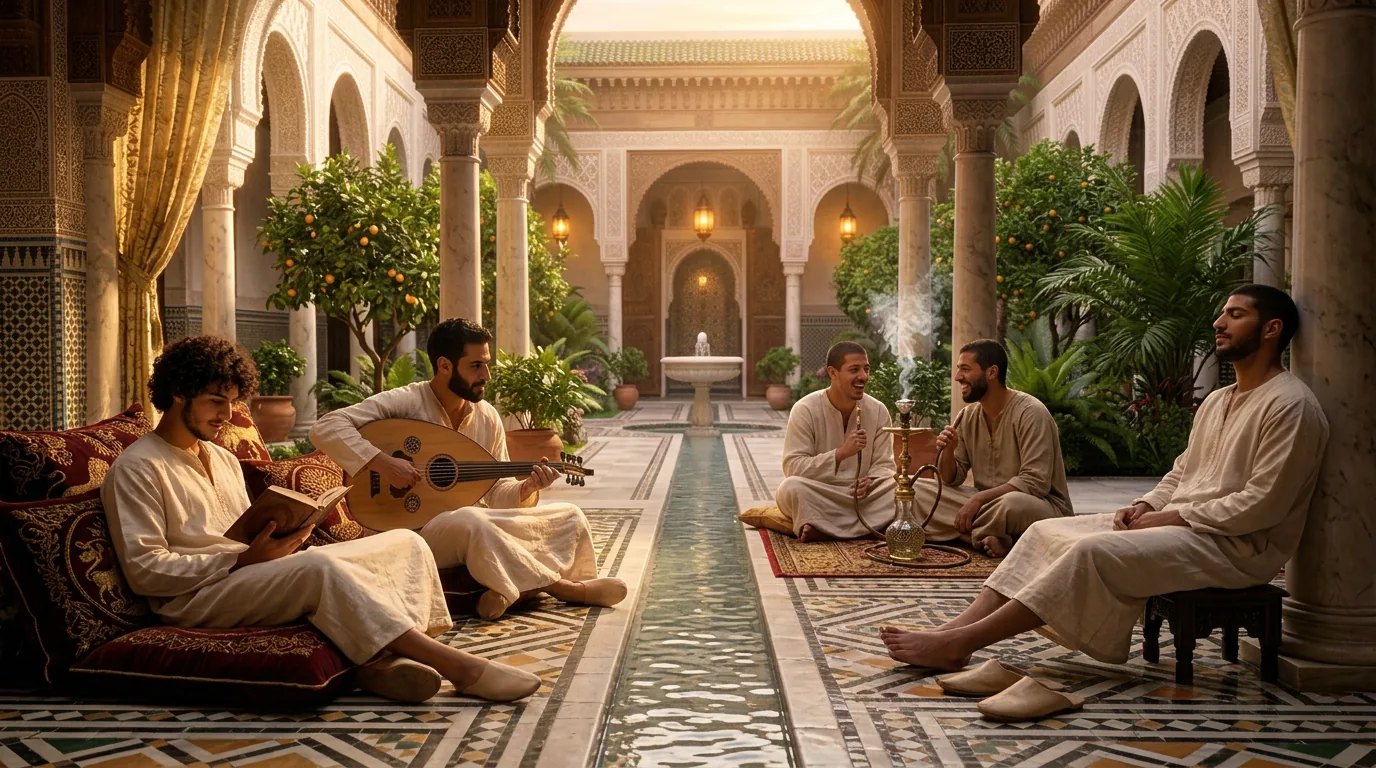
“To site a house among gardens, let a rise be chosen that makes it easy to keep. Let the well and the pool be placed at the highest point; better than a well, a channel running in the shade. Beside the pool let shrubs be planted that stay green all year. Further off, the flowers and the evergreen trees. Let the garden remain distinct from the rest of the land.”
Ibn Luyūn, Treatise on Agriculture, Almería, 1348 (after the Spanish version of J. Eguaras Ibáñez, 1975, revised by W. Akef and I. Almela, 2021)
What a munya was
In the fourteenth century, at Almería, Ibn Luyūn describes the munya as an estate in which the house, the water and the crops keep a single order. The pool is set high, so that the water runs down. The evergreen planting stands beside it. The flowers come next, then the vine along the walks, then the working land, kept distinct from the garden. Dwelling and cultivation draw on the same water, at different times.
It is a precedent of measure. The Favara of Palermo — the castle with its fishpond that Ibn Jubayr calls Qasr Ja‘far, and that ‘Abd al-Raḥmān of Trapani sings as a lake of two palms — is the other shore of the same precedent: an enclosure, a spring, a garden that feeds and that receives.
What Al-Munya is
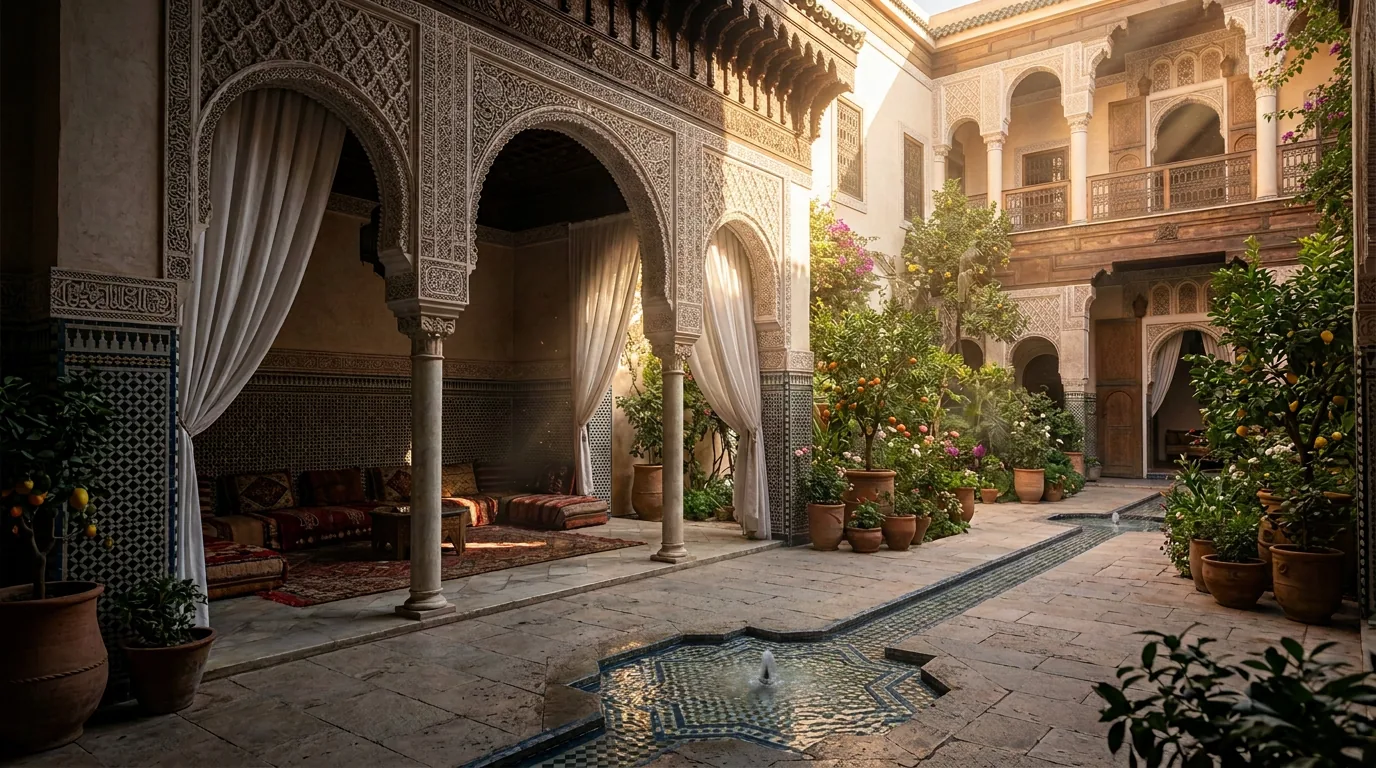
Al-Munya, within this ecosystem, is the guesthouse. A separate body, with its own entrance, sharing a wall with the house of formation, in Fez and in Sicily. A single door in the common wall, and it opens from the side of the house. It receives few guests, and receives them by degrees.
Dār al-Aṣl, the house of the origin, lodges without charge the guests whom the House invites: the costs fall on Al-Munya. Dār al-Diyāfa, the house of hospitality, lodges the nudamāʾ and the guests they introduce, who pay their own share. Al-Munya pays the house of formation a fixed annual sum. The apartment of honour enters no tariff.
Of Ibn Luyūn, the guesthouse keeps this: water led with measure, green that shades what grows beneath it, dwelling kept distinct from work. In Fez, the great orchard was another thing, and lay outside the city. Here the scale is that of a courtyard and a garden beside the house.
An-Nudama is the company of the founders: the ninety-nine who support the House without governing it, with a fund of their own. When its members stay, they are guests of Dār al-Diyāfa. Their name is not on a plaque.
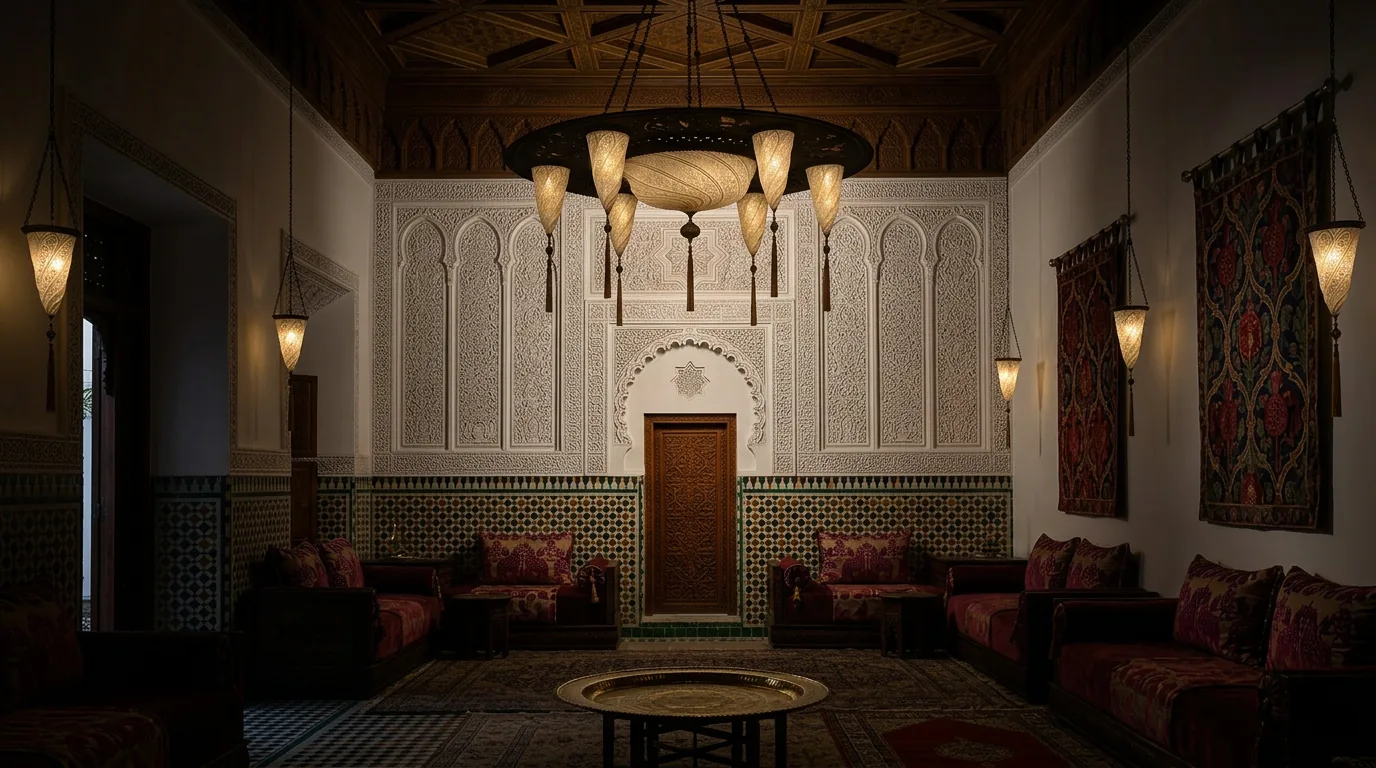
The chapters of Al-Munya.
The guesthouse in brief.
- Nature
- The house beside the house, in Fez and in Sicily
- The two houses
- Dār al-Aṣl · Dār al-Diyāfa
- Foundation
- An-Nudama, the company of the founders
- Rule
- The nizam ad-dar, shared with the houses