The table
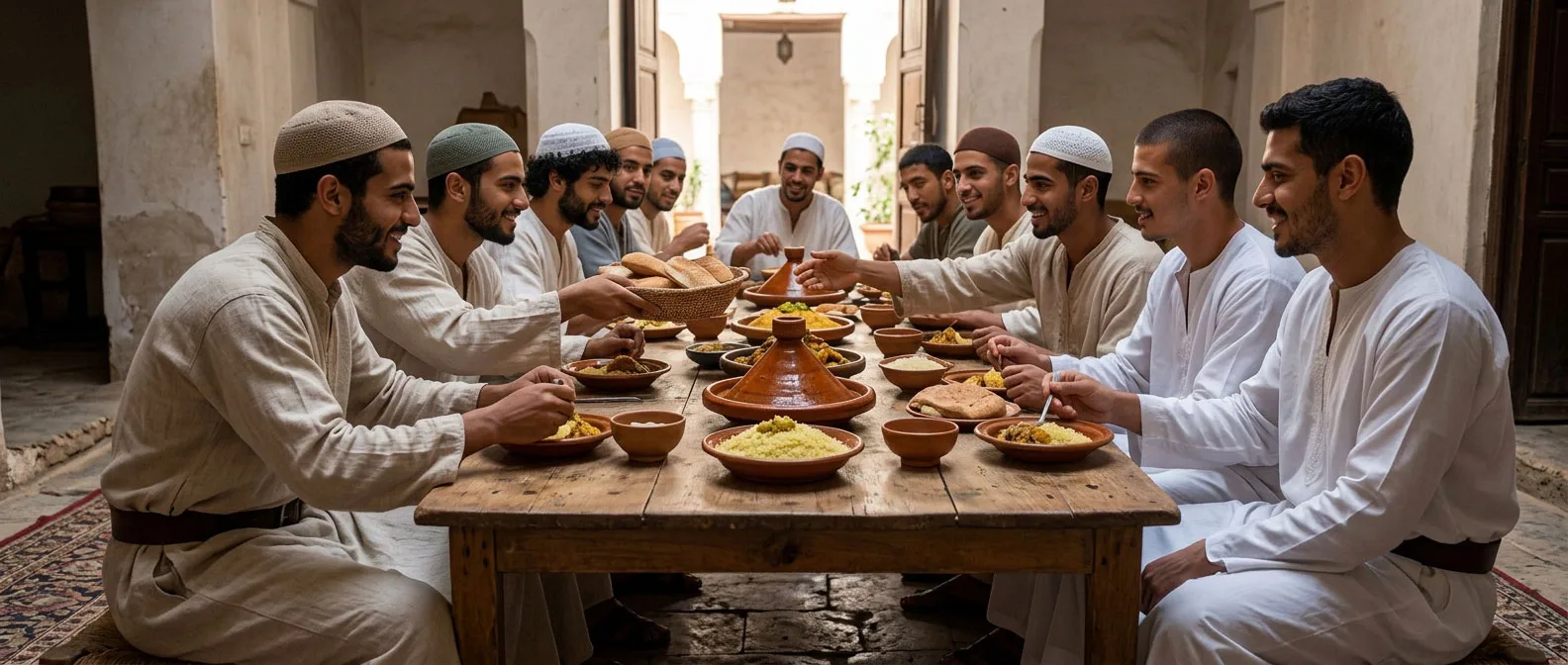
A kitchen for men in full vigour: the workshop in the morning, wrestling, the horse and the field in the afternoon. The house eats what the garden and the orchard give, in the season they give it.
The day at the Riad asks a great deal of the body. The saddler stays bent over the bench for hours, the building site lifts stone and lime, and the afternoon brings the furūsiyya: the horse, wrestling, the staff of taḥṭīb, football with the boys of the quarter. The table is made for this: it gives strength, renews it and keeps it high from dawn to night.
مَا مَلَأَ آدَمِيٌّ وِعَاءً شَرًّا مِنْ بَطْنٍ، بِحَسْبِ ابْنِ آدَمَ أُكُلَاتٌ يُقِمْنَ صُلْبَهُ
“The son of Adam fills no vessel worse than his stomach: a few mouthfuls are enough for him, to keep his back straight.”
Prophetic tradition (Tirmidhī, no. 2380; Ibn Māja, no. 3349)
The saying goes on: a third for food, a third for drink, a third for breath. One eats to stand, and one stands for a long time: dishes full of what builds the body, and nothing that weighs it down.
What builds
Every meal carries its share of protein. Oily fish from the Atlantic coast, sardines and mackerel, comes back several times a week; eggs every day; lamb and beef regularly, slow-cooked in the ṭājin or over embers. Pulses, chickpeas, lentils, broad beans, go with the bread and the barley couscous. Whoever wrestles and rides rebuilds his muscle at the table, and the kitchen knows it.
In the morning. Eggs, olive oil, barley or wholemeal semolina bread, olives, dates, amlū (almonds, argan oil and honey), a fruit in season.
At midday. The main meal: a ṭājin of meat or fish with vegetables from the garden, pulses, raw and cooked salads.
After the field. Fermented milk, the lben, with dates and nuts: what the body needs at the hour it needs it most.
In the evening. Ḥarīra or a soup of pulses, fish or eggs, vegetables, fruit.
From the garden and the orchard
The vegetable garden and the orchard give a good part of what goes on the table, and what is missing is bought at the market of the quarter, in the right season. The kitchen follows the land: what is ripe today goes into today’s meal.
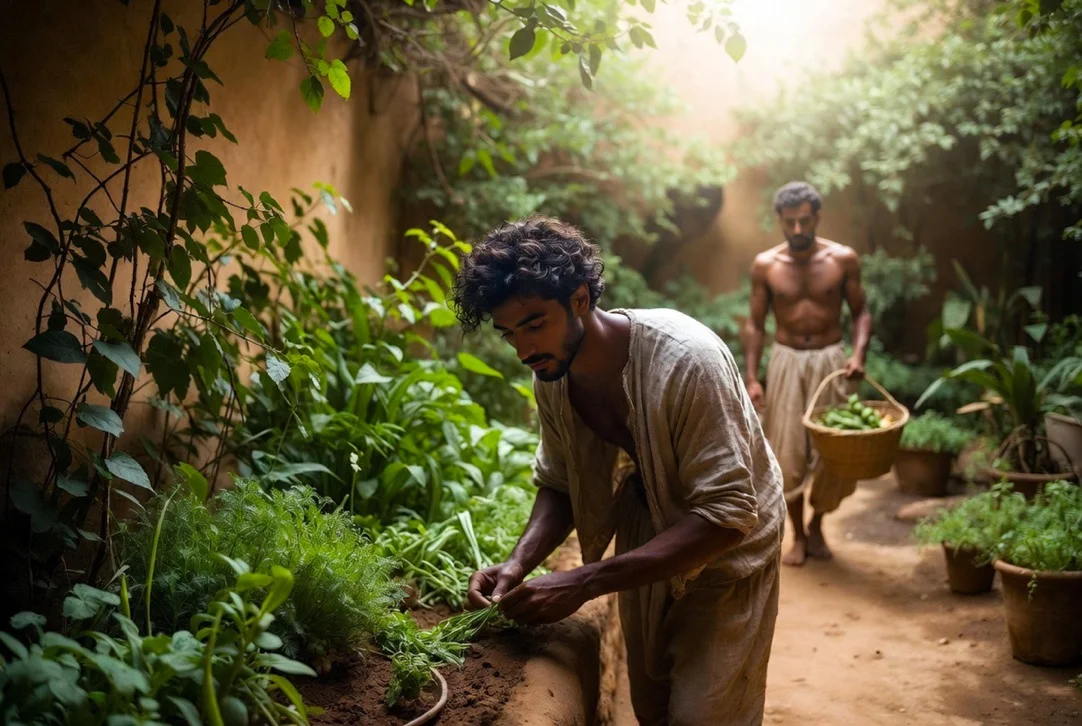
Spring. Fresh broad beans and peas, artichokes, asparagus, rocket, spring onions, young herbs, the first apricots.
Summer. Tomatoes in abundance, peppers, aubergines, courgettes, watermelons, figs, grapes.
Autumn. Pomegranates, fresh dates, grapes, squash, beetroot, freshly picked walnuts.
Winter. Oranges and lemons, cabbage and broccoli, turnips, fennel, spinach and chard, garlic and onions from the store.
Every day, in every season: garlic, onion, fresh parsley and coriander, ginger and cumin in the sauces, raw olive oil over everything.
The store
Always within reach, in the rooms and on the workbench: walnuts, almonds, pumpkin seeds, dates, dried figs, honey. It is the food of those who work with their hands and have no time to stop. Argan oil and Atlas honey go into the morning amlū; sesame seeds into the bread.
What one drinks
Water above all, plenty of it, and more in the hot months and on building days. Green tea with mint goes round after meals, lightly sweetened. Lben, and almond milk in summer. Sugary drinks and industrial food stay at the market; alcohol stays outside the house, as the rule lays down.
The fast
During Ramadan the house fasts with the city. The meal that breaks the fast begins as custom wants, with dates and water, then the ḥarīra; the saḥūr before dawn is substantial: eggs, bread, oil, milk, nuts. Work shifts towards the cool hours, and the field to after sunset.
Who keeps the kitchen
The kitchen is a charge of the house, like the door and the library. The residents take turns there and learn to make bread, to cook a ṭājin, to preserve what the garden gives in excess. A man who knows how to feed a table also knows how to feed a household.
See also: Garden and vegetable garden→, A day at the Riad→, The furusiyya→.
The words of this page are in the common glossary; the works cited in the sources; the sister house is Al-Funduq aṣ-Ṣiqillī.