Short stay
Three to seven nights in the rhythm of the house, without commitment: an autonomous path, reserved for adult men
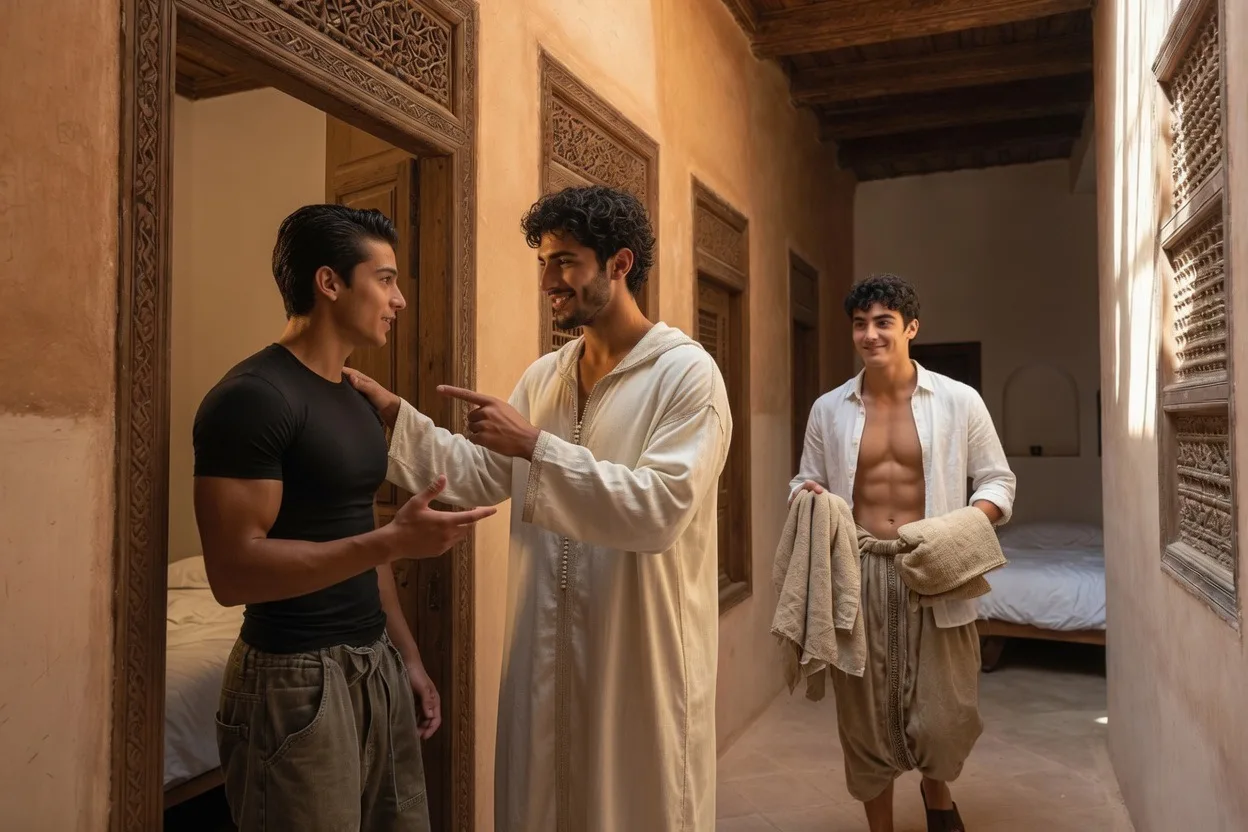
When the house is open, the guest will be received for a period of three to seven nights in a living house, where the formation of the young men, the disciplines of Dar al-Hiraf and the rhythm of the five prayers form one whole.
The number of places will be deliberately very restricted. Most of those who live there will be young men in formation, and hospitality will remain rare, to keep the rhythm of the house.
One enters by accepting silence, the common table, respect for the prayers and for the work. Welcome is an ancient duty, which the house observes according to the same principles as Measured hospitality→.
In the rhythm of the house
Sharing the rhythm of the house: the five prayers structure the day, meals are common, the silence after ʿishāʾ is kept. Sometimes a workshop, sometimes a conversation.
Rarity
Few guests at a time: the house will welcome first those who live and form themselves there.
Measure
Each request will be examined one by one, and the house will welcome those who seek to respect its rhythm.
Where one sleeps
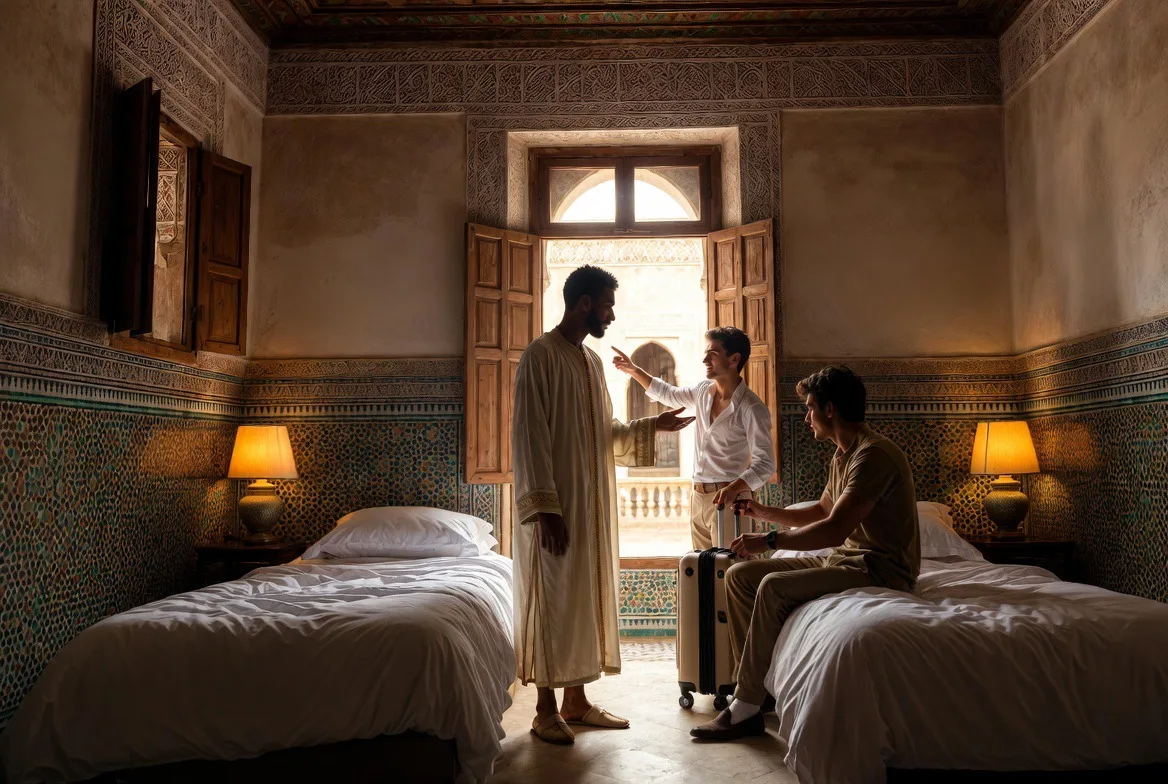
It depends on what one is looking for. Whoever comes to rest, as a guest of the house or as a paying guest, will lodge in Al-Munya→: in Dār al-Aṣl if invited by the community, in Dār al-Diyāfa at his own expense. Whoever wishes to live by the rhythms of the house may sleep in the dormitories, with the residents, from his second visit onward.
A house without keys
The common spaces are shared, meals are taken together, the hall and the hammam belong to all. Nights are spent in dormitories, six beds to a room; only the maʿallem has a room of his own, next to that of his ṣāniʿ. The doors remain without locks: what separates the spaces will be screens of carved wood and hangings, made in the wood workshop. Each keeps his privacy, but the spaces are designed to avoid isolation: whoever lives here considers himself the brother and companion of the others, and lives with them openly.
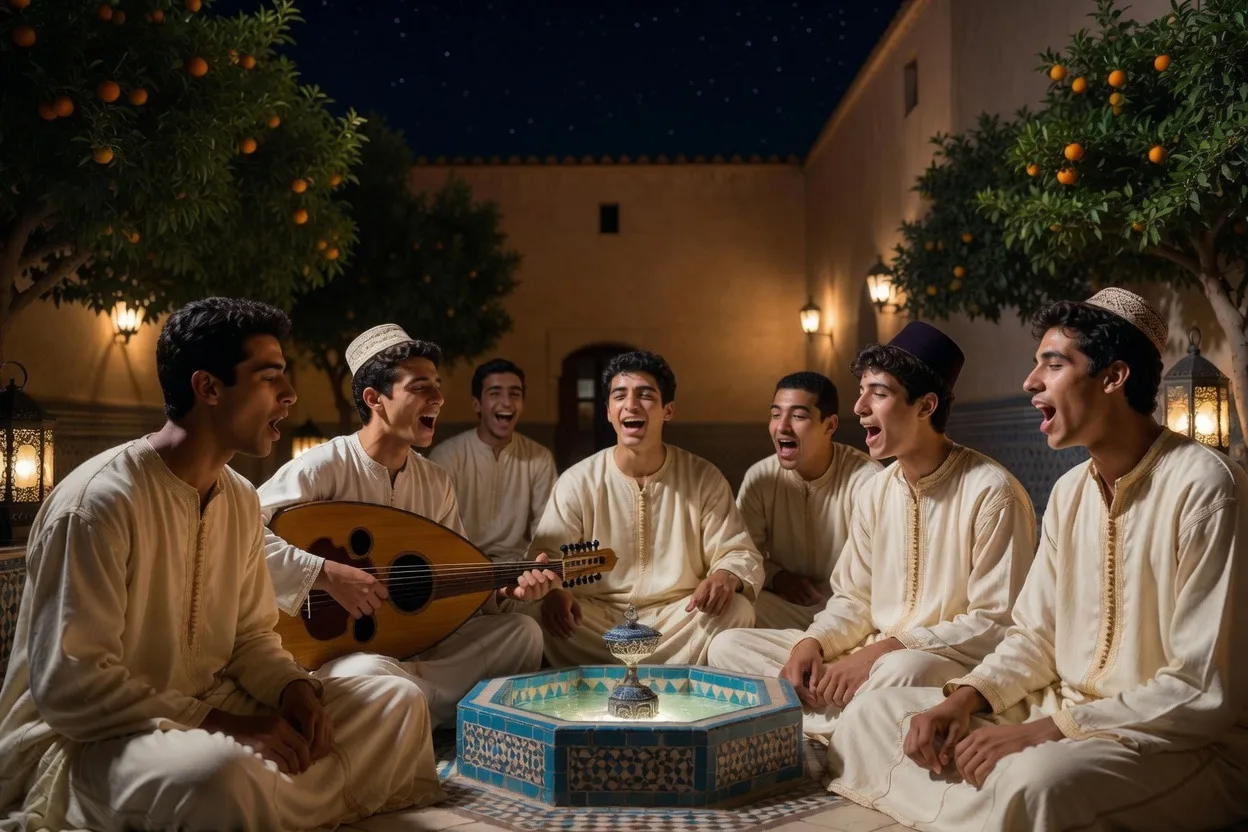
Common spaces
Patio, garden, meals, hammam and the sports room. The guest is invited to enter into the rhythm.
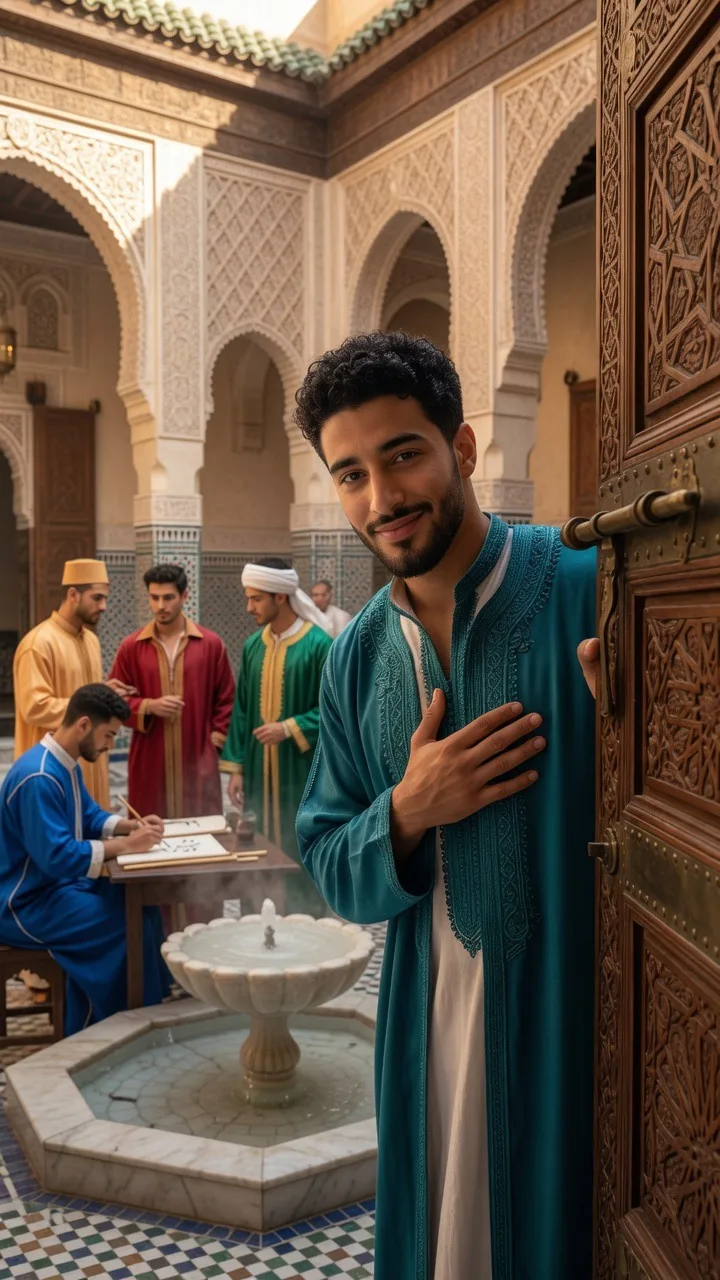
What the guest finds
Concretely, here is what the house offers to those it receives:
A bed in Al-Munya or, from the second visit, in the dormitories of the house
Shared meals according to the rhythm of the day
Access, according to the moments, to the patio, the garden, the terrace, the hammam and the sports room
The possibility, according to the moments, of sharing the work of the workshops
The silence of the night after ʿishāʾ
In Dār al-Aṣl the guest will be received by the community; in Dār al-Diyāfa he will bear the cost of his own stay. In the dormitories a simple rule holds: whoever has may give, whoever has not repays with his own time. One will give a free contribution, or take an active part in the activities and tasks of the house. Anyone with particular abilities or professional skills may mention them when writing: where possible, he will be given tasks that match them.
The three doors
The short stay is one of the three autonomous paths of the Riad; the craft immersion and the residential path have different purposes and durations. The doors are described in How one enters→.
The request is addressed to the house from the Contact→ page, stating who one is, what one is looking for and which dates.
How one enters · Craft immersion · The residence · Al-Munya, the guesthouse
The words of this page are in the common glossary; the works cited in the sources; the sister house is Al-Funduq aṣ-Ṣiqillī.