AL-MITHAQالميثاق
THE STRUCTURE · 03

The Ecosystem

One charter, two houses and a network. The house in Fez trains, the Funduq gives work and selects, the ḥānūt affiliate. In each house, the place of common life, the workshops, a guesthouse of its own and the land, Ar-Raḥl: the garden in the medina in Fez, the twenty-three hectares in Sicily.

At the Riad the rules govern a single house, with its council, the majlis al-umanāʾ, and its arbitral panel, the hayʾat at-taḥkīm. Beside it, Al-Munya is the body, and the company that holds it: distinct from the House, with its own members and its own investors. Inside Al-Munya stand two houses: Dār al-Aṣl, where those invited by the community lodge without charge, whose costs fall on the company; and Dār al-Diyāfa, where the nudamāʾ and their guests lodge against payment, whose proceeds remain with the company. The company pays the Riad an annual fee, regardless of profits. An-Nudamāʾ is the body of the ninety-nine founders, with its own treasury to fund the Riad: it is not a house. At the Funduq the same rules hold five bodies apart (the House, the cooperative of the masters trained in Fez who work there, the farming, Al-Munya and An-Nudamāʾ) each with its own assets and its own liability; inside Al-Munya, again, Dār al-Aṣl (those invited by the community) and Dār al-Diyāfa (the nudamāʾ and their guests). The structure is the same in both seats, and the houses are equal in rule and in dignity; their function is distinct, for the house in Fez trains the masters and the Funduq gives them work and chooses the young men who will go to Fez. This is the part of the house that is not seen and that decides whether the other two last, because a community with rules of its own lasts as long as the contract it has written, and the contract is the same in both houses.

One building, two houses, the same in both seats. Dār al-Aṣl receives those invited by the community; Dār al-Diyāfa lodges the nudamāʾ and their guests. An-Nudamāʾ does not appear in this drawing: it is not a house.

THE ORDER OF THE HOUSES

Each body has its own crest; the signs of the crafts are the same in the two seats. The structure is common, while the timing and the activities of the houses remain distinct.

THE COMMON CHARTER

Al-Mithaq

The charter that keeps the rule of the network: the house, the funduq, the ḥānūt.

The Charter
01 · FEZ, MEDINA

Riad Al-Uns

The house that trains · Medina of Fez

The house
THE PLACE OF COMMON LIFE

The House

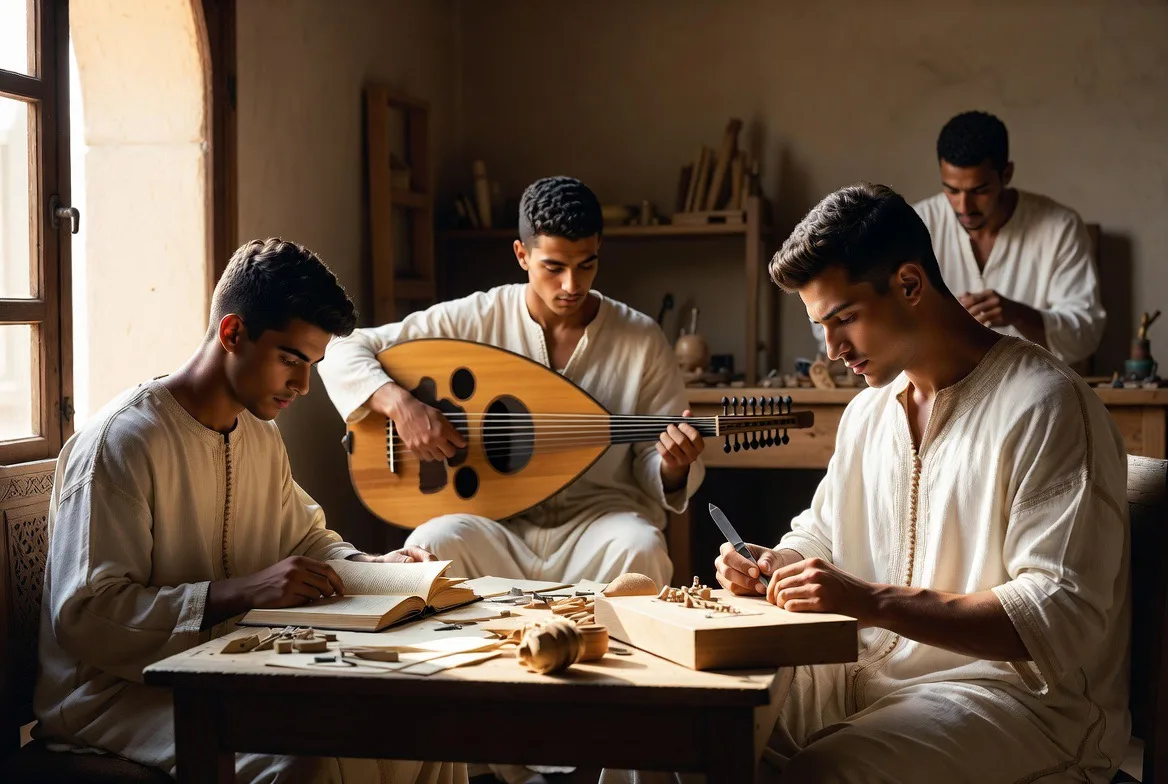
A community of masters and ṣunnāʿ, under the same rule: here the apprenticeship is completed and one becomes a master.
  • Entrance
  • Library
  • Treasury
  • Kitchen
  • Garden
  • Dormitory
THE ARTS AND THE CRAFTS

The Workshops

The Riad will open with the saddlery (leather, wood and metals), which at this scale is already a complete work; the other arts of the hand, zellige, plaster, cloth, bookbinding and perfumes, may be added later, also by way of the ḥānūt.
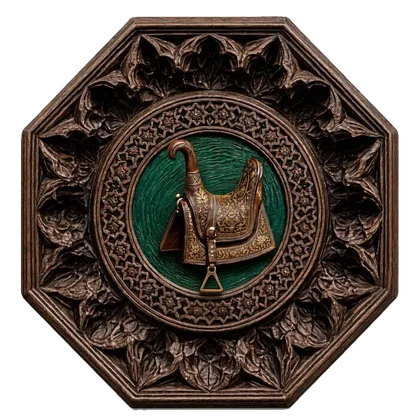
The Saddlery

One workshop, three crafts gathered
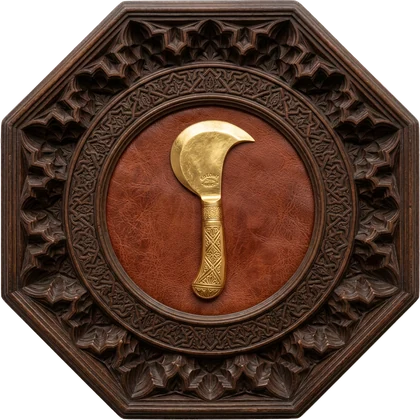
  • Leather
  • Wood
  • Metals
  • Zellige
  • Plaster
  • Cloth
  • Bookbinding
  • Perfumes
  • Glass
HOSPITALITY · FEZ

Al-Munya

A guesthouse, distinct from the house, with its own entrance.
Dār al-AṣlThose invited by the community
Dār al-DiyāfaThe nudamāʾ and their guests
THE NINETY-NINE FOUNDERS

An-Nudama

The company of the ninety-nine founders, with its own treasury to support the house. It does not govern: its members stay at their own expense in Dār al-Diyāfa, in both seats.
THE SETTLED COMMUNITY · FEZ

Ar-Riwaq

The community of the house has two parts: the ṣunnāʿ, who stay until mastery, and the young masters who, their apprenticeship over, choose to remain under the same rule. They are Ar-Riwāq, the pillar of the house: they keep the thresholds and the workshops.

The settled community
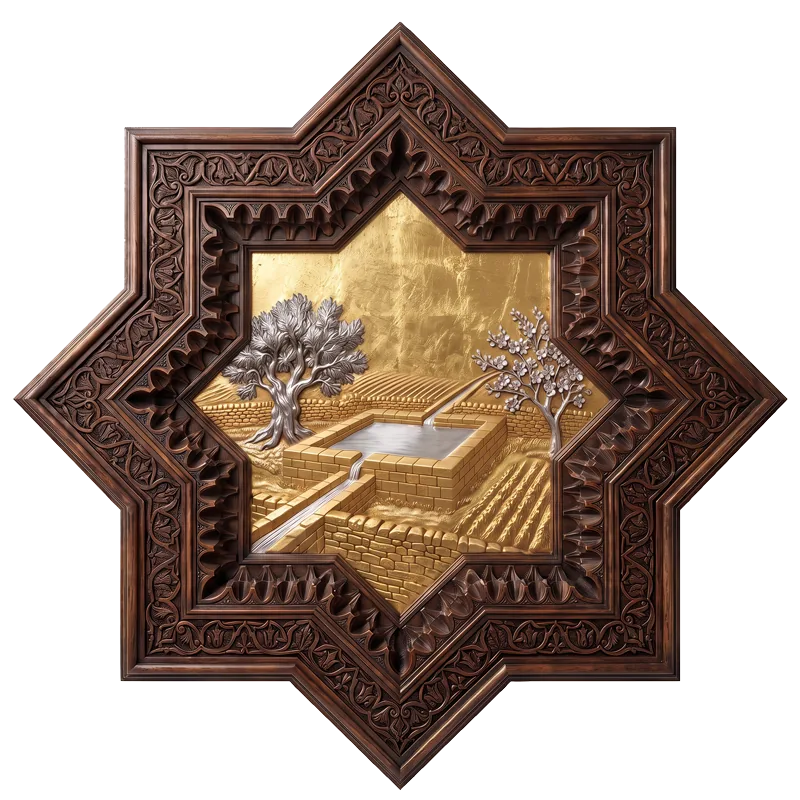
FEZ

Ar-Rahl

The garden with kitchen garden and orchard within the property, in the heart of the medina.
02 · SICILY, IBLEI

Al-Funduq as-Siqilli

The house of work and of first selection · Province of Ragusa

The house
THE PLACE OF COMMON LIFE

The House

The masters trained in Fez, their apprentices and the young men on trial, of different faiths and cultures; the threshold is secular.

  • Entrance
  • Library
  • Treasury
  • Kitchen
  • Garden
  • Dormitory
THE ARTS AND THE CRAFTS

The Workshops

At the Funduq the workshops will open with the masters trained in Fez, each when its art has a master available.

The Saddlery

One workshop, three crafts gathered
  • Leather
  • Wood
  • Metals
  • Zellige
  • Plaster
  • Cloth
  • Bookbinding
  • Perfumes
  • Glass
HOSPITALITY · SICILY

Al-Munya

A guesthouse, distinct from the house, with its own entrance.

Dār al-AṣlThose invited by the community
Dār al-DiyāfaThe nudamāʾ and their guests
THE NINETY-NINE FOUNDERS

An-Nudama

The company of the ninety-nine founders, with its own treasury to support the house. It does not govern: its members stay at their own expense in Dār al-Diyāfa, in both seats.

SICILY

Ar-Rahl

The farmland of the Iblean masseria: a distinct body beside the House, the Workshops and the guesthouse.

THE NETWORK

Around the two houses the network will extend to the affiliated workshops and to the restoration teams, under the same rule.

THE AFFILIATED WORKSHOPS

The hanut

Workshops already at work, each with a single master, which join the network by a written and revocable pact: they receive commissions, host placements and may grow a discipline the house does not yet have.

THE RESTORATION TEAMS

Al-Khayma

Masters, apprentices and helpers who, on commission, move for the years of a restoration to the site of the building and form a temporary community there.

THE REGISTER OF THE ARTS

Diwan al-Sanai

The comparative archive of the Mediterranean variants of each craft, each described in its own language, without standardisation.

The register of the arts
AN-NUDAMA

Support, not government

The companions of the table sit neither in the majlis al-umanāʾ nor in the hayʾat at-taḥkīm: the separation is written in the statute, not left to custom. A house that depends on those who fund it would end up teaching what its patrons want; the distance between the two bodies allows the founders to be generous without becoming a power.

An-Nudama
CORRESPONDENCE

Writing to the house

Contact