Events and public programme
The work and the bonds the Funduq will bring to the Hyblaean countryside, and the occasions through which it will open itself to the villages of the plateau: exhibitions, lectures, music, evenings on the threshing floor, the harvest, the repair bench, the evening class, the cup.
The Funduq stands in open country, among the villages of the Hyblaean plateau, where a masseria lived in by outsiders and turned in upon its courtyard would long remain, for the district, a place apart behind its walls. For this reason, over the course of the year, it will open the north wing and the threshing floor to those who live around it, men, women and families. The public programme, with its exhibitions, lectures and music, will also be where the work finds its buyers, where the masters are recognised as masters, and where a culture that Europe today knows almost only through labour statistics becomes visible again as a civilisation.
Work and bonds
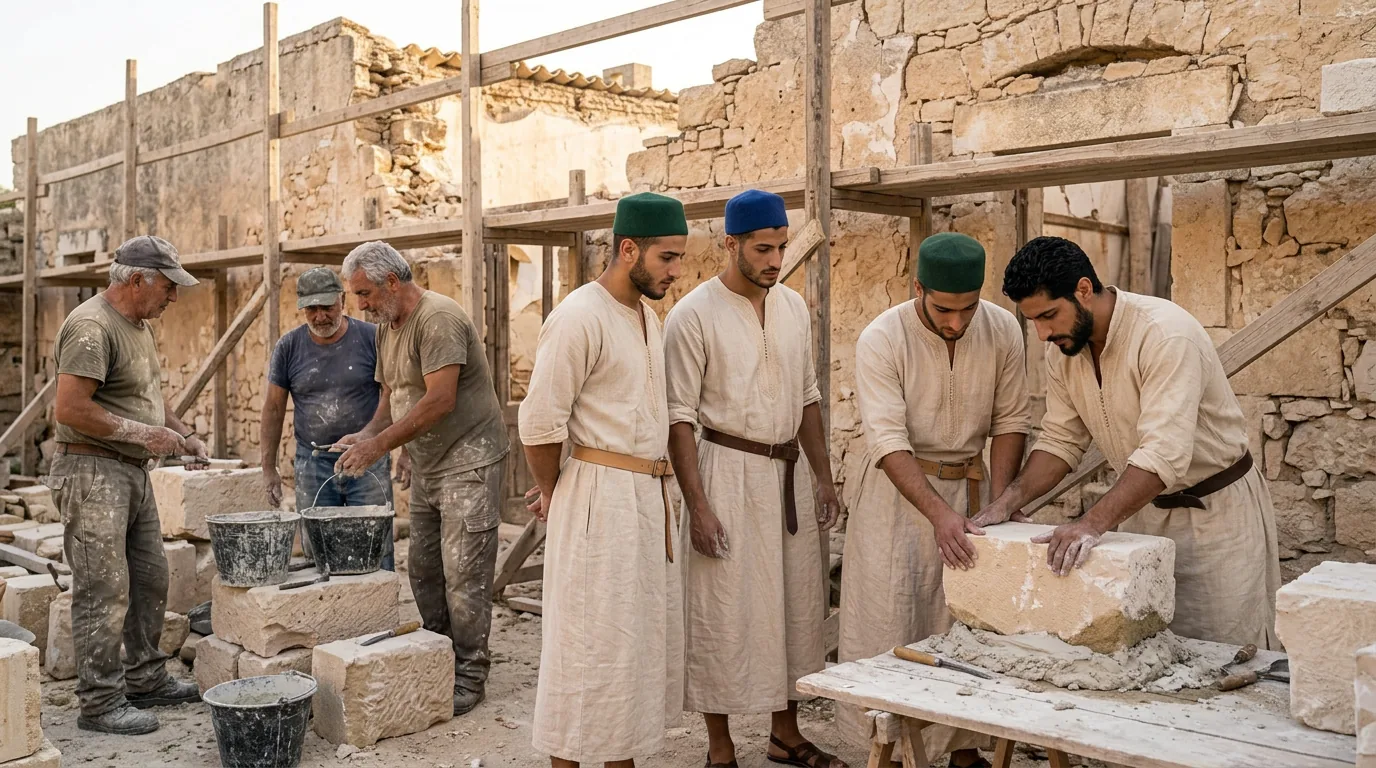
To the land around it the Funduq will bring, first of all, work. The restoration of the masseria, and then of the collapsed buildings around it, will employ the craftsmen of the Hyblaean hills: local firms for the structures, the carvers of the limestone, the lime masons, the carpenters, those who still know how to raise a dry-stone wall. Alongside them will work the masters and craftsmen of a khayma of the network and the house’s young men on trial, as described in The building site as first school→. The opening of the house will not close the site, which will go on for years and throughout that time will bring contracts and wages to the firms and craftsmen of the villages.
Bonds will follow from the work: with Ragusa and the surrounding villages, with those who farm the neighbouring land, with the suppliers of the common table and the workshops of the area. The evenings and gatherings described on this page will let the neighbours see the house in its ordinary life, with its workshop hours, its common table and its daily work.
Many pupils, too, will come from these encounters. A boy who has played in the cup, brought a saddle to the bench to be restitched or picked olives with the house will ask to enter already knowing how the work is done there; and the masters, on the same occasions, will have been able to observe who has the aptitude of hand and the temper a craft demands. Whom the Funduq is looking for is set out in Who we are looking for→.
What it includes
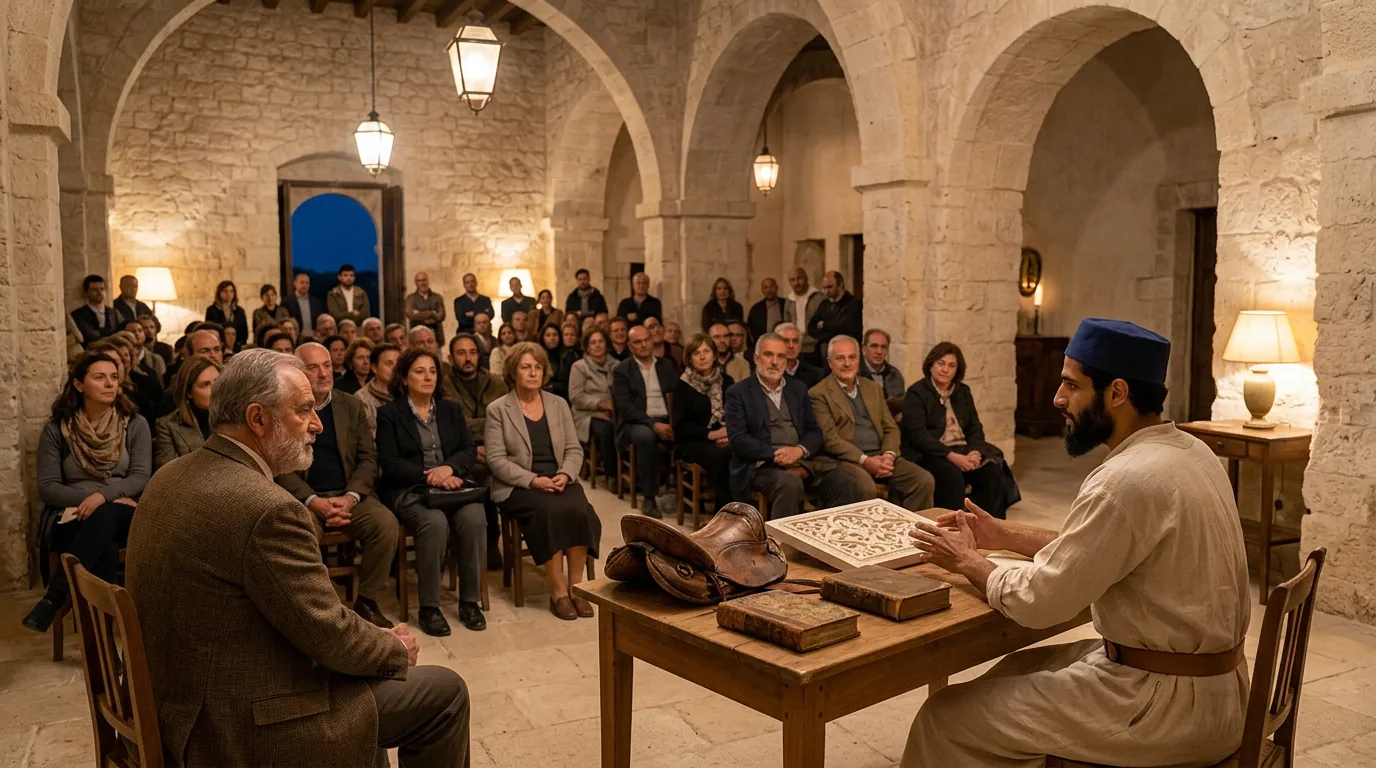
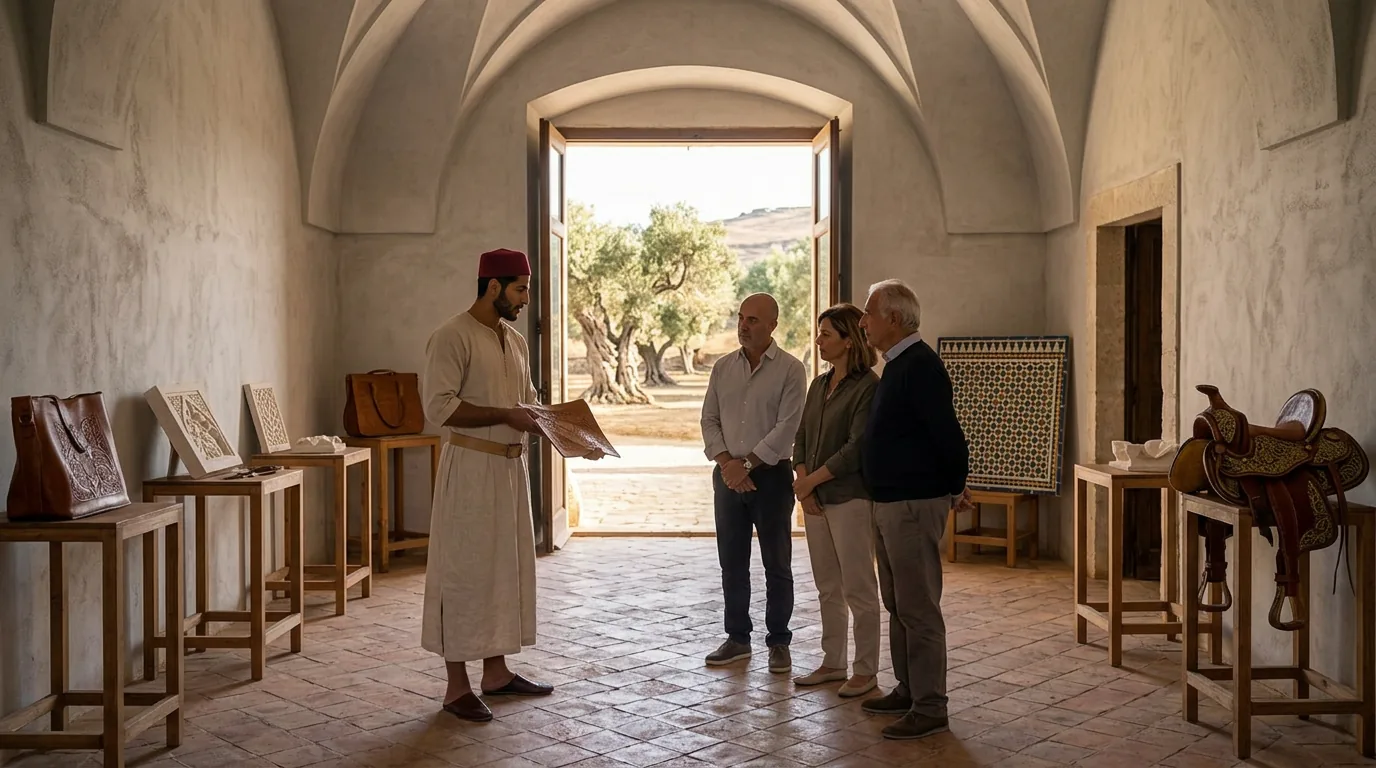
Exhibitions. The work of the house and that of the workshops of Fez, shown as craftsmanship, far from folklore.
Lectures. Architecture, ornament, calligraphy and the law of the crafts, with scholars and with the masters themselves.
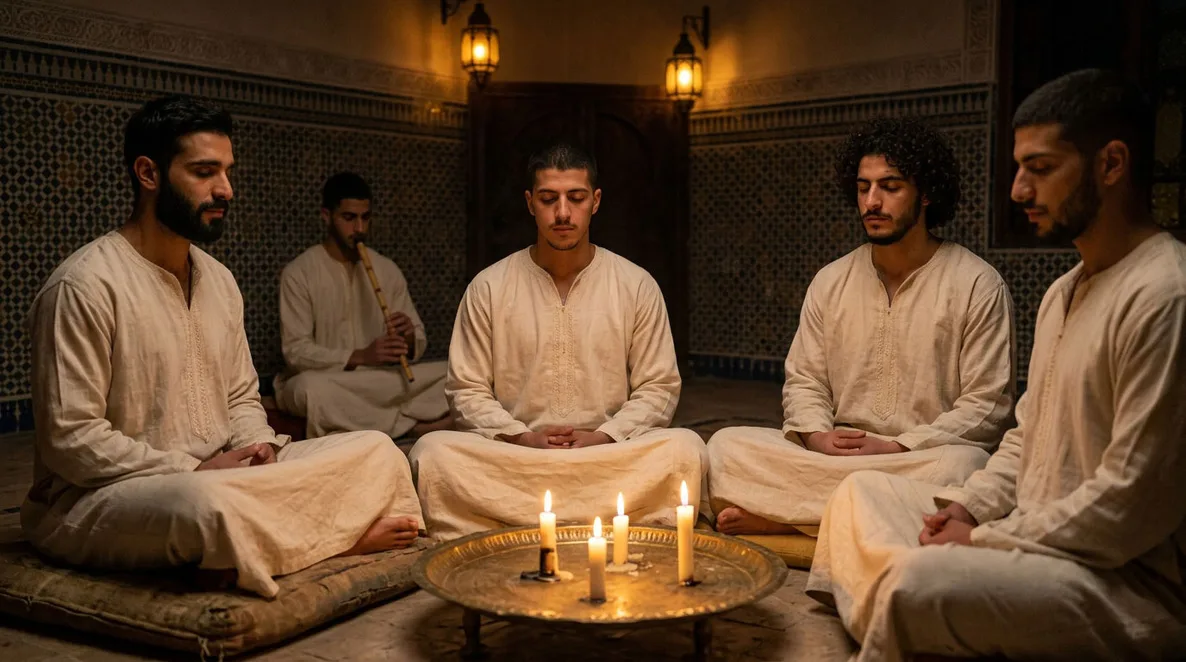
Music and tables. Concerts of al-ala and malhun, with food cooked in the house: for many, this will be the reason to come the first time.
Short residencies. One or two weeks for young men, students and designers from European schools, who will sleep in the dormitories and live by the rule of the house.
It begins with Morocco
The first cycle will be devoted to Morocco, for reasons of origin: the masters come from Fez, the techniques they bring are documented there, and the workshops the house will work with in its first years are those of Fez. Later the programme may open to other traditions, in the direction the statutes point to with their reciprocity clause.
In the reception wing, under the rule of the house
The events held at the masseria will take place in the spaces open to the public: the north reception wing, with the entrance hall and the arcaded room, and the threshing floor in front of the entrance. The courtyard, the workshops, the dormitories, the hammam and the training room will remain reserved for the life of the house. Visitors will meet the masters and the companions and see the work that has left the workshops, with nothing staged for the occasion; as a consequence, event times will be set by workshop hours.
Evenings on the threshing floor
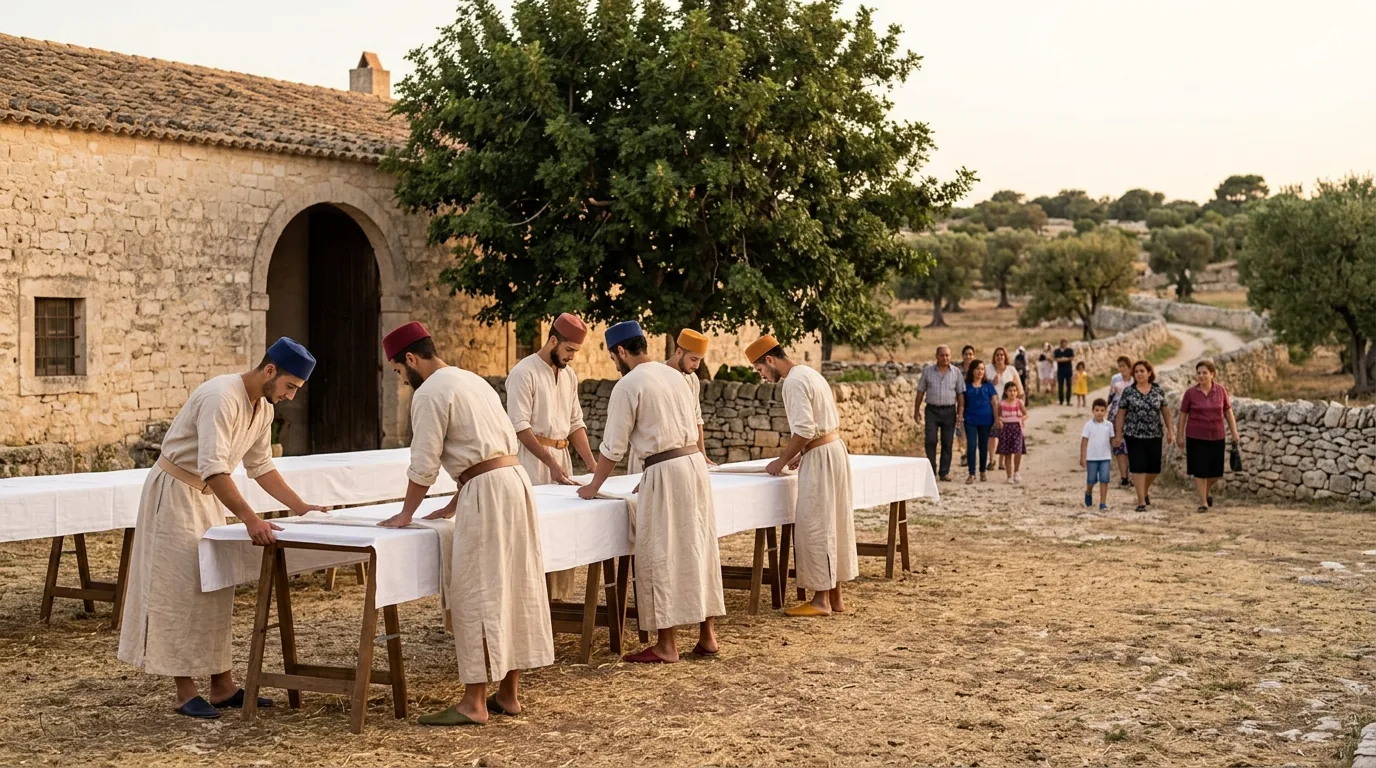
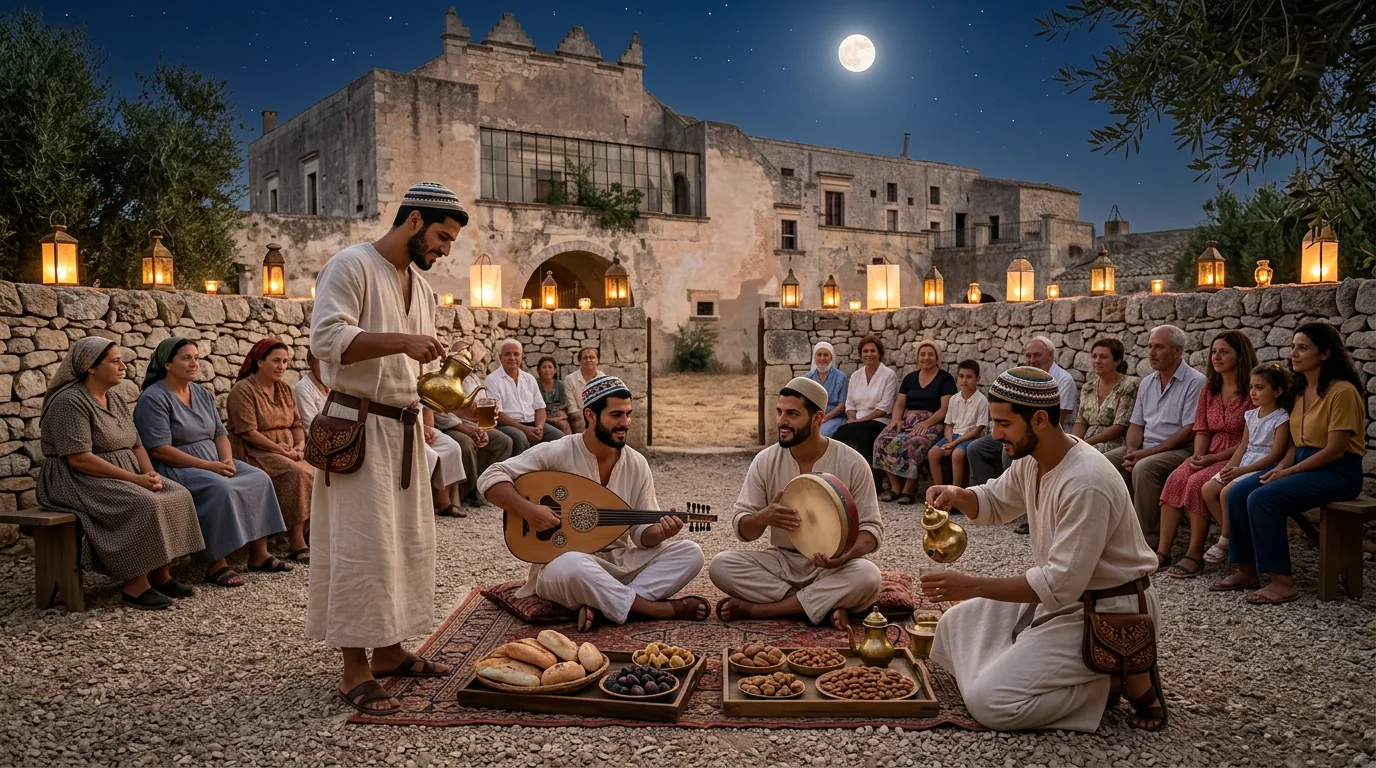
In summer, one evening a month, on the night of the full moon, the house will open the threshing floor in front of the entrance. Once the heat has eased there will be music, tea will be poured, and the bread of the house will be offered with the garden’s fruit of those days: figs, fresh almonds, tomatoes.
There will be no invitations and no lists: the lanterns lit on the threshing floor will be visible from the road and from the neighbouring farms, and anyone passing from the villages may stop, sit down and linger for as long as the music lasts.
The open harvest
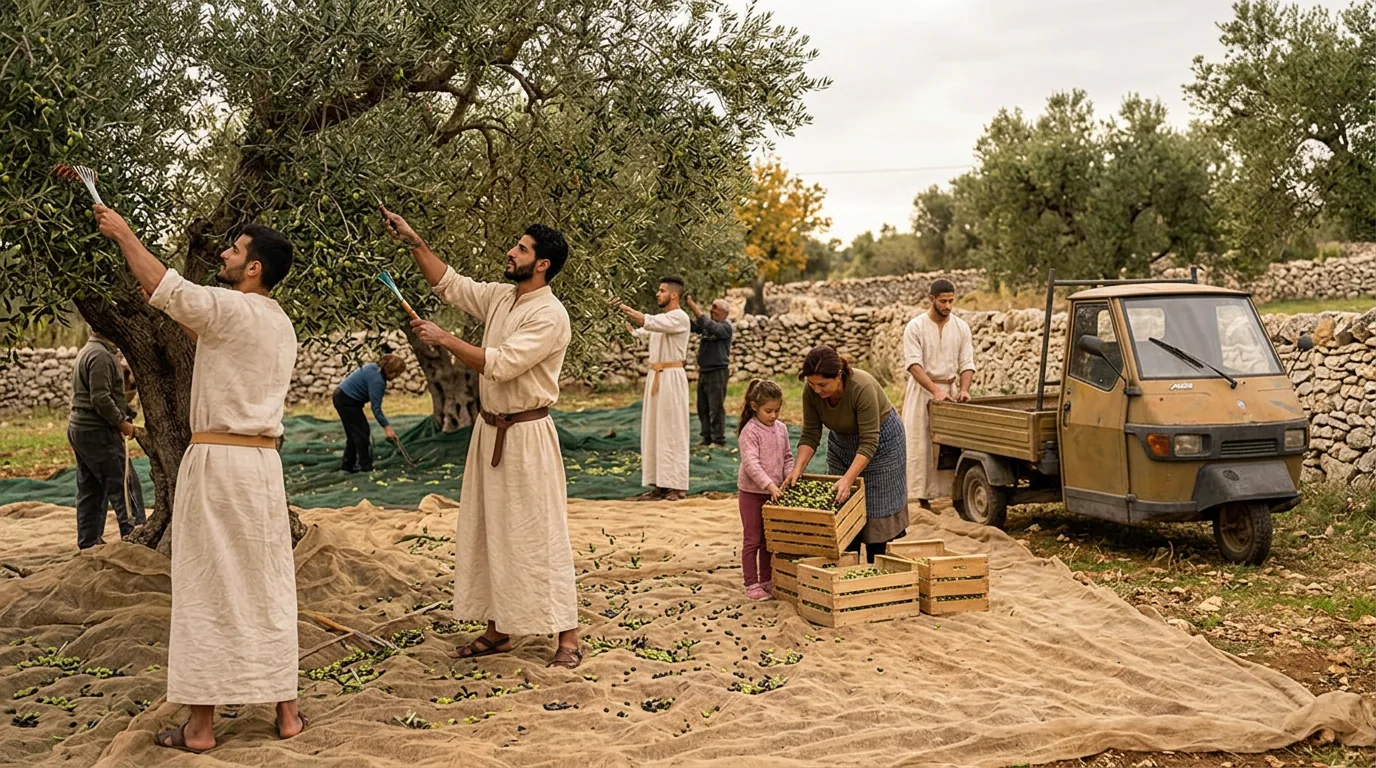
Each harvest will have its open day: almonds at the end of summer, carobs in August, olives between October and November. Whoever wishes will pick with the house, and at midday everyone will eat together on the threshing floor. The olives will then go to the local mill, and those who took part in the harvest will go home with the new oil.
This calendar has always governed the life of the villages of the plateau, and the house will keep to it like any other farm in the area; in this way its twenty-three hectares, described in The twenty-three hectares→, will become known to those who have worked them.
The repair bench
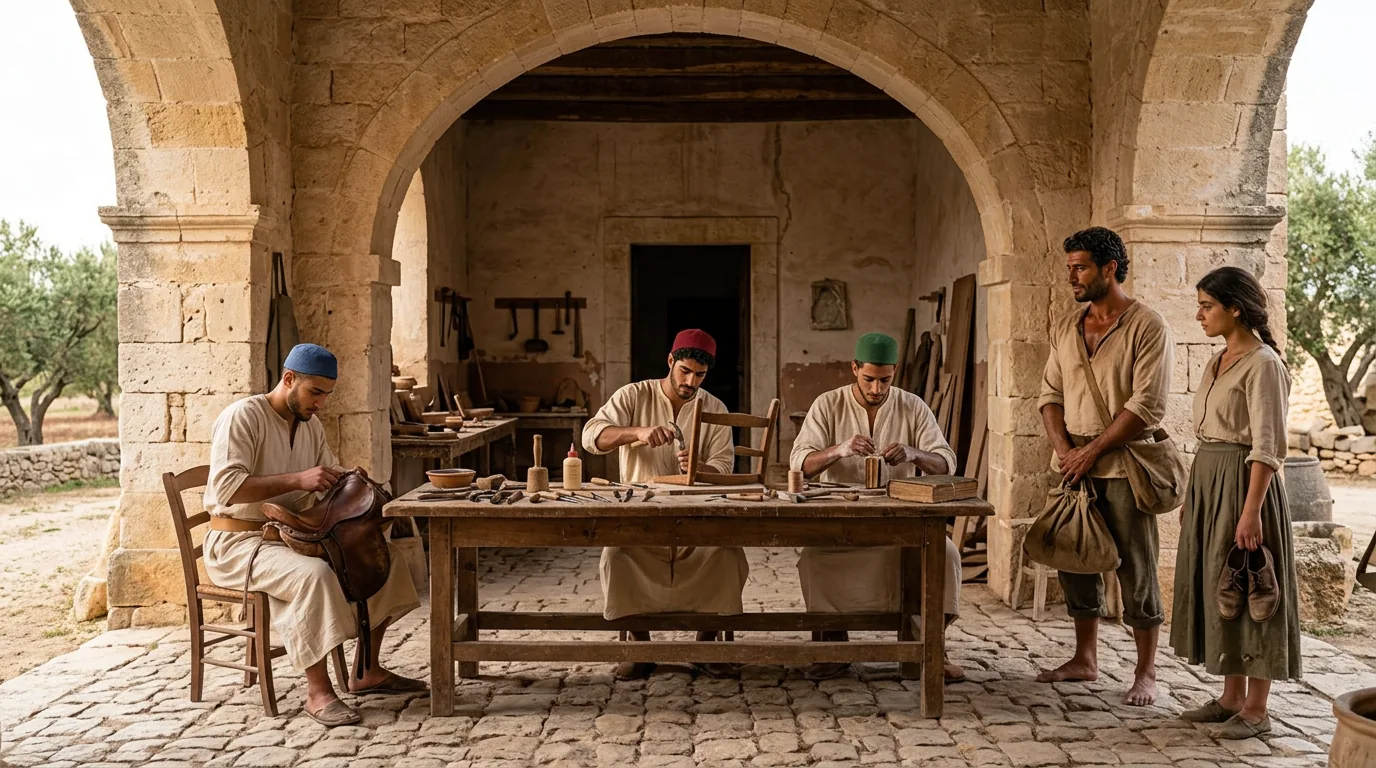
One morning a month the apprentices will sit at the bench under the entrance hall to mend what the neighbours bring: a saddle, a harness, an unstitched bag, a pair of shoes, a broken book, a limping chair. The repairs will be free. For the apprentices it will be valuable practice, since taking up another’s work teaches one to read its choices and its mistakes; for the neighbours, a chance to meet in person those who work in the masseria’s workshops.
The evening class
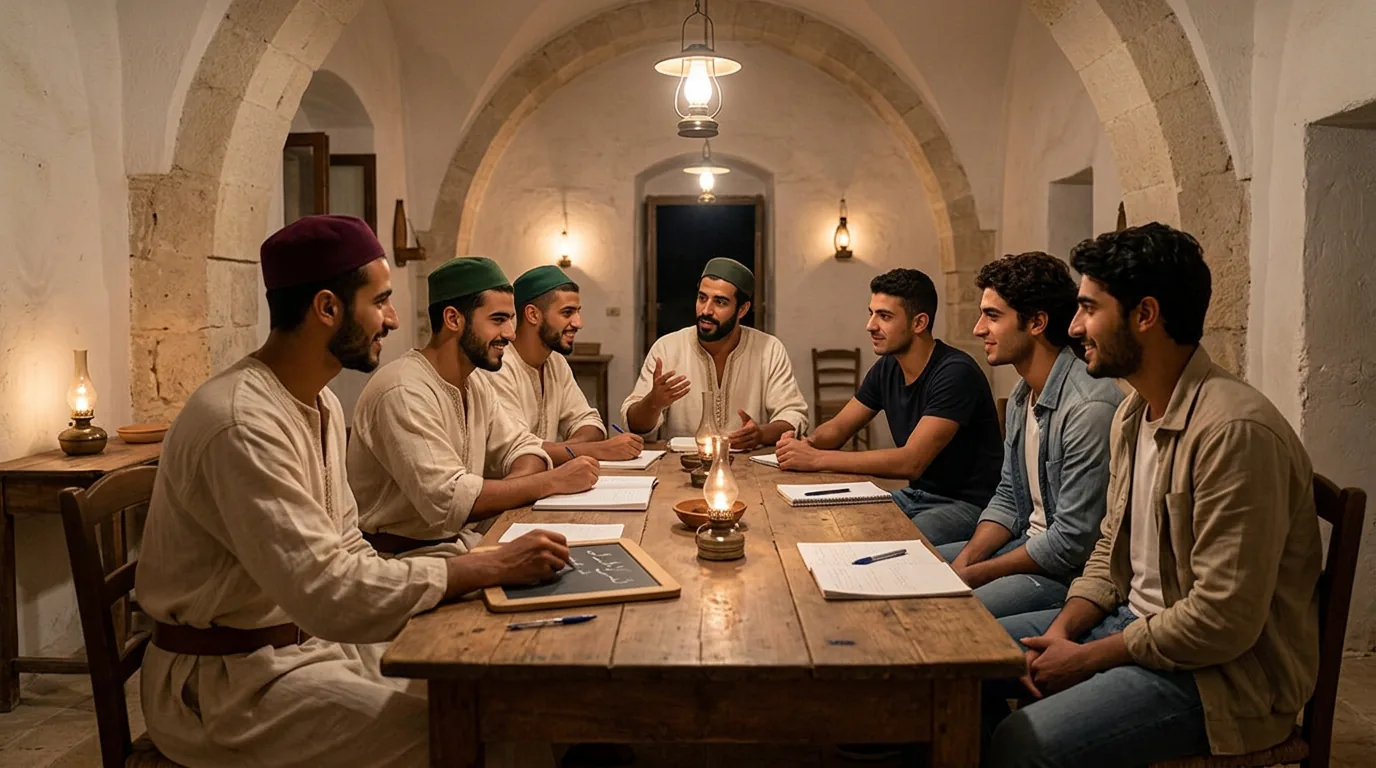
One evening a week the house will hold a class for young men from the surrounding area, aged eighteen to thirty and up to thirty-five: for Italian speakers, dārija; for Arabic speakers, Italian. The companions and the masters will teach it, each in his own language, as teaching is done in the workshop, by voice and at the side of the one who learns. The language spoken in the house is described in The day and the rule→.
The villages’ cup
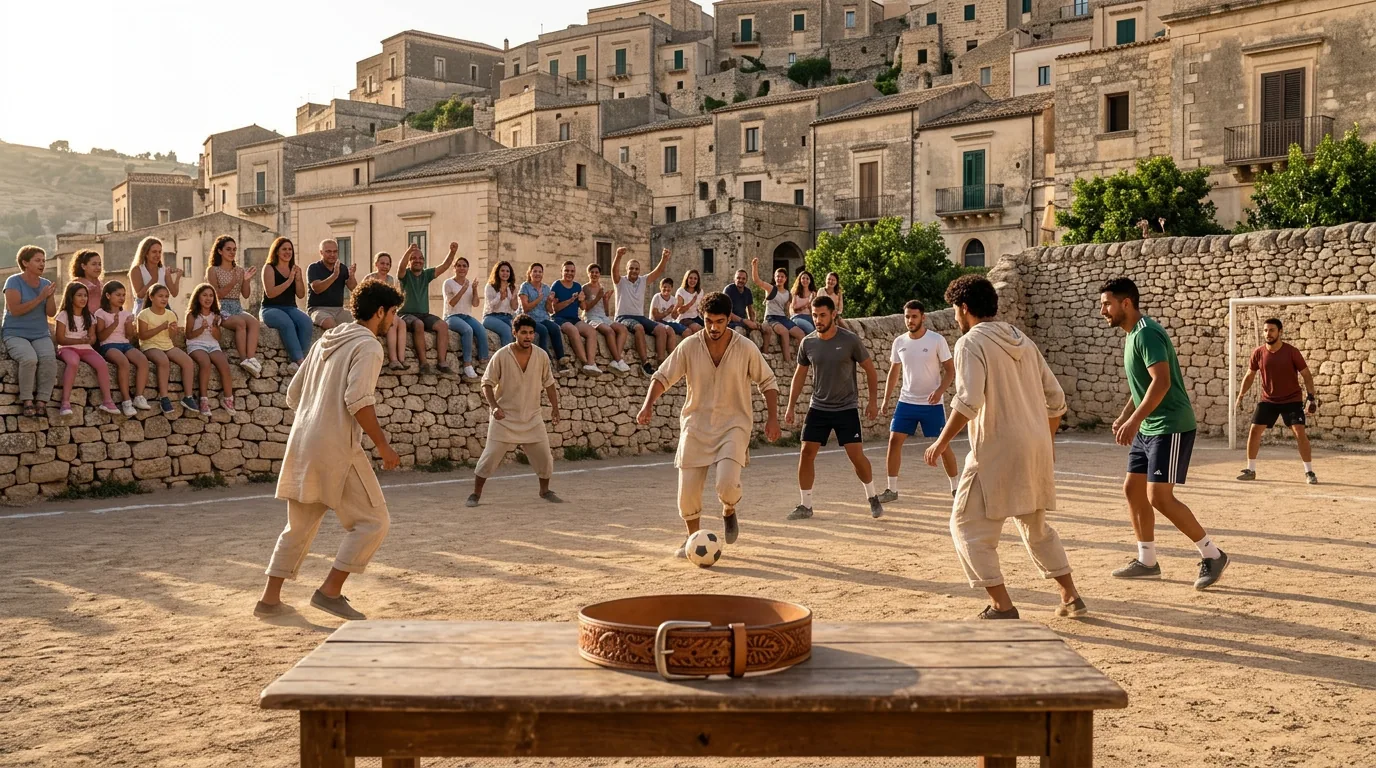
Once a season the young men of the house and those of the nearby villages will meet on the village pitch for a tournament of football, wrestling and running, in mixed teams, before the families. The prize will be an object made in the workshops, a leather belt or bag, awarded to whoever has stood out for merit and fair play, who may very well be a young man of the village.
The open building site
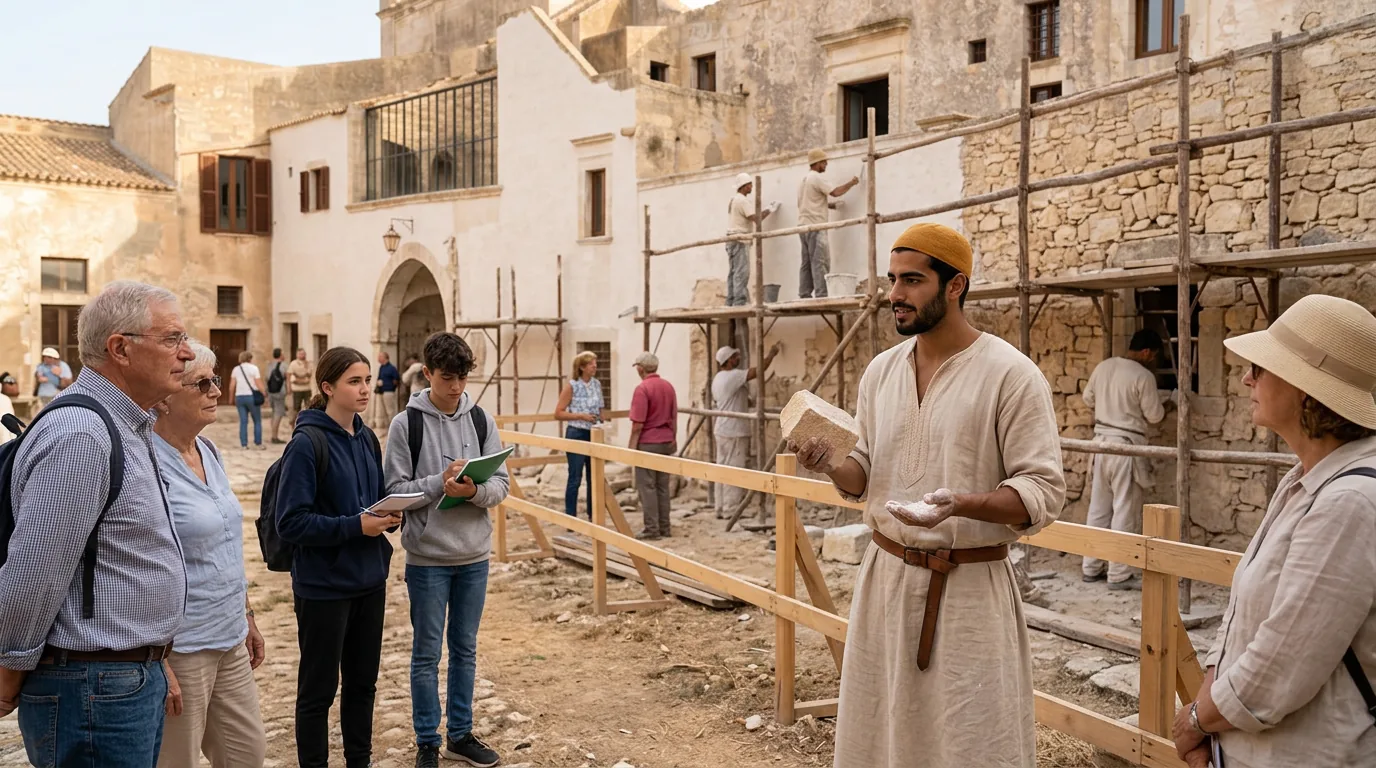
In September, during the European Heritage Days, the house will open its building sites: the buildings under restoration outside the house, and the north wing. The visits will be led by the apprentices, who will show the lime, the stone and the wood and explain each operation and the reason it is carried out that way. Those who live on the plateau will be able to see at close hand how a Hyblaean masseria is raised again, and to meet those who are working on it.
The garden basket
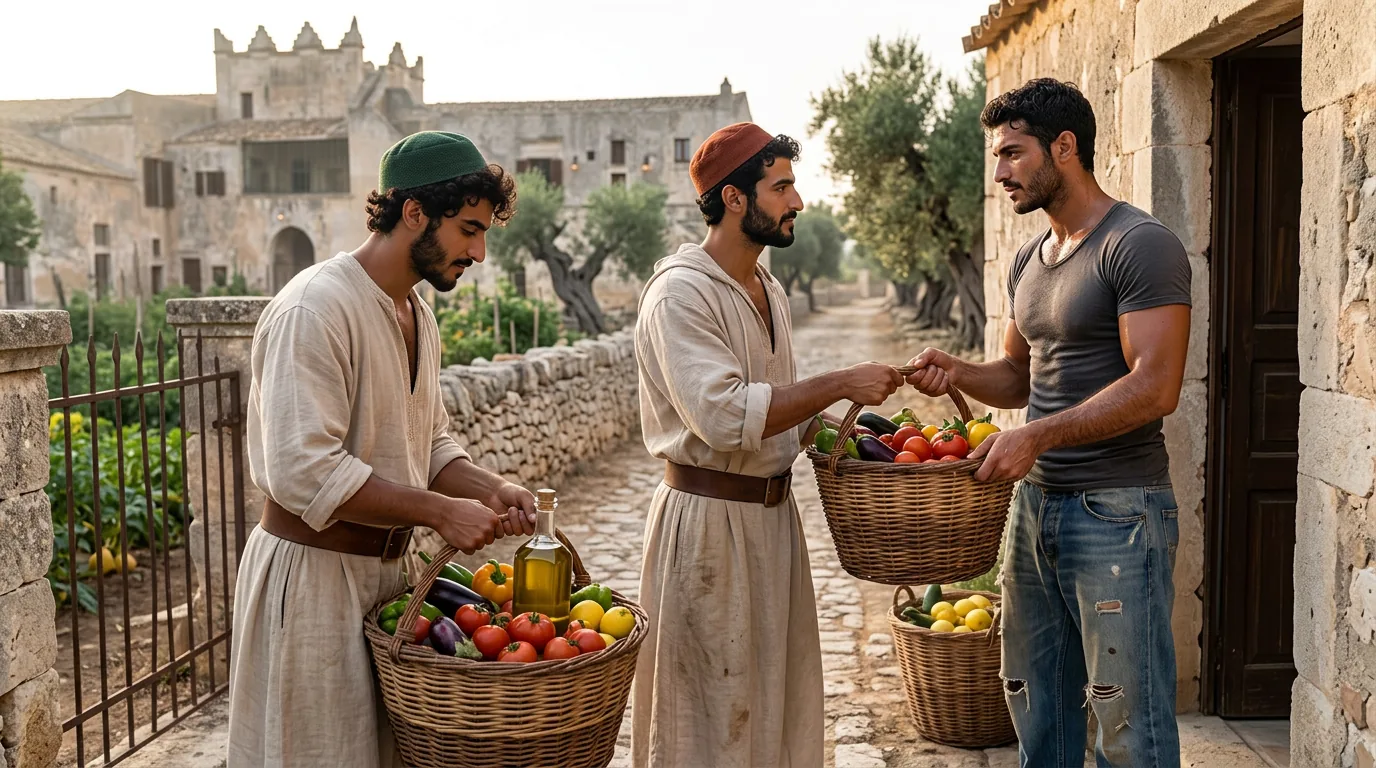
The surplus of the garden and the olive grove will not go to waste: each week a basket will be taken to neighbours in difficulty and to families nearby who need it.
The calendar
| When | What | Where |
|---|---|---|
| Every week | The garden basket | At the doors of neighbours and families |
| Every week, one evening | The evening class in dārija and Italian | The house |
| Every month, one morning | The repair bench | The entrance hall of the north wing |
| In summer, at the full moon | Evenings on the threshing floor | The threshing floor in front of the entrance |
| Every season | Exhibitions, lectures, concerts and tables | The north wing and the threshing floor |
| Every season | The villages’ cup | The village pitch |
| In August and at the end of summer | The carob and almond harvest | The lands of the house |
| Between October and November | The olive harvest | The olive grove, then the local mill |
| In September | The open building site | The buildings under restoration and the north wing |
How to take part
The evenings on the threshing floor, the repair bench and the harvest will be open to all, without booking. Lectures, concerts, tables and visits to the building site will have limited places: dates will be announced in the Newsletter→, and to book it will be enough to write to the house→. Short residencies follow the rules set out in The hospitalities→.
See also Events→ at Riad Al-Uns, in Fez.
The words of this page are in the common glossary; the works cited in the sources; the sister house is Riyāḍ al-Uns.