The nuara, the irrigated garden
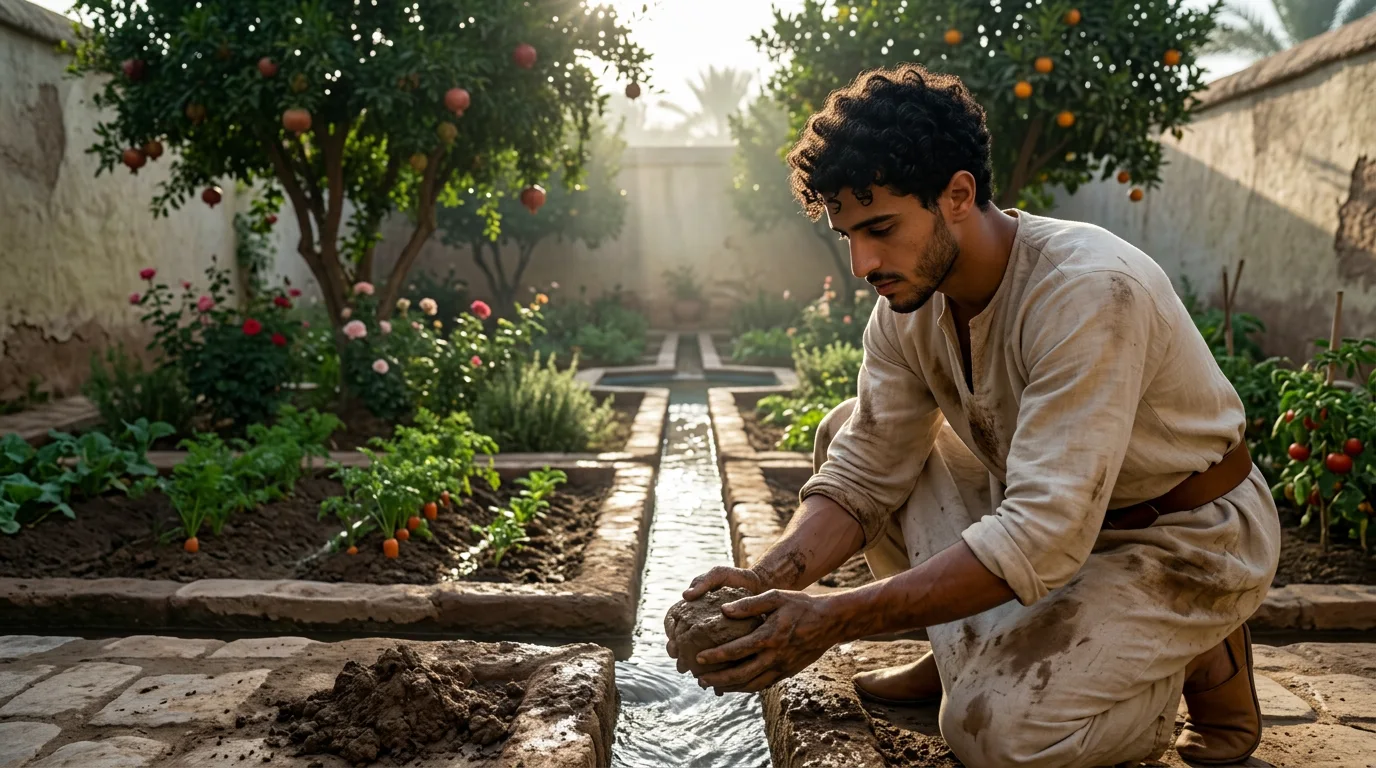
The garden of the house takes up the irrigated gardens the Arabs left in Sicily: the tanks, the channels and the plants, which still carry their names in the dialect.
In Sicilian the irrigated garden is called nuara, from the Arabic nuwwār. Around that word the dialect has kept the whole system: the gebbia, the tank that gathers the water (ǧābiya); the saia, the channel that carries it to the beds (sāqiya); the senia, the wheel that lifts it from the well (sāniya). Before the walls, it is the words that tell what Arab farming was on the island: a way of leading water.
The water that makes the garden
The Funduq’s nuara takes its water from the existing tanks and from the new cisterns under the courtyard, described in The twenty-three hectares→. From the gebbia the saie run down by gravity to the beds, sunk between the channels as the Andalusi treatises teach, so that the water reaches the roots and is not lost on the surface. If the well’s yield allows, a senia restored by the workshops will lift it again: a work of wood and iron that the building site can teach.
The books of the garden
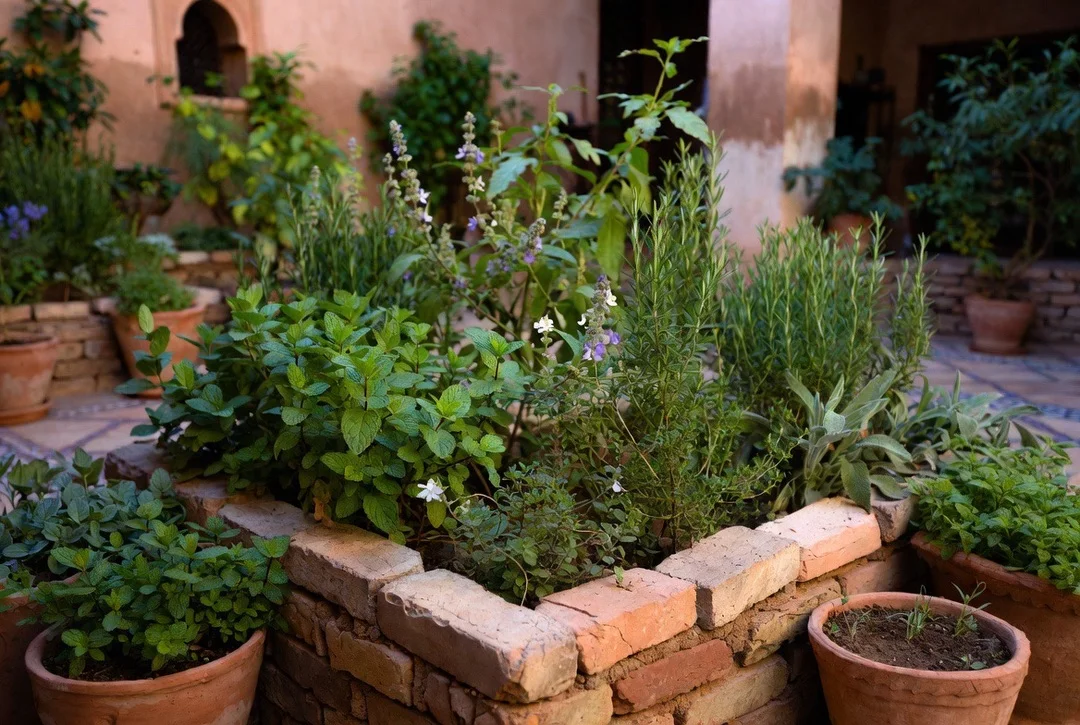
The garden follows the order of the farming books of al-Andalus. Ibn Baṣṣāl, in Toledo in the eleventh century, tended the king’s garden and set down what he had learned there. Ibn al-ʿAwwām, in Seville at the end of the twelfth century, gathered thirty-four chapters in the Kitāb al-filāḥa: thirty on plants and four on animals, with some nineteen hundred citations from a hundred and twelve authors, Greek, Eastern and Andalusi. First the soil, then the manure, then the water, and the seed only at the end: it is the order the house teaches its apprentices.
What is planted
Many plants of the Sicilian garden reached the island, or spread there, in the Arab years. How many is still debated by historians: the idea of an Islamic “agricultural revolution”, put forward by Andrew Watson in 1983, has been partly scaled back. Excavation does give firm facts: at Mazara del Vallo archaeobotanists have found remains of spinach, aubergine, melon and lemon. The nuara brings together these plants and those the treatises describe, and each bed carries its name in Sicilian, Arabic and Italian.
Citrus. Lemon and bitter orange, whose blossom Sicilian calls zàgara, from the Arabic zahra.
Fruit trees. Pistachio (fastuca, from fustuq), apricot (varcocu, from barqūq), azarole (azzalora, from zuʿrūr), pomegranate and mulberry.
The garden. Aubergines, spinach, melons, and sesame, which in Sicily is called giuggiulena, from the Arabic ǧulǧulān, and ends up on the bread.
The workshop plants. Reeds for the calligraphers’ pens; safflower, madder and henna to dye leather and yarn.
Papyrus
In the tenth century the traveller Ibn Ḥawqal saw fields of papyrus around Palermo: it was twisted into rope for ships and made into paper for the sultan, and he wrote that he knew of no papyrus on earth to match Egypt’s except that of Sicily. Papyrus still grows on the river Ciane, near Syracuse. A gebbia of the nuara will hold it, and the calligraphy and book workshop will learn to make sheets from it.
Ibn Ḥawqal, Ṣūrat al-arḍ, description of Palermo (ed. M. Amari, Biblioteca arabo-sicula)
The nuara is sized to the common table, like the rest of the land; the surplus goes to the cooperative. The workshop plants stay a few rows: enough for the apprentices to know where the colour they use comes from, and the reed they write with.
The words of this page are in the common glossary; the works cited in the sources; the sister house is Riyāḍ al-Uns.