
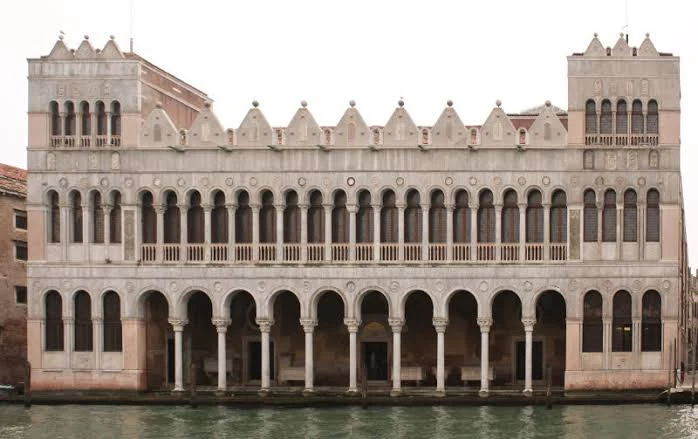
Venice
In Venice the fondaco was for centuries the ordinary way of hosting the merchant nations.
Its rules changed with the times, and that too teaches something.
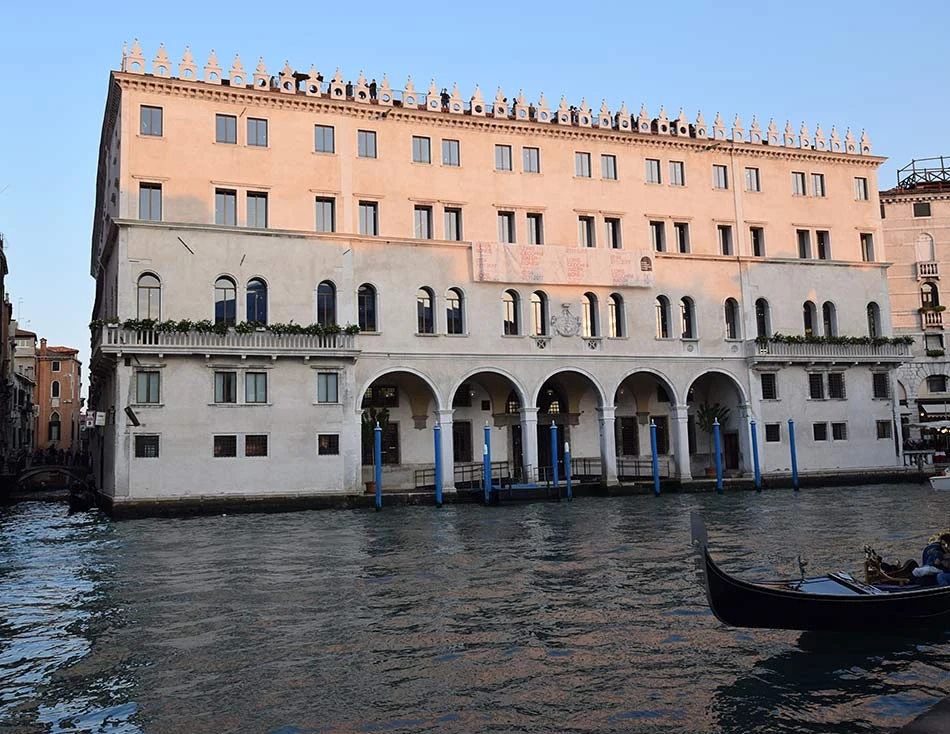
German merchants held the Fondaco dei Tedeschi at Rialto from the thirteenth century, and Ottoman merchants the Fondaco dei Turchi on the Grand Canal from 1621. They were houses, warehouses and meeting places at the heart of the city, and Venice regarded them as the ordinary way of dealing with people who lived under another law, and not as a concession to foreigners.
The rules of the Republic
The rules of the fondaci answered the needs of a merchant State that had to protect both its trade and its guests. The German merchants lodged in the Fondaco, their dealings passed through Venetian brokers and the offices of the Republic recorded their traffic, as was the custom in the customs houses of the time. At the Fondaco dei Turchi, in years of recurring wars with the Ottoman Empire, the choice was to protect the guests: a single guarded entrance, the openings on the canal closed, the doors shut at night.
Each measure had its reasons at the moment it was taken: fiscal control, professional brokerage, the safety of guests. Taken together, though, they made the house less free than it had been at the start. For anyone wishing to make a fondaco again today, the lesson concerns the rules more than those who wrote them: when one side alone sets the conditions, a common house tends to close in on itself.
What we take from it
There are three conditions to keep. Two depend on the house and stand in the statutes: residence, which members choose on entering and which no one imposes on them from outside, and free withdrawal, which lets them leave whenever they wish. They can be amended only unanimously, and amending withdrawal is among the signs by which to read the project’s outcomes→. The third, freedom of dealings with the outside, comes of itself: the house owns its own building and sells to order to whomever it chooses, and no one asks it to pass its business through intermediaries.
There remains reciprocity, which holds all the rest together, because the rules belong to everyone when everyone has signed them; this is why the statutes→ were written.
The words of this page are in the common glossary; the works cited in the sources; the sister house is Riyāḍ al-Uns.