The Furusiyya
The horse, the saddle that dresses it and the sword: the horseman’s discipline, alongside the workshops.
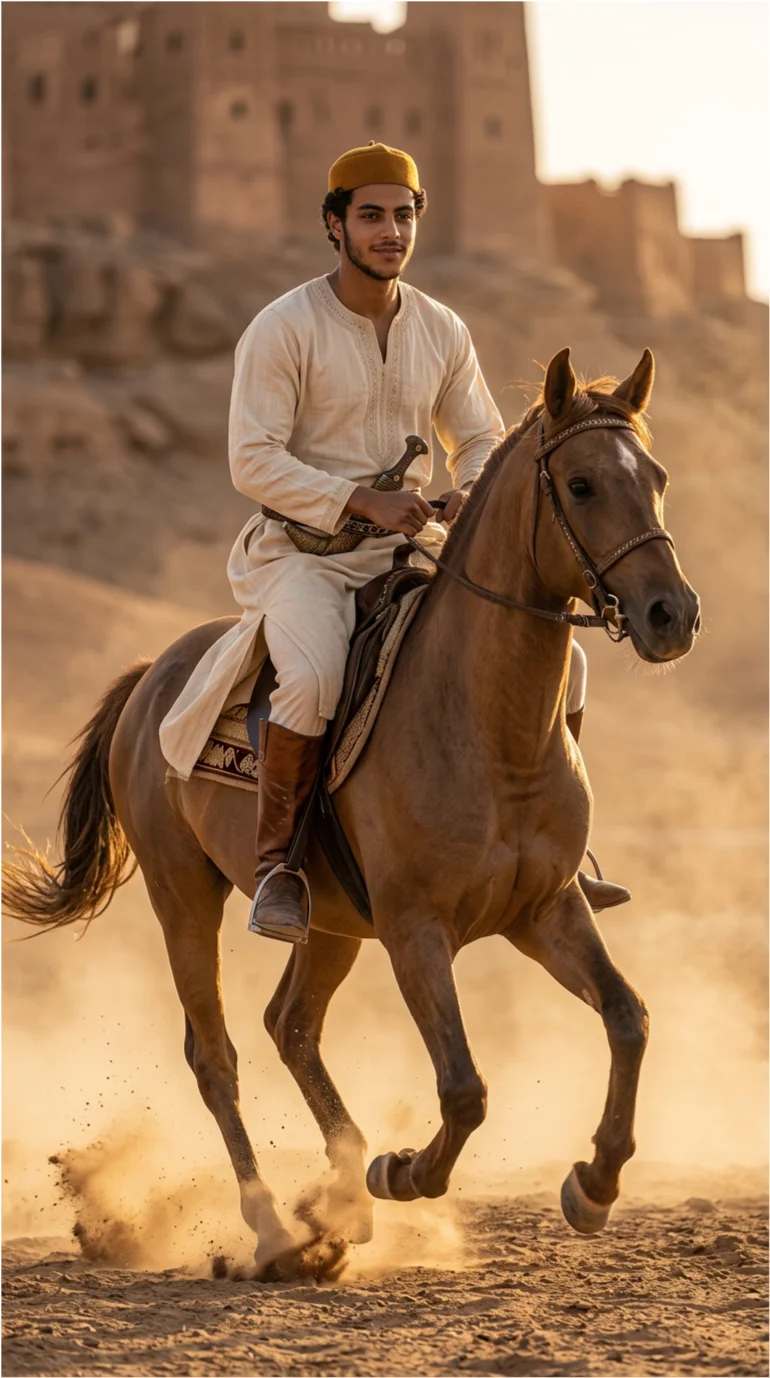
In the Arab tradition furūsiyya is the art of the horseman: the care and training of the horse, the harness that dresses it, the practice of arms and the bearing of the one who carries them. The treatises that describe it, written in Mamluk Cairo and Nasrid Granada, hold the farrier, the saddler and the master-at-arms together in a single body of knowledge.
The two houses take it up as a discipline alongside the crafts, because the saddle and the harness need several workshops working together, and because the hand that makes them must know the horse that carries them.
The saddlery
«Poi sono quelli che fanno selle di cuoio, e usano di far tre coperte per sella, l’una sopra l’altra, più fina quella di mezzo e l’ultima di minor bellezza, e tutte di cordovano. Questi lavori ancora sono eccellenti e mirabili, e sono circa a cento botteghe.»
[Then come those who make leather saddles; they are wont to put three covers on each saddle, one over the other, the finest in the middle and the last of lesser beauty, all of cordovan. These works too are excellent and admirable, and there are about a hundred shops.]
Leo Africanus, Description of Africa, book III, Fez, “Various artisans, shops and squares” (Italian text; our translation in brackets)
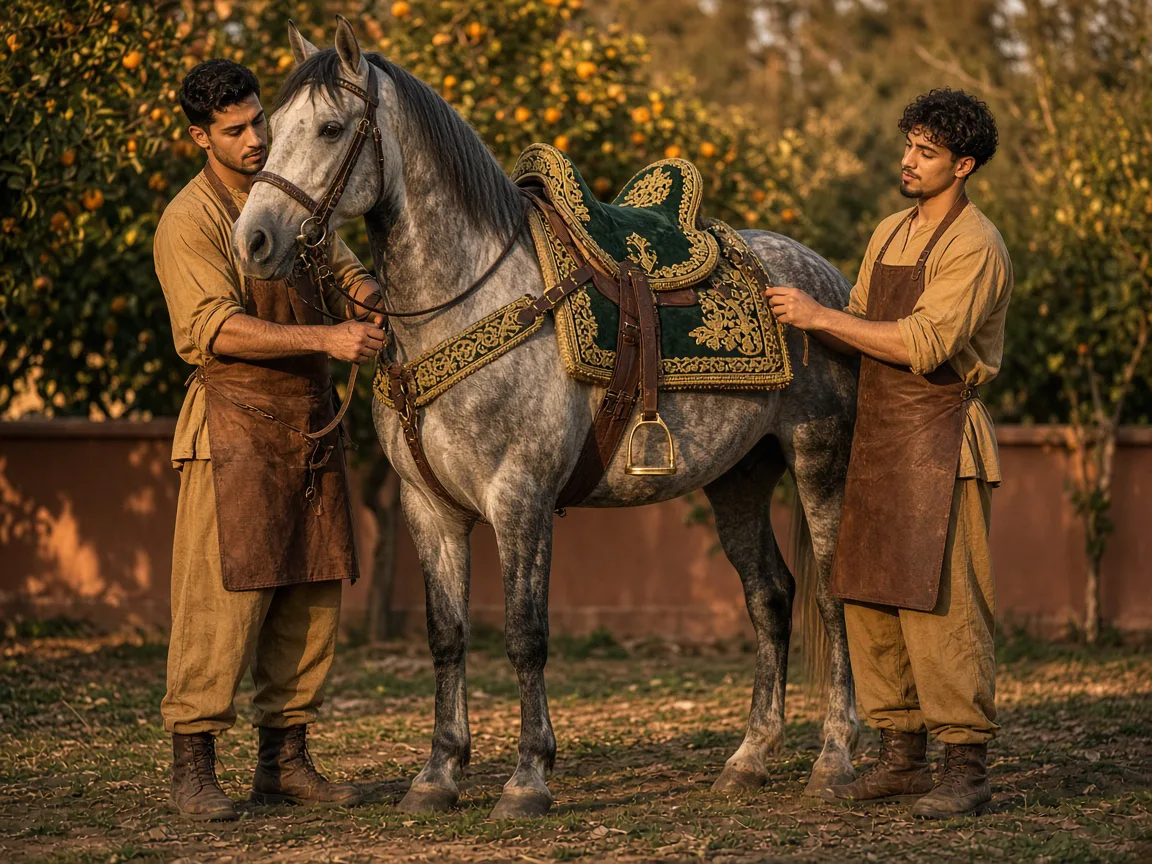
The saddler’s workshop, in both houses, works leather, the wooden saddle tree, gold embroidery on velvet and the metals of the harness. The saddles that come out of it will be made to be ridden: on the house’s horse and, to commission, also as ceremonial saddles, including those of Tbourida, the Moroccan equestrian art inscribed by UNESCO on the intangible cultural heritage of humanity.
The horse
The masseria will have its own field, where the horse lives, works and is ridden, and where the saddle that leaves the workshop is tried under the rider.
The sword
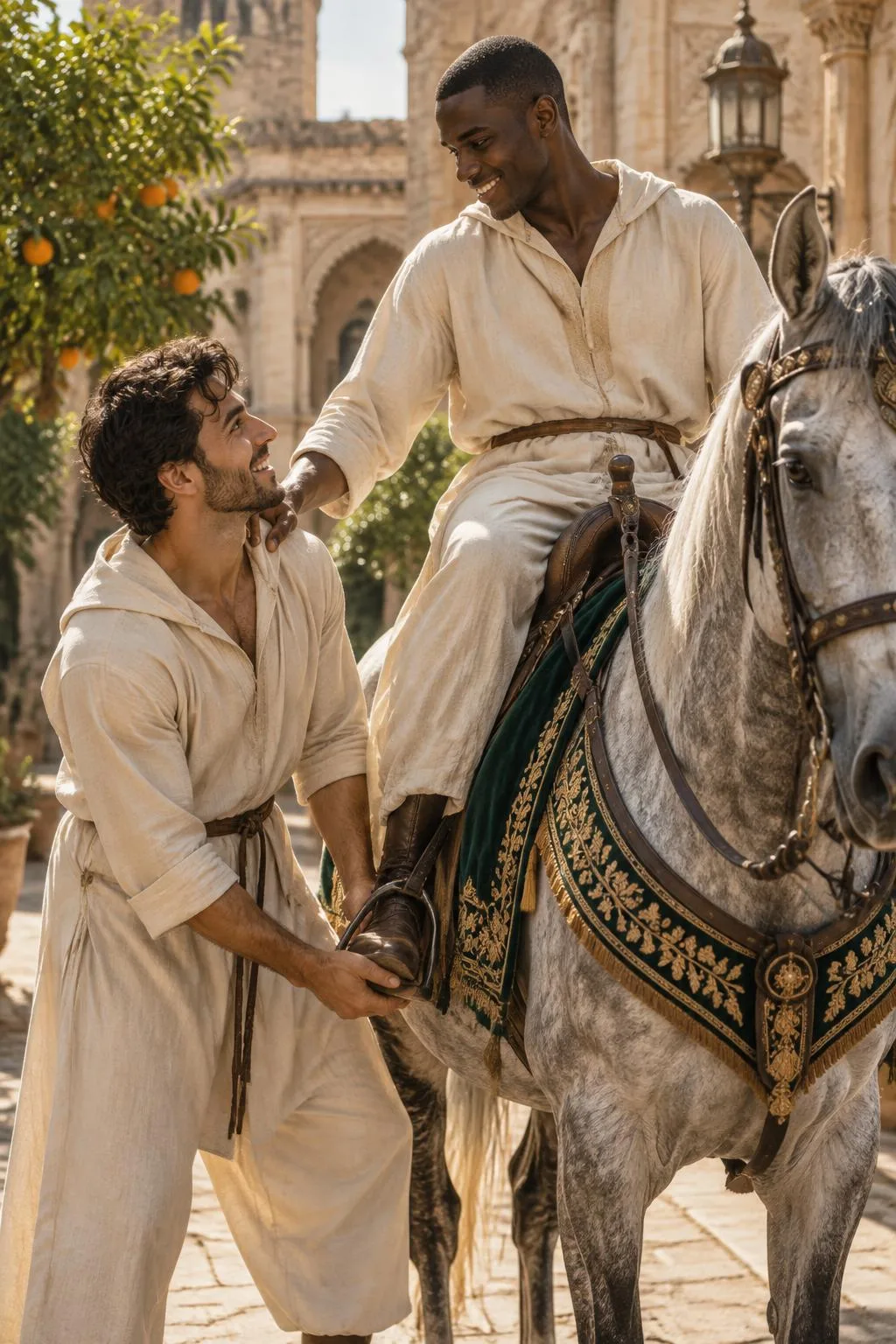
No classical school of Arab swordsmanship has come down to us from master to pupil. What remains are the furūsiyya treatises, which describe its strokes, guards and training, and a few kindred living traditions, such as the sword dances of the Arabian Peninsula and Tbourida.
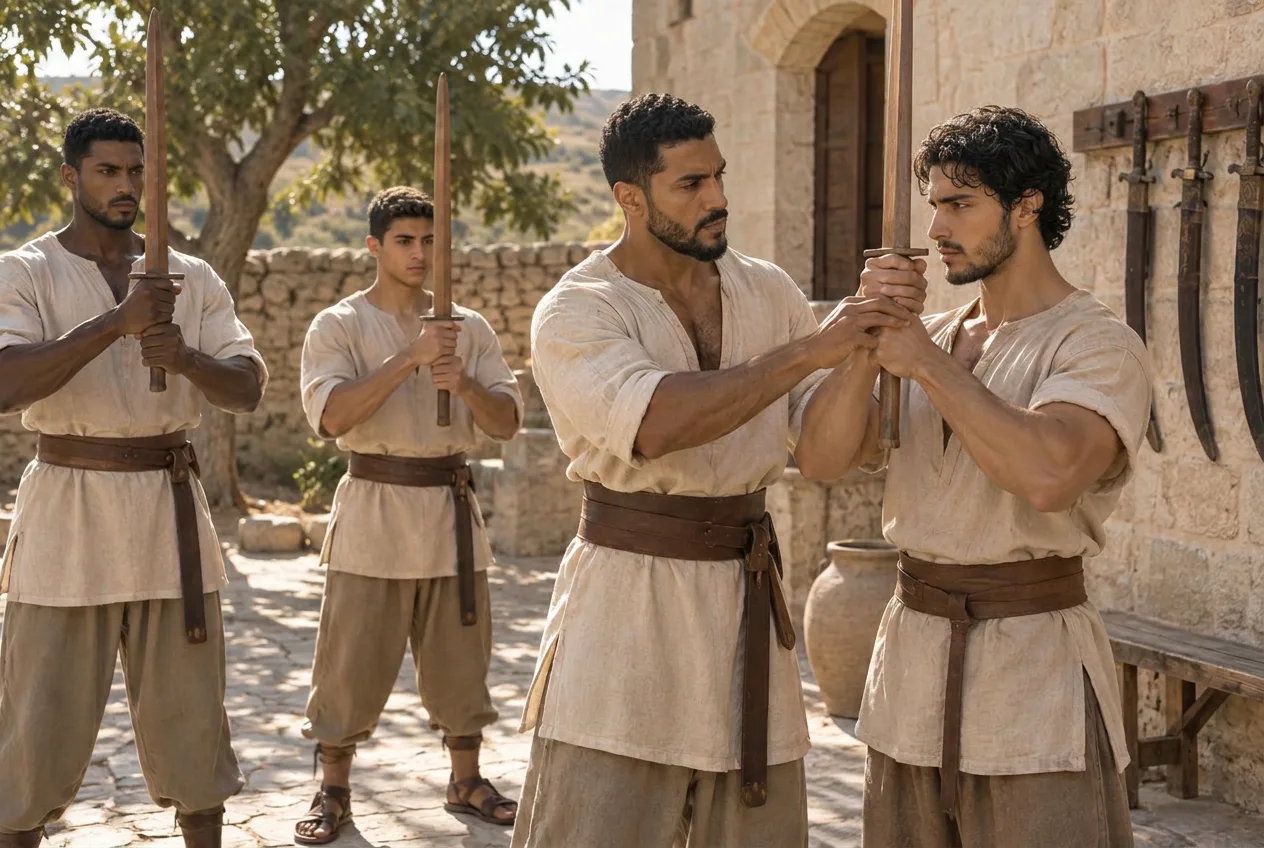
The houses will reconstruct this discipline from the texts, with a stated method and the help of scholars of historical fencing, and keep it alive like the other disciplines of the body: regular practice, under a master, with training weapons. On solemn days it is shown as a ceremony.
The dress of solemn days
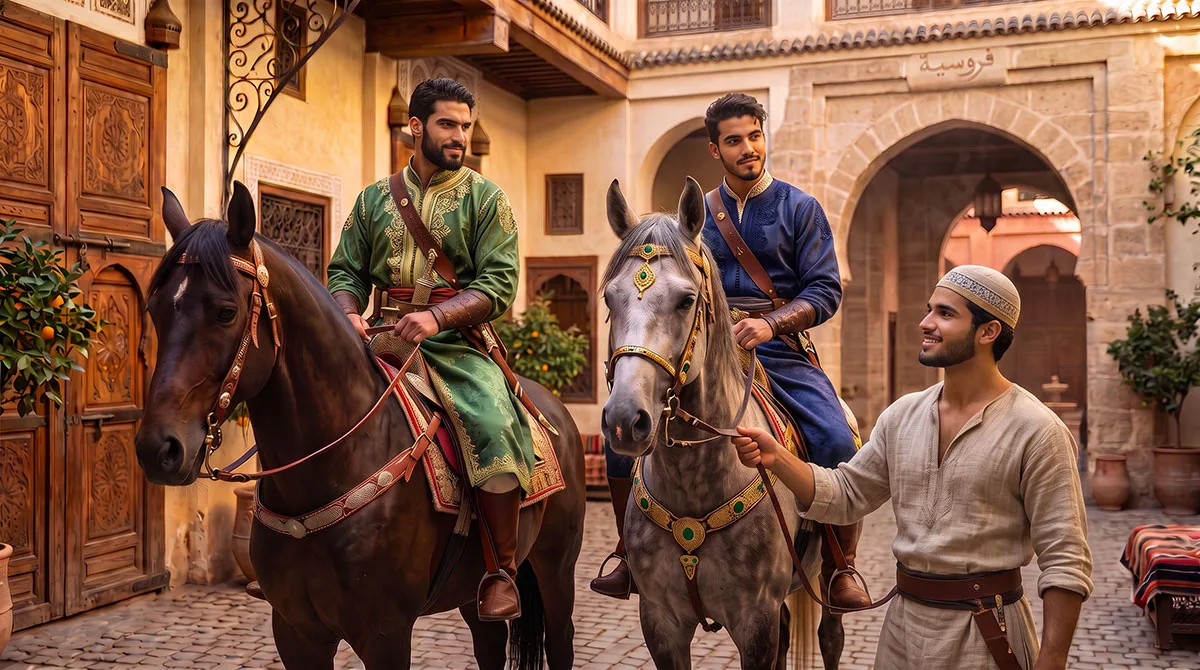
On solemn days the companions wear the dress of the house and the sword in its scabbard, at the side: the sign of a discipline learned and a bearing to be kept.
See also: Saddlery: leather, wood, metal→, The furusiyya at the Riad→, Riding→.
The words of this page are in the common glossary; the works cited in the sources; the sister house is Riyāḍ al-Uns.