The bow (qaws)
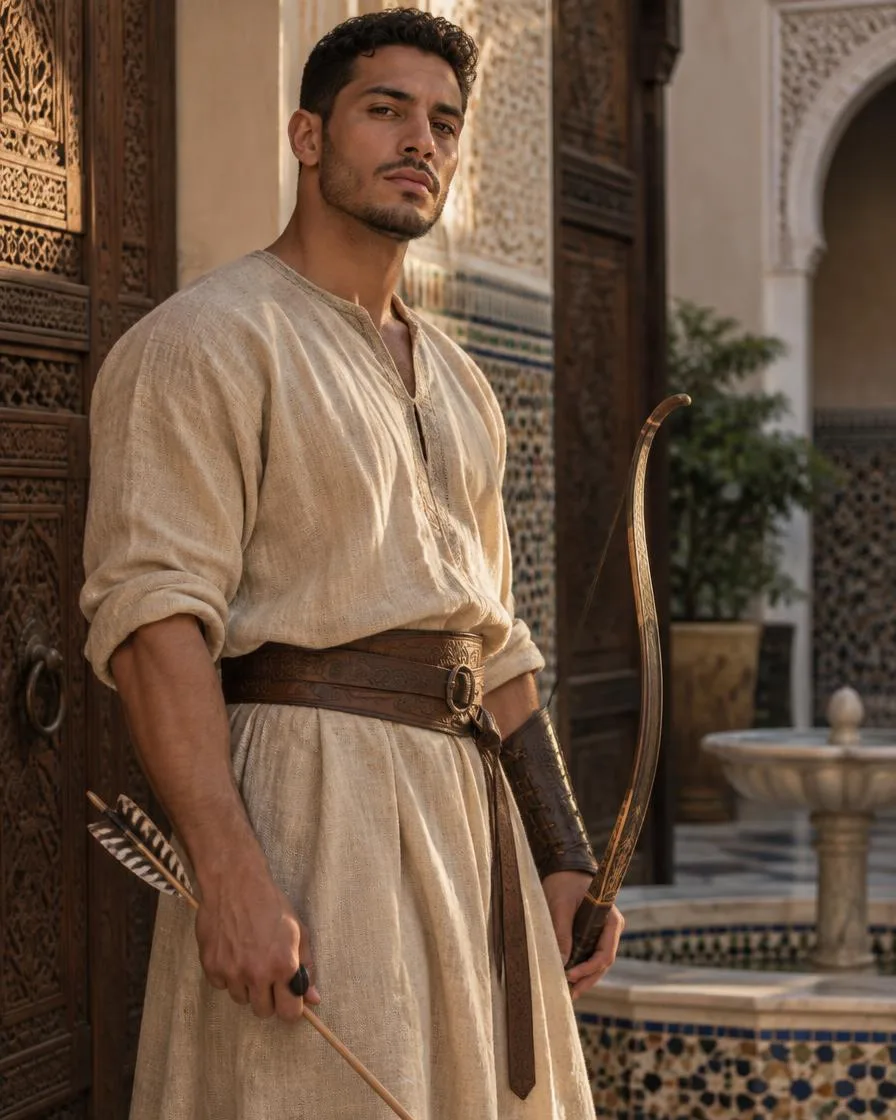
Wood, horn and sinew joined in one flexible body. It is the central instrument of the discipline, chosen to match the archer’s strength.
The bow, the string, the arrows, the quiver, the guards and the belt: the objects with which the shot is prepared.
As in the saddlery, the instruments here are a library: each one teaches a movement. This page lists the archer’s kit according to the discipline described in the chapter on archery→, and names the workshop for each: the bowyer, the smith, the saddler.
The objects will be made in the house workshops, to the measure of whoever uses them. The forms shown here are the working basis from which the masters will start.
Wood, horn and sinew joined in one flexible body. It is the central instrument of the discipline, chosen to match the archer’s strength.
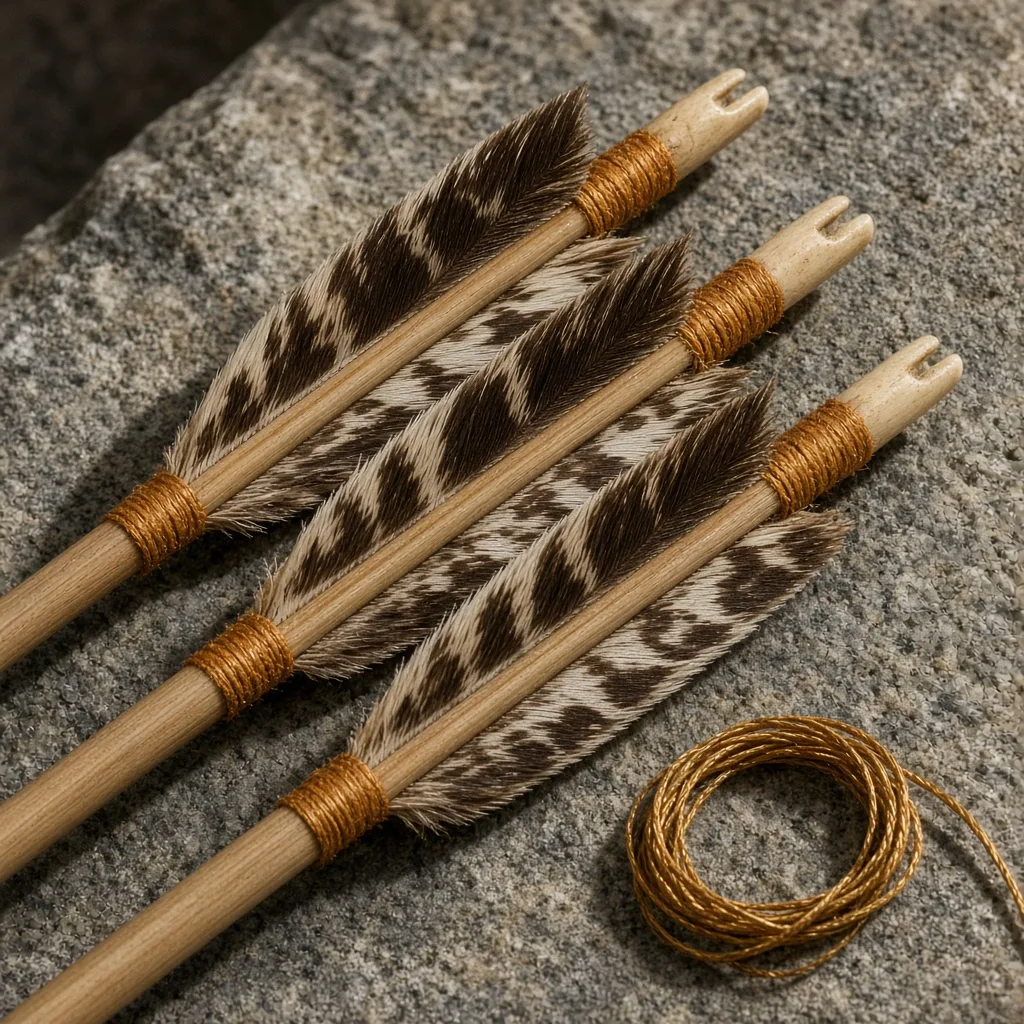
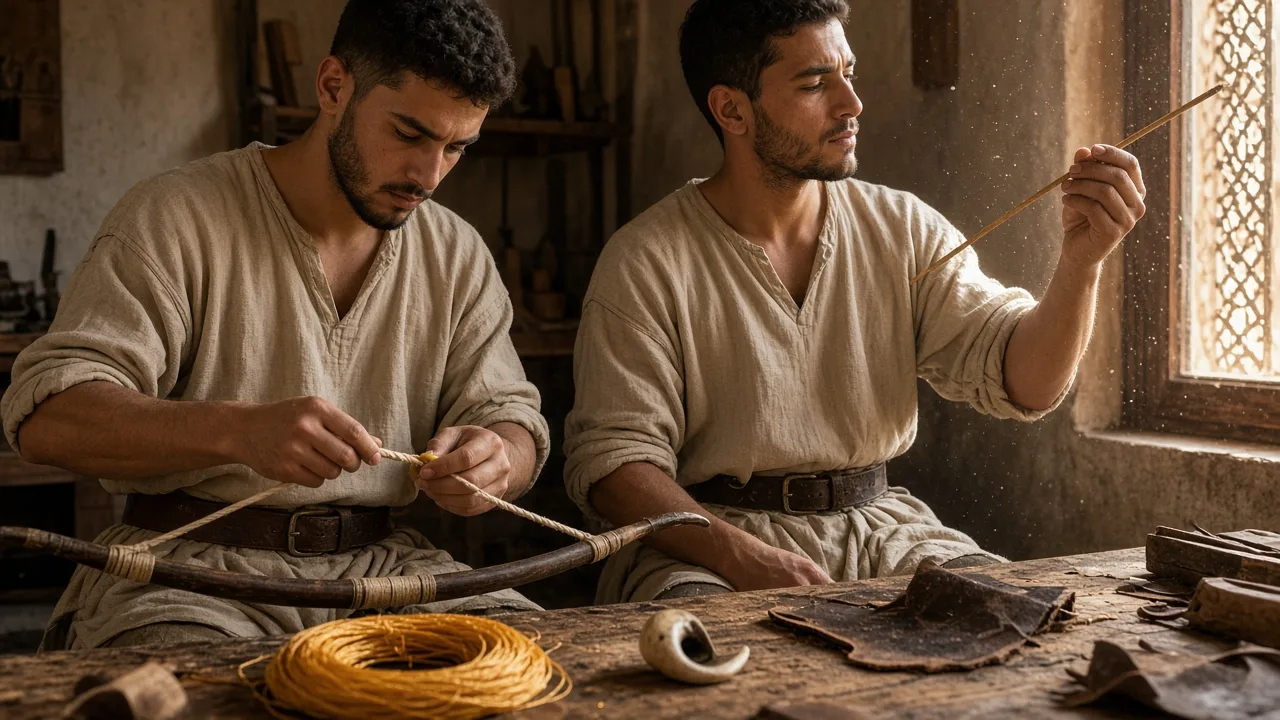
Braided, waxed fibre, always kept in pairs: one on the bow, one in the quiver. Wax protects it from damp and friction.
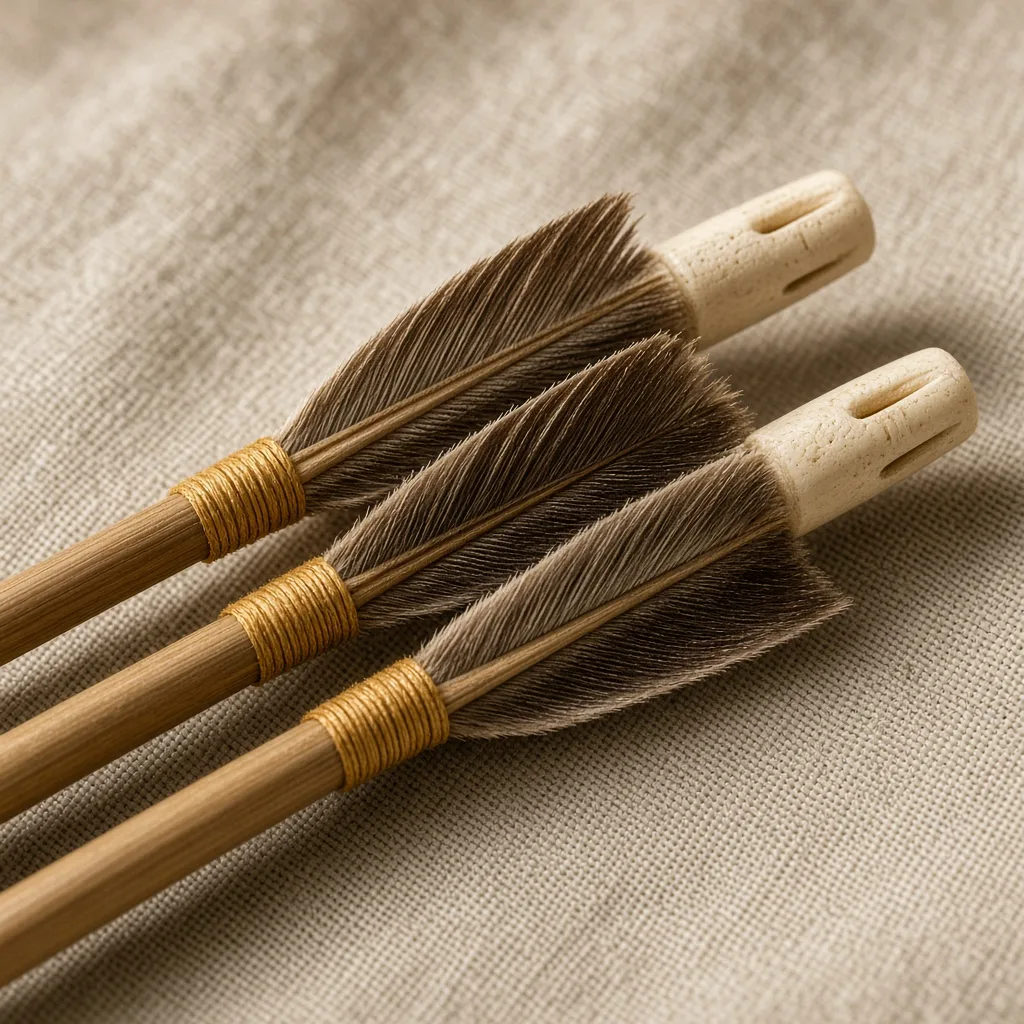
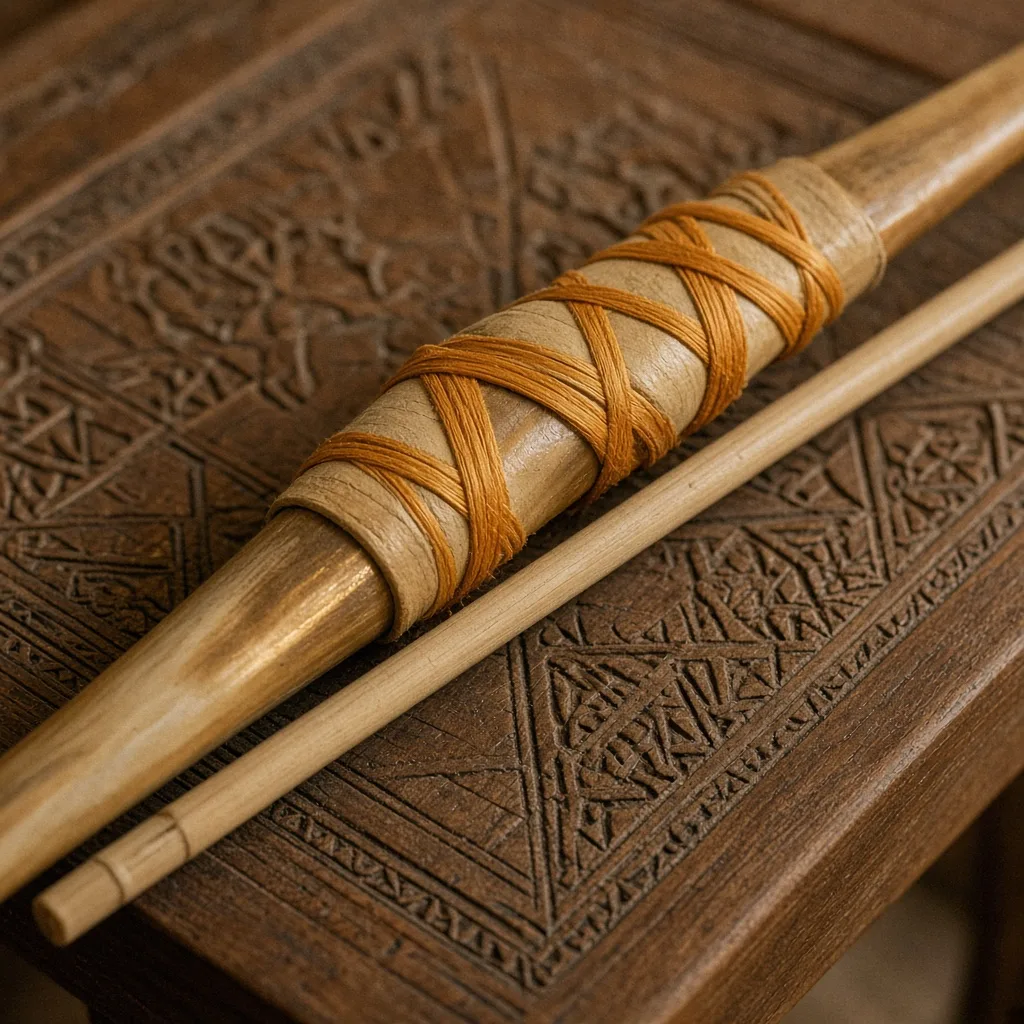
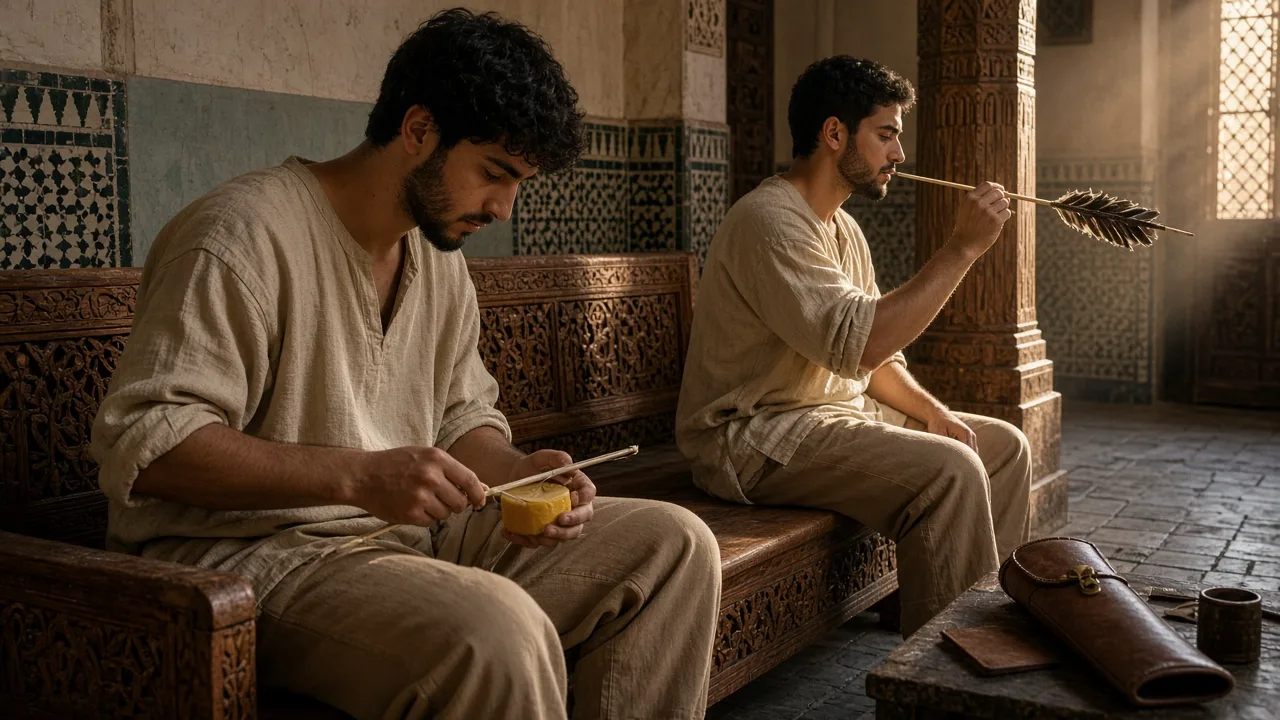
A straight, trued wooden shaft, natural feathers, a cut nock, an iron head. Weight and stiffness are matched to the bow.
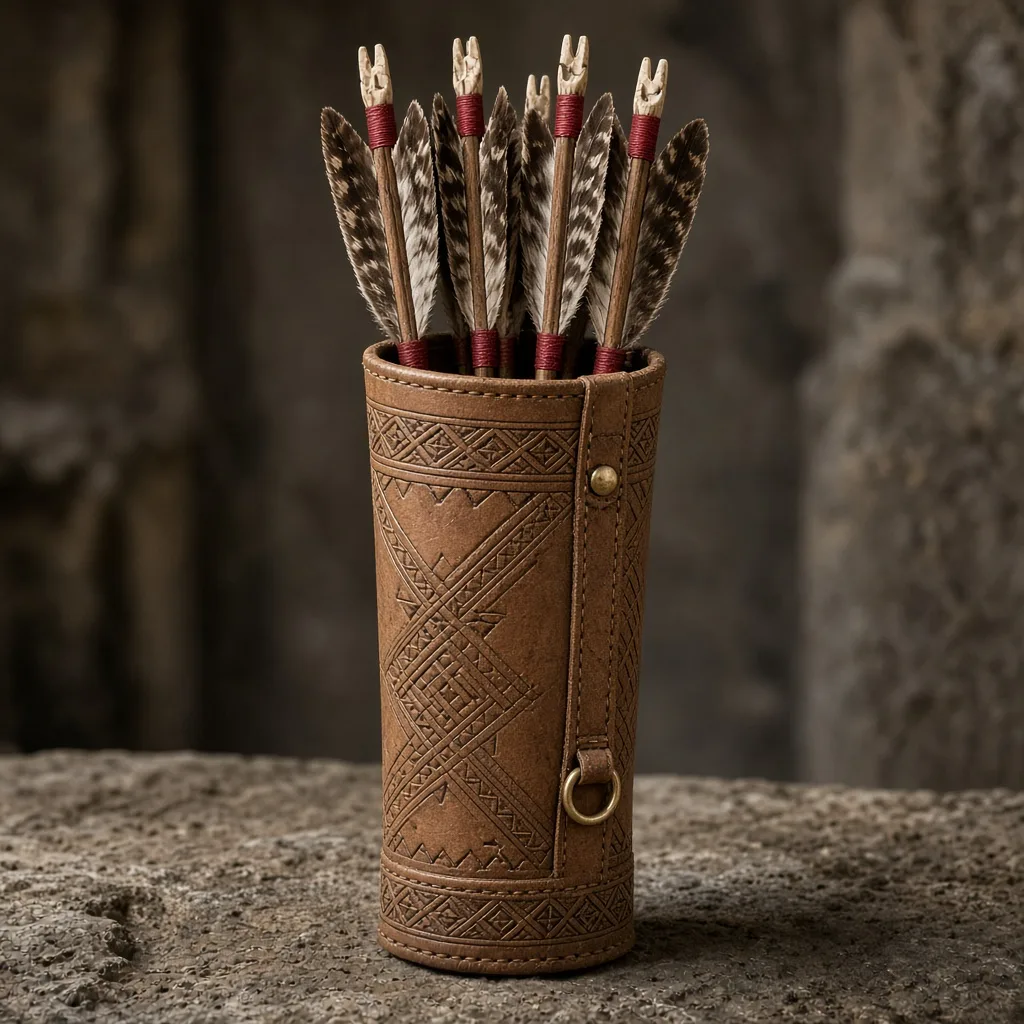
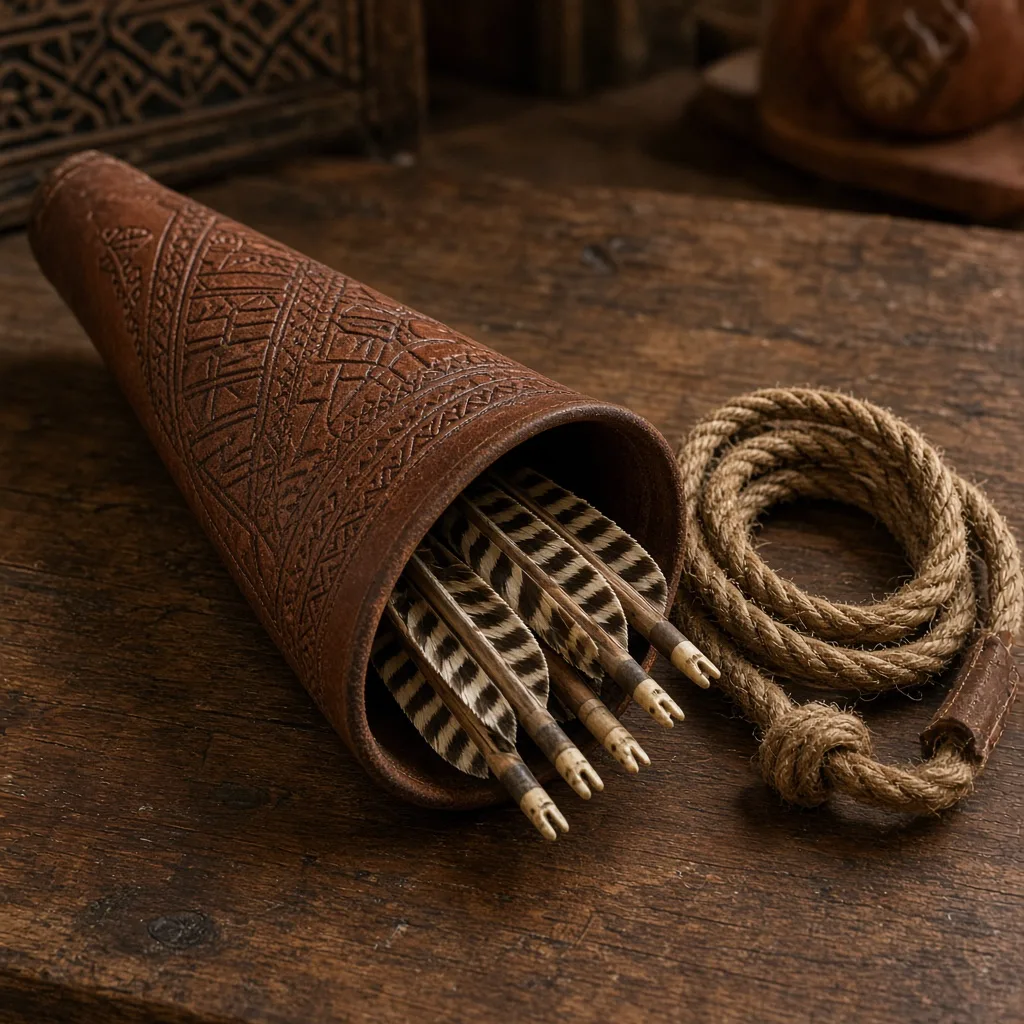
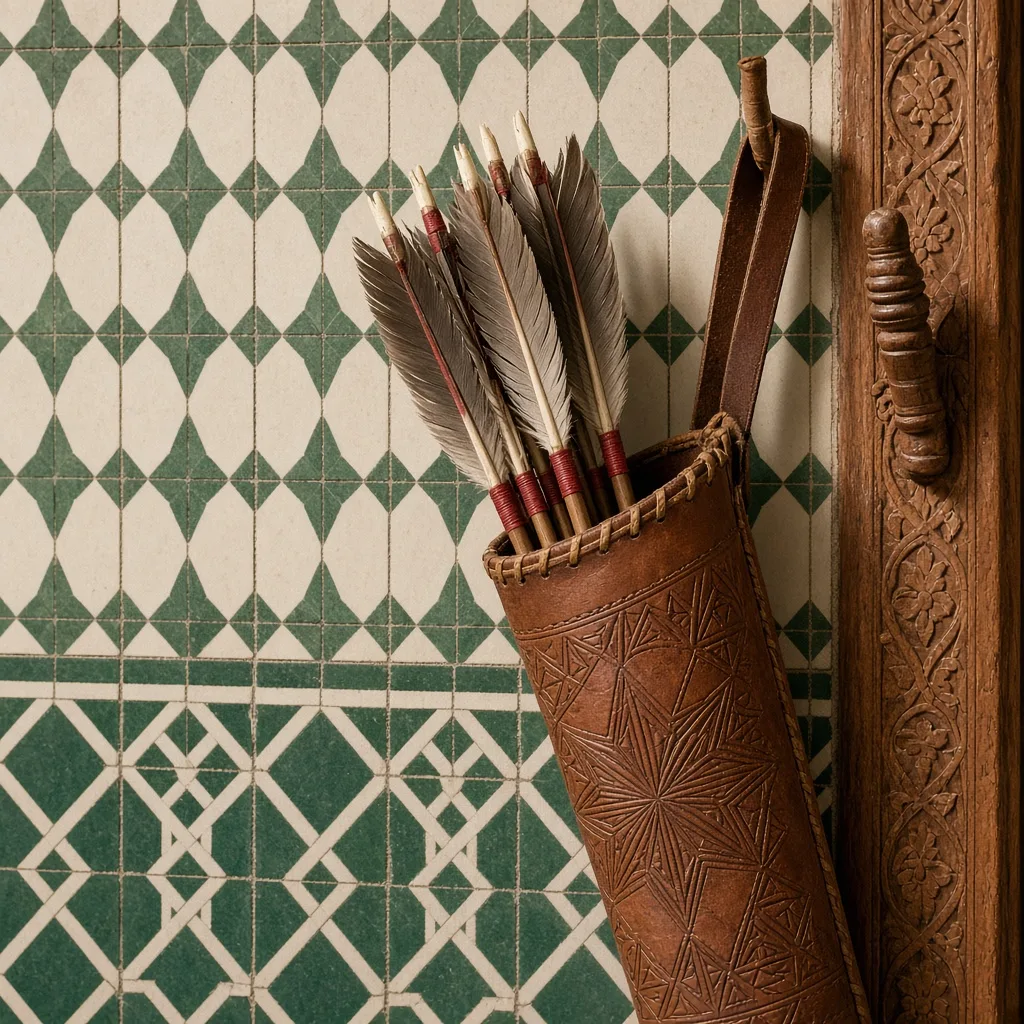
Leather sewn by the house saddlery, worn at the side or on the back. It protects the feathers and keeps the arrows in order, ready to hand.
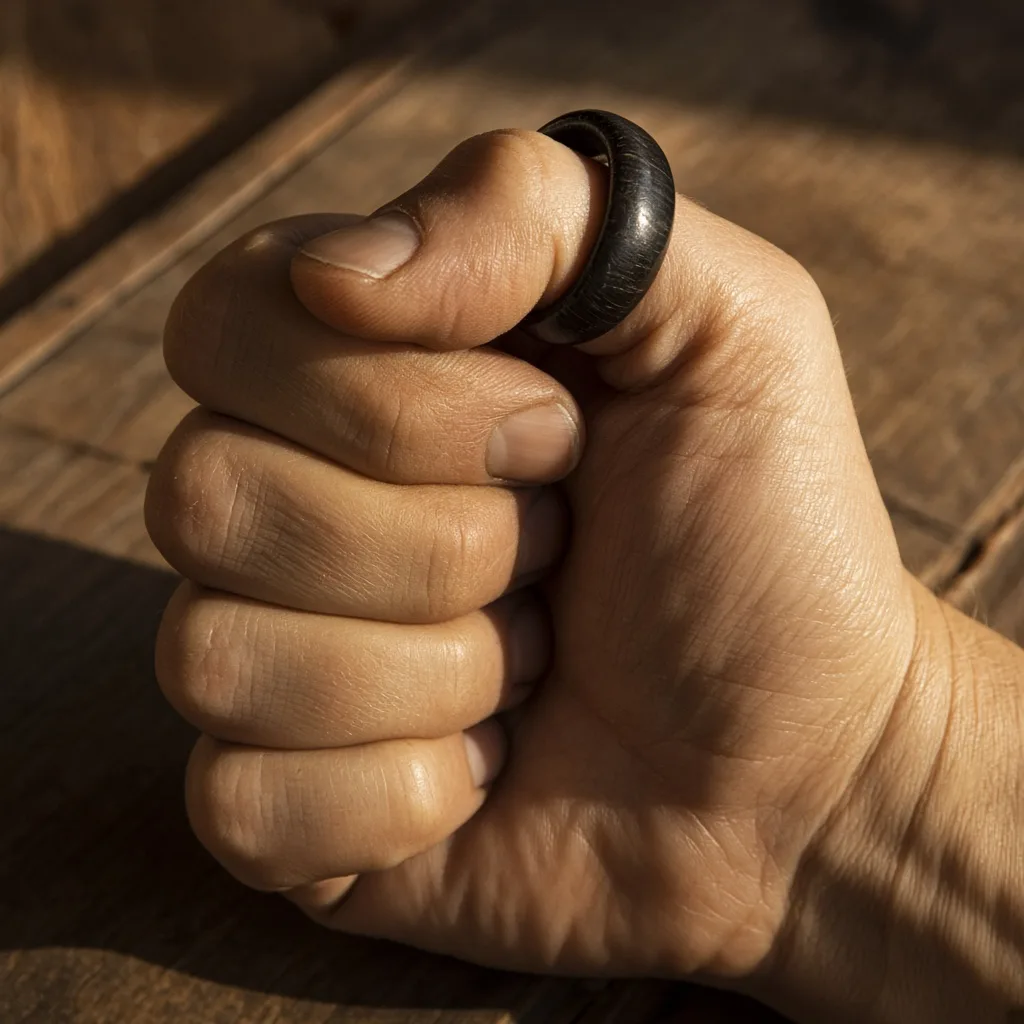
A leather ring or stall on the thumb that holds the string. The saddler will make it to fit each hand.
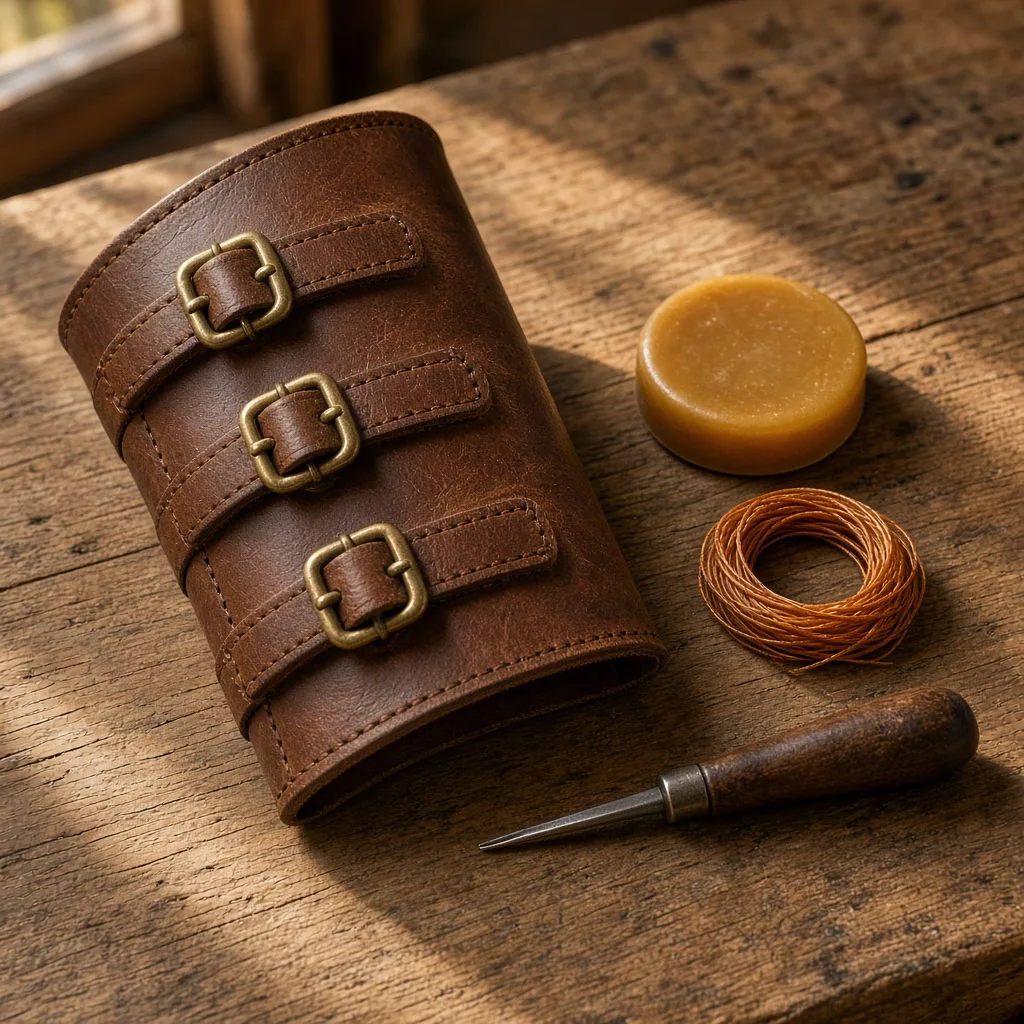
A leather band on the bow arm that shields it from the string at release and holds the sleeve in place.
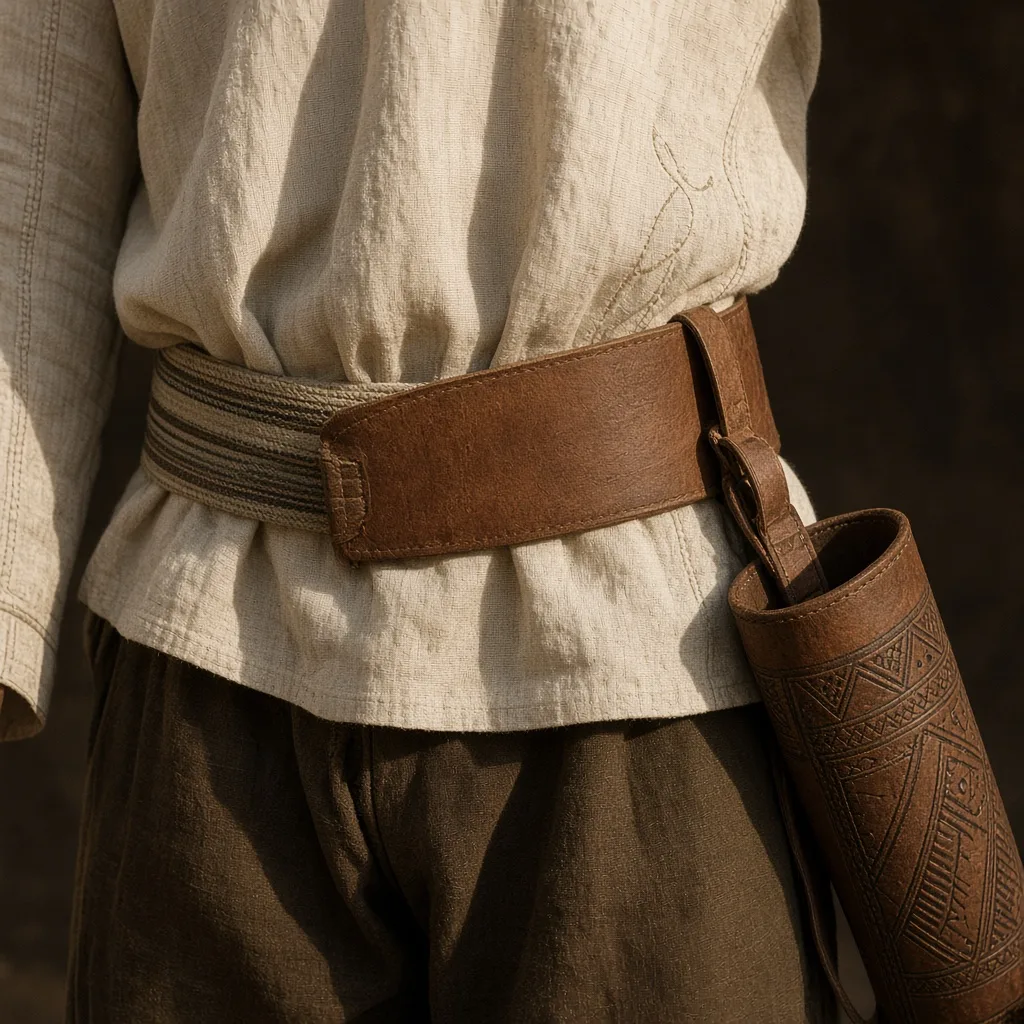
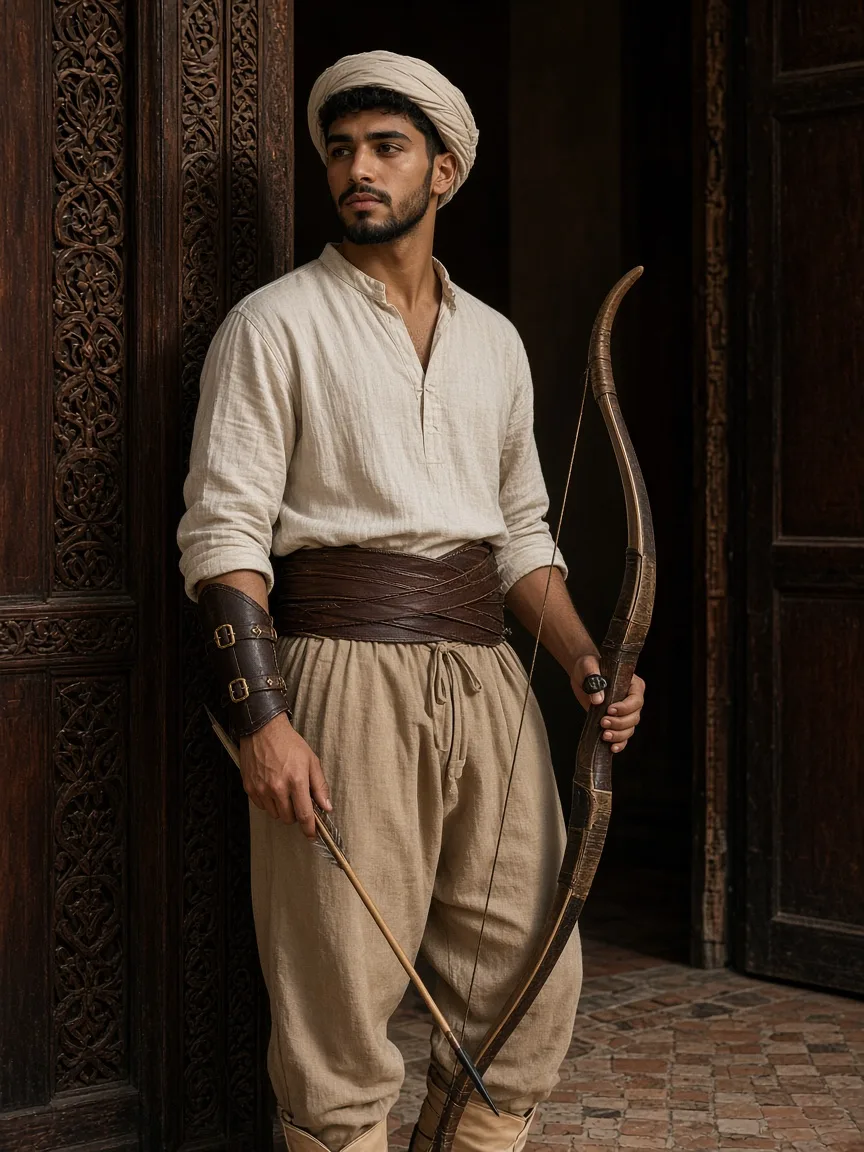
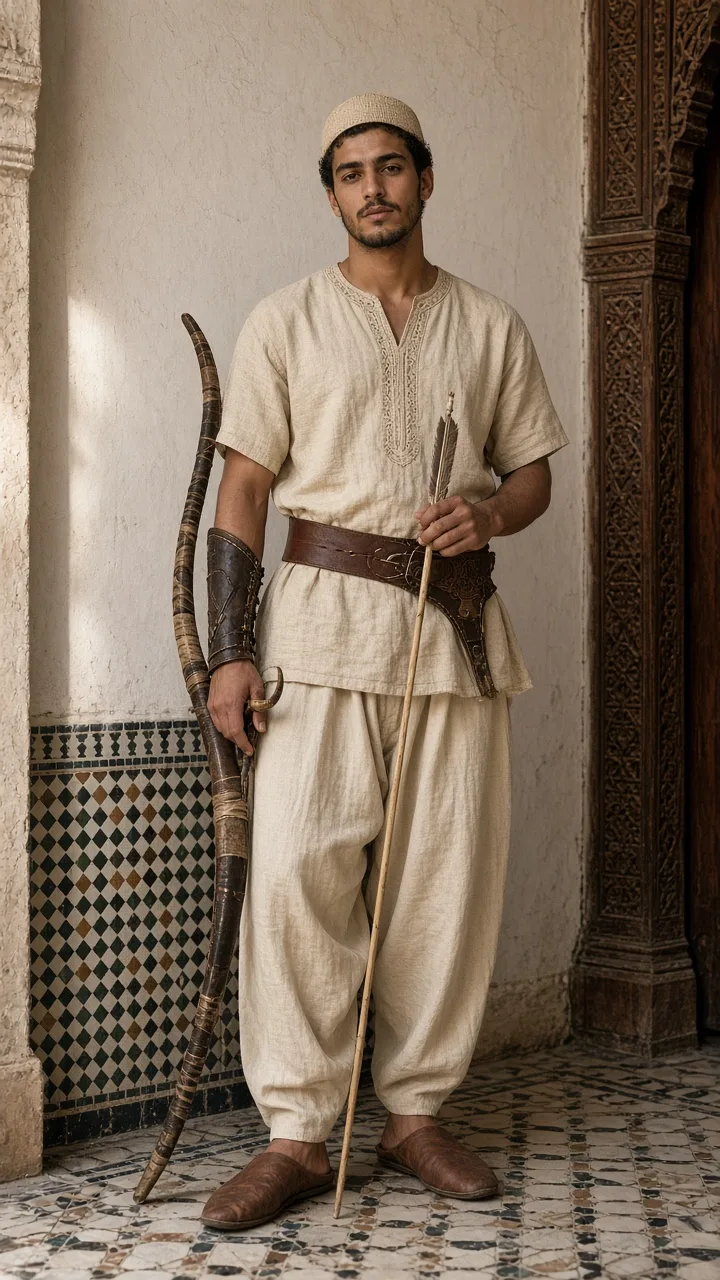
Loose, plain clothing, sleeves that clear the string, a belt that carries the quiver: dress made for the movement, like the attire of Al-Kiswa.
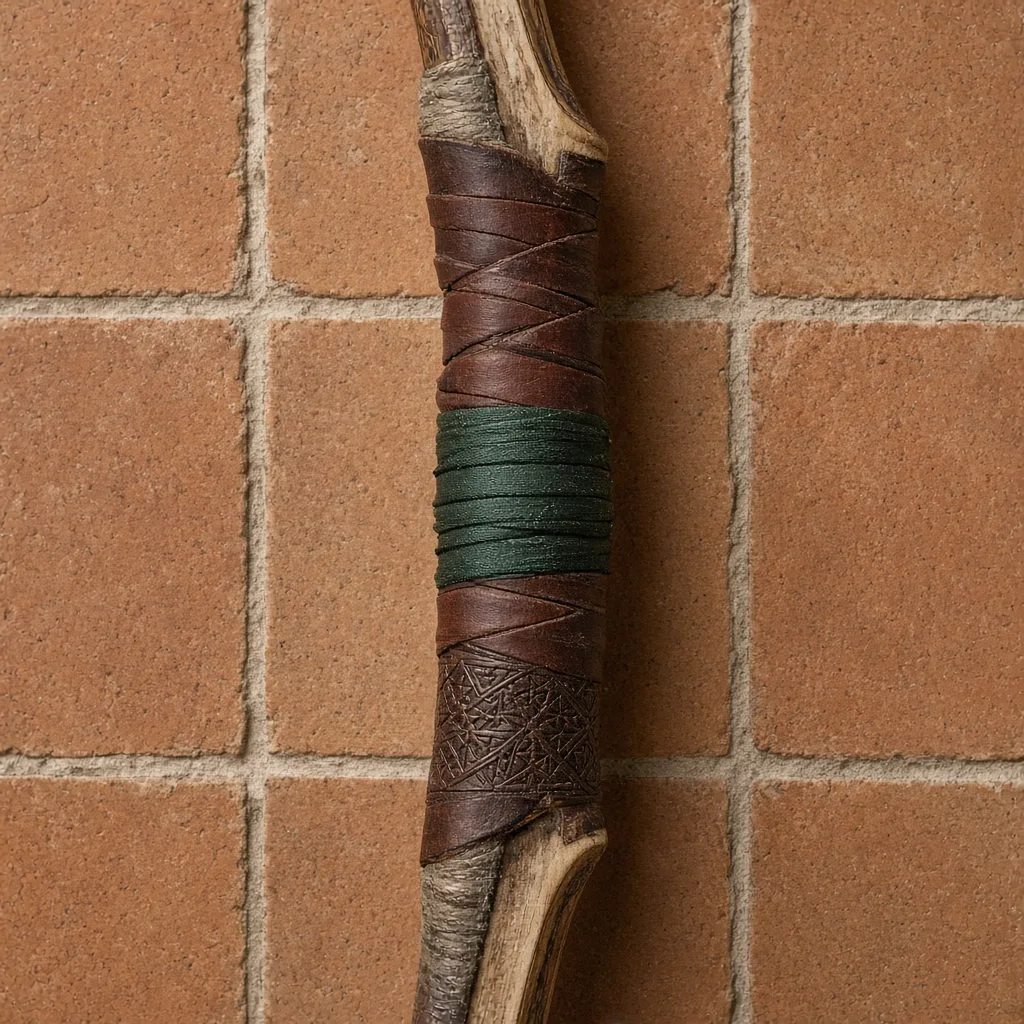
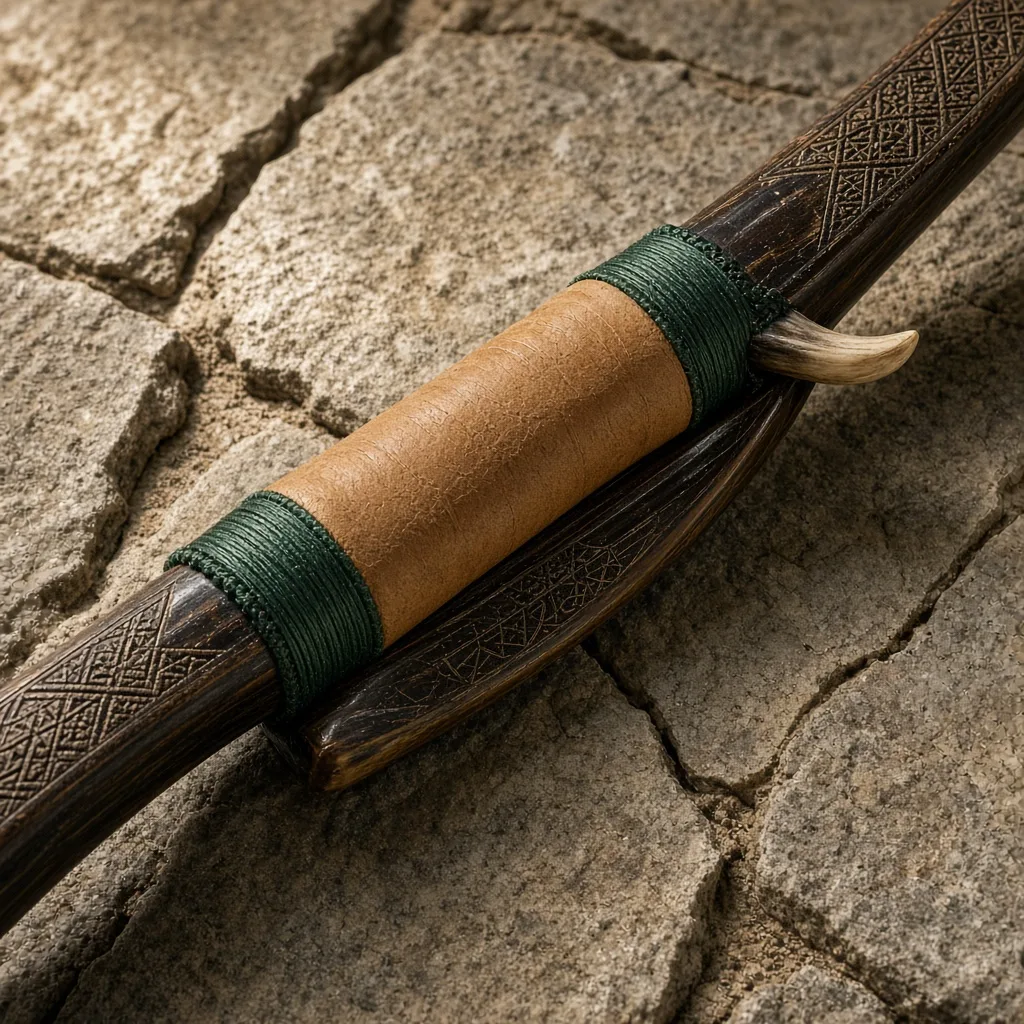
The grip is bound in leather, thread or silk: it gives the hand purchase and protects the wood. Each archer feels it differently, and the saddler rebinds it when it wears.
The quiver is born in the saddlery: the leather is cut, dry-tooled with the house patterns, sewn round a rigid base and finished with a reinforced mouth. Once made, it stands beside the bow, lies with the spare string, hangs on the armoury wall.
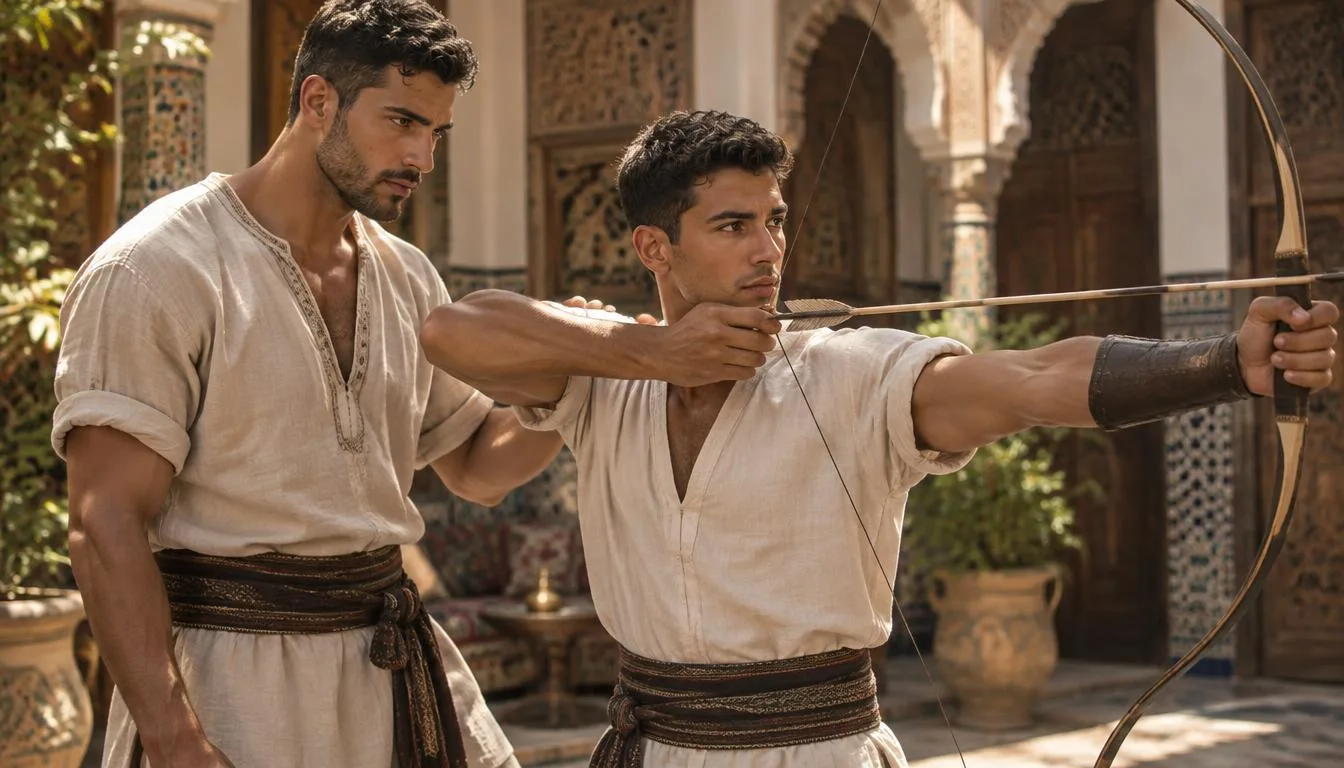
Bow in hand and quiver at his side, the archer stands upright, weight on both feet, shoulders loose. It is the posture every shot begins from, and the first the master corrects.
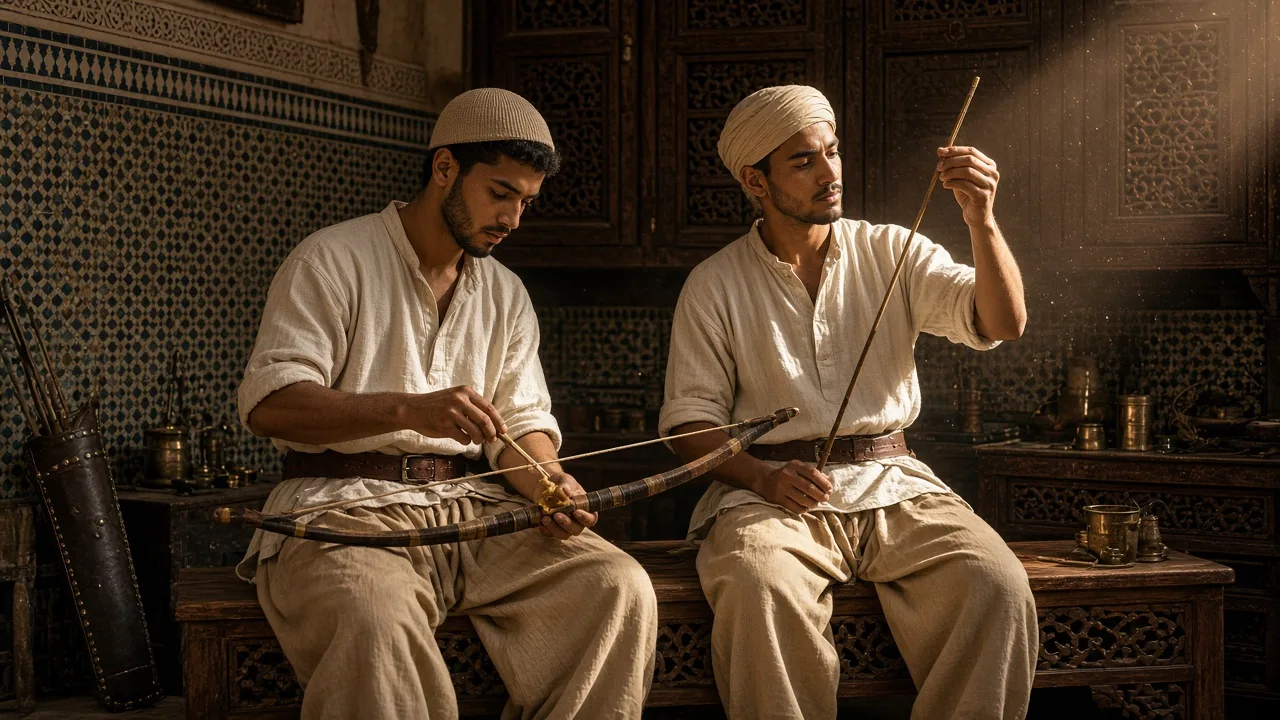
A composite bow fears damp and swings of heat: it rests unstrung in its leather case, away from the sun and from cold walls. The string is checked at every session and changed at the first sign of wear; arrows are inspected along the shaft, the feathers and the nock. The bowyer, the smith and the saddler will mend what breaks, and the pupil, watching them, learns how the things he uses are made.
For the history of the discipline and the thirty-four points of the body, see the chapter on archery→.
Archery · The saddlery tools · Falconry
The words of this page are in the common glossary; the works cited in the sources; the sister house is Al-Funduq aṣ-Ṣiqillī.