Hizam al-Itqan
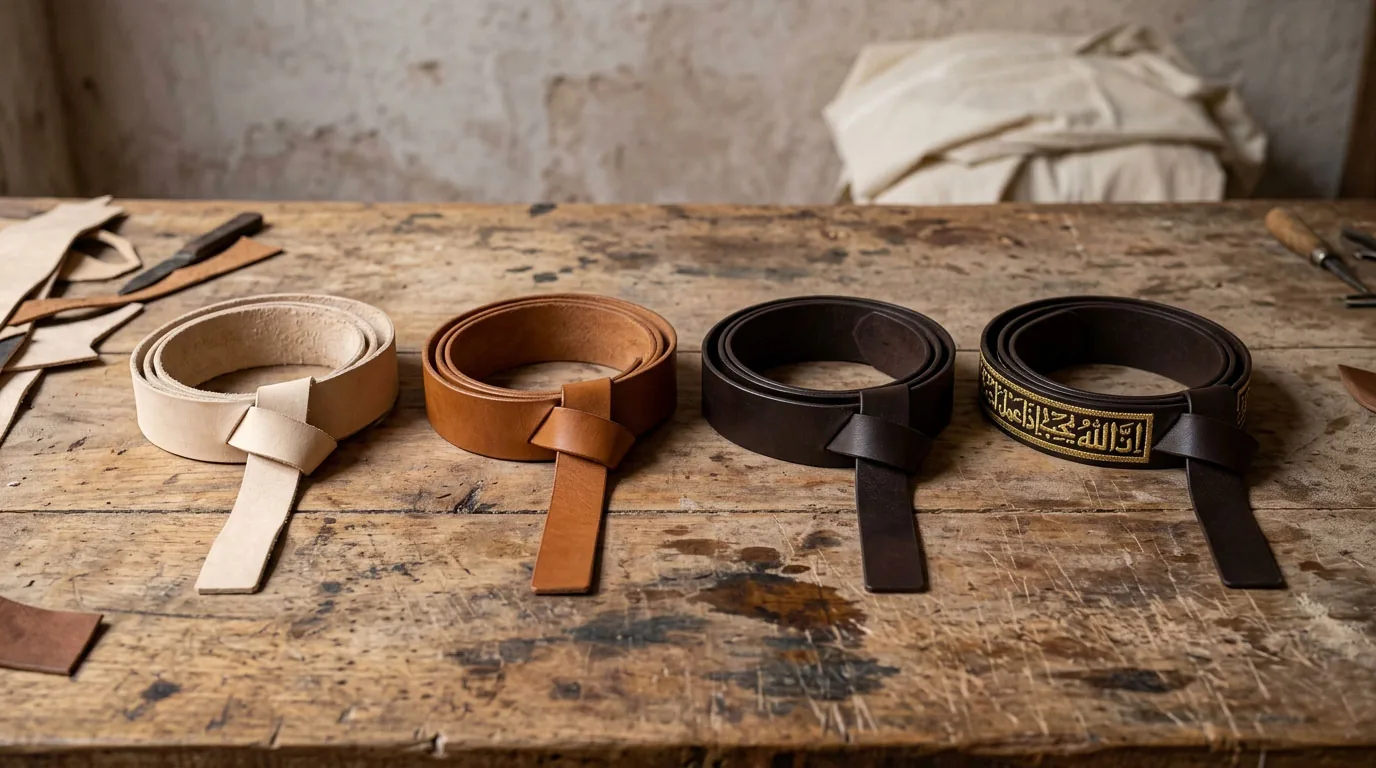
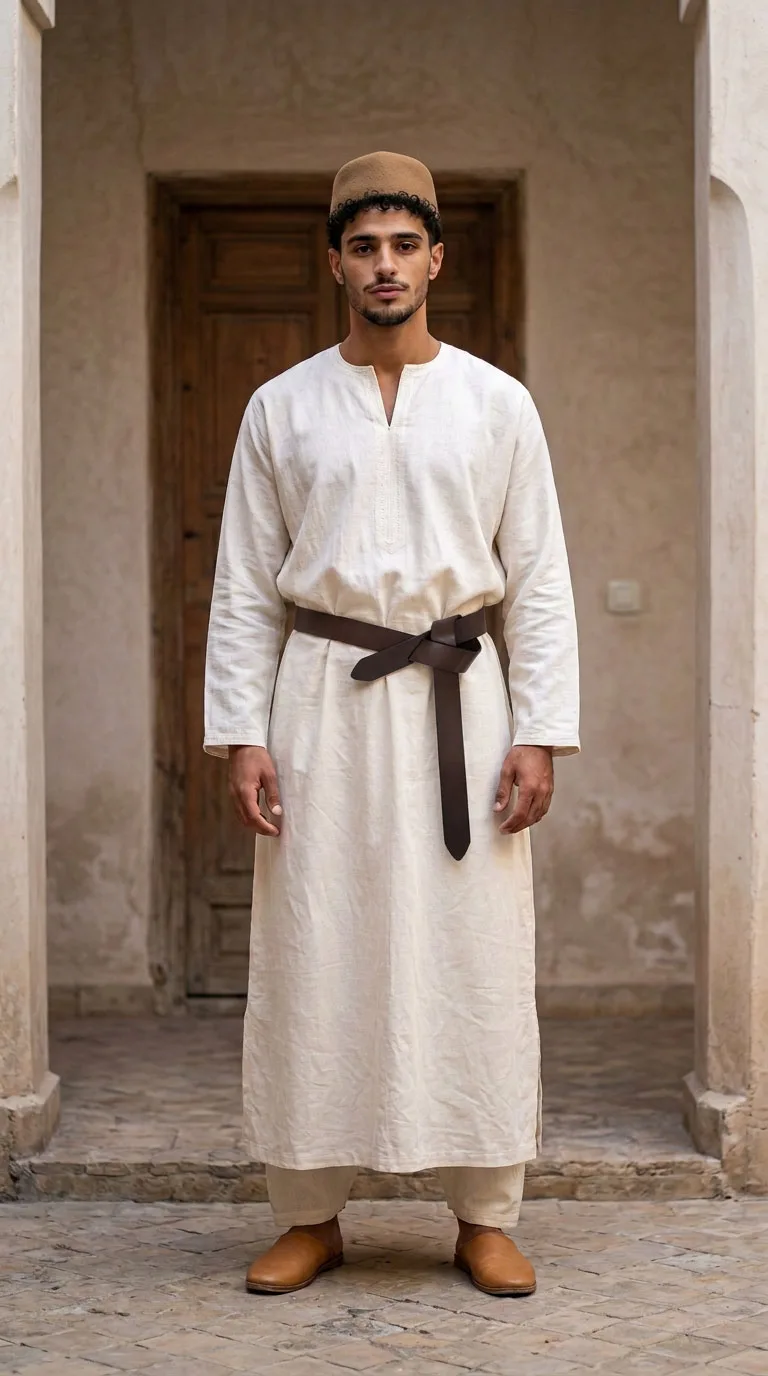
The belt of mastery. Three tones of leather, from beige to brown. Nothing is gained by seniority alone.
حِزَامُ الإِتْقَانِ
ḥizām al-itqān — the belt of accomplished execution
Progression follows competence actually shown. Three tones of leather, from beige to brown, mark a personal path without displaying it as a visible hierarchy. The buckle is plain, with no prong and no holes: one draws it tight, then knots it. The sign is worn at the waist — it is not a title, it is a measure.
FIRST TONE
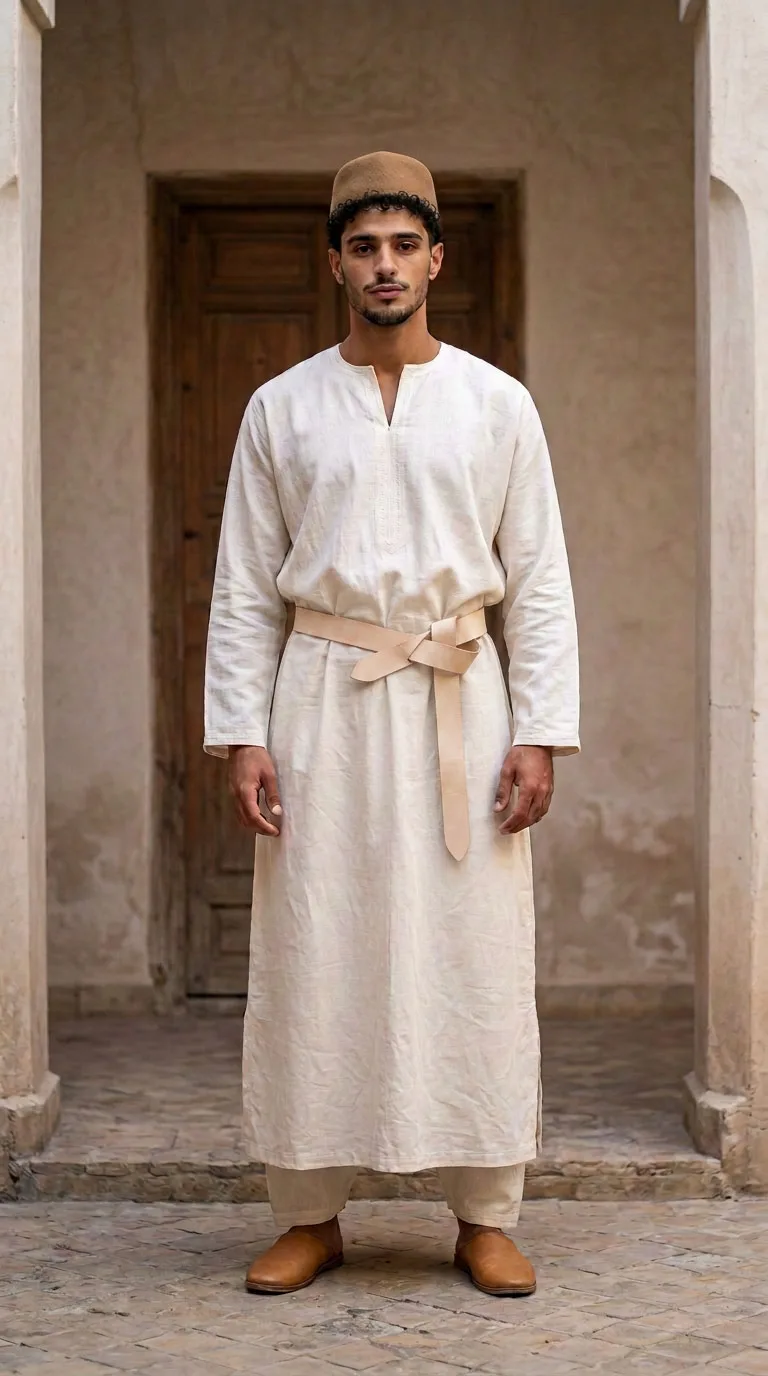
Beige
Entering the workshop. The palest leather is handed over on the day a maalem receives a man into his workshop. Nothing else has been earned yet: only that — having been received, and accepting the rhythm. The belt says: we begin. Before it, a man who has no workshop yet wears no leather at all: his waist is bare, or girt only with the cord of whatever charge he holds for the house.
SECOND TONE
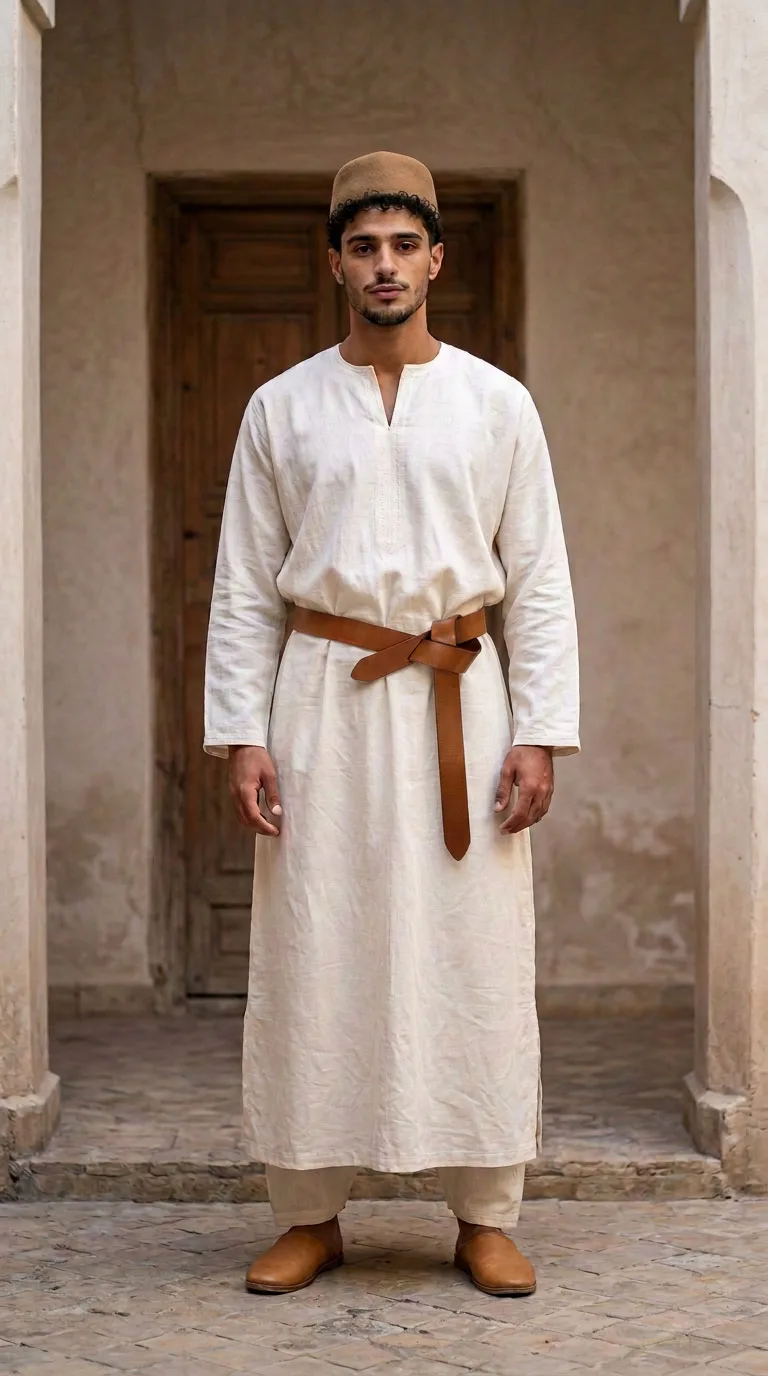
Cognac
Advanced training. The hand has already acquired a sure gesture, without this being mastery yet, and the craft has begun to take root. This brown is not bought. It is shown.
THIRD TONE
Brown
The nearness of mastery. The man possesses the craft well enough to be relied upon, and this degree gives him the right to a ṣāniʿ of his own, a beginner whom he sets to roughing out the material and carries as far as the point where the maʿallem takes over. Transmission begins there, at the lower end of the work, and it is ordinarily from among the men of this rank that the next master is chosen.
OUTSIDE THE SCALE
The gold thread of the Ash-Shaykh
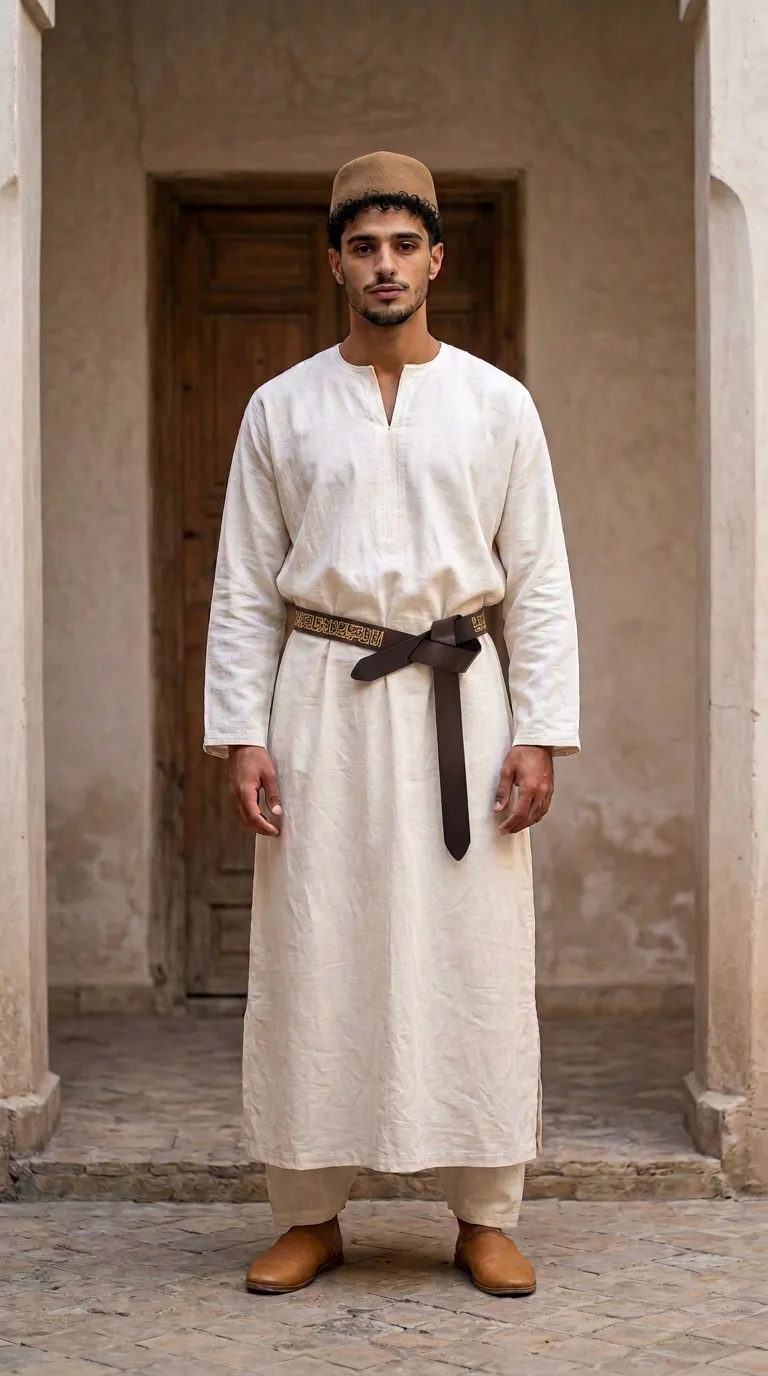
The fourth degree stands outside the scale, since it belongs to the Ash-Shaykh and to him alone. Dark brown, embroidered in gold thread in Andalusian Kufic, it carries an authenticated hadith. His authority does not need a scale in order to be stated; and the maalem, for his part, no longer shows a belt at all, the Al-Hulla having taken the sign over.
إِنَّ اللَّهَ يُحِبُّ إِذَا عَمِلَ أَحَدُكُمْ عَمَلًا أَنْ يُتْقِنَهُ
“God loves that, when one of you does a work, he does it with excellence.”
WHAT IT IS NOT
Neither seniority nor costume
The Hizam is not a stripe. It is not worn to be seen from afar, and it says one thing only: the distance covered in the craft. What a man answers for on behalf of the others is read elsewhere — on the jacket, the coat and the cord, in the colour of the charge, and only for as long as it lasts. The two signs do not replace one another, but are worn together. The maalem, for his part, once the Al-Hulla is on his shoulders, no longer shows the belt: the whole garment takes the sign over.
The Ash-Shaykh alone wears the gold embroidery at all times, outside ceremonies: his authority does not need a scale. See Al-Kiswa.
THE CHAIN
Who answers, who transmits
The grade says what the hand can do. Governance says who answers. After the residency, what remains is the malaka and not the belt — and, one day, a household to lead.
الرِّياضُ لِأَهْلِهِ، لَا أَهْلُهُ لِلرِّياضِ
The words of this page are in the common glossary; the works cited in the sources; the sister house is Al-Funduq aṣ-Ṣiqillī.