The craftsman’s genius
The gesture that comes from the past and the flair that renews it: the house forms both.
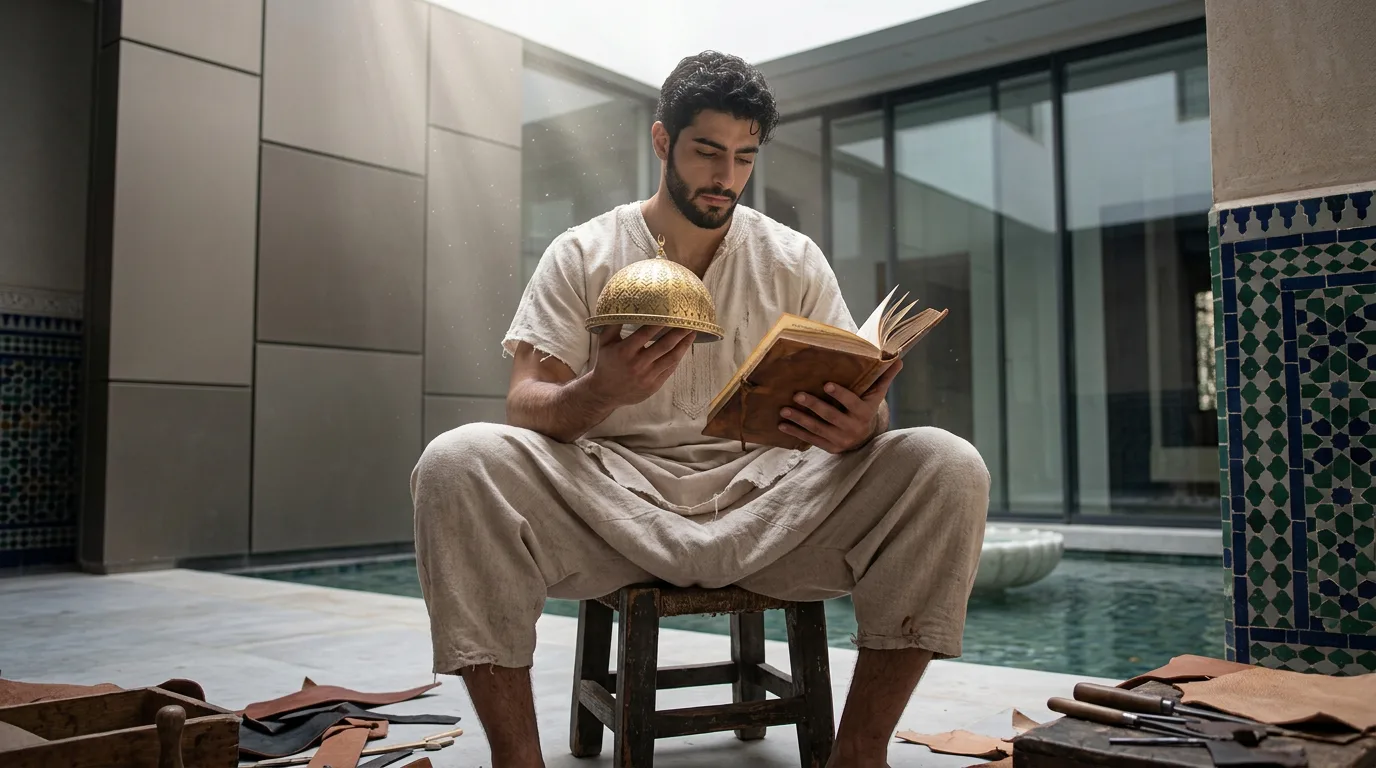
In the crafts and in the handing on of the gesture, the house fosters two things together. The first is the tradition that comes from the past, sifted by history and handed down to us. The second is that share of creativity and flair that marks a true artistic spirit. The craftsman thus receives the means to carry out with his own hands the new ideas, too, that his mind, his gifts and his genius inspire in him.
The masters of the house faithfully keep the knowledge handed down and also bring innovation and experiment, in the craft as in the other disciplines that shape the life of the house.
The gesture handed down
What history has sifted is the work of many generations, and every gesture that has reached us was, one day, someone’s discovery. The 2003 UNESCO Convention says as much of living heritage:
“[The intangible cultural heritage], transmitted from generation to generation, is constantly recreated by communities and groups in response to their environment, their interaction with nature and their history”
UNESCO Convention for the Safeguarding of the Intangible Cultural Heritage, Paris, 17 October 2003, art. 2, para. 1
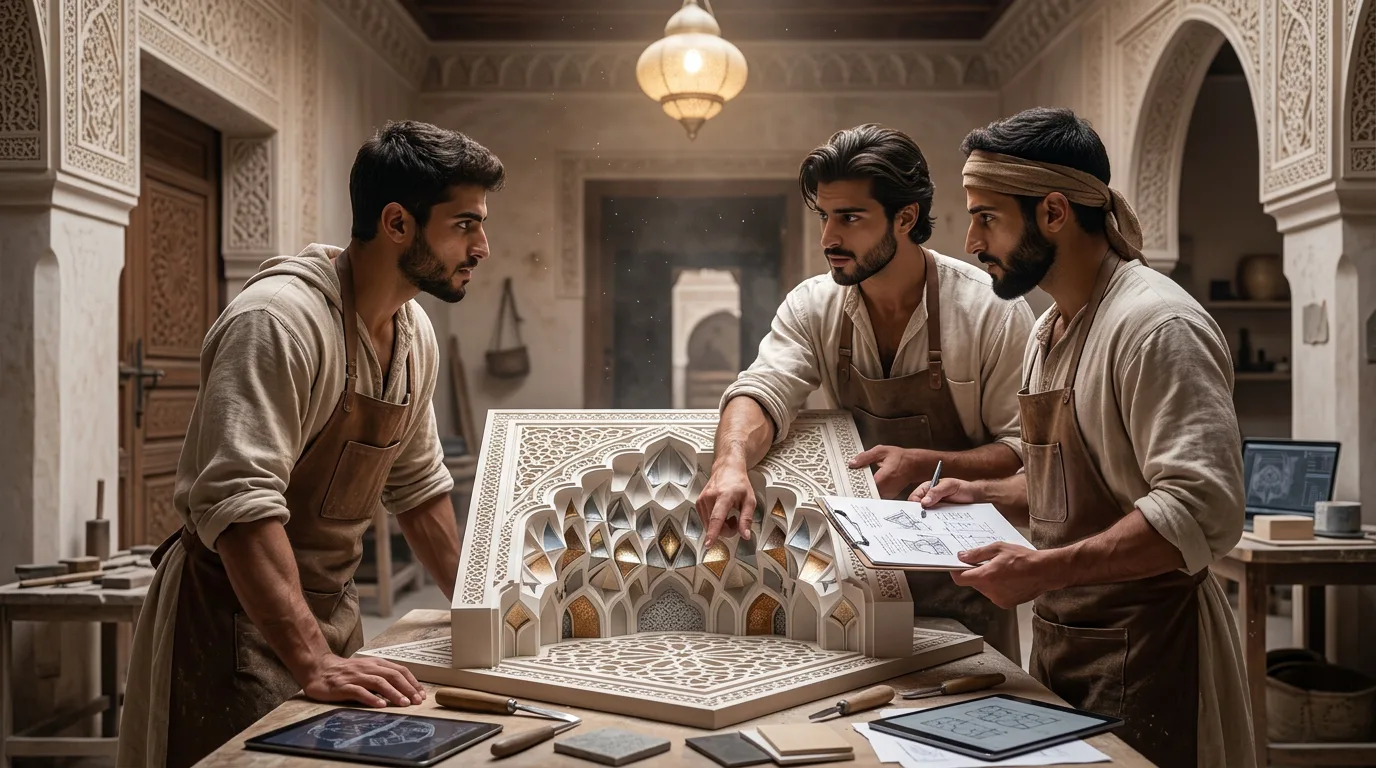
Every form, before becoming tradition, was a proposal. The muqarnas, those cells of carved plaster hung like stalactites, probably arose in Persia and Mesopotamia in the 10th-11th centuries; in 1427 the mathematician Ghiyāth al-Dīn Jamshīd al-Kāshī explains in the Miftāḥ al-ḥisāb how to measure it and break it into modules.
The itqān, accomplished execution, remains the measure of all work. The hand is formed on the masters’ gesture, as Hizam al-Itqan→ tells, and whoever owns the gesture can change it with judgement: freedom is born of mastery.
Flair needs the hand
Cennino Cennini, a Tuscan painter, opens his book of the craft with a demand addressed to whoever loves art: to have imagination and to know how to carry it out by hand.
“conviene avere fantasia, con operazione di mano, di trovare cose non vedute” [“one needs imagination, and the work of the hand, to find things not yet seen”: our translation]
Cennino Cennini, Il libro dell’arte, ch. I (c. 1400)
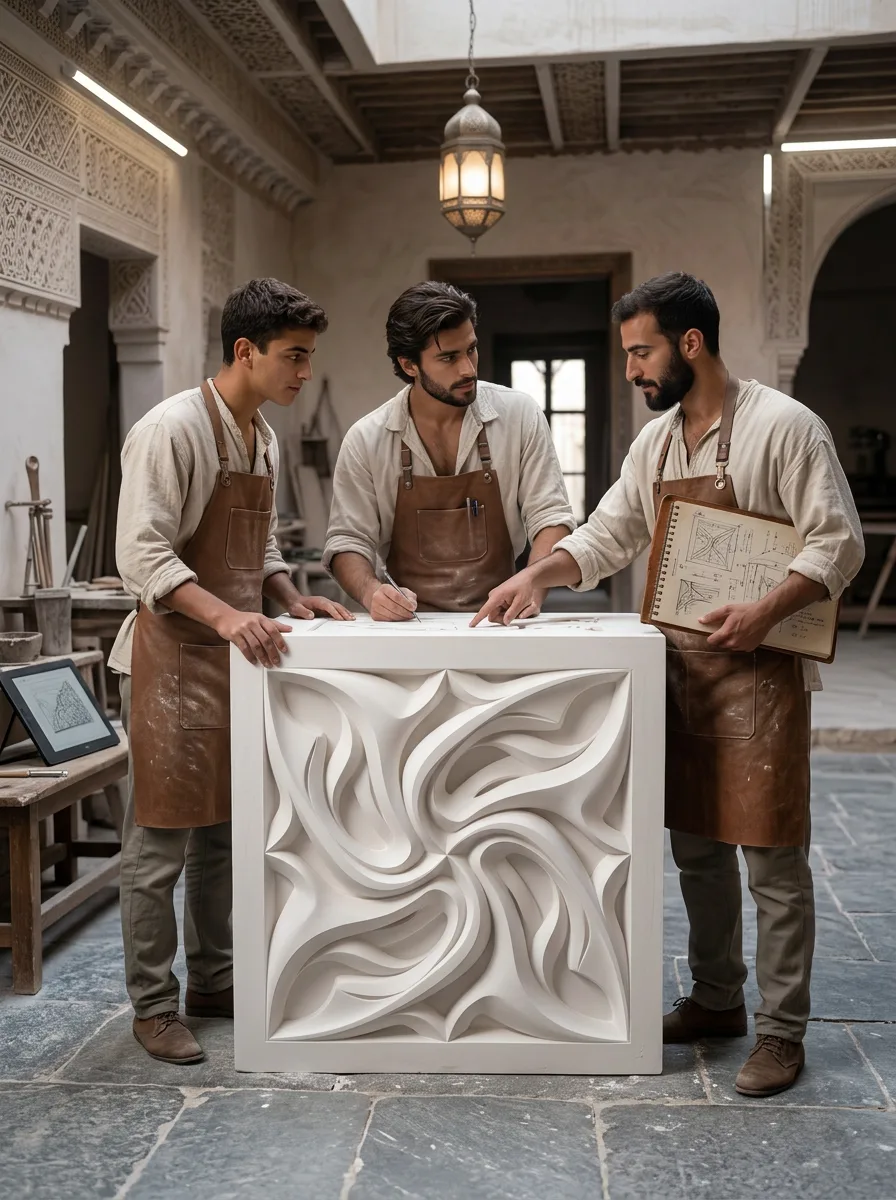
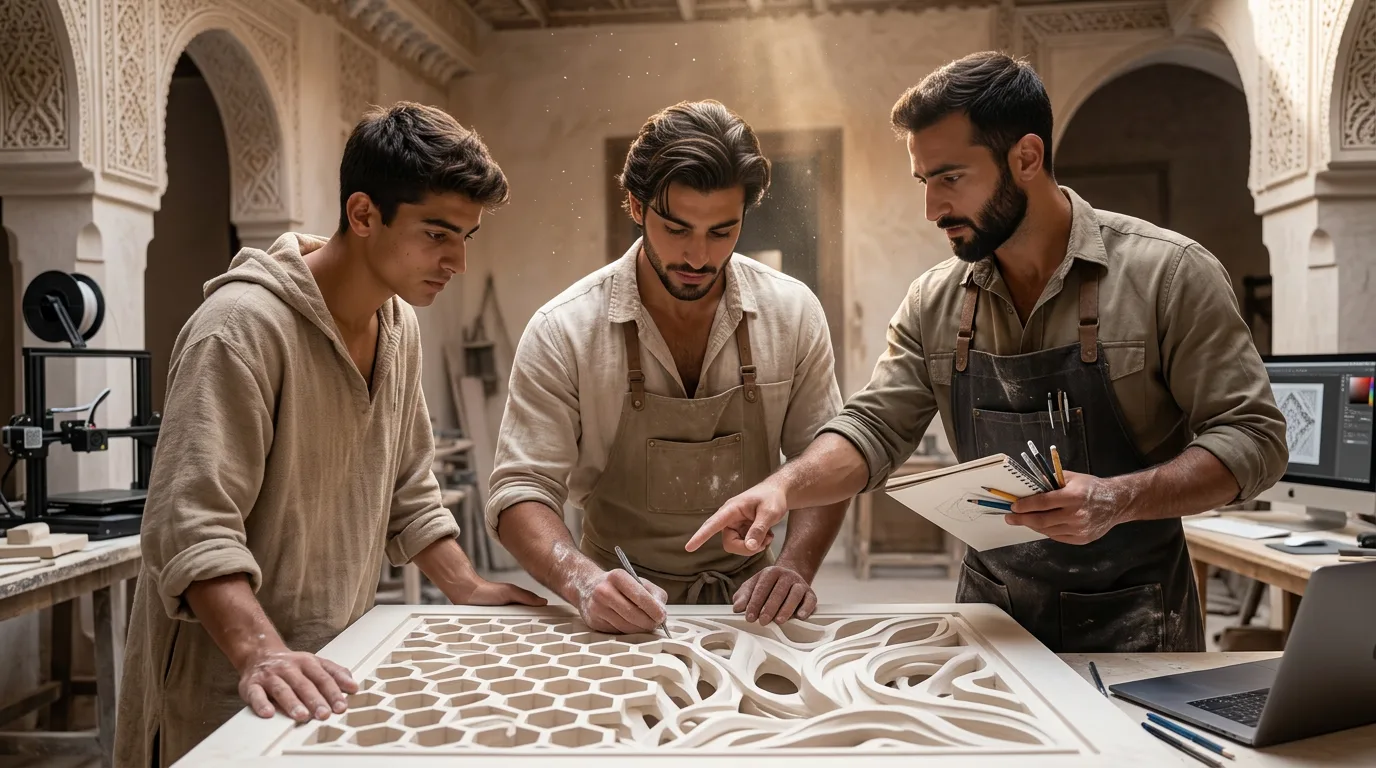
David Pye, a cabinetmaker and teacher of design, calls workmanship of risk the kind of work in which the quality of the result is not fixed in advance and depends on the “judgment, dexterity and care” of the maker. It is the work of the bench, where the piece may turn out better or worse than imagined, and where invention finds its place.
David Pye, The Nature and Art of Workmanship, Cambridge University Press, 1968
The merit of introducing what is good
The prophetic tradition recognises this merit in a saying transmitted by Jarīr ibn ʿAbd Allāh and collected by Muslim:
مَنْ سَنَّ فِي الْإِسْلَامِ سُنَّةً حَسَنَةً فَلَهُ أَجْرُهَا
“Whoever establishes a good practice in Islam will have its reward […]”
Prophetic tradition (Muslim, no. 1017; narrator Jarīr ibn ʿAbd Allāh)
The saying goes on to the reward of those who put it into practice after him. A good new practice, when it is useful and sound, thus enters the tradition.
The polyhedron
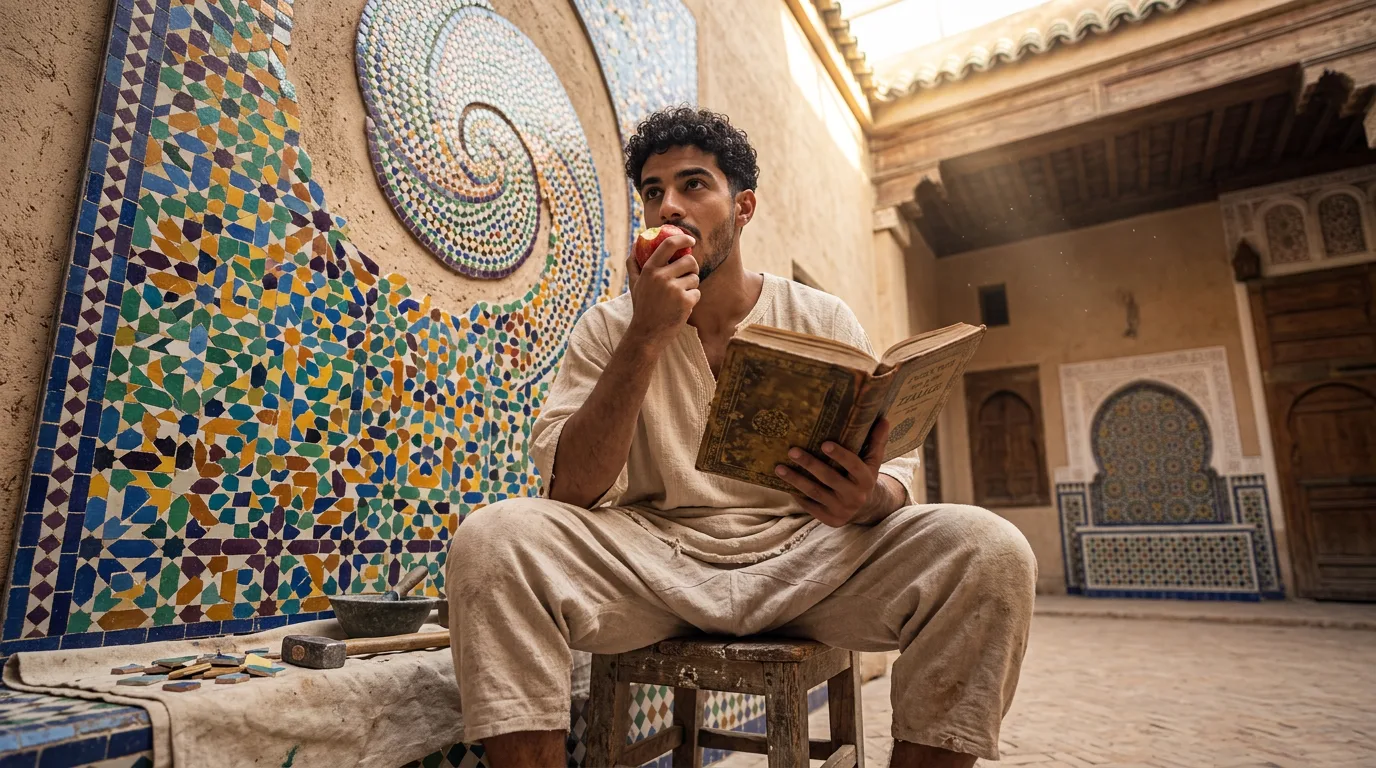
The house forms people, and people have many faces. The philosopher, the thinker, the artist and the lay monk are the facets of a polyhedron that composes and shapes the personality and character of whoever lives in the house.
The philosopher and the thinker study and debate, in the library of the house (Al-Khizana→).
The artist invents: at the bench, by hand, and in music and song (Music and chant→).
The lay monk lives the rule, silence and service in the world, beside his work (Brotherhood and rectitude→).
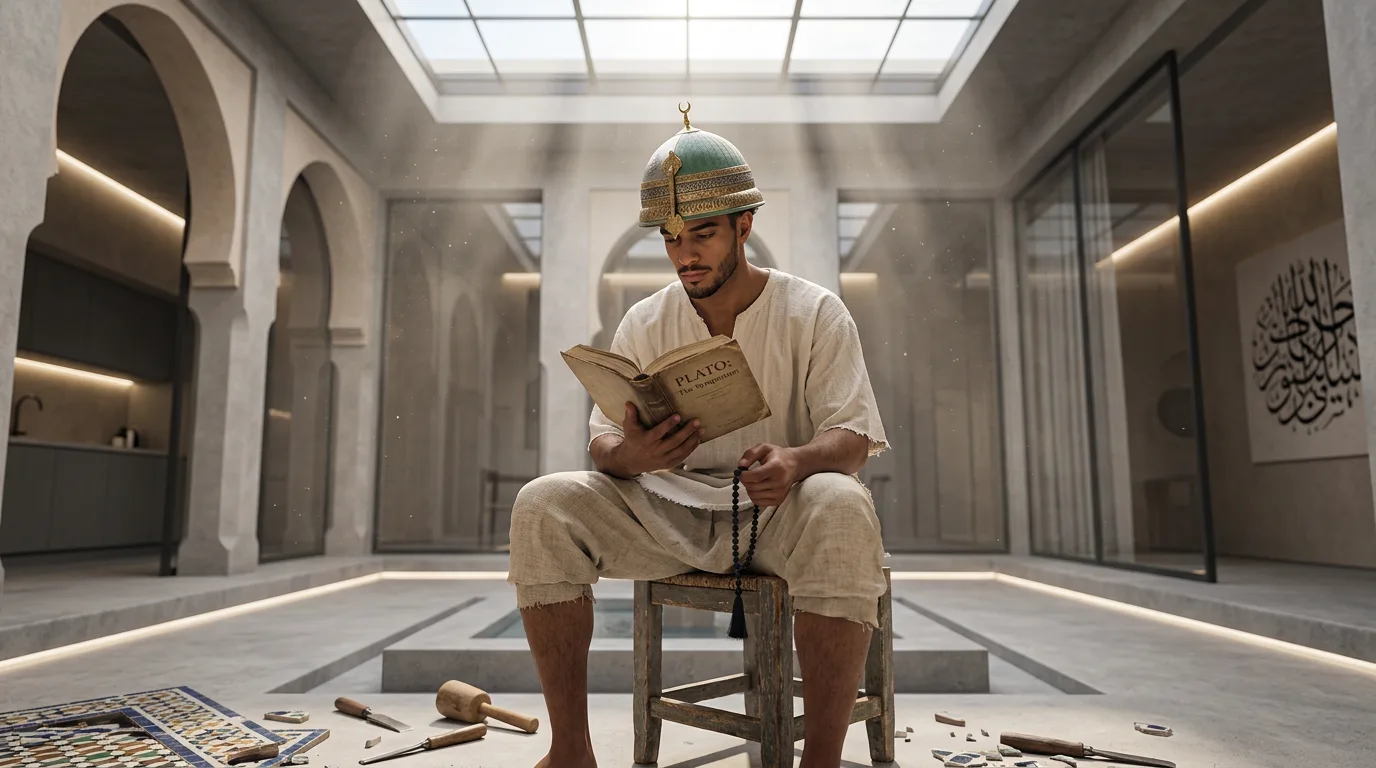
From the thinkers of classical Islam the house also receives a way of approaching the works of the ancients. Ibn al-Haytham, in his Doubts on Ptolemy (al-Shukūk ʿalā Baṭlamyūs), writes that whoever seeks the truth questions the texts of his predecessors rather than simply trusting them:
“the one who suspects his faith in them and questions what he gathers from them”
Ibn al-Haytham, al-Shukūk ʿalā Baṭlamyūs (early 11th century), in A. I. Sabra’s English version, “Harvard Magazine”, September-October 2003
The workshop does the same with the gesture it receives: it learns it thoroughly, puts it to the test and, when needed, improves it.
Making the gesture one’s own
The craftsman’s technical skills, acquired during the years of apprenticeship, thus join the master’s artistic taste, and the ancient heritage is read anew through the eyes of a young person of the third millennium. A living continuity follows, that of a community of craftsmen-philosophers, so to speak, who find in their work one more reason for pride.
This pride comes from having made the gesture one’s own, rather than from repeating it: having taken it in so deeply that it becomes almost a part of one’s being. The philosopher Michael Polanyi called tacit knowledge what the hand knows and words cannot say:
“we can know more than we can tell”
Michael Polanyi, The Tacit Dimension, Doubleday, 1966
Whoever possesses the gesture in this way can go “beyond” the rules of the craft, because he knows them from within. The Japanese martial arts made of it a path in three stages, shu, ha, ri: one observes the form, then loosens it, finally goes past it.
The house offers this possibility to those with the aptitude for it. Some will feel drawn to creativity and innovation, others will find comfort in the ritual repetition of a gesture, adding nothing to it, and the house welcomes them with the same respect. The talent and inspiration of the first become a spur and an example for the others, and the fidelity of the second gives the first a firm ground on which to invent.
In the daily work
The work of the house will have two beats. The first is the commission: what tradition has fixed is carried out exactly, to the measure of whoever orders it and of the building (see The work on commission→ and The passage to master→). The second is research: the master and his apprentices try new forms, materials and techniques, and the successful piece takes its place in the workshop beside the others.
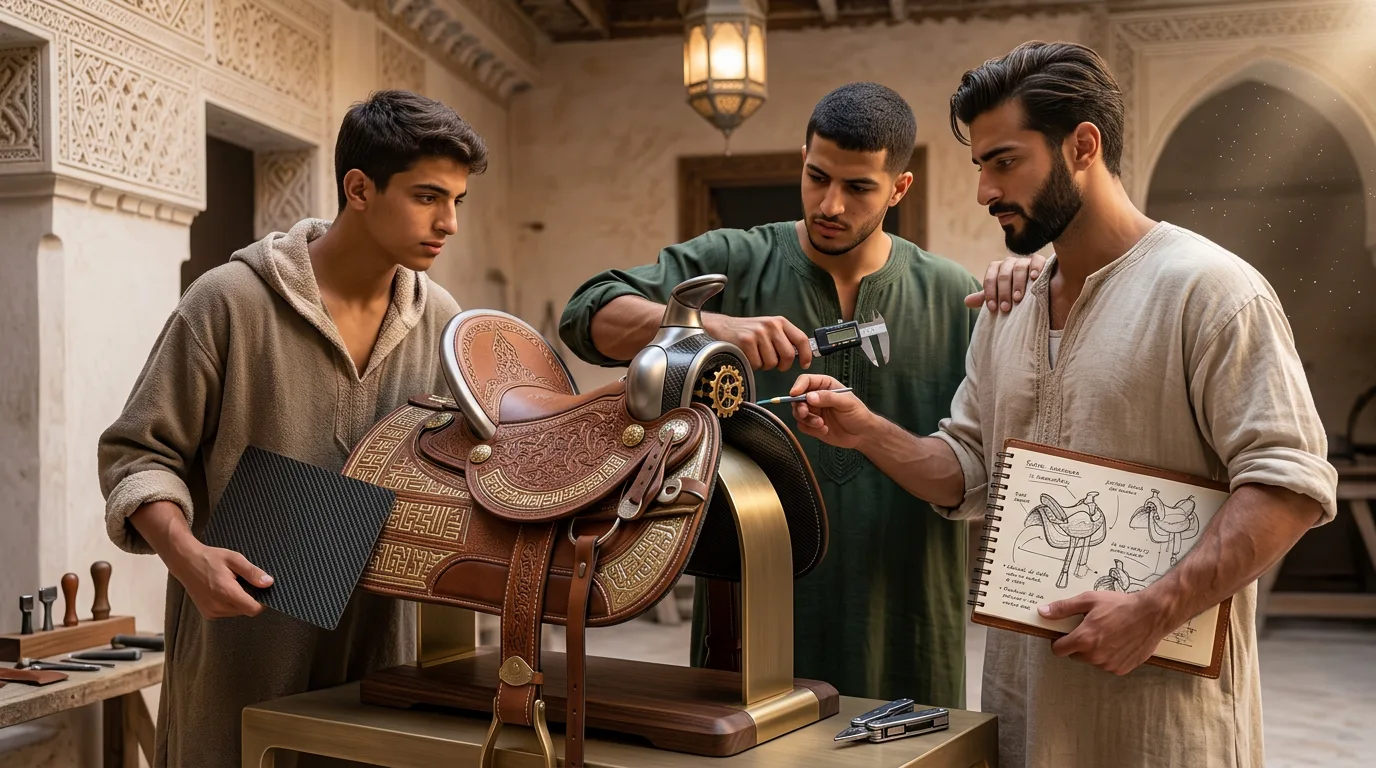
In the Gulf and in other lands the craft has often slid towards the accessory shown to the foreigner, the object that says “here is what we have”. The Saudi artist Abdulnasser Gharem observes this with concern: the craftsmen themselves ask what sense there is in what they do. The house takes another road: the piece is born of a question, and master and apprentice alike are free to ask it.
“For me, art begins with the why.”
Abdulnasser Gharem, interview with Mia Funk, The Creative Process
A house that also invents continues its own tradition.
A contemporary part
Nothing prevents a part of the house from being restored in a more modern, design-minded style. Beside the historic part there could thus arise a kind of living monument of modern art, where the masters and artists of the house try out new languages with the materials and crafts of all time.
See also The disciplines→, The chain of masters→ and The frame of reference→.
The words of this page are in the common glossary; the works cited in the sources; the sister house is Riyāḍ al-Uns.