The rider and the troop
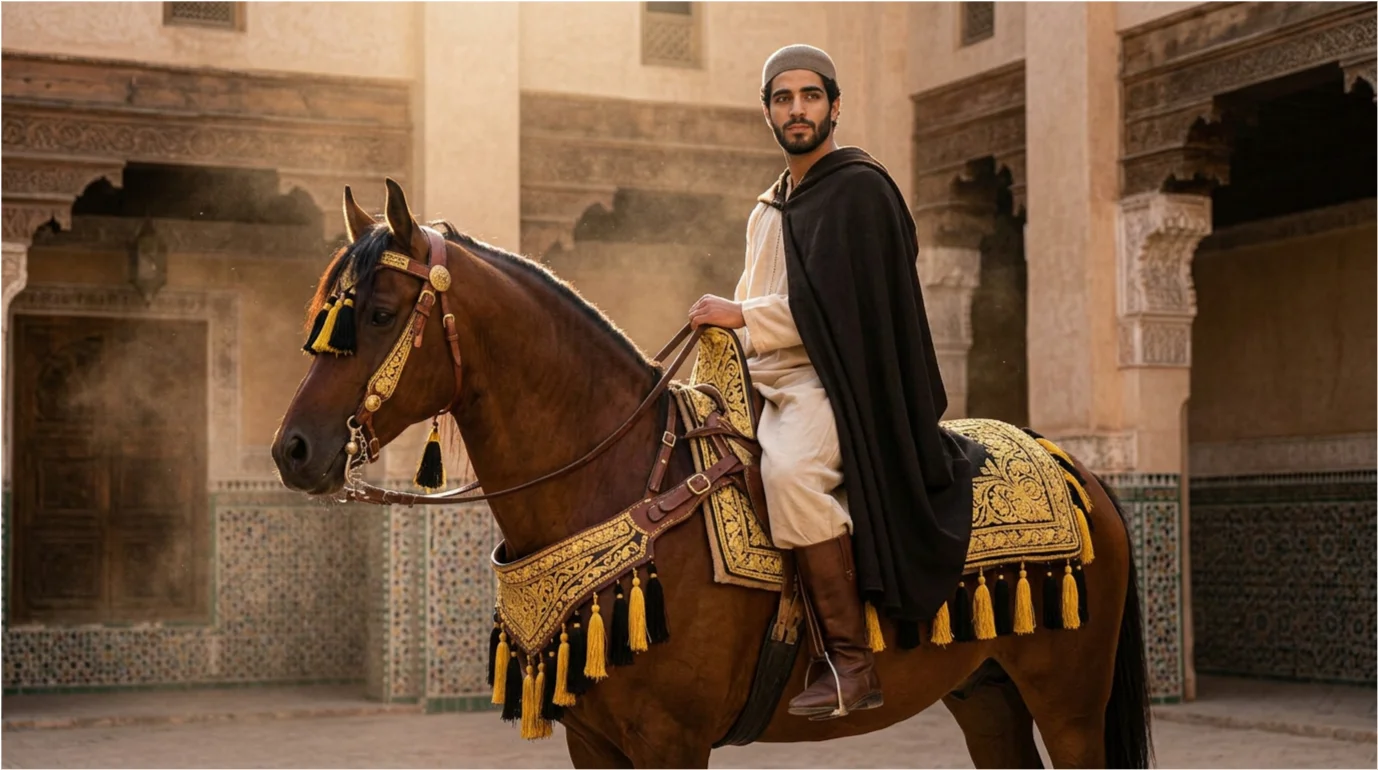
The harness seen by the one who rides and the one who serves.
To hold oneself
الفارس
al-fāris, the rider
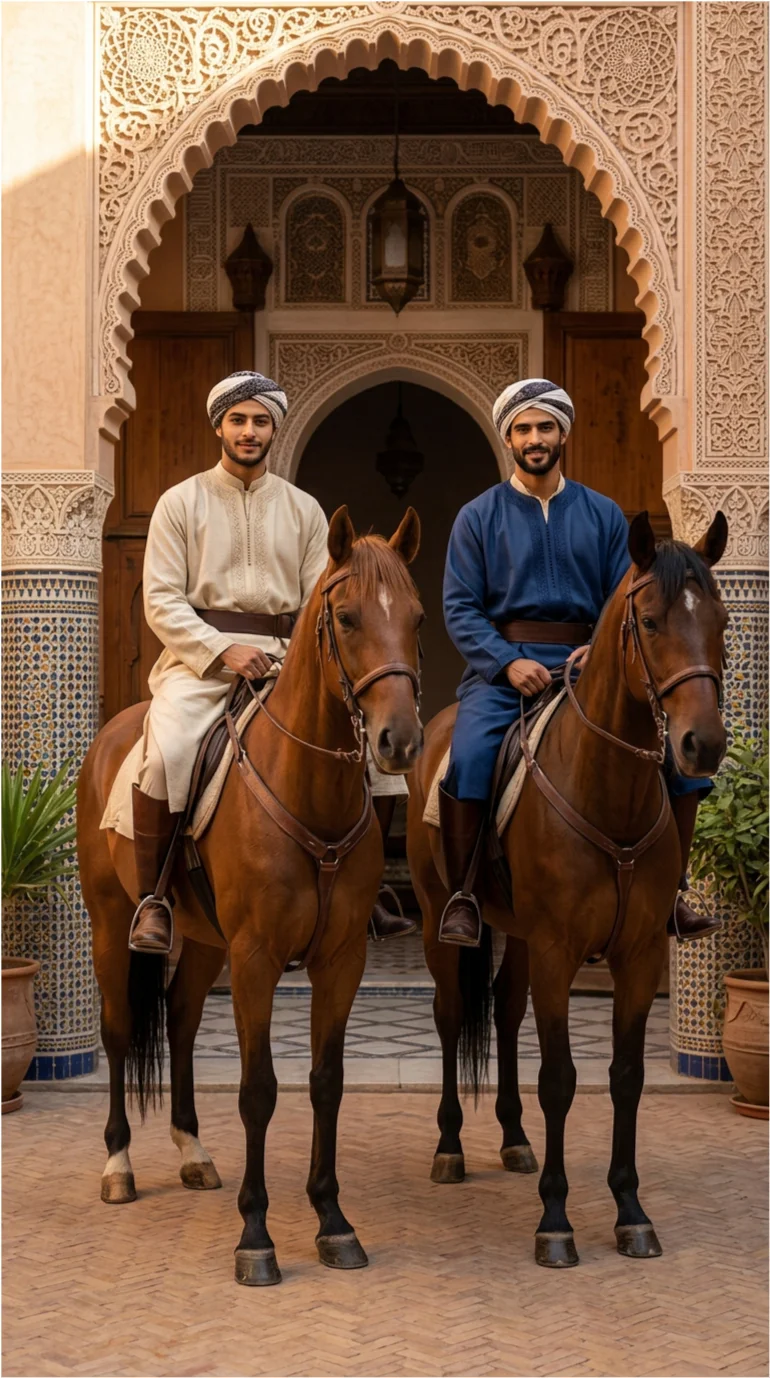
Authority shows in the way a man holds himself on horseback, more than in ornament. He commands who can command himself.
The sorba
السَّرْبَة
as-sarba, the aligned troop; the tbourida, the ride of the guns
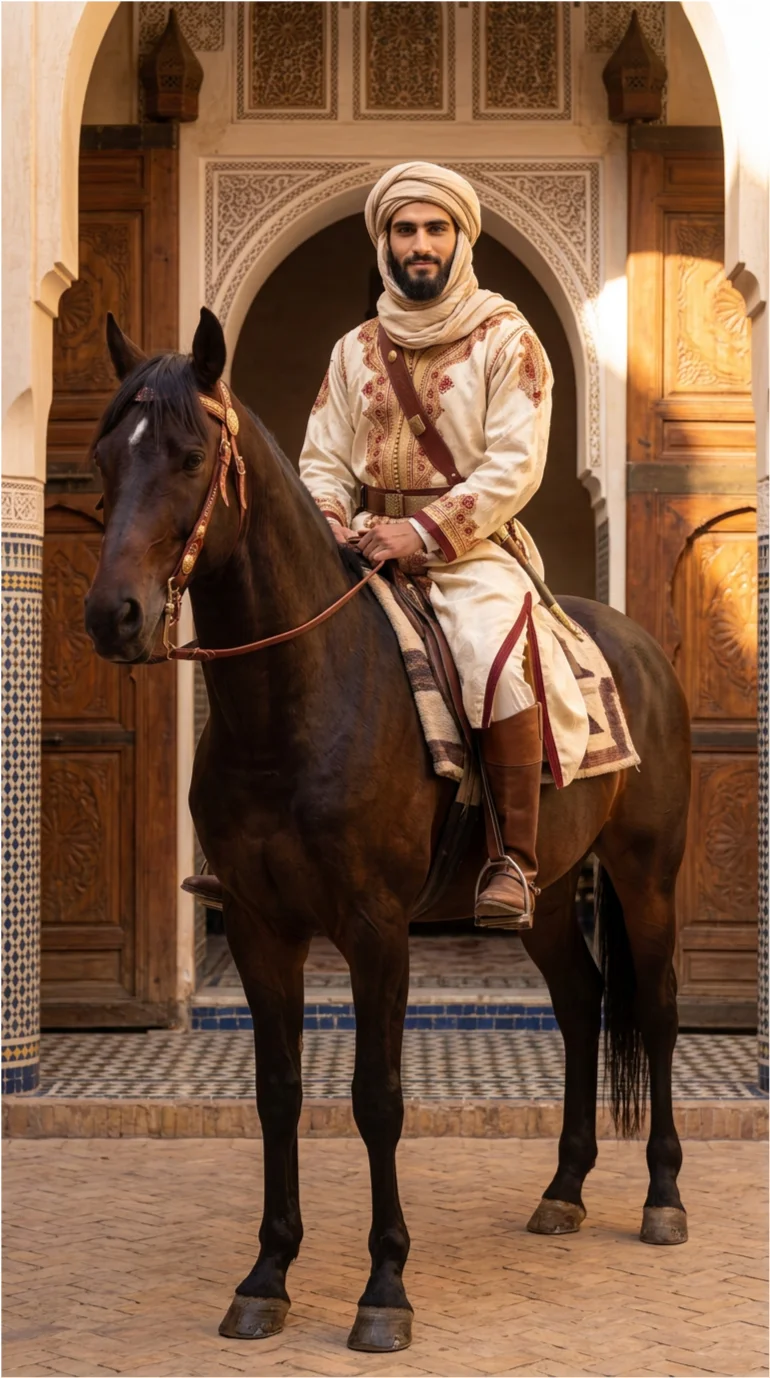
So far, one man and one horse. In Morocco furūsiyya also shows itself as a troop. The tbourida lines up a sarba, fifteen riders or so and sometimes more, under the authority of the ʿallām, who holds the centre of the line and gives the start.
The difficulty is to set off together, to hold the line along the whole length of the track and to make the guns thunder in a single shot. One rider ahead or one behind is enough, and the line is lost for all: the troop is judged on its unity, more than on its best rider.
It is the most exact figure of common life, and it comes from practice: they set off together and arrive together, and the honour is undivided. This is what The futuwwa→ and Brotherhood and uprightness→ say.
To assist and to serve
السائس
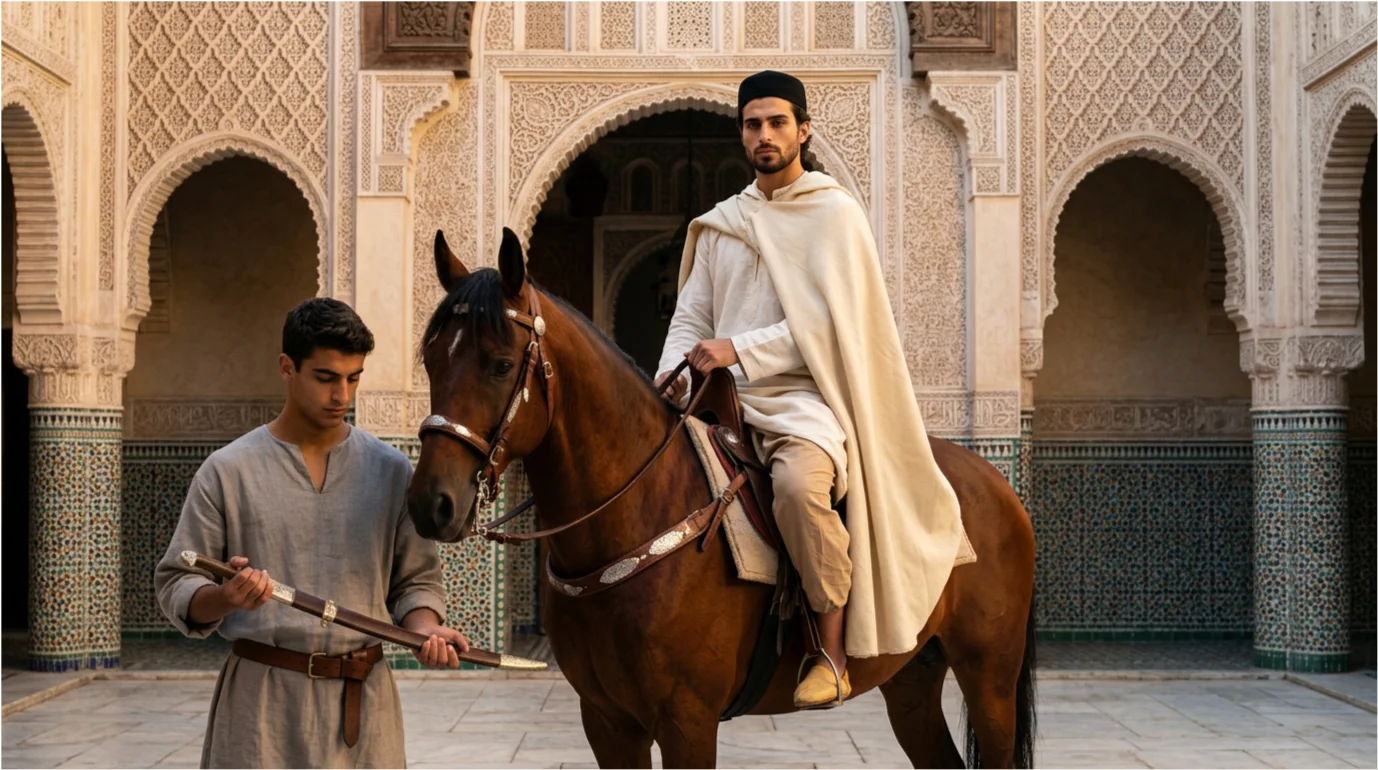
as-sāʾis, the groom
The sāʾis holds the horse, and that gesture is what makes furūsiyya possible. Whoever holds rank also accepts the humble task: the same demand as in futuwwa.
Who enters
المُهر
al-muhr, the colt
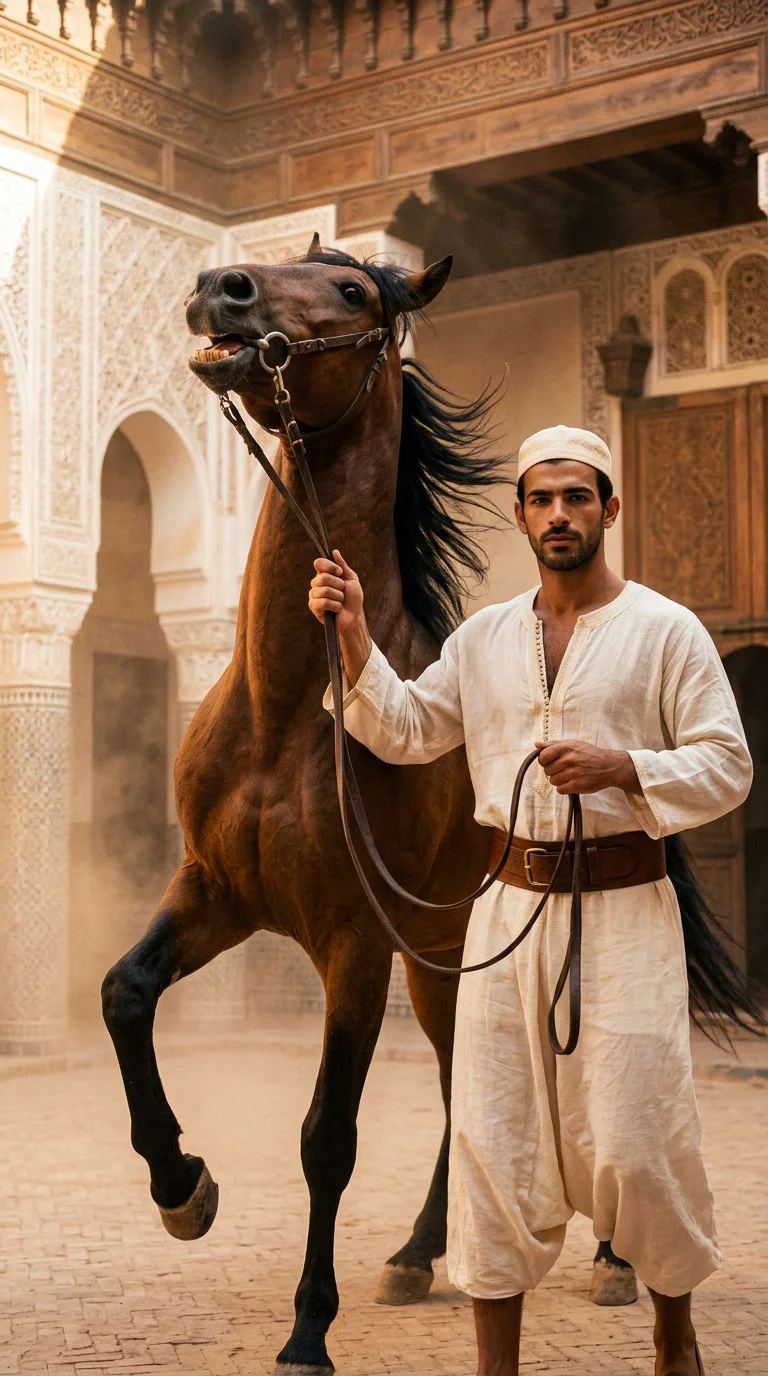
The colt that rears shows strength before measure, and it is a promise. The community offers the bit; holding firm is his part.
He is the same young man the house is looking for: one who has strength and accepts being led. See Who we are looking for→ and The residency→.
See also Al-Udda, the harness→.
The words of this page are in the common glossary; the works cited in the sources; the sister house is Al-Funduq aṣ-Ṣiqillī.