The lance
The measure at three paces.
The fourth art of the canon of furūsiyya was still missing from the house. Ibn Akhī Ḥizām set the lance game at the summit of the horseman’s science, and the Mamluk manuals, the Nihāyat as-sūl as well as the seventy-two bunūd of Najm ad-Dīn al-Aḥdab ar-Rammāḥ, devote more exercises to it than to any other weapon. What the lance teaches of its own can be put as a distance: the bow trains the instant before the gesture, wrestling the body to body, the sword the measure of an arm, and the lance the measure of three paces.
A man learns there to hold the three metres in front of him, to read his opponent before the bodies meet, and to carry his gaze to where the shaft will go. It is a discipline of the eye as much as of the arm, and it is practised slowly: it is an exercise, and stays one.
Cabinetmaking
النجّار
Olive green
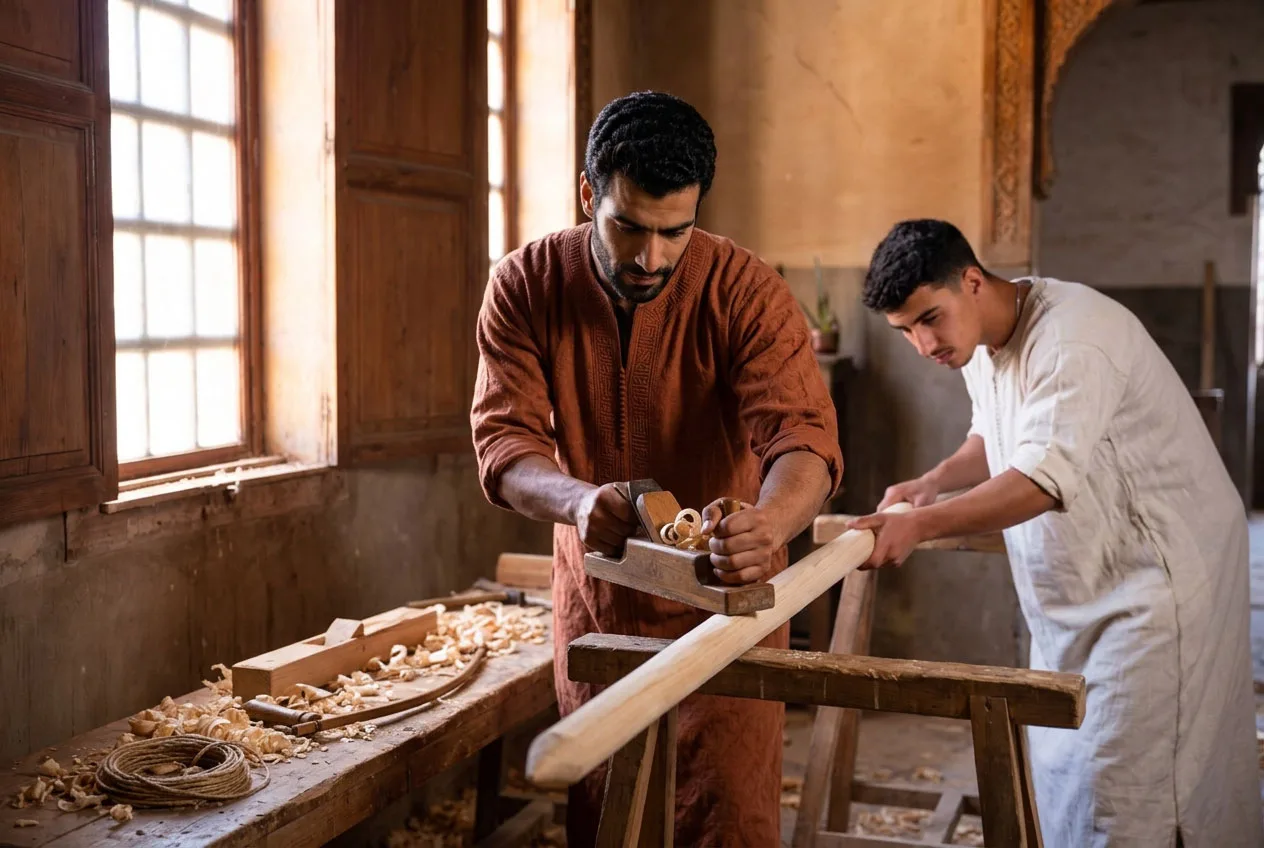
The shafts come from the cabinetmaking workshop, straightened with the plane and checked along their whole length.
The ash is turned, straightened with the plane, then checked by the very man who will use it. It is the rule of the house: its workshops make the instruments of the disciplines taught there, from the shafts to the horse’s harness. A shaft made here and broken at the first exercise is made again here.
الثِّقافُ ما تُسوَّى بِهِ الرِّماحُ، وَتَثقيفُها تَسوِيَتُها
“The thiqāf is that with which lances are straightened, and straightening them is called tathqīf.”
Ibn Manẓūr, Lisān al-ʿArab
The root th-q-f first names this workshop labour, the crooked wood passed and passed again through a bored block until it runs straight, and it is on this root that modern Arabic formed thaqāfa, the word that today means culture. The descent must be stated with care, since the modern sense is recent and comes from a calque; the reading of the classical dictionaries is nonetheless certain, and the gesture they describe is exactly the carpenter’s.
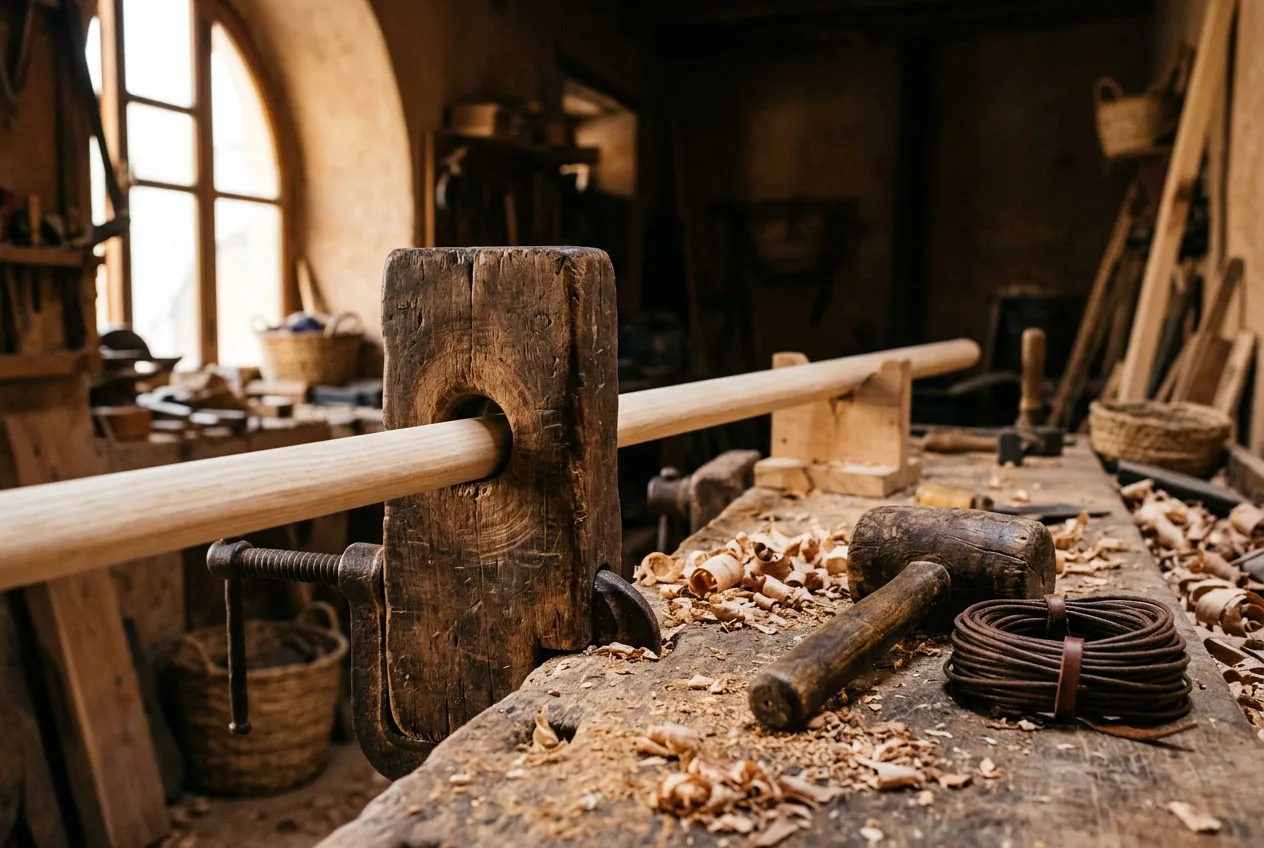
The thiqāf, a pierced block clamped to the bench, in which the shaft is straightened.
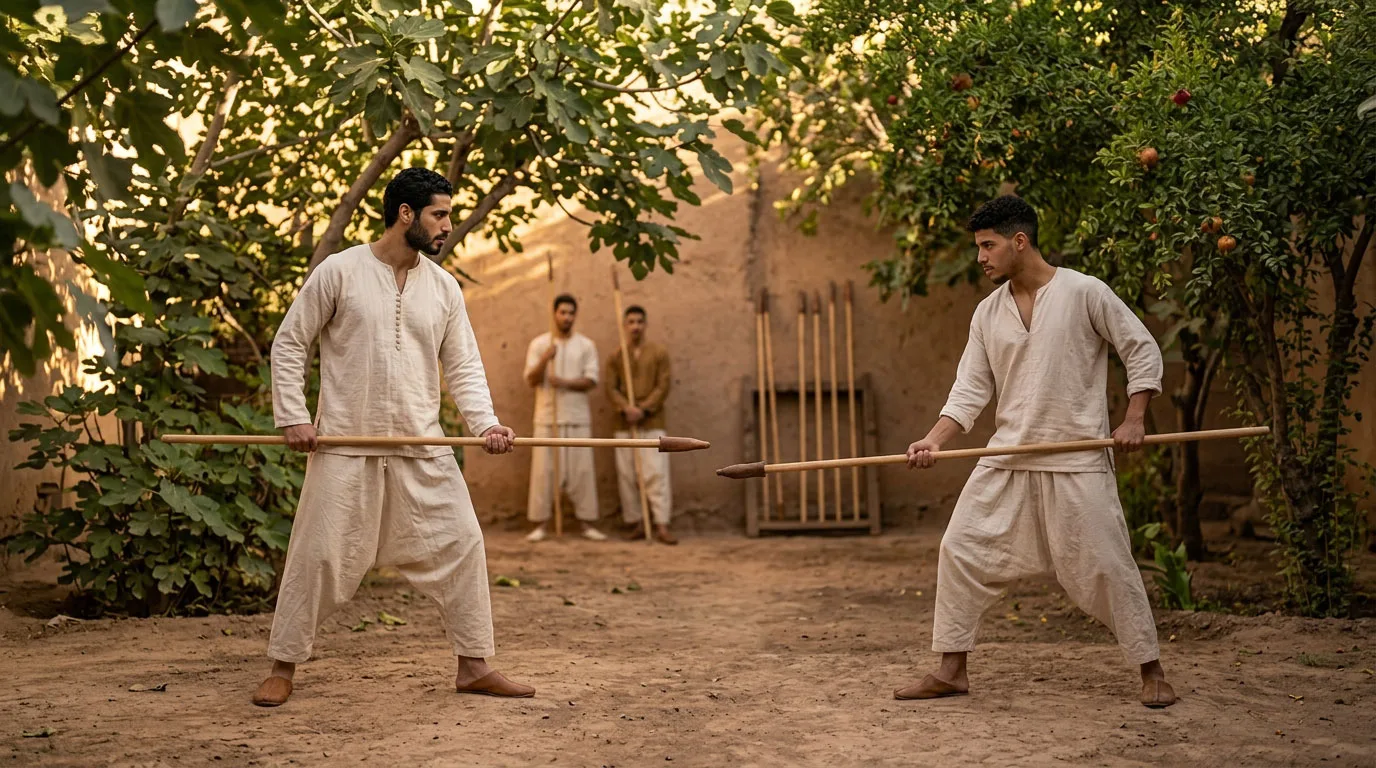
The first year is done on foot, in the shaded part of the garden and on beaten earth, two sessions a week at the end of riyāḍa, on days other than those of ground wrestling. The shafts measure from two metres twenty to two metres eighty and stay plain wood, with a rounded end or a cap of stitched leather. Mounted work, with the rings and the birjās, will come later and outside the medina, on the riding ground, once the seat is sure: the horse must first accept the shaft around its head and flanks, and this is obtained in the stable, over several months.
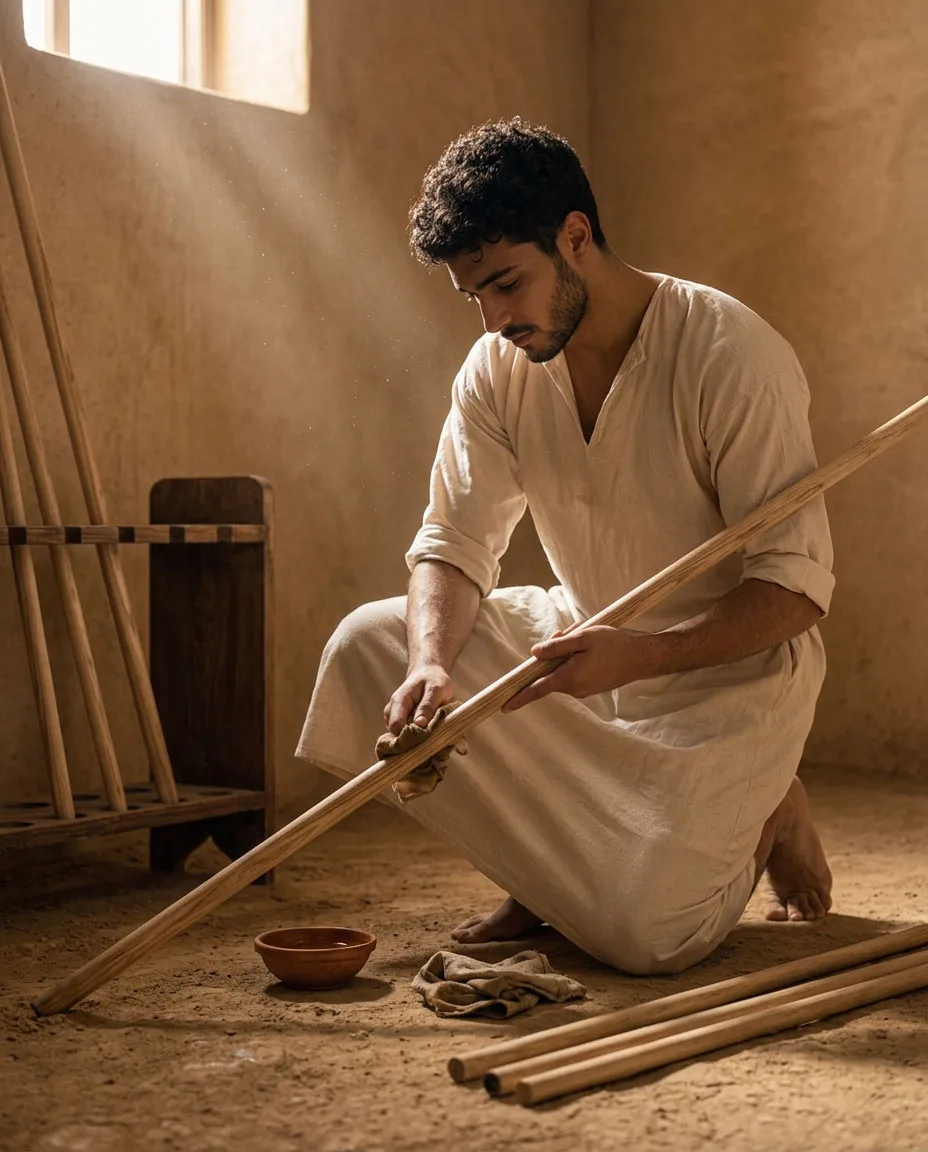
The muʿāwin oils the wood and looks for cracks before the session.
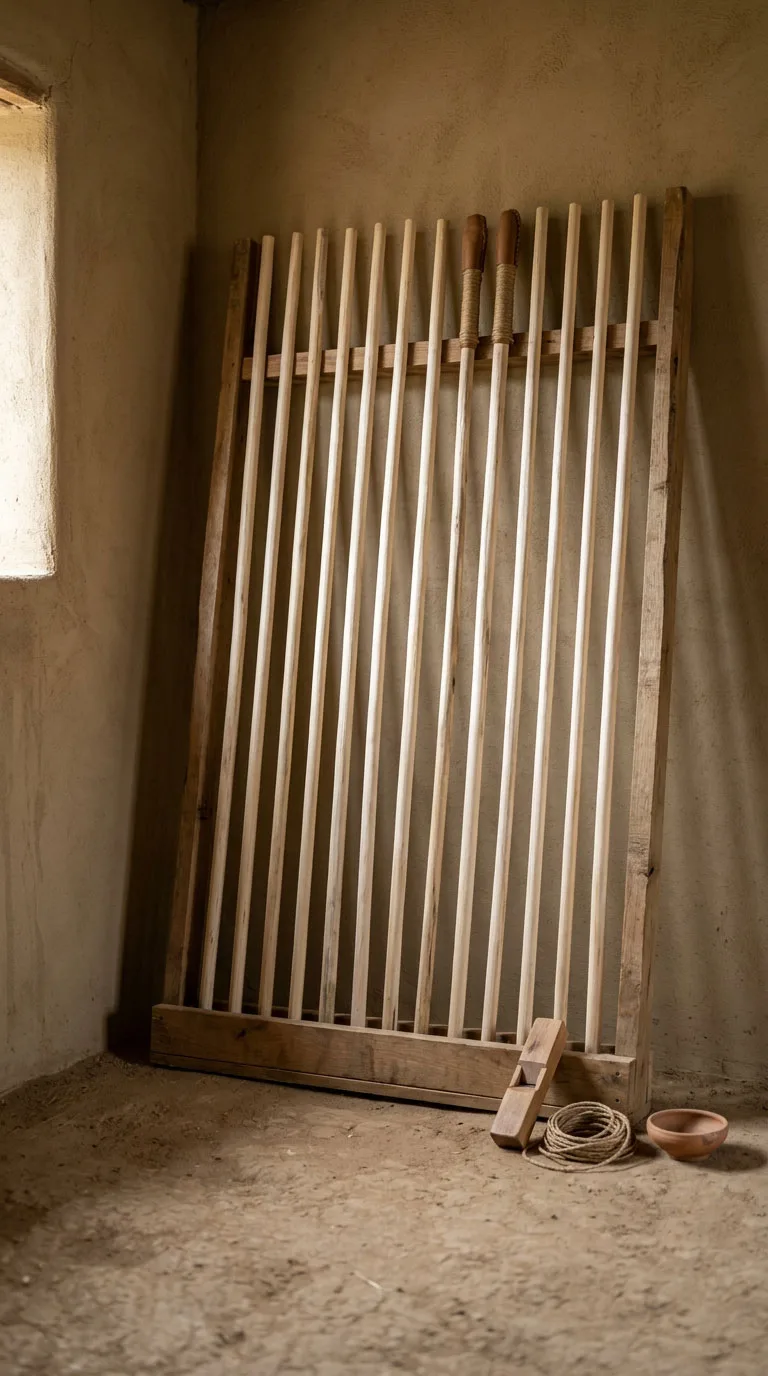
The rack, made by the cabinetmaking workshop, where the shafts stand upright and dry.
See also The furusiyya→.
The words of this page are in the common glossary; the works cited in the sources; the sister house is Al-Funduq aṣ-Ṣiqillī.