Restraint and measure
Each piece of the harness, set on the real things of the house.
Each piece of the harness has a meaning for the man. Here that meaning settles on the real things of the house.
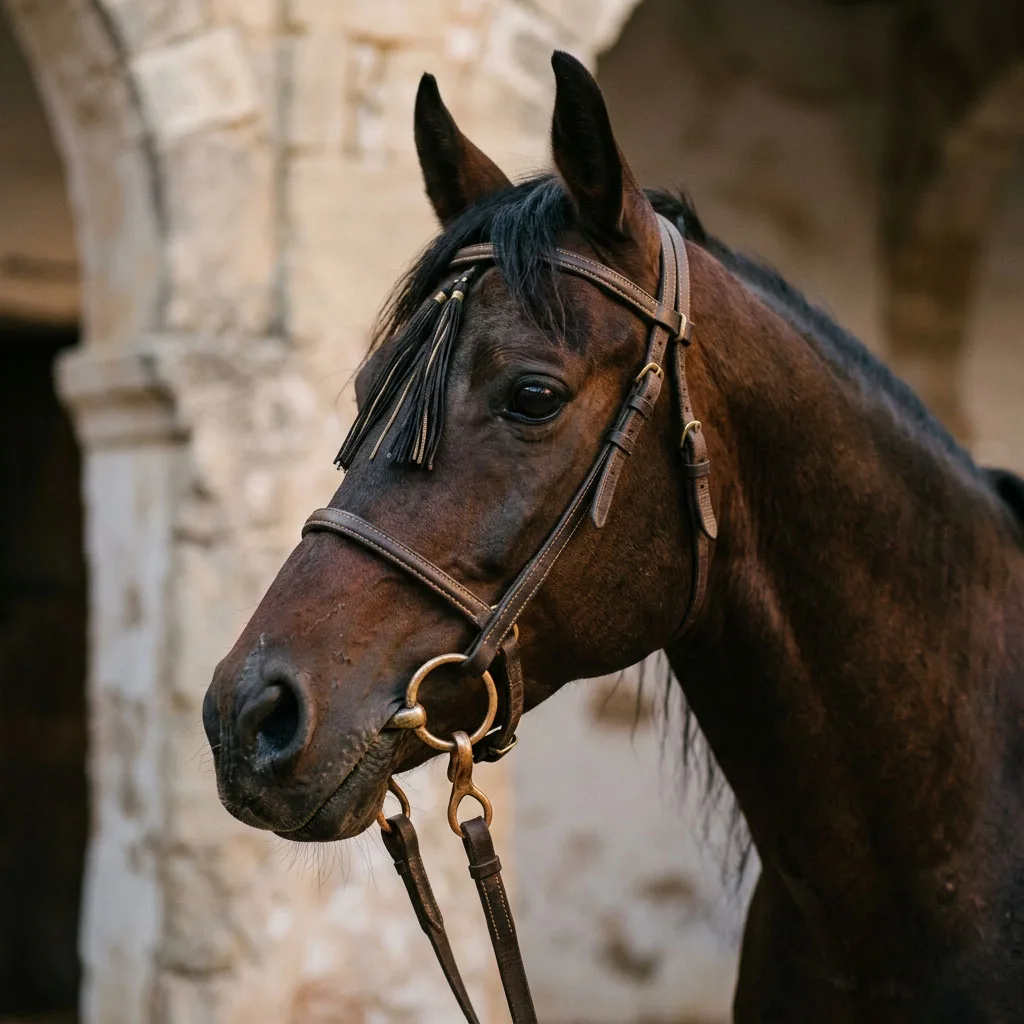
The lijam
اللجام
al-lijām, the bridle
The bridle holds the brow and gives the bit its seat. First apprenticeship: to receive a measure, so that strength, intact, can be guided.
The bit
الحكمة
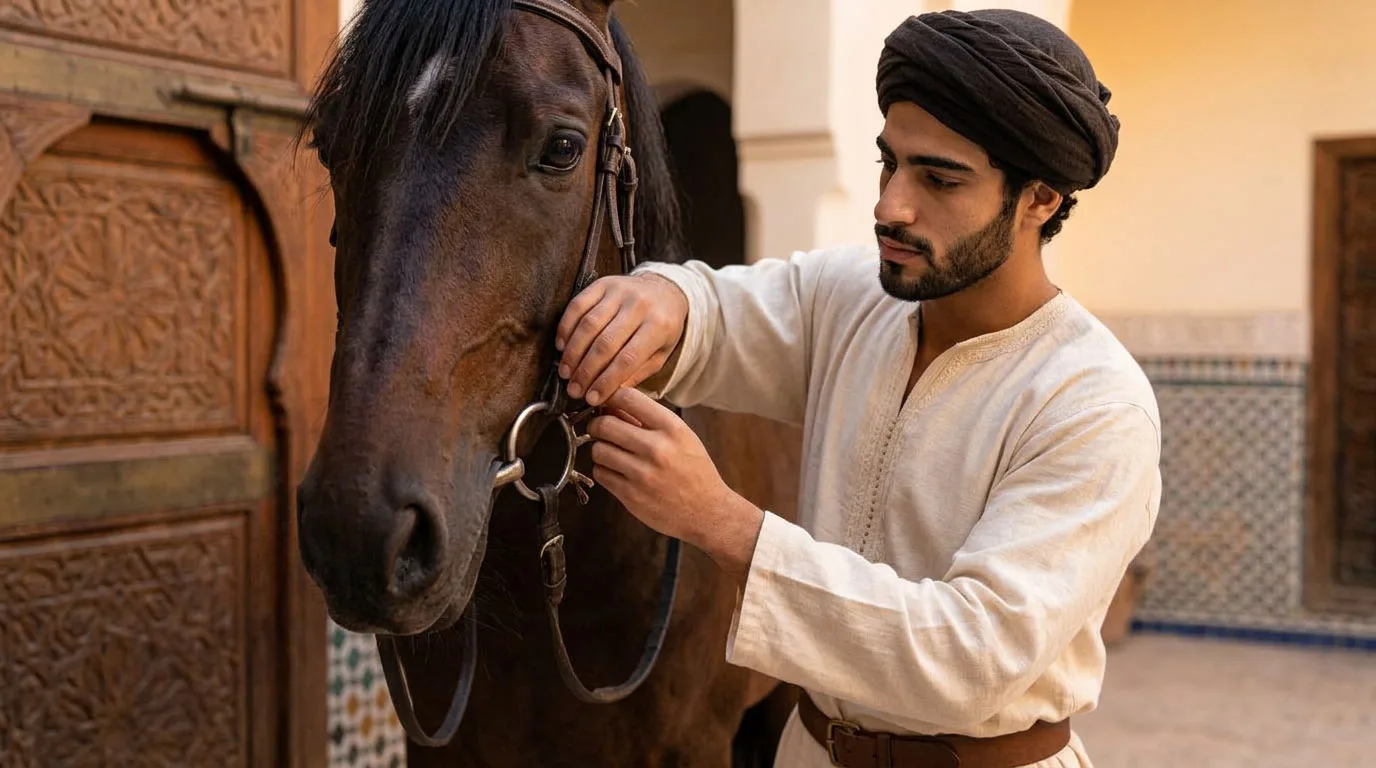
al-ḥakama, the bit
The bit leaves the horse its fire and gives it a language. So with the passions: they are bridled, and stay alive.
Gentleness
الرِّفق
ar-rifq, gentleness, forbearance
A bit too harsh wounds the mouth and closes the horse; a spur badly held opens the flank. The piece meant to give a language becomes an instrument of constraint, and the horse, instead of obeying, defends itself. What is gained that way is lost twice.
The tradition is precise on this: one does not brand an animal’s face (Muslim, no. 2116), nor use it as a seat for conversation (Abū Dāwūd, no. 2567); one unloads it before sitting down (Abū Dāwūd, no. 2551), and custom has it watered first.
إِنَّ الرِّفْقَ لَا يَكُونُ فِي شَيْءٍ إِلَّا زَانَهُ، وَلَا يُنْزَعُ مِنْ شَيْءٍ إِلَّا شَانَهُ
“Gentleness is in nothing without adorning it,
and it is taken from nothing without disfiguring it.”
Prophetic tradition (Muslim, no. 2594)
Restraint thus serves measure, and the last word belongs to measure. A discipline that breaks is a breakdown, and a spoiled mouth stays spoiled. What holds for the rider’s hand holds for authority in the house: see At-Tahkim, arbitration→.
The saddle
السرج
as-sarj, the saddle
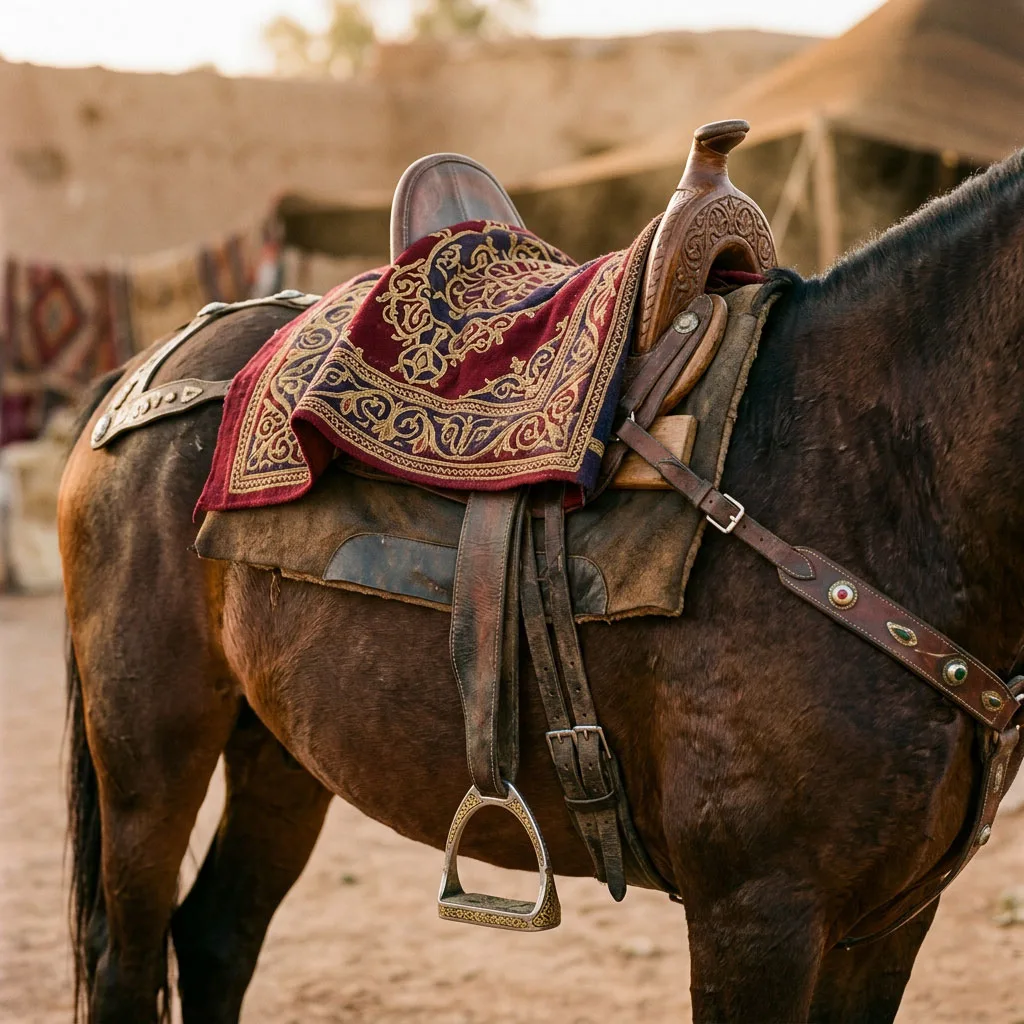
The saddle (as-sarj) gives the seat. The Moroccan saddle, of Andalusi descent, has a high tree covered in velvet embroidered in gold thread, ṭarz fāsī or drawn thread, and belongs to parade and war harness rather than to riding as a sport. In the house the rule does the same work: it makes continuity possible. It is also, on a larger scale, the sense of At-Tadbir, governance, which gives the house its seat.
The parade
العُدّة
al-ʿudda, the tack
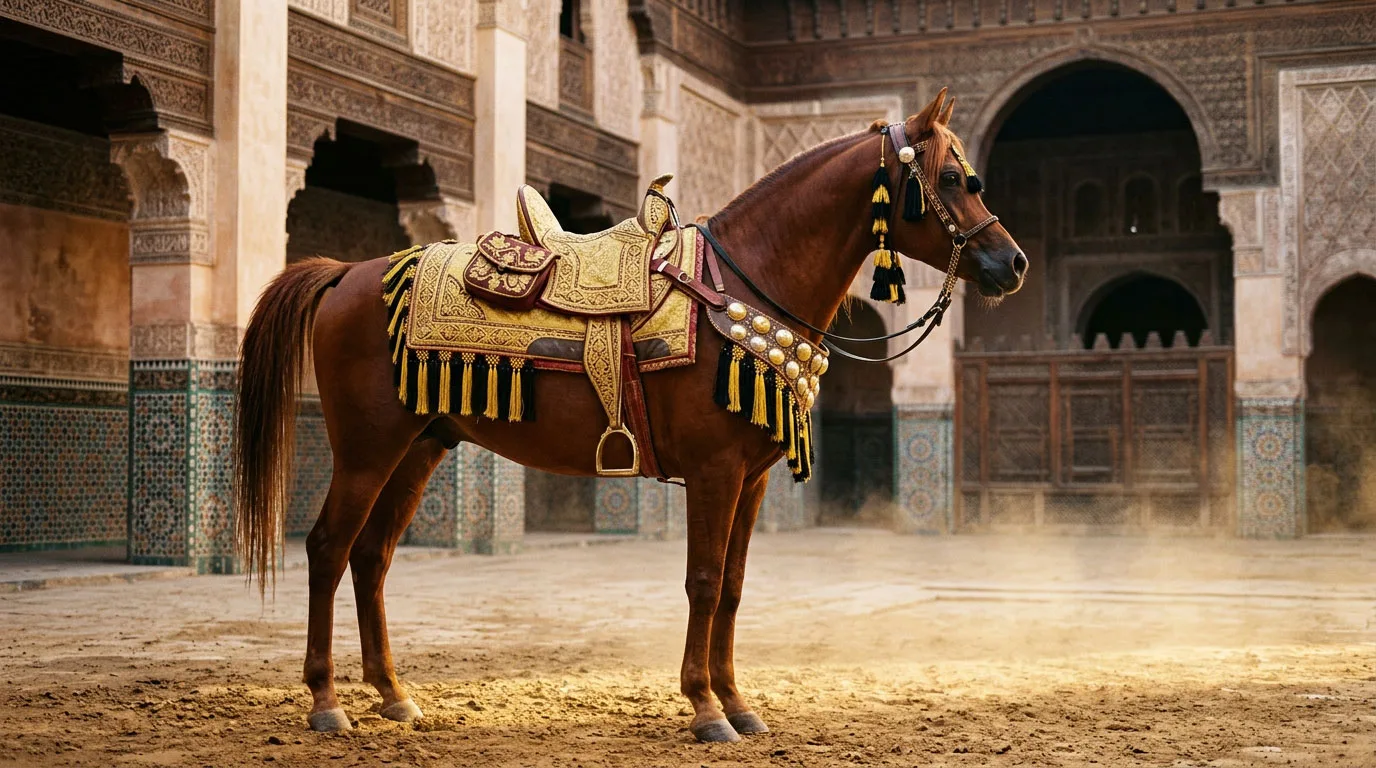
Housings and breastplate: what the horse wears outwardly, in parade and war harness. The ʿudda may be rich, provided it stays sober in spirit: what is shown honours, or betrays.
The grooming
العِنَايَة
al-ʿināya, care
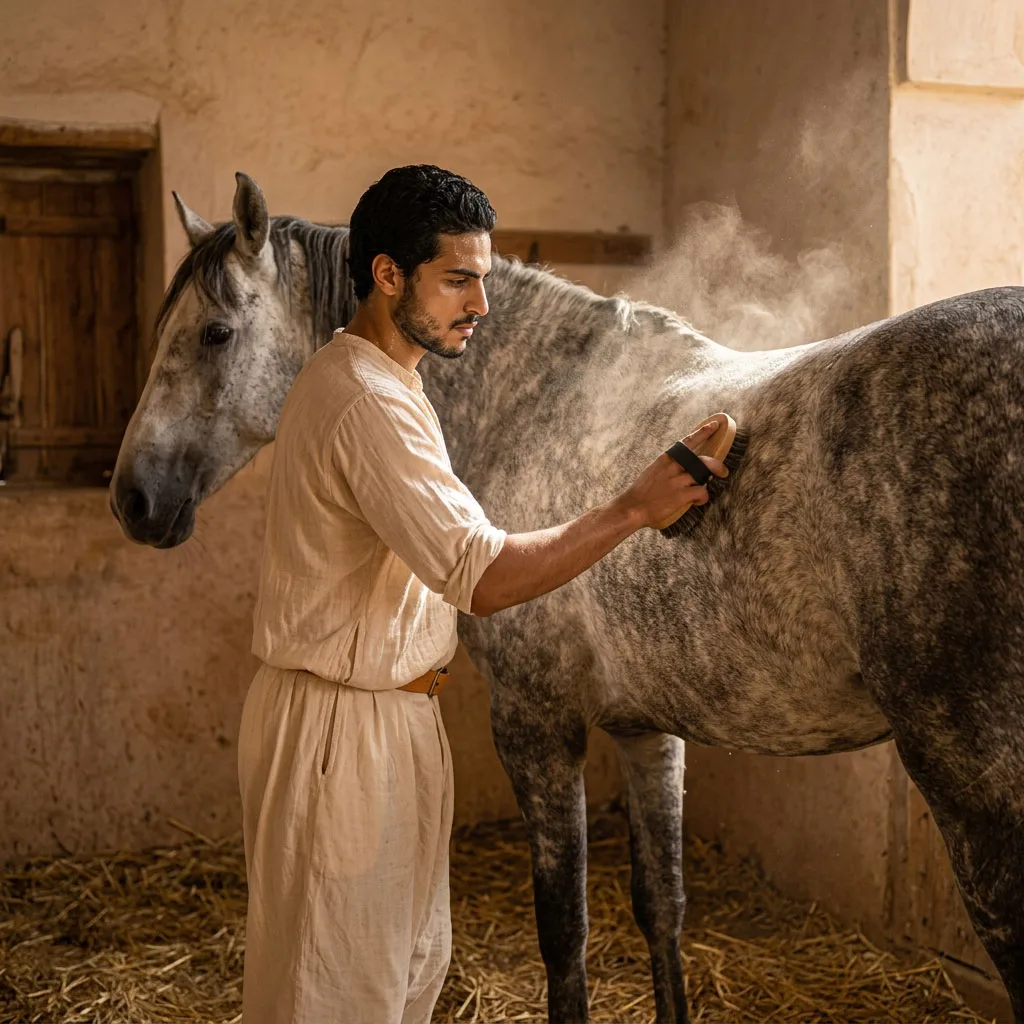
The ten pieces of the ʿudda are the ones that are seen. The tack, however, begins lower and earlier: the shoe (an-naʿl) checked before going out, the felt (al-labad) laid under the saddle so that the wood does not wound the back, the curry-comb passed over the coat, the leather greased and the buckles wiped once the horse is back in.
All this stays hidden. A nail badly set shows at the third kilometre, and the start keeps silent about it. A girth never cleaned stays invisible until the day of the outing, when it gives way.
It is the exact counterpart of the parade. What is shown honours on condition that what is hidden has been done. A man is judged by what he does when no one is watching; the horse always notices. The day of the house is built on these gestures: see A day at the Riad→.
See also Al-Udda, the harness→.
The words of this page are in the common glossary; the works cited in the sources; the sister house is Al-Funduq aṣ-Ṣiqillī.