The bit
الحكمة
al-ḥakama
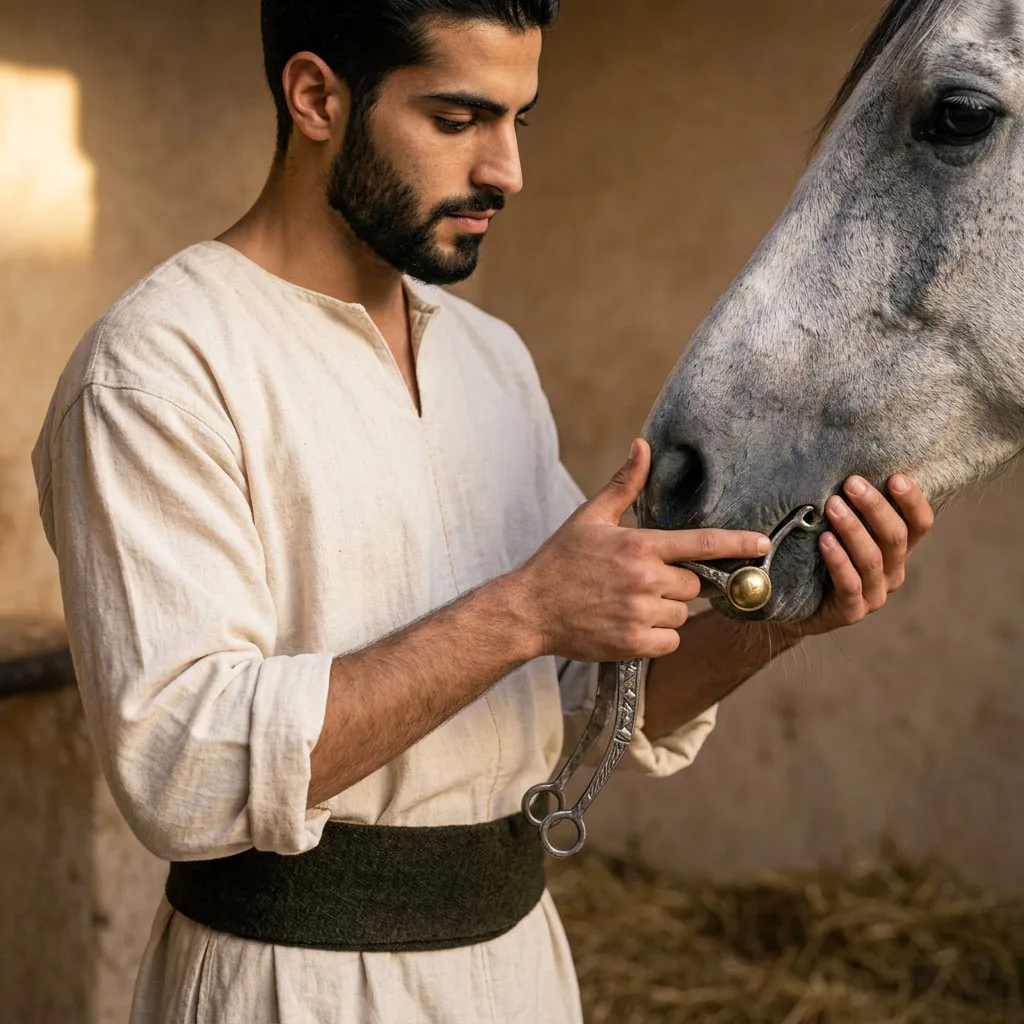
It speaks to the horse’s mouth and passes on the hand with no need of voice. In the man it is the restraint set on what would prevail in him.
العُدّة
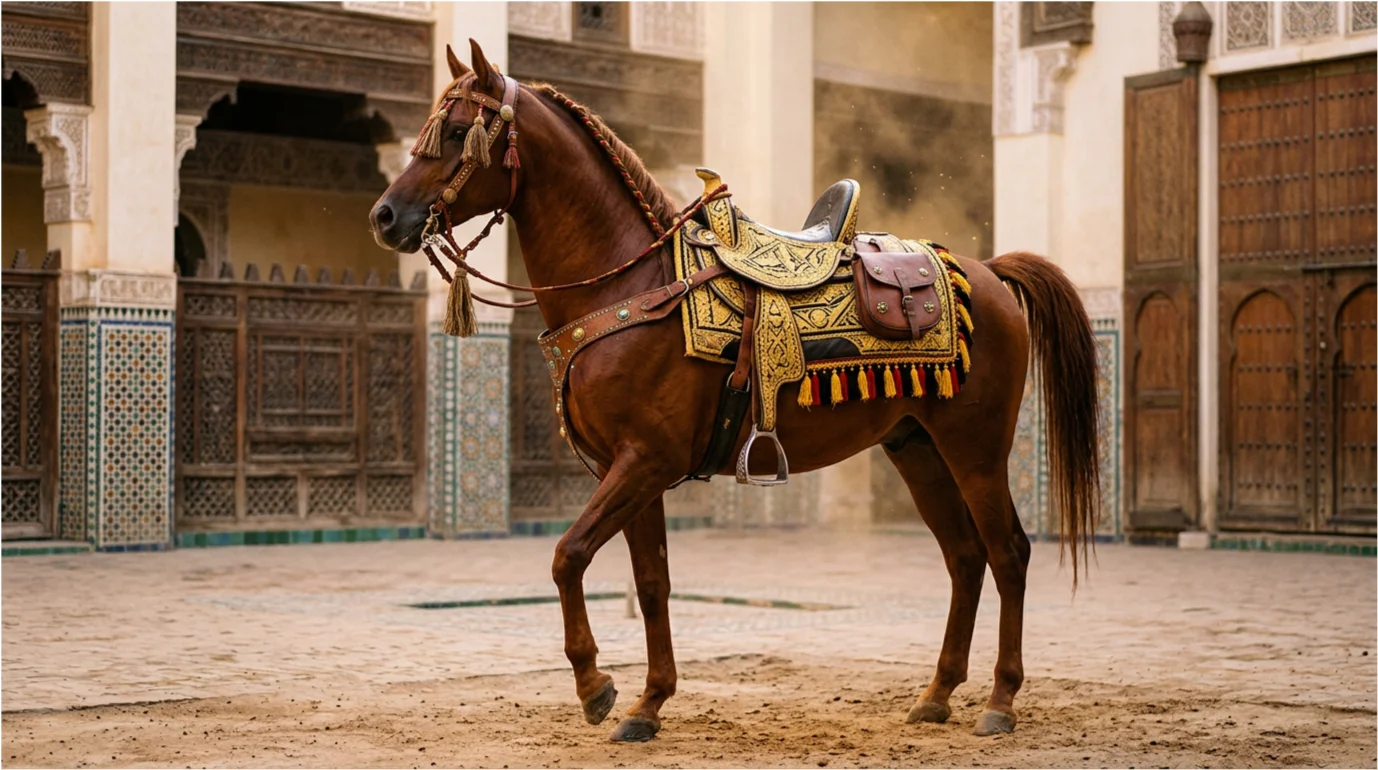
al-ʿudda: the tack, the horse’s equipment
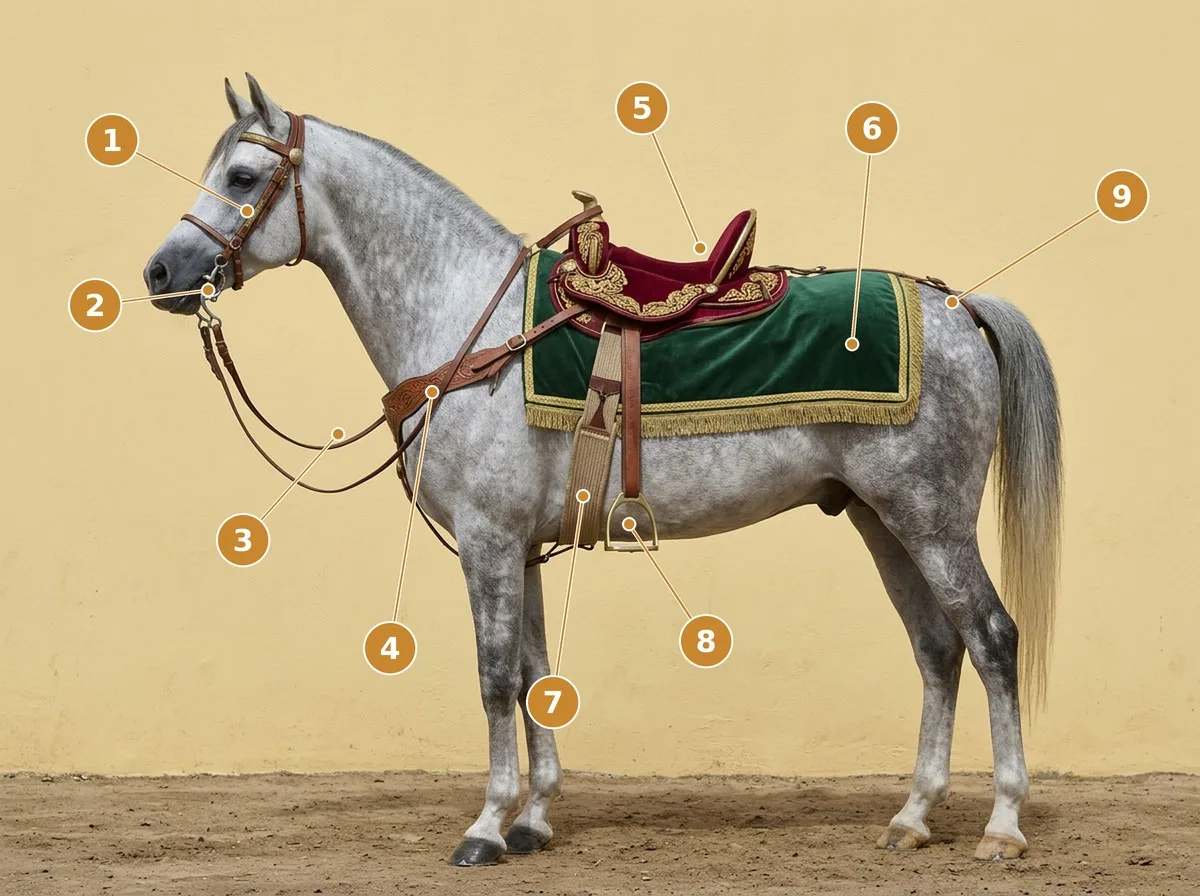
Each piece has a task on the horse and a meaning for the man.
الحكمة
al-ḥakama
It speaks to the horse’s mouth and passes on the hand with no need of voice. In the man it is the restraint set on what would prevail in him.
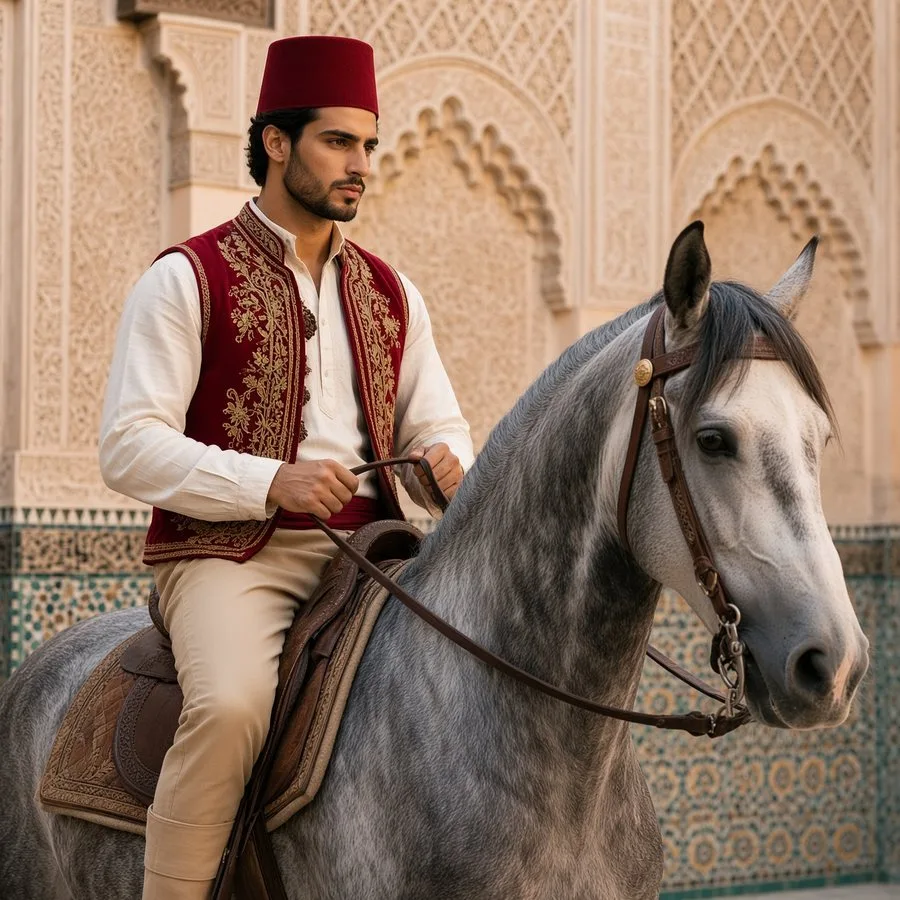
العنان
al-ʿinān
They carry the hand’s intention to the bit and bring back its answer. In the man they are intention: what one wants, held with measure.
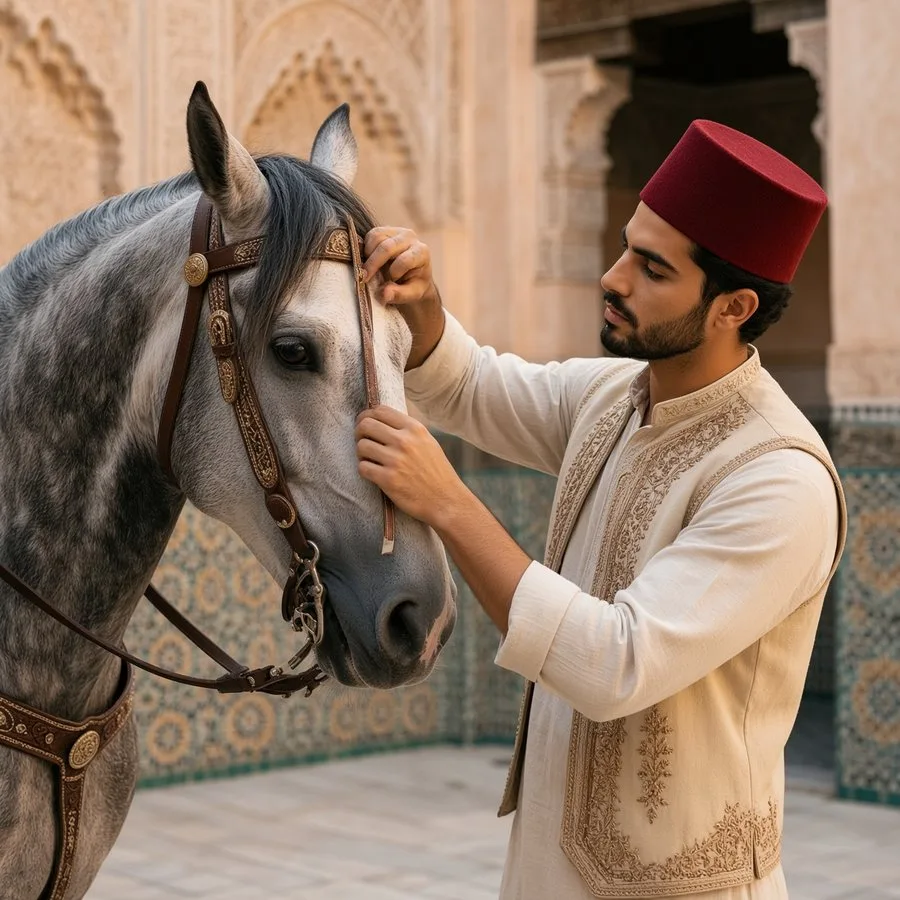
اللجام
al-lijām
It holds the horse’s head and gives the bit its seat. In the man it is orientation: knowing where one looks before moving.
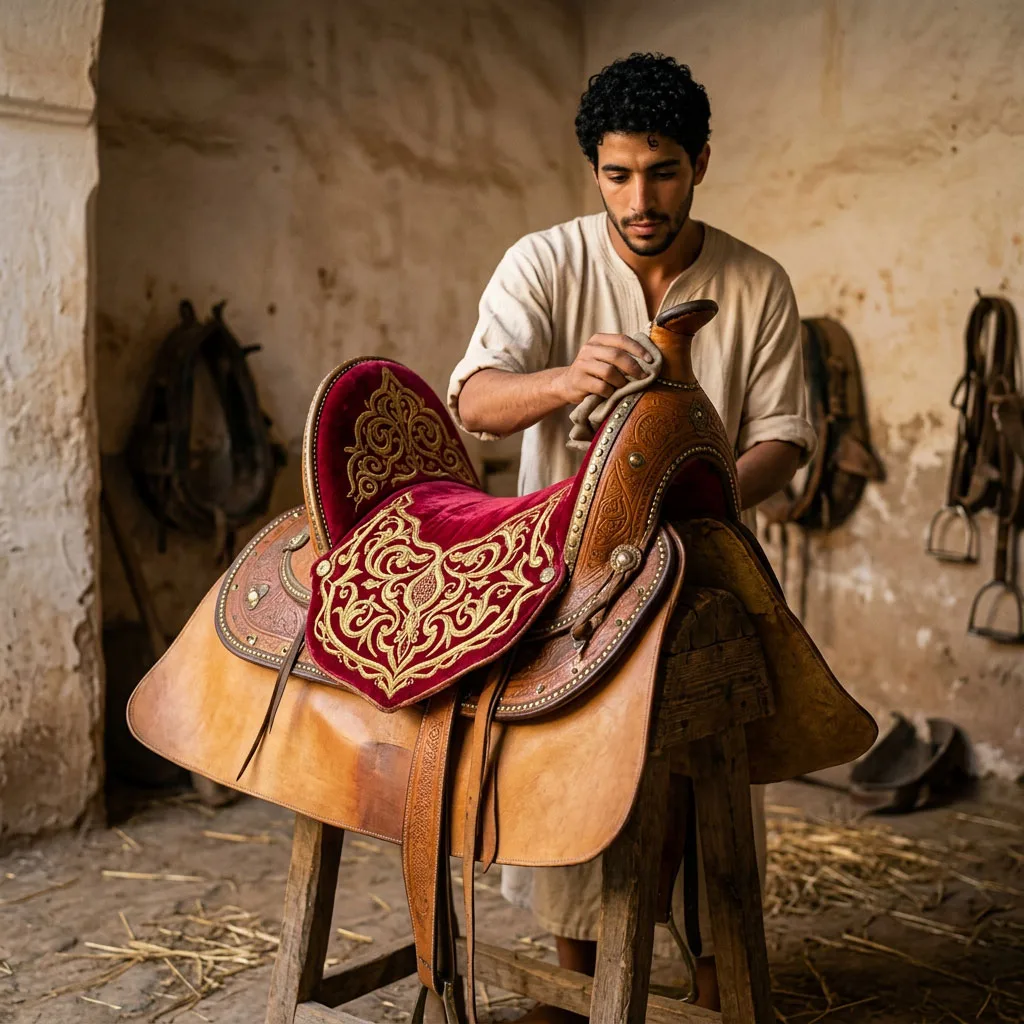
السرج
as-sarj
It gives the rider his place and the horse a well-spread weight. In the man it is the rule, which gives each his place.
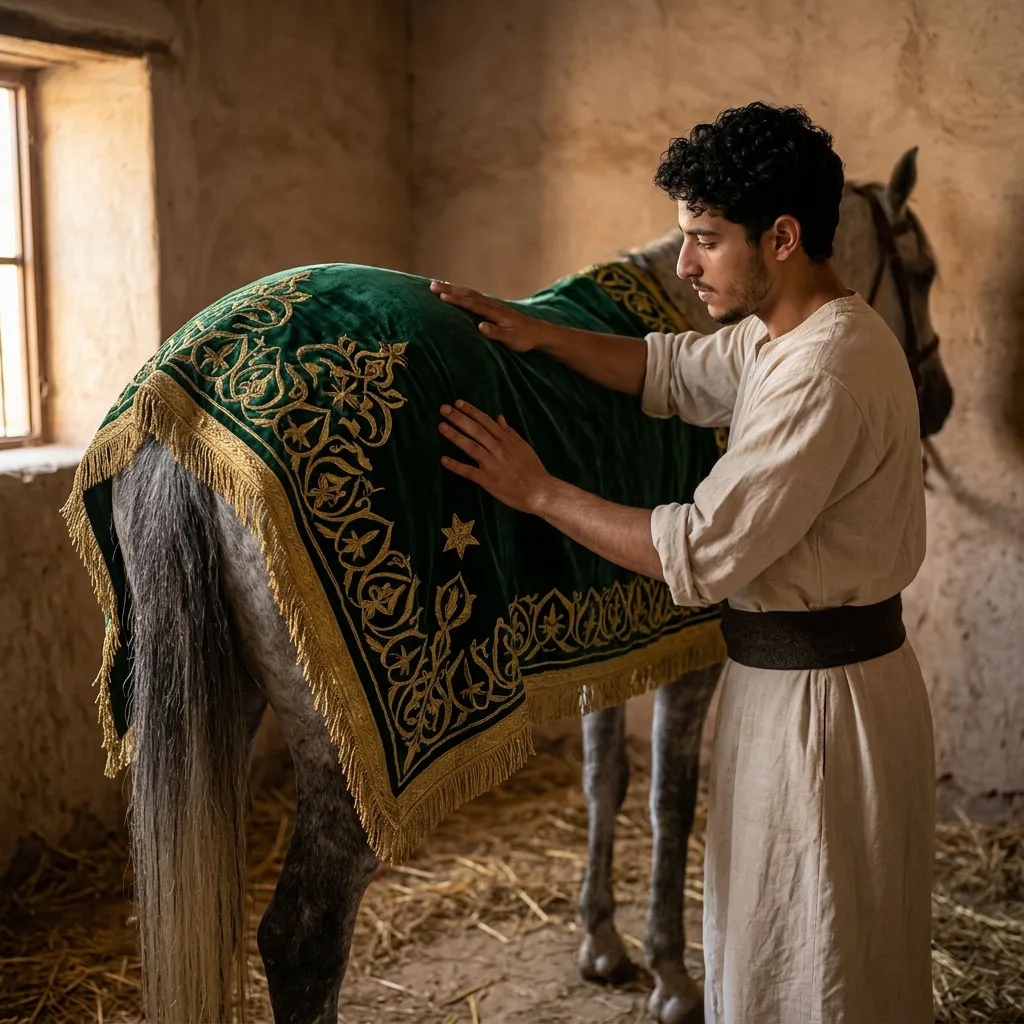
الجل
al-jull
It covers the back and honours the mount on feast days. In the man it is what is shown, worn without vanity.
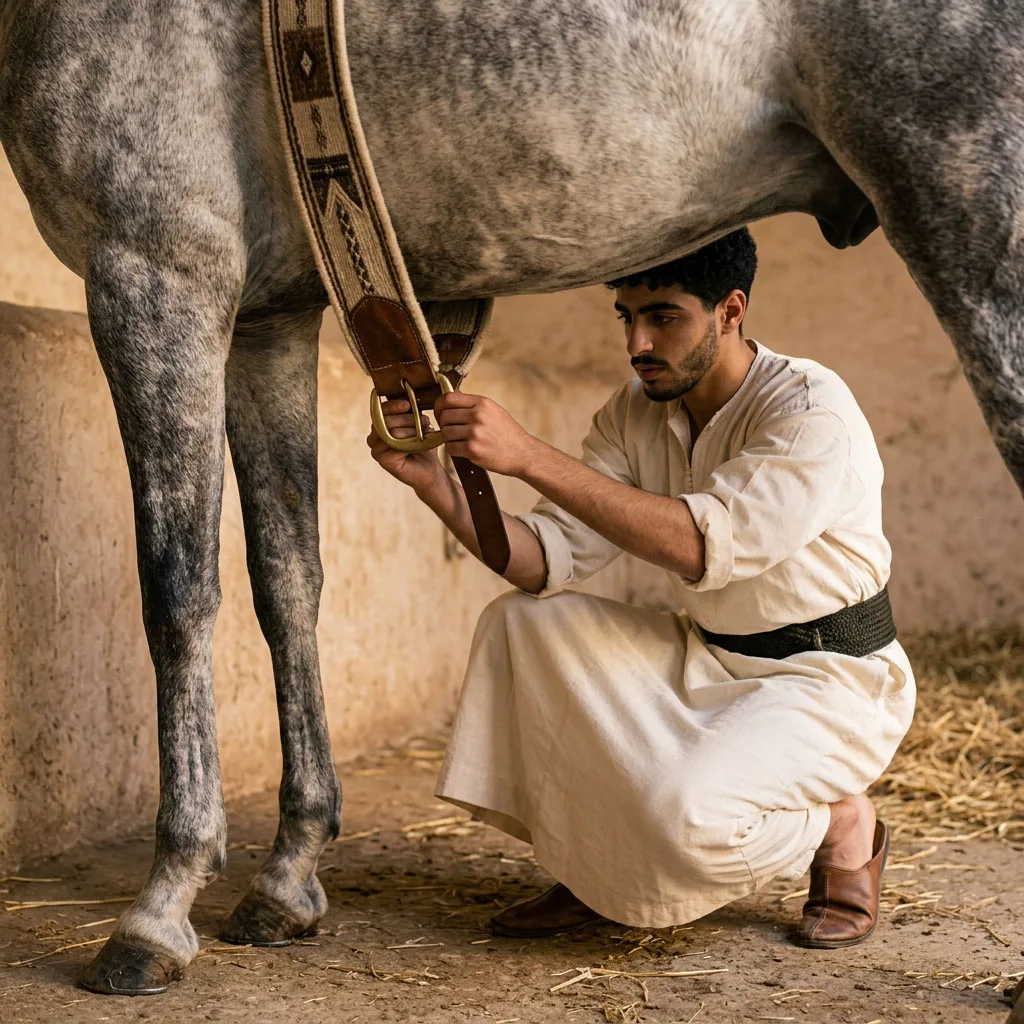
البطانة
al-biṭāna
It binds the saddle to the horse’s body while leaving it its breath. In the man it is measure: holding firm without stifling.
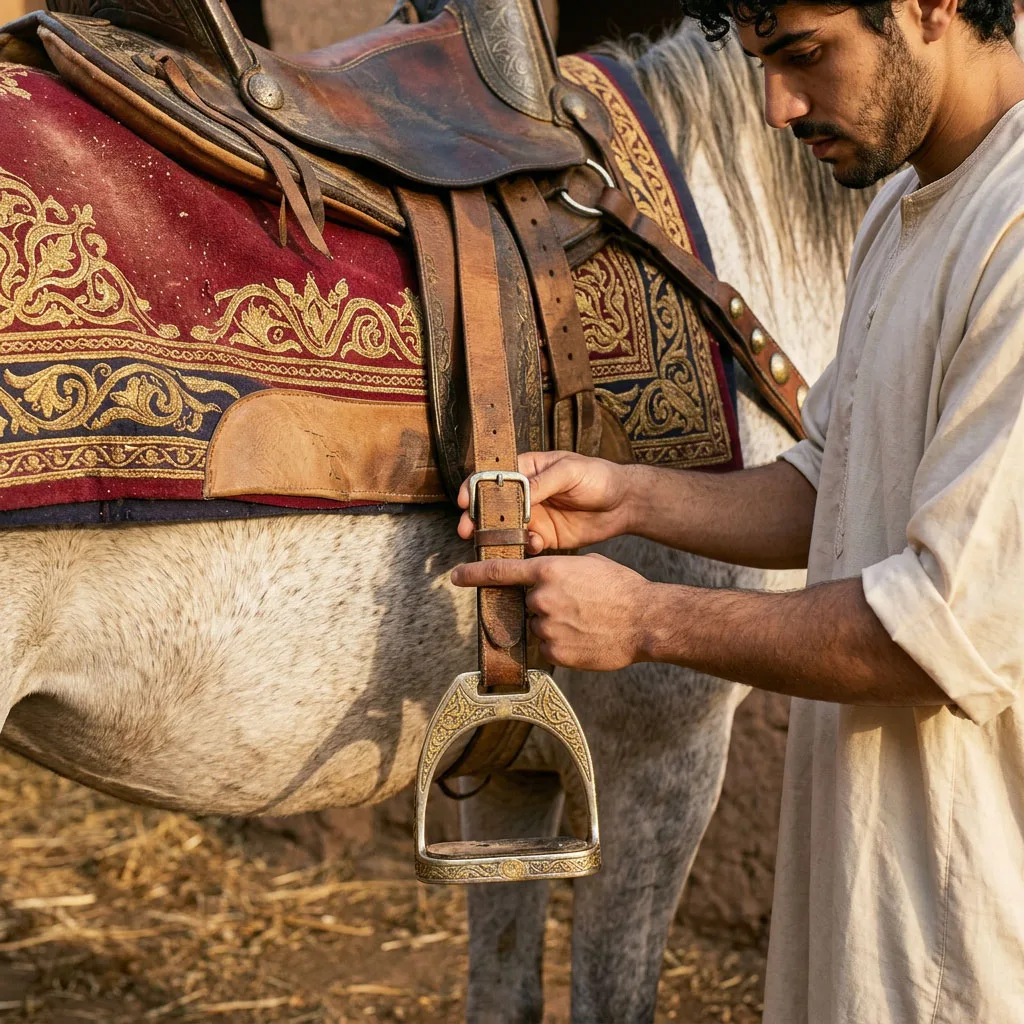
الركاب
ar-rikāb
They take the rider’s weight and give him support. In the man they are the companions one leans on and who carry us.
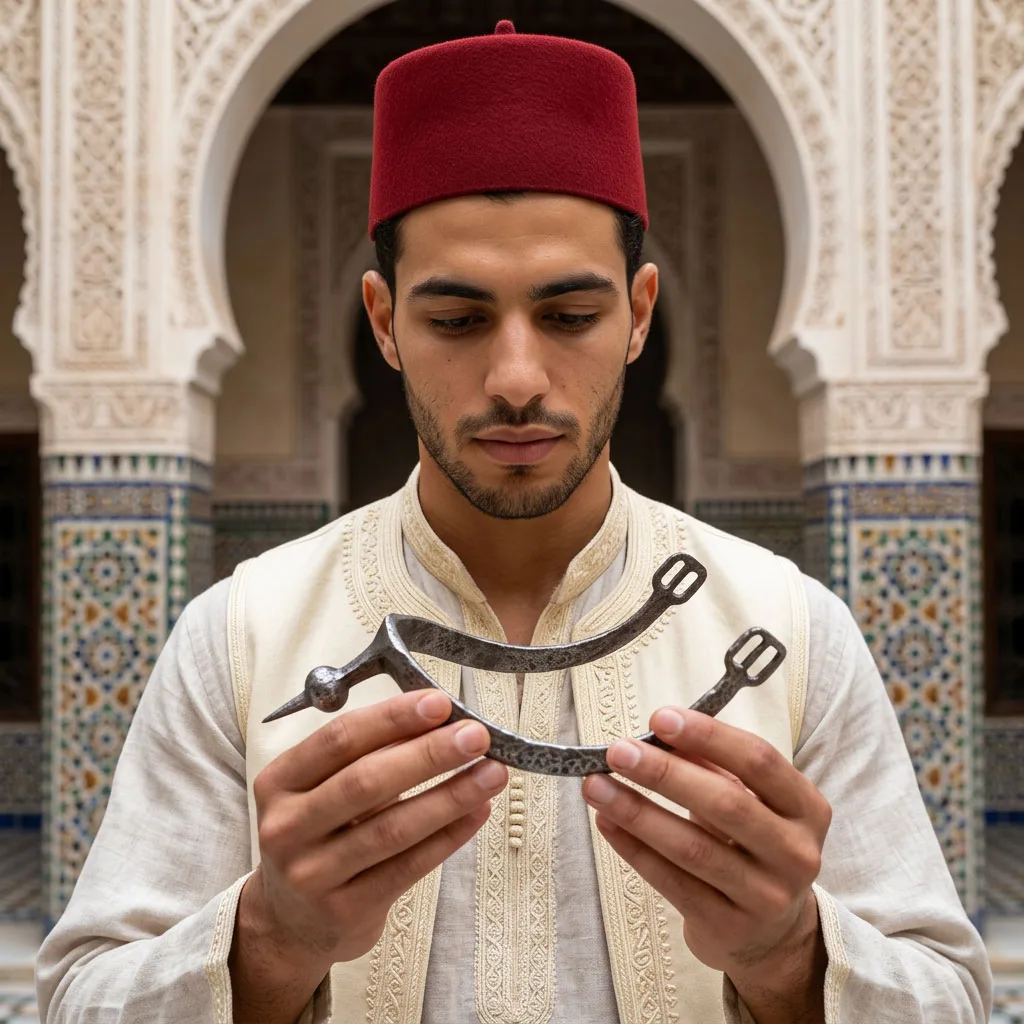
المهماز
al-miḥmāz
They wake the horse when the leg uses them with measure. In the man they are demand, which rouses without breaking.
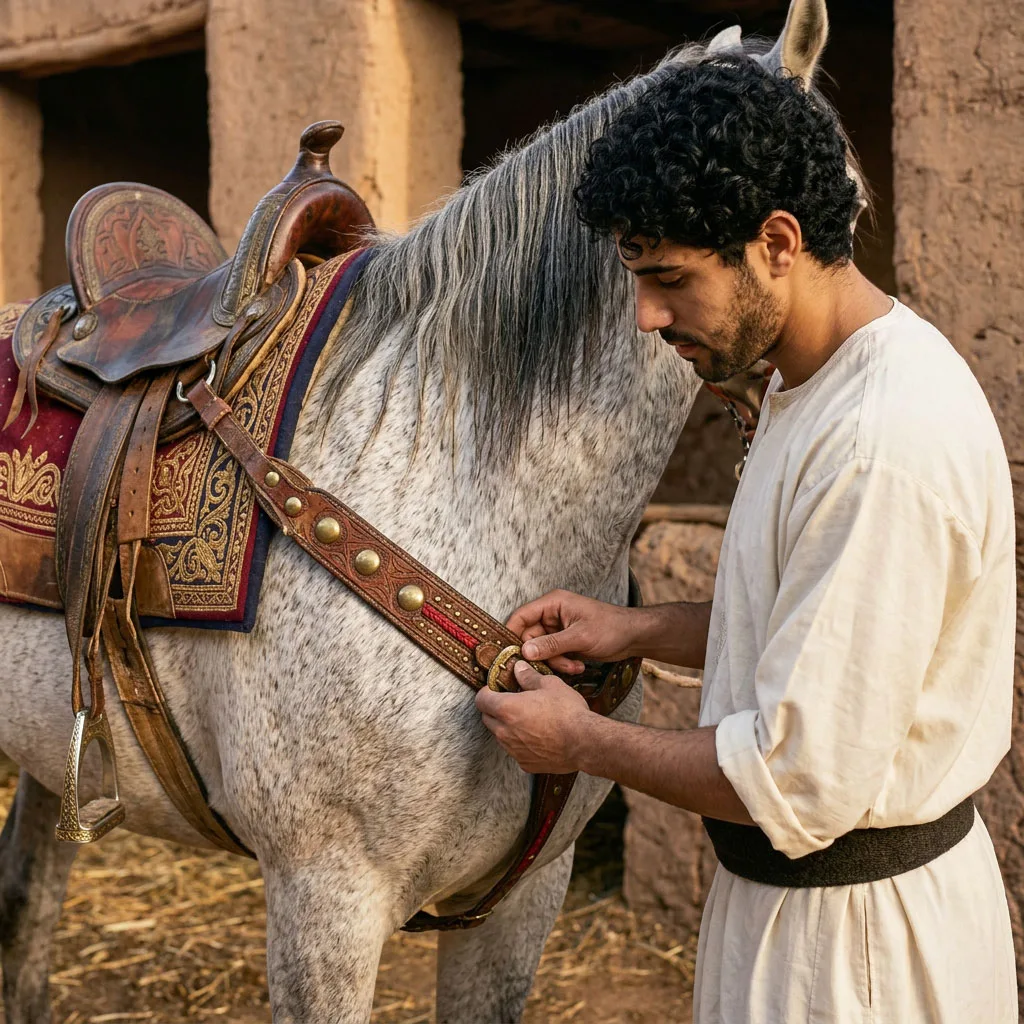
اللبب
al-labab
It holds the saddle forward, uphill and at speed. In the man it is what supports him in front: the aim he moves toward.
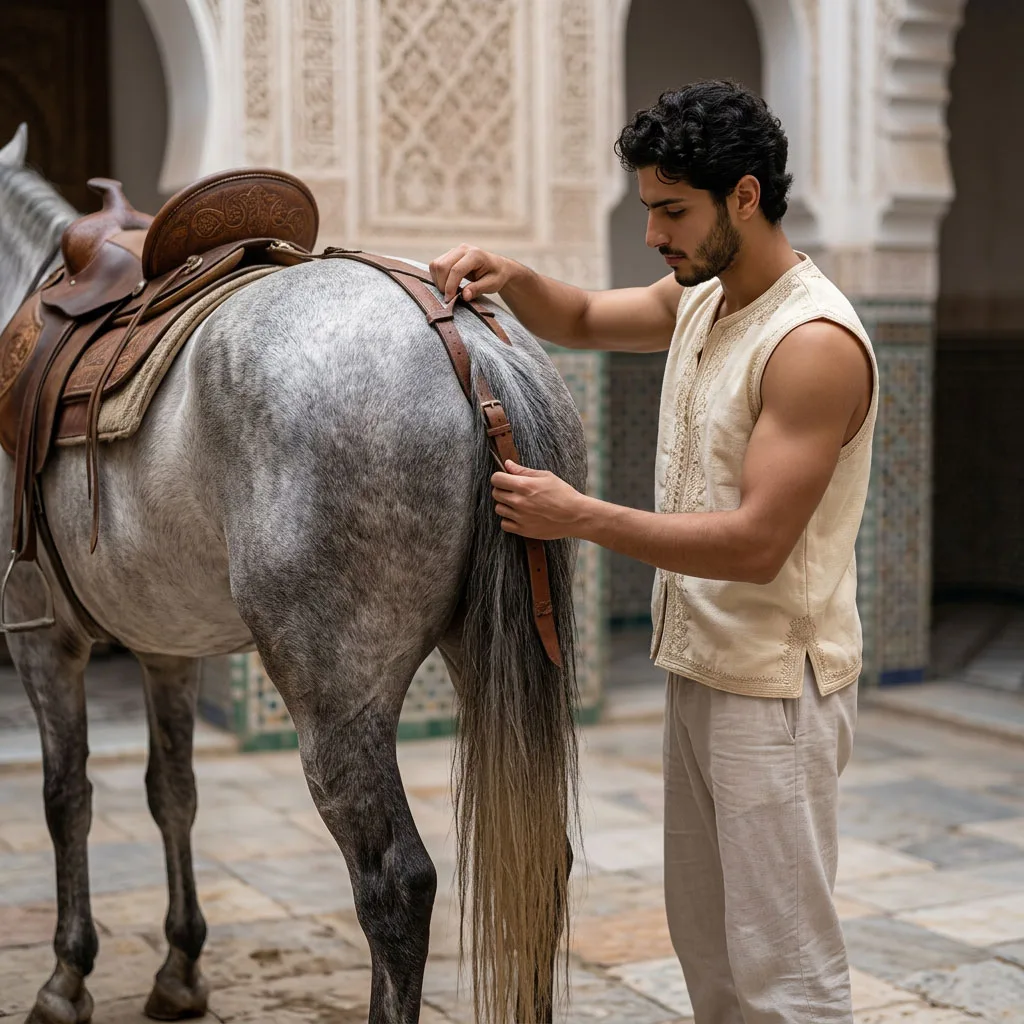
الحقّب
al-ḥaqab
It holds the saddle back, downhill. In the man it is what holds him from behind: the memory of what he has received.
The community provides the bit, the bridle, the spurs and the saddle. It is the ṣāniʿ who must stand firm.
See also Al-Udda, the harness→.
The words of this page are in the common glossary; the works cited in the sources; the sister house is Al-Funduq aṣ-Ṣiqillī.